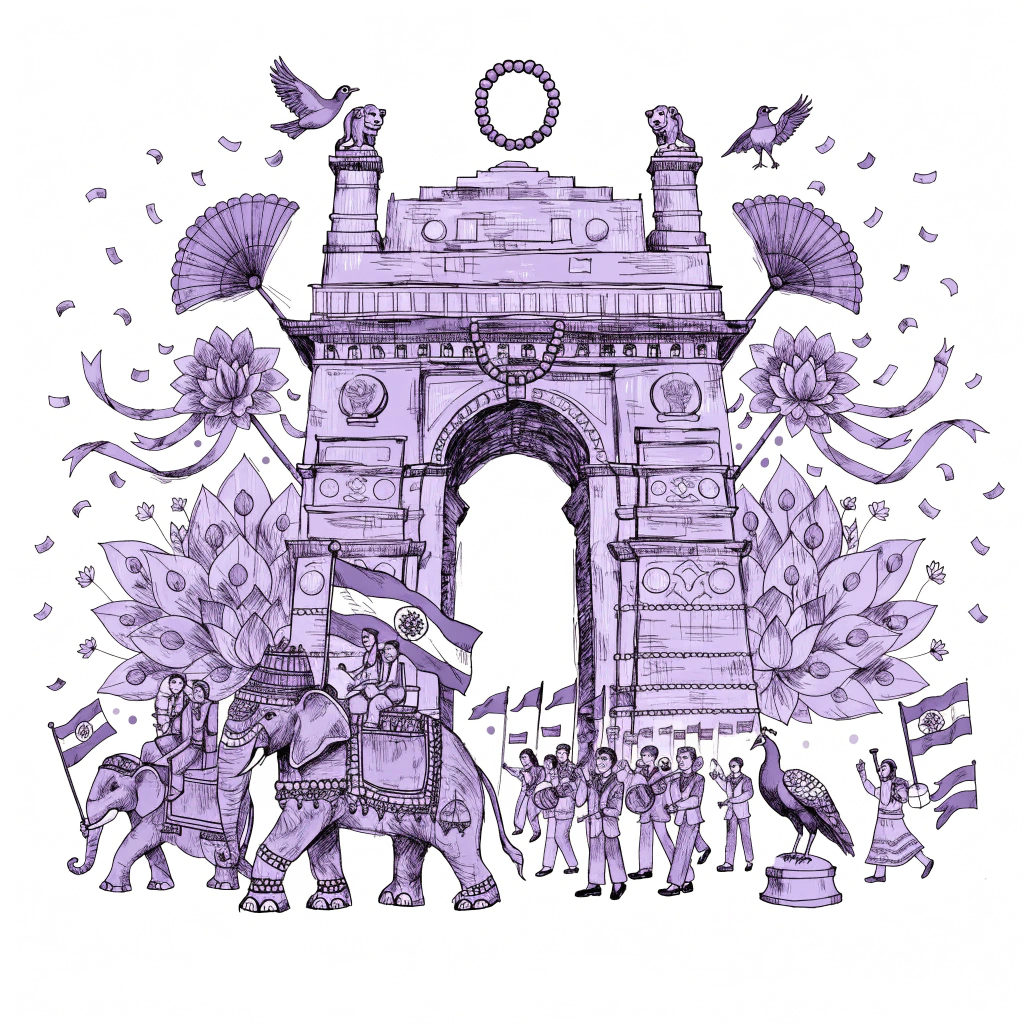
Republic Day in India
Republic Day is a very big holiday in India. It is on January 26th every year. This day is important for all Indian people.
In New Delhi, there is a big parade. The parade has many soldiers and loud music. The President of India watches the parade. There are many colorful groups from different parts of India.
Children wave the Indian flag. They wear beautiful clothes and dance. People sing songs and feel happy. It is a special day to celebrate the country.
문법 스포트라이트
패턴: Present Simple with 'Be'
"Republic Day is a very big holiday in India."
We use 'is' for one thing and 'are' for many things. It helps us talk about facts or describe how things are.
패턴: Present Simple for Plural Subjects
"Children wave the Indian flag."
When the subject is plural (like 'children'), we use the base form of the verb. We use this to talk about actions that happen regularly.
이해도를 테스트하세요
10 질문 · A1 초급 · 무료 미리보기 1회
이 기사에서 배운 내용을 테스트하세요. 모든 질문에 답하여 XP를 획득하세요!
When is Republic Day in India?
문제별 결과
When is Republic Day in India?
내 답변:
정답: January 26th
There is a big parade in New Delhi.
내 답변:
정답: 참
What is a 'flag'?
내 답변:
정답: A piece of cloth for a country
Children _____ the Indian flag.
내 답변:
정답: wave
인도의 특별한 기념일: 공화국의 날
인도에는 아주 특별하고 중요한 날이 있습니다. 바로 매년 1월 26일에 열리는 '공화국의 날'입니다. 인도는 1947년 8월 15일에 영국에서 독립했습니다. 하지만 그때는 아직 완벽한 법이 없었습니다. 그래서 인도 사람들은 새로운 나라를 위해 '헌법'을 만들었습니다. 1950년 1월 26일에 이 헌법이 시작되었고, 인도는 드디어 민주적인 공화국이 되었습니다.
이날이 되면 인도의 수도인 뉴델리에서는 아주 크고 화려한 퍼레이드가 열립니다. 수많은 군인이 줄을 맞춰 행진하고, 인도의 여러 지역에서 온 사람들이 아름다운 전통 춤을 춥니다. 하늘에서는 비행기들이 무지개색 연기를 뿜으며 멋진 쇼를 보여줍니다. 많은 인도 사람이 가족과 함께 모여 텔레비전으로 이 모습을 지켜봅니다.
공화국의 날은 인도의 자유와 평화를 상징합니다. 사람들은 거리에서 국기를 흔들며 이 기쁜 날을 축하합니다. 인도의 역사를 기억하고 더 나은 미래를 꿈꾸는 아주 소중한 시간입니다. 여러분은 인도의 이런 역동적인 축제에 대해 들어본 적이 있나요?
문법 스포트라이트
패턴: 명사 + 에서
"인도는 1947년 8월 15일에 영국에서 독립했습니다."
'~에서'는 출발점이나 행동이 일어나는 장소를 나타냅니다. 여기서는 영국이라는 나라로부터 독립했다는 의미로 쓰였습니다.
패턴: 동사/형용사 + 고
"1950년 1월 26일에 이 헌법이 시작되었고, 인도는 드디어 민주적인 공화국이 되었습니다."
두 문장을 대등하게 연결할 때 사용합니다. '그리고'의 의미를 가지고 있으며 앞의 내용과 뒤의 내용을 이어줍니다.
이해도를 테스트하세요
11 질문 · A2 초등급 · 무료 미리보기 1회
이 기사에서 배운 내용을 테스트하세요. 모든 질문에 답하여 XP를 획득하세요!
인도의 공화국의 날은 언제입니까?
문제별 결과
인도의 공화국의 날은 언제입니까?
내 답변:
정답: 1월 26일
인도는 영국에서 독립한 직후에 바로 헌법을 만들었습니다.
내 답변:
정답: 거짓
'헌법'은 무엇을 의미합니까?
내 답변:
정답: 나라의 가장 기본이 되는 법
인도의 _____인 뉴델리에서는 큰 퍼레이드가 열립니다.
내 답변:
정답: 수도
퍼레이드에서 하늘은 무엇을 보여줍니까?
내 답변:
정답: 비행기 에어쇼
Republic Day: Celebrating India's Democratic Identity
Republic Day is celebrated every year on January 26th to honor the date when the Constitution of India came into effect. Although India had gained independence from British rule in 1947, it remained a dominion for a few years. Finally, in 1950, India became a sovereign, democratic republic. This transition was a historic moment that defined the nation’s identity.
The main celebration has been held in the capital, New Delhi, every year since the first Republic Day. A massive parade is organized on Rajpath, which starts from the Rashtrapati Bhavan and goes past the India Gate. The President of India, who is the head of state, unfurls the national flag while the national anthem is played. This is a moment of great pride for every citizen, as the flag symbolizes the sacrifices made by freedom fighters.
The parade is a magnificent display of India's military strength and cultural diversity. Different states prepare colorful floats that showcase their unique traditions and achievements. Many people have traveled from far away just to witness this spectacular event. Additionally, school children participate by performing dances and singing patriotic songs. Every year, a foreign leader is invited to be the Chief Guest at the parade, which strengthens international relations.
Republic Day is not just about parades; it is a day to remember the values of justice, liberty, equality, and fraternity. These principles are written in the Preamble of the Constitution. Over the years, India has made significant progress in various fields, and this day serves as a reminder of the journey the nation has taken. The celebrations officially conclude on the evening of January 29th with the Beating Retreat ceremony. It is a time when people reflect on their responsibilities as citizens of a free nation.
문법 스포트라이트
패턴: Passive Voice
"A massive parade is organized on Rajpath."
The passive voice is used here because the action (organizing the parade) is more important than who performs it. It is formed using the verb 'to be' and the past participle of the main verb.
패턴: Non-defining Relative Clauses
"The President of India, who is the head of state, unfurls the national flag."
This clause gives extra information about the President. It is separated by commas and uses 'who' for people. If you remove it, the sentence still makes sense.
이해도를 테스트하세요
11 질문 · B1 중급 · 무료 미리보기 1회
이 기사에서 배운 내용을 테스트하세요. 모든 질문에 답하여 XP를 획득하세요!
In which year did the Constitution of India come into effect?
문제별 결과
In which year did the Constitution of India come into effect?
내 답변:
정답: 1950
India became independent and a republic on the same day in 1947.
내 답변:
정답: 거짓
What does the word 'sovereign' mean in the text?
내 답변:
정답: Independent and self-governing
The President of India _____ the national flag during the ceremony.
내 답변:
정답: unfurls
Where does the main Republic Day parade take place?
내 답변:
정답: New Delhi
Beyond Independence: The Significance of India's Republic Day
India's journey toward becoming a fully independent nation was a complex and multi-faceted process that extended far beyond the initial, joyous celebration of independence in 1947. While August 15 marks the definitive end of British colonial rule, it was on January 26, 1950, that the nation truly defined its own internal identity by formally adopting its Constitution. Consequently, Republic Day is not merely a commemoration of a specific date on the calendar, but rather a profound celebration of the democratic values that underpin the world's largest democracy.
Historically, the transition from a colony to a republic was significant. Although India had gained its freedom three years earlier, it initially remained a dominion under the British Crown, maintaining a constitutional link to the monarchy. The drafting of a comprehensive and inclusive constitution, led by the visionary Dr. B.R. Ambedkar, was essential to establish India as a sovereign, socialist, secular, and democratic republic. Interestingly, January 26 was specifically chosen to honor the 1930 declaration of 'Purna Swaraj' (Complete Self-Rule), a bold proclamation that had been a major turning point in the long struggle for liberty.
Today, the festivities in New Delhi are characterized by a grand and prestigious parade along Kartavya Path. This spectacular event showcases India's military prowess through disciplined formations and advanced technology, alongside its rich and vibrant cultural tapestry. Various states and union territories present elaborate tableaus, each illustrating unique traditions, regional achievements, and folklore. Furthermore, the presence of a foreign head of state as the chief guest underscores India's growing diplomatic influence and its strategic partnerships on the global stage.
Nevertheless, the day serves a much deeper purpose than just a public spectacle or a display of strength. It is a solemn time for citizens to reflect on their fundamental constitutional rights and their corresponding duties to the nation. As the President unfurls the national flag and the anthem resonates across the country, the ceremony reminds the population of the sacrifices made by freedom fighters. Having overcome numerous socioeconomic challenges since 1950, India continues to strive toward the lofty ideals of justice, liberty, and equality for all its people. Therefore, Republic Day remains a cornerstone of Indian national identity, bridging the historical gap between a colonial past and a self-determined, modern future.
문법 스포트라이트
패턴: 수동태 (과거 단순 시제)
"January 26 was specifically chosen to honor the 1930 declaration of 'Purna Swaraj'."
수동태는 행위자보다 행동이나 대상에 초점을 맞출 때 사용해요. 'be' 동사 다음에 과거 분사를 써서 만들어요.
패턴: 완료 분사 구문
"Having overcome numerous socioeconomic challenges since 1950, India continues to strive toward the lofty ideals of justice."
이 구조는 한 행동이 다른 행동이 시작되기 전에 완료되었음을 보여줄 때 사용해요. 주어가 같은 두 문장을 결합하는 격식 있는 방법이에요.
패턴: 축약된 관계절
"The drafting of a comprehensive and inclusive constitution, led by the visionary Dr. B.R. Ambedkar, was essential..."
이 패턴은 관계 대명사와 'be' 동사를 생략하여 관계절(예: 'which was led by')을 줄여줘요. 글을 더 간결하고 세련되게 만들어주죠.
이해도를 테스트하세요
11 질문 · B2 중상급 · 무료 미리보기 1회
이 기사에서 배운 내용을 테스트하세요. 모든 질문에 답하여 XP를 획득하세요!
1950년 1월 26일, 인도에서 구체적으로 무슨 일이 일어났나요?
문제별 결과
1950년 1월 26일, 인도에서 구체적으로 무슨 일이 일어났나요?
내 답변:
정답: 헌법의 공식 채택
인도는 1947년 독립하자마자 즉시 주권 공화국이 되었어요.
내 답변:
정답: 거짓
기사 문맥에서 'sovereign'은 무슨 뜻인가요?
내 답변:
정답: 최고의 독립적인 권력을 가진
공화국의 날 행사 중에, 대통령은 국기를 _____.
내 답변:
정답: unfurls
왜 1월 26일이 공화국의 날로 특별히 선택되었나요?
내 답변:
정답: 1930년 '완전한 자치' 선언을 기리기 위해서
인도의 ‘공화국의 날’: 헌법적 가치와 국가 정체성의 재확립
1947년 8월 15일, 인도가 영국 식민 지배의 사슬을 끊고 독립을 쟁취했을 때, 그것은 단지 서막에 불과했다. 진정한 국가적 정체성의 완성은 1950년 1월 26일, 헌법이 발효되면서 비로소 이루어졌다. 이 날을 기리는 ‘공화국의 날(Republic Day)’은 인도가 대영제국의 자치령에서 벗어나 완전한 주권 국가이자 공화국으로 거듭났음을 전 세계에 선포한 역사적 이정표이다. 특히 1월 26일이라는 날짜는 1930년 인도 국민 회의가 ‘푸르나 스와라지(Purna Swaraj)’, 즉 완전한 자치를 선언했던 날을 기념하고자 선택된 것으로, 그 상징적 의미가 매우 깊다.
인도 헌법은 비단 법률 체계의 정립을 넘어, 인도를 주권, 사회주의, 세속주의, 민주 공화국으로 규정하는 가치관의 집약체라 할 수 있다. 비.알. 암베드카르 박사가 주도한 헌법 기안 위원회는 수많은 언어와 종교, 인종이 혼재하는 인도의 다양성을 하나의 틀로 결집시키고자 고심했다. 이러한 노력의 결과로 탄생한 헌법은 모든 시민에게 정의, 자유, 평등을 보장하며, 형제애를 고양하는 토대가 되었다. 따라서 공화국의 날은 단순한 휴일을 넘어, 민주주의의 가치를 수호하고 헌법 정신을 되새기는 성찰의 시간이기도 하다.
수도 뉴델리의 '카르타비야 패스(Kartavya Path)'에서 펼쳐지는 장대한 퍼레이드는 공화국의 날의 백미로 꼽힌다. 인도 대통령이 국기를 게양하며 시작되는 이 행사는 인도의 군사적 위상과 찬란한 문화적 유산을 동시에 과시하는 장이다. 각 주를 대표하는 화려한 장식 차량과 군악대의 행진은 국민들에게 애국심을 고취하는 동시에, ‘다양성 속의 통일’이라는 인도의 핵심 가치를 가시적으로 보여준다.
오늘날 인도가 직면한 대내외적 도전 속에서 공화국의 날이 갖는 함의는 더욱 각별하다. 헌법에 명시된 민주적 가치들이 현대 사회의 갈등을 해결하는 나침반 역할을 하고 있기 때문이다. 인도의 시민들은 매년 이 날을 기념하며, 과거의 투쟁을 기억하고 미래 세대에게 물려줄 공화국의 가치를 재확인한다. 결론적으로 공화국의 날은 과거의 영광을 기리는 제례에 머물지 않고, 끊임없이 진화하는 인도의 민주주의적 역동성을 증명하는 살아있는 역사의 현장이라 하겠다.
문법 스포트라이트
패턴: -(이)야말로
"이 날이야말로 인도의 민주주의가 뿌리내린 진정한 출발점이라 할 수 있다."
어떤 대상을 강조하여 말할 때 사용하는 조사로, '진정으로', '바로 그것'이라는 의미를 내포합니다.
패턴: -고자
"1930년 인도 국민 회의가 ‘푸르나 스와라지’를 선언했던 날을 기념하고자 선택된 것으로..."
어떤 행동을 하려는 의도나 목적을 나타낼 때 사용하는 연결 어미입니다. 격식적인 문맥에서 주로 쓰입니다.
패턴: -음에도 불구하고
"수많은 언어와 종교가 혼재함에도 불구하고 인도의 다양성을 하나의 틀로 결집시키고자 고심했다."
앞의 사실을 인정하지만, 그것이 뒤의 사실에 영향을 미치지 않음을 나타내는 양보의 표현입니다.
이해도를 테스트하세요
12 질문 · C1 고급 · 무료 미리보기 1회
이 기사에서 배운 내용을 테스트하세요. 모든 질문에 답하여 XP를 획득하세요!
인도의 ‘공화국의 날’이 1월 26일로 지정된 역사적 배경은 무엇입니까?
문제별 결과
인도의 ‘공화국의 날’이 1월 26일로 지정된 역사적 배경은 무엇입니까?
내 답변:
정답: 1930년 완전한 자치(Purna Swaraj)를 선언한 날을 기념하기 위해
인도는 1947년 독립 직후 즉시 공화국이 되었다.
내 답변:
정답: 거짓
'정체성'의 의미로 가장 적절한 것은?
내 답변:
정답: 존재의 본질을 깨닫는 성질
인도 헌법은 주권, 사회주의, _____, 민주 공화국으로 국가를 규정한다.
내 답변:
정답: 세속주의
공화국의 날 퍼레이드가 상징하는 인도의 핵심 가치는 무엇입니까?
내 답변:
정답: 다양성 속의 통일
암베드카르 박사는 인도 헌법 기안 위원회를 주도한 인물이다.
내 답변:
정답: 참
The Constitutional Odyssey: Evaluating the Metamorphosis of the Indian Republic
While the euphoria of August 15, 1947, marked the culmination of a protracted struggle against British colonial hegemony, it did not, in a strictly legal sense, represent the absolute zenith of Indian self-determination. For nearly three years following the withdrawal of the British Raj, India retained the somewhat paradoxical status of a dominion—a vestigial link to the Crown that necessitated a final, decisive metamorphosis. This transition reached its apotheosis on January 26, 1950, when the Constitution of India came into effect, officially establishing the nation as a sovereign, socialist, secular, and democratic republic. Seldom has a post-colonial transition been so meticulously codified as that of India, reflecting a unique blend of indigenous aspirations and global legal traditions.
The choice of January 26 was far from arbitrary; it was steeped in historical resonance. Two decades prior, in 1930, the Indian National Congress had issued the Purna Swaraj (Complete Self-Rule) declaration, a seminal moment that challenged the very foundations of imperial authority. By aligning the birth of the Republic with this anniversary, the architects of the Constitution sought to bridge the gap between revolutionary aspiration and institutional reality. It was a symbolic reclamation of a date that had hitherto served as a beacon for the independence movement.
At the heart of this legal architecture stood Dr. B.R. Ambedkar, whose erudition and unwavering commitment to social justice shaped a document that was as much a social contract as a legal framework. The Preamble, often described as the 'soul' of the Constitution, delineates an egalitarian vision that seeks to reconcile the disparate threads of a deeply stratified society. In a land defined by its staggering plurality of language, religion, and ethnicity, the commitment to secularism was not merely a political choice but an existential necessity. The Constitution thus became the bedrock upon which a modern, diverse polity could be constructed, ensuring that the rights of the individual were not subsumed by the whims of the majority.
Should one analyze the contemporary celebrations in the capital, New Delhi, one would find a meticulously choreographed spectacle that reflects the dual nature of the Republic. The vibrant parade along the Kartavya Path serves as a testament to India’s burgeoning military prowess and its rich cultural tapestry. Yet, beneath the veneer of pomp and circumstance lies a deeper philosophical inquiry: how does a nation maintain its democratic integrity in an era of global volatility? The Republic Day honors are not merely a nod to the past; they are a reaffirmation of the collective resolve to uphold the tenets of justice, liberty, and equality.
Nevertheless, the journey of the Indian Republic is far from static. It is a living experiment, one that requires constant vigilance to ensure that the spirit of the Constitution remains untarnished. Critics might argue that the implementation of constitutional ideals remains an ongoing endeavor, particularly concerning economic disparities and social prejudices. Be that as it may, the enduring strength of the Indian democratic paradigm lies in its capacity for self-correction and its resilience in the face of internal and external pressures. As the nation commemorates this milestone annually, it is imperative that the citizenry reflect on the fragility and the fortitude of their republican identity.
Ultimately, Republic Day serves as a poignant reminder that independence is not an endpoint but a threshold. The severing of colonial ties was but the first act; the subsequent task of building a republic based on the rule of law and the dignity of the individual remains the defining challenge of the modern era. As long as the Preamble continues to inspire and the institutions remain robust, the Indian Republic will continue to evolve, navigating the complexities of the twenty-first century with the same audacity that characterized its inception.
문법 스포트라이트
패턴: Conditional Inversion
"Should one analyze the contemporary celebrations in the capital, New Delhi, one would find a meticulously choreographed spectacle..."
This formal structure replaces 'If one should analyze' by inverting the auxiliary verb and subject. It is common in academic and literary English to express hypothetical situations or conditions with a sophisticated tone.
패턴: The Subjunctive Mood
"it is imperative that the citizenry reflect on the fragility and the fortitude of their republican identity."
The base form of the verb 'reflect' is used after adjectives of necessity (imperative, vital, essential). Even if the subject were third-person singular, the verb would remain 'reflect' without an 's', indicating the subjunctive mood used for requirements or urgency.
패턴: Negative Inversion for Emphasis
"Seldom has a post-colonial transition been so meticulously codified as that of India..."
When a sentence starts with a negative or restrictive adverb like 'seldom', 'rarely', or 'never', the auxiliary verb ('has') must precede the subject ('a post-colonial transition'). This emphasizes the rarity or significance of the statement.
이해도를 테스트하세요
12 질문 · C2 마스터 · 무료 미리보기 1회
이 기사에서 배운 내용을 테스트하세요. 모든 질문에 답하여 XP를 획득하세요!
What was the specific legal status of India between 1947 and 1950?
문제별 결과
What was the specific legal status of India between 1947 and 1950?
내 답변:
정답: A dominion of the British Crown
The date January 26 was chosen primarily because it was the day the British officially left India.
내 답변:
정답: 거짓
Which word best describes the 'Complete Self-Rule' declaration of 1930?
내 답변:
정답: Seminal
The Preamble is often metaphorically described as the _____ of the Constitution.
내 답변:
정답: soul
According to the article, why was secularism considered an 'existential necessity' for India?
내 답변:
정답: To manage the staggering plurality of religions and ethnicities
The author suggests that the Indian Republic is a finished product that no longer requires changes.
내 답변:
정답: 거짓

