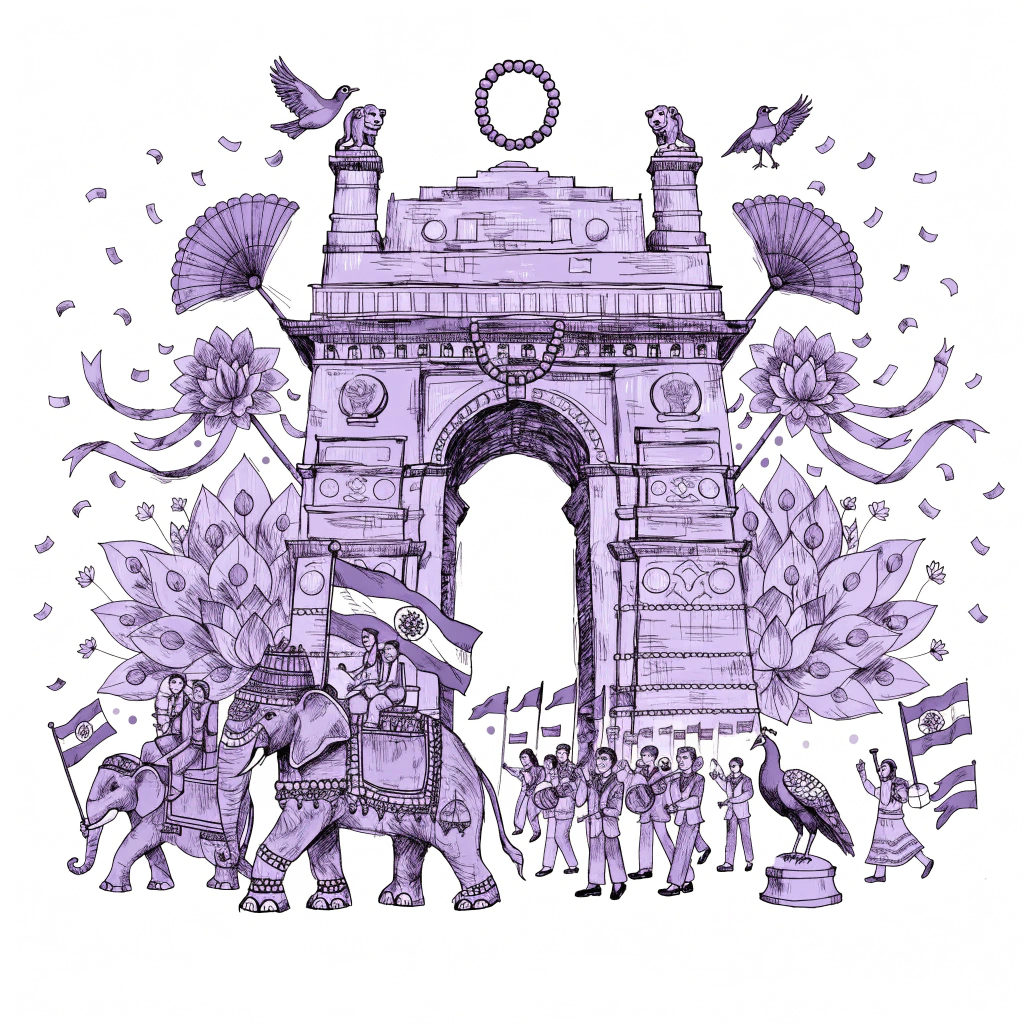
Republic Day in India
Republic Day is a very big holiday in India. It is on January 26th every year. This day is important for all Indian people.
In New Delhi, there is a big parade. The parade has many soldiers and loud music. The President of India watches the parade. There are many colorful groups from different parts of India.
Children wave the Indian flag. They wear beautiful clothes and dance. People sing songs and feel happy. It is a special day to celebrate the country.
文法スポットライト
パターン: Be動詞を使った現在形
"Republic Day is a very big holiday in India."
1つのものには「is」、複数のものには「are」を使います。事実を伝えたり、物事の状態を説明したりする時に役立ちます。
パターン: 複数主語の現在形
"Children wave the Indian flag."
主語が複数(「children」など)の場合、動詞はそのままの形(原形)を使います。日常的に起こる動作について話す時に使われます。
理解度をチェック
10 問 · A1 初級 · 無料プレビュー 1回
この記事で学んだことをテストしよう。全問正解してXPを獲得!
インドの共和国記念日(Republic Day)はいつですか?
問題の内訳
インドの共和国記念日(Republic Day)はいつですか?
あなたの回答:
正解: 1月26日
ニューデリーでは大きなパレードが行われます。
あなたの回答:
正解: 正しい
「flag」とは何ですか?
あなたの回答:
正解: 国を表す布
子供たちはインドの旗を _____。
あなたの回答:
正解: wave
インドの共和国記念日:大切な祝日
インドには、毎年1月26日に「共和国記念日」という大切な祝日があります。この日は、インドが独立した国として、新しい憲法(けんぽう)を作った日です。
インドは、昔、イギリスの支配下にありました。しかし、1947年8月15日に、イギリスから独立しました。そして、1950年1月26日に、インドは正式に「共和国」になりました。この日、新しい憲法が始まりました。だから、インドの人々は、この日をとても大切にしています。
共和国記念日には、インドの首都デリーで大きなパレードがあります。たくさんの人がパレードを見て、国を祝います。学校や会社は休みになります。家族や友達と、この特別な日をお祝いします。インドの歴史を知る、素晴らしい日です。
文法スポットライト
パターン: 〜になります
"インドは正式に「共和国」になりました。"
これは、何かが別の状態や形に変わることを表します。「名詞 + になります」で「~になる」という意味です。例えば、「大人になります」は「大人になる」という意味です。
パターン: 〜から (理由)
"だから、インドの人々は、この日をとても大切にしています。"
これは、理由や原因を表すときに使います。「文 + から」で「~なので」という意味になります。例えば、「寒いから、窓を閉めます」は「寒いので、窓を閉めます」という意味です。
理解度をチェック
11 問 · A2 初級 · 無料プレビュー 1回
この記事で学んだことをテストしよう。全問正解してXPを獲得!
インドの共和国記念日はいつですか?
問題の内訳
インドの共和国記念日はいつですか?
あなたの回答:
正解: 1月26日
共和国記念日は、インドがイギリスの支配下にあった日です。
あなたの回答:
正解: 間違い
「憲法」は何ですか?
あなたの回答:
正解: 国の一番大切なルール
共和国記念日には、デリーで大きな_______があります。
あなたの回答:
正解: パレード
インドがイギリスから独立した年はいつですか?
あなたの回答:
正解: 1947年
インドの「共和国記念日」:大切な祝日
インドでは、毎年1月26日に「共和国記念日」という祝日があります。この日は、インドが独立した共和国になったことを記念する、とても大切な日です。インドの人々は、この日を国全体で盛大に祝います。
インドは1947年8月15日にイギリスから独立しました。しかし、その時まだ完全に独立した共和国ではありませんでした。イギリスの支配から自由になった後も、しばらくはイギリス連邦の一部でした。そして、1950年1月26日に新しい憲法が採択され、インドは主権を持つ民主的な共和国となりました。この日が選ばれたのは、1930年に完全な自治を求める宣言がされた日だったからです。
共和国記念日には、首都デリーで大きなパレードが行われます。インド軍の兵士たちが、行進し、国の力を見せます。様々な州の文化を紹介する山車も登場し、インドの多様な文化の美しさを伝えます。子どもたちや学生もパレードに参加し、この日を祝います。テレビでも生中継され、多くの人々が家でパレードを見ます。
この祝日は、インドの人々が自分たちの国の歴史や独立の精神を思い出し、未来への希望を共有する機会です。国民全員が、インドという国を誇りに思う大切な日なのです。
文法スポットライト
パターン: 名詞を修飾する文 (Relative Clause)
"インドが独立した共和国になったことを記念する、とても大切な日です。"
動詞の普通形(「~た」や「~る」など)が名詞の前に来て、その名詞について詳しく説明するときに使います。「独立した共和国」は、「独立する」という動詞が「共和国」という名詞を説明しています。
パターン: 受身形 (Passive Voice)
"新しい憲法が採択され"
誰かによって何かアクションがされたときや、自然に何かが起こったときに使います。動詞の形は、五段活用動詞は「~れる」、一段活用動詞やサ変動詞は「~られる」になります。「採択され」は「採択する」の受身形です。
理解度をチェック
11 問 · B1 中級 · 無料プレビュー 1回
この記事で学んだことをテストしよう。全問正解してXPを獲得!
インドの「共和国記念日」はいつですか?
問題の内訳
インドの「共和国記念日」はいつですか?
あなたの回答:
正解: 1月26日
インドは1947年にイギリスから独立しましたが、その時すぐに完全な共和国になりました。
あなたの回答:
正解: 間違い
「憲法」とは何ですか?
あなたの回答:
正解: 国の基本的なルールや法律が書かれている本
共和国記念日には、首都デリーで大きな____が行われます。
あなたの回答:
正解: パレード
なぜ1月26日が共和国記念日として選ばれたのですか?
あなたの回答:
正解: 1930年に完全な自治を求める宣言がされた日だったからです。
Beyond Independence: The Significance of India's Republic Day
India's journey toward becoming a fully independent nation was a complex and multi-faceted process that extended far beyond the initial, joyous celebration of independence in 1947. While August 15 marks the definitive end of British colonial rule, it was on January 26, 1950, that the nation truly defined its own internal identity by formally adopting its Constitution. Consequently, Republic Day is not merely a commemoration of a specific date on the calendar, but rather a profound celebration of the democratic values that underpin the world's largest democracy.
Historically, the transition from a colony to a republic was significant. Although India had gained its freedom three years earlier, it initially remained a dominion under the British Crown, maintaining a constitutional link to the monarchy. The drafting of a comprehensive and inclusive constitution, led by the visionary Dr. B.R. Ambedkar, was essential to establish India as a sovereign, socialist, secular, and democratic republic. Interestingly, January 26 was specifically chosen to honor the 1930 declaration of 'Purna Swaraj' (Complete Self-Rule), a bold proclamation that had been a major turning point in the long struggle for liberty.
Today, the festivities in New Delhi are characterized by a grand and prestigious parade along Kartavya Path. This spectacular event showcases India's military prowess through disciplined formations and advanced technology, alongside its rich and vibrant cultural tapestry. Various states and union territories present elaborate tableaus, each illustrating unique traditions, regional achievements, and folklore. Furthermore, the presence of a foreign head of state as the chief guest underscores India's growing diplomatic influence and its strategic partnerships on the global stage.
Nevertheless, the day serves a much deeper purpose than just a public spectacle or a display of strength. It is a solemn time for citizens to reflect on their fundamental constitutional rights and their corresponding duties to the nation. As the President unfurls the national flag and the anthem resonates across the country, the ceremony reminds the population of the sacrifices made by freedom fighters. Having overcome numerous socioeconomic challenges since 1950, India continues to strive toward the lofty ideals of justice, liberty, and equality for all its people. Therefore, Republic Day remains a cornerstone of Indian national identity, bridging the historical gap between a colonial past and a self-determined, modern future.
文法スポットライト
パターン: 受動態(過去形)
"January 26 was specifically chosen to honor the 1930 declaration of 'Purna Swaraj'."
受動態は、行為者よりも行為そのものや対象に焦点が当てられる場合に使われます。「be動詞 + 過去分詞」で形成されます。
パターン: 完了分詞構文
"Having overcome numerous socioeconomic challenges since 1950, India continues to strive toward the lofty ideals of justice."
この構造は、ある動作が別の動作が始まる前に完了したことを示すために使われます。同じ主語を持つ2つの文を結合する、形式的な表現です。
パターン: 関係詞節の縮約
"The drafting of a comprehensive and inclusive constitution, led by the visionary Dr. B.R. Ambedkar, was essential..."
このパターンは、関係代名詞とbe動詞を省略することで、関係詞節(例: 'which was led by')を短縮します。文章をより簡潔で洗練されたものにします。
理解度をチェック
11 問 · B2 中上級 · 無料プレビュー 1回
この記事で学んだことをテストしよう。全問正解してXPを獲得!
1950年1月26日、インドでは具体的に何が起こりましたか?
問題の内訳
1950年1月26日、インドでは具体的に何が起こりましたか?
あなたの回答:
正解: 憲法の正式な採択
インドは1947年の独立直後、即座に主権共和国となった。
あなたの回答:
正解: 間違い
記事の文脈において、'sovereign'(主権のある)という言葉は何を意味しますか?
あなたの回答:
正解: 最高かつ独立した権力を持っている
共和国記念日の式典で、大統領は国旗を _____ します。
あなたの回答:
正解: unfurls
なぜ共和国記念日として、特に1月26日という日付が選ばれたのですか?
あなたの回答:
正解: 1930年の「完全な自治」宣言を記念するため
Sovereignty Unveiled: The Constitutional Metamorphosis of Modern India
Whilst the strokes of midnight on August 15, 1947, heralded the end of nearly two centuries of British colonial rule, India’s journey toward complete political self-determination was far from over. For three years following independence, the nation remained a dominion, technically acknowledging the British Crown as the ceremonial head of state. It was the adoption of the Constitution on January 26, 1950, that officially severed these final legal vestiges, establishing India as a sovereign, socialist, secular, and democratic republic. This momentous transition is commemorated annually as Republic Day, a date chosen for its historical resonance with the 1930 Purna Swaraj declaration, where the Indian National Congress first articulated the demand for absolute independence.
The meticulous drafting of the Constitution was an intellectual feat of unparalleled proportions, led by Dr. B.R. Ambedkar. Seldom has a legal document attempted to balance such a plethora of linguistic, religious, and socio-economic diversities within a single unified framework. Ambedkar and the drafting committee spent nearly three years refining the text, drawing inspiration from various global models while ensuring local relevance. The Preamble, often described as the 'soul of the Constitution', underscores the collective aspiration for justice, liberty, equality, and fraternity. However, the implementation of these egalitarian ideals remains a complex paradox in a burgeoning democracy grappling with systemic inequities.
Central to the festivities is the grand parade at Kartavya Path in New Delhi. Not only does the parade showcase military prowess through advanced hardware and precision marching, but it also celebrates the diverse cultural tapestry of the subcontinent. The presence of a foreign head of state as the chief guest underscores India's evolving geopolitical stature. The display of 'jhankis', or tableaux, provides a visual narrative of regional achievements, ranging from pioneering technological breakthroughs to indigenous folklore. These displays serve as a reminder of the unity in diversity that the Constitution seeks to protect.
Beyond the pageantry, Republic Day invites critical analysis of India's progress. The severance of colonial ties was merely the inception of a continuous process of nation-building. The burgeoning middle class and the rapid digitalization of the economy stand in stark contrast to the persistent agrarian challenges and educational disparities. To view the Constitution as a static document would be a fallacy; it is a living organism, subject to amendments that reflect the changing ethos of the citizenry. This flexibility has allowed the nation to navigate the tumultuous decades following the transition from a colony to a republic.
In essence, Republic Day is the culmination of a revolutionary dream. It serves as a reminder that sovereignty is not a gift bestowed upon a people, but a responsibility continuously upheld through civic engagement. As the tricolor is unfurled across the nation, it symbolizes a collective commitment to the constitutional values that define the Indian identity in an increasingly fragmented global landscape. The celebration is not merely for the laws written on parchment, but for the democratic spirit that continues to animate the world's largest democracy.
文法スポットライト
パターン: 分裂文 (Cleft Sentences)
"It was the adoption of the Constitution on January 26, 1950, that officially severed these final legal vestiges."
分裂文は「It + is/was + [強調したい部分] + that/who」の形を使い、特定の情報を強調します。ここでは、法的な変化を引き起こした正確な出来事が強調されています。
パターン: 否定語・制限語による倒置
"Seldom has a legal document attempted to balance such a plethora of linguistic, religious, and socio-economic diversities."
「Seldom(めったに〜ない)」や「Never(決して〜ない)」のような制限を表す言葉で文が始まる場合、助動詞が主語の前に来ます。この構造により、その任務の難しさがフォーマルかつ劇的に強調されます。
パターン: 「Not only... but also」を用いた倒置
"Not only does the parade showcase military prowess through advanced hardware and precision marching, but it also celebrates the diverse cultural tapestry of the subcontinent."
「Not only」が文頭に来る場合、主語と助動詞が入れ替わります(倒置)。これは、フォーマルなトーンを保ちながら2つの関連するポイントを結びつける洗練された表現方法です。
理解度をチェック
12 問 · C1 上級 · 無料プレビュー 1回
この記事で学んだことをテストしよう。全問正解してXPを獲得!
1947年から1950年の間のインドの法的地位は何でしたか?
問題の内訳
1947年から1950年の間のインドの法的地位は何でしたか?
あなたの回答:
正解: イギリスの自治領(ドミニオン)
1月26日が共和国記念日に選ばれたのは、インドがイギリスから独立を果たした日だったからである。
あなたの回答:
正解: 間違い
「急速に成長または増加している」ことを表す言葉はどれですか?
あなたの回答:
正解: Burgeoning
これらの平等主義的な理想の実現は、急成長する民主主義において複雑な _____ であり続けている。
あなたの回答:
正解: paradox
パレード中の「山車(jhankis)」の主な役割は何ですか?
あなたの回答:
正解: 地域の成果や伝承を披露するため
インド憲法は、変更不可能な静的な文書として説明されている。
あなたの回答:
正解: 間違い
インド共和国記念日:主権国家としての確固たる礎
毎年1月26日に厳かに祝われるインドの共和国記念日は、単なる国民の祝日という範疇に留まるものではない。それは、インドが宗主国イギリスの支配から完全に脱却し、真の意味での主権を持つ共和国として世界にその存在を宣言した、国家形成史における極めて重要な転換点を象徴する日である。1947年8月15日に独立を達成したとはいえ、当時のインドはイギリス連邦内の自治領(ドミニオン)という位置づけに過ぎず、名目上は英国王が国家元首であった。この「不完全な独立」状態からの脱却を希求する国民の熱意が、憲法制定へと向かう原動力となったのである。
この共和国記念日が1月26日に定められた背景には、歴史的な意義が深く刻まれている。1930年の同日、インド国民会議派は「プールナ・スワラージ」(完全なる自治)宣言を発し、イギリスからの完全な独立を公に要求した。この宣言は、独立運動における転換点であり、将来のインドが自治領ではなく、主権を持つ共和国として立つべきだという国民の確固たる意志を内外に示したものに他ならない。したがって、1950年にインド憲法が採択され、これによりイギリスとの全ての法的・政治的紐帯が断ち切られ、インドが主権的、社会主義的、世俗的、そして民主的な共和国として正式に発足した際、この歴史的日付が選ばれたのは、偶然の所産ではなく、むしろ必然であったと言えよう。
インド憲法は、その複雑かつ多岐にわたる民族、言語、宗教を包含する広大な国家を統治するための、まさに青写真である。それは、国民一人ひとりの基本的人権を保障し、社会正義と平等を追求し、国家の世俗的性格を明文化することで、多様性の中の統一というインド独自の理念を具現化しようとする、壮大な試みであった。この憲法が採択されたことにより、インドは単なる地理的実体から、共通の価値観と法の下に統合された国民国家へと昇華したのである。
共和国記念日の祝典は、その意義の深さを反映して、実に荘厳かつ華やかである。首都ニューデリーでは、インド大統領が国旗を掲揚し、陸海空軍による壮大なパレードがラージパト通りを練り歩く。このパレードは、インドの軍事力を誇示するのみならず、各州の文化的な多様性を象徴する山車や、学校の生徒たちによる民族舞踊が披露される場ともなっている。それは、国家の統一と多様性の共存を視覚的に表現する、まさに圧巻のスペクタクルである。また、国家への貢献を称える栄誉賞が授与され、過去の功績を讃える機会ともなっている。
しかしながら、今日のインドにおいて共和国記念日の意味合いは、単なる歴史的祝典に止まらない。憲法が謳う理想と現実との乖離、あるいはその解釈を巡る政治的・社会的な緊張は、常に存在し得る。世俗主義の原則が時に挑戦を受け、社会正義の実現が未だ道半ばであるとすれば、この記念日は、国民一人ひとりが憲法の精神に立ち返り、インドが目指すべき理想の姿について深く考察する契機を提供すると言えよう。それは、過去の偉業を追想するのみならず、未来に向けての責任と課題を再認識する、現代インドにとって極めて重要な日なのである。
結論として、インド共和国記念日は、単に過去の栄光を祝う日ではなく、主権国家としてのアイデンティティを再確認し、多様な国民が共通の理想を追求し続ける誓いを新たにする、生きた記念碑である。この日は、インドが自らの運命を自らの手で切り開き、民主主義の普遍的価値を世界に示すべく邁進する、その不屈の精神を象徴していると言っても過言ではない。
文法スポットライト
パターン: 〜に他ならない
"この宣言は、独立運動における転換点であり、将来のインドが自治領ではなく、主権を持つ共和国として立つべきだという国民の確固たる意志を内外に示したものに他ならない。"
ある物事が、他の何物でもなく、まさにそれであると断定する際に用いられる表現。事実や結論を強調し、強い確信を表明する。文末に置いて主張を強固にする役割を果たす。
パターン: 〜のみならず
"このパレードは、インドの軍事力を誇示するのみならず、各州の文化的な多様性を象徴する山車や、学校の生徒たちによる民族舞踊が披露される場ともなっている。"
ある事柄が一つだけでなく、さらに別の事柄にも当てはまることを示す際に使う。前の内容に加えて、さらに重要な情報や関連する事実を提示し、論旨を広げる効果がある。
パターン: 〜と言っても過言ではない
"この日は、インドが自らの運命を自らの手で切り開き、民主主義の普遍的価値を世界に示すべく邁進する、その不屈の精神を象徴していると言っても過言ではない。"
ある表現が、たとえ誇張されているように聞こえるとしても、事実と大差ない、あるいは本質を突いていると強調する際に用いる。強い確信や断定のニュアンスを含み、読者にその重要性を訴えかける。
理解度をチェック
12 問 · C2 マスター · 無料プレビュー 1回
この記事で学んだことをテストしよう。全問正解してXPを獲得!
インドがイギリスからの「不完全な独立」状態にあったとは、具体的にどのような意味か。
問題の内訳
インドがイギリスからの「不完全な独立」状態にあったとは、具体的にどのような意味か。
あなたの回答:
正解: インドがイギリス連邦内の自治領であり、英国王が国家元首であったこと。
共和国記念日が1月26日に定められたのは、インド憲法がこの日に初めて起草されたからである。
あなたの回答:
正解: 間違い
「希求」とは、どのような意味か。
あなたの回答:
正解: 心から強く望み求めること。
インド憲法は、国民一人ひとりの基本的人権を保障し、社会正義と平等を追求し、国家の______的性格を明文化することで、多様性の中の統一というインド独自の理念を具現化しようとした。
あなたの回答:
正解: 世俗
ニューデリーで行われる共和国記念日のパレードで披露されるものとして、記事に記載されていないのはどれか。
あなたの回答:
正解: 外国からの賓客によるスピーチ
現代のインドにおいて、共和国記念日は単に過去の栄光を祝うだけでなく、憲法の精神に立ち返り、未来の課題を考察する機会でもある。
あなたの回答:
正解: 正しい

