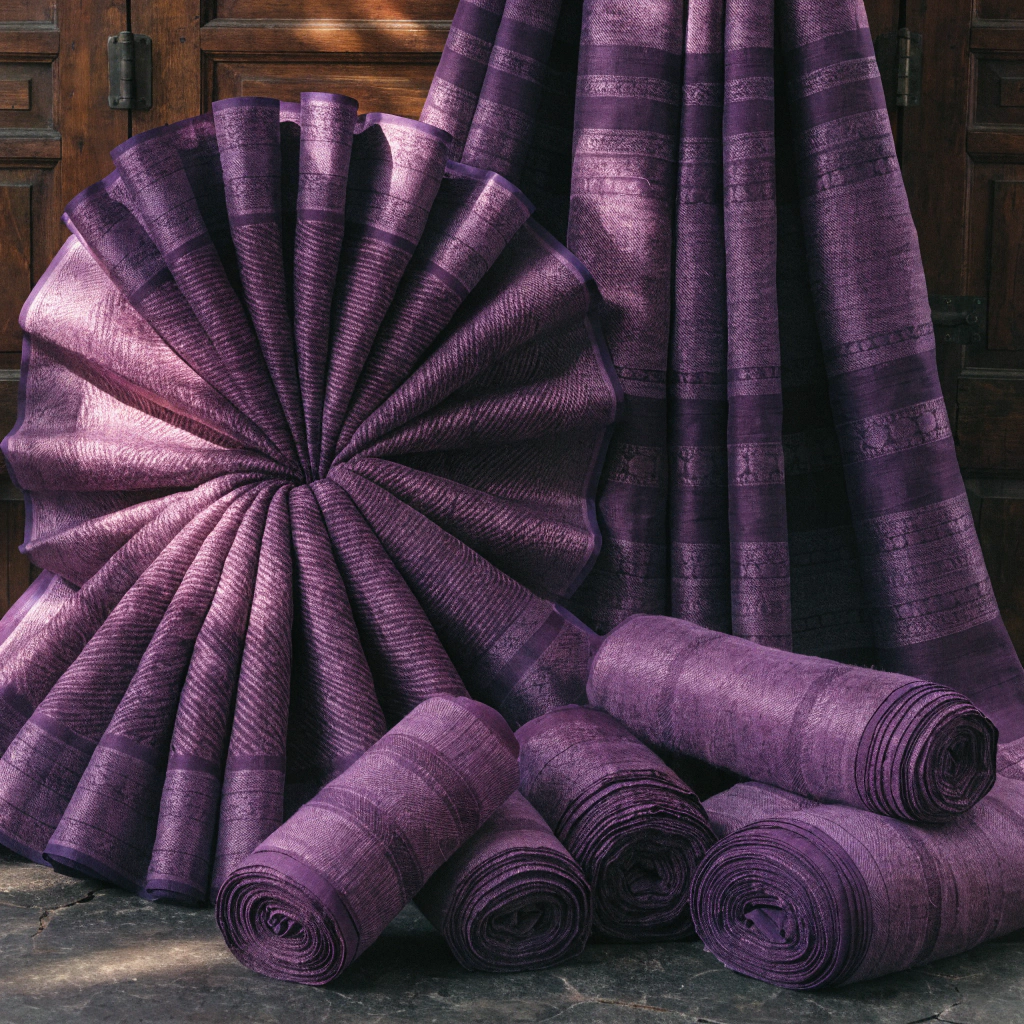
The Saree: A Beautiful Dress from India
The saree is a famous dress from India. It is very old. Women wear it today too. A saree is a long piece of cloth. It is about five or six meters long. There are many colors and patterns. Women wear the saree with a small top. This top is called a blouse. Indian women wear sarees for weddings and festivals. They also wear them at home. Every part of India has a special style. The saree is beautiful and elegant. It is a symbol of India.
نکته دستوری
الگو: Present Simple (to be)
"The saree is a famous dress from India."
We use 'is' with singular subjects to describe facts. It tells us what something is.
الگو: Present Simple (regular verbs)
"Indian women wear sarees for weddings and festivals."
We use the base form of the verb for plural subjects like 'women'. This describes a general habit.
درک خود را بسنجید
10 سوال · A1 مبتدی · 1 پیشنمایش رایگان
آنچه از این مقاله آموختید را بسنجید. به همه سؤالات پاسخ دهید و XP کسب کنید!
Where is the saree from?
آیا میخواهید آزمون را تمام کنید؟
9 سؤال دیگر منتظر شماست. ثبتنام رایگان کنید تا آزمون کامل را باز کنید و XP کسب کنید!
ثبتنام رایگانقبلاً ثبتنام کردی؟ ورود
جزئیات سؤالات
Where is the saree from?
پاسخ شما:
پاسخ درست: India
The saree is a new type of dress.
پاسخ شما:
پاسخ درست: نادرست
What does 'cloth' mean?
پاسخ شما:
پاسخ درست: Material for clothes
A saree is a long piece of _____.
پاسخ شما:
پاسخ درست: cloth
The Beautiful Saree of India
The saree is a very famous piece of clothing from India. It is one of the oldest garments in the world. People first wore it thousands of years ago during the ancient Indus Valley Civilization. The word 'saree' comes from an old language, and it means a strip of cloth.
A saree is a single piece of long cloth. It is usually between five and nine yards long. Women wrap the fabric around their bodies in many different ways. They often wear it with a small, fitted top. It is more beautiful than many modern clothes because it has many bright colors and patterns.
In the past, most Indian women wore sarees every day. Today, some women wear them for work, but many people save them for special weddings or festivals. Every part of India has its own special style and design. The saree is a very important symbol of Indian identity and history.
نکته دستوری
الگو: Past Simple
"People first wore it thousands of years ago."
The past simple is used for finished actions in the past. For irregular verbs like 'wear', the form changes to 'wore'.
الگو: Comparatives with 'more'
"It is more beautiful than many modern clothes."
For long adjectives like 'beautiful', we use 'more' + adjective + 'than' to compare two things. It shows one has a higher quality than the other.
درک خود را بسنجید
11 سوال · A2 مقدماتی · 1 پیشنمایش رایگان
آنچه از این مقاله آموختید را بسنجید. به همه سؤالات پاسخ دهید و XP کسب کنید!
How long is a standard saree cloth?
آیا میخواهید آزمون را تمام کنید؟
10 سؤال دیگر منتظر شماست. ثبتنام رایگان کنید تا آزمون کامل را باز کنید و XP کسب کنید!
ثبتنام رایگانقبلاً ثبتنام کردی؟ ورود
جزئیات سؤالات
How long is a standard saree cloth?
پاسخ شما:
پاسخ درست: 5 to 9 yards
The saree is a modern invention from the last ten years.
پاسخ شما:
پاسخ درست: نادرست
What is a 'pattern'?
پاسخ شما:
پاسخ درست: A repeated decorative design
The saree is a very important _____ of Indian identity.
پاسخ شما:
پاسخ درست: symbol
What does the word 'saree' mean in its original language?
پاسخ شما:
پاسخ درست: A strip of cloth
The Saree: Six Yards of Timeless Elegance
The saree is one of the most famous symbols of Indian identity. It has been worn by women for thousands of years, dating back to the Indus Valley Civilization. The word "saree" comes from the Sanskrit word "sati," which means a strip of cloth. Although it has changed over time, it remains a masterpiece of design.
A saree consists of a single piece of unstitched fabric, which is usually between five and nine yards long. It is draped around the body in many different ways, depending on the region. Usually, it is paired with a fitted blouse and a long skirt called a petticoat. The way a woman wears her saree can show which part of India she is from.
In recent years, the saree has become popular all over the world. Many famous designers have created modern versions of this traditional dress. However, the classic styles are still preferred for special occasions like weddings and festivals. Silk sarees from cities like Varanasi or Kanchipuram are especially famous because they are decorated with beautiful gold threads.
Even though modern fashion is changing fast, the saree has survived because it is both elegant and practical. It is a garment that connects the past with the present. Today, many young women are learning how to drape sarees so they can keep this beautiful tradition alive.
نکته دستوری
الگو: Present Perfect
"The saree has been worn by women for thousands of years."
The present perfect (have/has + past participle) is used here to describe an action that started in the past and continues to the present day.
الگو: Passive Voice
"It is draped around the body in many different ways..."
The passive voice (is/are + past participle) focuses on the object receiving the action. It is used here because the method of wearing the saree is more important than who is doing it.
درک خود را بسنجید
11 سوال · B1 متوسط · 1 پیشنمایش رایگان
آنچه از این مقاله آموختید را بسنجید. به همه سؤالات پاسخ دهید و XP کسب کنید!
What does the word 'sati' originally mean?
آیا میخواهید آزمون را تمام کنید؟
10 سؤال دیگر منتظر شماست. ثبتنام رایگان کنید تا آزمون کامل را باز کنید و XP کسب کنید!
ثبتنام رایگانقبلاً ثبتنام کردی؟ ورود
جزئیات سؤالات
What does the word 'sati' originally mean?
پاسخ شما:
پاسخ درست: A strip of cloth
A saree is made by sewing several pieces of fabric together.
پاسخ شما:
پاسخ درست: نادرست
What does 'elegant' mean?
پاسخ شما:
پاسخ درست: Graceful and attractive
A saree is usually between five and nine _____ long.
پاسخ شما:
پاسخ درست: yards
Why are silk sarees from Varanasi famous?
پاسخ شما:
پاسخ درست: They are decorated with gold threads
The Saree: Six Yards of Timeless Elegance
The saree, a garment synonymous with Indian heritage, represents far more than a mere length of fabric. Often referred to as "six yards of elegance," this unstitched strip of cloth has endured for millennia, tracing its origins back to the Indus Valley Civilization. Despite the influx of Western fashion trends, the saree remains a cornerstone of Indian identity, seamlessly blending ancient tradition with contemporary aesthetics.
Historically, the term "saree" is derived from the Sanskrit word 'sati', which translates to a strip of cloth. Over centuries, what began as a simple wrap has evolved into a sophisticated masterpiece of textile engineering. The beauty of the saree lies in its versatility; although it typically ranges from five to nine yards in length, it can be draped in hundreds of different ways depending on regional customs. Whether it is the Nivi drape of Andhra Pradesh or the pleated style of Maharashtra, each variation reflects a unique cultural narrative.
The production of a saree is often a labor-intensive process that showcases exceptional craftsmanship. Regions across India are renowned for their specific weaving techniques and motifs. For instance, the intricate silk work of a Banarasi saree or the vibrant gold-thread borders of a Kanjeevaram are highly sought after for weddings and formal ceremonies. These garments are not merely clothes; they are heirlooms passed down through generations, embodying the history and skill of the weavers who created them.
Furthermore, the saree’s longevity can be attributed to its adaptability. In a modern context, the saree has been reimagined by designers to suit the fast-paced lifestyle of the 21st-century woman. While it was once exclusively paired with a traditional blouse and petticoat, contemporary stylists now experiment with belts, jackets, and even trousers. This evolution ensures that the saree remains relevant, appealing to younger generations who wish to honor their heritage while expressing individual style.
Ultimately, the saree serves as a profound symbol of resilience. In an era dominated by mass-produced "fast fashion," the continued popularity of this hand-woven garment highlights a global appreciation for sustainable and meaningful attire. As long as there are stories to be told through thread and color, the saree will undoubtedly maintain its status as one of the world’s most iconic garments.
نکته دستوری
الگو: Present Perfect Passive
"the saree has been reimagined by designers to suit the fast-paced lifestyle"
This is used to show an action that happened at an unspecified time in the past and continues to have an effect on the present, focusing on the object rather than the subject. It is formed using 'has/have been' + past participle.
الگو: Non-defining Relative Clause
"the Sanskrit word 'sati', which translates to a strip of cloth."
This provides extra information about a noun (sati) that is not essential to the core meaning of the sentence. It is always separated by commas and uses the relative pronoun 'which'.
الگو: Concessive Clause with 'While'
"While it was once exclusively paired with a traditional blouse and petticoat, contemporary stylists now experiment with belts, jackets, and even trousers."
This structure is used to contrast two facts or ideas. 'While' introduces a subordinate clause that acknowledges a previous state, making the contrast in the main clause more significant.
درک خود را بسنجید
11 سوال · B2 بالاتر از متوسط · 1 پیشنمایش رایگان
آنچه از این مقاله آموختید را بسنجید. به همه سؤالات پاسخ دهید و XP کسب کنید!
What is the primary reason the article mentions the Nivi and Maharashtra styles?
آیا میخواهید آزمون را تمام کنید؟
10 سؤال دیگر منتظر شماست. ثبتنام رایگان کنید تا آزمون کامل را باز کنید و XP کسب کنید!
ثبتنام رایگانقبلاً ثبتنام کردی؟ ورود
جزئیات سؤالات
What is the primary reason the article mentions the Nivi and Maharashtra styles?
پاسخ شما:
پاسخ درست: To illustrate the regional versatility of the garment
The word 'saree' originally comes from a Sanskrit term meaning 'a stitched dress'.
پاسخ شما:
پاسخ درست: نادرست
What does 'intricate' mean in the context of the article?
پاسخ شما:
پاسخ درست: Highly detailed and complex
The saree is described as a _____ of Indian identity, meaning it is a fundamental part of it.
پاسخ شما:
پاسخ درست: cornerstone
How has the saree changed to appeal to modern generations?
پاسخ شما:
پاسخ درست: It is being paired with non-traditional items like jackets and trousers.
The Saree: An Architectural Marvel of the Unstitched
Rarely does a single garment encapsulate the multifaceted history of an entire subcontinent as poignantly as the saree. Originating from the Sanskrit word 'sati', meaning a strip of cloth, this unstitched length of fabric, typically spanning five to nine yards, represents a quintessential fusion of utility and aesthetic grandeur. Its antiquity is staggering; archaeological evidence traces its precursors back to the Indus Valley Civilization, suggesting that the saree has survived millennia of cultural shifts, colonial interventions, and the relentless march of globalization.
The saree’s enduring appeal lies in its remarkable versatility. Unlike tailored Western garments that impose a specific silhouette upon the wearer, the saree is a fluid medium. It is through the diverse draping styles—of which there are over eighty documented regional variations—that the garment adapts to the climatic and social exigencies of different locales. Whether it is the robust 'Kashtha' drape of Maharashtra or the elegant 'Nivi' style that has become the contemporary standard, the saree serves as a canvas for regional identity.
Furthermore, the production of a saree is a testament to the sophisticated craftsmanship inherent in Indian textile traditions. From the opulent gold-threaded 'Zari' of Banarasi silks to the intricate geometric precision of 'Patola' ikat, each weave is a repository of ancestral knowledge. The preservation of these techniques, however, faces significant challenges in an era dominated by fast fashion and mechanized production. The labor-intensive nature of handloom weaving often struggles to compete with the ubiquity of synthetic, mass-produced fabrics, prompting a nuanced debate regarding the sustainability of traditional artisanal livelihoods.
Sociopolitically, the saree has occupied a complex space. During the Indian independence movement, the promotion of 'Khadi' (hand-spun cloth) sarees became a powerful symbol of self-reliance and resistance against British textile imports. Today, while the younger urban demographic might view the saree as formal attire reserved for ceremonial occasions, there is a burgeoning movement to reclaim it as an everyday garment. This resurgence is not merely nostalgic; it is a conscious rejection of homogenized global fashion in favor of a garment that celebrates individual morphology and cultural heritage.
Ultimately, the saree remains an architectural marvel of the unstitched. What the saree offers is a unique paradox: it is at once a static artifact of history and a living, breathing entity that evolves with each drape. Its continued relevance is a testament to the resilience of Indian aesthetic sensibilities, proving that true elegance requires neither a needle nor a thread, but rather the harmonious confluence of fabric, form, and history.
نکته دستوری
الگو: Inversion with negative/restrictive adverbs
"Rarely does a single garment encapsulate the multifaceted history of an entire subcontinent..."
When starting a sentence with a restrictive adverb like 'Rarely' or 'Seldom', the subject and auxiliary verb are inverted to add emphasis and a formal tone.
الگو: Cleft Sentences
"What the saree offers is a unique paradox..."
Cleft sentences use 'What' or 'It' to focus on specific information. Here, it emphasizes the nature of the 'paradox' being offered by the saree.
الگو: Nominalisation
"The preservation of these techniques, however, faces significant challenges..."
Nominalisation involves turning verbs (preserve) into nouns (preservation). This is a hallmark of C1 writing as it allows for more abstract and concise academic discussion.
درک خود را بسنجید
12 سوال · C1 پیشرفته · 1 پیشنمایش رایگان
آنچه از این مقاله آموختید را بسنجید. به همه سؤالات پاسخ دهید و XP کسب کنید!
What is the primary linguistic origin of the word 'saree' mentioned in the text?
آیا میخواهید آزمون را تمام کنید؟
11 سؤال دیگر منتظر شماست. ثبتنام رایگان کنید تا آزمون کامل را باز کنید و XP کسب کنید!
ثبتنام رایگانقبلاً ثبتنام کردی؟ ورود
جزئیات سؤالات
What is the primary linguistic origin of the word 'saree' mentioned in the text?
پاسخ شما:
پاسخ درست: The Sanskrit word 'sati', meaning a strip of cloth
The saree is a tailored garment that imposes a specific silhouette on the wearer.
پاسخ شما:
پاسخ درست: نادرست
What is the meaning of 'ubiquity' as used in the third paragraph?
پاسخ شما:
پاسخ درست: The state of being found everywhere
The saree is described as an _____ marvel of the unstitched.
پاسخ شما:
پاسخ درست: architectural
Why did 'Khadi' sarees become significant during the Indian independence movement?
پاسخ شما:
پاسخ درست: They symbolized self-reliance and resistance
There are over eighty documented regional variations of saree draping styles.
پاسخ شما:
پاسخ درست: درست
The Vestiary Lexicon of India: Deconstructing the Saree’s Ontological Persistence
To contemplate the Indian saree is to engage with a vestiary tradition that defies the transient whims of global fashion, positioning itself as a quintessential emblem of the Indian subcontinent’s cultural landscape. Seldom has a single strip of cloth, typically spanning six to nine yards, commanded such a profound influence over the identity of a civilization. This primordial garment represents an ontological bridge between the historical past and the fluid present, maintaining its relevance through millennia of social and political upheaval. Its origins, which can be traced back to the Indus Valley Civilization (2800–1800 BCE), reveal a garment that evolved from a utilitarian wrap into a sophisticated masterpiece of textile engineering. The etymological roots of the word ‘saree’ lie in the Sanskrit ‘sati’, a term denoting a strip of cloth, yet such a simplistic definition fails to encapsulate the garment’s semiotic depth.
The technical sophistication of the saree lies in its status as an unstitched entity. Unlike Western tailored garments, which impose a predetermined structure upon the wearer, the saree is a blank canvas of silk, cotton, or linen that adapts to the contours of the body. This lack of structural rigidity allows for a versatility that tailored garments, by their very nature, cannot emulate. The drape itself is a complex interplay of physics and aesthetics, where the weight of the fabric and the tension of the pleats work in tandem to create a silhouette that is both regal and functional. Should one traverse the diverse landscapes of India, one would encounter over eighty distinct draping styles, each articulating a unique regional semiotic. From the Nivi drape of Andhra Pradesh to the Kachha style of Maharashtra, these variations are not merely stylistic choices but are reflections of regional idiosyncrasies, climate, and social history.
Central to the saree’s aesthetic appeal is the ‘pallu’—the decorative end-piece that is traditionally draped over the shoulder. The pallu serves as the communicative heart of the garment, often featuring intricate motifs that tell stories of mythology, nature, or geometric precision. However, the saree is not an isolated piece of fabric; its modern iteration is typically paired with a fitted blouse, or ‘choli’, and a petticoat. It is worth noting that the ensemble we recognize today underwent a significant transformation during the colonial era. Under British influence, Victorian notions of modesty dictated the addition of the blouse and petticoat, illustrating how the saree has historically absorbed external influences without losing its core identity. This ability to synthesize disparate cultural elements is perhaps why the saree remains a potent symbol of resistance against the homogenization of global attire.
In the contemporary era, the saree faces the dual challenges of industrialization and the fast-paced nature of modern life. Lest the art of handloom weaving be consigned to the annals of history, contemporary designers and activists are increasingly championing the ‘slow fashion’ movement. They argue that the saree is not merely a garment but a living museum of artisanal techniques, such as the intricate gold thread work of Banarasi silk or the tie-dye complexities of Bandhani. Were it not for this renewed appreciation for the artisanal, many of these specialized weaving traditions might have succumbed to the relentless march of mass production. Today, the saree continues to evolve, appearing on international runways and in corporate boardrooms, proving that its elegance is far from ephemeral. It remains an enduring testament to the fact that true sophistication lies in the balance between tradition and innovation, making the saree a timeless masterpiece of human creativity.
نکته دستوری
الگو: Negative Inversion
"Seldom has a single strip of cloth, typically spanning six to nine yards, commanded such a profound influence..."
When a sentence starts with a negative or restrictive adverb like 'seldom', the subject and auxiliary verb are inverted. This is used in formal writing to emphasize the rarity or importance of the statement.
الگو: The Subjunctive Mood
"Lest the art of handloom weaving be consigned to the annals of history..."
The word 'lest' is followed by the subjunctive form of the verb (the base form 'be'). This structure is used to express a fear or a reason for caution, meaning 'to avoid the risk of'.
الگو: Inverted Unreal Conditional
"Were it not for this renewed appreciation for the artisanal, many of these specialized weaving traditions might have succumbed..."
This is a formal alternative to 'If it were not for'. By inverting the verb 'were' and the subject, the writer creates a more scholarly and hypothetical tone for a second or third conditional meaning.
درک خود را بسنجید
12 سوال · C2 تسلط · 1 پیشنمایش رایگان
آنچه از این مقاله آموختید را بسنجید. به همه سؤالات پاسخ دهید و XP کسب کنید!
What does the author suggest is the primary technical advantage of the saree over tailored garments?
آیا میخواهید آزمون را تمام کنید؟
11 سؤال دیگر منتظر شماست. ثبتنام رایگان کنید تا آزمون کامل را باز کنید و XP کسب کنید!
ثبتنام رایگانقبلاً ثبتنام کردی؟ ورود
جزئیات سؤالات
What does the author suggest is the primary technical advantage of the saree over tailored garments?
پاسخ شما:
پاسخ درست: Its lack of structural rigidity allows it to adapt to any wearer.
The addition of the blouse and petticoat to the saree ensemble was a result of colonial influence.
پاسخ شما:
پاسخ درست: درست
Which word describes something that is 'lasting for a very short time'?
پاسخ شما:
پاسخ درست: Ephemeral
The author argues that the saree is a masterpiece of textile engineering because it remains an _____ entity.
پاسخ شما:
پاسخ درست: unstitched
According to the text, how many distinct draping styles of the saree exist?
پاسخ شما:
پاسخ درست: Over eighty
The word 'saree' is derived from a Sanskrit word meaning 'masterpiece'.
پاسخ شما:
پاسخ درست: نادرست

