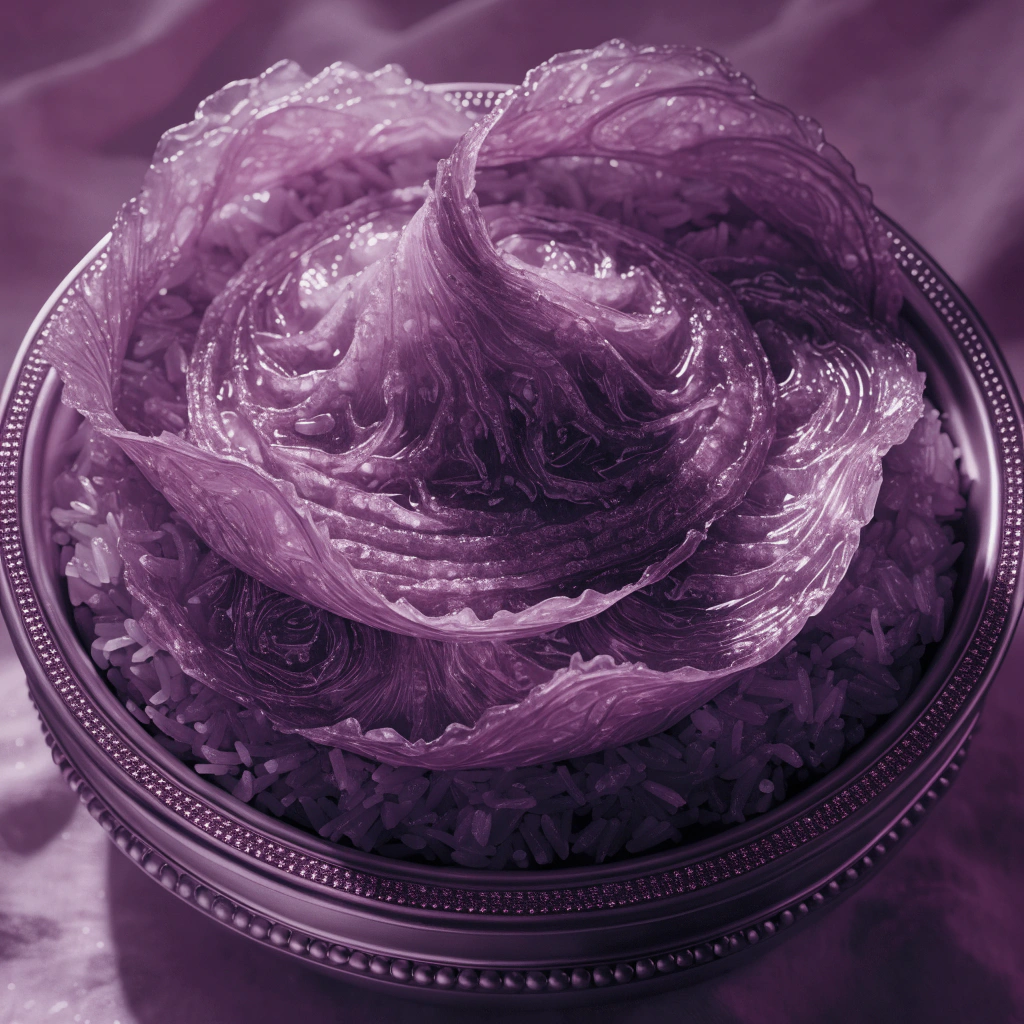
The Golden Rice of Iran
Iran has many delicious foods. One special food is Tahdig. The name means 'bottom of the pot.' It is the rice at the bottom of the cooking pot. Tahdig is very crunchy and golden. It is not soft rice. Families in Iran love it. Sometimes, people use bread or potatoes to make it. It is very tasty. Cooking Tahdig is an art. You need a hot pot and oil. Everyone wants a piece of Tahdig at dinner. It is the best part of the meal.
نکته دستوری
الگو: Present Simple (to be)
"It is the rice at the bottom of the cooking pot."
We use 'is' with singular subjects like 'it' to describe facts or states. In this sentence, it tells us what Tahdig is.
الگو: Present Simple (regular verbs)
"Families in Iran love it."
We use the base form of the verb 'love' for plural subjects like 'families'. This pattern shows a general truth or habit.
درک خود را بسنجید
10 سوال · A1 مبتدی · 1 پیشنمایش رایگان
آنچه از این مقاله آموختید را بسنجید. به همه سؤالات پاسخ دهید و XP کسب کنید!
What does the name Tahdig mean?
آیا میخواهید آزمون را تمام کنید؟
9 سؤال دیگر منتظر شماست. ثبتنام رایگان کنید تا آزمون کامل را باز کنید و XP کسب کنید!
ثبتنام رایگانقبلاً ثبتنام کردی؟ ورود
جزئیات سؤالات
What does the name Tahdig mean?
پاسخ شما:
پاسخ درست: Bottom of the pot
Tahdig is soft rice.
پاسخ شما:
پاسخ درست: نادرست
What is a 'pot'?
پاسخ شما:
پاسخ درست: A container for cooking
Tahdig is very _____.
پاسخ شما:
پاسخ درست: crunchy
Tahdig: The Golden Secret of Persian Rice
In Iran, people love a special dish called Tahdig. The name means 'bottom of the pot' in Persian. It is the most famous part of a Persian meal. When you cook rice, you put some oil and bread or sliced potatoes at the bottom of the pot first.
After the rice cooks for a long time, the bottom becomes golden and crispy. This layer is crunchier than the soft rice on top. Families often talk and laugh while they wait for it. Sometimes, children fight over the last piece because it is so delicious! It is not a mistake; it is a special way of cooking rice.
Tahdig is very important in Iranian culture. When guests come to dinner, the host always serves the best pieces of Tahdig to them first. Making the perfect Tahdig is difficult because you need the right heat. However, it is better than regular rice because of its amazing texture. It is a symbol of love and hard work in the kitchen.
نکته دستوری
الگو: Comparatives
"This layer is crunchier than the soft rice on top."
We use comparatives to compare two things. For short adjectives like 'crunchy', we change the 'y' to 'i' and add '-er' followed by 'than'.
الگو: Conjunction: Because
"Sometimes, children fight over the last piece because it is so delicious!"
We use 'because' to give a reason for something. It connects the main action with the cause.
درک خود را بسنجید
11 سوال · A2 مقدماتی · 1 پیشنمایش رایگان
آنچه از این مقاله آموختید را بسنجید. به همه سؤالات پاسخ دهید و XP کسب کنید!
What does the word 'Tahdig' mean?
آیا میخواهید آزمون را تمام کنید؟
10 سؤال دیگر منتظر شماست. ثبتنام رایگان کنید تا آزمون کامل را باز کنید و XP کسب کنید!
ثبتنام رایگانقبلاً ثبتنام کردی؟ ورود
جزئیات سؤالات
What does the word 'Tahdig' mean?
پاسخ شما:
پاسخ درست: Bottom of the pot
Tahdig is the soft part of the rice on top.
پاسخ شما:
پاسخ درست: نادرست
What does 'crispy' mean?
پاسخ شما:
پاسخ درست: Hard and crunchy
Making the perfect Tahdig is _____ because you need the right heat.
پاسخ شما:
پاسخ درست: difficult
Who usually receives the best pieces of Tahdig first?
پاسخ شما:
پاسخ درست: The guests
Tahdig: The Golden Secret of the Persian Table
If you have ever visited an Iranian home for dinner, you have probably seen a plate of rice with a beautiful, crunchy topping. This golden layer, which is known as Tahdig, is the most famous part of Persian cuisine. The name literally means 'bottom of the pot,' and it is loved by everyone at the dinner table.
Tahdig is not just a lucky accident; it is a deliberate culinary art that requires a lot of practice. To make it perfectly, the rice is first boiled in salted water and then drained. A layer of oil or butter is placed at the bottom of a heavy pot. Sometimes, thin slices of potato or flatbread are added to create different textures. The rice is then returned to the pot and cooked very slowly over low heat. This steaming technique creates a crispy texture that contrasts perfectly with the soft, fluffy rice on top.
In Iranian culture, the Tahdig is considered the most precious part of the meal. There is often a friendly competition between family members to see who can get the biggest piece. If you are a guest in an Iranian home, you will likely be offered the best portion as a sign of respect. It is a dish that has been passed down through generations.
While the classic version is made only with rice, many delicious variations have been developed over the years. Some cooks use yogurt and saffron to create a thicker, more colorful crust. No matter how it is prepared, Tahdig has become a symbol of hospitality and tradition. It shows that even the simplest ingredients can be turned into something special with patience and the right technique. Mastering the art of the perfect Tahdig is the goal of every serious Persian cook.
نکته دستوری
الگو: Passive Voice
"the rice is first boiled in salted water"
The passive voice is used when the action is more important than the person performing it. It is formed using the verb 'to be' followed by the past participle.
الگو: Relative Clauses
"This golden layer, which is known as Tahdig, is the most famous part of Persian cuisine."
Relative clauses provide extra information about a noun. In this sentence, the clause starting with 'which' describes the golden layer.
درک خود را بسنجید
11 سوال · B1 متوسط · 1 پیشنمایش رایگان
آنچه از این مقاله آموختید را بسنجید. به همه سؤالات پاسخ دهید و XP کسب کنید!
What does the word 'Tahdig' literally translate to?
آیا میخواهید آزمون را تمام کنید؟
10 سؤال دیگر منتظر شماست. ثبتنام رایگان کنید تا آزمون کامل را باز کنید و XP کسب کنید!
ثبتنام رایگانقبلاً ثبتنام کردی؟ ورود
جزئیات سؤالات
What does the word 'Tahdig' literally translate to?
پاسخ شما:
پاسخ درست: Bottom of the pot
Tahdig is usually a lucky accident in the kitchen.
پاسخ شما:
پاسخ درست: نادرست
What does 'deliberate' mean in the text?
پاسخ شما:
پاسخ درست: On purpose
Mastering the _____ of the perfect Tahdig is the goal of every serious Persian cook.
پاسخ شما:
پاسخ درست: art
Why do family members often compete for Tahdig?
پاسخ شما:
پاسخ درست: Because it is the most precious part
The Golden Crust: Exploring the Culinary Art of Persian Tahdig
In the sophisticated hierarchy of the Persian dinner table, no element is more fiercely contested or more beloved than Tahdig. The term literally translates to 'bottom of the pot,' referring to the crisp, golden layer that forms at the base of the rice during the steaming process. While it might initially appear to be a mere byproduct of cooking, Tahdig is actually a deliberate culinary art form that requires precise timing, heat control, and a significant degree of kitchen intuition. It is the gold standard by which a cook’s skill is evaluated in Iranian households.
The preparation of a perfect Tahdig involves a meticulous process that begins long before the rice reaches the table. After the rice has been parboiled and drained, a layer of oil or butter is placed at the bottom of the pot. Depending on the desired variation, pieces of thin flatbread or slices of potato may be arranged before the rice is returned to the heat. If the temperature were not monitored with extreme care, the delicate crust would quickly transition from golden perfection to an unpalatable char. Consequently, achieving the ideal texture—crunchy yet tender—is regarded as a manifestation of culinary mastery.
Beyond its physical properties, Tahdig holds a unique social prestige. When a large platter of rice is presented at a gathering, the Tahdig is often removed separately and served as a prized delicacy. It is frequently the first item to disappear, as guests eagerly anticipate its satisfying crunch. In many ways, the distribution of Tahdig reflects the hospitality and warmth inherent in Persian culture. Families often share the crust amongst themselves, ensuring that everyone receives a portion of this highly sought-after component.
Moreover, the versatility of Tahdig allows for various interpretations. While the classic rice-only version is a staple, the addition of yogurt, saffron, or even lettuce leaves can create distinct flavor profiles and textures. Each variation requires a specific adjustment in cooking time and heat intensity. Ultimately, Tahdig is more than just a side dish; it is a symbol of patience and precision. It serves as a reminder that the most rewarding aspects of a meal are often those that require the most effort to perfect.
نکته دستوری
الگو: Passive Voice
"The ideal texture—crunchy yet tender—is regarded as a manifestation of culinary mastery."
The passive voice is used here to focus on the 'texture' rather than who is doing the regarding. It is formed using the verb 'to be' plus the past participle.
الگو: Second Conditional
"If the temperature were not monitored with extreme care, the delicate crust would quickly transition from golden perfection to an unpalatable char."
This structure describes a hypothetical situation and its consequence. It uses 'if' + past subjunctive ('were') and 'would' + base verb.
الگو: Relative Clauses
"The term literally translates to 'bottom of the pot,' referring to the crisp, golden layer that forms at the base of the rice during the steaming process."
The relative pronoun 'that' introduces a clause that provides essential information about the 'golden layer'. This helps combine complex ideas into a single sentence.
درک خود را بسنجید
11 سوال · B2 بالاتر از متوسط · 1 پیشنمایش رایگان
آنچه از این مقاله آموختید را بسنجید. به همه سؤالات پاسخ دهید و XP کسب کنید!
What is the literal meaning of the word 'Tahdig'?
آیا میخواهید آزمون را تمام کنید؟
10 سؤال دیگر منتظر شماست. ثبتنام رایگان کنید تا آزمون کامل را باز کنید و XP کسب کنید!
ثبتنام رایگانقبلاً ثبتنام کردی؟ ورود
جزئیات سؤالات
What is the literal meaning of the word 'Tahdig'?
پاسخ شما:
پاسخ درست: Bottom of the pot
Tahdig is considered an accidental result of overcooking rice.
پاسخ شما:
پاسخ درست: نادرست
Which word describes something done intentionally?
پاسخ شما:
پاسخ درست: Deliberate
Achieving the ideal texture is regarded as a _____ of culinary mastery.
پاسخ شما:
پاسخ درست: manifestation
According to the article, what happens if the heat is not monitored carefully?
پاسخ شما:
پاسخ درست: The crust becomes a bitter char
The Golden Crust: Socio-Culinary Significance and Technical Mastery of Persian Tahdig
In the intricate landscape of Persian gastronomy, few elements occupy a space as revered or as fiercely contested as Tahdig. Literally translated as the 'bottom of the pot,' Tahdig represents the golden, crisp layer of rice, bread, or potato that forms at the base of the cooking vessel during the steaming process. To the uninitiated, it might appear to be a mere byproduct of cooking; however, within the Iranian household, the attainment of a perfect Tahdig is a manifestation of culinary sovereignty and technical precision. Seldom does a single dish carry such weight in determining a cook’s reputation.
The preparation of Tahdig is a precarious endeavor, requiring an intimate understanding of thermodynamics and timing. It is the meticulous control of heat that determines whether the crust achieves a sublime crunch or suffers an inadvertent charring. The process involves a delicate stratification: parboiled rice is layered over oil and often a base of thinly sliced potatoes or flatbread. As the steam rises to cook the grains above, the base undergoes a transformative frying process. What results is a textural dichotomy—fluffy, aromatic long-grain rice contrasted against a rigid, savory foundation.
Culturally, the distribution of Tahdig serves as a fascinating study of social dynamics. In a society that prides itself on hospitality and 'Taarof'—a complex system of etiquette—the offering of the best piece of Tahdig is the quintessential gesture of respect. It is not merely a side dish; it is the most coveted prize on the table. The scarcity of the crust, inherently limited by the diameter of the pot, creates a natural tension. This scarcity necessitates a careful, often playful, negotiation among diners, reflecting broader themes of generosity and familial hierarchy.
Beyond its physical properties, Tahdig invites a critical analysis of the relationship between tradition and innovation. While saffron-infused rice remains the classic standard, modern iterations have seen the inclusion of yogurt, egg yolks, or even vine leaves to create varied textures and flavors. This evolution suggests that while the form of Tahdig is steeped in history, its execution remains a living art. The ephemeral nature of the perfect crunch—which must be consumed immediately to preserve its integrity—underscores the importance of presence and shared experience in Persian dining.
Ultimately, the pursuit of the perfect Tahdig is emblematic of the Persian approach to life: a blend of patience, artistic flair, and the transformation of the mundane into something extraordinary. It is the textural contrast that elevates a simple meal into a multisensory event. For the Iranian diaspora, the scent of searing rice and the rhythmic scraping of the pot base evoke a profound sense of nostalgia, proving that Tahdig is far more than a culinary byproduct; it is a cultural anchor.
نکته دستوری
الگو: Inversion with Negative Adverbials
"Seldom does a single dish carry such weight in determining a cook’s reputation."
When negative or restrictive adverbials like 'seldom' or 'rarely' are placed at the beginning of a sentence for emphasis, the subject and auxiliary verb are inverted. This creates a formal and dramatic tone typical of C1 level writing.
الگو: Cleft Sentences
"It is the meticulous control of heat that determines whether the crust achieves a sublime crunch."
An 'It is... that...' cleft sentence is used to focus on a specific piece of information (the control of heat). It emphasizes the subject as the primary cause or factor in the outcome.
الگو: Nominalisation
"The attainment of a perfect Tahdig is a manifestation of culinary sovereignty and technical precision."
Nominalisation involves turning verbs (attain, manifest) into nouns (attainment, manifestation). This creates a more academic, abstract, and sophisticated style by focusing on concepts rather than actions.
درک خود را بسنجید
12 سوال · C1 پیشرفته · 1 پیشنمایش رایگان
آنچه از این مقاله آموختید را بسنجید. به همه سؤالات پاسخ دهید و XP کسب کنید!
According to the article, why is Tahdig more than just a byproduct of cooking?
آیا میخواهید آزمون را تمام کنید؟
11 سؤال دیگر منتظر شماست. ثبتنام رایگان کنید تا آزمون کامل را باز کنید و XP کسب کنید!
ثبتنام رایگانقبلاً ثبتنام کردی؟ ورود
جزئیات سؤالات
According to the article, why is Tahdig more than just a byproduct of cooking?
پاسخ شما:
پاسخ درست: It serves as a measure of a cook's technical skill and social standing.
The author suggests that the scarcity of Tahdig is a source of social interaction and negotiation.
پاسخ شما:
پاسخ درست: درست
What does 'ephemeral' mean in the context of the article?
پاسخ شما:
پاسخ درست: Lasting for a very short time.
The preparation of Tahdig is described as a _____ endeavor because it requires perfect heat and timing to avoid burning.
پاسخ شما:
پاسخ درست: precarious
What does the term 'textural dichotomy' refer to in the second paragraph?
پاسخ شما:
پاسخ درست: The contrast between the soft rice and the hard crust.
The article claims that modern versions of Tahdig are considered inferior to the classic saffron rice version.
پاسخ شما:
پاسخ درست: نادرست
The Alchemy of the Bottom: A Socio-Gastronomic Analysis of Tahdig
In the pantheon of Persian culinary achievements, few elements command as much reverence or elicit as much fervor as Tahdig. While ostensibly a mere byproduct of the rice-steaming process, this golden, scorched crust represents the sine qua non of Iranian hospitality. To the uninitiated, it may appear as a fortuitous accident of heat and time; however, to the seasoned chef, it is a manifestation of meticulous alchemy. The term itself, literally 'bottom of the pot,' belies the sophisticated stratification of textures that defines the Iranian palate. Whether it be the classic saffron-infused rice, the inclusion of thinly sliced potatoes, or the use of flatbread, the preparation of Tahdig is a high-stakes endeavor. Should the heat be too modest, the crust remains flaccid and uninspired; should it be too aggressive, the result is a charred vestige of what could have been. This precarious balance requires an intuitive understanding of thermal dynamics and the capricious nature of the vessel itself.
Never has a culinary byproduct occupied such a central role in the social hierarchy of the dinner table. One might argue that the distribution of Tahdig is a performative act of affection and respect, often reserved for the most honored guests. It is a prize for which guests may politely, yet fervently, contend, navigating the delicate social codes of 'Taarof'—a complex system of Iranian etiquette. This paradoxical status—a humble crust elevated to the zenith of gastronomic desire—speaks to a broader cultural ethos that finds beauty in the ephemeral and the overlooked. The aesthetic appeal of the perfect Tahdig—shattering under the fork to reveal tender, aromatic grains beneath—is a sensory experience that transcends mere sustenance. One could posit that the obsession with the crust is not merely about flavor, but about the mastery of fire and the patience required to yield perfection from the mundane.
The technical execution of Tahdig involves the Maillard reaction taken to its most refined conclusion. After the rice has been parboiled and drained, a layer of fat and often saffron-water is placed at the base of the pot. It is at this juncture that the chef's expertise is truly tested. Lest the heat be too intense, a 'damkani' (a cloth-wrapped lid) is employed to regulate steam and pressure, ensuring the rice remains fluffy while the base undergoes its transformation. This process is not merely mechanical; it is an exercise in academic hedging, where the chef must constantly reassess the variables of humidity and flame. The result is a monolithic disk of crunch that, when inverted, serves as the crowning glory of the meal.
Furthermore, the hegemony of Tahdig remains unchallenged even in the Iranian diaspora. For those living far from their ancestral lands, the scent of parched rice and saffron serves as a potent mnemonic device, bridging the gap between past and present. It is a culinary vestige that survives the pressures of globalization, maintaining its idiosyncrasies despite the ubiquity of modern non-stick cookware. The cultural weight of Tahdig is such that its failure can be seen as a minor domestic tragedy, while its success is a triumph of the spirit. In conclusion, Tahdig is not simply food; it is a complex intersection of chemistry, social stratification, and artistic expression. It remains a testament to the fact that the most exquisite rewards often lie hidden beneath the surface, waiting for those with the patience to cultivate them.
نکته دستوری
الگو: Subjunctive Mood
"Lest the heat be too intense, a 'damkani' is employed to regulate steam."
The word 'lest' triggers the subjunctive mood (be instead of is/was). This is used in formal, C2-level English to express a negative purpose or fear of a specific outcome.
الگو: Inversion for Emphasis
"Never has a culinary byproduct occupied such a central role in the social hierarchy."
Starting a sentence with a negative adverbial like 'Never' requires an auxiliary verb (has) before the subject. This rhetorical device adds dramatic emphasis to the statement.
الگو: Academic Hedging
"One might argue that the distribution of Tahdig is a performative act."
Hedging (using 'one might argue') is a key feature of C2 academic writing. It allows the author to present a claim without asserting it as an absolute, undeniable fact, thus sounding more analytical.
درک خود را بسنجید
12 سوال · C2 تسلط · 1 پیشنمایش رایگان
آنچه از این مقاله آموختید را بسنجید. به همه سؤالات پاسخ دهید و XP کسب کنید!
According to the article, what does the term 'Tahdig' literally translate to?
آیا میخواهید آزمون را تمام کنید؟
11 سؤال دیگر منتظر شماست. ثبتنام رایگان کنید تا آزمون کامل را باز کنید و XP کسب کنید!
ثبتنام رایگانقبلاً ثبتنام کردی؟ ورود
جزئیات سؤالات
According to the article, what does the term 'Tahdig' literally translate to?
پاسخ شما:
پاسخ درست: Bottom of the pot
The author suggests that Tahdig is primarily a result of accidental cooking errors.
پاسخ شما:
پاسخ درست: نادرست
What does 'ephemeral' mean in the context of the article?
پاسخ شما:
پاسخ درست: Short-lived or temporary
The author describes the balance of heat required for Tahdig as _____, meaning it is dangerously unstable.
پاسخ شما:
پاسخ درست: precarious
What is the function of the 'damkani' mentioned in the text?
پاسخ شما:
پاسخ درست: To regulate steam and pressure
The article claims that modern cooking technology has completely eliminated the cultural significance of Tahdig.
پاسخ شما:
پاسخ درست: نادرست

