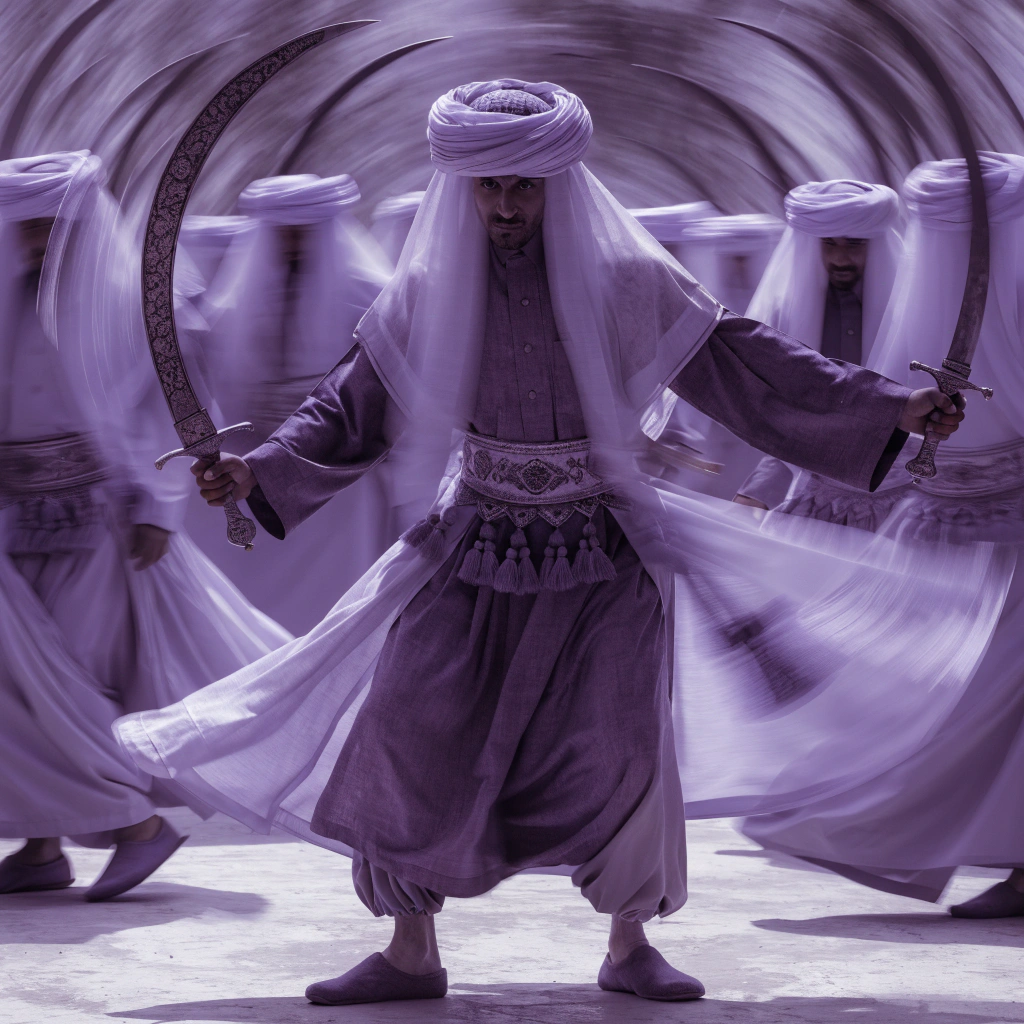
The Saudi Sword Dance
Al-Ardha is a famous dance in Saudi Arabia. It is a traditional dance from the Najd region. People call it the sword dance.
Long ago, men danced before a battle. They wanted to be brave. Today, men dance at weddings and festivals. They wear beautiful white clothes and carry swords.
There are drums and poetry. Men move together in a line. It is a very happy and proud dance. Many people watch the Ardha today. It is part of Saudi culture.
نکته دستوری
الگو: Present Simple of 'to be'
"It is a famous dance in Saudi Arabia."
We use 'is' with singular subjects like 'it' or 'he' to describe facts. This helps us say what something is like.
الگو: Present Simple (Plural Verbs)
"Men move together in a line."
With plural subjects like 'men', we use the base form of the verb without an 's'. We use this to talk about habits or general truths.
درک خود را بسنجید
10 سوال · A1 مبتدی · 1 پیشنمایش رایگان
آنچه از این مقاله آموختید را بسنجید. به همه سؤالات پاسخ دهید و XP کسب کنید!
Where is the Ardha dance from?
آیا میخواهید آزمون را تمام کنید؟
9 سؤال دیگر منتظر شماست. ثبتنام رایگان کنید تا آزمون کامل را باز کنید و XP کسب کنید!
ثبتنام رایگانقبلاً ثبتنام کردی؟ ورود
جزئیات سؤالات
Where is the Ardha dance from?
پاسخ شما:
پاسخ درست: The Najd region
Men dance the Ardha at weddings today.
پاسخ شما:
پاسخ درست: درست
What does 'brave' mean?
پاسخ شما:
پاسخ درست: Not afraid
Men carry _____ during the dance.
پاسخ شما:
پاسخ درست: swords
Al-Ardha Al-Najdiya: The Saudi Sword Dance
Al-Ardha Al-Najdiya is a very famous dance in Saudi Arabia. People often call it the national sword dance. Long ago, tribes in the Najd region started this dance. They performed it before a battle because they wanted to be brave. The dance showed their strength and power to their enemies. It was a way to feel stronger before a fight.
Today, the Ardha is different. It is a happy dance for celebrations. People perform it at national festivals, Eid, and big weddings. Men wear traditional clothes and carry swords. They move together in rows and sing beautiful poems. There are also many drums that make a loud and exciting sound.
This dance is more popular than many other traditional dances. It is a special part of Saudi culture. When you see the Ardha, you feel the history of the country. Many people enjoy watching the performers because the music is strong and the dance is beautiful. It is an amazing experience for everyone.
نکته دستوری
الگو: Past Simple
"They performed it before a battle because they wanted to be brave."
We use the past simple to talk about finished actions in the past. To form regular verbs, we usually add '-ed' to the end of the word.
الگو: Comparatives
"This dance is more popular than many other traditional dances."
We use 'more' + adjective + 'than' to compare two things when the adjective is long. It shows that one thing has more of a quality than the other.
درک خود را بسنجید
11 سوال · A2 مقدماتی · 1 پیشنمایش رایگان
آنچه از این مقاله آموختید را بسنجید. به همه سؤالات پاسخ دهید و XP کسب کنید!
Where did the Ardha dance originally come from?
آیا میخواهید آزمون را تمام کنید؟
10 سؤال دیگر منتظر شماست. ثبتنام رایگان کنید تا آزمون کامل را باز کنید و XP کسب کنید!
ثبتنام رایگانقبلاً ثبتنام کردی؟ ورود
جزئیات سؤالات
Where did the Ardha dance originally come from?
پاسخ شما:
پاسخ درست: The Najd region
In the past, tribes performed the dance to show they were weak.
پاسخ شما:
پاسخ درست: نادرست
What does 'brave' mean?
پاسخ شما:
پاسخ درست: Not afraid of danger
Al-Ardha Al-Najdiya is the national _____ dance.
پاسخ شما:
پاسخ درست: sword
Why do people perform the Ardha today?
پاسخ شما:
پاسخ درست: For happy celebrations and festivals
The Spirit of the Sword: Understanding Al-Ardha Al-Najdiya
Al-Ardha Al-Najdiya, which is often called the 'Saudi sword dance,' is a powerful symbol of Saudi Arabian culture. This traditional performance has been passed down through many generations and remains a source of pride for the nation. It originally started in the Najd region, which is located in the center of the Arabian Peninsula. In the past, the Ardha was performed by tribes before they went into battle. It was used to show strength and to make the soldiers feel brave before facing their enemies.
Today, the dance has changed from a war ritual into a beautiful celebration of unity and heritage. It is performed at major national events, such as the Saudi National Day, and also at personal celebrations like weddings. Even the Saudi Royal Family often takes part in the dance, which shows their deep connection to the people and their history.
The performance is very organized and impressive to watch. Two rows of men stand opposite each other, wearing traditional clothes like the white thobe and a dark cloak called a bisht. They carry swords and move rhythmically to the sound of large drums. The rhythm is created by different types of percussion instruments, and the sound can be heard from far away. The dancers move their swords up and down in a coordinated way, which shows their discipline. The poetry, which is shouted by the dancers, tells stories of bravery and pride.
The Ardha has been recognized by UNESCO as an important part of human heritage. This global recognition ensures that the dance will be protected and celebrated for the future. Many young people have learned the steps from their fathers, so the tradition stays alive. For anyone visiting Saudi Arabia, watching the Ardha is a memorable experience because it combines history, music, and art in a unique way.
نکته دستوری
الگو: Passive Voice
"In the past, the Ardha was performed by tribes before they went into battle."
The passive voice is used here because the action (performing the dance) is more important than who did it. It is formed using 'was/were' + the past participle.
الگو: Relative Clauses
"Al-Ardha Al-Najdiya, which is often called the 'Saudi sword dance,' is a powerful symbol of Saudi Arabian culture."
A relative clause starting with 'which' provides extra information about the subject. It helps combine two thoughts into one complex sentence.
درک خود را بسنجید
11 سوال · B1 متوسط · 1 پیشنمایش رایگان
آنچه از این مقاله آموختید را بسنجید. به همه سؤالات پاسخ دهید و XP کسب کنید!
Where did the Ardha dance originally start?
آیا میخواهید آزمون را تمام کنید؟
10 سؤال دیگر منتظر شماست. ثبتنام رایگان کنید تا آزمون کامل را باز کنید و XP کسب کنید!
ثبتنام رایگانقبلاً ثبتنام کردی؟ ورود
جزئیات سؤالات
Where did the Ardha dance originally start?
پاسخ شما:
پاسخ درست: In the Najd region
The Saudi Royal Family sometimes participates in the Ardha dance.
پاسخ شما:
پاسخ درست: درست
What does 'heritage' mean?
پاسخ شما:
پاسخ درست: Traditions and culture from the past
Today, the dance has changed into a celebration of _____ and heritage.
پاسخ شما:
پاسخ درست: unity
Why was the dance performed in the past?
پاسخ شما:
پاسخ درست: To show strength and bravery
Al-Ardha Al-Najdiya: A Synchronized Legacy of Saudi Strength
Having originated in the central Najd region, Al-Ardha Al-Najdiya represents far more than a mere performance; it is a profound manifestation of Saudi identity. Historically, this rhythmic display served as a tactical war dance, performed by tribal warriors before engaging in battle. The primary objective was to intimidate any potential adversary while simultaneously boosting the collective morale of the fighters. By drumming up courage through synchronization and poetic chanting, the tribes demonstrated their unwavering resilience and readiness to protect their land.
Today, the Ardha has been transformed into a celebratory performance that serves as the centerpiece of national festivals, Eid celebrations, and prestigious royal receptions. Despite its shift from the battlefield to the stage, the dance retains its stirring intensity. The performance typically involves two rows of men, dressed in traditional 'Daglah' coats or 'Sayf' robes, who sway in unison to the beat of large frame drums known as 'Takhmir' and 'Tathlith'. They carry swords, which are raised and lowered in a rhythmic fashion, symbolizing the defensive strength of the nation rather than a desire for aggression.
Central to the performance is the recitation of 'Nabati' poetry. These verses, often chanted by a lead poet and echoed by the ranks of dancers, tell epic stories of bravery, loyalty, and the complex history of the Arabian Peninsula. It is widely believed that the rhythmic drumming serves to ground the performance, creating a heartbeat that resonates with both the participants and the audience. This auditory experience, combined with the visual spectacle of gleaming swords and traditional attire, creates an atmosphere of deep-seated national pride.
In 2015, the cultural significance of the dance was recognized globally when it was inscribed on the UNESCO Representative List of the Intangible Cultural Heritage of Humanity. This prestigious recognition highlights how the tradition continues to unify the Saudi people, bridging the gap between a nomadic past and a modern, rapidly developing future. To witness the Ardha is to see the history of a nation in motion. It allows the Saudi people to commemorate their heritage while looking forward to new global horizons. Ultimately, the dance serves as a living archive of Saudi values, proving that even as a society evolves, its core cultural expressions remain as vital as ever.
نکته دستوری
الگو: Perfect Participle Clause
"Having originated in the central Najd region, Al-Ardha Al-Najdiya represents far more than a mere performance..."
This structure is used to indicate that the action in the participle clause happened before the action in the main clause. It is common in formal writing to provide background information efficiently.
الگو: Present Perfect Passive
"Today, the Ardha has been transformed into a celebratory performance..."
Formed with 'has/have been' + past participle, this pattern focuses on the result of a past action on the present. It emphasizes the transformation itself rather than who performed it.
الگو: Passive with Reporting Verbs
"It is widely believed that the rhythmic drumming serves to ground the performance..."
This structure (It + is + past participle + that) is used to report general opinions or widely held beliefs. It maintains an objective, academic tone by avoiding personal pronouns.
درک خود را بسنجید
11 سوال · B2 بالاتر از متوسط · 1 پیشنمایش رایگان
آنچه از این مقاله آموختید را بسنجید. به همه سؤالات پاسخ دهید و XP کسب کنید!
What was the primary historical purpose of the Al-Ardha dance?
آیا میخواهید آزمون را تمام کنید؟
10 سؤال دیگر منتظر شماست. ثبتنام رایگان کنید تا آزمون کامل را باز کنید و XP کسب کنید!
ثبتنام رایگانقبلاً ثبتنام کردی؟ ورود
جزئیات سؤالات
What was the primary historical purpose of the Al-Ardha dance?
پاسخ شما:
پاسخ درست: To intimidate enemies and boost warrior morale
The Al-Ardha dance is currently only performed in the Najd region.
پاسخ شما:
پاسخ درست: نادرست
Which word describes a sign that shows an idea or feeling clearly?
پاسخ شما:
پاسخ درست: Manifestation
The traditional coats worn by the dancers are known as ____.
پاسخ شما:
پاسخ درست: Daglah
What does the movement of swords symbolize in the modern version of the dance?
پاسخ شما:
پاسخ درست: Defensive strength of the nation
The Rhythmic Pulse of Sovereignty: Decoding the Al-Ardha Al-Najdiya
Rarely does a cultural performance encapsulate the collective soul of a nation as poignantly as the Al-Ardha Al-Najdiya. Originating in the rugged heartland of the Najd region, this 'sword dance' transcends mere choreography, serving as a living testament to the historical trajectory of Saudi Arabia. Historically, the Ardha was a bellicose precursor to tribal conflict, a strategic display of martial prowess designed to galvanize warriors and intimidate adversaries. However, what was once a prelude to war has undergone a profound transformation, evolving into a sophisticated emblem of national unity and festive jubilation.
What distinguishes the Ardha is its intricate fusion of poetry, rhythm, and movement. It is the rhythmic cadence of the drums—specifically the large takhmir and the smaller tathlith—that provides the heartbeat of the performance. Participants, clad in traditional daghla or sayah garments, brandish swords in a synchronized sway that mirrors the ebb and flow of a desert breeze. Yet, the visual spectacle is only half the narrative. Central to the performance is the recitation of Nabati poetry. These verses, chanted in a call-and-response format, often extol virtues of courage, loyalty, and the indomitable spirit of the leadership. The interplay between the spoken word and the percussive backdrop creates a sensory experience that is both ancient and immediate.
Critical to understanding the Ardha's contemporary relevance is the recognition of its role in fostering a shared identity. In an era of rapid globalization, the meticulous preservation of such traditions acts as a cultural anchor. The performance is fundamentally egalitarian; while it is often led by members of the royal family, it remains a communal expression where the boundaries between the elite and the citizenry blur in a collective celebration of heritage. This inclusivity reinforces the social contract, reminding participants of their shared history and mutual responsibilities.
Furthermore, the Ardha serves as a powerful medium for historical continuity. Not only does it commemorate the unification of the Kingdom under King Abdulaziz, but it also reinforces the social fabric of modern Saudi society. By analyzing the performance through a sociological lens, one can discern the transition from tribal autonomy to a unified national consciousness. The dance acts as a bridge, connecting the austere realities of the past with the prosperous aspirations of the future. Rarely has a tradition managed to remain so visceral and relevant while adapting to the shifting political and social landscapes of the 21st century.
In conclusion, the Al-Ardha Al-Najdiya is far more than a folkloric display. It is a nuanced dialogue between the past and the present, a rhythmic assertion of sovereignty, and a quintessential symbol of Saudi resilience. As the swords catch the light during a national festival, they do not herald conflict, but rather the enduring strength of a culture that refuses to be eclipsed by the passage of time. The preservation of such intricate traditions is not merely an act of nostalgia; it is a vital component of the nation's ongoing narrative.
نکته دستوری
الگو: Inversion with Negative Adverbials
"Rarely does a cultural performance encapsulate the collective soul of a nation as poignantly as the Al-Ardha Al-Najdiya."
This structure places a negative or restrictive adverbial at the beginning for emphasis. It requires the auxiliary verb to come before the subject, creating a formal and dramatic tone.
الگو: Cleft Sentences
"It is the rhythmic cadence of the drums—specifically the large takhmir and the smaller tathlith—that provides the heartbeat of the performance."
Cleft sentences use the 'It is... that...' construction to focus on a specific piece of information. This highlights the drums as the primary source of the performance's rhythm.
الگو: Nominalization
"The meticulous preservation of such traditions acts as a cultural anchor."
Nominalization involves turning verbs into nouns (e.g., 'preserve' to 'preservation') to create a more academic and abstract style. It allows the focus to remain on the concept rather than the actor.
درک خود را بسنجید
12 سوال · C1 پیشرفته · 1 پیشنمایش رایگان
آنچه از این مقاله آموختید را بسنجید. به همه سؤالات پاسخ دهید و XP کسب کنید!
What was the primary historical purpose of the Al-Ardha Al-Najdiya?
آیا میخواهید آزمون را تمام کنید؟
11 سؤال دیگر منتظر شماست. ثبتنام رایگان کنید تا آزمون کامل را باز کنید و XP کسب کنید!
ثبتنام رایگانقبلاً ثبتنام کردی؟ ورود
جزئیات سؤالات
What was the primary historical purpose of the Al-Ardha Al-Najdiya?
پاسخ شما:
پاسخ درست: A bellicose display to prepare warriors for battle
The Ardha is described as fundamentally egalitarian because it is a communal expression where elite and citizenry participate together.
پاسخ شما:
پاسخ درست: درست
Which word means 'impossible to subdue or defeat'?
پاسخ شما:
پاسخ درست: Indomitable
The Ardha serves as a powerful _____ for historical continuity in Saudi society.
پاسخ شما:
پاسخ درست: medium
What role does Nabati poetry play in the performance?
پاسخ شما:
پاسخ درست: It extols virtues like courage and loyalty through call-and-response
In the modern context, the brandished swords in the Ardha signify an upcoming military conflict.
پاسخ شما:
پاسخ درست: نادرست
The Choreography of Sovereignty: An Analytical Inquiry into Al-Ardha Al-Najdiya
To witness Al-Ardha Al-Najdiya is to observe the very heartbeat of the Arabian Peninsula, a visceral manifestation of history, honor, and collective identity. While the casual observer might perceive merely a rhythmic spectacle of swords and drums, the nuanced reality is far more profound. Emerging from the rugged landscapes of the Najd region, this performance—now the national dance of Saudi Arabia—represents a sophisticated synthesis of martial prowess and poetic eloquence. Historically, the Ardha was far from a mere aesthetic endeavor; it was a primordial instrument of psychological warfare and tribal cohesion. Before the dust of the battlefield rose, the tribesmen would gather, their voices rising in a unified chant, their swords catching the unforgiving desert sun. This was a display designed to galvanize the spirit of the warriors while simultaneously instilling a sense of trepidation in any would-be adversary.
The structural integrity of the Ardha is predicated upon a delicate balance between the auditory and the visual. At its core lies the Nabati poetry, a vernacular tradition that serves as the narrative soul of the performance. These verses, often extolling the virtues of courage, lineage, and the sovereignty of the state, are delivered with a cadence that dictates the movement of the entire ensemble. It is imperative that the cultural observer recognize the role of the drums—the large 'Takhmir' providing the deep, foundational pulse, and the smaller 'Tathlith' offering a sharper, syncopated counterpoint. This rhythmic undulation creates a sonic landscape that is both hypnotic and energizing, driving the performers into a state of focused collective consciousness.
However, the Ardha has undergone a significant metamorphosis in the modern era. No longer is it a prelude to conflict; rather, it has evolved into a quintessential emblem of national unity and festive celebration. From the grandeur of the Janadriyah Festival to the intimacy of a local wedding, the dance serves as a bridge between the kingdom’s storied past and its ambitious future. Not only does the Ardha serve as a testament to the enduring nature of Saudi heritage, but it also functions as a diplomatic tool, often performed in the presence of visiting world leaders to signify hospitality and strength. The sword, once a literal weapon of war, has been recontextualized as a symbolic instrument of justice and heritage, held aloft not in aggression, but in a display of indelible pride.
Were it not for the meticulous preservation of these traditions by successive generations, the martial vigor and cultural resonance of the Ardha might have been lost to the relentless march of globalization. Instead, it remains a living tradition, a confluence of historical memory and contemporary relevance. The choreography, characterized by the synchronized swaying of the performers and the precise, disciplined manipulation of the swords, reflects a societal structure based on harmony and mutual respect. To participate in or observe the Ardha is to engage with an epistemological framework where history is not merely read in books but is physically enacted through the body.
Ultimately, Al-Ardha Al-Najdiya transcends the boundaries of simple performance. It is an evocative reminder of the resilience of the human spirit and the power of tradition to forge a cohesive national identity. As the rhythmic thud of the drums echoes across the modern skylines of Riyadh and beyond, it carries with it the echoes of the desert ancestors, ensuring that the legacy of the Najd remains an integral part of the Saudi narrative for generations to come.
نکته دستوری
الگو: Negative Inversion
"Not only does the Ardha serve as a testament to the enduring nature of Saudi heritage, but it also functions as a diplomatic tool."
When a sentence begins with a negative adverbial like 'Not only', the subject and auxiliary verb are inverted. This is used in formal writing to add emphasis and rhetorical weight.
الگو: Inverted Third Conditional
"Were it not for the meticulous preservation of these traditions by successive generations, the martial vigor... might have been lost."
The word 'if' is omitted and 'were' is moved to the beginning of the clause. This formal structure is used to discuss hypothetical past situations and their consequences.
الگو: Subjunctive Mood
"It is imperative that the cultural observer recognize the role of the drums."
The subjunctive is used after verbs or adjectives of necessity or importance. Note that 'recognize' does not take an 's' even though the subject is singular, as it is in the base form.
درک خود را بسنجید
12 سوال · C2 تسلط · 1 پیشنمایش رایگان
آنچه از این مقاله آموختید را بسنجید. به همه سؤالات پاسخ دهید و XP کسب کنید!
What was the primary historical purpose of Al-Ardha Al-Najdiya?
آیا میخواهید آزمون را تمام کنید؟
11 سؤال دیگر منتظر شماست. ثبتنام رایگان کنید تا آزمون کامل را باز کنید و XP کسب کنید!
ثبتنام رایگانقبلاً ثبتنام کردی؟ ورود
جزئیات سؤالات
What was the primary historical purpose of Al-Ardha Al-Najdiya?
پاسخ شما:
پاسخ درست: To serve as a psychological tool for tribal unity and intimidation before battle
The Ardha is exclusively performed during times of conflict in the modern era.
پاسخ شما:
پاسخ درست: نادرست
What does 'metamorphosis' mean in the context of the article?
پاسخ شما:
پاسخ درست: A complete transformation in nature or function
The sword in the modern Ardha is described as a _____ instrument of justice.
پاسخ شما:
پاسخ درست: symbolic
Which poetic tradition forms the 'narrative soul' of the Ardha?
پاسخ شما:
پاسخ درست: Nabati poetry
The 'Takhmir' drum provides the sharper, syncopated counterpoint to the 'Tathlith'.
پاسخ شما:
پاسخ درست: نادرست

