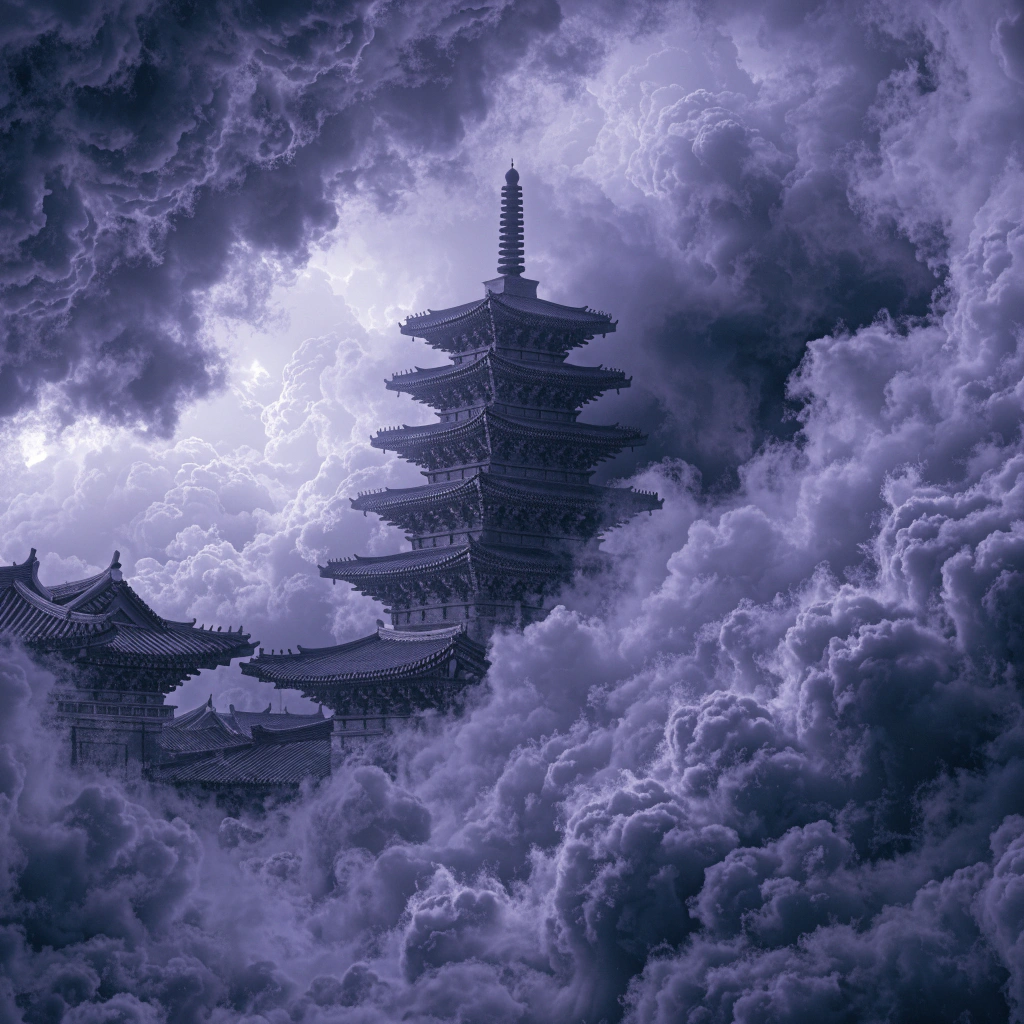
A Visit to Bulguksa Temple
Bulguksa is a famous temple in South Korea. It is on a big mountain in Gyeongju. This temple is very old. It has many beautiful stone buildings and wooden roofs. Many people visit this place every day. Inside the temple, there are two famous stone towers. They are very tall and strong. People go there to see the art and pray. It is a very peaceful place. You can walk in the gardens and see the green trees. It is a special place in Korean history. Everyone likes the quiet atmosphere here.
نکته دستوری
الگو: Present Simple (to be)
"It is on a big mountain in Gyeongju."
We use 'is' for singular subjects like 'it' or 'the temple'. It describes facts or states in the present.
الگو: There is / There are
"Inside the temple, there are two famous stone towers."
We use 'there are' to say that multiple things exist. It is followed by a plural noun like 'towers'.
درک خود را بسنجید
10 سوال · A1 مبتدی · 1 پیشنمایش رایگان
آنچه از این مقاله آموختید را بسنجید. به همه سؤالات پاسخ دهید و XP کسب کنید!
Where is Bulguksa Temple?
آیا میخواهید آزمون را تمام کنید؟
9 سؤال دیگر منتظر شماست. ثبتنام رایگان کنید تا آزمون کامل را باز کنید و XP کسب کنید!
ثبتنام رایگانقبلاً ثبتنام کردی؟ ورود
جزئیات سؤالات
Where is Bulguksa Temple?
پاسخ شما:
پاسخ درست: South Korea
The temple is a very new building.
پاسخ شما:
پاسخ درست: نادرست
What is a mountain?
پاسخ شما:
پاسخ درست: A very high piece of land
People go there to see the _____ and pray.
پاسخ شما:
پاسخ درست: art
The Beautiful Bulguksa Temple
Bulguksa is a very old and beautiful temple in South Korea. It is located on the slopes of Mount Tohamsan in the city of Gyeongju. People built this famous temple a long time ago, in the year 751. It is one of the most important places for Buddhist art and architecture in the country.
The name Bulguksa means "Temple of the Buddha Land." In the past, the builders wanted to create a place that looked like a spiritual world on earth. The temple is famous for its amazing stone work and wooden buildings. There are two very special stone towers called pagodas. One pagoda is simple, but the other one is more decorative and complex.
Today, Bulguksa is a UNESCO World Heritage site. It is larger than many other temples in Korea. Every year, many tourists visit the temple to see the beautiful stairs and statues. It is a quiet and peaceful place. People go there because they want to learn about the history of the Silla Kingdom. It is a wonderful place to see.
نکته دستوری
الگو: Past Simple
"People built this famous temple a long time ago."
The past simple is used to talk about finished actions in the past. To form the past simple of 'build', we use the irregular form 'built'.
الگو: Comparatives
"It is larger than many other temples in Korea."
We use comparatives to compare two things. For short adjectives like 'large', we add '-er' and use the word 'than'.
درک خود را بسنجید
11 سوال · A2 مقدماتی · 1 پیشنمایش رایگان
آنچه از این مقاله آموختید را بسنجید. به همه سؤالات پاسخ دهید و XP کسب کنید!
Where is Bulguksa Temple located?
آیا میخواهید آزمون را تمام کنید؟
10 سؤال دیگر منتظر شماست. ثبتنام رایگان کنید تا آزمون کامل را باز کنید و XP کسب کنید!
ثبتنام رایگانقبلاً ثبتنام کردی؟ ورود
جزئیات سؤالات
Where is Bulguksa Temple located?
پاسخ شما:
پاسخ درست: In Gyeongju
Bulguksa Temple was built in the year 751.
پاسخ شما:
پاسخ درست: درست
What does 'temple' mean?
پاسخ شما:
پاسخ درست: A religious building
What does the name Bulguksa mean?
پاسخ شما:
پاسخ درست: Temple of the Buddha Land
It is a quiet and _____ place.
پاسخ شما:
پاسخ درست: peaceful
Bulguksa: A Masterpiece of Korean History
Bulguksa Temple is one of the most beautiful places in South Korea. It is located on the slopes of Mount Tohamsan in Gyeongju. This temple has been a symbol of Korean culture for over a thousand years. It was built in 751 AD during the Silla Kingdom, which was a golden age for art and religion.
The name Bulguksa means "Temple of the Buddha Land." The monks who designed it wanted to create a spiritual paradise on earth. When you visit, you can see amazing stone masonry and wooden buildings. The temple complex is a masterpiece of ancient engineering. Two of the most famous structures are the stone pagodas, Seokgatap and Dabotap. These pagodas have been preserved very well, and they show the skill of the people who lived long ago.
Visitors are often impressed by the stone bridges that lead to the main hall. These bridges represent the transition from the human world to the world of Buddha. Many people have traveled from all over the world to see this site because it is a UNESCO World Heritage site.
Today, the temple is still an active place for Buddhist practice. It is not just a museum; it is a living part of Korean history. If you go there early in the morning, you can hear the peaceful sounds of bells and chanting. Bulguksa is a place where history and nature meet perfectly.
نکته دستوری
الگو: Passive Voice
"It was built in 751 AD during the Silla Kingdom."
We use the passive voice (was/were + past participle) when the action is more important than who did it. In history, we often use it to talk about when buildings were constructed.
الگو: Relative Clauses
"It was built in 751 AD during the Silla Kingdom, which was a golden age for art and religion."
A relative clause starting with 'which' gives more information about the noun before it. It helps connect ideas into longer, more complex sentences.
درک خود را بسنجید
11 سوال · B1 متوسط · 1 پیشنمایش رایگان
آنچه از این مقاله آموختید را بسنجید. به همه سؤالات پاسخ دهید و XP کسب کنید!
Where is Bulguksa Temple located?
آیا میخواهید آزمون را تمام کنید؟
10 سؤال دیگر منتظر شماست. ثبتنام رایگان کنید تا آزمون کامل را باز کنید و XP کسب کنید!
ثبتنام رایگانقبلاً ثبتنام کردی؟ ورود
جزئیات سؤالات
Where is Bulguksa Temple located?
پاسخ شما:
پاسخ درست: Gyeongju
Bulguksa was built in the 20th century.
پاسخ شما:
پاسخ درست: نادرست
What does 'masterpiece' mean?
پاسخ شما:
پاسخ درست: A work of outstanding skill
The temple _____ is a masterpiece of ancient engineering.
پاسخ شما:
پاسخ درست: complex
What does the name Bulguksa mean?
پاسخ شما:
پاسخ درست: Temple of the Buddha Land
Bulguksa Temple: A Masterpiece of Silla Architecture and Spirituality
Perched on the slopes of Mount Tohamsan in Gyeongju, Bulguksa Temple is widely considered the pinnacle of Buddhist architecture and art in South Korea. Established in 751 AD during the Silla Kingdom's golden age, the temple was meticulously designed to represent the Buddhist 'Pure Land' on earth. Its name, which means 'Temple of the Buddha Land', reflects this profound spiritual ambition. For centuries, it has served as a central hub for religious practice and a symbol of Korean cultural identity, eventually being recognized as a UNESCO World Heritage site.
The complex is a masterpiece of stone masonry and timber construction, showcasing the advanced engineering and artistic sensibilities of the Silla people. One of the most striking features of the temple is the pair of stone pagodas, Dabotap and Seokgatap, which stand in the main courtyard. While Seokgatap is celebrated for its simple and elegant lines, Dabotap is famous for its intricate and ornate carvings. This contrast illustrates the harmonious balance between simplicity and complexity that characterizes Silla aesthetics. Furthermore, the stone bridges leading to the main halls represent the symbolic transition from the secular world to the spiritual realm.
Despite its current grandeur, Bulguksa has faced numerous challenges throughout history. During the Imjin War in the late 16th century, many of the original wooden structures were destroyed by fire. Consequently, the temple underwent significant restoration projects over the following centuries, particularly in the 1970s, to return it to its former glory. These efforts highlight the resilience of Korean heritage and the importance placed on preserving historical integrity. Scholars often analyze the temple's layout to understand the sophisticated mathematical precision used by ancient architects, who managed to integrate the structures perfectly into the natural landscape.
Today, Bulguksa remains an active place of worship and a major destination for travelers seeking to experience Korea's spiritual legacy. It is not merely a museum of the past but a living testament to the enduring influence of Buddhism in the region. Visitors are often struck by the serene atmosphere, which is enhanced by the surrounding forests and the rhythmic sounds of chanting. Ultimately, Bulguksa provides an unparalleled insight into the philosophical depth and artistic brilliance of ancient Korea, ensuring its status as a cultural treasure for generations to come.
نکته دستوری
الگو: Passive Voice (Present Simple)
"Bulguksa Temple is widely considered the pinnacle of Buddhist architecture."
The passive voice is used here to focus on the temple itself rather than who is doing the considering. It is formed using 'is' + the past participle 'considered'.
الگو: Non-defining Relative Clauses
"Its name, which means 'Temple of the Buddha Land', reflects this profound spiritual ambition."
This clause provides extra information about the name. It is separated by commas and uses 'which' to add detail without changing the basic meaning of the sentence.
الگو: Participle Clauses
"Perched on the slopes of Mount Tohamsan in Gyeongju, Bulguksa Temple is widely considered..."
The past participle 'perched' starts a clause that describes the subject of the main sentence. This is a common way in B2 writing to provide background information economically.
درک خود را بسنجید
11 سوال · B2 بالاتر از متوسط · 1 پیشنمایش رایگان
آنچه از این مقاله آموختید را بسنجید. به همه سؤالات پاسخ دهید و XP کسب کنید!
What was the primary spiritual goal behind the design of Bulguksa Temple?
آیا میخواهید آزمون را تمام کنید؟
10 سؤال دیگر منتظر شماست. ثبتنام رایگان کنید تا آزمون کامل را باز کنید و XP کسب کنید!
ثبتنام رایگانقبلاً ثبتنام کردی؟ ورود
جزئیات سؤالات
What was the primary spiritual goal behind the design of Bulguksa Temple?
پاسخ شما:
پاسخ درست: To represent the Buddhist 'Pure Land' on earth
The Dabotap and Seokgatap pagodas are identical in their architectural style.
پاسخ شما:
پاسخ درست: نادرست
What does the word 'resilience' mean in the context of the article?
پاسخ شما:
پاسخ درست: The ability to recover from destruction or difficulty
The complex is a _____ of stone masonry and timber construction.
پاسخ شما:
پاسخ درست: masterpiece
Why did the temple require significant restoration in the 20th century?
پاسخ شما:
پاسخ درست: Because of damage sustained during the Imjin War and other conflicts
Stones of the Pure Land: The Architectural Zenith of Bulguksa
The manifestation of the Silla Kingdom's spiritual zenith is nowhere more evident than in the stone-clad slopes of Mount Tohamsan. Bulguksa Temple, a site of profound historical resonance, serves as a testament to the sophisticated synthesis of religious devotion and advanced engineering that characterized the 8th-century Korean peninsula. Established in 751 AD during the reign of King Gyeongdeok, the complex was envisioned not merely as a place of worship but as a physical instantiation of the Buddhist 'Pure Land' on earth.
What distinguishes Bulguksa from its contemporaries is the meticulous precision of its masonry. The duality of its two primary pagodas, Seokgatap and Dabotap, offers a fascinating study in aesthetic contrast. While Seokgatap embodies an austere, minimalist elegance, Dabotap presents an intricate, ornate complexity. This architectural dichotomy is thought to represent the balance between the historical Buddha’s simplicity and the multifaceted nature of his wisdom. Seldom has stone been manipulated with such fluidity, bridging the gap between the material and the metaphysical.
The engineering prowess required for such an endeavor cannot be overstated. The use of natural stones—unrefined and irregular—at the base of the structures, topped by perfectly polished blocks, reflects a profound philosophical alignment with the natural world. This technique, known as 'gregeng-i,' allows the temple to withstand seismic activity, demonstrating a foresight that borders on the prophetic. It is this marriage of form and function that elevates Bulguksa above mere construction into the realm of high art.
The physical journey through the temple is itself a symbolic ascent. One must cross the 'Blue Cloud' and 'White Cloud' bridges—stone staircases that signify the transition from the mundane world into the celestial realm. This architectural choreography forces the visitor into a state of contemplative reverence, a deliberate design choice that underscores the temple's function as a bridge between the human and the divine. The sophisticated use of perspective and spatial arrangement suggests that the Silla architects possessed a deep understanding of psychological impact, utilizing physical space to mirror spiritual progression.
Furthermore, the political implications of Bulguksa’s construction are equally compelling. During the Silla period, Buddhism was inextricably linked with the state, serving as a unifying ideology that consolidated power and fostered cultural identity. The temple was a visual proclamation of the kingdom's divine favor and its central position in the Buddhist world. However, the site’s history is also one of remarkable resilience. Having faced near-total destruction during the Imjin War in the 16th century, its subsequent restoration reflects the enduring significance of these structures to the Korean national consciousness.
In conclusion, Bulguksa remains a transcendent masterpiece. Its enduring appeal lies not just in its antiquity, but in the nuanced way it articulates the human desire for spiritual order within the chaotic flux of the temporal world. It is a monument where the ephemeral meets the eternal, and where the mastery of man honors the majesty of the divine.
نکته دستوری
الگو: Cleft Sentences
"What distinguishes Bulguksa from its contemporaries is the meticulous precision of its masonry."
A pseudo-cleft sentence starting with 'What' is used to focus on specific information. It emphasizes the subject (meticulous precision) by placing it after the verb 'is'.
الگو: Inversion
"Seldom has stone been manipulated with such fluidity, bridging the gap between the material and the metaphysical."
After negative or limiting adverbs like 'Seldom', the auxiliary verb comes before the subject. This structure is used for rhetorical effect and formal emphasis.
الگو: Nominalization
"The manifestation of the Silla Kingdom's spiritual zenith is nowhere more evident than in the stone-clad slopes of Mount Tohamsan."
Using a noun phrase (The manifestation) instead of a verb (It manifests) makes the text more academic and concise. It allows for the expression of complex ideas as a single subject.
درک خود را بسنجید
12 سوال · C1 پیشرفته · 1 پیشنمایش رایگان
آنچه از این مقاله آموختید را بسنجید. به همه سؤالات پاسخ دهید و XP کسب کنید!
What was the primary conceptual goal behind the design of Bulguksa Temple?
آیا میخواهید آزمون را تمام کنید؟
11 سؤال دیگر منتظر شماست. ثبتنام رایگان کنید تا آزمون کامل را باز کنید و XP کسب کنید!
ثبتنام رایگانقبلاً ثبتنام کردی؟ ورود
جزئیات سؤالات
What was the primary conceptual goal behind the design of Bulguksa Temple?
پاسخ شما:
پاسخ درست: To physically represent the Buddhist 'Pure Land' on earth
The 'gregeng-i' technique was primarily used for aesthetic decoration rather than structural integrity.
پاسخ شما:
پاسخ درست: نادرست
What does 'zenith' mean in the context of the article?
پاسخ شما:
پاسخ درست: The highest point or peak of power
The temple's history of surviving destruction and being rebuilt is a sign of its remarkable _____.
پاسخ شما:
پاسخ درست: resilience
How do the two pagodas, Seokgatap and Dabotap, differ in their architectural style?
پاسخ شما:
پاسخ درست: One is minimalist and austere, while the other is intricate and complex
Buddhism and state politics were closely linked during the Silla period.
پاسخ شما:
پاسخ درست: درست
The Ontological Synthesis of Stone and Spirit: A Critical Appraisal of Bulguksa’s Architectural Transcendence
Nestled amidst the verdant undulations of Mount Tohamsan in Gyeongju, Bulguksa Temple stands not merely as a historical vestige of the Silla Kingdom’s zenith, but as a profound manifestation of Buddhist cosmology. Established in 751 AD under the auspices of Prime Minister Kim Dae-seong, the complex was meticulously conceived as a terrestrial proxy for the 'Pure Land'—the celestial realm of the Buddha. Its nomenclature, which translates to 'Temple of the Buddha Land,' encapsulates an ambitious spiritual agenda: the rendering of ephemeral human existence into a permanent, architectural testament of enlightenment. Should one venture to traverse its hallowed precincts today, one encounters a spatial articulation that challenges the dichotomy between the material and the metaphysical.
Central to the temple’s semiotic landscape is the courtyard of the Daeungjeon, the Hall of Great Enlightenment, where the juxtaposition of two iconic stone pagodas, Dabotap and Seokgatap, invites scholarly scrutiny. Dabotap, the Pagoda of Many Treasures, exhibits an ornate, almost baroque intricacy, characterized by complex stairways and stone lions. In stark contrast, Seokgatap, the Pagoda of Sakyamuni, adheres to a minimalist, austere aesthetic, symbolizing the silent, unadorned path to nirvana. This deliberate architectural divergence is far from serendipitous; rather, it represents a synthesis of the Buddha’s eternal presence and the rigorous discipline required to perceive it. Had the architects opted for a more homogenous design, the dialectical tension that defines the courtyard’s spiritual gravity would have been irrevocably diluted, undermining the pedagogical function of the site.
The stone masonry of Bulguksa is equally deserving of analytical attention, particularly the 'Gureum-dari' or Cloud Bridges. These structures serve as a liminal threshold, physically and symbolically elevating the practitioner from the profane world of suffering to the sacred interior of the temple. The precision with which these granite blocks were hewn—interlocking with such exactitude that they have withstood over a millennium of seismic activity without the necessity of mortar—alludes to a sophisticated grasp of engineering. It is conjectured that such resilience was a deliberate choice, intended to mirror the immutable nature of the Dharma amidst the shifting sands of temporal history. The masonry does not merely support the structure; it articulates a philosophy of permanence.
Furthermore, the integration of the temple into the natural topography of Mount Tohamsan reflects an advanced ecological consciousness. The architects utilized the natural slopes to create a multi-tiered journey, where each level represents a different stage of spiritual ascension. This harmonious blending of the man-made and the organic suggests a worldview where human ingenuity is seen as an extension of, rather than a conquest over, the natural order. This synthesis is particularly evident in the way the stone foundations appear to grow directly from the bedrock, blurring the lines between geological formation and human artifice.
In contemporary discourse, Bulguksa remains a quintessential paradigm of East Asian Buddhist art, and its designation as a UNESCO World Heritage site underscores its universal significance. Despite the ravages of conflict and the inevitable decay associated with the passage of time, the temple’s core structural integrity remains intact. Whether one approaches the site from a theological perspective or a purely aesthetic one, the temple compels a recognition of the sublime. It stands as an invitation to contemplate the intersection of the finite and the infinite, rendered in the silent, eloquent language of stone. The cultural tenacity required to maintain such a site over thirteen centuries speaks to the enduring relevance of its original vision—a vision that continues to resonate as a masterpiece of human creative genius.
نکته دستوری
الگو: Formal Conditional Inversion with 'Should'
"Should one venture to traverse its hallowed precincts today, one encounters a spatial articulation that challenges the dichotomy between the material and the metaphysical."
In formal and academic English, 'should' can replace 'if' in first conditional sentences to express a hypothetical possibility. This structure requires the subject and 'should' to be inverted, omitting 'if'.
الگو: Third Conditional Inversion (Had + Subject + Past Participle)
"Had the architects opted for a more homogenous design, the dialectical tension that defines the courtyard’s spiritual gravity would have been irrevocably diluted."
This inversion is used for hypothetical past situations. By placing 'had' before the subject, the speaker creates a more formal and sophisticated tone than using 'if the architects had opted'.
الگو: Concessive Clauses with 'Whether'
"Whether one approaches the site from a theological perspective or a purely aesthetic one, the temple compels a recognition of the sublime."
This structure is used to indicate that the following statement is true regardless of which of the two or more conditions applies. It functions as a complex adverbial clause of concession.
درک خود را بسنجید
12 سوال · C2 تسلط · 1 پیشنمایش رایگان
آنچه از این مقاله آموختید را بسنجید. به همه سؤالات پاسخ دهید و XP کسب کنید!
What was the primary conceptual goal of Bulguksa Temple's construction?
آیا میخواهید آزمون را تمام کنید؟
11 سؤال دیگر منتظر شماست. ثبتنام رایگان کنید تا آزمون کامل را باز کنید و XP کسب کنید!
ثبتنام رایگانقبلاً ثبتنام کردی؟ ورود
جزئیات سؤالات
What was the primary conceptual goal of Bulguksa Temple's construction?
پاسخ شما:
پاسخ درست: To represent the Buddhist 'Pure Land' on earth
The Seokgatap pagoda is known for its highly ornate and baroque style compared to Dabotap.
پاسخ شما:
پاسخ درست: نادرست
Which word describes something that is secular and not related to the sacred?
پاسخ شما:
پاسخ درست: Profane
The temple's stone blocks interlock with such precision that they do not require _____ to stay together.
پاسخ شما:
پاسخ درست: mortar
What does the text suggest about the relationship between the temple and its natural environment?
پاسخ شما:
پاسخ درست: The architecture is an extension of the natural order and topography.
The name 'Bulguksa' translates to 'Temple of the Buddha Land'.
پاسخ شما:
پاسخ درست: درست

