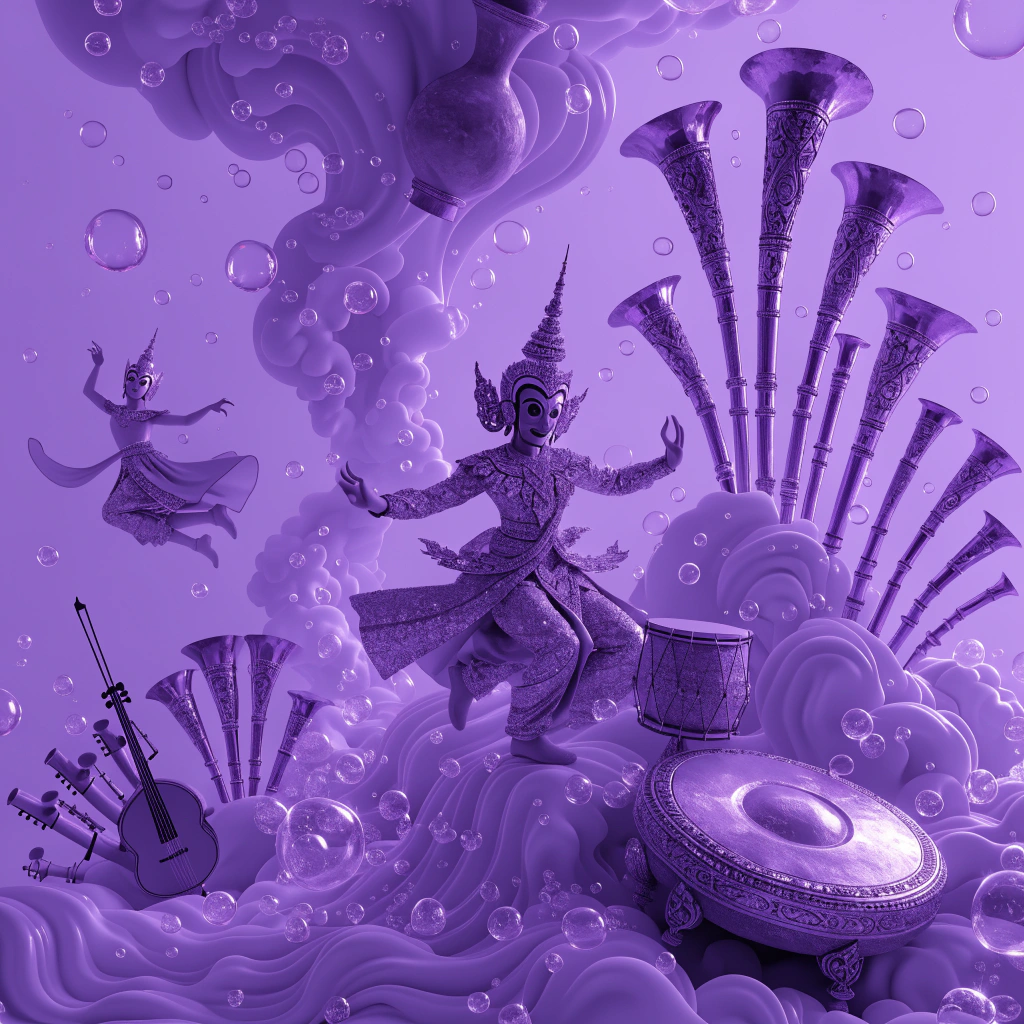
Thai Classical Music: The Piphat
Piphat is a special kind of music from Thailand. It is very old and very important. People play this music at royal ceremonies and in Buddhist temples. It is a big part of Thai history.
The music has many instruments. There are drums and gongs. There is also a wind instrument called a Pi. It makes a loud and beautiful sound.
Many musicians play together. They create a big sound. You can hear this music at a Thai theater or a festival. It is very beautiful to hear.
نکته دستوری
الگو: Present Simple (to be)
"Piphat is a special kind of music from Thailand."
We use 'is' for singular subjects to describe facts or states. It helps us give information about what something is.
الگو: There is / There are
"There are drums and gongs."
We use 'There are' for plural things and 'There is' for singular things. It shows that something exists in a place.
درک خود را بسنجید
10 سوال · A1 مبتدی · 1 پیشنمایش رایگان
آنچه از این مقاله آموختید را بسنجید. به همه سؤالات پاسخ دهید و XP کسب کنید!
Where is Piphat music from?
آیا میخواهید آزمون را تمام کنید؟
9 سؤال دیگر منتظر شماست. ثبتنام رایگان کنید تا آزمون کامل را باز کنید و XP کسب کنید!
ثبتنام رایگانقبلاً ثبتنام کردی؟ ورود
جزئیات سؤالات
Where is Piphat music from?
پاسخ شما:
پاسخ درست: Thailand
Piphat music is new.
پاسخ شما:
پاسخ درست: نادرست
What does 'beautiful' mean?
پاسخ شما:
پاسخ درست: Very nice to hear
There is also a wind _____ called a Pi.
پاسخ شما:
پاسخ درست: instrument
Piphat: The Traditional Music of Thailand
Piphat is a very famous type of traditional music from Thailand. It is an ensemble, which means a group of musicians playing together. You can hear this music at royal ceremonies, Buddhist festivals, and traditional dance shows. It is older and more traditional than modern pop music.
The ensemble uses many percussion instruments. The most important instrument is the Ranat Ek. It looks like a wooden xylophone and has a beautiful sound. There is also a special wind instrument called the Pi. It has a very loud and sharp sound. The musicians play different melodies at the same time. This makes the music sound very busy and energetic.
In the past, Piphat music was mostly for the king and the royal court. Today, many people in Thailand enjoy it. It is very important for Thai culture because it helps tell stories. For example, musicians play Piphat during the Khon masked dance. This music is louder than other styles, but it is very peaceful too. It is a special part of Thailand's history.
نکته دستوری
الگو: Comparatives
"It is older and more traditional than modern pop music."
We use comparatives to compare two things. For short adjectives like 'old', we add '-er'. For long adjectives like 'traditional', we use 'more' before the word.
الگو: Past Simple (State)
"In the past, Piphat music was mostly for the king and the royal court."
The past simple of the verb 'to be' is 'was' (singular) or 'were' (plural). It describes a situation or state that happened and finished in the past.
درک خود را بسنجید
11 سوال · A2 مقدماتی · 1 پیشنمایش رایگان
آنچه از این مقاله آموختید را بسنجید. به همه سؤالات پاسخ دهید و XP کسب کنید!
What is a Piphat?
آیا میخواهید آزمون را تمام کنید؟
10 سؤال دیگر منتظر شماست. ثبتنام رایگان کنید تا آزمون کامل را باز کنید و XP کسب کنید!
ثبتنام رایگانقبلاً ثبتنام کردی؟ ورود
جزئیات سؤالات
What is a Piphat?
پاسخ شما:
پاسخ درست: A group of musicians
Piphat music is a modern style of pop music.
پاسخ شما:
پاسخ درست: نادرست
What does 'instrument' mean?
پاسخ شما:
پاسخ درست: An object used for music
The Ranat Ek looks like a wooden _____.
پاسخ شما:
پاسخ درست: xylophone
Where can you hear Piphat music today?
پاسخ شما:
پاسخ درست: At festivals and dance shows
The Magic of Piphat: Thailand's Traditional Sound
The Piphat is the most famous type of classical music ensemble in Thailand. It has been played for many centuries and remains a vital part of Thai culture today. This music is often heard during royal ceremonies, Buddhist rituals, and traditional theater performances. For example, the Piphat provides the essential accompaniment for Khon, which is a famous Thai masked dance.
The ensemble is characterized by its use of percussion instruments and a special wind instrument called the Pi. The most important instrument is the Ranat Ek, a wooden xylophone that leads the group. There are also many different drums and gongs that create a rich, complex sound. In a Piphat performance, several melodic lines are played at the same time. This creates a polyphonic texture where different melodies weave around a central theme.
Because the music is very sophisticated, musicians must practice for many years to master it. Historically, the Piphat ensemble symbolized the power and elegance of the Thai royal court. Today, the tradition has been preserved by dedicated teachers and students who want to keep their heritage alive. Even though modern music is popular in Thailand, the unique sound of the Piphat is still respected by people of all ages. It is a beautiful symbol of Thailand’s long history and artistic spirit.
نکته دستوری
الگو: The Passive Voice
"The ensemble is characterized by its use of percussion instruments."
The passive voice is formed using 'be' + past participle. It is used here to focus on the ensemble rather than who is doing the characterizing.
الگو: Relative Clauses with 'which'
"The Piphat provides the essential accompaniment for Khon, which is a famous Thai masked dance."
A relative clause adds extra information about a noun. 'Which' is used here to provide more detail about the noun 'Khon'.
درک خود را بسنجید
11 سوال · B1 متوسط · 1 پیشنمایش رایگان
آنچه از این مقاله آموختید را بسنجید. به همه سؤالات پاسخ دهید و XP کسب کنید!
What is the Piphat primarily known as in Thailand?
آیا میخواهید آزمون را تمام کنید؟
10 سؤال دیگر منتظر شماست. ثبتنام رایگان کنید تا آزمون کامل را باز کنید و XP کسب کنید!
ثبتنام رایگانقبلاً ثبتنام کردی؟ ورود
جزئیات سؤالات
What is the Piphat primarily known as in Thailand?
پاسخ شما:
پاسخ درست: A classical music ensemble
The Piphat ensemble only uses wind instruments.
پاسخ شما:
پاسخ درست: نادرست
What does the word 'ritual' mean?
پاسخ شما:
پاسخ درست: A religious or formal ceremony
The Ranat Ek is a type of _____ instrument that leads the group.
پاسخ شما:
پاسخ درست: percussion
Where is Piphat music often heard?
پاسخ شما:
پاسخ درست: During royal ceremonies and rituals
The Resonance of Tradition: Understanding the Thai Piphat Ensemble
The Piphat ensemble represents the pinnacle of Thai classical music, a tradition that has been meticulously preserved for centuries. Characterized by its vibrant and piercing sound, this musical arrangement has long served as the primary accompaniment for royal ceremonies and sacred rituals. Despite the influx of Western musical influences, the Piphat remains an integral part of Thailand’s cultural identity, reflecting a history of artistic sophistication.
One cannot discuss the Piphat without mentioning its unique instrumentation. The ensemble is primarily composed of tuned percussion instruments and a single woodwind instrument known as the 'Pi'. The Ranat Ek, a leading xylophone, often takes center stage, delivering rapid melodic passages that require immense skill and precision. These instruments are not merely tools for entertainment; they are frequently treated as sacred objects, often being blessed before performances to honor the spirits of musical ancestors. To the Thai people, the music is a bridge between the earthly and spiritual realms.
The musical structure of a Piphat performance is fascinatingly complex. Unlike Western orchestras, which often follow a vertical harmonic progression, Piphat music is fundamentally polyphonic. This means that several melodic lines are played simultaneously, weaving around a central, unspoken theme. Each musician must maintain a delicate balance, ensuring their individual contribution enhances the collective sound without overshadowing the main melody. This intricate layering creates a dense texture that is both haunting and celebratory, a characteristic that has fascinated ethnomusicologists for decades.
Historically, the Piphat was synonymous with the sophistication of the Thai court. It provided the soundtrack for Khon masked dances and Nang Yai shadow plays, elevating these performances to a spiritual level. Furthermore, the choice of mallets—hard or soft—can drastically alter the ensemble's tone, adapting it for indoor or outdoor settings. In contemporary Thailand, the ensemble continues to play a vital role in Buddhist rituals and national celebrations. Students across the country still dedicate years to mastering these instruments, ensuring that the cultural resonance of the Piphat will be heard by future generations.
While modern technology has changed how people consume music, the Piphat's enduring popularity suggests a deep-seated respect for heritage. It is not just about the notes played; it is about the preservation of a national soul. By analyzing the Piphat, we gain insight into the values of Thai society—discipline, respect for tradition, and the pursuit of artistic excellence.
نکته دستوری
الگو: The Passive Voice
"The ensemble is primarily composed of tuned percussion instruments..."
The passive voice is used here to focus on the ensemble rather than the person who created it. It is formed using 'to be' + the past participle.
الگو: Present Perfect Passive
"...a tradition that has been meticulously preserved for centuries."
This pattern shows an action that started in the past and continues to the present, emphasizing the object. It uses 'has/have been' + past participle.
الگو: Reduced Relative Clauses (Participle Phrases)
"Characterized by its vibrant and piercing sound, this musical arrangement..."
This structure functions as an adjective to describe the subject. It is a more formal way to provide background information without starting a new sentence.
درک خود را بسنجید
11 سوال · B2 بالاتر از متوسط · 1 پیشنمایش رایگان
آنچه از این مقاله آموختید را بسنجید. به همه سؤالات پاسخ دهید و XP کسب کنید!
What is the primary role of the Piphat ensemble in Thai culture?
آیا میخواهید آزمون را تمام کنید؟
10 سؤال دیگر منتظر شماست. ثبتنام رایگان کنید تا آزمون کامل را باز کنید و XP کسب کنید!
ثبتنام رایگانقبلاً ثبتنام کردی؟ ورود
جزئیات سؤالات
What is the primary role of the Piphat ensemble in Thai culture?
پاسخ شما:
پاسخ درست: To accompany royal ceremonies and sacred rituals
The Piphat ensemble is mainly composed of string instruments like the violin.
پاسخ شما:
پاسخ درست: نادرست
What does 'polyphonic' mean in the context of the article?
پاسخ شما:
پاسخ درست: Multiple melodic lines played at the same time
The leading xylophone in the ensemble, known for its rapid melodic passages, is the Ranat _____.
پاسخ شما:
پاسخ درست: Ek
Historically, where was the Piphat ensemble most commonly heard?
پاسخ شما:
پاسخ درست: In the Thai royal court
Resonance of the Court: The Socio-Cultural Tapestry of the Thai Piphat Ensemble
Seldom does one encounter a musical tradition so inextricably linked to the spiritual and ceremonial life of a nation as the Thai Piphat ensemble. At the heart of Thailand’s classical heritage, the Piphat serves not merely as a form of entertainment but as a sophisticated auditory embodiment of the kingdom’s historical sovereignty and religious devotion. Traditionally associated with the royal court, this ensemble epitomizes the grandeur of Siamese artistic expression, weaving together intricate rhythmic cycles and melodic patterns that have resonated through the centuries.
It is through the intricate interplay of tuned percussion and wind instruments that the ensemble achieves its characteristic shimmer. The primary melodic burden is often carried by the ranat ek, a high-pitched xylophone, whose rapid-fire flourishes are supported by the khong wong lek, a circle of small gongs. Meanwhile, the pi nai, a double-reed instrument with a hauntingly piercing timbre, provides a continuous, winding melody that floats above the percussion. This creates a dense, polyphonic texture, where multiple melodic lines deviate from and return to a central theme—a concept known as heterophony. The complexity of this arrangement requires a high degree of technical mastery and an intuitive understanding of collective improvisation within a rigid framework.
The systematization of these musical structures reflects the hierarchical nature of the Thai court itself. Historically, the Piphat was a symbol of prestige, reserved for the most auspicious occasions, including royal coronations, funerals, and state ceremonies. Its role in the theater, particularly in the masked dance-drama known as Khon, is equally vital. In these performances, the music does not simply accompany the action; it drives the narrative, signaling changes in mood, character movement, and thematic development. The music acts as a bridge between the mundane and the divine, often serving as a necessary component in 'Wai Khru' ceremonies, where students pay homage to their teachers and the spirits of the arts.
However, the transition into the modern era has presented a nuanced dichotomy for the Piphat. On one hand, the globalization of music and the rise of contemporary pop cultures threaten to relegate classical forms to the status of museum pieces. On the other hand, there is a renewed interest in the preservation of national identity, leading to the institutionalization of Piphat education in universities and specialized academies. Critics argue that while this ensures the survival of the technical skills, the ephemeral spirit of the music—once passed down through oral tradition in a master-apprentice relationship—may be lost in the process of formalization.
The enduring resonance of the Piphat lies in its ability to adapt while maintaining its core aesthetic values. Whether it is performed in the hushed solemnity of a Buddhist temple or the vibrant atmosphere of a traditional festival, the ensemble remains a vestige of a glorious past and a testament to the enduring sophistication of Thai culture. To listen to a Piphat ensemble is to experience a sonic landscape where every stroke of the mallet and every breath through the reed is a deliberate act of cultural preservation, ensuring that the echoes of the Siamese court continue to be heard in a rapidly changing world.
نکته دستوری
الگو: Negative Inversion
"Seldom does one encounter a musical tradition so inextricably linked to the spiritual and ceremonial life of a nation."
When a sentence begins with a negative or restrictive adverb like 'seldom', the subject and auxiliary verb are inverted. This is used in formal writing to add emphasis or a dramatic tone.
الگو: Cleft Sentence
"It is through the intricate interplay of tuned percussion and wind instruments that the ensemble achieves its characteristic shimmer."
Cleft sentences use the structure 'It is/was + [emphasized part] + that/who...' to focus on specific information. Here, it emphasizes the 'how' (the interplay) rather than the result.
الگو: Nominalisation
"The systematization of these musical structures reflects the hierarchical nature of the Thai court itself."
Nominalisation turns verbs or adjectives into nouns (e.g., 'systematize' to 'systematization'). This creates a more formal, academic tone by focusing on concepts rather than actions.
درک خود را بسنجید
12 سوال · C1 پیشرفته · 1 پیشنمایش رایگان
آنچه از این مقاله آموختید را بسنجید. به همه سؤالات پاسخ دهید و XP کسب کنید!
What is the primary function of the Piphat ensemble according to the text?
آیا میخواهید آزمون را تمام کنید؟
11 سؤال دیگر منتظر شماست. ثبتنام رایگان کنید تا آزمون کامل را باز کنید و XP کسب کنید!
ثبتنام رایگانقبلاً ثبتنام کردی؟ ورود
جزئیات سؤالات
What is the primary function of the Piphat ensemble according to the text?
پاسخ شما:
پاسخ درست: To serve as a ritual and ceremonial accompaniment
The Piphat ensemble is characterized by a simple, monophonic musical texture.
پاسخ شما:
پاسخ درست: نادرست
What does 'epitomize' mean in the context of the article?
پاسخ شما:
پاسخ درست: To serve as a perfect example of
The music serves as a bridge between the _____ and the divine.
پاسخ شما:
پاسخ درست: mundane
What concern do critics have regarding the formalization of Piphat education?
پاسخ شما:
پاسخ درست: The ephemeral spirit of oral tradition might be lost
The pi nai is a wind instrument that provides a continuous, winding melody.
پاسخ شما:
پاسخ درست: درست
The Sonic Tapestry of the Siamese Court: An Ontological Analysis of the Piphat Ensemble
Seldom has any musical tradition maintained such a rigid adherence to its ancestral roots while simultaneously adapting to the shifting sands of global modernity. The Piphat, the quintessential classical ensemble of Thailand, represents an intricate convergence of ritualistic duty and aesthetic sophistication. To the uninitiated ear, the ensemble’s output might appear as a cacophony of percussive resonance; however, to the scholarly observer, it reveals a profound ontological depth. Were one to strip the Piphat of its ceremonial function, the music would ostensibly lose its grounding, for its very existence is inextricably linked to the sacred and the courtly. At the heart of the Piphat’s sonic identity lies the concept of heterophony—a musical texture characterized by the simultaneous variation of a single melodic line. This is not merely a technical choice but a philosophical paradigm. Each instrument, from the high-pitched xylophone known as the ranat ek to the circular gong chimes of the khong wong yai, performs a unique idiomatic elaboration of a central, often unspoken, melody. The khong wong yai, which provides the 'basic melody,' serves as the structural foundation upon which all other instruments build. The ranat ek, conversely, is tasked with performing the melody in octaves with complex, rapid-fire variations that demand a high degree of manual dexterity. This polyphonic stratification creates a dense, shimmering atmosphere where the evanescent nature of the notes reflects the Buddhist concept of impermanence. The Pi Nai, a piercing double-reed wind instrument, acts as the only non-percussive element, weaving a melodic thread that binds the rhythmic layers together. The historical lineage of the Piphat is a vestige of the Ayutthaya period’s courtly grandeur. Historically, the ensemble enjoyed the exclusive patronage of the monarchy, serving as the sonic backdrop for royal coronations and the Khon masked dance-drama. It is widely contended that the complexity of the music served to mirror the stratified social hierarchies of the time. This symbiosis between sound and social structure meant that to master the Piphat was to understand the very fabric of Siamese governance and spirituality. Even today, the esoteric knowledge required to perform these pieces is passed down through the Wai Khru ceremony, a ritual of paying respect to teachers, which ensures that the tradition remains untainted by the vulgarities of commercialism. Furthermore, the aesthetic appeal of the Piphat lies in its ineffable ability to evoke the sublime. The music does not seek to provide a linear narrative in the Western sense; rather, it aims to create a ritualistic space where time seems to suspend. This suspension is achieved through a meticulous balance of dynamics and tempo, where the lead xylophone player must exhibit both technical virtuosity and emotional restraint. The interplay between the rhythmic pulse of the ching and the larger drums like the taphon creates a temporal framework that is both cyclical and forward-moving. Should a performer prioritize individual flair over the collective harmony, the delicate equilibrium of the ensemble would be irrevocably shattered. In the contemporary era, the Piphat faces the inevitable challenge of maintaining its relevance in a globalized world. While some critics argue that it has become a museum piece, a mere relic of a bygone era, others see it as a vibrant, living tradition. The inherent resilience of the Piphat lies in its capacity to adapt without losing its core identity. Whether it is providing the accompaniment for a village funeral or a grand state ceremony, the ensemble remains a potent symbol of Thai cultural identity. Ultimately, the Piphat is more than just music; it is a sonic manifestation of the Thai soul, a bridge between the terrestrial and the divine, and a testament to the enduring power of traditional art in the face of modernity.
نکته دستوری
الگو: Inversion with Negative Adverbials
"Seldom has any musical tradition maintained such a rigid adherence to its ancestral roots while simultaneously adapting to the shifting sands of global modernity."
When an adverbial with a negative or restrictive meaning is placed at the beginning of a sentence for emphasis, the subject and auxiliary verb are inverted. This is common in formal, academic, and C2-level writing.
الگو: The Subjunctive Mood (Inverted Conditional)
"Were one to strip the Piphat of its ceremonial function, the music would ostensibly lose its grounding."
The 'were' inversion is used to express a hypothetical or formal conditional statement (if one were to...). It removes the 'if' and places the verb at the start, signaling high-level proficiency and literary style.
الگو: Academic Hedging and Passive Voice
"It is widely contended that the complexity of the music served to mirror the stratified social hierarchies of the time."
Hedging (using 'it is contended that' instead of 'I think') allows the writer to distance themselves from a claim and present it as a scholarly debate. It uses the passive voice to maintain an objective, analytical tone.
درک خود را بسنجید
12 سوال · C2 تسلط · 1 پیشنمایش رایگان
آنچه از این مقاله آموختید را بسنجید. به همه سؤالات پاسخ دهید و XP کسب کنید!
What is the primary musical texture of the Piphat ensemble?
آیا میخواهید آزمون را تمام کنید؟
11 سؤال دیگر منتظر شماست. ثبتنام رایگان کنید تا آزمون کامل را باز کنید و XP کسب کنید!
ثبتنام رایگانقبلاً ثبتنام کردی؟ ورود
جزئیات سؤالات
What is the primary musical texture of the Piphat ensemble?
پاسخ شما:
پاسخ درست: Heterophony
The Pi Nai is a percussive instrument that provides the rhythmic foundation.
پاسخ شما:
پاسخ درست: نادرست
Which word describes something that is 'too great to be expressed in words'?
پاسخ شما:
پاسخ درست: Ineffable
The Piphat's polyphonic _____ creates a dense, shimmering atmosphere.
پاسخ شما:
پاسخ درست: stratification
Which ritual is mentioned as the primary way esoteric knowledge is passed down?
پاسخ شما:
پاسخ درست: Wai Khru
The article suggests that individual virtuosity is more important than collective harmony in Piphat.
پاسخ شما:
پاسخ درست: نادرست

