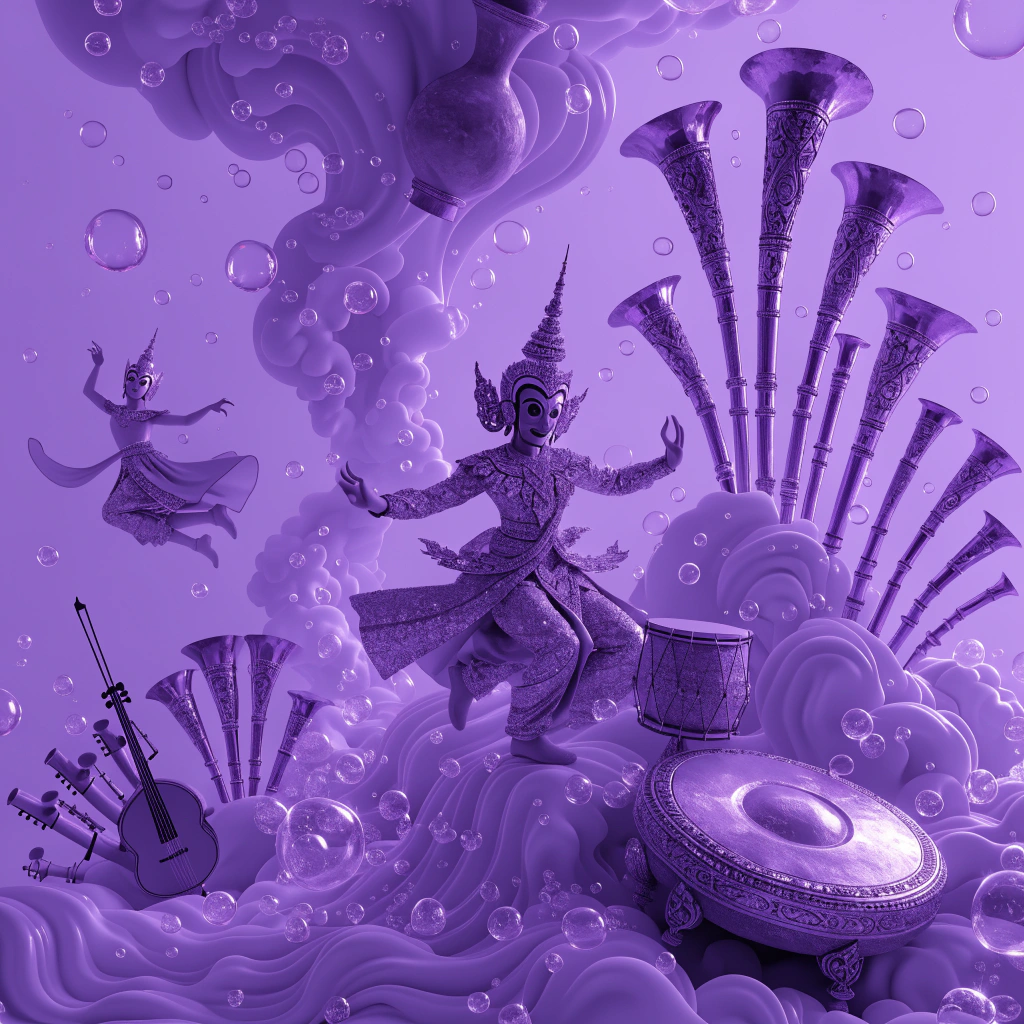
Thai Classical Music: The Piphat
Piphat is a special kind of music from Thailand. It is very old and very important. People play this music at royal ceremonies and in Buddhist temples. It is a big part of Thai history.
The music has many instruments. There are drums and gongs. There is also a wind instrument called a Pi. It makes a loud and beautiful sound.
Many musicians play together. They create a big sound. You can hear this music at a Thai theater or a festival. It is very beautiful to hear.
文法スポットライト
パターン: Present Simple (to be)
"Piphat is a special kind of music from Thailand."
We use 'is' for singular subjects to describe facts or states. It helps us give information about what something is.
パターン: There is / There are
"There are drums and gongs."
We use 'There are' for plural things and 'There is' for singular things. It shows that something exists in a place.
理解度をチェック
10 問 · A1 初級 · 無料プレビュー 1回
この記事で学んだことをテストしよう。全問正解してXPを獲得!
Where is Piphat music from?
問題の内訳
Where is Piphat music from?
あなたの回答:
正解: Thailand
Piphat music is new.
あなたの回答:
正解: 間違い
What does 'beautiful' mean?
あなたの回答:
正解: Very nice to hear
There is also a wind _____ called a Pi.
あなたの回答:
正解: instrument
Piphat: The Traditional Music of Thailand
Piphat is a very famous type of traditional music from Thailand. It is an ensemble, which means a group of musicians playing together. You can hear this music at royal ceremonies, Buddhist festivals, and traditional dance shows. It is older and more traditional than modern pop music.
The ensemble uses many percussion instruments. The most important instrument is the Ranat Ek. It looks like a wooden xylophone and has a beautiful sound. There is also a special wind instrument called the Pi. It has a very loud and sharp sound. The musicians play different melodies at the same time. This makes the music sound very busy and energetic.
In the past, Piphat music was mostly for the king and the royal court. Today, many people in Thailand enjoy it. It is very important for Thai culture because it helps tell stories. For example, musicians play Piphat during the Khon masked dance. This music is louder than other styles, but it is very peaceful too. It is a special part of Thailand's history.
文法スポットライト
パターン: Comparatives
"It is older and more traditional than modern pop music."
We use comparatives to compare two things. For short adjectives like 'old', we add '-er'. For long adjectives like 'traditional', we use 'more' before the word.
パターン: Past Simple (State)
"In the past, Piphat music was mostly for the king and the royal court."
The past simple of the verb 'to be' is 'was' (singular) or 'were' (plural). It describes a situation or state that happened and finished in the past.
理解度をチェック
11 問 · A2 初級 · 無料プレビュー 1回
この記事で学んだことをテストしよう。全問正解してXPを獲得!
What is a Piphat?
問題の内訳
What is a Piphat?
あなたの回答:
正解: A group of musicians
Piphat music is a modern style of pop music.
あなたの回答:
正解: 間違い
What does 'instrument' mean?
あなたの回答:
正解: An object used for music
The Ranat Ek looks like a wooden _____.
あなたの回答:
正解: xylophone
Where can you hear Piphat music today?
あなたの回答:
正解: At festivals and dance shows
The Magic of Piphat: Thailand's Traditional Sound
The Piphat is the most famous type of classical music ensemble in Thailand. It has been played for many centuries and remains a vital part of Thai culture today. This music is often heard during royal ceremonies, Buddhist rituals, and traditional theater performances. For example, the Piphat provides the essential accompaniment for Khon, which is a famous Thai masked dance.
The ensemble is characterized by its use of percussion instruments and a special wind instrument called the Pi. The most important instrument is the Ranat Ek, a wooden xylophone that leads the group. There are also many different drums and gongs that create a rich, complex sound. In a Piphat performance, several melodic lines are played at the same time. This creates a polyphonic texture where different melodies weave around a central theme.
Because the music is very sophisticated, musicians must practice for many years to master it. Historically, the Piphat ensemble symbolized the power and elegance of the Thai royal court. Today, the tradition has been preserved by dedicated teachers and students who want to keep their heritage alive. Even though modern music is popular in Thailand, the unique sound of the Piphat is still respected by people of all ages. It is a beautiful symbol of Thailand’s long history and artistic spirit.
文法スポットライト
パターン: The Passive Voice
"The ensemble is characterized by its use of percussion instruments."
The passive voice is formed using 'be' + past participle. It is used here to focus on the ensemble rather than who is doing the characterizing.
パターン: Relative Clauses with 'which'
"The Piphat provides the essential accompaniment for Khon, which is a famous Thai masked dance."
A relative clause adds extra information about a noun. 'Which' is used here to provide more detail about the noun 'Khon'.
理解度をチェック
11 問 · B1 中級 · 無料プレビュー 1回
この記事で学んだことをテストしよう。全問正解してXPを獲得!
What is the Piphat primarily known as in Thailand?
問題の内訳
What is the Piphat primarily known as in Thailand?
あなたの回答:
正解: A classical music ensemble
The Piphat ensemble only uses wind instruments.
あなたの回答:
正解: 間違い
What does the word 'ritual' mean?
あなたの回答:
正解: A religious or formal ceremony
The Ranat Ek is a type of _____ instrument that leads the group.
あなたの回答:
正解: percussion
Where is Piphat music often heard?
あなたの回答:
正解: During royal ceremonies and rituals
The Resonance of Tradition: Understanding the Thai Piphat Ensemble
The Piphat ensemble represents the pinnacle of Thai classical music, a tradition that has been meticulously preserved for centuries. Characterized by its vibrant and piercing sound, this musical arrangement has long served as the primary accompaniment for royal ceremonies and sacred rituals. Despite the influx of Western musical influences, the Piphat remains an integral part of Thailand’s cultural identity, reflecting a history of artistic sophistication.
One cannot discuss the Piphat without mentioning its unique instrumentation. The ensemble is primarily composed of tuned percussion instruments and a single woodwind instrument known as the 'Pi'. The Ranat Ek, a leading xylophone, often takes center stage, delivering rapid melodic passages that require immense skill and precision. These instruments are not merely tools for entertainment; they are frequently treated as sacred objects, often being blessed before performances to honor the spirits of musical ancestors. To the Thai people, the music is a bridge between the earthly and spiritual realms.
The musical structure of a Piphat performance is fascinatingly complex. Unlike Western orchestras, which often follow a vertical harmonic progression, Piphat music is fundamentally polyphonic. This means that several melodic lines are played simultaneously, weaving around a central, unspoken theme. Each musician must maintain a delicate balance, ensuring their individual contribution enhances the collective sound without overshadowing the main melody. This intricate layering creates a dense texture that is both haunting and celebratory, a characteristic that has fascinated ethnomusicologists for decades.
Historically, the Piphat was synonymous with the sophistication of the Thai court. It provided the soundtrack for Khon masked dances and Nang Yai shadow plays, elevating these performances to a spiritual level. Furthermore, the choice of mallets—hard or soft—can drastically alter the ensemble's tone, adapting it for indoor or outdoor settings. In contemporary Thailand, the ensemble continues to play a vital role in Buddhist rituals and national celebrations. Students across the country still dedicate years to mastering these instruments, ensuring that the cultural resonance of the Piphat will be heard by future generations.
While modern technology has changed how people consume music, the Piphat's enduring popularity suggests a deep-seated respect for heritage. It is not just about the notes played; it is about the preservation of a national soul. By analyzing the Piphat, we gain insight into the values of Thai society—discipline, respect for tradition, and the pursuit of artistic excellence.
文法スポットライト
パターン: The Passive Voice
"The ensemble is primarily composed of tuned percussion instruments..."
The passive voice is used here to focus on the ensemble rather than the person who created it. It is formed using 'to be' + the past participle.
パターン: Present Perfect Passive
"...a tradition that has been meticulously preserved for centuries."
This pattern shows an action that started in the past and continues to the present, emphasizing the object. It uses 'has/have been' + past participle.
パターン: Reduced Relative Clauses (Participle Phrases)
"Characterized by its vibrant and piercing sound, this musical arrangement..."
This structure functions as an adjective to describe the subject. It is a more formal way to provide background information without starting a new sentence.
理解度をチェック
11 問 · B2 中上級 · 無料プレビュー 1回
この記事で学んだことをテストしよう。全問正解してXPを獲得!
What is the primary role of the Piphat ensemble in Thai culture?
問題の内訳
What is the primary role of the Piphat ensemble in Thai culture?
あなたの回答:
正解: To accompany royal ceremonies and sacred rituals
The Piphat ensemble is mainly composed of string instruments like the violin.
あなたの回答:
正解: 間違い
What does 'polyphonic' mean in the context of the article?
あなたの回答:
正解: Multiple melodic lines played at the same time
The leading xylophone in the ensemble, known for its rapid melodic passages, is the Ranat _____.
あなたの回答:
正解: Ek
Historically, where was the Piphat ensemble most commonly heard?
あなたの回答:
正解: In the Thai royal court
タイ古典音楽の精髄:ピパット合奏団が織りなす音の曼荼羅
タイの豊かな文化遺産の中核をなすものの一つに、独特の音色と様式美を誇る古典音楽があります。その中でも最も象徴的かつ不可欠な存在として知られるのが、ピパット合奏団に他なりません。王室の儀式、仏教の行事、そしてコーンやナンヤイといった伝統的な演劇形式の伴奏に至るまで、その用途は多岐にわたり、タイ社会の精神性と深く結びついています。
ピパット合奏団を特徴づけるのは、何よりもその楽器構成にあります。メロディを奏でる木琴や鉄琴、リズムを刻む様々な打楽器、そして合奏全体を貫くような鋭い音色を持つダブルリードの管楽器「ピー・ナイ」が主要な要素として挙げられます。これらの楽器が一体となって織り成すサウンドは、一度耳にすれば忘れがたい、重層的かつポリフォニーな響きを特徴とします。複数の旋律線が複雑に絡み合いながらも、見事な調和を保ち、中心となる主題を浮き彫りにするその演奏様式は、まさに音の曼荼羅と呼ぶに相応しいでしょう。
この合奏団の歴史は古く、アユタヤ時代にまで遡るとされています。王宮文化の中で洗練され、その典雅な響きはタイの宮廷文化の象徴として位置づけられてきました。単なる音楽の形態に留まらず、ピパットの音色は、人々の生活に深く根ざし、喜びや悲しみ、そして信仰といった普遍的な感情を表現する媒体であり続けてきたのです。その壮麗な音色は、聴衆を厳粛な儀式の世界へと誘い、あるいは物語の情景を鮮やかに描き出す力を持っています。
現代においても、ピパットは脈々と継承されており、国立劇場での公演はもとより、寺院の祭事や特別な祝典の場では欠かすことのできない存在です。しかし、その継承には課題も少なくありません。西洋音楽の普及や若者の音楽嗜好の変化といった現代社会の波は、伝統音楽の担い手不足や聴衆の減少といった問題を引き起こしています。このような状況にあって、ピパットの豊かな伝統を次世代に繋ぐためには、単に技術を伝承するだけでなく、その文化的価値や魅力を再認識させるための新たなアプローチが求められているのは言うまでもありません。
例えば、学校教育における伝統音楽の導入強化や、現代的な要素を取り入れた新たな演奏形態の模索などが、その一助となることでしょう。ピパットが持つ独特の世界観と、それが内包するタイ文化の深遠さを理解することは、異文化理解の入り口としても極めて重要です。この比類なき音楽文化が、今後もその輝きを失うことなく、世界中の人々を魅了し続けることを願ってやみません。
文法スポットライト
パターン: ~に他ならない
"その中でも最も象徴的かつ不可欠な存在として知られるのが、ピパット合奏団に他なりません。"
「~に他ならない」は、「~であるに違いない」「~以外のものではない」という意味で、断定的な結論や強調を表す表現です。多くの場合、主語が述語そのものであることを強く主張する際に用いられます。名詞や名詞句の後に続きます。
パターン: ~といったところで
"コーンやナンヤイといった伝統的な演劇形式の伴奏に至るまで、その用途は多岐にわたり、タイ社会の精神性と深く結びついています。"
「~といったところで」は、いくつかの例を挙げて「~のようなもの」と示す表現です。特に、その後に続く文で「多様性」や「広範囲」であることを示す際に使われます。具体的な例を提示することで、読者の理解を助けます。
パターン: ~にあって
"このような状況にあって、ピパットの豊かな伝統を次世代に繋ぐためには、単に技術を伝承するだけでなく、その文化的価値や魅力を再認識させるための新たなアプローチが求められているのは言うまでもありません。"
「~にあって」は、「~の状況で」「~の環境において」という意味で、ある特定の状況下での行動や状態を述べる際に使われます。やや硬い表現で、特に困難な状況や重要な局面で用いられることが多いです。
理解度をチェック
12 問 · C1 上級 · 無料プレビュー 1回
この記事で学んだことをテストしよう。全問正解してXPを獲得!
ピパット合奏団がタイ社会で果たす役割として、記事中で最も強調されているのはどれですか?
問題の内訳
ピパット合奏団がタイ社会で果たす役割として、記事中で最も強調されているのはどれですか?
あなたの回答:
正解: 王室の儀式や仏教行事の伴奏
ピパット合奏団の音色は、複数の旋律が独立して進行するポリフォニーな響きを特徴としている。
あなたの回答:
正解: 正しい
「不可欠」という言葉の、記事中の意味として最も適切なものはどれですか?
あなたの回答:
正解: なくてはならないほど重要
ピパット合奏団の主要な管楽器は、「ピー・_____」と呼ばれています。
あなたの回答:
正解: ナイ
記事によると、ピパット合奏団の歴史はいつの時代まで遡るとされていますか?
あなたの回答:
正解: アユタヤ時代
現代社会において、ピパットの継承には全く問題がないと記事は述べている。
あなたの回答:
正解: 間違い
The Sonic Tapestry of the Siamese Court: An Ontological Analysis of the Piphat Ensemble
Seldom has any musical tradition maintained such a rigid adherence to its ancestral roots while simultaneously adapting to the shifting sands of global modernity. The Piphat, the quintessential classical ensemble of Thailand, represents an intricate convergence of ritualistic duty and aesthetic sophistication. To the uninitiated ear, the ensemble’s output might appear as a cacophony of percussive resonance; however, to the scholarly observer, it reveals a profound ontological depth. Were one to strip the Piphat of its ceremonial function, the music would ostensibly lose its grounding, for its very existence is inextricably linked to the sacred and the courtly. At the heart of the Piphat’s sonic identity lies the concept of heterophony—a musical texture characterized by the simultaneous variation of a single melodic line. This is not merely a technical choice but a philosophical paradigm. Each instrument, from the high-pitched xylophone known as the ranat ek to the circular gong chimes of the khong wong yai, performs a unique idiomatic elaboration of a central, often unspoken, melody. The khong wong yai, which provides the 'basic melody,' serves as the structural foundation upon which all other instruments build. The ranat ek, conversely, is tasked with performing the melody in octaves with complex, rapid-fire variations that demand a high degree of manual dexterity. This polyphonic stratification creates a dense, shimmering atmosphere where the evanescent nature of the notes reflects the Buddhist concept of impermanence. The Pi Nai, a piercing double-reed wind instrument, acts as the only non-percussive element, weaving a melodic thread that binds the rhythmic layers together. The historical lineage of the Piphat is a vestige of the Ayutthaya period’s courtly grandeur. Historically, the ensemble enjoyed the exclusive patronage of the monarchy, serving as the sonic backdrop for royal coronations and the Khon masked dance-drama. It is widely contended that the complexity of the music served to mirror the stratified social hierarchies of the time. This symbiosis between sound and social structure meant that to master the Piphat was to understand the very fabric of Siamese governance and spirituality. Even today, the esoteric knowledge required to perform these pieces is passed down through the Wai Khru ceremony, a ritual of paying respect to teachers, which ensures that the tradition remains untainted by the vulgarities of commercialism. Furthermore, the aesthetic appeal of the Piphat lies in its ineffable ability to evoke the sublime. The music does not seek to provide a linear narrative in the Western sense; rather, it aims to create a ritualistic space where time seems to suspend. This suspension is achieved through a meticulous balance of dynamics and tempo, where the lead xylophone player must exhibit both technical virtuosity and emotional restraint. The interplay between the rhythmic pulse of the ching and the larger drums like the taphon creates a temporal framework that is both cyclical and forward-moving. Should a performer prioritize individual flair over the collective harmony, the delicate equilibrium of the ensemble would be irrevocably shattered. In the contemporary era, the Piphat faces the inevitable challenge of maintaining its relevance in a globalized world. While some critics argue that it has become a museum piece, a mere relic of a bygone era, others see it as a vibrant, living tradition. The inherent resilience of the Piphat lies in its capacity to adapt without losing its core identity. Whether it is providing the accompaniment for a village funeral or a grand state ceremony, the ensemble remains a potent symbol of Thai cultural identity. Ultimately, the Piphat is more than just music; it is a sonic manifestation of the Thai soul, a bridge between the terrestrial and the divine, and a testament to the enduring power of traditional art in the face of modernity.
文法スポットライト
パターン: Inversion with Negative Adverbials
"Seldom has any musical tradition maintained such a rigid adherence to its ancestral roots while simultaneously adapting to the shifting sands of global modernity."
When an adverbial with a negative or restrictive meaning is placed at the beginning of a sentence for emphasis, the subject and auxiliary verb are inverted. This is common in formal, academic, and C2-level writing.
パターン: The Subjunctive Mood (Inverted Conditional)
"Were one to strip the Piphat of its ceremonial function, the music would ostensibly lose its grounding."
The 'were' inversion is used to express a hypothetical or formal conditional statement (if one were to...). It removes the 'if' and places the verb at the start, signaling high-level proficiency and literary style.
パターン: Academic Hedging and Passive Voice
"It is widely contended that the complexity of the music served to mirror the stratified social hierarchies of the time."
Hedging (using 'it is contended that' instead of 'I think') allows the writer to distance themselves from a claim and present it as a scholarly debate. It uses the passive voice to maintain an objective, analytical tone.
理解度をチェック
12 問 · C2 マスター · 無料プレビュー 1回
この記事で学んだことをテストしよう。全問正解してXPを獲得!
What is the primary musical texture of the Piphat ensemble?
問題の内訳
What is the primary musical texture of the Piphat ensemble?
あなたの回答:
正解: Heterophony
The Pi Nai is a percussive instrument that provides the rhythmic foundation.
あなたの回答:
正解: 間違い
Which word describes something that is 'too great to be expressed in words'?
あなたの回答:
正解: Ineffable
The Piphat's polyphonic _____ creates a dense, shimmering atmosphere.
あなたの回答:
正解: stratification
Which ritual is mentioned as the primary way esoteric knowledge is passed down?
あなたの回答:
正解: Wai Khru
The article suggests that individual virtuosity is more important than collective harmony in Piphat.
あなたの回答:
正解: 間違い

