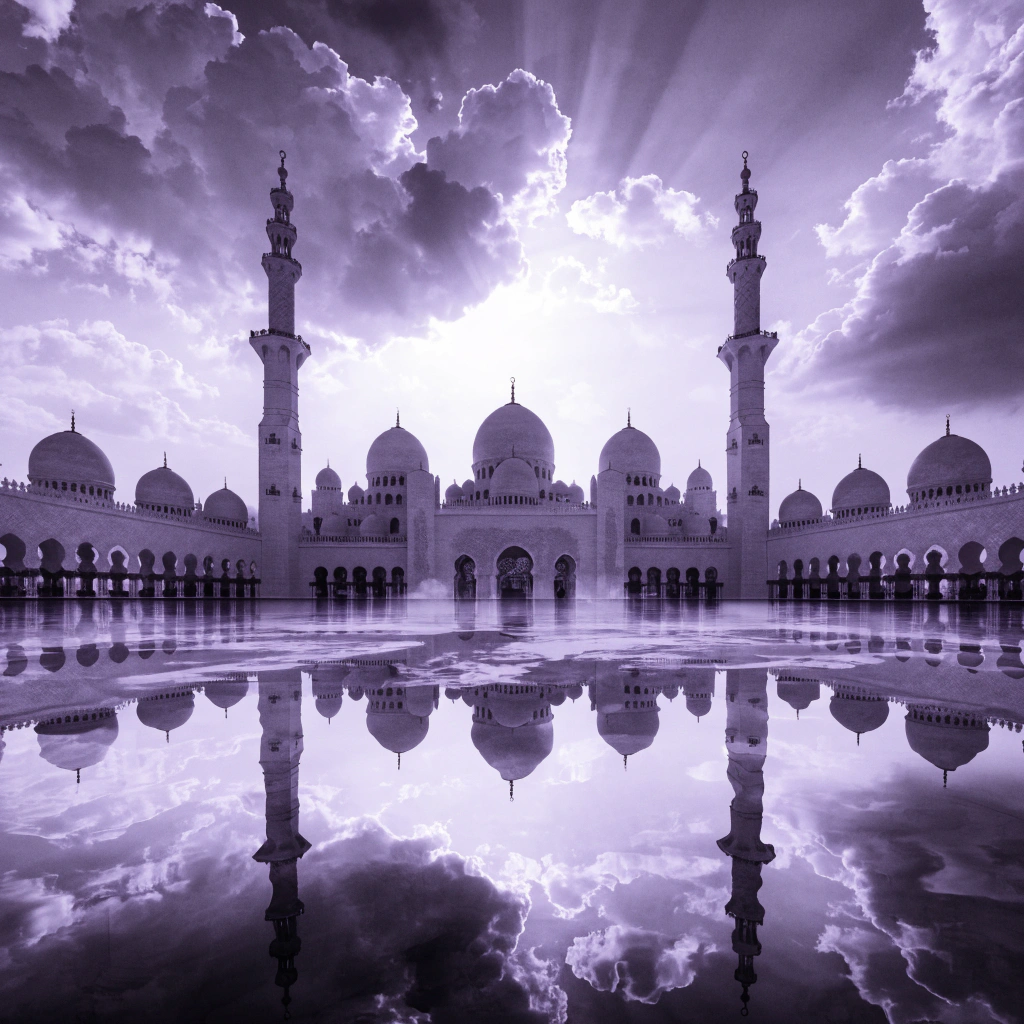
The Beautiful Grand Mosque
The Sheikh Zayed Grand Mosque is in Abu Dhabi. It is a very large and beautiful building. It is white and has many domes. There are eighty-two domes in total.
The mosque is a place for prayer. Many people visit it every day. Inside, there is a very big carpet. It is the largest carpet in the world. There are also many gold lamps.
The mosque is special for the people of the UAE. It is a symbol of peace. You can see the mosque from far away. It is open to everyone.
نکته دستوری
الگو: Present Simple 'to be'
"The Sheikh Zayed Grand Mosque is in Abu Dhabi."
We use 'is' with singular subjects like the mosque. It describes a fact or a location.
الگو: There is / There are
"There are eighty-two domes in total."
We use 'There are' for plural things (more than one). We use 'There is' for one thing.
درک خود را بسنجید
10 سوال · A1 مبتدی · 1 پیشنمایش رایگان
آنچه از این مقاله آموختید را بسنجید. به همه سؤالات پاسخ دهید و XP کسب کنید!
Where is the mosque located?
آیا میخواهید آزمون را تمام کنید؟
9 سؤال دیگر منتظر شماست. ثبتنام رایگان کنید تا آزمون کامل را باز کنید و XP کسب کنید!
ثبتنام رایگانقبلاً ثبتنام کردی؟ ورود
جزئیات سؤالات
Where is the mosque located?
پاسخ شما:
پاسخ درست: Abu Dhabi
The mosque is a very small building.
پاسخ شما:
پاسخ درست: نادرست
What is a carpet?
پاسخ شما:
پاسخ درست: A soft floor covering
The mosque is a symbol of _____.
پاسخ شما:
پاسخ درست: peace
The Beautiful Sheikh Zayed Grand Mosque
The Sheikh Zayed Grand Mosque is in Abu Dhabi, the capital of the United Arab Emirates. It is one of the most beautiful buildings in the world. Sheikh Zayed bin Sultan Al Nahyan, the first president of the UAE, wanted to build this mosque. He wanted a place that showed Islamic art and brought different cultures together.
Workers started building the mosque in 1996 and finished it in 2007. It is very large because more than 40,000 people can pray there at the same time. The mosque has 82 white domes and four tall towers. Inside, there is the largest hand-made carpet in the world. It is also more colorful than many other mosques because it has gold and beautiful stones.
Visitors from many countries come to see the mosque every day. They like the white marble and the quiet gardens. It is a very important place for the people of the UAE. It is a symbol of their history and their future.
نکته دستوری
الگو: Past Simple
"Workers started building the mosque in 1996 and finished it in 2007."
We use the past simple to talk about completed actions in the past. For regular verbs, we add '-ed' to the base form of the verb.
الگو: Comparatives
"It is also more colorful than many other mosques because it has gold and beautiful stones."
We use 'more + adjective + than' to compare two things when the adjective is long. This shows how one thing is different from another.
درک خود را بسنجید
11 سوال · A2 مقدماتی · 1 پیشنمایش رایگان
آنچه از این مقاله آموختید را بسنجید. به همه سؤالات پاسخ دهید و XP کسب کنید!
In which city is the Sheikh Zayed Grand Mosque located?
آیا میخواهید آزمون را تمام کنید؟
10 سؤال دیگر منتظر شماست. ثبتنام رایگان کنید تا آزمون کامل را باز کنید و XP کسب کنید!
ثبتنام رایگانقبلاً ثبتنام کردی؟ ورود
جزئیات سؤالات
In which city is the Sheikh Zayed Grand Mosque located?
پاسخ شما:
پاسخ درست: Abu Dhabi
It took eleven years to finish building the mosque.
پاسخ شما:
پاسخ درست: درست
What does the word 'symbol' mean in the text?
پاسخ شما:
پاسخ درست: Something that represents an idea
The mosque has 82 white _____.
پاسخ شما:
پاسخ درست: domes
How many people can pray in the mosque at the same time?
پاسخ شما:
پاسخ درست: 40,000
The Sheikh Zayed Grand Mosque: A Masterpiece of Abu Dhabi
The Sheikh Zayed Grand Mosque is a beautiful symbol of peace and culture located in Abu Dhabi. It was built to honor the vision of Sheikh Zayed bin Sultan Al Nahyan, who was the founding father of the United Arab Emirates. He wanted to create a place that connects different Islamic cultures with modern architecture and art.
Construction on the mosque began in 1996 and it was completed in 2007. Since it opened, millions of people have visited this incredible landmark. The mosque is famous for its size, as it can hold more than 40,000 worshippers at once. The building is covered in white marble, which reflects the sunlight during the day and looks magical under the moon at night.
Inside the mosque, there are many unique features that have been crafted by international artists. For example, the main prayer hall has the world's largest hand-knotted carpet. This carpet was made by about 1,200 weavers from Iran. There are also seven massive chandeliers which are decorated with millions of crystals. The mosque’s design was inspired by Persian, Mughal, and Alexandrian styles. These elements have been combined to create a unique masterpiece.
The mosque is not just a place for prayer; it is also an educational center. Visitors from all over the world are welcomed here to learn about Islamic art and history. The mosque has become a bridge between different nations because it celebrates diversity and unity. If you travel to the UAE, you should not miss this magnificent site which has won many awards for its beauty and design.
نکته دستوری
الگو: Passive Voice
"It was built to honor the vision of Sheikh Zayed bin Sultan Al Nahyan."
The passive voice is used when the person or thing receiving the action is more important than the one doing it. It is formed using 'be' + the past participle.
الگو: Relative Clauses
"The building is covered in white marble, which reflects the sunlight during the day."
Relative clauses give more information about a noun. We use 'who' for people and 'which' or 'that' for things.
درک خود را بسنجید
11 سوال · B1 متوسط · 1 پیشنمایش رایگان
آنچه از این مقاله آموختید را بسنجید. به همه سؤالات پاسخ دهید و XP کسب کنید!
What was the main goal of Sheikh Zayed in building the mosque?
آیا میخواهید آزمون را تمام کنید؟
10 سؤال دیگر منتظر شماست. ثبتنام رایگان کنید تا آزمون کامل را باز کنید و XP کسب کنید!
ثبتنام رایگانقبلاً ثبتنام کردی؟ ورود
جزئیات سؤالات
What was the main goal of Sheikh Zayed in building the mosque?
پاسخ شما:
پاسخ درست: To unite Islamic cultures with modern architecture
The construction of the mosque was completed in 1996.
پاسخ شما:
پاسخ درست: نادرست
What does 'landmark' mean?
پاسخ شما:
پاسخ درست: A famous building or site that is easily recognized
The building is covered in white _____, which reflects the sunlight.
پاسخ شما:
پاسخ درست: marble
How many worshippers can the mosque hold at the same time?
پاسخ شما:
پاسخ درست: Over 40,000
The Sheikh Zayed Grand Mosque: A Monumental Fusion of Faith and Art
Located in the heart of Abu Dhabi, the Sheikh Zayed Grand Mosque stands as a monumental testament to the vision of the late Sheikh Zayed bin Sultan Al Nahyan, the founding father of the United Arab Emirates. His primary objective was to establish a structure that would unite the diverse cultures of the Islamic world with the historical and modern values of architecture. Consequently, the mosque has become more than just a place of worship; it is a global landmark that promotes cultural exchange and mutual understanding. Having been constructed over a period of eleven years, the mosque was finally completed in 2007, showcasing meticulous craftsmanship from across the globe.
The architecture of the mosque is a sophisticated fusion of various Islamic styles, including Fatimid, Mamluk, and Ottoman influences. This blend creates a harmonious aesthetic that honors the past while embracing contemporary design. Natural materials such as marble, gold, semi-precious stones, and ceramics were selected for their beauty and durability. Furthermore, the use of symmetry is evident throughout the structure, with 82 domes of varying sizes and four minarets that reach a height of 107 meters. The pure white marble cladding, which covers the exterior, symbolizes peace and purity, reflecting the sunlight during the day and the lunar phases at night.
Inside the main prayer hall, visitors are often overwhelmed by the sheer grandeur of the interior. The hall features the world’s largest hand-knotted carpet, which was hand-knotted by approximately 1,200 artisans over two years. This intricate masterpiece consists of 70% wool and 30% cotton, covering an area of over 5,000 square meters. In addition to the carpet, seven massive chandeliers, decorated with millions of Swarovski crystals, hang from the ceilings. The largest of these chandeliers is one of the biggest in the world, serving as a focal point for the hall’s breathtaking design.
Beyond its architectural brilliance, the mosque plays a vital role in the community. It is capable of accommodating over 40,000 worshippers at once, making it one of the largest mosques in the world. Unlike many other religious sites, the Sheikh Zayed Grand Mosque is open to visitors of all faiths, encouraging an open dialogue between different cultures. If one were to visit this site, they would surely appreciate how it balances religious tradition with a message of global peace. Ultimately, the mosque remains a symbol of the UAE’s commitment to tolerance and its enduring respect for Islamic heritage.
نکته دستوری
الگو: Present Perfect Passive
"Having been constructed over a period of eleven years, the mosque was finally completed in 2007."
This structure uses a perfect participle in the passive voice to indicate that one action was completed before another. It emphasizes the duration and the result of the construction process.
الگو: Non-defining Relative Clauses
"The carpet, which was hand-knotted by approximately 1,200 artisans, is considered a masterpiece of textile art."
The clause starting with 'which' adds extra information about the carpet. It is separated by commas because the sentence would still make sense without it.
الگو: Second Conditional
"If one were to visit this site, they would surely appreciate how it balances religious tradition with a message of global peace."
This pattern is used to talk about a hypothetical or unlikely situation in the present or future. It uses 'if' + past subjunctive (were) and 'would' + base verb.
درک خود را بسنجید
11 سوال · B2 بالاتر از متوسط · 1 پیشنمایش رایگان
آنچه از این مقاله آموختید را بسنجید. به همه سؤالات پاسخ دهید و XP کسب کنید!
What was the primary goal of Sheikh Zayed in building the mosque?
آیا میخواهید آزمون را تمام کنید؟
10 سؤال دیگر منتظر شماست. ثبتنام رایگان کنید تا آزمون کامل را باز کنید و XP کسب کنید!
ثبتنام رایگانقبلاً ثبتنام کردی؟ ورود
جزئیات سؤالات
What was the primary goal of Sheikh Zayed in building the mosque?
پاسخ شما:
پاسخ درست: To unite diverse Islamic cultures with modern architectural values
The mosque is exclusive to Muslim visitors only.
پاسخ شما:
پاسخ درست: نادرست
Which word describes something that is very complicated and detailed?
پاسخ شما:
پاسخ درست: Intricate
The mosque is capable of _____ over 40,000 worshippers at the same time.
پاسخ شما:
پاسخ درست: accommodating
How many domes does the Sheikh Zayed Grand Mosque have?
پاسخ شما:
پاسخ درست: 82
A Synthesis of Civilizations: The Architectural Legacy of the Sheikh Zayed Grand Mosque
Rarely in the annals of modern architecture has a structure so successfully harmonized the disparate threads of Islamic heritage into a singular, cohesive masterpiece. The Sheikh Zayed Grand Mosque, situated in the heart of Abu Dhabi, stands as a testament to the visionary foresight of the UAE’s founding father. What he sought to achieve was a sanctuary that transcended mere physical boundaries, serving instead as a global beacon of tolerance and cultural synthesis. Through the meticulous selection of materials—from Macedonian Sivec marble to semi-precious lapis lazuli—the mosque exemplifies an opulent yet refined aesthetic that defies conventional categorization.
The architectural narrative of the mosque is a sophisticated dialogue between history and modernity. Not only does the structure incorporate elements from the Fatimid, Mamluk, and Ottoman periods, but it also integrates state-of-the-art technology to reflect the lunar cycle through its exterior lighting. This juxtaposition of the traditional and the contemporary serves to underscore the UAE’s broader geopolitical identity. The sheer scale of the project, which took over a decade to manifest, reflects a profound nominalization of national pride; the very act of construction became a statement of cultural permanence and an invitation to global observers to witness the beauty of Islamic art.
Within the prayer halls, the intricacy of the design is overwhelming. The integration of diverse architectural styles represents a deliberate effort to unite the Ummah, or the global Muslim community. The world’s largest hand-knotted carpet, sprawling across the main prayer hall, serves as a metaphor for this unity. Its creation involved thousands of weavers whose collective effort resonates through the silent grandeur of the space. Every chandelier and every floral inlay is not merely a decorative choice but a paradigm of the mosque's commitment to excellence and its role as a repository of human craftsmanship.
The mosque’s cultural significance extends beyond its religious function. It acts as a bridge between civilizations, inviting visitors of all faiths to explore its corridors. This openness is a manifestation of the late Sheikh Zayed’s belief that diversity is a source of strength rather than division. By fostering an environment where art and spirituality intersect, the mosque encourages critical analysis of how sacred spaces can influence social cohesion in the 21st century.
Ultimately, the Sheikh Zayed Grand Mosque is more than a landmark; it is a living entity that evolves with the light of the moon and the voices of the faithful. It remains a powerful symbol of how historical reverence and modern ambition can coexist. As visitors wander through its vast courtyards, they are reminded that true beauty often lies in the harmonious blending of different worlds, creating a legacy that will undoubtedly continue to inspire for generations to come.
نکته دستوری
الگو: Inversion
"Rarely in the annals of modern architecture has a structure so successfully harmonized the disparate threads of Islamic heritage..."
Used for emphasis, inversion occurs when the auxiliary verb comes before the subject after negative or restrictive adverbs like 'rarely'.
الگو: Cleft Sentences
"What he sought to achieve was a sanctuary that transcended mere physical boundaries..."
Cleft sentences focus on specific information by dividing a clause into two parts, typically starting with 'What' or 'It is/was'.
الگو: Nominalisation
"The integration of diverse architectural styles represents a deliberate effort to unite the Ummah..."
Nominalisation is the use of a noun phrase instead of a verb or adjective (e.g., 'integration' instead of 'integrate') to sound more formal and academic.
درک خود را بسنجید
12 سوال · C1 پیشرفته · 1 پیشنمایش رایگان
آنچه از این مقاله آموختید را بسنجید. به همه سؤالات پاسخ دهید و XP کسب کنید!
What was the primary vision of Sheikh Zayed for the mosque?
آیا میخواهید آزمون را تمام کنید؟
11 سؤال دیگر منتظر شماست. ثبتنام رایگان کنید تا آزمون کامل را باز کنید و XP کسب کنید!
ثبتنام رایگانقبلاً ثبتنام کردی؟ ورود
جزئیات سؤالات
What was the primary vision of Sheikh Zayed for the mosque?
پاسخ شما:
پاسخ درست: To create a sanctuary of cultural synthesis and tolerance
The mosque's lighting system is designed to reflect the phases of the moon.
پاسخ شما:
پاسخ درست: درست
What does 'meticulous' mean in the context of the article?
پاسخ شما:
پاسخ درست: Very careful and precise
The mosque represents a _____ of different Islamic styles and modern technology.
پاسخ شما:
پاسخ درست: synthesis
The carpet in the main prayer hall is described as a metaphor for what?
پاسخ شما:
پاسخ درست: Unity
The construction of the mosque was completed in under five years.
پاسخ شما:
پاسخ درست: نادرست
A Synthesis of the Infinite: The Ontological Grandeur of the Sheikh Zayed Grand Mosque
The Sheikh Zayed Grand Mosque in Abu Dhabi represents more than a mere zenith of contemporary Islamic architecture; it serves as a profound ontological statement on the convergence of cultural pluralism and spiritual devotion. Commissioned by the late Sheikh Zayed bin Sultan Al Nahyan, the founding father of the United Arab Emirates, the structure was conceived as a crucible wherein the disparate artistic lineages of the Islamic world might coalesce into a unified, transcendent aesthetic. It is often posited that the mosque functions as an architectural palimpsest, layering Fatimid, Mamluk, and Ottoman influences with a modern sensibility that eschews the parochial in favor of the universal.
Were one to scrutinize the meticulous selection of materials, the globalized nature of its construction would become immediately apparent. The edifice is clad in pristine Sivec marble from Macedonia, an intentional choice that reflects a desire for a luminosity that borders on the ethereal. This is further augmented by the inclusion of semi-precious stones—lapis lazuli, amethyst, and jasper—inlaid into the marble through the traditional 'pietra dura' technique. Such opulence is not intended as a display of vanity, but rather as a symbolic tribute to the richness of the divine. It is through this syncretism of global resources and traditional craftsmanship that the mosque asserts its position as a global paradigm of religious architecture.
Furthermore, the mosque’s interiority invites a scholarly interrogation of the relationship between space and spirituality. The main prayer hall houses the world’s largest hand-knotted carpet, a feat of Iranian artistry that took two years to complete. The intricate floral motifs do not merely serve a decorative function; they represent a botanical taxonomy of the Islamic world, reinforcing the theme of unity in diversity. Above, the Swarovski-encrusted chandeliers mirror this floral geometry, their light refracting off the qibla wall which is inscribed with ninety-nine names of Allah in subtle Kufic calligraphy. This interplay of light and shadow, of the monumental and the minute, creates a sanctuary that is at once grandiose and intimately contemplative. This balance is further maintained by the reflective pools that surround the mosque, which amplify its grandeur while providing a sense of tranquility.
One might argue that the mosque’s significance extends beyond its liturgical function, positioning itself as a cornerstone of cultural diplomacy. In an era often characterized by ideological fragmentation, the Sheikh Zayed Grand Mosque stands as a liminal space where the secular and the sacred engage in a silent dialogue. It is a testament to the fact that tradition is not a static vestige of the past, but a living, breathing entity that evolves through interaction with the contemporary world. Rarely has a structure so successfully bridged the epistemological gap between historical reverence and forward-looking aspiration.
Ultimately, the mosque is an enduring legacy of Sheikh Zayed’s vision for a world defined by tolerance and mutual respect. It is imperative that the visitor perceive the structure not simply as a tourist destination, but as a sophisticated discourse on the possibilities of human collaboration. By harmonizing the architectural vernaculars of various eras and regions, the mosque achieves a state of aesthetic equilibrium that challenges the observer to reconsider the boundaries of cultural identity. It remains a beacon of intellectual and spiritual enlightenment, inviting all who enter to participate in a shared experience of wonder and reflection.
نکته دستوری
الگو: Inverted Conditional (Subjunctive)
"Were one to scrutinize the meticulous selection of materials, the globalized nature of its construction would become immediately apparent."
This formal structure replaces 'If one were to...' by moving the verb to the front. It is used in academic writing to present hypothetical scenarios with a high degree of formality.
الگو: Negative Inversion for Emphasis
"Rarely has a structure so successfully bridged the epistemological gap between historical reverence and forward-looking aspiration."
When a negative or restrictive adverb (like 'rarely') starts a sentence, the auxiliary verb and subject are inverted. This creates a rhetorical, emphatic effect common in C2-level prose.
الگو: Cleft Sentences with 'It'
"It is through this syncretism of global resources and traditional craftsmanship that the mosque asserts its position..."
A cleft sentence focuses on a specific part of the information (the 'syncretism') by placing it after 'It is'. This is used to highlight the primary cause or method in a complex argument.
درک خود را بسنجید
12 سوال · C2 تسلط · 1 پیشنمایش رایگان
آنچه از این مقاله آموختید را بسنجید. به همه سؤالات پاسخ دهید و XP کسب کنید!
What does the author suggest about the mosque's 'opulence'?
آیا میخواهید آزمون را تمام کنید؟
11 سؤال دیگر منتظر شماست. ثبتنام رایگان کنید تا آزمون کامل را باز کنید و XP کسب کنید!
ثبتنام رایگانقبلاً ثبتنام کردی؟ ورود
جزئیات سؤالات
What does the author suggest about the mosque's 'opulence'?
پاسخ شما:
پاسخ درست: It serves as a symbolic tribute to the divine rather than mere vanity.
The mosque's design is purely based on a single historical Islamic style.
پاسخ شما:
پاسخ درست: نادرست
What does 'syncretism' mean in the context of the article?
پاسخ شما:
پاسخ درست: The blending of different artistic and cultural lineages.
The author describes the mosque as an architectural _____, layering different historical influences.
پاسخ شما:
پاسخ درست: palimpsest
According to the text, what is the significance of the floral motifs in the prayer hall?
پاسخ شما:
پاسخ درست: They represent a botanical taxonomy symbolizing unity in diversity.
The author considers the mosque a 'liminal space' between the secular and the sacred.
پاسخ شما:
پاسخ درست: درست

