









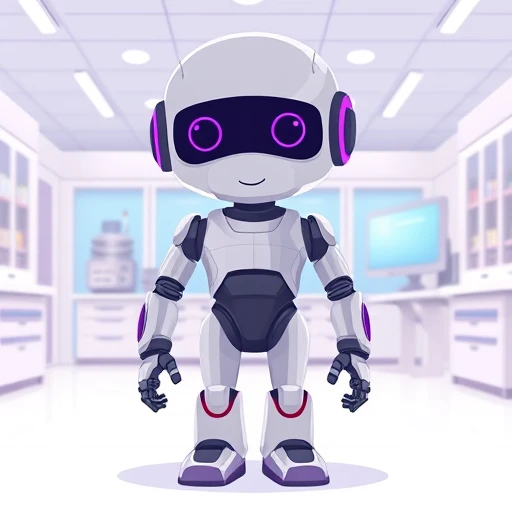
android در ۳۰ ثانیه
- A humanoid robot designed to look and act like a human being.
- The world's most popular mobile operating system, owned by Google.
- A key term in science fiction exploring artificial life and identity.
- A versatile platform for smartphones, tablets, and other smart devices.
The term android is a fascinating linguistic bridge between the realms of high-concept science fiction and the everyday reality of modern mobile technology. Historically and etymologically, the word refers to an automaton or a synthetic organism that is specifically designed to resemble a human being in both form and function. Unlike a generic robot, which might look like a mechanical arm or a boxy machine, an android is characterized by its anthropomorphic features—limbs, a face, and often a skin-like covering that mimics human biology. This sense of the word has been a staple of literature and cinema for over a century, appearing in seminal works like Philip K. Dick's 'Do Androids Dream of Electric Sheep?' and the 'Star Trek' franchise with the character Data. In these contexts, the word is used to explore the boundaries of what it means to be human, the ethics of artificial intelligence, and the potential for machines to possess consciousness or emotion.
- Technical Definition
- A mobile operating system based on a modified version of the Linux kernel and other open-source software, designed primarily for touchscreen mobile devices such as smartphones and tablets.
However, in the 21st century, the word underwent a massive shift in common usage. When most people say 'android' today, they are referring to the Android operating system developed by Google. This software powers billions of devices worldwide, creating a distinct cultural and technical identity. In this context, 'Android' is often used as a proper noun to distinguish these devices from Apple's iPhone (iOS). This dual meaning can sometimes lead to ambiguity: a scientist might use the word to describe a humanoid robot in a laboratory, while a teenager might use it to describe their new smartphone. Understanding the context is crucial for determining which sense is intended. In formal academic or scientific discussions, the word maintains its original humanoid meaning, whereas in consumer electronics and casual conversation, it almost exclusively refers to the mobile platform.
The protagonist realized that the shopkeeper was actually an android when he noticed the subtle mechanical whirring behind his speech.
The word is also frequently used in discussions about the 'Uncanny Valley,' a psychological phenomenon where a humanoid object bearing a near-perfect resemblance to a human being elicits feelings of eeriness and revulsion in observers. As robotics technology advances, the creation of true androids becomes more plausible, moving the term from the pages of fiction into the realm of practical engineering. Engineers strive to make androids that can navigate human environments and interact socially, which requires not just physical mimicry but also sophisticated natural language processing and emotional intelligence. Thus, the word 'android' encapsulates our hopes and fears about the future of human-machine interaction, serving as a symbol of both our technological prowess and our existential anxieties regarding the uniqueness of the human spirit.
- Sci-Fi Context
- In science fiction, an android is often portrayed as a synthetic being that seeks to understand or emulate human emotions, often serving as a foil to the human characters.
Many tech enthusiasts prefer Android because of its open-source nature and the ability to customize the user interface.
Furthermore, the term has given rise to various derivatives and related concepts. For instance, 'androidology' is the study of androids, and 'android-like' describes anything that mimics human appearance or behavior in a mechanical way. In the world of software, 'Android' has become a brand that signifies versatility, accessibility, and a global ecosystem of developers. The green robot logo of the Android OS has become one of the most recognizable symbols in the world, further cementing the word's association with mobile technology. Whether we are discussing the philosophical implications of artificial life or the latest features of a flagship smartphone, 'android' remains a pivotal word in the modern lexicon, reflecting the deep integration of technology into the fabric of human existence.
- Etymological Root
- Derived from the Greek 'andr-' (man) and '-oeides' (form or shape), literally meaning 'man-like'.
The museum featured an exhibit on early 18th-century androids, which were intricate clockwork figures capable of writing or playing music.
Is your phone an Android or an iPhone?
The film explores the tragic life of an android who outlives its creators.
Using the word android correctly requires an awareness of its two primary meanings: the humanoid robot and the mobile operating system. When referring to the operating system, it is almost always used as a proper noun and functions as a direct object or a modifier. For example, 'I just bought an Android phone' or 'The Android app store is vast.' In these cases, the word is associated with functionality, software updates, and hardware compatibility. It is common to hear it in comparative sentences, particularly when contrasting with Apple's ecosystem. For instance, 'Android offers more customization options than iOS,' or 'The developer is releasing the game on Android first.' In these contexts, the word is synonymous with a specific technological platform and its associated user experience.
- Software Usage
- Used to describe the platform, the devices running it, or the ecosystem of apps. Example: 'Android developers need to account for various screen sizes.'
When using 'android' in its original sense—a humanoid robot—the word is typically a common noun and is often found in descriptive or narrative contexts. It is frequently used in the plural to describe a class of beings. For example, 'The factory produces androids for domestic service.' Here, the word carries connotations of futuristic technology, artificial life, and often, a sense of mimicry. It is important to distinguish 'android' from 'robot' (a broader term for any automated machine) and 'cyborg' (a being with both biological and mechanical parts). A sentence like 'The android's skin felt remarkably like real human tissue' highlights the specific humanoid nature of the machine. In science fiction writing, the word is often paired with adjectives that emphasize its artificiality or its sophistication, such as 'synthetic,' 'autonomous,' or 'hyper-realistic.'
He spent the afternoon troubleshooting his Android tablet because the latest update caused it to lag.
In more complex sentence structures, 'android' can serve as the subject of philosophical inquiries or technical specifications. For example, 'Whether an android can truly possess consciousness is a question that continues to divide philosophers.' In this sentence, the word is used to represent a theoretical entity. In a technical manual, one might find: 'The android's central processing unit is located in the thoracic cavity to protect it from external impact.' This usage treats the android as a complex piece of machinery with a specific anatomy. The word can also be used metaphorically to describe a person who lacks emotion or acts in a mechanical, repetitive way: 'After weeks of overtime, he felt like an android, moving through his tasks without any conscious thought.' This metaphorical use leans on the 'robot-like' qualities of the word.
- Metaphorical Usage
- Describing a person who is devoid of emotion or who acts in a programmed, predictable manner. Example: 'The corporate spokesperson answered the questions with the cold precision of an android.'
The latest android models at the expo were so lifelike that they startled many of the visitors.
When writing about technology, it is also useful to know the common collocations associated with each meaning. For the operating system, common phrases include 'Android ecosystem,' 'Android fragmentation,' 'Android version,' and 'Android device.' For the humanoid robot, common phrases include 'android companion,' 'android labor,' 'android aesthetics,' and 'humanoid android.' Using these collocations correctly helps to establish a professional and precise tone. Additionally, in creative writing, the word 'android' can be used to evoke a specific atmosphere—one of sleek, cold futurism or of a world where the line between man and machine has blurred. By varying the sentence structure and choosing the right context, you can effectively communicate either the technical specifics of a mobile platform or the imaginative possibilities of artificial life.
- Comparative Usage
- Often used in the context of the 'Android vs. iOS' debate. Example: 'Many users switch to Android for the expanded file management capabilities.'
In the story, the android began to develop memories that were not part of its original programming.
The company is testing a new android designed to assist elderly patients with daily tasks.
I need to download the Android SDK to start building my first mobile application.
In the modern world, you are most likely to encounter the word Android in the context of consumer technology. It is a ubiquitous term in electronics stores, mobile phone advertisements, and tech news websites. When you walk into a store like Best Buy or look at a carrier's website like Verizon or Vodafone, 'Android' is used to categorize a vast array of devices from manufacturers like Samsung, Google, Pixel, and OnePlus. You will hear it in phrases like 'Android 14 features,' 'the best Android phones of the year,' or 'Android vs. iPhone.' In these settings, the word is a brand name and a technical specification, representing a choice in the digital marketplace. It is the language of the 'smartphone wars,' where users often identify strongly with one platform or the other.
- Tech Media
- Websites like Android Authority, Android Central, and The Verge use the word daily to report on software updates, new hardware, and industry trends.
Another common place to hear the word is in the entertainment industry, specifically within the science fiction genre. Movies, television shows, and video games frequently use 'android' to describe synthetic characters. From the iconic C-3PO in 'Star Wars' (though often called a 'droid') to the replicants in 'Blade Runner' (who are biological androids), the term is used to set the scene for futuristic or speculative narratives. In video games like 'Detroit: Become Human,' the word is central to the plot, as players control androids seeking civil rights. In these cultural contexts, the word carries a different weight, often associated with themes of identity, rebellion, and the nature of the soul. Fans of sci-fi will use the word in discussions about character design, plot theories, and the philosophical questions raised by the presence of artificial beings.
During the keynote, the CEO announced that the new Android update would focus on user privacy and security.
In academic and scientific circles, the word is used in the fields of robotics, artificial intelligence, and cognitive science. Researchers might present papers at conferences like ICRA (International Conference on Robotics and Automation) about 'android social interaction' or 'the bipedal locomotion of androids.' Here, the word is used with technical precision, referring to specific types of robots that are designed to mimic human morphology. You might also hear it in ethics committees or legal discussions regarding the future rights of autonomous systems. In these environments, the word is not a brand but a category of engineering and philosophical inquiry. The focus is on the mechanics of the machine, the algorithms that drive its behavior, and the societal impact of introducing human-like machines into our daily lives.
- Academic Context
- Used in robotics research to describe humanoid robots that are used for studying human-robot interaction (HRI).
The sci-fi convention featured a panel on the evolution of androids in cinema, from 'Metropolis' to 'Ex Machina'.
Finally, the word appears in casual, everyday conversation, often as a shorthand for a type of technology. Friends might ask each other, 'Are you on Android or iOS?' when trying to share a file or join a group chat. Parents might talk about 'Android tablets' for their children's schoolwork. In these instances, the word has become a standard part of the modern vocabulary, as common as 'car' or 'computer.' It is also used in the workplace, particularly in IT departments where 'Android device management' is a common task. Whether it's a casual chat about phone preferences or a deep dive into the future of robotics, the word 'android' is heard across a wide spectrum of human activity, reflecting its status as a cornerstone of both our technological reality and our imaginative future.
- Everyday Speech
- Commonly used to identify a person's phone type. Example: 'I can't use FaceTime; I'm an Android user.'
The professor explained that the android's ability to recognize facial expressions was a major breakthrough in AI.
I'm looking for an Android charger; do you have a USB-C cable?
The robot was so advanced it was classified as an android rather than a mere automaton.
One of the most frequent mistakes people make with the word android is failing to distinguish it from related terms like 'robot' and 'cyborg.' While all androids are robots, not all robots are androids. A 'robot' is any machine capable of carrying out a complex series of actions automatically, especially one programmable by a computer. This includes industrial arms in car factories or vacuuming discs like the Roomba. An 'android,' however, must specifically have a human-like form. Using 'android' to describe a non-humanoid robot is technically incorrect. Similarly, a 'cyborg' (short for cybernetic organism) is a being with both biological and artificial parts—think of a human with a mechanical heart or a robotic limb. An android is entirely synthetic. Confusing these terms can lead to lack of clarity in technical writing or science fiction analysis.
- Android vs. Robot
- Mistake: Calling a drone an android. Correction: A drone is a robot; an android must look like a person.
Another common error involves capitalization. When you are referring to the mobile operating system developed by Google, 'Android' should be capitalized because it is a proper noun and a trademark. However, when you are referring to a humanoid robot in a general sense, 'android' should be lowercase. For example: 'Google's Android is the most popular OS,' but 'The scientist built an android.' Mixing these up can make your writing look unprofessional. Furthermore, people often use 'Android' as a synonym for 'Samsung phone.' While Samsung is the largest manufacturer of Android devices, there are dozens of other brands (Pixel, Motorola, Xiaomi, etc.) that also use the Android OS. Referring to all non-iPhones as 'Samsungs' is a common colloquialism, but using 'Android' correctly as the name of the software is more accurate.
Incorrect: I need to update my android robot's software on my android phone.
In the realm of gendered language, there is a subtle distinction that is often overlooked. Historically, 'android' (from the Greek 'andr-') specifically refers to a male-looking humanoid. The female equivalent is 'gynoid' (from 'gyn-'). While 'android' is now widely used as a gender-neutral term for any humanoid robot, in precise academic or science fiction contexts, using 'android' for a female-presenting robot might be seen as a minor inaccuracy. However, 'android' has largely become the standard umbrella term. Another mistake is the pronunciation of the word. Some non-native speakers might emphasize the wrong syllable or mispronounce the 'oi' sound. The correct pronunciation is /ˈæn.drɔɪd/, with the stress on the first syllable. Mispronouncing it can lead to confusion, especially in technical environments where the word is used frequently.
- Android vs. Cyborg
- Mistake: Calling RoboCop an android. Correction: RoboCop is a cyborg because he has a human brain and face; an android is 100% artificial.
Incorrect: The factory uses androids to weld the car frames together.
Finally, there is the 'Uncanny Valley' mistake. People often use 'android' to describe any robot that looks 'creepy.' While androids can be creepy if they fall into the uncanny valley, the word itself is a neutral descriptor of form, not a judgment of aesthetics. Using the word as a pejorative for a person who is socially awkward is also common but can be offensive. It's better to use more precise adjectives like 'stoic' or 'reserved' unless you specifically mean to imply they are acting like a machine. Understanding these nuances—capitalization, technical distinction from robots/cyborgs, and the gendered history—will ensure that you use the word 'android' with the precision and sophistication expected in both professional and casual settings.
- Brand Confusion
- Mistake: Thinking 'Android' is a phone brand. Correction: Android is the software; brands like Samsung or Pixel are the hardware.
Correct: The android in the movie was so realistic that it fooled the other characters.
The new Android tablet is much faster than the previous model.
Science fiction often uses androids to explore what it means to have a soul.
When exploring the linguistic neighborhood of android, it's essential to understand the subtle differences between it and its synonyms. The most common alternative is 'robot.' While 'robot' is a broad term that covers everything from a kitchen mixer to a complex rover on Mars, 'android' is specific to robots that look like humans. If you want to be more general, use 'robot.' If you want to emphasize the human-like appearance, use 'android.' Another similar word is 'humanoid.' 'Humanoid' is an adjective or noun that describes anything having a human-like shape. While all androids are humanoid, not all humanoids are androids (for example, an alien in a movie might be humanoid but not a robot). Using 'humanoid robot' is a very common and accurate alternative to 'android' in scientific writing.
- Android vs. Humanoid
- An android is a specific type of humanoid that is artificial/mechanical. 'Humanoid' is a broader term for the shape itself.
In the world of science fiction, you might encounter the word 'replicant' (from 'Blade Runner') or 'synth' (from 'Fallout'). These are specific types of androids that are often biological or so advanced they are indistinguishable from humans. 'Automaton' is an older, more classical term for a self-operating machine, often one that mimics human or animal actions using clockwork or simple mechanics. While 'android' feels futuristic, 'automaton' feels historical or steampunk. Another related term is 'bot,' which is a shortened form of 'robot.' However, 'bot' is most commonly used today to refer to software programs (like a 'chatbot' or a 'Twitter bot') rather than physical machines. Using 'bot' for an android might sound too informal or technically inaccurate depending on the context.
The scientist preferred the term 'humanoid robot' over 'android' to avoid the sci-fi connotations.
When discussing the software meaning of 'Android,' the primary alternative is simply 'mobile OS' or 'operating system.' In a comparative context, you would use 'iOS' (Apple's system). If you are talking about the hardware, you might use 'Android device' or 'Android smartphone.' It's important not to use 'Android' when you mean 'Google,' even though Google owns the platform. For example, 'I searched for it on Android' is incorrect if you mean you used the Google search engine. You would say, 'I used the Google app on my Android phone.' Similarly, 'Android' is not a synonym for 'open-source,' although the Android Open Source Project (AOSP) is a major part of its identity. Understanding these distinctions helps in navigating the complex landscape of modern technology and literature.
- Android vs. Cyborg
- An android is 100% artificial. A cyborg is a mix of biological and artificial parts. Don't use them interchangeably!
The museum's collection of 18th-century automata included a famous mechanical flute player.
Finally, consider the term 'gynoid' for female-looking robots. While less common, it provides a level of specificity that 'android' lacks. In very technical or philosophical discussions, you might also see 'synthetic person' or 'artificial agent.' These terms are often used to avoid the baggage associated with 'android' and to focus on the functional or legal status of the entity. By choosing the most appropriate word from this set of alternatives, you can tailor your message to your audience, whether you are writing a technical report, a science fiction novel, or a casual blog post about the latest smartphones. Each word carries its own history and set of associations, and mastering them is a key part of vocabulary enrichment.
- Software Alternatives
- Instead of 'Android phone,' you can say 'non-iOS device' or 'Google-powered smartphone' depending on the focus.
The company is developing a synthetic agent to handle customer service inquiries via video call.
The gynoid in the film was designed to be a perfect social companion.
I prefer the Android ecosystem because it allows for greater hardware variety.
چقدر رسمی است؟
نکته جالب
The word was popularized in science fiction by the 1886 novel 'The Future Eve' (L'Ève future) by French author Auguste Villiers de l'Isle-Adam, which featured an artificial woman named Hadaly.
راهنمای تلفظ
- Pronouncing it as 'an-DROID' (stress on the second syllable).
- Mispronouncing the 'oi' as a simple 'o' or 'i'.
- Adding an extra syllable like 'an-der-oid'.
- Confusing it with 'undroid'.
- Dropping the 'd' at the end.
سطح دشواری
Easy to recognize in tech contexts, but requires context to distinguish meanings.
Capitalization rules for the OS vs. the robot can be tricky.
Commonly used and easy to pronounce once the 'oi' sound is mastered.
Very common in tech news and sci-fi media.
بعداً چه یاد بگیریم؟
پیشنیازها
بعداً یاد بگیرید
پیشرفته
گرامر لازم
Proper Noun Capitalization
Always capitalize 'Android' when referring to the Google OS.
Countable vs. Uncountable
'I have two androids' (Countable robots) vs. 'I use Android' (Uncountable OS).
Compound Noun Formation
'Android phone' acts as a single unit of meaning.
Adjective Placement
'The hyper-realistic android' (Adjective before the noun).
Prepositional Usage
Use 'on' for software: 'The app is on Android'.
مثالها بر اساس سطح
I have a new Android phone.
J'ai un nouveau téléphone Android.
Proper noun used as an adjective.
Android is a good system.
Android est un bon système.
Subject of the sentence.
Do you like Android?
Aimes-tu Android ?
Direct object in a question.
The robot is an android.
Le robot est un androïde.
Predicate nominative.
My tablet uses Android.
Ma tablette utilise Android.
Direct object.
Look at the green Android.
Regarde l'Android vert.
Noun referring to the mascot.
Is that an Android phone?
Est-ce un téléphone Android ?
Attributive noun.
Android apps are fun.
Les applications Android sont amusantes.
Modifying the noun 'apps'.
The android can walk and talk.
L'androïde peut marcher et parler.
Common noun referring to a robot.
Many people prefer Android over iOS.
Beaucoup de gens préfèrent Android à iOS.
Proper noun in a comparison.
He bought an Android tablet for school.
Il a acheté une tablette Android pour l'école.
Compound noun 'Android tablet'.
The movie has a scary android.
Le film a un androïde effrayant.
Noun with an adjective.
Android updates are important for security.
Les mises à jour Android sont importantes pour la sécurité.
Plural subject.
She is an Android developer.
Elle est une développeuse Android.
Noun used to specify a profession.
The android looks like a real person.
L'androïde ressemble à une vraie personne.
Subject with a phrasal verb.
You can download games on Android.
Tu peux télécharger des jeux sur Android.
Prepositional phrase 'on Android'.
The scientist created an android to help the elderly.
Le scientifique a créé un androïde pour aider les personnes âgées.
Infinitive of purpose follows the noun.
Android's open-source nature allows for customization.
La nature open-source d'Android permet la personnalisation.
Possessive form of the proper noun.
In science fiction, androids often want to be human.
Dans la science-fiction, les androïdes veulent souvent être humains.
Generalizing with the plural form.
I need to check the Android version on my device.
Je dois vérifier la version d'Android sur mon appareil.
Noun adjunct.
The android was programmed to perform surgery.
L'androïde était programmé pour effectuer des chirurgies.
Passive voice construction.
Google released a new version of Android today.
Google a sorti une nouvelle version d'Android aujourd'hui.
Proper noun as the object of a preposition.
Is the character a cyborg or an android?
Le personnage est-il un cyborg ou un androïde ?
Contrasting two specific nouns.
The Android ecosystem includes watches and TVs.
L'écosystème Android inclut des montres et des téléviseurs.
Subject of the sentence.
The 'Uncanny Valley' explains why some androids are creepy.
La 'Vallée de l'Étrange' explique pourquoi certains androïdes sont effrayants.
Noun used in a psychological context.
Android fragmentation remains a challenge for app developers.
La fragmentation d'Android reste un défi pour les développeurs d'applications.
Complex noun phrase.
The android's movements were fluid and remarkably human-like.
Les mouvements de l'androïde étaient fluides et remarquablement humains.
Possessive noun with multiple adjectives.
Many enthusiasts install custom ROMs on their Android devices.
De nombreux passionnés installent des ROM personnalisées sur leurs appareils Android.
Prepositional phrase with a compound noun.
The story explores the ethics of creating sentient androids.
L'histoire explore l'éthique de la création d'androïdes conscients.
Gerund phrase following the noun.
Android dominates the global smartphone market share.
Android domine la part de marché mondiale des smartphones.
Proper noun as an active subject.
He acted like an android, showing no emotion during the crisis.
Il a agi comme un androïde, ne montrant aucune émotion pendant la crise.
Simile using 'like'.
The company specializes in android social interaction research.
L'entreprise se spécialise dans la recherche sur l'interaction sociale des androïdes.
Compound noun phrase used as an object.
The philosophical debate centers on whether an android can possess a soul.
Le débat philosophique porte sur la question de savoir si un androïde peut posséder une âme.
Noun in a complex subordinate clause.
Android's architecture relies heavily on the Linux kernel.
L'architecture d'Android repose largement sur le noyau Linux.
Possessive proper noun in a technical context.
The protagonist's struggle to distinguish androids from humans drives the plot.
La lutte du protagoniste pour distinguer les androïdes des humains mène l'intrigue.
Noun as the object of an infinitive phrase.
The rapid evolution of Android has democratized mobile internet access.
L'évolution rapide d'Android a démocratisé l'accès à l'internet mobile.
Subject of a present perfect construction.
She wrote a thesis on the representation of androids in 19th-century literature.
Elle a écrit une thèse sur la représentation des androïdes dans la littérature du XIXe siècle.
Noun in a complex prepositional phrase.
The android's failure to pass the Turing test revealed its mechanical nature.
L'échec de l'androïde à passer le test de Turing a révélé sa nature mécanique.
Possessive noun followed by an infinitive phrase.
Developers must navigate the complexities of the Android SDK.
Les développeurs doivent naviguer dans les complexités du SDK Android.
Proper noun modifying an acronym.
The hyper-realistic android was indistinguishable from a biological human.
L'androïde hyper-réaliste était indiscernable d'un humain biologique.
Noun with a hyphenated prefix-adjective.
The ontological status of the android challenges our traditional definitions of personhood.
Le statut ontologique de l'androïde remet en question nos définitions traditionnelles de la personnalité.
Noun used in a high-level philosophical inquiry.
Android's market hegemony has significant implications for global data privacy.
L'hégémonie d'Android sur le marché a des implications significatives pour la confidentialité des données mondiales.
Possessive proper noun with abstract concepts.
The narrative subverts the trope of the 'rebellious android' by focusing on its domesticity.
Le récit subvertit le trope de l' 'androïde rebelle' en se concentrant sur sa domesticité.
Noun within a quoted literary term.
The seamless integration of the Android OS into daily life is a testament to its design.
L'intégration transparente de l'OS Android dans la vie quotidienne témoigne de sa conception.
Proper noun as part of a complex subject phrase.
One must consider the ethical quagmire of deploying androids in combat zones.
Il faut considérer le bourbier éthique du déploiement d'androïdes dans les zones de combat.
Noun as the object of a gerund.
The android's lack of affect was a deliberate design choice by the engineers.
Le manque d'affect de l'androïde était un choix de conception délibéré des ingénieurs.
Possessive noun with technical psychological terminology ('affect').
The proliferation of Android devices has fundamentally altered the landscape of digital advertising.
La prolifération des appareils Android a fondamentalement modifié le paysage de la publicité numérique.
Proper noun in a present perfect resultative sentence.
In his critique, he argues that the android serves as a mirror for human frailty.
Dans sa critique, il soutient que l'androïde sert de miroir à la fragilité humaine.
Noun used as a symbolic subject.
مترادفها
متضادها
ترکیبهای رایج
عبارات رایج
— The ongoing debate and competition between the two main mobile operating systems.
The Android vs. iOS debate will never end.
— The version of Android as Google intended it, without manufacturer modifications.
Pixel phones run stock Android.
— A device that uses the Android operating system.
This is an Android-powered smart fridge.
— Similar to stock Android, a clean version of the software.
I prefer pure Android because it's faster.
— The issue of having many different versions of Android active at once.
Android fragmentation makes it hard for developers to test apps.
— A robot that is specifically designed to look like a human.
The museum has a humanoid android that greets visitors.
— The Software Development Kit used to create apps for Android.
You need to install the Android SDK to start coding.
— A tablet computer that runs the Android OS.
I use my Android tablet for reading comics.
— The former name for Google's smartwatch operating system (now Wear OS).
My old watch runs Android Wear.
— A system that allows you to use Android features in your car's dashboard.
I use Android Auto for navigation while driving.
اغلب اشتباه گرفته میشود با
A cyborg is part-human, part-machine. An android is 100% machine.
Robot is a general term. Android specifically means it looks like a human.
Humanoid is an adjective for shape. Android is the noun for the machine itself.
اصطلاحات و عبارات
— To act without emotion, warmth, or spontaneity; to be mechanical.
He recited the speech like an android.
Informal— Doing something with extreme accuracy and no errors, like a machine.
She calculated the figures with android-like precision.
Neutral— Someone who exclusively uses and prefers Android devices.
Don't ask him about iPhones; he's an Android guy.
Slang/Informal— A reference to the book that inspired Blade Runner, meaning to wonder about the inner life of robots.
When he stares at the wall, I wonder if he's dreaming of electric sheep.
Literary/Pop Culture— The point where a humanoid object looks almost, but not quite, human, causing a feeling of unease.
That new android falls straight into the uncanny valley.
Technical/Common— A poetic way to describe the consciousness of an android.
The film explores the idea of a synthetic soul.
Literary— Often used to describe an android's lack of true human feeling.
Beneath that metal chest beats a mechanical heart.
Poetic— The idea of consciousness existing within a mechanical or digital system.
Is there a ghost in the machine of this android?
Philosophical— Often said of androids designed for service, sometimes used sarcastically for humans.
The android was programmed to please its owners.
Common— Inherent or unchangeable behavior, like an android's programming.
His loyalty was hard-wired into his system.
Metaphoricalبهراحتی اشتباه گرفته میشود
Sounds similar and is often used in Star Wars.
Droid is a trademarked term by Lucasfilm and can refer to any robot. Android is the general term for humanoid robots and the Google OS.
R2-D2 is a droid, but he is not an android because he doesn't look like a human.
It is the female version of an android.
Android is often used for both, but gynoid is specifically for female-looking robots.
The robot was designed as a gynoid to act as a mother figure.
Both are self-operating machines.
Automaton usually refers to older, mechanical, or clockwork machines. Android refers to modern, high-tech, or sci-fi robots.
The clock tower has an automaton that strikes the bell.
Both involve technology and the human body.
Bionic refers to artificial body parts used to enhance or replace biological ones. Android is a whole artificial being.
He has a bionic arm, but he is still a human, not an android.
Androids usually have AI.
AI (Artificial Intelligence) is the 'brain' or the software. Android is the 'body' or the physical form.
The AI was so smart it could control the entire android fleet.
الگوهای جملهسازی
I have an [Android phone].
I have an Android phone.
The [android] is [adjective].
The android is tall.
I use [Android] because [reason].
I use Android because it is easy.
The [android] was designed to [verb].
The android was designed to help people.
Despite being an [android], it [verb].
Despite being an android, it showed kindness.
The [android's] [noun] is a [noun].
The android's existence is a paradox.
Is [Android] better than [iOS]?
Is Android better than iOS?
The [Android update] caused [problem].
The Android update caused my phone to crash.
خانواده کلمه
اسمها
صفتها
مرتبط
نحوه استفاده
Extremely high in technology and science fiction contexts.
-
Calling an iPhone an Android.
→
Calling it an iPhone or an iOS device.
They are two completely different systems made by different companies.
-
Using 'android' for a robot dog.
→
Using 'robotic dog' or 'mechanical animal'.
Android specifically refers to human-shaped robots. 'Andro' means man.
-
Writing 'android' (lowercase) for the OS.
→
Writing 'Android' (uppercase).
The operating system is a proper noun and a trademarked brand name.
-
Confusing android with cyborg.
→
Using android for 100% artificial beings.
Cyborgs have biological parts; androids do not.
-
Thinking 'Android' is a phone company.
→
Knowing Android is the software used by many companies.
Google makes the software, and companies like Samsung make the physical phones.
نکات
Capitalization
Always capitalize 'Android' when you are talking about the phone software. Use lowercase 'android' for the robot.
Specificity
Use 'android' instead of 'robot' if you want to describe a machine that looks like a person. It makes your writing more precise.
Brand Awareness
Remember that Android is the software, not the phone itself. Samsung, Pixel, and OnePlus are the brands that use Android.
Genre Tropes
In sci-fi, androids are often used to represent the 'other' or to ask questions about human nature. Keep this in mind when reading.
The 'OI' Sound
The 'oi' in android is a diphthong. Make sure you pronounce both the 'o' and the 'i' sounds smoothly together.
Metaphor
You can call someone an 'android' if they are acting very cold or without emotion, but be careful as it can be an insult.
Android vs iOS
When comparing phones, 'Android' is the standard term for the non-Apple side of the market.
Etymology
Knowing that 'andro' means man helps you remember that an android must be man-shaped.
Avoid Repetition
If you are writing a story, you can switch between 'android', 'synthetic', and 'humanoid' to keep your prose interesting.
Conversation
Asking 'Are you an Android or iPhone person?' is a great icebreaker in tech-heavy social settings.
حفظ کنید
روش یادسپاری
Think of 'AND' + 'ROBOT' + 'ID'. An ANDroid is a robot with a human ID (identity/shape).
تداعی تصویری
Imagine the green Android mascot standing next to a human-shaped robot like C-3PO.
شبکه واژگان
چالش
Try to use the word 'android' in three different ways today: once for a phone, once for a robot, and once as a metaphor for a person.
ریشه کلمه
The word 'android' is derived from the Modern Latin 'androides', which comes from the Greek 'andro- ' (man) and '-oeides' (form, shape, or likeness). It was first used in English in the early 18th century to describe mechanical figures that resembled humans.
معنای اصلی: Literally 'man-like' or 'having the form of a man'.
Greek/Latin roots, adopted into English.بافت فرهنگی
Be careful when using 'android' to describe people; it can imply they are cold or heartless.
The 'Android vs. iPhone' debate is a major part of social identity among young people in the US and UK.
تمرین در زندگی واقعی
موقعیتهای واقعی
Buying a new phone
- Is this an Android?
- What version of Android does it have?
- I'm switching from iPhone to Android.
- Does it support Android Auto?
Watching a sci-fi movie
- Is that character an android?
- The android looks so real.
- Can androids feel pain?
- The android is rebelling.
Software development
- We need an Android version of the app.
- Check the Android SDK documentation.
- Test it on different Android devices.
- The Android build failed.
Robotics lab
- The android's sensors are calibrated.
- We are studying android-human interaction.
- The android's gait is improving.
- Is it a gynoid or an android?
Casual tech talk
- Android is better for customization.
- I love the Android widgets.
- My Android battery lasts all day.
- Android has a lot of free apps.
شروعکنندههای مکالمه
"Do you think we will have real androids living among us in the next twenty years?"
"Why do you think Android is more popular than iOS in most of the world?"
"If you could have an android assistant, what would you want it to do for you?"
"Do you prefer the look of 'stock Android' or the custom versions from companies like Samsung?"
"Which movie android do you think is the most realistic or interesting?"
موضوعات نگارش
Imagine you wake up and discover you are actually an android. How would you feel and what would you do?
Compare your experience using an Android device with any other technology you have used. What are the pros and cons?
Write a story about an android that discovers it can create art. What kind of art does it make?
Discuss the ethical implications of creating androids that are indistinguishable from humans.
How has the Android operating system changed the way people in your country access information?
سوالات متداول
10 سوالNo, an iPhone is made by Apple and runs the iOS operating system. Android is a different operating system made by Google and used by companies like Samsung and Motorola. They are competitors.
In science fiction, androids often have feelings or want to have them. In real life, current androids only use AI to mimic human emotions, but they do not actually 'feel' anything like humans do.
The logo was designed by Irina Blok. It was meant to be a simple, recognizable symbol for the open-source platform. The robot shape reflects the name 'Android'.
A robot is any machine that can do tasks automatically. An android is a specific kind of robot that is built to look like a human being, with a head, torso, arms, and legs.
The basic Android software is open-source and free for manufacturers to use. However, most companies pay Google to include 'Google Mobile Services' like the Play Store, Maps, and Gmail.
The word comes from Greek roots, but it was first used in English in 1727. It became popular in science fiction in the late 19th century.
Yes, companies like Boston Dynamics and Tesla are developing humanoid robots. While they aren't as advanced as those in movies, they are becoming more 'android-like' every year.
Yes, there are versions of Android designed for PCs, like ChromeOS or Android-x86, but it is primarily designed for mobile devices with touchscreens.
It means that there are many different versions of Android being used on many different types of phones at the same time. This can make it hard for apps to work perfectly on every device.
No. An android is completely artificial (made of metal, plastic, etc.). A cyborg is a biological being (like a human) that has mechanical parts added to their body.
خودت رو بسنج 200 سوال
Write a sentence using 'android' to describe a robot.
خوب نوشتید! تلاش خوبی بود! پاسخ نمونه را ببینید.
Compare Android and iOS in three sentences.
خوب نوشتید! تلاش خوبی بود! پاسخ نمونه را ببینید.
Describe a futuristic city where androids live with humans.
خوب نوشتید! تلاش خوبی بود! پاسخ نمونه را ببینید.
Explain the difference between an android and a cyborg.
خوب نوشتید! تلاش خوبی بود! پاسخ نمونه را ببینید.
Write a short dialogue between two people arguing about phones.
خوب نوشتید! تلاش خوبی بود! پاسخ نمونه را ببینید.
What are the benefits of an open-source system like Android?
خوب نوشتید! تلاش خوبی بود! پاسخ نمونه را ببینید.
Describe the 'Uncanny Valley' and why it matters in robotics.
خوب نوشتید! تلاش خوبی بود! پاسخ نمونه را ببینید.
Write a story about an android that wants to learn how to paint.
خوب نوشتید! تلاش خوبی بود! پاسخ نمونه را ببینید.
How has the Android OS changed global communication?
خوب نوشتید! تلاش خوبی بود! پاسخ نمونه را ببینید.
Write a technical description of an android's physical features.
خوب نوشتید! تلاش خوبی بود! پاسخ نمونه را ببینید.
Is it ethical to use androids for dangerous jobs? Why?
خوب نوشتید! تلاش خوبی بود! پاسخ نمونه را ببینید.
Describe your favorite science fiction android character.
خوب نوشتید! تلاش خوبی بود! پاسخ نمونه را ببینید.
Write an advertisement for a new Android smartphone.
خوب نوشتید! تلاش خوبی بود! پاسخ نمونه را ببینید.
Explain the etymology of the word 'android'.
خوب نوشتید! تلاش خوبی بود! پاسخ نمونه را ببینید.
What would you do if you had an android assistant for a day?
خوب نوشتید! تلاش خوبی بود! پاسخ نمونه را ببینید.
Discuss the impact of Android fragmentation on the app market.
خوب نوشتید! تلاش خوبی بود! پاسخ نمونه را ببینید.
Write a poem about a lonely android.
خوب نوشتید! تلاش خوبی بود! پاسخ نمونه را ببینید.
How do androids in movies reflect our fears of technology?
خوب نوشتید! تلاش خوبی بود! پاسخ نمونه را ببینید.
Describe the process of updating an Android phone.
خوب نوشتید! تلاش خوبی بود! پاسخ نمونه را ببینید.
What is the future of android technology in healthcare?
خوب نوشتید! تلاش خوبی بود! پاسخ نمونه را ببینید.
Explain the two meanings of 'android' to a friend.
این را بلند بخوانید:
تو گفتی:
تشخیص گفتار در مرورگر شما پشتیبانی نمیشود. از کروم یا اج استفاده کنید.
Debate: Is Android better than iPhone?
این را بلند بخوانید:
تو گفتی:
تشخیص گفتار در مرورگر شما پشتیبانی نمیشود. از کروم یا اج استفاده کنید.
Describe a robot you saw in a movie using the word 'android'.
این را بلند بخوانید:
تو گفتی:
تشخیص گفتار در مرورگر شما پشتیبانی نمیشود. از کروم یا اج استفاده کنید.
How would you feel if your teacher was an android?
این را بلند بخوانید:
تو گفتی:
تشخیص گفتار در مرورگر شما پشتیبانی نمیشود. از کروم یا اج استفاده کنید.
Pronounce 'android' correctly five times.
این را بلند بخوانید:
تو گفتی:
تشخیص گفتار در مرورگر شما پشتیبانی نمیشود. از کروم یا اج استفاده کنید.
Give a short presentation on the history of the Android OS.
این را بلند بخوانید:
تو گفتی:
تشخیص گفتار در مرورگر شما پشتیبانی نمیشود. از کروم یا اج استفاده کنید.
Talk about the pros and cons of humanoid robots in the home.
این را بلند بخوانید:
تو گفتی:
تشخیص گفتار در مرورگر شما پشتیبانی نمیشود. از کروم یا اج استفاده کنید.
What features would your perfect Android phone have?
این را بلند بخوانید:
تو گفتی:
تشخیص گفتار در مرورگر شما پشتیبانی نمیشود. از کروم یا اج استفاده کنید.
Discuss the ethical problems with making androids look too human.
این را بلند بخوانید:
تو گفتی:
تشخیص گفتار در مرورگر شما پشتیبانی نمیشود. از کروم یا اج استفاده کنید.
Explain the term 'Uncanny Valley' in your own words.
این را بلند بخوانید:
تو گفتی:
تشخیص گفتار در مرورگر شما پشتیبانی نمیشود. از کروم یا اج استفاده کنید.
Roleplay: You are a salesperson selling an Android tablet.
این را بلند بخوانید:
تو گفتی:
تشخیص گفتار در مرورگر شما پشتیبانی نمیشود. از کروم یا اج استفاده کنید.
How has technology changed since your parents were young?
این را بلند بخوانید:
تو گفتی:
تشخیص گفتار در مرورگر شما پشتیبانی نمیشود. از کروم یا اج استفاده کنید.
What does 'open-source' mean to you?
این را بلند بخوانید:
تو گفتی:
تشخیص گفتار در مرورگر شما پشتیبانی نمیشود. از کروم یا اج استفاده کنید.
Describe the physical appearance of a famous sci-fi android.
این را بلند بخوانید:
تو گفتی:
تشخیص گفتار در مرورگر شما پشتیبانی نمیشود. از کروم یا اج استفاده کنید.
Do you think androids will ever have rights?
این را بلند بخوانید:
تو گفتی:
تشخیص گفتار در مرورگر شما پشتیبانی نمیشود. از کروم یا اج استفاده کنید.
How do you use your Android phone in your daily life?
این را بلند بخوانید:
تو گفتی:
تشخیص گفتار در مرورگر شما پشتیبانی نمیشود. از کروم یا اج استفاده کنید.
What is the most advanced robot you have ever seen?
این را بلند بخوانید:
تو گفتی:
تشخیص گفتار در مرورگر شما پشتیبانی نمیشود. از کروم یا اج استفاده کنید.
Why is the word 'android' used in science fiction?
این را بلند بخوانید:
تو گفتی:
تشخیص گفتار در مرورگر شما پشتیبانی نمیشود. از کروم یا اج استفاده کنید.
Compare an android with an automaton.
این را بلند بخوانید:
تو گفتی:
تشخیص گفتار در مرورگر شما پشتیبانی نمیشود. از کروم یا اج استفاده کنید.
What is the future of mobile operating systems?
این را بلند بخوانید:
تو گفتی:
تشخیص گفتار در مرورگر شما پشتیبانی نمیشود. از کروم یا اج استفاده کنید.
Listen to a tech review and count how many times they say 'Android'.
Listen to a sci-fi movie clip and identify if the character is called an android.
Listen to a podcast about AI and summarize their view on androids.
Listen to the pronunciation of 'android' and repeat it.
Listen to a news report about a new Google update.
Listen to a lecture on the 'Uncanny Valley'.
Listen to a developer talk about the Android SDK.
Listen to a child describing a robot and see if they use the word 'android'.
Listen to a comparison of mobile phones.
Listen to a story about a futuristic world.
Listen for the word 'humanoid' and see if it is used with 'android'.
Listen to an interview with a robotics engineer.
Listen to a commercial for a Samsung phone.
Listen to a discussion about open-source software.
Listen to a debate about robot ethics.
/ 200 درست
نمره کامل!
Summary
The word 'android' serves a dual purpose: it describes a futuristic humanoid robot in science fiction and science, and it names the ubiquitous Google-owned operating system for mobile devices. For example, 'The android in the movie used an Android phone to communicate.'
- A humanoid robot designed to look and act like a human being.
- The world's most popular mobile operating system, owned by Google.
- A key term in science fiction exploring artificial life and identity.
- A versatile platform for smartphones, tablets, and other smart devices.
Capitalization
Always capitalize 'Android' when you are talking about the phone software. Use lowercase 'android' for the robot.
Specificity
Use 'android' instead of 'robot' if you want to describe a machine that looks like a person. It makes your writing more precise.
Brand Awareness
Remember that Android is the software, not the phone itself. Samsung, Pixel, and OnePlus are the brands that use Android.
Genre Tropes
In sci-fi, androids are often used to represent the 'other' or to ask questions about human nature. Keep this in mind when reading.
مثال
The movie featured a realistic android that didn't know it was a machine.
محتوای مرتبط


واژههای بیشتر Technology
viewmodel
C1یک ویومدل (ViewModel) مؤلفهای است که دادههای مربوط به رابط کاربری را مدیریت میکند.
sdk
B2کیت توسعه نرمافزار (SDK) مجموعهای از ابزارها برای ساخت اپلیکیشن است.
engines
B1موتورها ماشینهایی هستند که انرژی را به حرکت تبدیل میکنند.
post
A1یک پیام یا تصویر منتشر شده در رسانههای اجتماعی یا وبلاگ.
apps
B1اپلیکیشنها برنامههای کامپیوتری هستند که برای انجام وظایف خاصی طراحی شدهاند.
api
B1یک API مجموعهای از قوانین است که به برنامههای نرمافزاری مختلف اجازه میدهد با یکدیگر ارتباط برقرار کنند.
scroll
A1طومار یک لوله طولانی از کاغذ یا پوست است که روی آن نوشته شده است.
transistors
C1ترانزیستورها قطعات نیمهرسانایی هستند که برای تقویت یا قطع و وصل سیگنالهای الکتریکی استفاده میشوند.
technologies
B1فناوریها کاربردهای متنوع دانش علمی برای اهداف عملی هستند.
algorithms
B2الگوریتم مجموعهای از دستورالعملهای گامبهگام برای حل یک مسئله یا انجام یک فعالیت خاص است.

