werner
Werner is a proper noun of Germanic origin used as both a masculine given name and a surname. In academic contexts, it frequently refers to influential historical figures in the fields of chemistry and geology.
werner در ۳۰ ثانیه
- Werner is a traditional Germanic name meaning 'defending warrior,' used as both a first and last name.
- It is a key term in science, specifically referring to Alfred Werner's coordination chemistry and Abraham Werner's geology.
- The name is also prominent in the arts through filmmaker Werner Herzog and in sports through footballer Timo Werner.
- In industrial contexts, Werner is a well-known brand for ladders and a major American transportation company.
The word Werner is a distinguished proper noun of Germanic origin, functioning primarily as a masculine given name and a surname. Etymologically, it is derived from the Old High German elements 'warin', meaning 'guard' or 'to defend,' and 'heri', meaning 'army' or 'warrior.' Consequently, the name carries the powerful connotation of a 'defending warrior' or 'armed protector.' While it was exceptionally common in German-speaking territories during the 19th and early 20th centuries, its usage today often evokes a sense of tradition, intellectual rigor, and historical depth. In contemporary English contexts, you are most likely to encounter 'Werner' when discussing significant figures in the history of science, particularly chemistry and geology, or when referring to influential artists and athletes.
- Academic Context
- In chemistry, 'Werner' refers to Alfred Werner, the Nobel Prize winner who founded coordination chemistry. In geology, it refers to Abraham Gottlob Werner, the father of Neptunism.
The name Werner is not merely a label but a marker of cultural heritage. In Germany, it peaked in popularity between 1910 and 1940, making it a name frequently associated with the 'grandfather' generation. However, its international footprint is significant due to the global migration of German scientists and intellectuals. When a student of inorganic chemistry speaks of 'Werner complexes,' they are using the name as an eponymous adjective to describe a specific class of chemical structures where a central metal atom is surrounded by ligands. This transformation from a personal name to a scientific term is a testament to the lasting impact of the individuals who bore the name.
The professor explained that Werner's theory of coordination compounds revolutionized our understanding of molecular geometry.
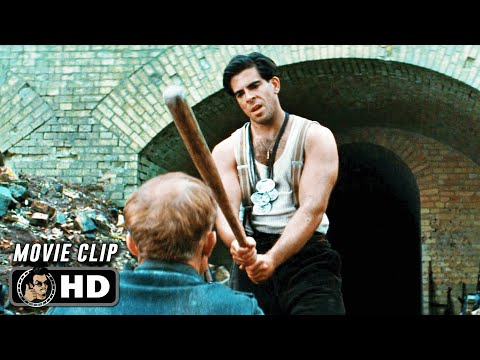
Beyond science, 'Werner' appears frequently in the arts. Werner Herzog, the legendary German filmmaker, has brought the name into the realm of high-culture cinema, known for his eccentric and profound documentaries and feature films. In the world of sports, names like Timo Werner, the professional footballer, keep the name visible in popular media. When using the name, one must be mindful of its Germanic pronunciation—traditionally starting with a 'V' sound (/ˈvɛərnər/)—though in English-speaking countries, it is almost universally anglicized with a 'W' sound (/ˈwɜːrnər/).
In social settings, 'Werner' is used like any other name, but it carries a certain 'old-world' charm. It is less common as a baby name in the 21st century compared to more modern choices, but it remains a staple surname. In business, 'Werner Enterprises' is a major American transportation company, showing how the name has transitioned into a corporate brand. Understanding the name 'Werner' requires recognizing its dual role as a personal identifier and a technical descriptor in specialized fields.
- Cultural Nuance
- In German pop culture, 'Werner' is also the name of a famous comic book character, a biker known for his love of beer and chaotic adventures, which provides a humorous contrast to the name's academic associations.
During the lecture on mineralogy, the students learned about the Wernerian system of classification.
Furthermore, the name's versatility is seen in its variations across different languages. In Scandinavian countries, it might appear as 'Verner,' while in English-speaking regions, it is sometimes confused with 'Warner.' However, 'Werner' remains the standard spelling for the Germanic root. Whether you are reading a biography of Werner Heisenberg (the physicist behind the Uncertainty Principle) or meeting a colleague named Werner, the name signifies a legacy of protection and strength rooted in ancient European history.
- Onomastic Fact
- The name Werner is cognate with the English name 'Warner,' which evolved from the same Germanic roots but took a different phonetic path in Old French.
I recently watched a documentary directed by Werner Herzog about the Chauvet Cave.
The Werner family has lived in this village for over four generations.
Many scientific terms, such as the Werner coordination number, are named after the chemist Alfred Werner.
Using the word Werner correctly depends largely on whether you are using it as a first name, a surname, or an eponymous adjective. As a proper noun, it must always be capitalized. When referring to a person, it functions like any other name: 'Werner is coming over for dinner.' However, when used in academic writing, it often possesses a possessive form ('Werner's theory') or acts as a modifier for a specific discovery ('The Werner complex').
- As a Subject
- 'Werner decided to pursue a career in theoretical physics after reading about quantum mechanics.'
In formal writing, especially in the history of science, 'Werner' is often used to represent an entire school of thought. For example, 'Wernerian geology' refers to the theories of Abraham Gottlob Werner. In this case, the name is transformed into an adjective by adding the suffix '-ian.' This is a common way to use the name in higher-level academic discourse. It is important to distinguish between the different 'Werners' based on the context of the sentence; if the sentence mentions 'crystals' or 'strata,' it refers to the geologist; if it mentions 'cobalt' or 'isomers,' it refers to the chemist.
The Wernerian approach to rock formation was eventually superseded by Plutonism.
When using 'Werner' as a surname, it follows standard English naming conventions. You might refer to 'Mr. Werner' or 'The Werners' (referring to the family). In professional environments, especially in Europe, it is common to use the surname to refer to authors of papers or heads of departments. For example, 'The latest study by Werner et al. (2023) provides new insights into carbon sequestration.' Here, 'Werner' acts as the primary identifier for a research group.
In casual conversation, 'Werner' is straightforward. However, because it is a Germanic name, you might encounter it in translated literature or films. In these cases, the name often serves to ground the character in a specific cultural milieu. For instance, 'Werner was a man of few words, typical of his northern upbringing.' This use of the name helps build characterization through cultural association.
- As a Possessive
- 'We are going to Werner's house for the holiday celebration.'
Is Werner joining us for the conference in Berlin next month?
Finally, in technical fields like logistics or manufacturing, 'Werner' might refer to a company name. In such instances, it is treated as a singular entity: 'Werner has updated its shipping protocols.' This variety of usage—from a personal name to a scientific adjective to a corporate entity—makes 'Werner' a versatile word that requires attention to the surrounding text to determine its exact meaning.
- In Direct Address
- 'Good morning, Werner, have you had a chance to review the project proposal?'
The Werner family crest is displayed prominently in the hallway.
He cited Werner (1913) as the foundational text for his research.
The Werner ladder is known for its durability and safety features.
You will encounter the word Werner in several distinct environments, each providing a different layer of meaning. The most common place is within the walls of academia. If you are a student of the physical sciences, 'Werner' is a name you will hear repeatedly. In a chemistry lecture, the professor might discuss 'Werner's coordination theory,' which explains how metal ions bond with other molecules. This is a fundamental concept for anyone studying advanced chemistry, and the name is synonymous with this specific breakthrough.
- In the Classroom
- 'Today we will explore how Werner challenged the prevailing views on valence in 1893.'
Another frequent setting is the world of cinema and documentaries. Werner Herzog is a household name for film buffs. You might hear his name in a podcast about great directors or see it on a movie poster. His unique voice and philosophical approach to filmmaking have made 'Werner' a name associated with artistic eccentricity and deep exploration of the human condition. When people talk about 'a Werner Herzog film,' they are referring to a specific aesthetic—often raw, intense, and focused on the struggle between man and nature.
Have you seen the new Werner Herzog documentary? His narration is absolutely captivating.
In the sports world, particularly European football (soccer), the name 'Werner' is often shouted by commentators. Timo Werner, a prominent German striker, has played for major clubs like RB Leipzig and Chelsea. During a match, you might hear: 'Werner makes a brilliant run down the wing!' or 'That's a clinical finish by Werner!' In this context, the name is associated with speed, agility, and professional athleticism. It serves as a reminder of the name's continued relevance in modern popular culture.
Geology and history of science are other areas where 'Werner' is a key term. Abraham Gottlob Werner's influence on how we classify minerals and understand the Earth's crust is still discussed in history of science courses. You might hear a historian say, 'Werner's Neptunism was the dominant geological theory of the late 18th century.' This usage highlights the name's role in the development of modern scientific thought. It is also heard in the context of the 'Wernerian Natural History Society,' an old scientific society in Edinburgh.
- In History
- 'The debate between the Wernerians and the Huttonians shaped the future of geology.'
The commentator noted that Werner's pace was the deciding factor in the game.
Finally, in the United States, 'Werner' is a common name seen on the side of large trucks or on ladders in hardware stores. Werner Enterprises and Werner Co. are major industrial players. You might hear a construction worker say, 'Pass me that Werner ladder,' or a logistics manager mention, 'We have a shipment coming in via Werner.' In these industrial contexts, the name represents reliability and corporate presence. This broad spectrum of usage—from Nobel-level science to heavy-duty ladders—demonstrates the name's pervasive nature in the English-speaking world.
- In Industry
- 'I need to buy a new Werner extension ladder for the roofing project.'
The physics department is hosting a seminar on Werner Heisenberg's contributions to quantum theory.
I saw a Werner truck on the highway today while driving to Omaha.
The museum has a collection of minerals classified according to Werner's original system.
One of the most frequent mistakes learners make with the word Werner involves its capitalization. Because it is a proper noun—referring to a specific person, family, or brand—it must always begin with a capital 'W.' Writing 'werner' in lowercase is a grammatical error that can lead to confusion, especially in academic contexts where it might be mistaken for a common noun or a typo. Always ensure that the first letter is capitalized, regardless of its position in the sentence.
- Capitalization Error
- Incorrect: 'The werner theory is complex.' Correct: 'The Werner theory is complex.'
Another common point of confusion is the pronunciation. In German, the 'W' is pronounced like an English 'V.' Many people who are familiar with German culture or language might try to use the German pronunciation in an English-speaking environment. While this is technically more 'authentic' to the name's origin, it can sometimes confuse listeners who are only familiar with the anglicized 'W' sound. Conversely, pronouncing it with a 'W' in a strictly German context might be seen as an error. The key is to match your pronunciation to your audience.
Wait, are you talking about Werner the chemist or Werner the geologist?
Learners also often confuse 'Werner' with the similar-sounding name 'Warner.' While they share the same Germanic root, they are distinct names with different spellings and histories. 'Warner' is more common as an English surname (like Warner Bros.), while 'Werner' retains its stronger Germanic identity. Using one when you mean the other can lead to factual inaccuracies, especially when citing sources or discussing historical figures. For example, referring to 'Alfred Warner' instead of 'Alfred Werner' would be a significant mistake in a chemistry paper.
In terms of grammar, a common mistake is the incorrect use of the possessive form. When referring to a theory or discovery, it should be 'Werner's theory.' Some learners might forget the apostrophe or try to use 'Werner' as an adjective without the possessive ('The Werner theory'). While 'The Werner Theory' is sometimes used as a title, in standard descriptive prose, the possessive is usually required to indicate that the theory belongs to or was developed by Werner.
- Possessive Usage
- Incorrect: 'Werner discovery changed science.' Correct: 'Werner's discovery changed science.'
The student misspelled Werner as 'Warner' throughout the entire essay.
Finally, there is the issue of context. Because there are several famous Werners, failing to specify which one you are talking about can be a mistake in academic or professional settings. If you simply say 'Werner said...' in a history of science class, your audience might not know if you mean the geologist or the chemist. Providing a first name or a specific context (e.g., 'In his work on minerals, Werner...') is essential for clear communication. This lack of specificity is a common pitfall for those new to these academic fields.
- Ambiguity Error
- Vague: 'Werner was born in Germany.' Specific: 'The chemist Alfred Werner was born in Mulhouse.'
Don't forget that Werner is a proper noun and needs a capital letter.
The lecturer corrected the student's pronunciation of Werner during the seminar.
Is it Werner with an 'e' or Warner with an 'a'?
When exploring words similar to Werner, we primarily look at other Germanic names or names that share a similar phonetic structure. The most direct alternative is Verner. This is the Scandinavian variant of the name and is used in countries like Sweden and Denmark. While the spelling is different, the origin and meaning remain identical. In an English context, 'Verner' is much rarer but might be encountered in genealogical research or Nordic literature.
- Werner vs. Verner
- 'Werner' is the standard German spelling, while 'Verner' is the common Scandinavian adaptation. They both mean 'defending warrior.'
Another similar word is Warner. As mentioned previously, 'Warner' is the English cognate. It shares the same roots but has been fully integrated into the English language over centuries. If you are looking for a name that feels more 'English' while retaining the same historical 'vibe,' Warner is the closest match. However, in scientific or historical contexts, you cannot substitute one for the other, as they refer to different specific individuals.
While Werner is common in Germany, Warner is a more frequent surname in the United States.
In terms of meaning, names like Walter or Warren are conceptually similar. 'Walter' comes from 'wald' (rule) and 'heri' (army), meaning 'ruler of the army.' 'Warren' comes from the same 'warin' root as Werner, meaning 'protector' or 'guard.' If you are writing a story and want a name with a similar 'strong, protective' feel, these are excellent alternatives. They carry the same weight of tradition and Germanic strength that 'Werner' does.
From a scientific perspective, 'Werner' is often grouped with other eponymous names like Heisenberg, Planck, or Einstein. While these are not synonyms in a linguistic sense, they are 'contextual peers.' In a discussion about quantum mechanics, you might use 'Werner' (referring to Werner Heisenberg) alongside these other names. They all function as markers for monumental shifts in human understanding. If you are looking for an alternative way to refer to 'Werner's theory,' you might use more descriptive terms like 'coordination theory' or 'the theory of metal complexes,' though these lack the historical tribute of the original name.
- Werner vs. Walter
- Both are Germanic names ending in '-er.' Werner emphasizes protection ('warin'), while Walter emphasizes ruling ('wald').
The author chose the name Werner for the protagonist to highlight his role as a guardian of the secret.
Lastly, in the context of brands, 'Werner' might be compared to Louisville or Little Giant when talking about ladders. In the trucking industry, it might be compared to Swift or Schneider. These are not synonyms for the name itself, but they are alternatives in the marketplace. Understanding these associations helps you navigate different professional landscapes where the name 'Werner' is a prominent fixture.
- Eponymous Alternatives
- Instead of 'Werner's system,' one could say 'the Neptunian system,' though this is less common in modern science.
He considered naming his son Werner, but eventually decided on the more modern-sounding Warren.
The Werner and Verner families are actually distantly related through their common ancestors.
The professor noted that Werner's work was as influential as that of Mendeleev.
چقدر رسمی است؟
""
""
""
""
""
نکته جالب
The name Werner was so popular in Germany in the early 20th century that it became a generic name for a 'typical German man' in some contexts, similar to 'Joe' in English. It also became the name of one of Germany's most famous comic book characters, a beer-drinking biker.
راهنمای تلفظ
- Pronouncing the 'W' as a 'V' in English contexts (unless intentionally using the German pronunciation).
- Emphasizing the second syllable instead of the first.
- Muttering the 'r' sounds so they are not heard.
- Confusing the vowel sound with 'Warner' (war-ner).
- Adding an extra syllable (e.g., Wer-ne-er).
سطح دشواری
Easy to read as a name, but technical contexts can be harder.
Spelling is straightforward, but capitalization is essential.
Pronunciation varies between English and German styles.
Easily recognized in speech due to its distinct sound.
بعداً چه یاد بگیریم؟
پیشنیازها
بعداً یاد بگیرید
پیشرفته
گرامر لازم
Capitalization of Proper Nouns
Always write 'Werner' with a capital W.
Possessive Surnames
Use 'Werner's' for one person and 'the Werners'' for a family's property.
Eponymous Adjectives
Add '-ian' to Werner to make 'Wernerian'.
Articles with Names
Usually no article, but use 'the' for families: 'The Werners'.
Direct Address Punctuation
Use a comma before the name: 'Hello, Werner.'
مثالها بر اساس سطح
My name is Werner.
Je m'appelle Werner.
Proper noun, used as a subject.
Werner is from Germany.
Werner vient d'Allemagne.
Subject + verb 'to be' + prepositional phrase.
This is Werner's dog.
C'est le chien de Werner.
Possessive form ('s).
Werner lives in a big house.
Werner habite dans une grande maison.
Present simple tense.
I see Werner at the park.
Je vois Werner au parc.
Direct object.
Werner is a tall man.
Werner est un homme grand.
Adjective describing the subject.
Werner likes to eat apples.
Werner aime manger des pommes.
Verb + infinitive.
Good morning, Werner!
Bonjour, Werner !
Direct address.
Mr. Werner is our new teacher.
M. Werner est notre nouveau professeur.
Title + Surname.
Werner's car is very fast.
La voiture de Werner est très rapide.
Possessive noun.
The Werners are going on vacation.
Les Werner partent en vacances.
Plural surname referring to a family.
I wrote a letter to Werner yesterday.
J'ai écrit une lettre à Werner hier.
Past simple tense.
Werner works in a large office in Berlin.
Werner travaille dans un grand bureau à Berlin.
Prepositional phrases of place.
Did you see Werner at the party?
As-tu vu Werner à la fête ?
Interrogative sentence in past simple.
Werner is older than his brother.
Werner est plus âgé que son frère.
Comparative adjective.
Werner bought a new suit for the wedding.
Werner a acheté un nouveau costume pour le mariage.
Subject + verb + object + purpose.
Alfred Werner was a famous chemist.
Alfred Werner était un chimiste célèbre.
Full name used as a subject.
We used a Werner ladder to paint the ceiling.
Nous avons utilisé une échelle Werner pour peindre le plafond.
Brand name used as a modifier.
Werner Herzog has directed many interesting documentaries.
Werner Herzog a réalisé de nombreux documentaires intéressants.
Present perfect tense.
If Werner calls, tell him I will be back soon.
Si Werner appelle, dis-lui que je serai bientôt de retour.
First conditional.
The company was founded by a man named Werner.
L'entreprise a été fondée par un homme nommé Werner.
Passive voice.
Werner's contribution to science is still remembered today.
La contribution de Werner à la science est encore mémorisée aujourd'hui.
Possessive noun + abstract noun.
I am reading a book about Werner Heisenberg.
Je lis un livre sur Werner Heisenberg.
Present continuous tense.
Werner is known for his great sense of humor.
Werner est connu pour son grand sens de l'humour.
Adjective phrase with 'known for'.
Werner's coordination theory explains the structure of complex molecules.
La théorie de la coordination de Werner explique la structure des molécules complexes.
Possessive used in a technical term.
The Wernerian system of classification was popular in the 18th century.
Le système de classification wernerien était populaire au XVIIIe siècle.
Eponymous adjective (Wernerian).
Timo Werner is a striker who plays for the German national team.
Timo Werner est un attaquant qui joue pour l'équipe nationale allemande.
Relative clause.
Werner's films often explore the relationship between humans and nature.
Les films de Werner explorent souvent la relation entre l'homme et la nature.
Plural possessive subject.
The research paper cites Werner as a primary source for the data.
L'article de recherche cite Werner comme source primaire pour les données.
Surname used in academic citation.
Werner Enterprises is one of the largest trucking companies in the US.
Werner Enterprises est l'une des plus grandes entreprises de transport routier aux États-Unis.
Proper noun as part of a corporate name.
Despite the criticism, Werner remained committed to his geological theories.
Malgré les critiques, Werner est resté attaché à ses théories géologiques.
Concessive clause with 'despite'.
Werner's work laid the foundation for modern inorganic chemistry.
Les travaux de Werner ont jeté les bases de la chimie inorganique moderne.
Metaphorical use of 'laid the foundation'.
The Wernerian-Huttonian debate was a pivotal moment in the history of geology.
Le débat wernerien-huttonien a été un moment charnière dans l'histoire de la géologie.
Compound eponymous adjective.
Werner's meticulous approach to mineral classification set a new standard for the field.
L'approche méticuleuse de Werner en matière de classification des minéraux a établi une nouvelle norme pour le domaine.
Complex subject with possessive and adjectives.
In his later years, Werner Herzog became a cult figure in American cinema.
Dans ses dernières années, Werner Herzog est devenu une figure culte du cinéma américain.
Prepositional phrase of time + subject + complement.
The Werner coordination number is a fundamental concept in transition metal chemistry.
Le nombre de coordination de Werner est un concept fondamental de la chimie des métaux de transition.
Noun phrase acting as a technical term.
Werner's philosophy of 'Neptunism' suggested that all rocks originated from a global ocean.
La philosophie du « neptunisme » de Werner suggérait que toutes les roches provenaient d'un océan mondial.
Reported speech/thought.
The legacy of Werner Heisenberg continues to influence theoretical physics.
L'héritage de Werner Heisenberg continue d'influencer la physique théorique.
Abstract noun as subject.
Werner's influence extended far beyond the borders of his native Saxony.
L'influence de Werner s'étendait bien au-delà des frontières de sa Saxe natale.
Adverbial phrase of degree and place.
Critics often analyze the existential dread present in Werner's cinematic works.
Les critiques analysent souvent l'angoisse existentielle présente dans les œuvres cinématographiques de Werner.
Complex direct object.
The Wernerian paradigm, though eventually eclipsed, was instrumental in the institutionalization of mineralogy.
Le paradigme wernerien, bien qu'éclipsé par la suite, a contribué à l'institutionnalisation de la minéralogie.
Parenthetical concessive clause.
Werner's synthesis of chemical and physical properties provided a holistic view of coordination compounds.
La synthèse des propriétés chimiques et physiques de Werner a fourni une vision holistique des composés de coordination.
Nominalization of 'synthesis'.
One might argue that Werner's cinematic oeuvre is a meditation on the sublime and the grotesque.
On pourrait soutenir que l'œuvre cinématographique de Werner est une méditation sur le sublime et le grotesque.
Subjunctive mood/modal 'might'.
The nuances of Werner's 'primary' and 'secondary' rock classifications reflect the limitations of 18th-century empirical observation.
Les nuances des classifications de roches « primaires » et « secondaires » de Werner reflètent les limites de l'observation empirique du XVIIIe siècle.
Complex noun phrase with internal modifiers.
Werner's enduring presence in the nomenclature of chemistry underscores the foundational nature of his insights.
La présence durable de Werner dans la nomenclature de la chimie souligne le caractère fondamental de ses intuitions.
Subject-verb agreement with a complex subject.
The juxtaposition of Werner's scientific rigor with his philosophical speculations makes him a fascinating subject for biography.
La juxtaposition de la rigueur scientifique de Werner et de ses spéculations philosophiques en fait un sujet de biographie fascinant.
Gerund phrase as subject.
To understand the development of quantum mechanics, one must grapple with the implications of Werner Heisenberg's uncertainty principle.
Pour comprendre le développement de la mécanique quantique, il faut se colleter avec les implications du principe d'incertitude de Werner Heisenberg.
Infinitive of purpose + modal 'must'.
Werner's eponymous contributions serve as a linguistic bridge between historical discovery and modern application.
Les contributions éponymes de Werner servent de pont linguistique entre la découverte historique et l'application moderne.
Metaphorical language.
ترکیبهای رایج
عبارات رایج
The Werner way
A Werner classic
Werner's law
The Werner group
Werner and colleagues
Call Werner
Ask Werner
The Werner legacy
Werner-style
Meet Werner
اغلب اشتباه گرفته میشود با
A similar-sounding English name. 'Warner' is more common in the US, while 'Werner' is German.
The Scandinavian version of the name. It is spelled with a 'V' instead of a 'W'.
An English name that shares the same root but has a different sound and feel.
اصطلاحات و عبارات
"A Wernerian view"
A perspective that is strictly based on the theories of Abraham Gottlob Werner, often used to imply a traditional or outdated scientific view.
His Wernerian view of the Earth's crust was challenged by new evidence.
Academic"In the shadow of Werner"
Working in a field dominated by the achievements of a famous Werner, often feeling pressured to live up to that legacy.
Many young chemists feel they are working in the shadow of Werner.
Metaphorical"The Werner touch"
A unique or masterful quality added to a project by someone named Werner (often used for Werner Herzog).
The documentary has the Werner touch—it's both beautiful and strange.
Informal"Werner's maze"
A complex or difficult problem, named after the intricate coordination complexes Werner studied.
Navigating the legal paperwork was like entering Werner's maze.
Literary"To pull a Werner"
To do something characteristic of a famous Werner, like making a bold scientific claim or filming in a dangerous location.
He really pulled a Werner by taking the crew into the jungle without a map.
Slang/Informal"Werner's gold"
A term for a discovery that is highly valuable but difficult to understand at first.
The new data was Werner's gold—pure brilliance hidden in complexity.
Metaphorical"Solid as a Werner"
Extremely reliable and sturdy, likely referencing Werner ladders.
This new contract is solid as a Werner; we don't need to worry.
Informal"Werner's uncertainty"
A play on Heisenberg's Uncertainty Principle, used to describe a situation where nothing is clear.
We are in a state of Werner's uncertainty regarding the budget.
Humorous"The Werner standard"
The highest level of quality or accuracy in a specific field.
His research meets the Werner standard of excellence.
Formal"Werner's ghost"
The lingering influence of a past authority named Werner.
Werner's ghost still haunts the halls of the geology department.
Literaryبهراحتی اشتباه گرفته میشود
Phonetic similarity and shared Germanic roots.
Warner is the English evolution of the name, while Werner is the German one. Warner is often associated with media (Warner Bros), while Werner is associated with science.
He works for Warner Bros, but his name is Werner.
It is the same name but with a different spelling.
Verner is used in Scandinavia, whereas Werner is used in Germany. The pronunciation is often identical in their respective languages.
In Sweden, they spell it Verner, but in Germany, it's Werner.
Both start with 'W' and end with 'n'.
Warren is a distinct English name. It has two syllables but a different vowel sound in the first syllable (WAH-ren vs WER-ner).
Warren is my cousin, but Werner is my boss.
Both are traditional Germanic names starting with 'W'.
Walter means 'ruler of the army,' while Werner means 'defending warrior.' They have different endings (-ter vs -ner).
Walter and Werner are both old German names.
Both are common German surnames starting with 'W'.
Wagner means 'wagon maker,' while Werner is a personal name. Wagner is most famous for the composer Richard Wagner.
We listened to Wagner's music with our friend Werner.
الگوهای جملهسازی
I am [Name].
I am Werner.
[Name] is from [Place].
Werner is from Germany.
[Name] was a [Profession].
Alfred Werner was a chemist.
[Name]'s [Noun] is [Adjective].
Werner's theory is important.
The [Adjective] [Name] [Verb].
The influential Werner discovered new elements.
By [Verb-ing], [Name] [Verb].
By studying crystals, Werner changed geology.
I have seen a [Name] [Noun].
I have seen a Werner ladder.
This is [Name]'s [Noun].
This is Werner's car.
خانواده کلمه
اسمها
صفتها
مرتبط
نحوه استفاده
Common as a surname and in academic/industrial contexts; less common as a modern given name.
-
Writing 'werner' with a lowercase 'w'.
→
Werner
Proper nouns must always be capitalized in English.
-
Spelling it 'Warner' when referring to the chemist.
→
Werner
Alfred Werner and Jack Warner are different people. The spelling matters for accuracy.
-
Saying 'The Werner' when referring to a person.
→
Werner
We don't use 'the' before a person's first name unless we are being very specific or humorous.
-
Using 'Werner' as a verb.
→
To act like Werner
Werner is a noun, not a verb. You cannot 'werner' something.
-
Confusing Werner Heisenberg with Alfred Werner.
→
Use full names.
One is a physicist and one is a chemist. Using the full name avoids confusion in science.
نکات
Remember the 'e'
Always spell it with an 'e' after the 'W'. Don't confuse it with 'Warner' which has an 'a'.
Check the Field
If you see 'Werner' in a book, look at the subject. Is it chemistry, physics, or film? This tells you which person it is.
Capitalize It
Since it's a proper noun, always use a capital 'W'. This is true for the name and the brand.
The 'W' Sound
In English, use the 'W' sound like in 'water.' Only use the 'V' sound if you are speaking German.
Eponymous Use
Learn the term 'Wernerian' if you study history or science. It's a great word to describe his followers.
German Roots
Remember that the name is German. This helps you understand why so many famous Werners are from Germany.
Brand Recognition
In the US, 'Werner' often means ladders or trucking. Keep this in mind in professional settings.
Warrior Werner
Think 'Warrior Werner' to remember the meaning of the name. It helps you associate it with strength.
Possessive Form
Use 'Werner's' when talking about his work. 'Werner's theory' is the most common way to say it.
Listen for 'er'
The end of the name sounds like 'learner.' This helps you distinguish it from other names like 'Warren'.
حفظ کنید
روش یادسپاری
WERner is a WARrior who is an EARner (he wins Nobel Prizes!).
تداعی تصویری
Imagine a man named Werner standing on a Werner ladder, holding a chemical flask (Alfred Werner) while looking at a mountain (Abraham Werner).
شبکه واژگان
چالش
Try to use 'Werner' in three different sentences today: one about a person, one about a scientist, and one about a brand.
ریشه کلمه
The name Werner originates from Old High German. It is a compound of two words: 'warin' and 'heri.' The first part, 'warin,' comes from the Proto-Germanic 'warōną,' meaning to watch, guard, or protect. The second part, 'heri,' comes from the Proto-Germanic 'harjaz,' meaning army or host. Together, they form a name that signifies a 'defending warrior' or 'protector of the army.'
معنای اصلی: Defending warrior / Armed protector
Germanicبافت فرهنگی
There are no major sensitivities, but be aware that it is a very 'German' name, which might carry cultural connotations depending on the context.
In the US and UK, Werner is primarily seen as a surname or a brand name for industrial equipment.
تمرین در زندگی واقعی
موقعیتهای واقعی
Chemistry Class
- Werner's coordination theory
- The Werner complex
- Alfred Werner's Nobel Prize
- Werner's coordination number
Film Discussion
- A Werner Herzog film
- Werner's unique narration
- The style of Werner Herzog
- Werner's documentary work
Construction Site
- The Werner ladder
- Grab the Werner
- Werner safety standards
- A Werner extension ladder
History of Science
- The Wernerian school
- Abraham Gottlob Werner
- Werner's classification of rocks
- The debate with Werner
Sports News
- Timo Werner's goal
- Werner's speed on the field
- The transfer of Werner
- Werner's performance today
شروعکنندههای مکالمه
"Have you ever heard of the famous chemist Alfred Werner?"
"What do you think of Werner Herzog's documentaries?"
"Is the name Werner common in your country?"
"Did you know that Werner means 'defending warrior'?"
"Have you ever used a Werner ladder for home repairs?"
موضوعات نگارش
Imagine you are a scientist like Werner. What new theory would you want to discover and name after yourself?
Write about a time you had to be a 'defending warrior' like the meaning of the name Werner.
If you were to direct a movie in the style of Werner Herzog, what would it be about?
Research a famous person named Werner and write a short biography of their life.
How does the name Werner sound to you? Does it feel modern or traditional? Why?
سوالات متداول
10 سوالWerner is used as both a first name and a last name. In Germany, it was very popular as a first name in the past. In English-speaking countries, it is more commonly seen as a surname or a brand name.
The name Werner comes from Old High German and means 'defending warrior' or 'armed protector.' It is made of the words 'warin' (guard) and 'heri' (army).
In English, it is usually pronounced with a 'W' sound: /ˈwɜːrnər/. It sounds like 'were' + 'ner.' In German, the 'W' sounds like a 'V'.
There are several! Alfred Werner is famous in chemistry, Werner Heisenberg in physics, Werner Herzog in film, and Timo Werner in soccer. It depends on what you are interested in!
In Germany, it is not very popular for babies today; it is seen as an 'old' name. However, it remains a very common surname.
A Werner ladder is a ladder made by the Werner Co., which is a large American company that specializes in climbing products. They are very common in hardware stores.
It is the theory of coordination compounds, which explains how metal atoms bond with other groups of atoms. Alfred Werner won a Nobel Prize for this discovery.
Yes, they share the same ancient Germanic roots. Warner is the version of the name that developed in English, while Werner stayed in German.
It refers to the theories of Abraham Gottlob Werner, who believed that all rocks were formed from a giant ancient ocean. This idea was called Neptunism.
No, Werner is traditionally a masculine (boy's) name. There is no common feminine version of the name.
خودت رو بسنج 200 سوال
Write a sentence using 'Werner' as a first name.
خوب نوشتید! تلاش خوبی بود! پاسخ نمونه را ببینید.
Write a sentence about a famous scientist named Werner.
خوب نوشتید! تلاش خوبی بود! پاسخ نمونه را ببینید.
Explain the meaning of the name Werner in your own words.
خوب نوشتید! تلاش خوبی بود! پاسخ نمونه را ببینید.
Write a short paragraph about Werner Herzog.
خوب نوشتید! تلاش خوبی بود! پاسخ نمونه را ببینید.
Compare the names Werner and Warner.
خوب نوشتید! تلاش خوبی بود! پاسخ نمونه را ببینید.
Write a sentence using the word 'Wernerian'.
خوب نوشتید! تلاش خوبی بود! پاسخ نمونه را ببینید.
Describe a 'Werner ladder' in two sentences.
خوب نوشتید! تلاش خوبی بود! پاسخ نمونه را ببینید.
Write a dialogue between two people where one is named Werner.
خوب نوشتید! تلاش خوبی بود! پاسخ نمونه را ببینید.
Summarize Alfred Werner's contribution to chemistry.
خوب نوشتید! تلاش خوبی بود! پاسخ نمونه را ببینید.
Write a sentence about Timo Werner.
خوب نوشتید! تلاش خوبی بود! پاسخ نمونه را ببینید.
Why is capitalization important for the word 'Werner'?
خوب نوشتید! تلاش خوبی بود! پاسخ نمونه را ببینید.
Write a sentence using 'Werner' as a surname.
خوب نوشتید! تلاش خوبی بود! پاسخ نمونه را ببینید.
Explain the etymology of Werner.
خوب نوشتید! تلاش خوبی بود! پاسخ نمونه را ببینید.
Write a sentence about Werner Heisenberg.
خوب نوشتید! تلاش خوبی بود! پاسخ نمونه را ببینید.
How would you use 'Werner' in a business context?
خوب نوشتید! تلاش خوبی بود! پاسخ نمونه را ببینید.
Write a sentence using 'Werner's' in the possessive form.
خوب نوشتید! تلاش خوبی بود! پاسخ نمونه را ببینید.
Describe the cultural significance of the name Werner in Germany.
خوب نوشتید! تلاش خوبی بود! پاسخ نمونه را ببینید.
Write a sentence about Abraham Gottlob Werner.
خوب نوشتید! تلاش خوبی بود! پاسخ نمونه را ببینید.
Create a mnemonic to remember the name Werner.
خوب نوشتید! تلاش خوبی بود! پاسخ نمونه را ببینید.
Write a sentence about a 'Werner complex' in chemistry.
خوب نوشتید! تلاش خوبی بود! پاسخ نمونه را ببینید.
Introduce yourself using the name Werner as if it were your own.
این را بلند بخوانید:
تو گفتی:
تشخیص گفتار در مرورگر شما پشتیبانی نمیشود. از کروم یا اج استفاده کنید.
Talk about a famous person named Werner for 30 seconds.
این را بلند بخوانید:
تو گفتی:
تشخیص گفتار در مرورگر شما پشتیبانی نمیشود. از کروم یا اج استفاده کنید.
Describe a Werner ladder and why someone might need one.
این را بلند بخوانید:
تو گفتی:
تشخیص گفتار در مرورگر شما پشتیبانی نمیشود. از کروم یا اج استفاده کنید.
Explain the difference between the German and English pronunciation of Werner.
این را بلند بخوانید:
تو گفتی:
تشخیص گفتار در مرورگر شما پشتیبانی نمیشود. از کروم یا اج استفاده کنید.
Discuss the impact of Werner Heisenberg on science.
این را بلند بخوانید:
تو گفتی:
تشخیص گفتار در مرورگر شما پشتیبانی نمیشود. از کروم یا اج استفاده کنید.
How would you address a teacher named Mr. Werner?
این را بلند بخوانید:
تو گفتی:
تشخیص گفتار در مرورگر شما پشتیبانی نمیشود. از کروم یا اج استفاده کنید.
Describe a scene from a Werner Herzog film you have seen or heard about.
این را بلند بخوانید:
تو گفتی:
تشخیص گفتار در مرورگر شما پشتیبانی نمیشود. از کروم یا اج استفاده کنید.
Explain why 'Werner' is a proper noun.
این را بلند بخوانید:
تو گفتی:
تشخیص گفتار در مرورگر شما پشتیبانی نمیشود. از کروم یا اج استفاده کنید.
Talk about the meaning of the name Werner and if it fits anyone you know.
این را بلند بخوانید:
تو گفتی:
تشخیص گفتار در مرورگر شما پشتیبانی نمیشود. از کروم یا اج استفاده کنید.
Discuss the 'Wernerian' debate in geology.
این را بلند بخوانید:
تو گفتی:
تشخیص گفتار در مرورگر شما پشتیبانی نمیشود. از کروم یا اج استفاده کنید.
Pronounce the following words: Werner, Warner, Verner.
این را بلند بخوانید:
تو گفتی:
تشخیص گفتار در مرورگر شما پشتیبانی نمیشود. از کروم یا اج استفاده کنید.
Ask a question to someone named Werner.
این را بلند بخوانید:
تو گفتی:
تشخیص گفتار در مرورگر شما پشتیبانی نمیشود. از کروم یا اج استفاده کنید.
Tell a short story about a character named Werner.
این را بلند بخوانید:
تو گفتی:
تشخیص گفتار در مرورگر شما پشتیبانی نمیشود. از کروم یا اج استفاده کنید.
Explain what 'Werner Enterprises' does.
این را بلند بخوانید:
تو گفتی:
تشخیص گفتار در مرورگر شما پشتیبانی نمیشود. از کروم یا اج استفاده کنید.
Discuss the importance of Alfred Werner's work today.
این را بلند بخوانید:
تو گفتی:
تشخیص گفتار در مرورگر شما پشتیبانی نمیشود. از کروم یا اج استفاده کنید.
How do you spell Werner? Say it out loud.
این را بلند بخوانید:
تو گفتی:
تشخیص گفتار در مرورگر شما پشتیبانی نمیشود. از کروم یا اج استفاده کنید.
Describe the logo of a company named Werner if you've seen one.
این را بلند بخوانید:
تو گفتی:
تشخیص گفتار در مرورگر شما پشتیبانی نمیشود. از کروم یا اج استفاده کنید.
Talk about Timo Werner's career in football.
این را بلند بخوانید:
تو گفتی:
تشخیص گفتار در مرورگر شما پشتیبانی نمیشود. از کروم یا اج استفاده کنید.
Explain the concept of an 'eponym' using Werner as an example.
این را بلند بخوانید:
تو گفتی:
تشخیص گفتار در مرورگر شما پشتیبانی نمیشود. از کروم یا اج استفاده کنید.
What are your thoughts on the name Werner?
این را بلند بخوانید:
تو گفتی:
تشخیص گفتار در مرورگر شما پشتیبانی نمیشود. از کروم یا اج استفاده کنید.
Listen to the sentence: 'Werner is going to the store.' Who is going to the store?
Listen to the sentence: 'Alfred Werner won the Nobel Prize in 1913.' In what year did he win the prize?
Listen to the sentence: 'The Werner ladder is in the garage.' Where is the ladder?
Listen to the sentence: 'Werner Herzog directed Fitzcarraldo.' What did Werner Herzog do?
Listen to the sentence: 'Timo Werner scored two goals.' How many goals did he score?
Listen to the sentence: 'The Wernerian system was replaced by Plutonism.' What replaced the Wernerian system?
Listen to the sentence: 'Is Werner coming with us?' What is the speaker asking?
Listen to the sentence: 'Werner Heisenberg's principle is about uncertainty.' What is the principle about?
Listen to the sentence: 'The Werners are our neighbors.' Who are the neighbors?
Listen to the sentence: 'Werner Enterprises is a trucking company.' What kind of company is it?
Listen to the sentence: 'Werner's theory was revolutionary.' How was the theory described?
Listen to the sentence: 'Call Werner if you need help.' Who should you call?
Listen to the sentence: 'The name Werner has Germanic roots.' What kind of roots does the name have?
Listen to the sentence: 'Werner was born in Saxony.' Where was he born?
Listen to the sentence: 'The Werner complex is octahedral.' What is the shape of the complex?
/ 200 درست
نمره کامل!
Summary
The word 'Werner' is a versatile proper noun that bridges the gap between traditional European naming and high-level scientific terminology. For example, 'Werner's coordination theory' is a staple of inorganic chemistry textbooks worldwide.
- Werner is a traditional Germanic name meaning 'defending warrior,' used as both a first and last name.
- It is a key term in science, specifically referring to Alfred Werner's coordination chemistry and Abraham Werner's geology.
- The name is also prominent in the arts through filmmaker Werner Herzog and in sports through footballer Timo Werner.
- In industrial contexts, Werner is a well-known brand for ladders and a major American transportation company.
Remember the 'e'
Always spell it with an 'e' after the 'W'. Don't confuse it with 'Warner' which has an 'a'.
Check the Field
If you see 'Werner' in a book, look at the subject. Is it chemistry, physics, or film? This tells you which person it is.
Capitalize It
Since it's a proper noun, always use a capital 'W'. This is true for the name and the brand.
The 'W' Sound
In English, use the 'W' sound like in 'water.' Only use the 'V' sound if you are speaking German.