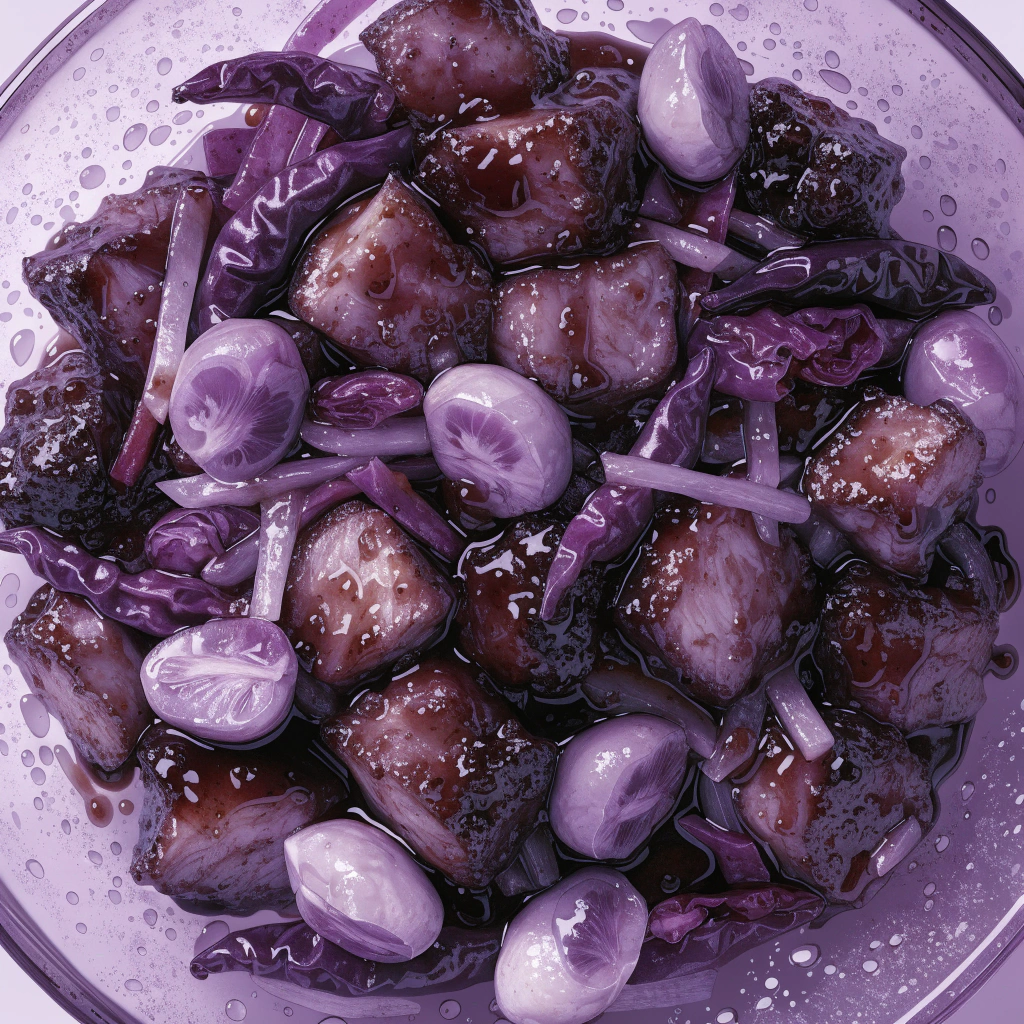
A Famous Chinese Dish: Kung Pao Chicken
Kung Pao Chicken is a very famous food from China. It comes from Sichuan province. Many people in China and around the world like it. It has chicken, peanuts, and fresh vegetables. The food is both sweet and spicy. It is named after a famous man from history. His name was Ding Baozhen. People called him 'Gongbao'. Today, you can find this dish in many restaurants. It is delicious with white rice. It is a great meal for a nice lunch or dinner.
Point grammaire
Structure: Present Simple (to be)
"Kung Pao Chicken is a very famous food from China."
We use 'is' with singular nouns to describe facts or states. It tells us what the food is or where it is from.
Structure: Present Simple (have/has)
"It has chicken, peanuts, and fresh vegetables."
We use 'has' with the pronoun 'it' to describe parts or ingredients. This shows what the dish contains.
Teste ta compréhension
10 questions · A1 Débutant · 1 aperçu gratuit
Teste ce que tu as appris dans cet article. Réponds à toutes les questions pour gagner des XP !
Where does Kung Pao Chicken come from?
Tu veux terminer le quiz ?
9 questions supplémentaires t'attendent. Inscris-toi gratuitement pour débloquer le quiz complet et gagner des XP !
S'inscrire gratuitementTu as dj un compte ? Connexion
Bien joué !
Continue à pratiquer !
Déjà terminé — pas de XP supplémentaire
Inscris-toi pour gagner des XPDétail des questions
Where does Kung Pao Chicken come from?
Ta réponse:
Bonne réponse: China
The food is both sweet and spicy.
Ta réponse:
Bonne réponse: Vrai
What does 'dish' mean?
Ta réponse:
Bonne réponse: A food prepared for a meal
It is _____ with white rice.
Ta réponse:
Bonne réponse: delicious
The Story of Kung Pao Chicken
Kung Pao Chicken is a very famous dish from China. People call it 'Gong Bao Ji Ding' in Chinese. It comes from the Sichuan province. Long ago, a man named Ding Baozhen loved this food. He was an important governor. People named the dish after him because he liked it so much.
The taste of Kung Pao Chicken is very special. It is a mix of salty, sweet, sour, and spicy flavors. Chefs cook small pieces of chicken with crunchy peanuts and red peppers. Most people think it is more delicious than other chicken dishes because the sauce is very rich.
Today, you can find this dish in many countries. It is more popular than many other Chinese foods. In China, the traditional version is spicier than the version in Western countries. If you visit China, you must try it because it is a part of Chinese history.
Point grammaire
Structure: Past Simple with 'be'
"He was an important governor."
We use 'was' or 'were' to talk about people in the past. Use 'was' for singular subjects like 'he', 'she', or 'it'.
Structure: Comparatives with 'more'
"It is more popular than many other Chinese foods."
For long adjectives like 'popular' or 'delicious', use 'more' + adjective + 'than' to compare two things. It shows that one thing has more of a specific quality.
Teste ta compréhension
11 questions · A2 mentaire · 1 aperçu gratuit
Teste ce que tu as appris dans cet article. Réponds à toutes les questions pour gagner des XP !
Who was the dish named after?
Tu veux terminer le quiz ?
10 questions supplémentaires t'attendent. Inscris-toi gratuitement pour débloquer le quiz complet et gagner des XP !
S'inscrire gratuitementTu as dj un compte ? Connexion
Bien joué !
Continue à pratiquer !
Déjà terminé — pas de XP supplémentaire
Inscris-toi pour gagner des XPDétail des questions
Who was the dish named after?
Ta réponse:
Bonne réponse: A governor named Ding Baozhen
Kung Pao Chicken only has a spicy flavor.
Ta réponse:
Bonne réponse: Faux
What does 'crunchy' mean?
Ta réponse:
Bonne réponse: Hard and making a noise when eaten
It comes from the Sichuan _____.
Ta réponse:
Bonne réponse: province
What are the main ingredients mentioned in the text?
Ta réponse:
Bonne réponse: Chicken, peanuts, and red peppers
The Story of Kung Pao Chicken: A Taste of Sichuan
If you have ever visited a Chinese restaurant, you have probably seen Kung Pao Chicken on the menu. This famous dish, which is known as 'Gong Bao Ji Ding' in China, comes from the Sichuan province in the southwest. It has become popular all over the world because of its unique and exciting taste.
The dish is named after Ding Baozhen, an important official who lived during the Qing Dynasty. He was given the title 'Gongbao', which means 'Palace Guardian'. It is believed that the recipe was created by his personal chef to satisfy the official’s preference for spicy food. Later, the dish was popularized in local restaurants, and it soon became a favorite throughout the region.
What makes Kung Pao Chicken truly special is its complex flavor profile. It is often described as having a 'lychee-like' taste because it balances salty, sweet, sour, and spicy notes perfectly. The main ingredients include diced chicken, crunchy peanuts, and dried chili peppers. In Sichuan, the authentic version also uses Sichuan peppercorns, which create a unique numbing sensation in the mouth. This combination of heat and texture has made the dish a masterpiece of Chinese cooking.
In modern times, the recipe has been adapted in many different countries to suit local tastes. For example, in Western versions, the dish is often less spicy and includes extra vegetables like bell peppers or carrots. However, the original version is still celebrated for its rich history and its perfect balance of ingredients. Many food lovers have traveled to Sichuan just to try the authentic meal. If you want to experience real Chinese culture through food, Kung Pao Chicken is a dish that must be tried.
Point grammaire
Structure: Present Perfect
"If you have ever visited a Chinese restaurant, you have probably seen Kung Pao Chicken on the menu."
The present perfect (have + past participle) is used here to talk about life experiences that happened at an unspecified time in the past.
Structure: Passive Voice
"It is believed that the recipe was created by his personal chef..."
The passive voice (be + past participle) is used to focus on the action or the object rather than the person performing the action.
Teste ta compréhension
11 questions · B1 Intermédiaire · 1 aperçu gratuit
Teste ce que tu as appris dans cet article. Réponds à toutes les questions pour gagner des XP !
Where does Kung Pao Chicken originally come from?
Tu veux terminer le quiz ?
10 questions supplémentaires t'attendent. Inscris-toi gratuitement pour débloquer le quiz complet et gagner des XP !
S'inscrire gratuitementTu as dj un compte ? Connexion
Bien joué !
Continue à pratiquer !
Déjà terminé — pas de XP supplémentaire
Inscris-toi pour gagner des XPDétail des questions
Where does Kung Pao Chicken originally come from?
Ta réponse:
Bonne réponse: Sichuan province
The dish is only spicy and does not have any other flavors.
Ta réponse:
Bonne réponse: Faux
What does 'authentic' mean in the context of the article?
Ta réponse:
Bonne réponse: Original and traditional
The main _____ include diced chicken, peanuts, and chili peppers.
Ta réponse:
Bonne réponse: ingredients
Who was Ding Baozhen?
Ta réponse:
Bonne réponse: An important official
Kung Pao Chicken: A Culinary Analysis of Sichuan's Most Famous Export
Kung Pao Chicken, or 'Gong Bao Ji Ding,' represents more than just a staple of Chinese cuisine; it is a sophisticated culinary masterpiece that embodies the complex history of Sichuan province. While many international diners are familiar with its westernized iterations, the authentic version offers a refined balance of flavors often described as 'lychee-like.' This unique profile is achieved through a meticulous combination of sugar, vinegar, and soy sauce, which serves to harmonize the intense heat of dried chilies and the numbing sensation of Sichuan peppercorns.
The origins of the dish are inextricably linked to the Qing Dynasty official Ding Baozhen, who served as the governor of Sichuan in the late 19th century. Having been awarded the honorary title of 'Gongbao,' or Palace Guardian, Ding is credited with popularizing the dish. Historical accounts suggest that his family chef developed the recipe to cater to the governor’s refined palate, though some argue it was adapted from local street food. Regardless of its precise inception, the dish has endured as a symbol of regional identity and culinary ingenuity.
From a technical perspective, the preparation of Kung Pao Chicken requires a high degree of precision. The chicken must be diced into uniform cubes to ensure even cooking, while the peanuts provide a crucial textural contrast. Furthermore, the use of the 'wok hei'—or breath of the wok—is essential for imparting a smoky aroma that elevates the ingredients. It is this attention to detail that distinguishes a mediocre version from an exceptional one.
In the contemporary era, the global spread of Kung Pao Chicken has led to various adaptations. In many Western countries, the dish has been modified to suit local tastes, often resulting in a sweeter, less spicy profile. However, culinary enthusiasts argue that these variations frequently omit the essential Sichuan peppercorn, thereby losing the 'ma-la'—or numbing and spicy—character that defines the original. Consequently, there has been a resurgence of interest in authentic regional cooking, as diners increasingly seek out traditional preparation methods.
Ultimately, Kung Pao Chicken serves as a testament to the enduring appeal of Sichuanese gastronomy. By analyzing its historical roots and flavor complexity, one can appreciate why it remains one of China's most significant cultural exports. Whether enjoyed in a bustling Chengdu eatery or a high-end restaurant abroad, it continues to captivate the senses of food lovers worldwide.
Point grammaire
Structure: Relative Clauses with 'Who'
"The origins of the dish are inextricably linked to the Qing Dynasty official Ding Baozhen, who served as the governor of Sichuan."
A non-defining relative clause is used here to provide additional information about a specific person. It is separated by a comma and uses 'who' because the subject is human.
Structure: Perfect Participle Phrases
"Having been awarded the honorary title of 'Gongbao,' or Palace Guardian, Ding is credited with popularizing the dish."
The perfect participle (having + past participle) indicates that one action was completed before the main action of the sentence began. It is a formal way to show sequence and cause.
Structure: Passive Voice with 'Is/Are + Past Participle'
"This unique profile is achieved through a meticulous combination of sugar, vinegar, and soy sauce."
The passive voice is used to focus on the process (the achievement of the flavor profile) rather than the person performing the action, which is common in academic and analytical writing.
Teste ta compréhension
11 questions · B2 Intermédiaire supérieur · 1 aperçu gratuit
Teste ce que tu as appris dans cet article. Réponds à toutes les questions pour gagner des XP !
According to the article, what defines the 'lychee-like' flavor of the dish?
Tu veux terminer le quiz ?
10 questions supplémentaires t'attendent. Inscris-toi gratuitement pour débloquer le quiz complet et gagner des XP !
S'inscrire gratuitementTu as dj un compte ? Connexion
Bien joué !
Continue à pratiquer !
Déjà terminé — pas de XP supplémentaire
Inscris-toi pour gagner des XPDétail des questions
According to the article, what defines the 'lychee-like' flavor of the dish?
Ta réponse:
Bonne réponse: A balance of sugar, vinegar, and soy sauce
Ding Baozhen was the chef who originally invented the recipe for Kung Pao Chicken.
Ta réponse:
Bonne réponse: Faux
What does 'ingenuity' mean in the context of the article?
Ta réponse:
Bonne réponse: Cleverness and originality
The chicken must be diced into _____ cubes to ensure it cooks evenly.
Ta réponse:
Bonne réponse: uniform
What is 'wok hei' often referred to as in the text?
Ta réponse:
Bonne réponse: The breath of the wok
The Gastronomic Legacy of Gong Bao Ji Ding: Beyond the Western Facade
Seldom does a dish manage to transcend its humble regional origins to become a global culinary icon while simultaneously retaining a fiercely guarded traditional identity. Gong Bao Ji Ding, more commonly known in the Anglophone world as Kung Pao Chicken, represents the quintessential Sichuanese contribution to the global gastronomic landscape. However, the ubiquitous nature of its Westernized iterations often obscures the nuanced complexity of the original dish, which is ostensibly a masterclass in the 'lychee-like' flavor profile—a delicate interplay of salty, sweet, sour, and piquant notes.
It was under the governance of Ding Baozhen, a high-ranking Qing Dynasty official, that the dish purportedly achieved its legendary status. Ding, whose honorary title was 'Gongbao' (Palace Guardian), was the eponymous inspiration for the dish’s name. Historical accounts suggest that the dish was either a private creation of his family chef or a local adaptation designed to accommodate Ding’s specific palate. Regardless of its exact genesis, the proliferation of Gong Bao Ji Ding across international borders has led to a fascinating dichotomy between the authentic Sichuanese preparation and the modified versions found in overseas Chinatowns.
In its traditional form, the dish is a testament to culinary precision. The integration of tender diced chicken, crunchy peanuts, and dried Sichuan chili peppers requires a technique known as 'wok hei' or the breath of the wok. What distinguishes the authentic version from its Western counterparts is the inclusion of the Sichuan peppercorn, which provides the signature 'ma' (numbing) sensation. This numbing effect is not merely for heat; it serves to heighten the other flavors, creating a sensory experience that is far more sophisticated than the sugary, starch-heavy sauces often found elsewhere. Western versions are often made more palatable to local tongues by omitting this numbing sensation entirely.
The 'lychee-flavor' profile, despite its name, contains no actual fruit. Instead, it refers to a specific ratio of vinegar, sugar, and soy sauce that mimics the refreshing, floral acidity of the lychee. Achieving this balance is the benchmark by which Sichuanese chefs are judged. If the sweetness predominates, the dish loses its character; if the acidity is too sharp, the harmony is shattered. This sophisticated requirement is why the dish is often cited in culinary textbooks as the ultimate test of a chef's control over heat and seasoning. Rarely does a single recipe demand such rigorous adherence to proportions while allowing for the erratic nature of open-flame cooking.
Critical analysis of the dish’s global journey reveals how migration and cultural adaptation have reshaped its identity. While the Western version often prioritizes sweetness and mildness to suit local preferences, the original remains a piquant reminder of Sichuan’s bold heritage. The vestiges of the Qing Dynasty are still palpable in the way modern chefs in Chengdu approach the dish, treating it with a reverence that borders on the academic. Furthermore, the nominalization of the cooking process—the 'frying of the chilies until they turn dark purple'—is a non-negotiable step for any chef seeking to claim authenticity. It is this meticulous attention to detail that ensures the dish remains a precursor to modern fusion cuisine, despite its centuries-old roots.
Point grammaire
Structure: Inversion for Emphasis
"Seldom does a dish manage to transcend its humble regional origins..."
Inversion occurs when the auxiliary verb comes before the subject, typically after negative or restrictive adverbs like 'seldom' or 'rarely'. It is used in formal writing to add rhetorical force.
Structure: Cleft Sentences
"It was under the governance of Ding Baozhen... that the dish purportedly achieved its legendary status."
Cleft sentences use the structure 'It is/was + [focus] + that/who' to emphasize a specific piece of information. Here, it emphasizes the specific historical period and person responsible for the dish.
Structure: Nominalization
"The proliferation of Gong Bao Ji Ding across international borders has led to a fascinating dichotomy..."
Nominalization is the use of a noun phrase to express an action (using 'proliferation' instead of 'proliferated'). This is a hallmark of C1-level academic writing, making the text more concise and objective.
Teste ta compréhension
12 questions · C1 Avancé · 1 aperçu gratuit
Teste ce que tu as appris dans cet article. Réponds à toutes les questions pour gagner des XP !
What does the 'lychee-like' flavor profile actually consist of?
Tu veux terminer le quiz ?
11 questions supplémentaires t'attendent. Inscris-toi gratuitement pour débloquer le quiz complet et gagner des XP !
S'inscrire gratuitementTu as dj un compte ? Connexion
Bien joué !
Continue à pratiquer !
Déjà terminé — pas de XP supplémentaire
Inscris-toi pour gagner des XPDétail des questions
What does the 'lychee-like' flavor profile actually consist of?
Ta réponse:
Bonne réponse: A balance of vinegar, sugar, and soy sauce
The dish was named after a Qing Dynasty official whose title was 'Gongbao'.
Ta réponse:
Bonne réponse: Vrai
What is the meaning of 'ubiquitous' as used in the text?
Ta réponse:
Bonne réponse: Found everywhere
Historical accounts suggest that the dish was designed to accommodate Ding’s specific _____.
Ta réponse:
Bonne réponse: palate
What is the primary role of the Sichuan peppercorn in the authentic dish?
Ta réponse:
Bonne réponse: To provide a numbing sensation that heightens other flavors
Western versions of the dish are generally spicier and less sweet than the original.
Ta réponse:
Bonne réponse: Faux
L'odyssée gustative du Poulet Kung Pao : Entre héritage impérial et alchimie des saveurs
Dans le panthéon de la gastronomie céleste, peu de mets atteignent la notoriété du Poulet Kung Pao, ou « Gong Bao Ji Ding ». Véritable emblème de la province du Sichuan, ce plat transcende la simple subsistance pour devenir un objet d'étude socioculturel et historique. Sa genèse nous transporte au XIXe siècle, sous l'égide de Ding Baozhen, un haut fonctionnaire de la dynastie Qing. Titulaire du titre honorifique de « Gongbao », ou tuteur impérial, ce fin gourmet aurait, selon l'hagiographie culinaire locale, favorisé l'émergence de cette recette alliant la volaille à la rudesse des piments séchés et à la rondeur des arachides. Bien que cette préparation soit désormais mondialement connue, elle demeure intrinsèquement liée à l'histoire de la province du Sichuan, où elle a été élevée au rang de chef-d'œuvre de la gastronomie vernaculaire.
Ce qui distingue le Poulet Kung Pao dans le corpus culinaire chinois, c'est sa complexité structurelle, souvent qualifiée de profil de saveur « litchi ». Point de fruit ici, mais une construction intellectuelle du goût où l'acidité du vinaigre noir de Chinkiang s'entremêle à la douceur du sucre, le tout rehaussé par la salinité du soja et l'ardeur du piment. Cette alchimie, loin d'être fortuite, exige une maîtrise absolue du « huo hou » — la maîtrise du feu. Le chef doit saisir les dés de poulet avec une vélocité telle que la chair demeure d'une onctuosité diaphane sous une pellicule de sauce caramélisée. En mariant subtilement le piquant du piment et la douceur du sucre, le cuisinier parvient à une harmonie parfaite qui obnubile les sens.
L'élément disruptif, la signature indélébile du Sichuan, réside dans l'usage du poivre du Sichuan. Ce dernier ne se contente pas d'apporter une note d'agrume ; il induit une paresthésie, un engourdissement buccal nommé « ma », qui neutralise temporairement les papilles pour mieux les préparer à l'assaut du « la », le piquant. Cette dualité « ma-la » constitue le pivot central de l'expérience sensorielle. Nonobstant les variations régionales, le plat originel se doit de respecter cet équilibre précaire. Peut-être le gouverneur Ding Baozhen n'aurait-il jamais imaginé que son nom traverserait les siècles à travers une recette, devenant ainsi un personnage éponyme de la culture populaire.
Toutefois, l'exportation mondiale du Poulet Kung Pao a engendré une métamorphose, voire une édulcoration du concept. Dans les diasporas occidentales, on observe souvent un syncrétisme culinaire où les légumes croquants remplacent la profondeur des piments roussis, et où la complexité du vinaigre s'efface devant une sucrosité exacerbée. Cette dichotomie entre le canon traditionnel et l'adaptation pragmatique soulève des questions sur l'authenticité culturelle. Est-ce une trahison ou une évolution nécessaire à la survie d'un patrimoine ?
La quintessence de ce plat réside dans sa capacité à s'imbriquer dans le quotidien tout en conservant une aura de prestige. Il ne s'agit pas simplement d'un mélange de protéines et d'épices, mais d'une réflexion sur la stratification sociale de la Chine impériale, où les prérogatives d'un gouverneur pouvaient influencer les habitudes alimentaires de tout un peuple. L'ambivalence du plat, à la fois populaire et aristocratique, en fait un exhausteur de l'identité chinoise. En définitive, savourer un authentique Poulet Kung Pao, c'est entreprendre un voyage exégétique au cœur d'un terroir d'exception, où chaque bouchée raconte une strate de l'histoire mandchoue et la résilience d'un art de vivre millénaire.
Point grammaire
Structure: L'emploi du subjonctif après les conjonctions de concession
"Bien que cette préparation soit désormais mondialement connue, elle demeure intrinsèquement liée à l'histoire de la province du Sichuan."
La conjonction 'bien que' introduit une proposition subordonnée de concession et exige l'utilisation du subjonctif pour exprimer une opposition réelle ou supposée.
Structure: L'inversion du sujet après « peut-être »
"Peut-être le gouverneur Ding Baozhen n'aurait-il jamais imaginé que son nom traverserait les siècles."
Lorsqu'un adverbe comme 'peut-être' commence une phrase, on utilise souvent l'inversion du sujet (ici avec le pronom de reprise 'il') pour élever le registre de langue.
Structure: La formation du gérondif pour exprimer le moyen
"En mariant subtilement le piquant du piment et la douceur du sucre, le cuisinier parvient à une harmonie parfaite."
Le gérondif (en + participe présent) est utilisé ici pour indiquer la manière ou le moyen par lequel l'action principale est accomplie.
Teste ta compréhension
12 questions · C2 Maîtrise · 1 aperçu gratuit
Teste ce que tu as appris dans cet article. Réponds à toutes les questions pour gagner des XP !
D'où provient le nom 'Kung Pao' ?
Tu veux terminer le quiz ?
11 questions supplémentaires t'attendent. Inscris-toi gratuitement pour débloquer le quiz complet et gagner des XP !
S'inscrire gratuitementTu as dj un compte ? Connexion
Bien joué !
Continue à pratiquer !
Déjà terminé — pas de XP supplémentaire
Inscris-toi pour gagner des XPDétail des questions
D'où provient le nom 'Kung Pao' ?
Ta réponse:
Bonne réponse: Du titre honorifique d'un fonctionnaire impérial
Le profil de saveur 'litchi' contient obligatoirement des morceaux de fruits frais.
Ta réponse:
Bonne réponse: Faux
Que signifie le mot 'éponyme' dans le texte ?
Ta réponse:
Bonne réponse: Qui donne son nom à quelque chose
La _____ de ce plat réside dans sa capacité à s'imbriquer dans le quotidien.
Ta réponse:
Bonne réponse: quintessence
Quel ingrédient provoque la sensation d'engourdissement buccal appelée 'ma' ?
Ta réponse:
Bonne réponse: Le poivre du Sichuan
L'article suggère que les versions occidentales du plat sont souvent plus sucrées que l'original.
Ta réponse:
Bonne réponse: Vrai

