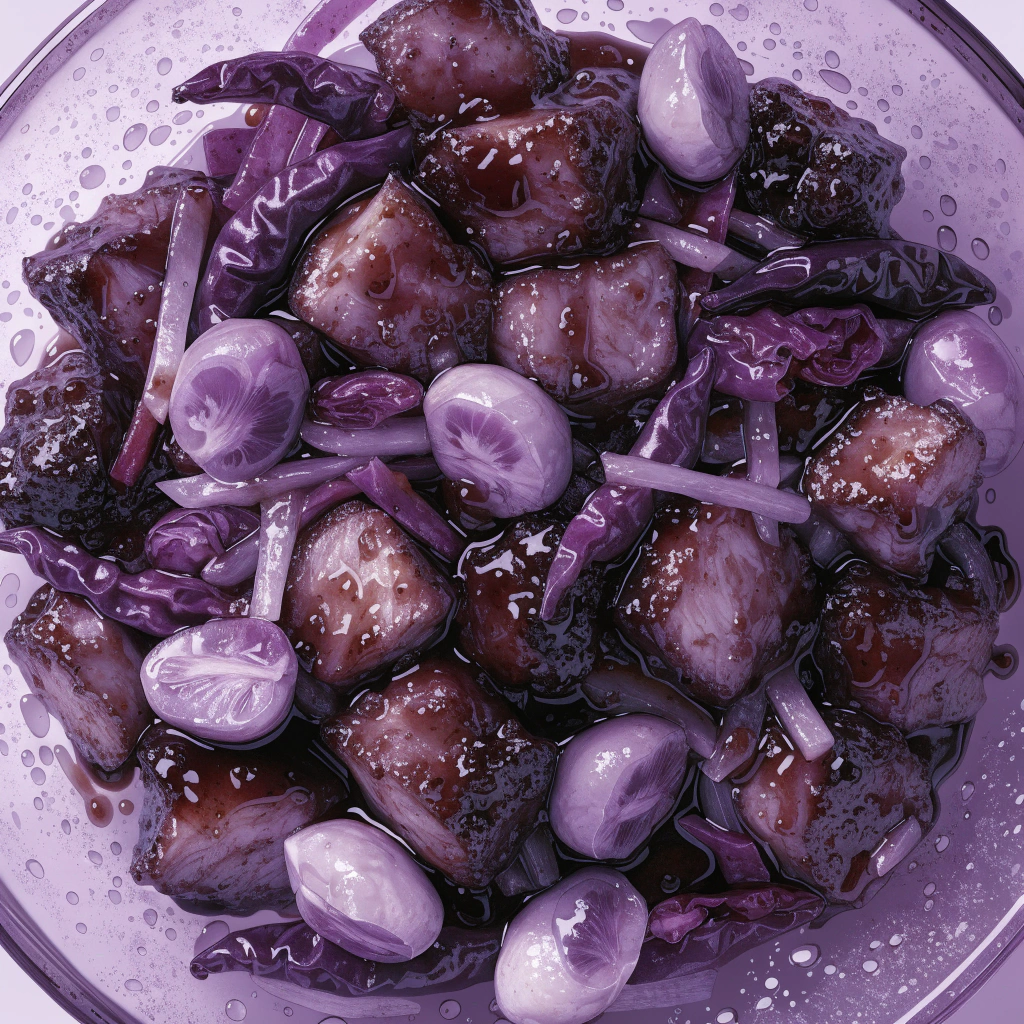
A Famous Chinese Dish: Kung Pao Chicken
Kung Pao Chicken is a very famous food from China. It comes from Sichuan province. Many people in China and around the world like it. It has chicken, peanuts, and fresh vegetables. The food is both sweet and spicy. It is named after a famous man from history. His name was Ding Baozhen. People called him 'Gongbao'. Today, you can find this dish in many restaurants. It is delicious with white rice. It is a great meal for a nice lunch or dinner.
文法スポットライト
パターン: Present Simple (to be)
"Kung Pao Chicken is a very famous food from China."
We use 'is' with singular nouns to describe facts or states. It tells us what the food is or where it is from.
パターン: Present Simple (have/has)
"It has chicken, peanuts, and fresh vegetables."
We use 'has' with the pronoun 'it' to describe parts or ingredients. This shows what the dish contains.
理解度をチェック
10 問 · A1 初級 · 無料プレビュー 1回
この記事で学んだことをテストしよう。全問正解してXPを獲得!
Where does Kung Pao Chicken come from?
問題の内訳
Where does Kung Pao Chicken come from?
あなたの回答:
正解: China
The food is both sweet and spicy.
あなたの回答:
正解: 正しい
What does 'dish' mean?
あなたの回答:
正解: A food prepared for a meal
It is _____ with white rice.
あなたの回答:
正解: delicious
中国の有名な料理:宮保鶏丁(クンパオチキン)
みなさんは、中国の「宮保鶏丁(クンパオチキン)」を食べたことがありますか?これは、中国の四川省でとても有名な料理です。鶏肉、ピーナッツ、唐辛子などを一緒に炒めて作ります。味は少し辛いですが、甘くて酸っぱい味もします。この複雑な味は「ライチのような味」と言われています。
この料理の名前は、昔の有名な役人、丁宝楨(ていほうてい)に関係があります。彼の仕事の称号は「宮保(ゴンバオ)」でした。彼はこの料理が大好きだったので、この名前がつきました。もともとは彼の家のシェフが作った料理、あるいは彼が地元のレストランで広めた料理だと言われています。
今では、中国だけでなく世界中で食べることができます。アメリカや日本のクンパオチキンは、中国のものより辛くないことが多いです。でも、四川省のものはとても辛くて、刺激的です。みなさんも、ぜひ本場の味を食べてみてください。
文法スポットライト
パターン: 〜たことがあります
"みなさんは、中国の「宮保鶏丁」を食べたことがありますか?"
過去の経験について話すときに使います。動詞の「た形」に「ことがあります」をつけます。
パターン: AはBより〜
"アメリカや日本のクンパオチキンは、中国のものより辛くないことが多いです。"
二つのものを比べるときに使います。比較の対象になる言葉のあとに「より」を置きます。
理解度をチェック
11 問 · A2 初級 · 無料プレビュー 1回
この記事で学んだことをテストしよう。全問正解してXPを獲得!
クンパオチキンは、どこの省の料理ですか?
問題の内訳
クンパオチキンは、どこの省の料理ですか?
あなたの回答:
正解: 四川省
クンパオチキンは、辛いだけでなく甘くて酸っぱい味もします。
あなたの回答:
正解: 正しい
「鶏肉」はどういう意味ですか?
あなたの回答:
正解: 鶏の肉
みなさんは、クンパオチキンを_____ことがありますか?
あなたの回答:
正解: 食べた
「宮保(ゴンバオ)」は誰の称号でしたか?
あなたの回答:
正解: 昔の役人
中国の有名な料理:宮保鶏丁(ゴンバオジーディン)
中国料理は世界中で人気がありますが、特に有名なものの一つに「宮保鶏丁(ゴンバオジーディン)」があります。これは中国の四川省(しせんしょう)の代表的な料理で、その独特の味が多くの人々を魅了(みりょう)してきました。
宮保鶏丁は、甘い、辛い、酸っぱい、そして塩辛いという四つの味が絶妙(ぜつみょう)に組み合わさっています。この複雑な味は「ライチのような味」と表現されることもあります。一口食べると、いろいろな味が口の中に広がり、食べる人を飽(あ)きさせません。特に、唐辛子の辛さと砂糖の甘さが同時に感じられるのが特徴です。
この料理の名前は、清(しん)の時代の役人、丁宝楨(ていほうてい)という人物に由来(ゆらい)しています。彼は四川省の知事を務めていました。彼の役職名が「宮保(ゴンバオ)」だったため、彼のお抱え料理人(おやといりょうりにん)が作った料理、または彼が好んだ味が広まって、この名前がつけられたと言われています。長い歴史の中で、この料理は多くの人々に愛されてきました。
宮保鶏丁は、鶏肉を一口大に切って、ピーナッツ、乾燥唐辛子(かんそうとうがらし)、花椒(ホアジャオ)などと一緒に炒めて作られます。花椒は、四川料理ならではの「しびれる辛さ」を出すための重要なスパイスです。家庭でも作られることがありますが、レストランでは強い火力で一気に炒めるため、香ばしい風味がさらに引き立ちます。現在、宮保鶏丁は中国だけでなく、世界中の多くの中華料理店で提供(ていきょう)されています。まだこの料理を食べたことがない人は、ぜひ一度試してみてください。きっとそのおいしさに驚くでしょう。
文法スポットライト
パターン: 〜てきました
"その独特の味が多くの人々を魅了(みりょう)してきました。"
「〜てきました」は、過去のある時点から現在まで、ある状態が続いていたり、ある行動が繰り返されてきたりしたことを表します。変化の過程や継続(けいぞく)を示すときに使われます。
パターン: 〜と言われています
"彼のお抱え料理人が作った料理、または彼が好んだ味が広まって、この名前がつけられたと言われています。"
「〜と言われています」は、一般的にそう言われていることや、広く信じられていることを伝えるときに使います。話者が直接確認(かくにん)したことではなく、伝聞(でんぶん)であることを示します。
理解度をチェック
11 問 · B1 中級 · 無料プレビュー 1回
この記事で学んだことをテストしよう。全問正解してXPを獲得!
宮保鶏丁の味の特徴として、この記事に書かれていないものはどれですか。
問題の内訳
宮保鶏丁の味の特徴として、この記事に書かれていないものはどれですか。
あなたの回答:
正解: 苦い
宮保鶏丁という名前は、四川省の知事だった人物に由来しています。
あなたの回答:
正解: 正しい
「魅了」という言葉の意味に一番近いのはどれですか。
あなたの回答:
正解: 人の心を強く引きつけること
宮保鶏丁は、鶏肉とピーナッツ、乾燥唐辛子、〇〇などと一緒に炒めて作られます。
あなたの回答:
正解: 花椒
花椒は、四川料理にどのような特徴的な味を加えますか。
あなたの回答:
正解: しびれる辛さ
四川料理の真髄:宮保鶏丁の歴史と奥深い味わいを探る
中国の四川料理を代表する一皿として、世界中で愛されている「宮保鶏丁(ゴンバオジーディン)」。この料理は、単なる鶏肉の炒め物ではなく、四川料理の真髄とも言える複雑な味の構成を持っている。その最大の特徴は「茘枝味(れいしあじ)」と称される風味である。これは、ライチのような甘酸っぱさと、塩味、そして唐辛子や花椒による刺激が絶妙に調和した状態を指す。一口食べれば、口の中に何層もの味わいが広がるのがこの料理の醍醐味だ。
この料理の名称には、歴史的な背景が深く関わっている。「宮保」とは、清代の官僚であった丁宝楨(てい・ほうてい)が授かった名誉ある称号「太子少保」に由来する。彼は四川省の総督を務めていた際、この料理を非常に好み、客をもてなす際に頻繁に提供したことから、彼の官職名にちなんで「宮保鶏丁」と呼ばれるようになったとされる。一説には、彼の家の料理人が考案したとも、彼が好んだ地元の料理を改良させたものとも言われている。
調理工程においても、高度な技術が要求される。鶏肉の柔らかさを保ちつつ、ピーナッツの香ばしさと唐辛子の風味を最大限に引き出すためには、強火で一気に炒め上げる「爆炒(バオチャオ)」という技法が不可欠である。また、最後に加える甘酸っぱいソースが、具材全体を一つにまとめ上げる役割を果たしている。
今日、宮保鶏丁は中国国内のみならず、欧米や日本など世界各地の中華料理店で提供されている。地域によって味付けや具材に多少のアレンジが加えられることもあるが、その根底にある「複雑な味の調和」という概念は変わらない。食文化を通じて歴史を感じさせるこの料理は、まさに四川料理が誇る至宝と言えるだろう。分析的に見れば、この料理の普及は単なる食の好みの伝播ではなく、中国の官僚文化と庶民の食生活が融合した結果とも評価できるのである。
文法スポットライト
パターン: ~とされる
"彼の官職名にちなんで「宮保鶏丁」と呼ばれるようになったとされる。"
一般的にそのように言われている、あるいは考えられているという伝聞や客観的な判断を表す表現。歴史的な事実や社会的な評価を述べる際によく使われる。
パターン: ~のみならず
"宮保鶏丁は中国国内のみならず、世界各地の中華料理店で提供されている。"
「~だけでなく」の硬い表現。AだけではなくBも同様であるという範囲の広がりを強調する際に用いられる。
パターン: ~といった
"甘酸っぱさと、塩味、そして唐辛子や花椒による刺激といった複数の要素が複雑に絡み合っている。"
具体的な例をいくつか挙げ、それらをまとめる時に使う表現。列挙された例が全体の一部であることを示唆する。
理解度をチェック
11 問 · B2 中上級 · 無料プレビュー 1回
この記事で学んだことをテストしよう。全問正解してXPを獲得!
宮保鶏丁の味を象徴する「茘枝味(れいしあじ)」とはどのような味ですか?
問題の内訳
宮保鶏丁の味を象徴する「茘枝味(れいしあじ)」とはどのような味ですか?
あなたの回答:
正解: ライチのように甘酸っぱく、様々な味が調和した味
「宮保」という名前は、丁宝楨が持っていた名誉ある称号に由来している。
あなたの回答:
正解: 正しい
「物事が始まった理由や歴史的経緯」を意味する言葉はどれですか?
あなたの回答:
正解: 由来
鶏肉の柔らかさを保つためには、強火で一気に炒める「_____」という技法が不可欠である。
あなたの回答:
正解: 爆炒
記事によると、宮保鶏丁の普及は何の結果として評価されていますか?
あなたの回答:
正解: 官僚文化と庶民の食生活の融合
The Gastronomic Legacy of Gong Bao Ji Ding: Beyond the Western Facade
Seldom does a dish manage to transcend its humble regional origins to become a global culinary icon while simultaneously retaining a fiercely guarded traditional identity. Gong Bao Ji Ding, more commonly known in the Anglophone world as Kung Pao Chicken, represents the quintessential Sichuanese contribution to the global gastronomic landscape. However, the ubiquitous nature of its Westernized iterations often obscures the nuanced complexity of the original dish, which is ostensibly a masterclass in the 'lychee-like' flavor profile—a delicate interplay of salty, sweet, sour, and piquant notes.
It was under the governance of Ding Baozhen, a high-ranking Qing Dynasty official, that the dish purportedly achieved its legendary status. Ding, whose honorary title was 'Gongbao' (Palace Guardian), was the eponymous inspiration for the dish’s name. Historical accounts suggest that the dish was either a private creation of his family chef or a local adaptation designed to accommodate Ding’s specific palate. Regardless of its exact genesis, the proliferation of Gong Bao Ji Ding across international borders has led to a fascinating dichotomy between the authentic Sichuanese preparation and the modified versions found in overseas Chinatowns.
In its traditional form, the dish is a testament to culinary precision. The integration of tender diced chicken, crunchy peanuts, and dried Sichuan chili peppers requires a technique known as 'wok hei' or the breath of the wok. What distinguishes the authentic version from its Western counterparts is the inclusion of the Sichuan peppercorn, which provides the signature 'ma' (numbing) sensation. This numbing effect is not merely for heat; it serves to heighten the other flavors, creating a sensory experience that is far more sophisticated than the sugary, starch-heavy sauces often found elsewhere. Western versions are often made more palatable to local tongues by omitting this numbing sensation entirely.
The 'lychee-flavor' profile, despite its name, contains no actual fruit. Instead, it refers to a specific ratio of vinegar, sugar, and soy sauce that mimics the refreshing, floral acidity of the lychee. Achieving this balance is the benchmark by which Sichuanese chefs are judged. If the sweetness predominates, the dish loses its character; if the acidity is too sharp, the harmony is shattered. This sophisticated requirement is why the dish is often cited in culinary textbooks as the ultimate test of a chef's control over heat and seasoning. Rarely does a single recipe demand such rigorous adherence to proportions while allowing for the erratic nature of open-flame cooking.
Critical analysis of the dish’s global journey reveals how migration and cultural adaptation have reshaped its identity. While the Western version often prioritizes sweetness and mildness to suit local preferences, the original remains a piquant reminder of Sichuan’s bold heritage. The vestiges of the Qing Dynasty are still palpable in the way modern chefs in Chengdu approach the dish, treating it with a reverence that borders on the academic. Furthermore, the nominalization of the cooking process—the 'frying of the chilies until they turn dark purple'—is a non-negotiable step for any chef seeking to claim authenticity. It is this meticulous attention to detail that ensures the dish remains a precursor to modern fusion cuisine, despite its centuries-old roots.
文法スポットライト
パターン: Inversion for Emphasis
"Seldom does a dish manage to transcend its humble regional origins..."
Inversion occurs when the auxiliary verb comes before the subject, typically after negative or restrictive adverbs like 'seldom' or 'rarely'. It is used in formal writing to add rhetorical force.
パターン: Cleft Sentences
"It was under the governance of Ding Baozhen... that the dish purportedly achieved its legendary status."
Cleft sentences use the structure 'It is/was + [focus] + that/who' to emphasize a specific piece of information. Here, it emphasizes the specific historical period and person responsible for the dish.
パターン: Nominalization
"The proliferation of Gong Bao Ji Ding across international borders has led to a fascinating dichotomy..."
Nominalization is the use of a noun phrase to express an action (using 'proliferation' instead of 'proliferated'). This is a hallmark of C1-level academic writing, making the text more concise and objective.
理解度をチェック
12 問 · C1 上級 · 無料プレビュー 1回
この記事で学んだことをテストしよう。全問正解してXPを獲得!
What does the 'lychee-like' flavor profile actually consist of?
問題の内訳
What does the 'lychee-like' flavor profile actually consist of?
あなたの回答:
正解: A balance of vinegar, sugar, and soy sauce
The dish was named after a Qing Dynasty official whose title was 'Gongbao'.
あなたの回答:
正解: 正しい
What is the meaning of 'ubiquitous' as used in the text?
あなたの回答:
正解: Found everywhere
Historical accounts suggest that the dish was designed to accommodate Ding’s specific _____.
あなたの回答:
正解: palate
What is the primary role of the Sichuan peppercorn in the authentic dish?
あなたの回答:
正解: To provide a numbing sensation that heightens other flavors
Western versions of the dish are generally spicier and less sweet than the original.
あなたの回答:
正解: 間違い
The Gastronomic Legacy of Ding Baozhen: A Discourse on the Nuances of Gong Bao Ji Ding
To the uninitiated observer, Kung Pao Chicken—or Gong Bao Ji Ding, as it is known in its native Sichuan—might appear as merely another fixture of the globalized Chinese culinary repertoire. However, to dismiss it as such would be to overlook a profound narrative of historical contingency and sensory sophistication. Were one to traverse the bustling thoroughfares of Chengdu, the provincial capital of Sichuan, one would encounter a dish that bears little resemblance to the saccharine, starch-heavy iterations frequently found in Western takeout containers. Instead, the authentic preparation demands a rigorous adherence to the 'lychee-flavored' profile (lizhi wei), a delicate equilibrium of acidity, sweetness, and salinity, punctuated by the numbing piquancy of Sichuan peppercorns.
The nomenclature of the dish itself is inextricably linked to the historiography of the Qing Dynasty. Ding Baozhen, a venerable official who served as the governor of Sichuan in the late 19th century, was posthumously honored with the title 'Gongbao' (Palace Guardian). While historical accounts vary as to whether the dish was a creation of Ding’s personal chef or a refinement of a pre-existing local staple, its association with his station remains undisputed. It is perhaps ironic that a dish so deeply rooted in the aristocratic hierarchy of imperial China should become a synecdoche for the region’s democratic accessibility. The dish’s survival through various political upheavals suggests a cultural resilience that transcends mere palatability.
From a technical standpoint, the quintessence of Gong Bao Ji Ding lies in the 'wok hei'—the breath of the wok—and the precise timing required to emulsify the sauce. It is imperative that the chef flash-fry the dried chilies and peppercorns until they reach a state of darkened fragrance, yet stop short of carbonization. This process, often referred to as 'scorched chili' flavor, provides the smoky backdrop against which the succulent cubes of chicken and the crunch of fried peanuts are juxtaposed. The inclusion of peanuts, far from being a vestigial garnish, is essential for providing a textural contrast that elevates the dish from a simple stir-fry to a complex exercise in mouthfeel.
Furthermore, the global diaspora of Kung Pao Chicken serves as a fascinating case study in culinary adaptation. As the dish migrated across borders, it underwent a process of localizing transformation, often losing its characteristic numbing sensation to accommodate the less adventurous palates of foreign consumers. This proclivity for modification highlights the tension between authenticity and accessibility. Some purists argue that the omission of the Sichuan peppercorn renders the dish a mere shadow of its former self, yet others contend that such evolution is the hallmark of a living cuisine.
In conclusion, Gong Bao Ji Ding is far more than a culinary commodity; it is a manifestation of Sichuan’s historical depth and its sophisticated understanding of flavor chemistry. Whether one views it through the lens of imperial history or as a triumph of modern gastronomy, the dish remains an enduring testament to the ingenuity of Ding Baozhen’s era. It is through such dishes that we may better comprehend the intricate tapestry of Chinese cultural identity, provided that we approach the dining table with the requisite intellectual curiosity and a willingness to embrace the complexities of the Sichuanese palate.
文法スポットライト
パターン: Inverted Conditional (Type 2)
"Were one to traverse the bustling thoroughfares of Chengdu, one would encounter a dish that bears little resemblance to the saccharine iterations."
This formal structure replaces 'If one were to traverse'. It is used in C2-level academic writing to provide a hypothetical scenario with a more sophisticated tone.
パターン: Subjunctive Mood with Imperative Adjectives
"It is imperative that the chef flash-fry the dried chilies and peppercorns until they reach a state of darkened fragrance."
Used after adjectives expressing necessity or urgency (imperative, essential, crucial), the base form of the verb (flash-fry) is used regardless of the subject.
パターン: Complex Nominalization
"The global diaspora of Kung Pao Chicken serves as a fascinating case study in culinary adaptation."
Nominalization involves turning verbs (adapt) into nouns (adaptation). This allows for a higher information density and a more analytical, objective tone characteristic of C2 prose.
理解度をチェック
12 問 · C2 マスター · 無料プレビュー 1回
この記事で学んだことをテストしよう。全問正解してXPを獲得!
What does the author suggest about the relationship between the dish's name and its history?
問題の内訳
What does the author suggest about the relationship between the dish's name and its history?
あなたの回答:
正解: The name reflects the high social status of its namesake.
The author argues that Western versions of Kung Pao Chicken are identical to the original Sichuanese preparation.
あなたの回答:
正解: 間違い
What does 'quintessence' mean in the context of the article?
あなたの回答:
正解: The most perfect example of the dish's nature.
The author describes the inclusion of peanuts as essential for providing a textural _____.
あなたの回答:
正解: contrast
What is the 'lizhi wei' profile mentioned in the text?
あなたの回答:
正解: A balance of sour, sweet, and salty notes resembling lychee.
The author believes that the evolution of a dish in foreign countries is a sign of a 'living cuisine'.
あなたの回答:
正解: 正しい

