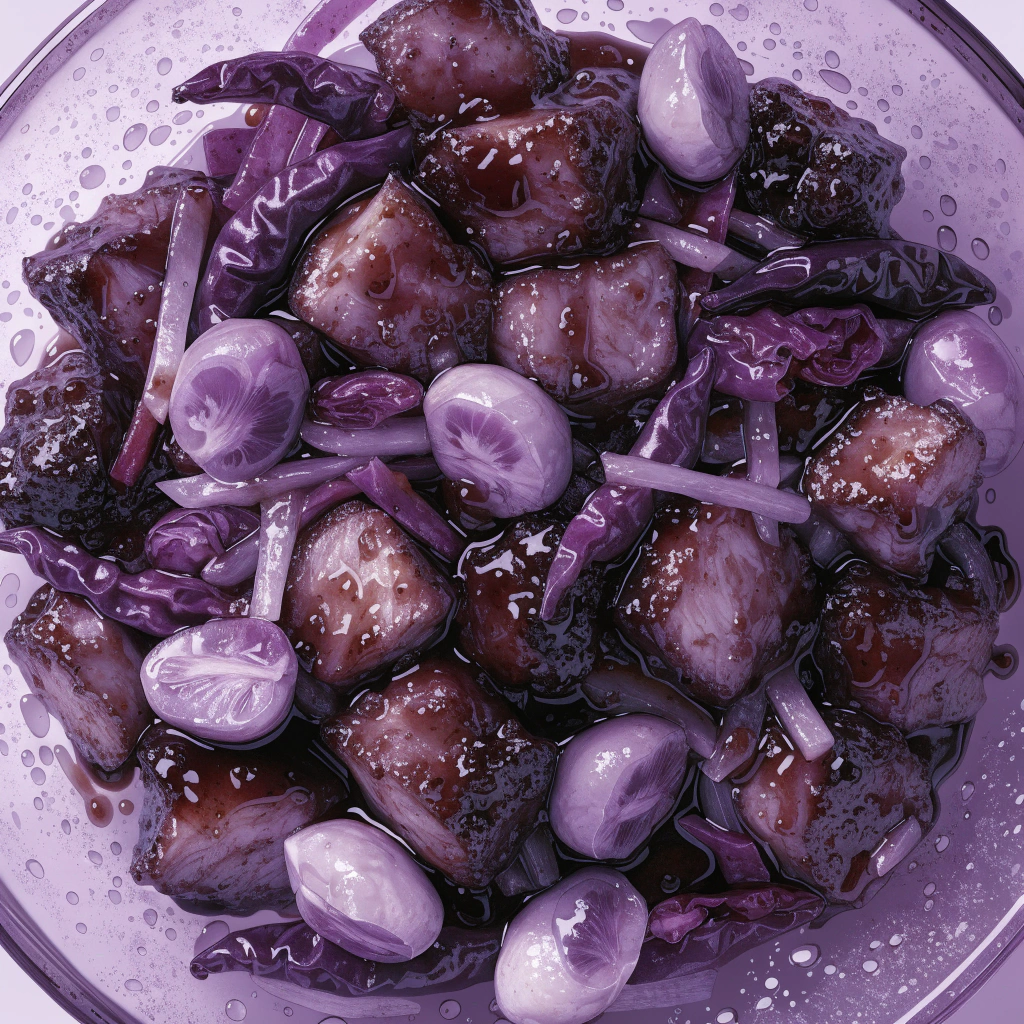
A Famous Chinese Dish: Kung Pao Chicken
Kung Pao Chicken is a very famous food from China. It comes from Sichuan province. Many people in China and around the world like it. It has chicken, peanuts, and fresh vegetables. The food is both sweet and spicy. It is named after a famous man from history. His name was Ding Baozhen. People called him 'Gongbao'. Today, you can find this dish in many restaurants. It is delicious with white rice. It is a great meal for a nice lunch or dinner.
Grammar Spotlight
Pattern: Present Simple (to be)
"Kung Pao Chicken is a very famous food from China."
We use 'is' with singular nouns to describe facts or states. It tells us what the food is or where it is from.
Pattern: Present Simple (have/has)
"It has chicken, peanuts, and fresh vegetables."
We use 'has' with the pronoun 'it' to describe parts or ingredients. This shows what the dish contains.
Test Your Understanding
10 questions · A1 Beginner · 1 free preview
Test what you learned from this article. Answer all questions to earn XP!
Where does Kung Pao Chicken come from?
Want to finish the quiz?
9 more questions are waiting for you. Sign up free to unlock the full quiz and earn XP!
Sign Up FreeAlready have an account? Sign In
Question Breakdown
Where does Kung Pao Chicken come from?
Your answer:
Correct answer: China
The food is both sweet and spicy.
Your answer:
Correct answer: True
What does 'dish' mean?
Your answer:
Correct answer: A food prepared for a meal
It is _____ with white rice.
Your answer:
Correct answer: delicious
The Story of Kung Pao Chicken
Kung Pao Chicken is a very famous dish from China. People call it 'Gong Bao Ji Ding' in Chinese. It comes from the Sichuan province. Long ago, a man named Ding Baozhen loved this food. He was an important governor. People named the dish after him because he liked it so much.
The taste of Kung Pao Chicken is very special. It is a mix of salty, sweet, sour, and spicy flavors. Chefs cook small pieces of chicken with crunchy peanuts and red peppers. Most people think it is more delicious than other chicken dishes because the sauce is very rich.
Today, you can find this dish in many countries. It is more popular than many other Chinese foods. In China, the traditional version is spicier than the version in Western countries. If you visit China, you must try it because it is a part of Chinese history.
Grammar Spotlight
Pattern: Past Simple with 'be'
"He was an important governor."
We use 'was' or 'were' to talk about people in the past. Use 'was' for singular subjects like 'he', 'she', or 'it'.
Pattern: Comparatives with 'more'
"It is more popular than many other Chinese foods."
For long adjectives like 'popular' or 'delicious', use 'more' + adjective + 'than' to compare two things. It shows that one thing has more of a specific quality.
Test Your Understanding
11 questions · A2 Elementary · 1 free preview
Test what you learned from this article. Answer all questions to earn XP!
Who was the dish named after?
Want to finish the quiz?
10 more questions are waiting for you. Sign up free to unlock the full quiz and earn XP!
Sign Up FreeAlready have an account? Sign In
Question Breakdown
Who was the dish named after?
Your answer:
Correct answer: A governor named Ding Baozhen
Kung Pao Chicken only has a spicy flavor.
Your answer:
Correct answer: False
What does 'crunchy' mean?
Your answer:
Correct answer: Hard and making a noise when eaten
It comes from the Sichuan _____.
Your answer:
Correct answer: province
What are the main ingredients mentioned in the text?
Your answer:
Correct answer: Chicken, peanuts, and red peppers
The Story of Kung Pao Chicken: A Taste of Sichuan
If you have ever visited a Chinese restaurant, you have probably seen Kung Pao Chicken on the menu. This famous dish, which is known as 'Gong Bao Ji Ding' in China, comes from the Sichuan province in the southwest. It has become popular all over the world because of its unique and exciting taste.
The dish is named after Ding Baozhen, an important official who lived during the Qing Dynasty. He was given the title 'Gongbao', which means 'Palace Guardian'. It is believed that the recipe was created by his personal chef to satisfy the official’s preference for spicy food. Later, the dish was popularized in local restaurants, and it soon became a favorite throughout the region.
What makes Kung Pao Chicken truly special is its complex flavor profile. It is often described as having a 'lychee-like' taste because it balances salty, sweet, sour, and spicy notes perfectly. The main ingredients include diced chicken, crunchy peanuts, and dried chili peppers. In Sichuan, the authentic version also uses Sichuan peppercorns, which create a unique numbing sensation in the mouth. This combination of heat and texture has made the dish a masterpiece of Chinese cooking.
In modern times, the recipe has been adapted in many different countries to suit local tastes. For example, in Western versions, the dish is often less spicy and includes extra vegetables like bell peppers or carrots. However, the original version is still celebrated for its rich history and its perfect balance of ingredients. Many food lovers have traveled to Sichuan just to try the authentic meal. If you want to experience real Chinese culture through food, Kung Pao Chicken is a dish that must be tried.
Grammar Spotlight
Pattern: Present Perfect
"If you have ever visited a Chinese restaurant, you have probably seen Kung Pao Chicken on the menu."
The present perfect (have + past participle) is used here to talk about life experiences that happened at an unspecified time in the past.
Pattern: Passive Voice
"It is believed that the recipe was created by his personal chef..."
The passive voice (be + past participle) is used to focus on the action or the object rather than the person performing the action.
Test Your Understanding
11 questions · B1 Intermediate · 1 free preview
Test what you learned from this article. Answer all questions to earn XP!
Where does Kung Pao Chicken originally come from?
Want to finish the quiz?
10 more questions are waiting for you. Sign up free to unlock the full quiz and earn XP!
Sign Up FreeAlready have an account? Sign In
Question Breakdown
Where does Kung Pao Chicken originally come from?
Your answer:
Correct answer: Sichuan province
The dish is only spicy and does not have any other flavors.
Your answer:
Correct answer: False
What does 'authentic' mean in the context of the article?
Your answer:
Correct answer: Original and traditional
The main _____ include diced chicken, peanuts, and chili peppers.
Your answer:
Correct answer: ingredients
Who was Ding Baozhen?
Your answer:
Correct answer: An important official
Kung Pao Chicken: A Culinary Analysis of Sichuan's Most Famous Export
Kung Pao Chicken, or 'Gong Bao Ji Ding,' represents more than just a staple of Chinese cuisine; it is a sophisticated culinary masterpiece that embodies the complex history of Sichuan province. While many international diners are familiar with its westernized iterations, the authentic version offers a refined balance of flavors often described as 'lychee-like.' This unique profile is achieved through a meticulous combination of sugar, vinegar, and soy sauce, which serves to harmonize the intense heat of dried chilies and the numbing sensation of Sichuan peppercorns.
The origins of the dish are inextricably linked to the Qing Dynasty official Ding Baozhen, who served as the governor of Sichuan in the late 19th century. Having been awarded the honorary title of 'Gongbao,' or Palace Guardian, Ding is credited with popularizing the dish. Historical accounts suggest that his family chef developed the recipe to cater to the governor’s refined palate, though some argue it was adapted from local street food. Regardless of its precise inception, the dish has endured as a symbol of regional identity and culinary ingenuity.
From a technical perspective, the preparation of Kung Pao Chicken requires a high degree of precision. The chicken must be diced into uniform cubes to ensure even cooking, while the peanuts provide a crucial textural contrast. Furthermore, the use of the 'wok hei'—or breath of the wok—is essential for imparting a smoky aroma that elevates the ingredients. It is this attention to detail that distinguishes a mediocre version from an exceptional one.
In the contemporary era, the global spread of Kung Pao Chicken has led to various adaptations. In many Western countries, the dish has been modified to suit local tastes, often resulting in a sweeter, less spicy profile. However, culinary enthusiasts argue that these variations frequently omit the essential Sichuan peppercorn, thereby losing the 'ma-la'—or numbing and spicy—character that defines the original. Consequently, there has been a resurgence of interest in authentic regional cooking, as diners increasingly seek out traditional preparation methods.
Ultimately, Kung Pao Chicken serves as a testament to the enduring appeal of Sichuanese gastronomy. By analyzing its historical roots and flavor complexity, one can appreciate why it remains one of China's most significant cultural exports. Whether enjoyed in a bustling Chengdu eatery or a high-end restaurant abroad, it continues to captivate the senses of food lovers worldwide.
Grammar Spotlight
Pattern: Relative Clauses with 'Who'
"The origins of the dish are inextricably linked to the Qing Dynasty official Ding Baozhen, who served as the governor of Sichuan."
A non-defining relative clause is used here to provide additional information about a specific person. It is separated by a comma and uses 'who' because the subject is human.
Pattern: Perfect Participle Phrases
"Having been awarded the honorary title of 'Gongbao,' or Palace Guardian, Ding is credited with popularizing the dish."
The perfect participle (having + past participle) indicates that one action was completed before the main action of the sentence began. It is a formal way to show sequence and cause.
Pattern: Passive Voice with 'Is/Are + Past Participle'
"This unique profile is achieved through a meticulous combination of sugar, vinegar, and soy sauce."
The passive voice is used to focus on the process (the achievement of the flavor profile) rather than the person performing the action, which is common in academic and analytical writing.
Test Your Understanding
11 questions · B2 Upper Intermediate · 1 free preview
Test what you learned from this article. Answer all questions to earn XP!
According to the article, what defines the 'lychee-like' flavor of the dish?
Want to finish the quiz?
10 more questions are waiting for you. Sign up free to unlock the full quiz and earn XP!
Sign Up FreeAlready have an account? Sign In
Question Breakdown
According to the article, what defines the 'lychee-like' flavor of the dish?
Your answer:
Correct answer: A balance of sugar, vinegar, and soy sauce
Ding Baozhen was the chef who originally invented the recipe for Kung Pao Chicken.
Your answer:
Correct answer: False
What does 'ingenuity' mean in the context of the article?
Your answer:
Correct answer: Cleverness and originality
The chicken must be diced into _____ cubes to ensure it cooks evenly.
Your answer:
Correct answer: uniform
What is 'wok hei' often referred to as in the text?
Your answer:
Correct answer: The breath of the wok
The Gastronomic Legacy of Gong Bao Ji Ding: Beyond the Western Facade
Seldom does a dish manage to transcend its humble regional origins to become a global culinary icon while simultaneously retaining a fiercely guarded traditional identity. Gong Bao Ji Ding, more commonly known in the Anglophone world as Kung Pao Chicken, represents the quintessential Sichuanese contribution to the global gastronomic landscape. However, the ubiquitous nature of its Westernized iterations often obscures the nuanced complexity of the original dish, which is ostensibly a masterclass in the 'lychee-like' flavor profile—a delicate interplay of salty, sweet, sour, and piquant notes.
It was under the governance of Ding Baozhen, a high-ranking Qing Dynasty official, that the dish purportedly achieved its legendary status. Ding, whose honorary title was 'Gongbao' (Palace Guardian), was the eponymous inspiration for the dish’s name. Historical accounts suggest that the dish was either a private creation of his family chef or a local adaptation designed to accommodate Ding’s specific palate. Regardless of its exact genesis, the proliferation of Gong Bao Ji Ding across international borders has led to a fascinating dichotomy between the authentic Sichuanese preparation and the modified versions found in overseas Chinatowns.
In its traditional form, the dish is a testament to culinary precision. The integration of tender diced chicken, crunchy peanuts, and dried Sichuan chili peppers requires a technique known as 'wok hei' or the breath of the wok. What distinguishes the authentic version from its Western counterparts is the inclusion of the Sichuan peppercorn, which provides the signature 'ma' (numbing) sensation. This numbing effect is not merely for heat; it serves to heighten the other flavors, creating a sensory experience that is far more sophisticated than the sugary, starch-heavy sauces often found elsewhere. Western versions are often made more palatable to local tongues by omitting this numbing sensation entirely.
The 'lychee-flavor' profile, despite its name, contains no actual fruit. Instead, it refers to a specific ratio of vinegar, sugar, and soy sauce that mimics the refreshing, floral acidity of the lychee. Achieving this balance is the benchmark by which Sichuanese chefs are judged. If the sweetness predominates, the dish loses its character; if the acidity is too sharp, the harmony is shattered. This sophisticated requirement is why the dish is often cited in culinary textbooks as the ultimate test of a chef's control over heat and seasoning. Rarely does a single recipe demand such rigorous adherence to proportions while allowing for the erratic nature of open-flame cooking.
Critical analysis of the dish’s global journey reveals how migration and cultural adaptation have reshaped its identity. While the Western version often prioritizes sweetness and mildness to suit local preferences, the original remains a piquant reminder of Sichuan’s bold heritage. The vestiges of the Qing Dynasty are still palpable in the way modern chefs in Chengdu approach the dish, treating it with a reverence that borders on the academic. Furthermore, the nominalization of the cooking process—the 'frying of the chilies until they turn dark purple'—is a non-negotiable step for any chef seeking to claim authenticity. It is this meticulous attention to detail that ensures the dish remains a precursor to modern fusion cuisine, despite its centuries-old roots.
Grammar Spotlight
Pattern: Inversion for Emphasis
"Seldom does a dish manage to transcend its humble regional origins..."
Inversion occurs when the auxiliary verb comes before the subject, typically after negative or restrictive adverbs like 'seldom' or 'rarely'. It is used in formal writing to add rhetorical force.
Pattern: Cleft Sentences
"It was under the governance of Ding Baozhen... that the dish purportedly achieved its legendary status."
Cleft sentences use the structure 'It is/was + [focus] + that/who' to emphasize a specific piece of information. Here, it emphasizes the specific historical period and person responsible for the dish.
Pattern: Nominalization
"The proliferation of Gong Bao Ji Ding across international borders has led to a fascinating dichotomy..."
Nominalization is the use of a noun phrase to express an action (using 'proliferation' instead of 'proliferated'). This is a hallmark of C1-level academic writing, making the text more concise and objective.
Test Your Understanding
12 questions · C1 Advanced · 1 free preview
Test what you learned from this article. Answer all questions to earn XP!
What does the 'lychee-like' flavor profile actually consist of?
Want to finish the quiz?
11 more questions are waiting for you. Sign up free to unlock the full quiz and earn XP!
Sign Up FreeAlready have an account? Sign In
Question Breakdown
What does the 'lychee-like' flavor profile actually consist of?
Your answer:
Correct answer: A balance of vinegar, sugar, and soy sauce
The dish was named after a Qing Dynasty official whose title was 'Gongbao'.
Your answer:
Correct answer: True
What is the meaning of 'ubiquitous' as used in the text?
Your answer:
Correct answer: Found everywhere
Historical accounts suggest that the dish was designed to accommodate Ding’s specific _____.
Your answer:
Correct answer: palate
What is the primary role of the Sichuan peppercorn in the authentic dish?
Your answer:
Correct answer: To provide a numbing sensation that heightens other flavors
Western versions of the dish are generally spicier and less sweet than the original.
Your answer:
Correct answer: False
The Gastronomic Legacy of Ding Baozhen: A Discourse on the Nuances of Gong Bao Ji Ding
To the uninitiated observer, Kung Pao Chicken—or Gong Bao Ji Ding, as it is known in its native Sichuan—might appear as merely another fixture of the globalized Chinese culinary repertoire. However, to dismiss it as such would be to overlook a profound narrative of historical contingency and sensory sophistication. Were one to traverse the bustling thoroughfares of Chengdu, the provincial capital of Sichuan, one would encounter a dish that bears little resemblance to the saccharine, starch-heavy iterations frequently found in Western takeout containers. Instead, the authentic preparation demands a rigorous adherence to the 'lychee-flavored' profile (lizhi wei), a delicate equilibrium of acidity, sweetness, and salinity, punctuated by the numbing piquancy of Sichuan peppercorns.
The nomenclature of the dish itself is inextricably linked to the historiography of the Qing Dynasty. Ding Baozhen, a venerable official who served as the governor of Sichuan in the late 19th century, was posthumously honored with the title 'Gongbao' (Palace Guardian). While historical accounts vary as to whether the dish was a creation of Ding’s personal chef or a refinement of a pre-existing local staple, its association with his station remains undisputed. It is perhaps ironic that a dish so deeply rooted in the aristocratic hierarchy of imperial China should become a synecdoche for the region’s democratic accessibility. The dish’s survival through various political upheavals suggests a cultural resilience that transcends mere palatability.
From a technical standpoint, the quintessence of Gong Bao Ji Ding lies in the 'wok hei'—the breath of the wok—and the precise timing required to emulsify the sauce. It is imperative that the chef flash-fry the dried chilies and peppercorns until they reach a state of darkened fragrance, yet stop short of carbonization. This process, often referred to as 'scorched chili' flavor, provides the smoky backdrop against which the succulent cubes of chicken and the crunch of fried peanuts are juxtaposed. The inclusion of peanuts, far from being a vestigial garnish, is essential for providing a textural contrast that elevates the dish from a simple stir-fry to a complex exercise in mouthfeel.
Furthermore, the global diaspora of Kung Pao Chicken serves as a fascinating case study in culinary adaptation. As the dish migrated across borders, it underwent a process of localizing transformation, often losing its characteristic numbing sensation to accommodate the less adventurous palates of foreign consumers. This proclivity for modification highlights the tension between authenticity and accessibility. Some purists argue that the omission of the Sichuan peppercorn renders the dish a mere shadow of its former self, yet others contend that such evolution is the hallmark of a living cuisine.
In conclusion, Gong Bao Ji Ding is far more than a culinary commodity; it is a manifestation of Sichuan’s historical depth and its sophisticated understanding of flavor chemistry. Whether one views it through the lens of imperial history or as a triumph of modern gastronomy, the dish remains an enduring testament to the ingenuity of Ding Baozhen’s era. It is through such dishes that we may better comprehend the intricate tapestry of Chinese cultural identity, provided that we approach the dining table with the requisite intellectual curiosity and a willingness to embrace the complexities of the Sichuanese palate.
Grammar Spotlight
Pattern: Inverted Conditional (Type 2)
"Were one to traverse the bustling thoroughfares of Chengdu, one would encounter a dish that bears little resemblance to the saccharine iterations."
This formal structure replaces 'If one were to traverse'. It is used in C2-level academic writing to provide a hypothetical scenario with a more sophisticated tone.
Pattern: Subjunctive Mood with Imperative Adjectives
"It is imperative that the chef flash-fry the dried chilies and peppercorns until they reach a state of darkened fragrance."
Used after adjectives expressing necessity or urgency (imperative, essential, crucial), the base form of the verb (flash-fry) is used regardless of the subject.
Pattern: Complex Nominalization
"The global diaspora of Kung Pao Chicken serves as a fascinating case study in culinary adaptation."
Nominalization involves turning verbs (adapt) into nouns (adaptation). This allows for a higher information density and a more analytical, objective tone characteristic of C2 prose.
Test Your Understanding
12 questions · C2 Mastery · 1 free preview
Test what you learned from this article. Answer all questions to earn XP!
What does the author suggest about the relationship between the dish's name and its history?
Want to finish the quiz?
11 more questions are waiting for you. Sign up free to unlock the full quiz and earn XP!
Sign Up FreeAlready have an account? Sign In
Question Breakdown
What does the author suggest about the relationship between the dish's name and its history?
Your answer:
Correct answer: The name reflects the high social status of its namesake.
The author argues that Western versions of Kung Pao Chicken are identical to the original Sichuanese preparation.
Your answer:
Correct answer: False
What does 'quintessence' mean in the context of the article?
Your answer:
Correct answer: The most perfect example of the dish's nature.
The author describes the inclusion of peanuts as essential for providing a textural _____.
Your answer:
Correct answer: contrast
What is the 'lizhi wei' profile mentioned in the text?
Your answer:
Correct answer: A balance of sour, sweet, and salty notes resembling lychee.
The author believes that the evolution of a dish in foreign countries is a sign of a 'living cuisine'.
Your answer:
Correct answer: True
