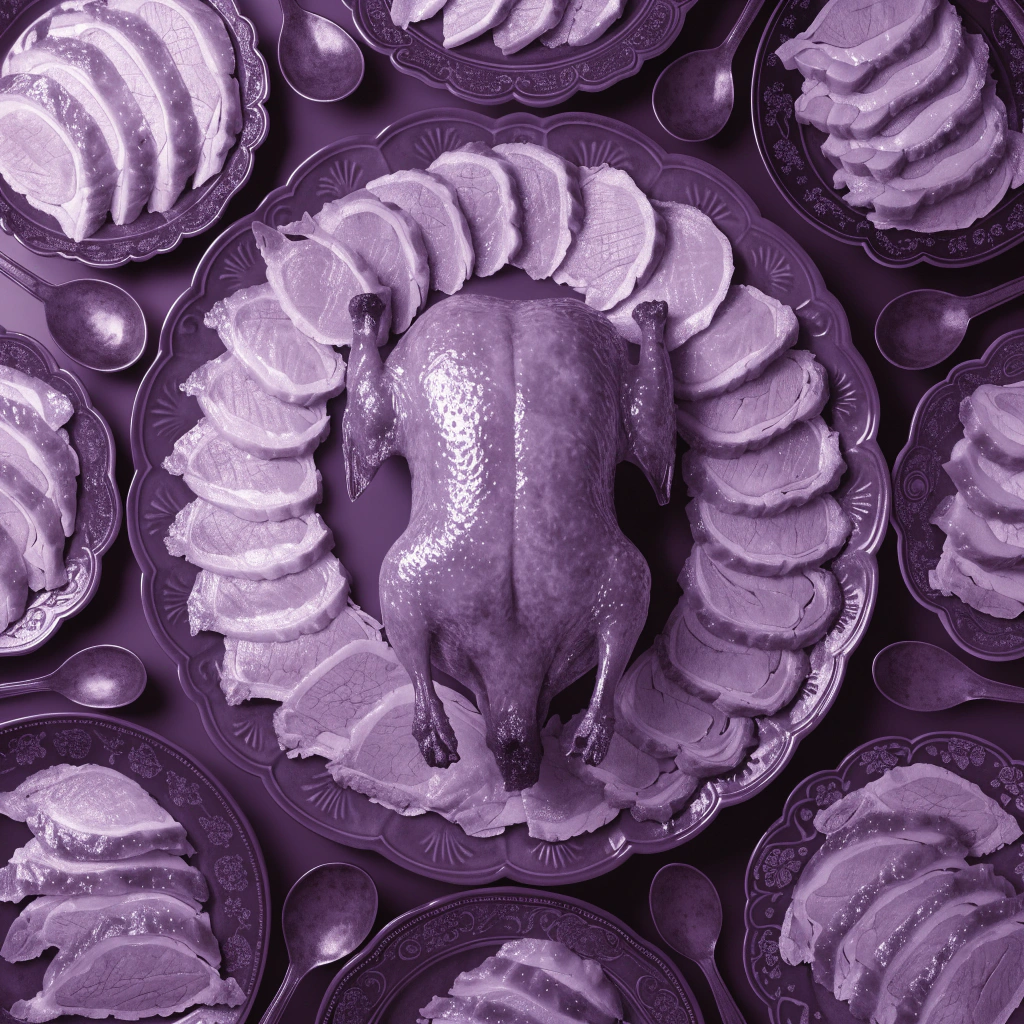
A Special Meal: Peking Duck
Peking Duck is a very famous food from China. It is a special dish. In the past, kings and queens in China ate this duck. Now, many people eat it in restaurants.
The duck has a very crispy skin. The meat is soft and delicious. Chefs cook the duck for a long time. They cut the meat into small pieces.
You eat the duck with thin pancakes. You also use green onions and sweet sauce. It is a fun meal to share with friends. Many people visit Beijing to try this food.
Grammar Spotlight
Pattern: Present Simple (to be)
"Peking Duck is a very famous food from China."
We use 'is' for singular subjects to describe facts or states. It connects the subject to a description.
Pattern: Present Simple (Action Verbs)
"Many people visit Beijing to try this food."
We use the base form of the verb (visit) for plural subjects like 'people'. This talks about a general fact or habit.
Test Your Understanding
10 questions · A1 Beginner · 1 free preview
Test what you learned from this article. Answer all questions to earn XP!
Where is Peking Duck from?
Want to finish the quiz?
9 more questions are waiting for you. Sign up free to unlock the full quiz and earn XP!
Sign Up FreeAlready have an account? Sign In
Question Breakdown
Where is Peking Duck from?
Your answer:
Correct answer: China
Only kings and queens eat this duck today.
Your answer:
Correct answer: False
What does 'meat' mean?
Your answer:
Correct answer: The part of an animal we eat
You eat the duck with thin _____.
Your answer:
Correct answer: pancakes
The Famous Peking Duck of China
Peking Duck is a very famous food from Beijing, China. Long ago, it was a special meal for kings and queens in the Imperial Palace. It first became popular hundreds of years ago. Today, people all over the world love it because it is delicious.
Making this dish is not easy. It takes a long time and a lot of work. Chefs cook the duck in a special oven until the skin is very crispy. The meat inside stays soft and tender. It is more difficult to cook than a normal chicken.
There is a special way to eat Peking Duck. People usually eat it with thin pancakes, green onions, and a sweet sauce. You put the meat and vegetables inside the pancake and roll it up. It is a fun and tasty experience for everyone who visits China.
Grammar Spotlight
Pattern: Past Simple (to be)
"Long ago, it was a special meal for kings and queens."
We use 'was' for the past of 'is'. It describes a state or situation that happened in the past.
Pattern: Comparatives
"It is more difficult to cook than a normal chicken."
We use 'more' + long adjective + 'than' to compare two things. Here, it compares the difficulty of cooking duck versus chicken.
Test Your Understanding
11 questions · A2 Elementary · 1 free preview
Test what you learned from this article. Answer all questions to earn XP!
Where does Peking Duck come from?
Want to finish the quiz?
10 more questions are waiting for you. Sign up free to unlock the full quiz and earn XP!
Sign Up FreeAlready have an account? Sign In
Question Breakdown
Where does Peking Duck come from?
Your answer:
Correct answer: China
Peking Duck was once a meal for kings and queens.
Your answer:
Correct answer: True
What does 'crispy' mean?
Your answer:
Correct answer: Hard and makes a noise when you bite it
The meat inside stays _____ and tender.
Your answer:
Correct answer: soft
What do people use to roll the meat and vegetables?
Your answer:
Correct answer: Pancakes
The Royal History of Peking Duck
Peking Duck is one of the most famous dishes in Chinese culture. It has been enjoyed for hundreds of years, starting back in the Yuan Dynasty. In the past, this meal was only served to emperors and royal families during special banquets. Historical records show that the dish was even mentioned in ancient medical texts as a healthy meal for the royal court. Today, it is a national symbol of China that people from all over the world travel to taste.
The preparation of the duck is a long process which requires great skill. First, air is pumped under the skin to separate it from the fat. Then, the duck is hung to dry for several days. Finally, it is roasted in a special oven until the skin becomes thin and crispy. This technique has been perfected by chefs over many generations. The chefs who worked in the palace had to follow very strict rules to ensure the quality was perfect.
When the dish is served, it is often a performance. A chef usually carves the duck in front of the guests. The meat is sliced into many thin pieces, which are then eaten with small pancakes. You should add some spring onions, cucumber, and a sweet bean sauce before you wrap the pancake. Modern diners enjoy the experience because it combines history with a unique taste. When you eat the duck, the contrast between the soft meat and the crunchy skin is what makes it special.
Many famous restaurants in Beijing have served this dish since the 19th century. Although it started as a royal meal, it has become a popular choice for families celebrating special occasions. If you visit China, you must try this delicious meal that has a history as rich as its flavor. It is not just about the food, but also about the tradition that has been passed down through time.
Grammar Spotlight
Pattern: Passive Voice
"The duck is roasted in a special oven until the skin becomes thin and crispy."
The passive voice is formed with 'be' + past participle. It is used when the action or the object is more important than the person doing the action.
Pattern: Relative Clauses
"The meat is sliced into many thin pieces, which are then eaten with small pancakes."
Relative clauses give extra information about a noun. We use 'which' for things and 'who' for people to connect two parts of a sentence.
Test Your Understanding
11 questions · B1 Intermediate · 1 free preview
Test what you learned from this article. Answer all questions to earn XP!
When did Peking Duck first start being enjoyed in China?
Want to finish the quiz?
10 more questions are waiting for you. Sign up free to unlock the full quiz and earn XP!
Sign Up FreeAlready have an account? Sign In
Question Breakdown
When did Peking Duck first start being enjoyed in China?
Your answer:
Correct answer: The Yuan Dynasty
The duck is dried for several days before it is roasted.
Your answer:
Correct answer: True
What does 'crispy' mean?
Your answer:
Correct answer: Hard and dry in a pleasant way
The duck is _____ in a special oven until the skin is thin.
Your answer:
Correct answer: roasted
What vegetable is mentioned as a side for the duck pancakes?
Your answer:
Correct answer: Cucumber
Peking Duck: The Culinary Legacy of Imperial China
Peking Duck represents more than a mere culinary delight; it serves as a testament to China's rich imperial heritage. Having originated during the Yuan Dynasty, the dish underwent significant refinement throughout the Ming and Qing eras. Historically, it was reserved exclusively for the emperor's table, a fact underscored by its inclusion in the 'Yishizhen' medical text, which documented it as a dish fit for royalty. Today, it remains a cornerstone of Chinese identity, celebrated for its complex preparation and cultural significance.
The preparation of this iconic dish is an arduous endeavor that demands precision and patience. To achieve the signature crispy skin, air is pumped between the skin and the flesh before the duck is hung to dry for several days. This specialized process ensures that the fat renders perfectly during roasting, resulting in a unique texture that is simultaneously crunchy and succulent. Chefs often utilize fruitwood, such as jujube or pear, to infuse the meat with a subtle, aromatic fragrance that cannot be replicated by modern electric ovens.
Furthermore, the serving of Peking Duck is considered a theatrical performance in itself. A skilled chef will expertly carve the bird into over a hundred thin slices, each meticulously balanced with both meat and skin. Diners are encouraged to assemble their own wraps using thin pancakes, sweet bean sauce, and julienned vegetables. This interactive experience allows individuals to appreciate the contrast in textures—the crunch of the skin against the tenderness of the meat. This ritualistic approach to eating ensures that the meal is not just about sustenance, but about the appreciation of craftsmanship.
In contemporary times, Peking Duck has transcended its royal origins to become a global symbol of Chinese gastronomy. While modern techniques have been introduced to streamline production, the core principles of patience and craftsmanship remain unchanged. Consequently, the dish continues to be celebrated not only for its exquisite flavor but also for its historical continuity. It stands as a bridge between the ancient traditions of the imperial court and the vibrant, modern food scene of Beijing.
Grammar Spotlight
Pattern: Perfect Participle Clause
"Having originated during the Yuan Dynasty, the dish underwent significant refinement throughout the Ming and Qing eras."
This structure is used to show that one action happened before another. It is formed using 'Having' + past participle and provides a more formal, academic tone.
Pattern: Passive Voice with 'Be' + Past Participle
"Historically, it was reserved exclusively for the emperor's table."
The passive voice is used here to focus on the object (the dish) rather than the person who reserved it. This is common in formal writing when the agent is obvious or less important.
Pattern: Present Perfect Passive
"While modern techniques have been introduced to streamline production, the core principles remain unchanged."
This pattern (have/has + been + past participle) describes actions that started in the past and continue to be relevant or have effects in the present.
Test Your Understanding
11 questions · B2 Upper Intermediate · 1 free preview
Test what you learned from this article. Answer all questions to earn XP!
According to the text, why is air pumped between the skin and the meat?
Want to finish the quiz?
10 more questions are waiting for you. Sign up free to unlock the full quiz and earn XP!
Sign Up FreeAlready have an account? Sign In
Question Breakdown
According to the text, why is air pumped between the skin and the meat?
Your answer:
Correct answer: To ensure the skin becomes crispy and the fat melts correctly
Peking Duck was originally a common meal for ordinary citizens during the Yuan Dynasty.
Your answer:
Correct answer: False
What is the meaning of 'arduous' as used in the article?
Your answer:
Correct answer: Strenuous and difficult
A skilled chef will expertly _____ the bird into over a hundred thin slices.
Your answer:
Correct answer: carve
What role does fruitwood play in the traditional preparation?
Your answer:
Correct answer: It provides a subtle, aromatic scent to the meat
The Imperial Gastronomy of Peking Duck: A Symphony of Tradition and Technique
Rarely does a culinary artifact encapsulate the socio-political evolution of a nation as poignantly as the Peking Duck. What originated as a dietary staple for the Yuan royalty underwent a profound sublimation during the Ming and Qing Dynasties, eventually morphing into a symbol of Chinese cultural prowess. It was the imperial court that first recognized the bird not merely as sustenance, but as a canvas for technical mastery. Today, this dish remains a quintessential vestige of China’s dynastic legacy, demanding a level of meticulousness that borders on the obsessive.
The preparation of Peking Duck is an exercise in patience and precision. The process begins with the selection of the Imperial White duck, specifically bred for its ratio of fat to lean meat. Following the evisceration, the bird is subjected to a unique procedure: air is pumped between the skin and the flesh. This separation is crucial, as it ensures the fat renders out during roasting, leaving the skin exceptionally crisp. Subsequently, the duck is blanched and coated in a maltose-based glaze, which bestows that iconic lacquered appearance. Only after being air-dried for several days is the bird deemed ready for the oven. This commitment to the preservation of ancient techniques highlights the dish's status as a high-art form of gastronomy.
Not only is the preparation rigorous, but the roasting itself requires an artisan’s touch. Traditionally, the bird is suspended in a brick oven fueled by fruitwood—typically jujube or pear—to infuse the meat with a subtle, aromatic smokiness. It is the interplay between the crispness of the skin and the succulence of the meat that defines the dish's excellence. To the uninitiated, the carving might seem like a mere formality; however, it is a choreographed performance. A master chef must carve the duck into precisely 108 slices, ensuring each piece contains both the brittle skin and the tender flesh.
In contemporary discourse, the Peking Duck serves as a focal point for discussions regarding cultural sovereignty and the commercialization of heritage. While some critics argue that modern mass-production threatens the integrity of the dish, others view its global popularity as a successful sublimation of tradition into the modern marketplace. Regardless of these debates, the duck remains a palatable bridge between China’s imperial past and its cosmopolitan present. The ostentatious banquets of the Forbidden City may have faded into history, but the prerogative of the emperor survives on the dinner tables of Beijing, proving that true culinary excellence is timeless.
Grammar Spotlight
Pattern: Negative Inversion
"Rarely does a culinary artifact encapsulate the socio-political evolution of a nation as poignantly as the Peking Duck."
When using negative or restrictive adverbs like 'rarely' at the start of a sentence for emphasis, the subject and auxiliary verb are inverted. It creates a formal and dramatic tone typical of C1 academic writing.
Pattern: Cleft Sentence
"It is the interplay between the crispness of the skin and the succulence of the meat that defines the dish's excellence."
This structure (It + be + subject + relative clause) is used to focus on a specific piece of information. It highlights 'the interplay' as the most important factor in the sentence.
Pattern: Nominalisation
"This commitment to the preservation of ancient techniques highlights the dish's status as a high-art form of gastronomy."
Nominalisation involves turning verbs or adjectives into nouns (e.g., 'preserve' to 'preservation'). It allows for more abstract, concise, and sophisticated academic expression.
Test Your Understanding
12 questions · C1 Advanced · 1 free preview
Test what you learned from this article. Answer all questions to earn XP!
According to the article, what was the primary evolution of Peking Duck during the Ming and Qing Dynasties?
Want to finish the quiz?
11 more questions are waiting for you. Sign up free to unlock the full quiz and earn XP!
Sign Up FreeAlready have an account? Sign In
Question Breakdown
According to the article, what was the primary evolution of Peking Duck during the Ming and Qing Dynasties?
Your answer:
Correct answer: It became a symbol of cultural prowess and technical mastery.
The air-pumping process is intended to fuse the skin and flesh together for a denser texture.
Your answer:
Correct answer: False
What does 'meticulousness' refer to in the context of the preparation process?
Your answer:
Correct answer: The extreme attention to detail required.
The duck is coated in a maltose-based glaze to achieve its iconic _____ appearance.
Your answer:
Correct answer: lacquered
What is the significance of the number 108 in the carving process?
Your answer:
Correct answer: It is the specific number of slices a master chef must produce.
The article suggests that modern commercialization is unanimously seen as a positive development for the dish.
Your answer:
Correct answer: False
The Imperial Palate: An Analytical Inquiry into the Gastronomic Sovereignty of Peking Duck
To perceive Peking Duck merely as a culinary artifact is to overlook its profound status as a quintessential manifestation of Chinese imperial heritage. This dish, a centerpiece of the gastronomic sovereignty of the Middle Kingdom, transcends the boundaries of simple nourishment, positioning itself as a complex interplay of history, artifice, and technique. The genesis of this avian masterpiece traces its lineage back to the Yuan Dynasty, though it reached its zenith of refinement under the meticulous patronage of the Ming and Qing emperors. It is not merely the consumption of protein that the diner seeks, but rather an engagement with a historical narrative that has been curated over centuries. Should one delve into the 'Yishizhen', a seminal medical text of the era, one would discover the dish lauded not only for its epicurean delight but for its purported medicinal properties, illustrating the traditional Chinese belief in the indivisibility of diet and health.
The preparation of the duck is an exercise in sublime patience, requiring a level of dedication that borders on the ascetic. It is imperative that the skin be separated from the fat through a pressurized injection of air, an ostensible precursor to the crispness that defines the final product. This step, while seemingly mechanical, requires a delicate touch to avoid compromising the integrity of the skin. Following this, the bird is glazed with maltose syrup, a process that requires a propensity for precision to ensure an even, amber hue upon roasting. This glazing is not merely for aesthetic appeal; it facilitates the Maillard reaction, creating a complex profile of flavors that are as much a result of chemical transformation as they are of culinary skill.
Furthermore, the choice of roasting technique—be it the 'hanging oven' (gualu) or the 'closed oven' (menlu)—reflects a divergence in culinary philosophy. The hanging oven, fueled by fruitwoods such as date or pear, allows the heat to circulate freely, imparting a subtle fragrance that permeates the meat without overwhelming its natural essence. Conversely, the closed oven relies on residual heat, a method that demands an intimate understanding of thermodynamics and timing. Were one to scrutinize the preparation, the complexity would appear daunting, yet it is this very rigor that elevates the dish to its imperial status.
Seldom does a dish command such universal reverence across disparate social strata, yet the carving of the duck remains the most theatrical element of the experience. The chef, armed with a blade of surgical sharpness, must execute exactly 108 slices, a number steeped in Buddhist numerology and symbolic of cosmic harmony. Each slice must possess a harmonious balance of skin and meat, ensuring that the textural contrast—the 'crispy skin and tender meat'—is maintained. This ritualistic performance serves as a reminder that the culinary arts in China are never divorced from philosophical or spiritual considerations. The accompanying components—the thin pancakes, the pungent scallions, and the fermented bean sauce—are not mere garnishes but essential elements of a structural whole, designed to balance the richness of the duck with sharp, cooling, and earthy notes.
In the contemporary era, the dish continues to serve as a bridge between the ancient and the modern, surviving the upheavals of the 20th century to remain a symbol of national pride. While the techniques have been refined by modern technology, the core philosophy remains unchanged. It is a testament to the enduring power of tradition in an increasingly globalized world. Perhaps the true value of Peking Duck lies not in its flavor, but in its ability to evoke a sense of continuity, a tangible connection to a past that remains vibrant and relevant. Through its meticulous preparation and sublime presentation, the dish remains a cornerstone of Chinese identity, a manifestation of a culture that values the pursuit of perfection in all aspects of life. Ultimately, the experience of consuming Peking Duck is an invitation to participate in a living history, one where every bite is a reflection of centuries of refinement and a profound respect for the culinary craft.
Grammar Spotlight
Pattern: Inverted Conditional (Were one to...)
"Were one to scrutinize the preparation, the complexity would appear daunting."
This is a formal alternative to 'If one were to...'. It is used in C2 academic prose to express hypothetical situations with a higher degree of formality and rhetorical weight.
Pattern: Present Subjunctive
"It is imperative that the skin be separated from the fat through a pressurized injection of air."
The subjunctive 'be' is used after adjectives expressing urgency or necessity (imperative, essential, vital). It omits the 's' in the third person and uses 'be' for all persons of the verb 'to be'.
Pattern: Negative Inversion
"Seldom does a dish command such universal reverence across disparate social strata."
When a sentence begins with a negative or restrictive adverb like 'seldom', 'never', or 'rarely', the subject and auxiliary verb are inverted. This emphasizes the rarity or intensity of the statement.
Test Your Understanding
12 questions · C2 Mastery · 1 free preview
Test what you learned from this article. Answer all questions to earn XP!
What is the primary argument regarding the historical significance of the 'Yishizhen' text in the article?
Want to finish the quiz?
11 more questions are waiting for you. Sign up free to unlock the full quiz and earn XP!
Sign Up FreeAlready have an account? Sign In
Question Breakdown
What is the primary argument regarding the historical significance of the 'Yishizhen' text in the article?
Your answer:
Correct answer: It highlights the connection between nutrition and medical health.
The carving of 108 slices is primarily intended to maximize the efficiency of the kitchen staff.
Your answer:
Correct answer: False
Which word most closely matches the definition: 'Representing the most perfect or typical example'?
Your answer:
Correct answer: Quintessential
The dish's _____ traces its lineage back to the Yuan Dynasty, though it matured later.
Your answer:
Correct answer: genesis
Which phrase describes the difference between the 'hanging oven' and 'closed oven' techniques?
Your answer:
Correct answer: One allows free circulation of heat while the other uses residual heat.
The article suggests that the value of Peking Duck lies partially in its ability to provide a sense of cultural continuity.
Your answer:
Correct answer: True
