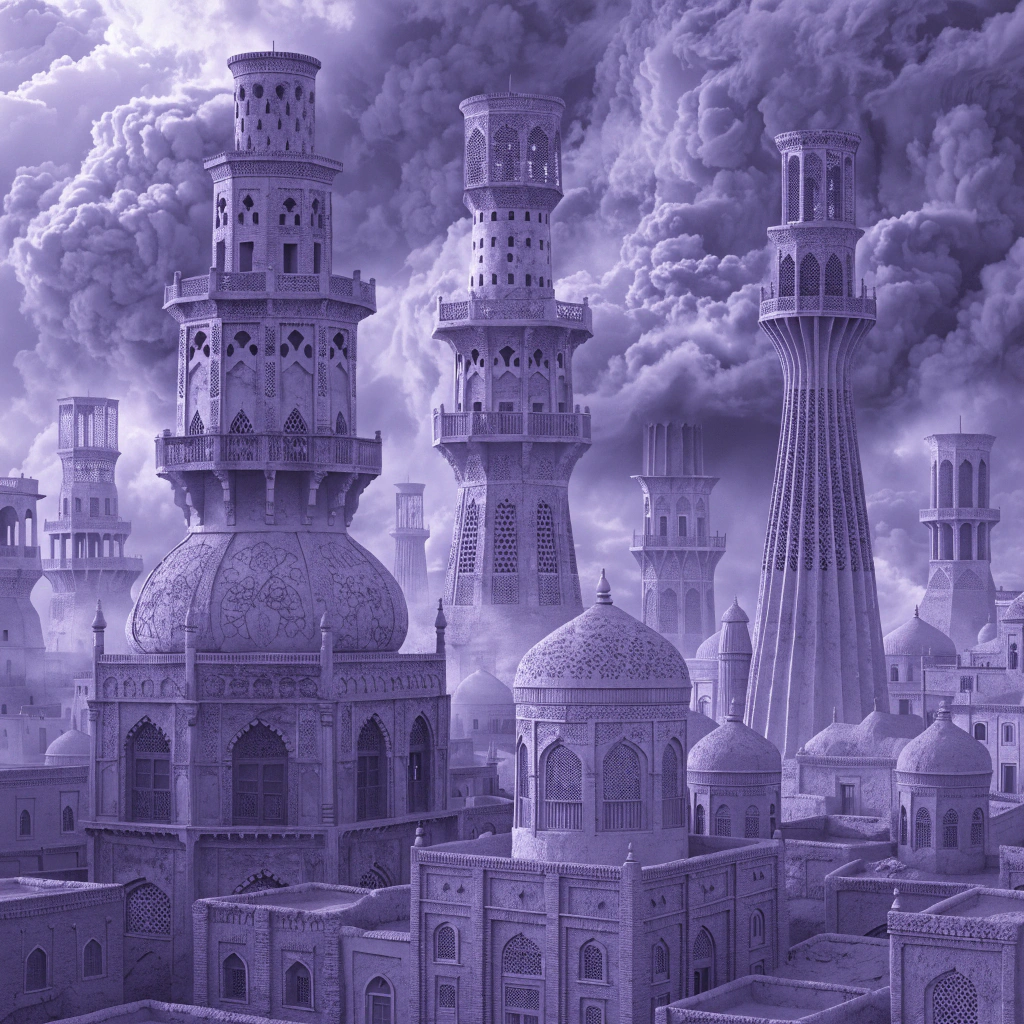
The Old City of Yazd
Yazd is a very old city in Iran. It is in the desert. The city is famous and beautiful. Many people live there today.
The houses are made of mud bricks. These bricks are dry and strong. The city has special towers. These towers keep the houses cool in the summer.
There are many narrow streets in the city. You can walk and see the old buildings. Yazd is a very special place in history. It is a UNESCO World Heritage site. Visitors love the desert sun and the history.
Point grammaire
Structure: Present Simple (To Be)
"Yazd is a very old city in Iran."
We use 'is' with singular subjects like 'Yazd' or 'the city'. It is used to describe facts or permanent states.
Structure: Present Simple (Plural Verbs)
"These towers keep the houses cool in the summer."
When the subject is plural (towers), we use the base form of the verb (keep). We do not add an 's' at the end of the verb.
Teste ta compréhension
10 questions · A1 Débutant · 1 aperçu gratuit
Teste ce que tu as appris dans cet article. Réponds à toutes les questions pour gagner des XP !
Where is the city of Yazd?
Tu veux terminer le quiz ?
9 questions supplémentaires t'attendent. Inscris-toi gratuitement pour débloquer le quiz complet et gagner des XP !
S'inscrire gratuitementTu as dj un compte ? Connexion
Bien joué !
Continue à pratiquer !
Déjà terminé — pas de XP supplémentaire
Inscris-toi pour gagner des XPDétail des questions
Where is the city of Yazd?
Ta réponse:
Bonne réponse: Iran
Yazd is a very new city.
Ta réponse:
Bonne réponse: Faux
What does 'old' mean?
Ta réponse:
Bonne réponse: Something that existed for a long time
The city is in the _____.
Ta réponse:
Bonne réponse: desert
The Magic of Yazd: An Ancient Desert City
Yazd is a very old and beautiful city in the middle of Iran. It is located between two large deserts. People lived there for thousands of years, so it is one of the oldest cities in the world.
The weather in Yazd is very hot and dry. Because of this, the people built special houses. They used mud bricks to keep the heat out. They also built tall towers called 'wind catchers.' These towers are more useful than modern fans because they catch the cool wind and move it inside the houses. Life in Yazd was difficult in the past, but the people were very clever.
In 2017, Yazd became a UNESCO World Heritage site. The streets are very narrow and quiet. Walking there is like traveling back in time. Yazd is smaller than Tehran, but it is more interesting for people who love history. Today, many tourists visit Yazd to see the beautiful mosques and the ancient desert architecture. It is a magical place.
Point grammaire
Structure: Comparatives
"Yazd is smaller than Tehran, but it is more interesting for people who love history."
We use the comparative form to compare two things. For short words, we add '-er' (smaller), and for long words, we use 'more' (more interesting).
Structure: Past Simple
"In 2017, Yazd became a UNESCO World Heritage site."
We use the past simple to talk about finished actions in the past. 'Became' is the irregular past form of the verb 'become'.
Teste ta compréhension
11 questions · A2 mentaire · 1 aperçu gratuit
Teste ce que tu as appris dans cet article. Réponds à toutes les questions pour gagner des XP !
Where is the city of Yazd located?
Tu veux terminer le quiz ?
10 questions supplémentaires t'attendent. Inscris-toi gratuitement pour débloquer le quiz complet et gagner des XP !
S'inscrire gratuitementTu as dj un compte ? Connexion
Bien joué !
Continue à pratiquer !
Déjà terminé — pas de XP supplémentaire
Inscris-toi pour gagner des XPDétail des questions
Where is the city of Yazd located?
Ta réponse:
Bonne réponse: Between two deserts in Iran
Yazd is one of the newest cities in the world.
Ta réponse:
Bonne réponse: Faux
What does 'narrow' mean?
Ta réponse:
Bonne réponse: A small distance from side to side
Yazd is one of the oldest _____ in the world.
Ta réponse:
Bonne réponse: cities
Why did people use mud bricks to build houses?
Ta réponse:
Bonne réponse: To keep the heat out of the houses
The Ancient Wonders of Yazd
Yazd is an ancient city located in the heart of the Iranian plateau. It has been a UNESCO World Heritage site since 2017 because of its amazing history and unique architecture. It is considered one of the oldest cities in the world where people have lived continuously for thousands of years. Because it is situated between two large deserts, the people who live there have developed clever ways to survive the extreme heat.
The city is famous for its "desert architecture," which uses natural materials and smart designs. Most of the buildings are made of sun-dried mud bricks. These bricks are used because they keep the rooms cool during the hot day and warm during the cold night. One of the most interesting features is the "badgir," or windcatcher. These tall towers have been used for centuries to catch the wind and direct it down into the houses. This natural cooling system is a perfect example of ancient ingenuity.
Another important feature that has been preserved is the qanat system. These are underground tunnels which were dug to carry water from the mountains to the city. This system allows the residents to have fresh water even in the middle of a dry desert. Without these tunnels, life in such a harsh environment would be impossible.
Visitors often feel like they have traveled back in time when they walk through the narrow, winding streets of the old city. Many traditional houses have been turned into beautiful hotels and cafes, where tourists can enjoy local tea. Yazd is a place where the past and the present live together in harmony. It shows us how humans can adapt to their environment using simple but effective technology.
Point grammaire
Structure: Present Perfect
"It has been a UNESCO World Heritage site since 2017."
The present perfect is used here to describe a state that started in the past (2017) and continues to the present. It is formed using 'has/have' + the past participle.
Structure: Passive Voice
"Most of the buildings are made of sun-dried mud bricks."
The passive voice is used when the action or the object is more important than the person doing it. It is formed using the verb 'to be' + the past participle.
Teste ta compréhension
11 questions · B1 Intermédiaire · 1 aperçu gratuit
Teste ce que tu as appris dans cet article. Réponds à toutes les questions pour gagner des XP !
Why is Yazd famous for its architecture?
Tu veux terminer le quiz ?
10 questions supplémentaires t'attendent. Inscris-toi gratuitement pour débloquer le quiz complet et gagner des XP !
S'inscrire gratuitementTu as dj un compte ? Connexion
Bien joué !
Continue à pratiquer !
Déjà terminé — pas de XP supplémentaire
Inscris-toi pour gagner des XPDétail des questions
Why is Yazd famous for its architecture?
Ta réponse:
Bonne réponse: Because it uses clever natural cooling systems and mud bricks
Yazd is a new city that was built in 2017.
Ta réponse:
Bonne réponse: Faux
What does 'ingenuity' mean?
Ta réponse:
Bonne réponse: The ability to solve problems in clever ways
Most of the buildings in Yazd are made of sun-dried mud _____.
Ta réponse:
Bonne réponse: bricks
What is the purpose of a 'badgir'?
Ta réponse:
Bonne réponse: To catch the wind and cool the house
Yazd: A Masterclass in Desert Adaptation and Architectural Ingenuity
Nestled between the expansive Kavir and Lut deserts, the historic city of Yazd stands as a remarkable testament to human resilience. Having been recognized as a UNESCO World Heritage site in 2017, the city offers a profound glimpse into how ancient civilizations adapted to one of the most inhospitable environments on Earth. Unlike many modern cities that rely heavily on energy-intensive cooling, Yazd has flourished for centuries by utilizing ingenious passive systems that remain functional to this day.
The most striking feature of the skyline is undoubtedly the 'badgir' or wind catcher. These elegant towers were designed to capture the slightest breeze and funnel it downwards, cooling the interior of the mud-brick dwellings. If one were to wander through the narrow, winding alleys, they would notice that the walls are constructed from sun-dried clay, which provides exceptional thermal insulation. This architectural foresight ensures that temperatures inside remain stable despite the scorching heat outside.
Equally impressive is the 'qanat' system, an intricate network of underground tunnels used to transport water from distant mountains. This sustainable irrigation method allowed the inhabitants to cultivate lush gardens in the heart of the desert. Had these sophisticated water management techniques not been developed, the city would likely have vanished long ago. Furthermore, Yazd serves as a cultural hub for the Zoroastrian faith. The Fire Temple and the Towers of Silence reflect a rich spiritual heritage that has coexisted peacefully with Islamic traditions for centuries.
In an era where modern urban planning is increasingly scrutinized for its environmental impact, Yazd offers valuable lessons. The city is not merely a museum of the past; it is a living laboratory for sustainable development. By examining the harmony between the built environment and the natural world in Yazd, contemporary architects might find the inspiration needed to address the climate challenges of the twenty-first century.
Point grammaire
Structure: Perfect Participle Clause
"Having been recognized as a UNESCO World Heritage site in 2017, the city offers a profound glimpse..."
This structure is used to show that one action happened before another. It provides background information or a reason for the main clause in a formal way.
Structure: Second Conditional (Hypothetical)
"If one were to wander through the narrow, winding alleys, they would notice..."
The 'if + were to' structure is used for unlikely or hypothetical present/future situations. It is more formal than the standard second conditional.
Structure: Third Conditional (Inverted)
"Had these sophisticated water management techniques not been developed, the city would likely have vanished long ago."
This is a formal version of 'If these had not been developed'. It describes a hypothetical past situation and its imaginary result.
Teste ta compréhension
11 questions · B2 Intermédiaire supérieur · 1 aperçu gratuit
Teste ce que tu as appris dans cet article. Réponds à toutes les questions pour gagner des XP !
What distinguishes Yazd's cooling systems from those in most modern cities?
Tu veux terminer le quiz ?
10 questions supplémentaires t'attendent. Inscris-toi gratuitement pour débloquer le quiz complet et gagner des XP !
S'inscrire gratuitementTu as dj un compte ? Connexion
Bien joué !
Continue à pratiquer !
Déjà terminé — pas de XP supplémentaire
Inscris-toi pour gagner des XPDétail des questions
What distinguishes Yazd's cooling systems from those in most modern cities?
Ta réponse:
Bonne réponse: They rely on passive methods rather than energy-intensive ones.
Yazd was officially recognized as a UNESCO World Heritage site in 2017.
Ta réponse:
Bonne réponse: Vrai
What does the word 'resilience' mean in the context of the article?
Ta réponse:
Bonne réponse: The capacity to adapt and survive in harsh conditions.
The city is described as a living _____ for sustainable development.
Ta réponse:
Bonne réponse: laboratory
What is the primary function of a 'badgir'?
Ta réponse:
Bonne réponse: To catch wind and cool the interior of buildings.
Ingenuity in the Arid Expanse: The Architectural Resilience of Yazd
Seldom has a city so successfully defied the constraints of its environment as has the historic city of Yazd. Nestled between the formidable Kavir and Lut deserts on the Iranian plateau, this UNESCO World Heritage site stands as a living testament to human ingenuity. For over a millennium, its inhabitants have navigated one of the most inhospitable climates on Earth, crafting a subterranean and terrestrial urban landscape that prioritizes sustainability over ephemeral architectural trends. It is the ingenious adaptation to these harsh conditions that renders Yazd a unique paradigm of ecological resilience.
At the heart of Yazd’s environmental mastery is the 'badgir', or windcatcher. These venerable towers, rising above the mud-brick skyline, are designed to harness even the slightest breeze, funneling cool air into the dwellings below while expelling heat. This passive cooling system operates without a single watt of electricity, providing a sophisticated alternative to modern air conditioning. Furthermore, the city’s labyrinthine streets, flanked by high walls of sun-dried mud bricks, offer significant thermal mass, ensuring that the blistering heat of the day remains at bay.
Equally impressive is the city’s water management system. It is the intricate network of qanats—underground channels that transport water from distant mountain aquifers—that has sustained life in this parched plateau for millennia. These subterranean arteries are a marvel of ancient engineering, requiring precise calculations of gradient and depth. The preservation of these structures represents a triumph of traditional ecological knowledge, proving that human survival in arid zones need not come at the cost of environmental degradation.
Beyond its structural brilliance, Yazd serves as a cultural crucible. As the historical center of Zoroastrianism, the city hosts the venerable Atashkadeh, a temple where a sacred fire has purportedly burned for over 1,500 years. The coexistence of various religious communities within the city’s dense urban fabric highlights a long-standing tradition of social harmony. This cultural aesthetics is mirrored in the city's architecture, where the simplicity of mud-brick exteriors often belies the intricate beauty of the courtyards within.
The material choice of sun-dried mud bricks, or 'khisht', is far from accidental. These bricks possess an extraordinary capacity for insulation, a quality that is indispensable when temperatures fluctuate wildly between the freezing desert nights and the scorching midday sun. Moreover, the city’s layout is characterized by 'sabats'—vaulted alleys that provide shade and facilitate the movement of air through the dense urban core. These structures are not merely functional; they are social spaces where neighbors congregate away from the sun’s glare. This integration of social and environmental needs is a hallmark of Yazd’s urban planning.
In an era increasingly defined by climate change and the search for sustainable living, Yazd offers more than just historical curiosity. The city’s architectural paradigm challenges the modern reliance on energy-intensive technologies. By revisiting the principles of thermal mass, passive ventilation, and collective water management, contemporary urban planners might find solutions to the pressing environmental crises of the twenty-first century. Ultimately, Yazd is not merely a relic of the past but a beacon for a more resilient and sustainable future.
Point grammaire
Structure: Inversion with Negative Adverbials
"Seldom has a city so successfully defied the constraints of its environment as has the historic city of Yazd."
Inversion is used here to emphasize the rarity and uniqueness of the city. When a sentence starts with a negative or restrictive adverbial like 'seldom', the auxiliary verb comes before the subject.
Structure: Cleft Sentences for Focus
"It is the intricate network of qanats that has sustained life in this parched plateau for millennia."
An 'it-cleft' sentence is used to focus on a specific piece of information, in this case, the qanats. It highlights the primary cause of survival in the desert environment.
Structure: Nominalisation
"The preservation of these structures represents a triumph of traditional ecological knowledge."
Nominalisation turns verbs (preserve) into nouns (preservation). This is a hallmark of C1/C2 academic writing, as it creates a more objective, formal, and concise tone.
Teste ta compréhension
12 questions · C1 Avancé · 1 aperçu gratuit
Teste ce que tu as appris dans cet article. Réponds à toutes les questions pour gagner des XP !
What is the primary function of the 'badgir' mentioned in the article?
Tu veux terminer le quiz ?
11 questions supplémentaires t'attendent. Inscris-toi gratuitement pour débloquer le quiz complet et gagner des XP !
S'inscrire gratuitementTu as dj un compte ? Connexion
Bien joué !
Continue à pratiquer !
Déjà terminé — pas de XP supplémentaire
Inscris-toi pour gagner des XPDétail des questions
What is the primary function of the 'badgir' mentioned in the article?
Ta réponse:
Bonne réponse: To provide a passive cooling system for homes
Qanats are a modern development introduced to Yazd in the 20th century.
Ta réponse:
Bonne réponse: Faux
Which word describes something that lasts for a very short period?
Ta réponse:
Bonne réponse: Ephemeral
The city’s _____ streets are designed with high mud-brick walls to provide thermal mass.
Ta réponse:
Bonne réponse: labyrinthine
What religious significance does Yazd hold according to the text?
Ta réponse:
Bonne réponse: It is the historical center of Zoroastrianism
The mud bricks used in Yazd are chosen specifically for their insulation properties.
Ta réponse:
Bonne réponse: Vrai
The Architectural Alchemy of Yazd: A Palimpsest of Desert Resilience
The Historic City of Yazd stands as a profound ontological inquiry into the endurance of human ingenuity within the unforgiving crucible of the Iranian plateau. Nestled between the formidable expanses of the Kavir and Lut deserts, this UNESCO World Heritage site is far more than a mere assemblage of sun-dried mud bricks; it represents a sophisticated, perennially evolving ecosystem that has defied the entropic forces of time for millennia. To traverse its labyrinthine alleys is to engage with a living palimpsest, where the echoes of Zoroastrian antiquity coalesce with Islamic architectural brilliance. This urban landscape is not merely a relic but a functioning paradigm of how humanity might thrive in the most inhospitable of climates through intellectual and physical symbiosis with the environment.
Rarely has a civilization so effectively harnessed the thermal inertia of the earth to mitigate the caprices of an arid climate. Central to this achievement is the subterranean network of qanats—an intricate system of gravity-fed water channels that transport life-sustaining fluid from distant aquifers to the heart of the city. Were it not for this indefatigable feat of engineering, the settlement would long ago have succumbed to the encroaching sands. The qanats do not merely provide water; they facilitate a unique thermal symbiosis, cooling the air as it passes over the water's surface before it is channeled into the dwellings above. This subterranean infrastructure allowed for the development of lush gardens and public squares in a region where surface water is a conspicuous rarity.
Complementing this subterranean mastery is the conspicuous skyline of badgirs, or windcatchers. These elegant towers, which rise like stone sentinels above the rooftops, function as passive cooling systems, capturing even the faintest of breezes and redirecting them into the living quarters. This vernacular architecture is a paradigm of sustainable design, achieving internal climate control without the deleterious environmental impact of modern refrigerants. It is imperative that modern urban planners recognize the wisdom inherent in these ancient structures, lest we overlook the sustainable solutions already provided by our ancestors. The cooling effect provided by these towers is not merely a matter of comfort; it is the very prerequisite for urban survival in the desert heat.
Beyond the physical infrastructure, Yazd serves as a sanctuary for the intangible heritage of the Silk Road. The city’s urban fabric is characterized by a remarkable social cohesion, where the Kucheh—the narrow, high-walled lanes—offer both shade and security. Within these walls, a religious pluralism persists; the Atash Behram, or Fire Temple, continues to house a flame that has purportedly flickered since 470 AD, standing in silent dialogue with the magnificent Jameh Mosque. This confluence of faiths underscores the city's role as a resilient bastion of cultural synthesis. The labyrinthine nature of the city's layout served a dual purpose: providing shade and confusing potential invaders, thus ensuring the city's longevity through both environmental and strategic design.
However, the preservation of Yazd is fraught with contemporary challenges. As globalization exerts its homogenizing influence, the traditional methods of mud-brick maintenance face the threat of obsolescence. The aesthetic integrity of the city depends on the continued use of cob—a mixture of clay, sand, and straw—which requires periodic renewal. Should the local knowledge of these materials be lost, the city’s structural resilience would be severely compromised. Furthermore, the modern reliance on mechanical cooling systems threatens to render the badgirs purely decorative, stripping them of their functional essence.
Ultimately, Yazd is not a static relic of a bygone era, but a dynamic testament to the possibility of harmony between humanity and the environment. It challenges the modern penchant for technological supremacy over nature, suggesting instead a path of profound alignment. To study Yazd is to understand that true progress is not always found in the novelty of the future, but often in the refined wisdom of the past. The city remains an indefatigable witness to the power of human adaptation, proving that even in the heart of the desert, civilization can flourish with grace.
Point grammaire
Structure: Negative Inversion
"Rarely has a civilization so effectively harnessed the thermal inertia of the earth to mitigate the caprices of an arid climate."
When using restrictive adverbs like 'rarely' or 'never' at the start of a sentence for emphasis, the subject and auxiliary verb are inverted. This creates a more formal and dramatic rhetorical effect characteristic of C2 English.
Structure: Inverted Unreal Conditional (Third/Mixed)
"Were it not for this indefatigable feat of engineering, the settlement would long ago have succumbed to the encroaching sands."
This structure replaces 'If it were not for...' with an inverted form for a more literary tone. It expresses a hypothetical situation in the past or present that prevents a certain outcome.
Structure: Present Subjunctive
"It is imperative that modern urban planners recognize the wisdom inherent in these ancient structures..."
The subjunctive mood is used after certain verbs or adjectives of necessity (imperative, essential, suggest). Note that 'recognize' does not take an 's' even if the subject were singular, as it is the base form of the verb.
Teste ta compréhension
12 questions · C2 Maîtrise · 1 aperçu gratuit
Teste ce que tu as appris dans cet article. Réponds à toutes les questions pour gagner des XP !
According to the text, what is the primary function of the qanats beyond water transport?
Tu veux terminer le quiz ?
11 questions supplémentaires t'attendent. Inscris-toi gratuitement pour débloquer le quiz complet et gagner des XP !
S'inscrire gratuitementTu as dj un compte ? Connexion
Bien joué !
Continue à pratiquer !
Déjà terminé — pas de XP supplémentaire
Inscris-toi pour gagner des XPDétail des questions
According to the text, what is the primary function of the qanats beyond water transport?
Ta réponse:
Bonne réponse: To facilitate a cooling system for the city's dwellings.
The text suggests that the architectural style of Yazd is no longer relevant to modern sustainability needs.
Ta réponse:
Bonne réponse: Faux
What does 'obsolescence' refer to in the context of the article?
Ta réponse:
Bonne réponse: The process of becoming outdated or no longer useful.
The city's skyline is dominated by _____, which act as passive cooling towers.
Ta réponse:
Bonne réponse: badgirs
What does the author mean by describing Yazd as a 'living palimpsest'?
Ta réponse:
Bonne réponse: A place where historical layers of different eras are visible and coexist.
The Jameh Mosque and the Atash Behram represent the religious pluralism found in Yazd.
Ta réponse:
Bonne réponse: Vrai

