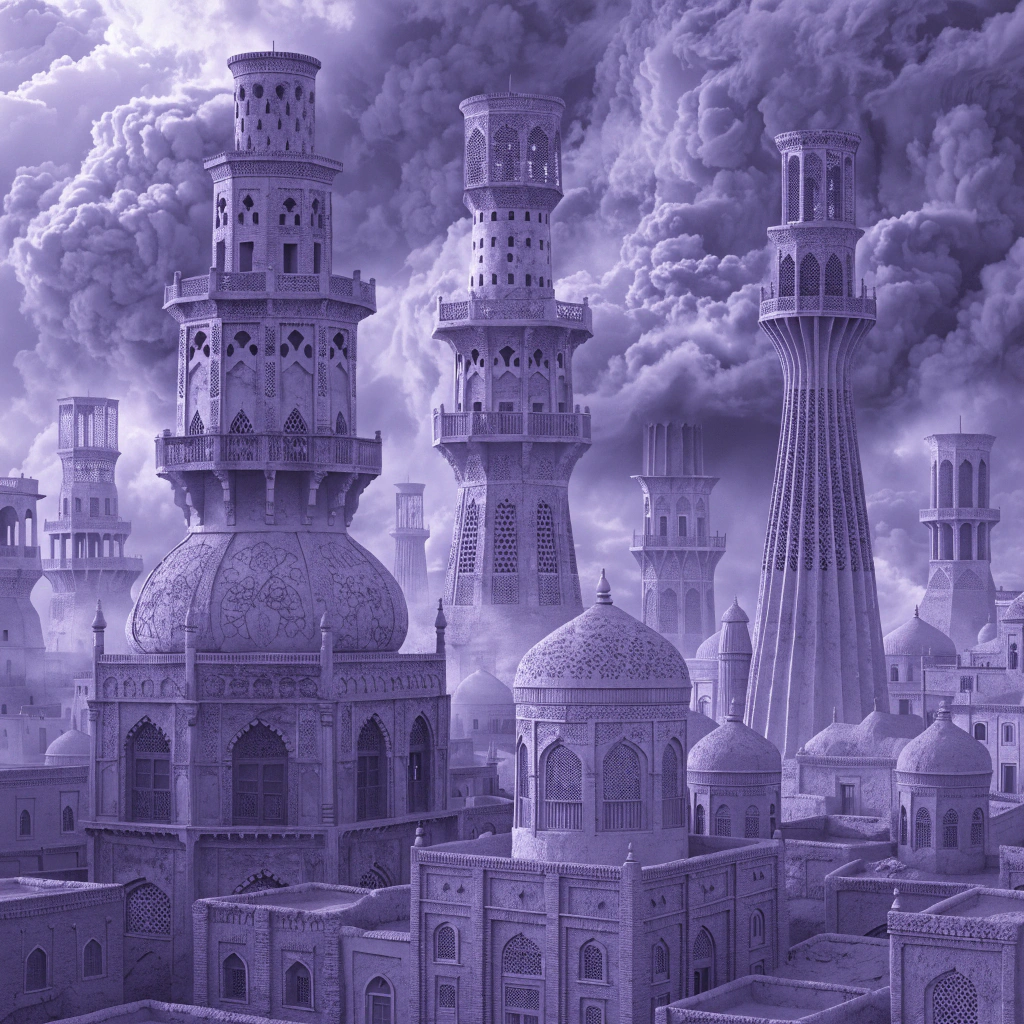
The Old City of Yazd
Yazd is a very old city in Iran. It is in the desert. The city is famous and beautiful. Many people live there today.
The houses are made of mud bricks. These bricks are dry and strong. The city has special towers. These towers keep the houses cool in the summer.
There are many narrow streets in the city. You can walk and see the old buildings. Yazd is a very special place in history. It is a UNESCO World Heritage site. Visitors love the desert sun and the history.
语法聚焦
句型: Present Simple (To Be)
"Yazd is a very old city in Iran."
We use 'is' with singular subjects like 'Yazd' or 'the city'. It is used to describe facts or permanent states.
句型: Present Simple (Plural Verbs)
"These towers keep the houses cool in the summer."
When the subject is plural (towers), we use the base form of the verb (keep). We do not add an 's' at the end of the verb.
测试你的理解
10 个问题 · A1 初学 · 1 次免费预览
测试你从这篇文章中学到的知识。回答所有问题即可获得经验值!
题目详情
Where is the city of Yazd?
你的回答:
正确答案: Iran
Yazd is a very new city.
你的回答:
正确答案: 错误
What does 'old' mean?
你的回答:
正确答案: Something that existed for a long time
The city is in the _____.
你的回答:
正确答案: desert
The Magic of Yazd: An Ancient Desert City
Yazd is a very old and beautiful city in the middle of Iran. It is located between two large deserts. People lived there for thousands of years, so it is one of the oldest cities in the world.
The weather in Yazd is very hot and dry. Because of this, the people built special houses. They used mud bricks to keep the heat out. They also built tall towers called 'wind catchers.' These towers are more useful than modern fans because they catch the cool wind and move it inside the houses. Life in Yazd was difficult in the past, but the people were very clever.
In 2017, Yazd became a UNESCO World Heritage site. The streets are very narrow and quiet. Walking there is like traveling back in time. Yazd is smaller than Tehran, but it is more interesting for people who love history. Today, many tourists visit Yazd to see the beautiful mosques and the ancient desert architecture. It is a magical place.
语法聚焦
句型: Comparatives
"Yazd is smaller than Tehran, but it is more interesting for people who love history."
We use the comparative form to compare two things. For short words, we add '-er' (smaller), and for long words, we use 'more' (more interesting).
句型: Past Simple
"In 2017, Yazd became a UNESCO World Heritage site."
We use the past simple to talk about finished actions in the past. 'Became' is the irregular past form of the verb 'become'.
测试你的理解
11 个问题 · A2 基础 · 1 次免费预览
测试你从这篇文章中学到的知识。回答所有问题即可获得经验值!
Where is the city of Yazd located?
题目详情
Where is the city of Yazd located?
你的回答:
正确答案: Between two deserts in Iran
Yazd is one of the newest cities in the world.
你的回答:
正确答案: 错误
What does 'narrow' mean?
你的回答:
正确答案: A small distance from side to side
Yazd is one of the oldest _____ in the world.
你的回答:
正确答案: cities
Why did people use mud bricks to build houses?
你的回答:
正确答案: To keep the heat out of the houses
The Ancient Wonders of Yazd
Yazd is an ancient city located in the heart of the Iranian plateau. It has been a UNESCO World Heritage site since 2017 because of its amazing history and unique architecture. It is considered one of the oldest cities in the world where people have lived continuously for thousands of years. Because it is situated between two large deserts, the people who live there have developed clever ways to survive the extreme heat.
The city is famous for its "desert architecture," which uses natural materials and smart designs. Most of the buildings are made of sun-dried mud bricks. These bricks are used because they keep the rooms cool during the hot day and warm during the cold night. One of the most interesting features is the "badgir," or windcatcher. These tall towers have been used for centuries to catch the wind and direct it down into the houses. This natural cooling system is a perfect example of ancient ingenuity.
Another important feature that has been preserved is the qanat system. These are underground tunnels which were dug to carry water from the mountains to the city. This system allows the residents to have fresh water even in the middle of a dry desert. Without these tunnels, life in such a harsh environment would be impossible.
Visitors often feel like they have traveled back in time when they walk through the narrow, winding streets of the old city. Many traditional houses have been turned into beautiful hotels and cafes, where tourists can enjoy local tea. Yazd is a place where the past and the present live together in harmony. It shows us how humans can adapt to their environment using simple but effective technology.
语法聚焦
句型: Present Perfect
"It has been a UNESCO World Heritage site since 2017."
The present perfect is used here to describe a state that started in the past (2017) and continues to the present. It is formed using 'has/have' + the past participle.
句型: Passive Voice
"Most of the buildings are made of sun-dried mud bricks."
The passive voice is used when the action or the object is more important than the person doing it. It is formed using the verb 'to be' + the past participle.
测试你的理解
11 个问题 · B1 中级 · 1 次免费预览
测试你从这篇文章中学到的知识。回答所有问题即可获得经验值!
Why is Yazd famous for its architecture?
题目详情
Why is Yazd famous for its architecture?
你的回答:
正确答案: Because it uses clever natural cooling systems and mud bricks
Yazd is a new city that was built in 2017.
你的回答:
正确答案: 错误
What does 'ingenuity' mean?
你的回答:
正确答案: The ability to solve problems in clever ways
Most of the buildings in Yazd are made of sun-dried mud _____.
你的回答:
正确答案: bricks
What is the purpose of a 'badgir'?
你的回答:
正确答案: To catch the wind and cool the house
Yazd: A Masterclass in Desert Adaptation and Architectural Ingenuity
Nestled between the expansive Kavir and Lut deserts, the historic city of Yazd stands as a remarkable testament to human resilience. Having been recognized as a UNESCO World Heritage site in 2017, the city offers a profound glimpse into how ancient civilizations adapted to one of the most inhospitable environments on Earth. Unlike many modern cities that rely heavily on energy-intensive cooling, Yazd has flourished for centuries by utilizing ingenious passive systems that remain functional to this day.
The most striking feature of the skyline is undoubtedly the 'badgir' or wind catcher. These elegant towers were designed to capture the slightest breeze and funnel it downwards, cooling the interior of the mud-brick dwellings. If one were to wander through the narrow, winding alleys, they would notice that the walls are constructed from sun-dried clay, which provides exceptional thermal insulation. This architectural foresight ensures that temperatures inside remain stable despite the scorching heat outside.
Equally impressive is the 'qanat' system, an intricate network of underground tunnels used to transport water from distant mountains. This sustainable irrigation method allowed the inhabitants to cultivate lush gardens in the heart of the desert. Had these sophisticated water management techniques not been developed, the city would likely have vanished long ago. Furthermore, Yazd serves as a cultural hub for the Zoroastrian faith. The Fire Temple and the Towers of Silence reflect a rich spiritual heritage that has coexisted peacefully with Islamic traditions for centuries.
In an era where modern urban planning is increasingly scrutinized for its environmental impact, Yazd offers valuable lessons. The city is not merely a museum of the past; it is a living laboratory for sustainable development. By examining the harmony between the built environment and the natural world in Yazd, contemporary architects might find the inspiration needed to address the climate challenges of the twenty-first century.
语法聚焦
句型: Perfect Participle Clause
"Having been recognized as a UNESCO World Heritage site in 2017, the city offers a profound glimpse..."
This structure is used to show that one action happened before another. It provides background information or a reason for the main clause in a formal way.
句型: Second Conditional (Hypothetical)
"If one were to wander through the narrow, winding alleys, they would notice..."
The 'if + were to' structure is used for unlikely or hypothetical present/future situations. It is more formal than the standard second conditional.
句型: Third Conditional (Inverted)
"Had these sophisticated water management techniques not been developed, the city would likely have vanished long ago."
This is a formal version of 'If these had not been developed'. It describes a hypothetical past situation and its imaginary result.
测试你的理解
11 个问题 · B2 中高级 · 1 次免费预览
测试你从这篇文章中学到的知识。回答所有问题即可获得经验值!
What distinguishes Yazd's cooling systems from those in most modern cities?
题目详情
What distinguishes Yazd's cooling systems from those in most modern cities?
你的回答:
正确答案: They rely on passive methods rather than energy-intensive ones.
Yazd was officially recognized as a UNESCO World Heritage site in 2017.
你的回答:
正确答案: 正确
What does the word 'resilience' mean in the context of the article?
你的回答:
正确答案: The capacity to adapt and survive in harsh conditions.
The city is described as a living _____ for sustainable development.
你的回答:
正确答案: laboratory
What is the primary function of a 'badgir'?
你的回答:
正确答案: To catch wind and cool the interior of buildings.
雅兹德:沙漠深处的古老智慧与生命韧性
雅兹德,这座坐落于伊朗高原腹地、两片浩瀚沙漠之间的古城,自2017年被联合国教科文组织列为世界文化遗产以来,便以其独树一帜的土坯建筑群和巧夺天工的沙漠智慧,吸引着全球的目光。它不仅是世界上最古老的持续有人居住的城市之一,更是人类文明在严酷自然环境下展现非凡韧性的活生生例证。漫步其中,古老的泥土芬芳与历史的沉重感扑面而来,让人不禁对古人的生存智慧肃然起敬。
雅兹德的建筑艺术堪称一绝,其核心在于一套历经千年演变而成的“沙漠建筑”体系。这些由泥土和稻草混合而成的土坯,不仅是建造房屋的基石,更是城市抵御酷热的天然屏障。最为引人注目的是遍布全城的风塔(Badgir)和坎儿井(Qanat)系统。风塔如同城市的呼吸器,巧妙地捕捉高空凉风,将其引入室内,并通过地下水降温,形成天然的空调。而坎儿井,这一古老的地下水利工程,则将远方山脉的融雪引入城市,为居民提供了宝贵的生命之源,其工程之浩大、智慧之深邃,令人叹为观止。这两种被动式冷却与灌溉系统,完美诠释了人与自然和谐共生的理念。
在雅兹德的蜿蜒巷道中穿行,仿佛置身于一座巨大的泥土迷宫。这里的每一砖一瓦,都承载着数千年的历史沉淀。城中至今仍保留着重要的琐罗亚斯德教(Zoroastrianism)遗迹,如寂静塔和火庙,见证了这一古老宗教的传承与发展。雅兹德人世代相传的智慧,不仅体现在建筑上,更渗透在他们与自然和谐共处的哲学之中。他们深谙如何在资源匮乏的沙漠中汲取生机,将挑战转化为独特的生存艺术。这种对环境的深刻理解和适应能力,使得雅兹德得以在历史长河中熠熠生辉。
诚然,雅兹德所面临的挑战从未止息,但正是这种严酷的环境,才锻造了其坚韧不拔的城市品格。如今,这座古城不仅是伊朗的文化瑰宝,更是全球研究可持续发展和传统智慧的宝贵课堂。它向世人昭示,即便在最极端的气候条件下,人类亦能凭借创新与协作,创造出与自然共生共荣的奇迹。雅兹德的魅力,不仅在于其宏伟的建筑,更在于其所蕴含的,那份对生命、对传统的敬畏与坚持。
综观雅兹德,它不啻为一幅流动的历史画卷,每一处细节都弥足珍贵。这座城市不仅以其独特的美学征服了世界,更以其深厚的文化底蕴和对可持续发展的启示,为现代社会提供了无与伦比的参考价值。它提醒我们,在追求现代化的进程中,那些源自古老文明的智慧馈赠,其价值往往超越想象,值得我们深入挖掘与传承。
语法聚焦
句型: 是...的 强调句 (Shì...de Emphatic Sentence)
"正是这种严酷的环境,才锻造了其坚韧不拔的城市品格。"
“是...的”结构常用于强调句,用来突出句子的时间、地点、方式、目的、施事者等。在这里,“正是...才...”的搭配,强调了“严酷的环境”是“锻造坚韧品格”的唯一或主要原因,使语气更具肯定性和强调性。
句型: “之”字结构表示修饰或所属关系
"其工程之浩大、智慧之深邃,令人叹为观止。"
在书面语或正式语体中,“之”字可以连接形容词和名词,形成“形容词 + 之 + 名词”的结构,表示名词所具有的某种性质或程度,常带有感叹或强调的意味。例如“浩大之工程”可写作“工程之浩大”,使表达更精炼、文雅。
句型: 不啻为 (Bù Chì Wéi)
"综观雅兹德,它不啻为一幅流动的历史画卷,每一处细节都熠熠生辉。"
“不啻为”是一个高级书面语表达,意为“简直就是”、“无异于”,用于强调某事物具有某种性质或达到了某种程度。它比“是”更具肯定性和修饰性,常用于引出对事物的高度评价或比喻。
测试你的理解
12 个问题 · C1 高级 · 1 次免费预览
测试你从这篇文章中学到的知识。回答所有问题即可获得经验值!
题目详情
雅兹德是哪一年被联合国教科文组织列为世界文化遗产的?
你的回答:
正确答案: 2017年
雅兹德位于热带气候区,以其湿润多雨而闻名。
你的回答:
正确答案: 错误
“韧性”在文中指的是什么?
你的回答:
正确答案: 在困难环境下承受打击并恢复的能力
风塔通过捕捉高空凉风,并利用地下水降温,形成天然的______。
你的回答:
正确答案: 空调
雅兹德最具特色的建筑材料是什么?
你的回答:
正确答案: 土坯
“巧夺天工”形容的是什么?
你的回答:
正确答案: 技艺高超,精巧得像是自然形成
The Architectural Alchemy of Yazd: A Palimpsest of Desert Resilience
The Historic City of Yazd stands as a profound ontological inquiry into the endurance of human ingenuity within the unforgiving crucible of the Iranian plateau. Nestled between the formidable expanses of the Kavir and Lut deserts, this UNESCO World Heritage site is far more than a mere assemblage of sun-dried mud bricks; it represents a sophisticated, perennially evolving ecosystem that has defied the entropic forces of time for millennia. To traverse its labyrinthine alleys is to engage with a living palimpsest, where the echoes of Zoroastrian antiquity coalesce with Islamic architectural brilliance. This urban landscape is not merely a relic but a functioning paradigm of how humanity might thrive in the most inhospitable of climates through intellectual and physical symbiosis with the environment.
Rarely has a civilization so effectively harnessed the thermal inertia of the earth to mitigate the caprices of an arid climate. Central to this achievement is the subterranean network of qanats—an intricate system of gravity-fed water channels that transport life-sustaining fluid from distant aquifers to the heart of the city. Were it not for this indefatigable feat of engineering, the settlement would long ago have succumbed to the encroaching sands. The qanats do not merely provide water; they facilitate a unique thermal symbiosis, cooling the air as it passes over the water's surface before it is channeled into the dwellings above. This subterranean infrastructure allowed for the development of lush gardens and public squares in a region where surface water is a conspicuous rarity.
Complementing this subterranean mastery is the conspicuous skyline of badgirs, or windcatchers. These elegant towers, which rise like stone sentinels above the rooftops, function as passive cooling systems, capturing even the faintest of breezes and redirecting them into the living quarters. This vernacular architecture is a paradigm of sustainable design, achieving internal climate control without the deleterious environmental impact of modern refrigerants. It is imperative that modern urban planners recognize the wisdom inherent in these ancient structures, lest we overlook the sustainable solutions already provided by our ancestors. The cooling effect provided by these towers is not merely a matter of comfort; it is the very prerequisite for urban survival in the desert heat.
Beyond the physical infrastructure, Yazd serves as a sanctuary for the intangible heritage of the Silk Road. The city’s urban fabric is characterized by a remarkable social cohesion, where the Kucheh—the narrow, high-walled lanes—offer both shade and security. Within these walls, a religious pluralism persists; the Atash Behram, or Fire Temple, continues to house a flame that has purportedly flickered since 470 AD, standing in silent dialogue with the magnificent Jameh Mosque. This confluence of faiths underscores the city's role as a resilient bastion of cultural synthesis. The labyrinthine nature of the city's layout served a dual purpose: providing shade and confusing potential invaders, thus ensuring the city's longevity through both environmental and strategic design.
However, the preservation of Yazd is fraught with contemporary challenges. As globalization exerts its homogenizing influence, the traditional methods of mud-brick maintenance face the threat of obsolescence. The aesthetic integrity of the city depends on the continued use of cob—a mixture of clay, sand, and straw—which requires periodic renewal. Should the local knowledge of these materials be lost, the city’s structural resilience would be severely compromised. Furthermore, the modern reliance on mechanical cooling systems threatens to render the badgirs purely decorative, stripping them of their functional essence.
Ultimately, Yazd is not a static relic of a bygone era, but a dynamic testament to the possibility of harmony between humanity and the environment. It challenges the modern penchant for technological supremacy over nature, suggesting instead a path of profound alignment. To study Yazd is to understand that true progress is not always found in the novelty of the future, but often in the refined wisdom of the past. The city remains an indefatigable witness to the power of human adaptation, proving that even in the heart of the desert, civilization can flourish with grace.
语法聚焦
句型: Negative Inversion
"Rarely has a civilization so effectively harnessed the thermal inertia of the earth to mitigate the caprices of an arid climate."
When using restrictive adverbs like 'rarely' or 'never' at the start of a sentence for emphasis, the subject and auxiliary verb are inverted. This creates a more formal and dramatic rhetorical effect characteristic of C2 English.
句型: Inverted Unreal Conditional (Third/Mixed)
"Were it not for this indefatigable feat of engineering, the settlement would long ago have succumbed to the encroaching sands."
This structure replaces 'If it were not for...' with an inverted form for a more literary tone. It expresses a hypothetical situation in the past or present that prevents a certain outcome.
句型: Present Subjunctive
"It is imperative that modern urban planners recognize the wisdom inherent in these ancient structures..."
The subjunctive mood is used after certain verbs or adjectives of necessity (imperative, essential, suggest). Note that 'recognize' does not take an 's' even if the subject were singular, as it is the base form of the verb.
测试你的理解
12 个问题 · C2 精通 · 1 次免费预览
测试你从这篇文章中学到的知识。回答所有问题即可获得经验值!
According to the text, what is the primary function of the qanats beyond water transport?
题目详情
According to the text, what is the primary function of the qanats beyond water transport?
你的回答:
正确答案: To facilitate a cooling system for the city's dwellings.
The text suggests that the architectural style of Yazd is no longer relevant to modern sustainability needs.
你的回答:
正确答案: 错误
What does 'obsolescence' refer to in the context of the article?
你的回答:
正确答案: The process of becoming outdated or no longer useful.
The city's skyline is dominated by _____, which act as passive cooling towers.
你的回答:
正确答案: badgirs
What does the author mean by describing Yazd as a 'living palimpsest'?
你的回答:
正确答案: A place where historical layers of different eras are visible and coexist.
The Jameh Mosque and the Atash Behram represent the religious pluralism found in Yazd.
你的回答:
正确答案: 正确

