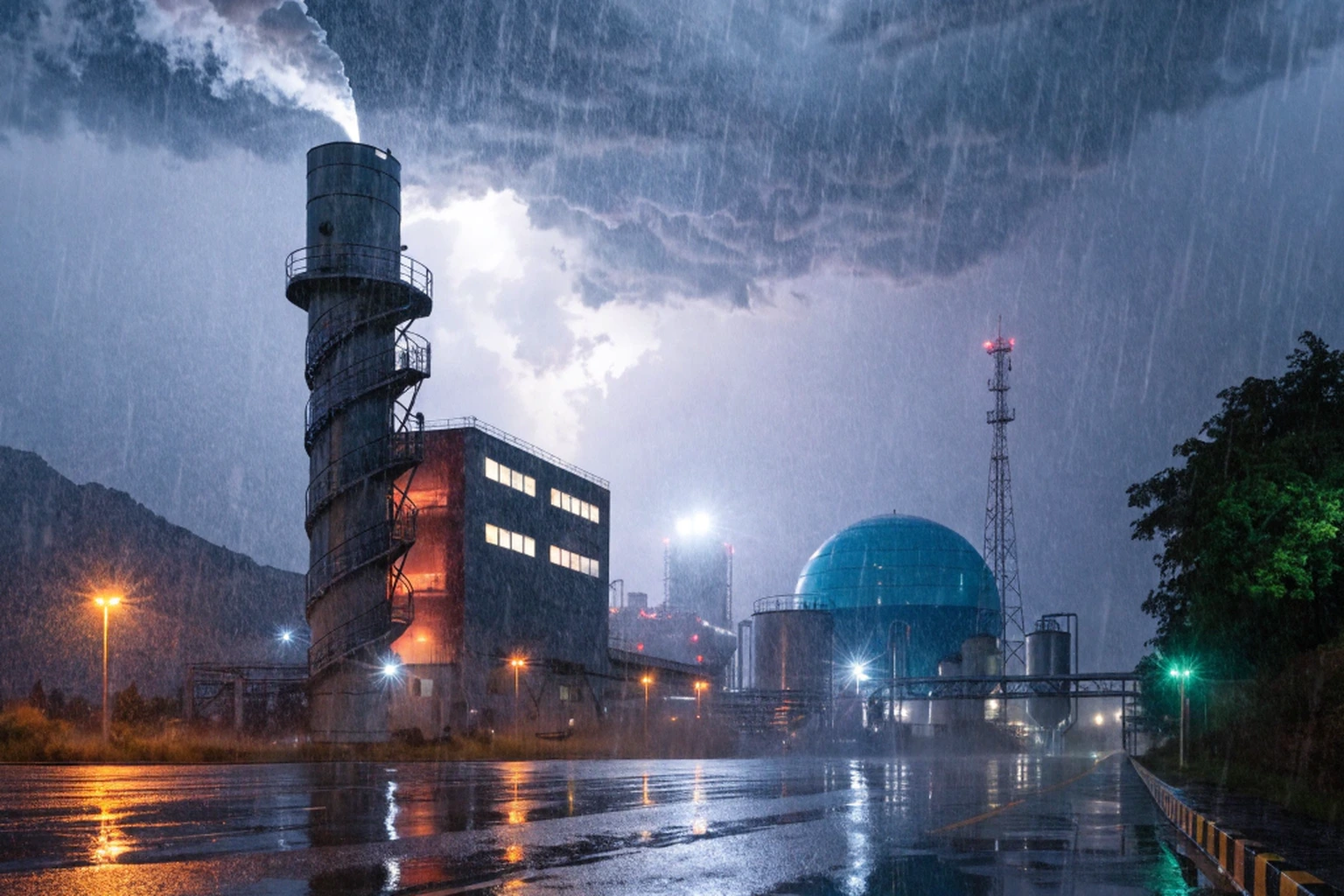
Morocco and Clean Energy
Morocco is a beautiful country. It has a lot of sun and wind. Now, Morocco makes green energy. This energy is clean. The country uses solar power. There is a big solar plant in Ouarzazate. It is very large. Now, Morocco makes green hydrogen. This is new and special. Green hydrogen helps the Earth. Morocco sells this energy to other countries. It is a leader in clean energy. The future is green in Morocco. Many people work for a clean world.
Point grammaire
Structure: Present Simple: To Be
"Morocco is a beautiful country."
We use 'is' with singular nouns like Morocco. It describes a fact or a state of being.
Structure: Present Simple: Third Person 's'
"Morocco makes green energy."
In the present simple, we add an 's' to the verb when the subject is 'he', 'she', or 'it' (Morocco).
Teste ta compréhension
10 questions · A1 Débutant · 1 aperçu gratuit
Teste ce que tu as appris dans cet article. Réponds à toutes les questions pour gagner des XP !
What does Morocco have a lot of?
Tu veux terminer le quiz ?
9 questions supplémentaires t'attendent. Inscris-toi gratuitement pour débloquer le quiz complet et gagner des XP !
S'inscrire gratuitementTu as dj un compte ? Connexion
Bien joué !
Continue à pratiquer !
Déjà terminé — pas de XP supplémentaire
Inscris-toi pour gagner des XPDétail des questions
What does Morocco have a lot of?
Ta réponse:
Bonne réponse: Sun and wind
Morocco makes energy that is clean.
Ta réponse:
Bonne réponse: Vrai
What does 'large' mean?
Ta réponse:
Bonne réponse: Big
Morocco _____ this energy to other countries.
Ta réponse:
Bonne réponse: sells
Le Maroc et l'Hydrogène Vert : Une Nouvelle Énergie
Le Maroc a beaucoup changé dans son énergie. Avant, le pays dépendait beaucoup des autres pour son énergie. Il achetait des combustibles fossiles, comme le pétrole. C'était une situation difficile pour le Maroc.
Mais le Maroc a décidé de changer. Il a commencé à utiliser des énergies propres. Un grand projet est le complexe solaire Noor Ouarzazate. C'est une très grande centrale solaire. Elle utilise le soleil pour faire de l'électricité. Ce complexe est devenu un exemple pour le monde.
Maintenant, le Maroc veut aller plus loin. Il s'intéresse à l'hydrogène vert. L'hydrogène vert est une énergie propre et importante. Le Maroc veut produire beaucoup d'hydrogène vert. Le but est de devenir un grand producteur et même d'exporter cette énergie.
Cette nouvelle direction est très importante pour l'économie du Maroc. Elle va créer de nouveaux emplois. Le Maroc ne veut plus seulement importer de l'énergie. Il veut devenir un leader mondial dans les énergies renouvelables. C'est une grande transformation pour le pays.
Point grammaire
Structure: Le Passé Composé
"Le Maroc a beaucoup changé dans son énergie."
On utilise le passé composé pour parler d'une action qui est finie dans le passé. Il se forme avec l'auxiliaire 'avoir' ou 'être' au présent et le participe passé du verbe.
Structure: Le Comparatif (plus...)
"Maintenant, le Maroc veut aller plus loin."
On utilise 'plus' pour indiquer une quantité ou un degré supérieur. 'Plus loin' signifie une distance plus grande ou une étape supplémentaire dans un projet. On peut aussi dire 'plus grand que' pour comparer deux choses.
Teste ta compréhension
11 questions · A2 mentaire · 1 aperçu gratuit
Teste ce que tu as appris dans cet article. Réponds à toutes les questions pour gagner des XP !
Quel était le principal problème du Maroc avec l'énergie avant ?
Tu veux terminer le quiz ?
10 questions supplémentaires t'attendent. Inscris-toi gratuitement pour débloquer le quiz complet et gagner des XP !
S'inscrire gratuitementTu as dj un compte ? Connexion
Bien joué !
Continue à pratiquer !
Déjà terminé — pas de XP supplémentaire
Inscris-toi pour gagner des XPDétail des questions
Quel était le principal problème du Maroc avec l'énergie avant ?
Ta réponse:
Bonne réponse: Il dépendait beaucoup des autres pays
Le complexe solaire Noor Ouarzazate utilise le vent pour faire de l'électricité.
Ta réponse:
Bonne réponse: Faux
Que signifie le mot 'exporter' ?
Ta réponse:
Bonne réponse: Vendre des produits à d'autres pays
Le Maroc veut devenir un _____ mondial dans les énergies renouvelables.
Ta réponse:
Bonne réponse: leader
Quelle est la nouvelle énergie que le Maroc veut développer ?
Ta réponse:
Bonne réponse: L'hydrogène vert
Le Maroc, Pionnier de l'Hydrogène Vert
Le Maroc, un pays d'Afrique du Nord, est en train de vivre une transformation énergétique majeure. Pendant de nombreuses années, le Royaume a largement dépendu de l'importation de combustibles fossiles pour ses besoins en énergie. Cette situation a toujours représenté un défi économique important pour le pays, car il devait acheter beaucoup d'énergie à l'étranger.
Cependant, le Maroc a pris une décision audacieuse de changer de cap. Il y a quelques années, il a lancé un projet ambitieux : le complexe solaire Noor Ouarzazate. Ce site, qui est devenu l'une des plus grandes centrales solaires concentrées au monde, a montré la capacité du Maroc à produire de l'énergie propre à grande échelle. Il a aussi prouvé que le pays pouvait être un leader dans le domaine des énergies renouvelables.
Aujourd'hui, le Maroc ne s'arrête pas là. Fort de son succès dans l'énergie solaire, il se tourne vers une nouvelle ressource prometteuse : l'hydrogène vert. L'hydrogène vert est produit en utilisant de l'électricité issue de sources renouvelables, comme le soleil ou le vent, pour séparer l'eau en hydrogène et en oxygène. Ce processus ne génère pas de CO2, ce qui en fait une énergie très propre pour l'environnement.
Le Royaume a un grand potentiel pour devenir un exportateur majeur d'hydrogène vert. Il possède de vastes étendues de désert ensoleillé et des côtes venteuses, idéales pour la production d'énergies renouvelables. De nombreux investissements ont déjà été faits et des partenariats internationaux sont en cours de développement. L'objectif est clair : passer d'un importateur d'énergie à un acteur clé de la transition énergétique mondiale. Le Maroc ne veut plus seulement satisfaire ses propres besoins, mais aussi fournir de l'énergie propre à d'autres pays, contribuant ainsi à un avenir plus durable pour tous.
Point grammaire
Structure: La voix passive
"L'hydrogène vert est produit en utilisant de l'électricité issue de sources renouvelables."
La voix passive est utilisée pour mettre l'accent sur l'action ou l'objet de l'action, plutôt que sur celui qui fait l'action. Elle se forme avec l'auxiliaire "être" conjugué et le participe passé du verbe principal. Ici, l'important est que l'hydrogène est produit, peu importe qui le produit directement.
Structure: Les pronoms relatifs (qui/que)
"Ce site, qui est devenu l'une des plus grandes centrales solaires concentrées au monde, a montré la capacité du Maroc."
Les pronoms relatifs "qui" et "que" permettent de relier deux phrases et d'éviter les répétitions. "Qui" est utilisé comme sujet de la proposition relative (il remplace "le site" qui fait l'action de devenir). "Que" est utilisé comme complément d'objet direct.
Teste ta compréhension
11 questions · B1 Intermédiaire · 1 aperçu gratuit
Teste ce que tu as appris dans cet article. Réponds à toutes les questions pour gagner des XP !
Quelle était la situation énergétique du Maroc avant le lancement du complexe Noor Ouarzazate?
Tu veux terminer le quiz ?
10 questions supplémentaires t'attendent. Inscris-toi gratuitement pour débloquer le quiz complet et gagner des XP !
S'inscrire gratuitementTu as dj un compte ? Connexion
Bien joué !
Continue à pratiquer !
Déjà terminé — pas de XP supplémentaire
Inscris-toi pour gagner des XPDétail des questions
Quelle était la situation énergétique du Maroc avant le lancement du complexe Noor Ouarzazate?
Ta réponse:
Bonne réponse: Il dépendait beaucoup de l'importation de combustibles fossiles.
Le complexe Noor Ouarzazate est une petite centrale solaire qui produit peu d'énergie.
Ta réponse:
Bonne réponse: Faux
Que signifie le mot "audacieuse" dans le contexte de l'article?
Ta réponse:
Bonne réponse: Qui est courageux et innovant.
L'hydrogène vert est produit en utilisant de l'électricité issue de sources ______.
Ta réponse:
Bonne réponse: renouvelables
Pourquoi l'hydrogène vert est-il considéré comme une énergie propre?
Ta réponse:
Bonne réponse: Parce qu'il ne génère pas de CO2 lors de sa production.
Morocco's Sustainable Shift: The Green Hydrogen Frontier
Morocco has long been recognized for its ambitious renewable energy targets. For decades, the nation relied heavily on imported fossil fuels, which created significant economic vulnerability. However, the inauguration of the Noor Ouarzazate Solar Complex marked a pivotal turning point in its energy strategy. Having successfully harnessed solar power, the Kingdom is now setting its sights on a new horizon: green hydrogen. This transition represents not only an environmental necessity but also a strategic economic maneuver.
Green hydrogen is produced through electrolysis, a process that uses renewable electricity to split water into hydrogen and oxygen. Unlike traditional hydrogen production, which depends on natural gas and releases pollutants, this method emits no carbon dioxide. Morocco’s geographical advantages are undeniable; the country possesses vast coastal areas with consistent wind and year-round sunshine. This unique combination makes it one of the most cost-effective locations globally for large-scale production. Consequently, the Kingdom is attracting significant international attention as a potential energy hub.
The implications for the Moroccan economy are profound. By transitioning from an energy importer to a significant exporter, Morocco could potentially supply a substantial portion of Europe’s energy needs. International investors have already begun to flock to the region, drawn by the government's stable regulatory framework and the strategic 'Morocco Offer' for green hydrogen. Nevertheless, the transition is not without its hurdles. Significant investment in infrastructure is required, including specialized pipelines and storage facilities to transport the gas safely.
Furthermore, the social impact must be considered. While the industry promises to create thousands of highly skilled jobs, it also requires a workforce that is adequately trained in new technologies. Educational institutions are currently adapting their curricula to meet this demand. If Morocco manages to overcome these logistical challenges, it will not only secure its own energy independence but also establish itself as a global leader in the fight against climate change. In conclusion, the green hydrogen frontier represents a bold leap toward a sustainable future, proving that geographical assets, when paired with political will, can redefine a nation's destiny.
Point grammaire
Structure: Present Perfect Passive
"Morocco has long been recognized for its ambitious renewable energy targets."
Used to describe an action that began in the past and continues to be true, where the focus is on the recipient. It is formed using 'has/have + been + past participle'.
Structure: Perfect Participle Clause
"Having successfully harnessed solar power, the Kingdom is now setting its sights on a new horizon."
This structure is used to show that one action was completed before another started. It helps to vary sentence structure and show clear sequences in formal writing.
Structure: First Conditional with 'If'
"If Morocco manages to overcome these logistical challenges, it will not only secure its own energy independence but also establish itself as a global leader."
Used to talk about real and possible future situations. It uses 'if + present simple' followed by 'will + base verb'.
Teste ta compréhension
11 questions · B2 Intermédiaire supérieur · 1 aperçu gratuit
Teste ce que tu as appris dans cet article. Réponds à toutes les questions pour gagner des XP !
What was the main consequence of Morocco's past reliance on imported fossil fuels?
Tu veux terminer le quiz ?
10 questions supplémentaires t'attendent. Inscris-toi gratuitement pour débloquer le quiz complet et gagner des XP !
S'inscrire gratuitementTu as dj un compte ? Connexion
Bien joué !
Continue à pratiquer !
Déjà terminé — pas de XP supplémentaire
Inscris-toi pour gagner des XPDétail des questions
What was the main consequence of Morocco's past reliance on imported fossil fuels?
Ta réponse:
Bonne réponse: Economic vulnerability
Green hydrogen production releases carbon dioxide as a byproduct.
Ta réponse:
Bonne réponse: Faux
Which word describes the possible future effects of an action?
Ta réponse:
Bonne réponse: Implications
The Kingdom is now setting its sights on a new _____: green hydrogen.
Ta réponse:
Bonne réponse: horizon
Why is Morocco considered an ideal location for green hydrogen production?
Ta réponse:
Bonne réponse: Because of its consistent wind and year-round sunshine
The Green Hydrogen Frontier: Morocco’s Strategic Pivot to Renewable Hegemony
For decades, Morocco’s economic stability was tethered to the volatile prices of the international fossil fuel market. As a nation devoid of significant hydrocarbon reserves, the Kingdom found itself in a precarious position, importing nearly 90% of its energy requirements. However, what the world is currently witnessing is a radical paradigm shift. The diversification of Morocco’s energy portfolio, which began in earnest with the inauguration of the Noor Ouarzazate Solar Complex, has now evolved into a sophisticated pursuit of green hydrogen leadership.
Not only does the Kingdom possess vast tracts of sun-drenched desert, but it also boasts consistent coastal winds, making it a prime candidate for the large-scale electrolysis required to produce green hydrogen. This process, which utilizes renewable electricity to split water into hydrogen and oxygen, offers a carbon-neutral alternative to traditional industrial processes. The impetus for this transition is twofold: achieving domestic energy sovereignty and positioning the nation as a vital feedstock provider for a decarbonizing Europe. Indeed, the proximity of Morocco to the European Union provides a unique geopolitical advantage, allowing for the potential export of hydrogen via existing and future pipeline infrastructure.
Nevertheless, the transition is not without its complexities. The production of green hydrogen is exceptionally water-intensive, a factor that presents a significant challenge given Morocco’s existing struggle with water scarcity. To mitigate this, the government is looking toward the burgeoning field of seawater desalination. It is the integration of these two high-tech sectors—desalination and electrolysis—that will determine the ultimate viability of the Moroccan strategy. Critics argue that the prioritization of industrial energy exports could inadvertently strain local resources, yet proponents maintain that the long-term economic benefits far outweigh these immediate hurdles.
Scarcely had the global discourse on climate change reached its current fever pitch when Morocco had already begun laying the groundwork for its ‘Green Hydrogen Offer.’ This ambitious framework aims to attract foreign direct investment by providing clear regulatory pathways and land incentives. The transformation from a dependent importer to a regional renewable powerhouse represents more than just an industrial upgrade; it is a fundamental reimagining of the nation’s role in the global economy. As the world moves away from carbon-intensive fuels, Morocco stands at the precipice of a new era, where its natural abundance of sun and wind becomes its most valuable currency.
Point grammaire
Structure: Inversion with negative/restrictive adverbials
"Not only does the Kingdom possess vast tracts of sun-drenched desert, but it also boasts consistent coastal winds."
When starting a sentence with 'Not only', the subject and auxiliary verb are inverted. This is used for emphasis and is common in formal C1-level writing.
Structure: Cleft Sentences
"However, what the world is currently witnessing is a radical paradigm shift."
A pseudo-cleft sentence using 'what' to focus on specific information. It shifts the emphasis to the 'radical paradigm shift' at the end of the clause.
Structure: Nominalisation
"The diversification of Morocco’s energy portfolio... has now evolved into a sophisticated pursuit of green hydrogen leadership."
Using noun phrases ('The diversification', 'the pursuit') instead of verbs makes the text more academic and concise, characteristic of advanced English.
Teste ta compréhension
12 questions · C1 Avancé · 1 aperçu gratuit
Teste ce que tu as appris dans cet article. Réponds à toutes les questions pour gagner des XP !
What was the primary reason for Morocco's historical energy vulnerability?
Tu veux terminer le quiz ?
11 questions supplémentaires t'attendent. Inscris-toi gratuitement pour débloquer le quiz complet et gagner des XP !
S'inscrire gratuitementTu as dj un compte ? Connexion
Bien joué !
Continue à pratiquer !
Déjà terminé — pas de XP supplémentaire
Inscris-toi pour gagner des XPDétail des questions
What was the primary reason for Morocco's historical energy vulnerability?
Ta réponse:
Bonne réponse: Dependency on foreign fossil fuel imports
The production of green hydrogen requires significant amounts of water.
Ta réponse:
Bonne réponse: Vrai
Which word describes a 'raw material used for industrial processes'?
Ta réponse:
Bonne réponse: Feedstock
Morocco aims to use seawater _____ to solve the water requirements of hydrogen production.
Ta réponse:
Bonne réponse: desalination
What does the 'Green Hydrogen Offer' primarily aim to attract?
Ta réponse:
Bonne réponse: Foreign direct investment
The article suggests that Morocco's proximity to Europe is a disadvantage.
Ta réponse:
Bonne réponse: Faux
The Maghrebian Vanguard: Deciphering Morocco’s Green Hydrogen Paradigm
For decades, the geopolitical narrative of the Maghreb was defined by a stark dichotomy: the energy-rich exporters of the central Sahara and the resource-constrained importers to the west. However, Morocco is currently orchestrating a profound ontological shift in its economic identity, transitioning from a state of fossil fuel dependency to a prospective hegemony in the renewable energy sector. This metamorphosis is not merely an incidental byproduct of geographical fortune but rather the result of a meticulously calibrated long-term strategy. The launch of the Noor Ouarzazate Solar Complex, a sprawling monolith of concentrated solar power, served as the initial catalyst, yet it is the nascent frontier of green hydrogen that now commands the global gaze.
Green hydrogen, produced through the electrolysis of water powered by renewable sources, represents the holy grail of global decarbonization efforts. Morocco’s unique climatological profile—characterized by an exceptional synergy of high solar irradiation and consistent Atlantic winds—provides a competitive advantage that few nations can rival. Were the Kingdom to harness this potential fully, it would not only satisfy its domestic energy mandates but also emerge as a primary conduit for Europe’s energy security. The 'Morocco Offer,' a comprehensive developmental framework unveiled by the government, underscores this ambition, seeking to integrate the entire value chain from electrolysis to the manufacture of specialized components.
Nevertheless, the path toward becoming a global lynchpin in the hydrogen economy is fraught with logistical and theoretical complexities. It is imperative that the Kingdom ensure its infrastructure keeps pace with the rapid evolution of electrolyzer technology. Furthermore, the substantial capital expenditure required for such projects necessitates a stable regulatory environment to attract institutional investors. Scholarly discourse often posits that the success of such a transition hinges upon the 'green corridor'—a series of pipelines and maritime routes connecting the North African coast to the industrial heartlands of the European Union. Should this infrastructure fail to materialize, the Kingdom’s vast potential might remain perpetually latent.
Moreover, the transition precipitates a series of socio-economic considerations. While the export potential is undeniable, the primary impetus must remain the amelioration of domestic energy costs and the fostering of local industrial expertise. Critics argue that an over-reliance on export-led growth could lead to a new form of 'green extractivism,' where the benefits of renewable resources are disproportionately siphoned off by foreign markets. To mitigate this, the Moroccan strategy emphasizes the creation of a local ecosystem, ensuring that the technological dividends of the green revolution are distributed equitably across the national demographic.
From a theoretical standpoint, Morocco’s trajectory serves as a poignant case study in sovereign energy transition. It challenges the traditional North-South energy dynamic, positioning a developing nation as a technological pioneer rather than a mere recipient of Western innovation. Seldom has a nation so effectively leveraged its natural endowments to rewrite its geopolitical destiny. As the world pivots away from the carbon-intensive paradigms of the twentieth century, Morocco stands at the vanguard, demonstrating that with sufficient political will and strategic foresight, the transition to a sustainable future is not only possible but economically inevitable. The green hydrogen frontier is no longer a distant mirage; it is a tangible reality being forged in the sands of the Sahara.
Point grammaire
Structure: Inversion with Negative Adverbials
"Seldom has a nation so effectively leveraged its natural endowments to rewrite its geopolitical destiny."
When a negative adverbial like 'seldom' or 'never' starts a sentence for emphasis, the auxiliary verb and subject are inverted. This creates a more formal and dramatic rhetorical effect characteristic of C2 level prose.
Structure: Subjunctive Mood with Impersonal Expressions
"It is imperative that the Kingdom ensure its infrastructure keeps pace with the rapid evolution of electrolyzer technology."
The subjunctive 'ensure' (base form) is used after expressions of necessity or urgency like 'it is imperative that'. This formal structure is common in academic and professional writing.
Structure: Inverted Conditional (Should)
"Should this infrastructure fail to materialize, the Kingdom’s vast potential might remain perpetually latent."
The word 'should' replaces 'if' in a first conditional structure to express a possibility that is considered somewhat unlikely or to sound more formal. The word order is 'Should + Subject + Verb'.
Teste ta compréhension
12 questions · C2 Maîtrise · 1 aperçu gratuit
Teste ce que tu as appris dans cet article. Réponds à toutes les questions pour gagner des XP !
What does the author suggest is the primary driver behind Morocco's shift in economic identity?
Tu veux terminer le quiz ?
11 questions supplémentaires t'attendent. Inscris-toi gratuitement pour débloquer le quiz complet et gagner des XP !
S'inscrire gratuitementTu as dj un compte ? Connexion
Bien joué !
Continue à pratiquer !
Déjà terminé — pas de XP supplémentaire
Inscris-toi pour gagner des XPDétail des questions
What does the author suggest is the primary driver behind Morocco's shift in economic identity?
Ta réponse:
Bonne réponse: A meticulously planned long-term strategy
The 'Morocco Offer' aims only to export raw energy without developing local manufacturing capabilities.
Ta réponse:
Bonne réponse: Faux
Which word is closest in meaning to 'the holy grail' as used in the context of decarbonization?
Ta réponse:
Bonne réponse: An ultimate, highly sought-after goal
The success of the transition depends on the 'green _____' connecting North Africa to Europe.
Ta réponse:
Bonne réponse: corridor
What risk do critics associate with an over-reliance on export-led green energy growth?
Ta réponse:
Bonne réponse: Green extractivism
The author believes that Morocco's transition challenges traditional energy dynamics between the North and South.
Ta réponse:
Bonne réponse: Vrai

