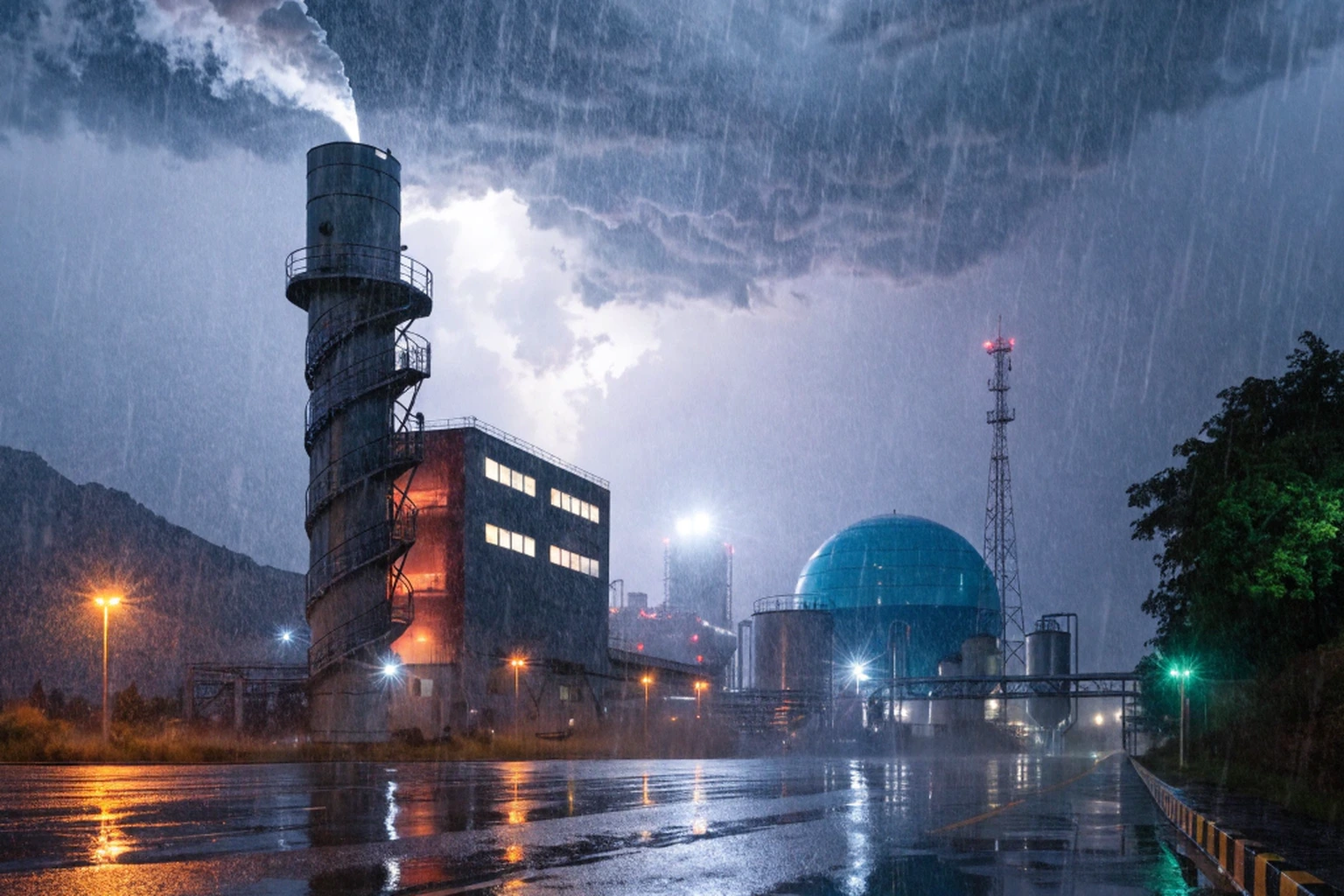
Morocco and Clean Energy
Morocco is a beautiful country. It has a lot of sun and wind. Now, Morocco makes green energy. This energy is clean. The country uses solar power. There is a big solar plant in Ouarzazate. It is very large. Now, Morocco makes green hydrogen. This is new and special. Green hydrogen helps the Earth. Morocco sells this energy to other countries. It is a leader in clean energy. The future is green in Morocco. Many people work for a clean world.
Grammar Spotlight
Pattern: Present Simple: To Be
"Morocco is a beautiful country."
We use 'is' with singular nouns like Morocco. It describes a fact or a state of being.
Pattern: Present Simple: Third Person 's'
"Morocco makes green energy."
In the present simple, we add an 's' to the verb when the subject is 'he', 'she', or 'it' (Morocco).
Test Your Understanding
10 questions · A1 Beginner · 1 free preview
Test what you learned from this article. Answer all questions to earn XP!
What does Morocco have a lot of?
Want to finish the quiz?
9 more questions are waiting for you. Sign up free to unlock the full quiz and earn XP!
Sign Up FreeAlready have an account? Sign In
Question Breakdown
What does Morocco have a lot of?
Your answer:
Correct answer: Sun and wind
Morocco makes energy that is clean.
Your answer:
Correct answer: True
What does 'large' mean?
Your answer:
Correct answer: Big
Morocco _____ this energy to other countries.
Your answer:
Correct answer: sells
Morocco: The New Leader of Green Energy
Morocco is a very sunny and windy country in North Africa. In the past, the country bought most of its energy from other countries. This was very expensive. Then, Morocco built the Noor Ouarzazate Solar Complex. It is one of the biggest solar plants in the world. Now, Morocco is becoming a leader in renewable energy.
Today, there is an exciting new project called "Green Hydrogen." This is a clean type of fuel made from water and sun. It is better for the environment than oil because it does not make pollution. Morocco wants to sell this green energy to Europe and other places.
The country is now greener and richer than before. Many people are working on these new projects because they want a better future. Morocco is changing from a buyer to a seller. This is a very big step for the planet. Scientists are happy because Morocco is helping to stop climate change. The future of energy is starting in Morocco.
Grammar Spotlight
Pattern: Past Simple
"Morocco built the Noor Ouarzazate Solar Complex."
We use the past simple to talk about completed actions in the past. For regular verbs we add -ed, but 'built' is the irregular past form of 'build'.
Pattern: Comparatives
"The country is now greener and richer than before."
We use comparatives to compare two things. For short adjectives, we add -er + than to show how one thing has more of a quality than another.
Test Your Understanding
11 questions · A2 Elementary · 1 free preview
Test what you learned from this article. Answer all questions to earn XP!
What is Green Hydrogen?
Want to finish the quiz?
10 more questions are waiting for you. Sign up free to unlock the full quiz and earn XP!
Sign Up FreeAlready have an account? Sign In
Question Breakdown
What is Green Hydrogen?
Your answer:
Correct answer: A clean type of fuel
Morocco bought most of its energy from other countries in the past.
Your answer:
Correct answer: True
What does 'environment' mean?
Your answer:
Correct answer: The natural world around us
Morocco is a very _____ and windy country.
Your answer:
Correct answer: sunny
Why is Green Hydrogen better than oil?
Your answer:
Correct answer: It does not make pollution
Morocco: The New Leader of Green Energy
Morocco has started a very exciting journey in the world of energy. For many years, the country was dependent on importing fossil fuels from other nations. However, this situation has changed because the government decided to invest in renewable energy. Today, Morocco is becoming a global leader in the "Green Hydrogen Frontier."
One of the most important steps in this transformation was the building of the Noor Ouarzazate Solar Complex. This massive project, which is one of the largest solar plants in the world, was designed to capture the desert sun. It is located in a place where the sun shines almost every day. Since its launch, the plant has produced clean electricity for millions of people.
Now, Morocco is looking at something even more advanced: green hydrogen. This is a special type of fuel that is created using renewable energy. Unlike traditional fuels, green hydrogen does not produce pollution when it is used. This process, which uses water and electricity, has been identified as the future of clean transport and industry.
Many international companies have shown interest in Morocco’s green hydrogen potential. Because the country has so much sun and wind, it can produce this energy more cheaply than many other places. In the future, green hydrogen will be exported to Europe and beyond. This transition has created new jobs and helped the environment at the same time. Morocco has successfully turned its natural resources into a sustainable future.
Grammar Spotlight
Pattern: Present Perfect
"Morocco has started a very exciting journey in the world of energy."
We use the present perfect (have/has + past participle) to talk about actions that started in the past and are still relevant or continuing now.
Pattern: Passive Voice
"This massive project... was designed to capture the desert sun."
The passive voice (be + past participle) is used when the focus is on the action or the object rather than the person performing the action.
Test Your Understanding
11 questions · B1 Intermediate · 1 free preview
Test what you learned from this article. Answer all questions to earn XP!
What was Morocco's energy situation in the past?
Want to finish the quiz?
10 more questions are waiting for you. Sign up free to unlock the full quiz and earn XP!
Sign Up FreeAlready have an account? Sign In
Question Breakdown
What was Morocco's energy situation in the past?
Your answer:
Correct answer: It relied on importing fossil fuels.
The Noor Ouarzazate Solar Complex is one of the smallest solar plants in the world.
Your answer:
Correct answer: False
What does 'renewable' mean?
Your answer:
Correct answer: Energy from sources that do not run out.
Morocco has successfully _____ its natural resources into a sustainable future.
Your answer:
Correct answer: turned
What is required to create green hydrogen?
Your answer:
Correct answer: Water and electricity.
Morocco's Sustainable Shift: The Green Hydrogen Frontier
Morocco has long been recognized for its ambitious renewable energy targets. For decades, the nation relied heavily on imported fossil fuels, which created significant economic vulnerability. However, the inauguration of the Noor Ouarzazate Solar Complex marked a pivotal turning point in its energy strategy. Having successfully harnessed solar power, the Kingdom is now setting its sights on a new horizon: green hydrogen. This transition represents not only an environmental necessity but also a strategic economic maneuver.
Green hydrogen is produced through electrolysis, a process that uses renewable electricity to split water into hydrogen and oxygen. Unlike traditional hydrogen production, which depends on natural gas and releases pollutants, this method emits no carbon dioxide. Morocco’s geographical advantages are undeniable; the country possesses vast coastal areas with consistent wind and year-round sunshine. This unique combination makes it one of the most cost-effective locations globally for large-scale production. Consequently, the Kingdom is attracting significant international attention as a potential energy hub.
The implications for the Moroccan economy are profound. By transitioning from an energy importer to a significant exporter, Morocco could potentially supply a substantial portion of Europe’s energy needs. International investors have already begun to flock to the region, drawn by the government's stable regulatory framework and the strategic 'Morocco Offer' for green hydrogen. Nevertheless, the transition is not without its hurdles. Significant investment in infrastructure is required, including specialized pipelines and storage facilities to transport the gas safely.
Furthermore, the social impact must be considered. While the industry promises to create thousands of highly skilled jobs, it also requires a workforce that is adequately trained in new technologies. Educational institutions are currently adapting their curricula to meet this demand. If Morocco manages to overcome these logistical challenges, it will not only secure its own energy independence but also establish itself as a global leader in the fight against climate change. In conclusion, the green hydrogen frontier represents a bold leap toward a sustainable future, proving that geographical assets, when paired with political will, can redefine a nation's destiny.
Grammar Spotlight
Pattern: Present Perfect Passive
"Morocco has long been recognized for its ambitious renewable energy targets."
Used to describe an action that began in the past and continues to be true, where the focus is on the recipient. It is formed using 'has/have + been + past participle'.
Pattern: Perfect Participle Clause
"Having successfully harnessed solar power, the Kingdom is now setting its sights on a new horizon."
This structure is used to show that one action was completed before another started. It helps to vary sentence structure and show clear sequences in formal writing.
Pattern: First Conditional with 'If'
"If Morocco manages to overcome these logistical challenges, it will not only secure its own energy independence but also establish itself as a global leader."
Used to talk about real and possible future situations. It uses 'if + present simple' followed by 'will + base verb'.
Test Your Understanding
11 questions · B2 Upper Intermediate · 1 free preview
Test what you learned from this article. Answer all questions to earn XP!
What was the main consequence of Morocco's past reliance on imported fossil fuels?
Want to finish the quiz?
10 more questions are waiting for you. Sign up free to unlock the full quiz and earn XP!
Sign Up FreeAlready have an account? Sign In
Question Breakdown
What was the main consequence of Morocco's past reliance on imported fossil fuels?
Your answer:
Correct answer: Economic vulnerability
Green hydrogen production releases carbon dioxide as a byproduct.
Your answer:
Correct answer: False
Which word describes the possible future effects of an action?
Your answer:
Correct answer: Implications
The Kingdom is now setting its sights on a new _____: green hydrogen.
Your answer:
Correct answer: horizon
Why is Morocco considered an ideal location for green hydrogen production?
Your answer:
Correct answer: Because of its consistent wind and year-round sunshine
The Green Hydrogen Frontier: Morocco’s Strategic Pivot to Renewable Hegemony
For decades, Morocco’s economic stability was tethered to the volatile prices of the international fossil fuel market. As a nation devoid of significant hydrocarbon reserves, the Kingdom found itself in a precarious position, importing nearly 90% of its energy requirements. However, what the world is currently witnessing is a radical paradigm shift. The diversification of Morocco’s energy portfolio, which began in earnest with the inauguration of the Noor Ouarzazate Solar Complex, has now evolved into a sophisticated pursuit of green hydrogen leadership.
Not only does the Kingdom possess vast tracts of sun-drenched desert, but it also boasts consistent coastal winds, making it a prime candidate for the large-scale electrolysis required to produce green hydrogen. This process, which utilizes renewable electricity to split water into hydrogen and oxygen, offers a carbon-neutral alternative to traditional industrial processes. The impetus for this transition is twofold: achieving domestic energy sovereignty and positioning the nation as a vital feedstock provider for a decarbonizing Europe. Indeed, the proximity of Morocco to the European Union provides a unique geopolitical advantage, allowing for the potential export of hydrogen via existing and future pipeline infrastructure.
Nevertheless, the transition is not without its complexities. The production of green hydrogen is exceptionally water-intensive, a factor that presents a significant challenge given Morocco’s existing struggle with water scarcity. To mitigate this, the government is looking toward the burgeoning field of seawater desalination. It is the integration of these two high-tech sectors—desalination and electrolysis—that will determine the ultimate viability of the Moroccan strategy. Critics argue that the prioritization of industrial energy exports could inadvertently strain local resources, yet proponents maintain that the long-term economic benefits far outweigh these immediate hurdles.
Scarcely had the global discourse on climate change reached its current fever pitch when Morocco had already begun laying the groundwork for its ‘Green Hydrogen Offer.’ This ambitious framework aims to attract foreign direct investment by providing clear regulatory pathways and land incentives. The transformation from a dependent importer to a regional renewable powerhouse represents more than just an industrial upgrade; it is a fundamental reimagining of the nation’s role in the global economy. As the world moves away from carbon-intensive fuels, Morocco stands at the precipice of a new era, where its natural abundance of sun and wind becomes its most valuable currency.
Grammar Spotlight
Pattern: Inversion with negative/restrictive adverbials
"Not only does the Kingdom possess vast tracts of sun-drenched desert, but it also boasts consistent coastal winds."
When starting a sentence with 'Not only', the subject and auxiliary verb are inverted. This is used for emphasis and is common in formal C1-level writing.
Pattern: Cleft Sentences
"However, what the world is currently witnessing is a radical paradigm shift."
A pseudo-cleft sentence using 'what' to focus on specific information. It shifts the emphasis to the 'radical paradigm shift' at the end of the clause.
Pattern: Nominalisation
"The diversification of Morocco’s energy portfolio... has now evolved into a sophisticated pursuit of green hydrogen leadership."
Using noun phrases ('The diversification', 'the pursuit') instead of verbs makes the text more academic and concise, characteristic of advanced English.
Test Your Understanding
12 questions · C1 Advanced · 1 free preview
Test what you learned from this article. Answer all questions to earn XP!
What was the primary reason for Morocco's historical energy vulnerability?
Want to finish the quiz?
11 more questions are waiting for you. Sign up free to unlock the full quiz and earn XP!
Sign Up FreeAlready have an account? Sign In
Question Breakdown
What was the primary reason for Morocco's historical energy vulnerability?
Your answer:
Correct answer: Dependency on foreign fossil fuel imports
The production of green hydrogen requires significant amounts of water.
Your answer:
Correct answer: True
Which word describes a 'raw material used for industrial processes'?
Your answer:
Correct answer: Feedstock
Morocco aims to use seawater _____ to solve the water requirements of hydrogen production.
Your answer:
Correct answer: desalination
What does the 'Green Hydrogen Offer' primarily aim to attract?
Your answer:
Correct answer: Foreign direct investment
The article suggests that Morocco's proximity to Europe is a disadvantage.
Your answer:
Correct answer: False
The Maghrebian Vanguard: Deciphering Morocco’s Green Hydrogen Paradigm
For decades, the geopolitical narrative of the Maghreb was defined by a stark dichotomy: the energy-rich exporters of the central Sahara and the resource-constrained importers to the west. However, Morocco is currently orchestrating a profound ontological shift in its economic identity, transitioning from a state of fossil fuel dependency to a prospective hegemony in the renewable energy sector. This metamorphosis is not merely an incidental byproduct of geographical fortune but rather the result of a meticulously calibrated long-term strategy. The launch of the Noor Ouarzazate Solar Complex, a sprawling monolith of concentrated solar power, served as the initial catalyst, yet it is the nascent frontier of green hydrogen that now commands the global gaze.
Green hydrogen, produced through the electrolysis of water powered by renewable sources, represents the holy grail of global decarbonization efforts. Morocco’s unique climatological profile—characterized by an exceptional synergy of high solar irradiation and consistent Atlantic winds—provides a competitive advantage that few nations can rival. Were the Kingdom to harness this potential fully, it would not only satisfy its domestic energy mandates but also emerge as a primary conduit for Europe’s energy security. The 'Morocco Offer,' a comprehensive developmental framework unveiled by the government, underscores this ambition, seeking to integrate the entire value chain from electrolysis to the manufacture of specialized components.
Nevertheless, the path toward becoming a global lynchpin in the hydrogen economy is fraught with logistical and theoretical complexities. It is imperative that the Kingdom ensure its infrastructure keeps pace with the rapid evolution of electrolyzer technology. Furthermore, the substantial capital expenditure required for such projects necessitates a stable regulatory environment to attract institutional investors. Scholarly discourse often posits that the success of such a transition hinges upon the 'green corridor'—a series of pipelines and maritime routes connecting the North African coast to the industrial heartlands of the European Union. Should this infrastructure fail to materialize, the Kingdom’s vast potential might remain perpetually latent.
Moreover, the transition precipitates a series of socio-economic considerations. While the export potential is undeniable, the primary impetus must remain the amelioration of domestic energy costs and the fostering of local industrial expertise. Critics argue that an over-reliance on export-led growth could lead to a new form of 'green extractivism,' where the benefits of renewable resources are disproportionately siphoned off by foreign markets. To mitigate this, the Moroccan strategy emphasizes the creation of a local ecosystem, ensuring that the technological dividends of the green revolution are distributed equitably across the national demographic.
From a theoretical standpoint, Morocco’s trajectory serves as a poignant case study in sovereign energy transition. It challenges the traditional North-South energy dynamic, positioning a developing nation as a technological pioneer rather than a mere recipient of Western innovation. Seldom has a nation so effectively leveraged its natural endowments to rewrite its geopolitical destiny. As the world pivots away from the carbon-intensive paradigms of the twentieth century, Morocco stands at the vanguard, demonstrating that with sufficient political will and strategic foresight, the transition to a sustainable future is not only possible but economically inevitable. The green hydrogen frontier is no longer a distant mirage; it is a tangible reality being forged in the sands of the Sahara.
Grammar Spotlight
Pattern: Inversion with Negative Adverbials
"Seldom has a nation so effectively leveraged its natural endowments to rewrite its geopolitical destiny."
When a negative adverbial like 'seldom' or 'never' starts a sentence for emphasis, the auxiliary verb and subject are inverted. This creates a more formal and dramatic rhetorical effect characteristic of C2 level prose.
Pattern: Subjunctive Mood with Impersonal Expressions
"It is imperative that the Kingdom ensure its infrastructure keeps pace with the rapid evolution of electrolyzer technology."
The subjunctive 'ensure' (base form) is used after expressions of necessity or urgency like 'it is imperative that'. This formal structure is common in academic and professional writing.
Pattern: Inverted Conditional (Should)
"Should this infrastructure fail to materialize, the Kingdom’s vast potential might remain perpetually latent."
The word 'should' replaces 'if' in a first conditional structure to express a possibility that is considered somewhat unlikely or to sound more formal. The word order is 'Should + Subject + Verb'.
Test Your Understanding
12 questions · C2 Mastery · 1 free preview
Test what you learned from this article. Answer all questions to earn XP!
What does the author suggest is the primary driver behind Morocco's shift in economic identity?
Want to finish the quiz?
11 more questions are waiting for you. Sign up free to unlock the full quiz and earn XP!
Sign Up FreeAlready have an account? Sign In
Question Breakdown
What does the author suggest is the primary driver behind Morocco's shift in economic identity?
Your answer:
Correct answer: A meticulously planned long-term strategy
The 'Morocco Offer' aims only to export raw energy without developing local manufacturing capabilities.
Your answer:
Correct answer: False
Which word is closest in meaning to 'the holy grail' as used in the context of decarbonization?
Your answer:
Correct answer: An ultimate, highly sought-after goal
The success of the transition depends on the 'green _____' connecting North Africa to Europe.
Your answer:
Correct answer: corridor
What risk do critics associate with an over-reliance on export-led green energy growth?
Your answer:
Correct answer: Green extractivism
The author believes that Morocco's transition challenges traditional energy dynamics between the North and South.
Your answer:
Correct answer: True
