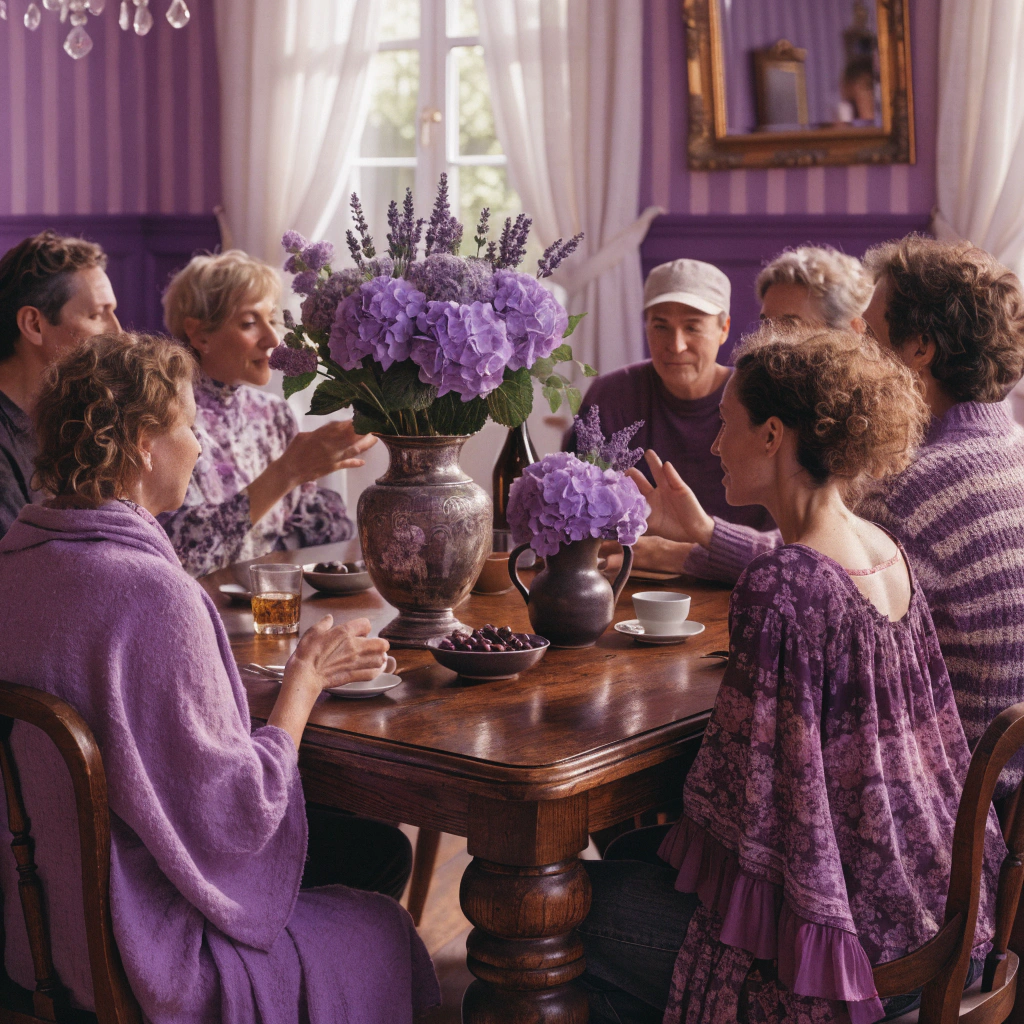
Eating and Talking in Spain
In Spain, lunch is a very important meal. People eat with family or friends. After the meal, they do not leave the table. This time is called 'Sobremesa'. People drink coffee or tea. They talk and laugh for a long time. They talk about their day or work. It is a time to relax. People do not hurry. Sobremesa is special. It is about friends and family. It is a slow and happy tradition in Spain.
Point grammaire
Structure: Present Simple (to be)
"In Spain, lunch is a very important meal."
We use 'is' with singular subjects like 'lunch' to state facts. This is the most common form of the verb 'to be' for descriptions.
Structure: Present Simple (Plural)
"They talk and laugh for a long time."
With plural subjects like 'they' or 'people', we use the base form of the verb. We do not add an 's' at the end.
Teste ta compréhension
10 questions · A1 Débutant · 1 aperçu gratuit
Teste ce que tu as appris dans cet article. Réponds à toutes les questions pour gagner des XP !
Where is this tradition from?
Tu veux terminer le quiz ?
9 questions supplémentaires t'attendent. Inscris-toi gratuitement pour débloquer le quiz complet et gagner des XP !
S'inscrire gratuitementTu as dj un compte ? Connexion
Bien joué !
Continue à pratiquer !
Déjà terminé — pas de XP supplémentaire
Inscris-toi pour gagner des XPDétail des questions
Where is this tradition from?
Ta réponse:
Bonne réponse: Spain
People leave the table immediately after eating.
Ta réponse:
Bonne réponse: Faux
What does 'relax' mean?
Ta réponse:
Bonne réponse: To rest and feel calm
People drink _____ or tea.
Ta réponse:
Bonne réponse: coffee
La Sobremesa : Un Moment Spécial en Espagne
En Espagne, après un bon repas, il y a une tradition très belle : la "Sobremesa". Ce mot signifie littéralement "sur la table". Ce n'est pas juste manger, c'est le moment après le repas, quand nous avons fini de manger et de boire notre café. Les Espagnols ne se lèvent pas tout de suite de table. Au contraire, ils restent assis ensemble pour parler, rire et passer un bon moment. C'est plus qu'une simple conversation ; c'est un moment de partage et de connexion.
La Sobremesa peut durer longtemps, parfois une heure ou plus ! Les familles et les amis discutent de tout : de la vie, du travail, des vacances. C'est une partie très importante de la culture espagnole. Dans beaucoup d'autres pays, les gens mangent vite et partent rapidement. Mais en Espagne, ce moment de détente après le repas est essentiel. Il montre que prendre son temps avec les personnes qu'on aime est très précieux. C'est une façon de vivre plus lentement et de profiter des relations humaines.
Point grammaire
Structure: Le Passé Composé
"quand nous avons fini de manger et de boire notre café."
Le Passé Composé est utilisé pour parler d'actions terminées dans le passé. Il se forme avec l'auxiliaire "avoir" ou "être" au présent, suivi du participe passé du verbe.
Structure: Les Comparatifs (plus... que)
"C'est plus qu'une simple conversation ; c'est un moment de partage et de connexion."
Pour comparer deux choses, on utilise "plus... que" pour dire qu'une chose est supérieure à l'autre. "Moins... que" est pour l'infériorité, et "aussi... que" pour l'égalité.
Teste ta compréhension
11 questions · A2 mentaire · 1 aperçu gratuit
Teste ce que tu as appris dans cet article. Réponds à toutes les questions pour gagner des XP !
Qu'est-ce que la Sobremesa ?
Tu veux terminer le quiz ?
10 questions supplémentaires t'attendent. Inscris-toi gratuitement pour débloquer le quiz complet et gagner des XP !
S'inscrire gratuitementTu as dj un compte ? Connexion
Bien joué !
Continue à pratiquer !
Déjà terminé — pas de XP supplémentaire
Inscris-toi pour gagner des XPDétail des questions
Qu'est-ce que la Sobremesa ?
Ta réponse:
Bonne réponse: Le moment de discussion après le repas
Les Espagnols se lèvent de table très rapidement après le repas.
Ta réponse:
Bonne réponse: Faux
Que signifie "précieux" ?
Ta réponse:
Bonne réponse: Très important ou de grande valeur
La Sobremesa peut durer _____, parfois une heure ou plus !
Ta réponse:
Bonne réponse: longtemps
Pourquoi la Sobremesa est-elle importante pour les Espagnols ?
Ta réponse:
Bonne réponse: Pour parler et se connecter avec les autres
The Art of the Long Lunch: Spain's La Sobremesa
Have you ever finished a delicious meal but felt like you didn't want to leave the table? In Spain, this feeling has been turned into a famous cultural tradition called 'La Sobremesa.' The word literally translates to 'over the table,' and it describes the period of time spent talking after a meal has finished. Families often gather at large tables where multiple generations sit together. It is common to see grandparents sharing advice with their grandchildren while they enjoy their drinks. These moments are considered the heart of Spanish social life.
While many Western countries have adopted a 'fast-food' mentality, Spain has kept a commitment to slow living. Once the coffee has been served and the last crumbs have been cleared, guests stay in their seats. This is a moment which is dedicated to laughter and deep conversation. It is not just about eating; it is about the interpersonal connection between friends and family. Furthermore, this practice is not limited to homes; it is a vital part of the restaurant industry too.
During La Sobremesa, many different topics are discussed, ranging from politics to personal stories. The tradition is often practiced during the weekends when people have more free time. In many Spanish restaurants, customers are never rushed to leave because the staff understands the importance of this social ritual. This tradition, which can last from thirty minutes to several hours, is seen as essential for mental health. It allows people to relax and escape the stress of daily life. Even though the world is becoming busier, La Sobremesa is still valued by both the young and the old. It is a beautiful reminder that life should be enjoyed slowly, one conversation at a time.
Point grammaire
Structure: Present Perfect
"Spain has kept a commitment to slow living."
The present perfect is used here to describe an action or state that started in the past and continues to the present. It is formed using 'has/have' plus the past participle.
Structure: Relative Clauses
"This is a moment which is dedicated to laughter and deep conversation."
A relative clause provides more information about a noun. In this sentence, 'which' introduces extra details about the 'moment' being described.
Teste ta compréhension
11 questions · B1 Intermédiaire · 1 aperçu gratuit
Teste ce que tu as appris dans cet article. Réponds à toutes les questions pour gagner des XP !
What does the word 'La Sobremesa' literally mean?
Tu veux terminer le quiz ?
10 questions supplémentaires t'attendent. Inscris-toi gratuitement pour débloquer le quiz complet et gagner des XP !
S'inscrire gratuitementTu as dj un compte ? Connexion
Bien joué !
Continue à pratiquer !
Déjà terminé — pas de XP supplémentaire
Inscris-toi pour gagner des XPDétail des questions
What does the word 'La Sobremesa' literally mean?
Ta réponse:
Bonne réponse: Over the table
La Sobremesa only happens in private homes and never in restaurants.
Ta réponse:
Bonne réponse: Faux
What does 'essential' mean in the context of the article?
Ta réponse:
Bonne réponse: Extremely important
The word literally _____ to 'over the table'.
Ta réponse:
Bonne réponse: translates
How long can La Sobremesa last?
Ta réponse:
Bonne réponse: From thirty minutes to several hours
The Art of Slow Living: Understanding La Sobremesa in Spain
While many Western cultures prioritize efficiency, the Spanish tradition of 'La Sobremesa' offers a refreshing alternative. This term, which literally means 'over the table,' refers to the extended period of conversation that follows a meal. It is not merely a break from work; rather, it is a deliberate choice to prioritize human connection over productivity. In an era where 'fast-food' and 'quick results' dominate our daily routines, this practice serves as a vital cornerstone of Spanish identity.
The mechanics of La Sobremesa are straightforward yet profound. Once the coffee has been served and the last crumbs have been cleared, guests remain seated. There is no rush to clear the dishes or return to mundane tasks. Instead, the time is dedicated to the art of conversation. Had it not been for this deep-seated cultural value, the social fabric of Spain might have evolved differently under the immense pressure of globalization. During these hours, interpersonal bonds are strengthened as family members and friends share anecdotes, debate current events, or simply enjoy each other's company in a relaxed environment.
Historically, this tradition has been passed down through generations, surviving various socio-economic shifts. It acts as a bridge between the old and the new, ensuring that despite technological advancements, the fundamental human need for connection is met. Moreover, the topics discussed during La Sobremesa are diverse, ranging from light-hearted gossip to profound philosophical inquiries. This diversity of dialogue ensures that every participant, regardless of age, feels included in the communal experience.
Furthermore, the psychological benefits of such unhurried social interaction cannot be overlooked. Experts suggest that these moments of communal reflection contribute significantly to the overall well-being of the population. By allowing individuals to unwind and disconnect from the stressors of professional life, La Sobremesa promotes a healthier work-life balance. Consequently, the practice remains a vital component of daily life, even in bustling cities where the pace of life is increasingly rapid.
The enduring appeal of this custom lies in its inherent simplicity. It requires no expensive equipment or complex planning—only a shared meal and the willingness to stay present. In conclusion, La Sobremesa is more than just a post-meal chat; it is a cultural commitment to slow living. By valuing time spent with others above the pursuit of efficiency, Spaniards maintain a tradition that fosters emotional resilience and social cohesion.
Point grammaire
Structure: Third Conditional (Inverted)
"Had it not been for this deep-seated cultural value, the social fabric of Spain might have evolved differently."
This is a formal version of 'If it had not been for...'. It is used to talk about hypothetical situations in the past and their hypothetical results.
Structure: Passive Voice with Modal Verbs
"The psychological benefits of such unhurried social interaction cannot be overlooked."
Formed by 'modal + be + past participle'. This structure focuses on the action rather than the person performing it, often used in academic writing.
Structure: Non-defining Relative Clauses
"This term, which literally means 'over the table,' refers to the extended period of conversation."
These provide extra information about a noun. They are separated by commas and cannot use 'that' as the relative pronoun.
Teste ta compréhension
11 questions · B2 Intermédiaire supérieur · 1 aperçu gratuit
Teste ce que tu as appris dans cet article. Réponds à toutes les questions pour gagner des XP !
What is the primary focus of La Sobremesa?
Tu veux terminer le quiz ?
10 questions supplémentaires t'attendent. Inscris-toi gratuitement pour débloquer le quiz complet et gagner des XP !
S'inscrire gratuitementTu as dj un compte ? Connexion
Bien joué !
Continue à pratiquer !
Déjà terminé — pas de XP supplémentaire
Inscris-toi pour gagner des XPDétail des questions
What is the primary focus of La Sobremesa?
Ta réponse:
Bonne réponse: Prioritizing human connection over productivity
La Sobremesa is a modern invention created due to globalization.
Ta réponse:
Bonne réponse: Faux
What does 'unwind' mean in the context of the article?
Ta réponse:
Bonne réponse: To relax and release stress
La Sobremesa serves as a vital _____ of Spanish identity.
Ta réponse:
Bonne réponse: cornerstone
According to the text, what are the psychological benefits of this tradition?
Ta réponse:
Bonne réponse: Improved overall well-being
The Art of the Lingering Table: Deconstructing the Spanish Sobremesa
Rarely does a cultural phenomenon encapsulate the soul of a nation quite like 'La Sobremesa'. To the uninitiated observer, the sight of diners lingering over an empty table for hours after the final morsel has been consumed might appear as an exercise in indolence. However, such a superficial reading fails to grasp the profound socio-cultural significance of this Spanish ritual. La Sobremesa—literally 'over the table'—is the antithesis of the modern, perfunctory approach to nourishment that characterizes many Western societies. In an era dominated by the relentless pursuit of efficiency, this practice represents a radical commitment to slow living and interpersonal connection. What defines this practice is not the consumption of food, but the communal digestion of shared experience. Once the coffee has been served and the bill settled, the real event begins. It is during these ephemeral hours that the rigid hierarchies of professional life dissolve, replaced by a genuine camaraderie that serves as the bedrock of Spanish social cohesion. The conversation flows without a predefined agenda, oscillating between the trivial and the existential. In these moments, time ceases to be a commodity to be managed and instead becomes a space to be inhabited. The ritualistic nature of La Sobremesa provides a necessary respite from the frantic pace of globalization. While other nations might view the post-prandial period as a mere transition to the next task, for Spaniards, it is the quintessential expression of life’s true purpose. The preservation of this tradition, however, faces significant challenges. The commodification of time and the encroachment of digital distractions threaten to erode the focused attention that La Sobremesa demands. As the 'fast-food' mentality gains traction globally, the deliberate deceleration inherent in Spanish dining culture stands as a poignant critique of our contemporary obsession with productivity. Furthermore, the psychological benefits of this practice cannot be overstated. By prioritizing human connection over the clock, participants experience a reduction in the stress levels associated with modern urban living. The ingrained expectation that a meal will be followed by lengthy discourse allows for a mental decompression that is seldom found in cultures where 'grabbing a bite' is the norm. It is this psychological sanctuary that makes La Sobremesa more than just a habit; it is a vital component of mental well-being. Ultimately, La Sobremesa serves as a reminder that the most valuable things in life are often those that cannot be measured by a stopwatch. It is a celebration of the present moment, an acknowledgment that the company we keep is far more nourishing than the food we eat. Whether it survives the pressures of the twenty-first century remains to be seen, but its enduring presence in Spanish life continues to offer a compelling alternative to the perfunctory existence mandated by the modern world.
Point grammaire
Structure: Negative Inversion
"Rarely does a cultural phenomenon encapsulate the soul of a nation quite like 'La Sobremesa'."
In formal English, when a sentence begins with a negative adverbial like 'rarely' or 'never', the auxiliary verb is placed before the subject. This is used to create emphasis or a more sophisticated tone.
Structure: Pseudo-cleft Sentences
"What defines this practice is not the consumption of food, but the communal digestion of shared experience."
Cleft sentences use a 'What' clause to focus on specific information. It allows the writer to emphasize the most important part of the sentence by placing it after the verb 'to be'.
Structure: Nominalization
"The commodification of time and the encroachment of digital distractions threaten to erode the focused attention that La Sobremesa demands."
Nominalization involves turning verbs or adjectives into nouns (e.g., 'commodification' from 'commodify'). This is a hallmark of C1/C2 writing, as it allows for the discussion of abstract concepts in a concise, academic manner.
Teste ta compréhension
12 questions · C1 Avancé · 1 aperçu gratuit
Teste ce que tu as appris dans cet article. Réponds à toutes les questions pour gagner des XP !
What is the primary focus of La Sobremesa according to the article?
Tu veux terminer le quiz ?
11 questions supplémentaires t'attendent. Inscris-toi gratuitement pour débloquer le quiz complet et gagner des XP !
S'inscrire gratuitementTu as dj un compte ? Connexion
Bien joué !
Continue à pratiquer !
Déjà terminé — pas de XP supplémentaire
Inscris-toi pour gagner des XPDétail des questions
What is the primary focus of La Sobremesa according to the article?
Ta réponse:
Bonne réponse: Interpersonal connection
The author suggests that globalization and digital distractions are potential threats to the tradition of Sobremesa.
Ta réponse:
Bonne réponse: Vrai
What does 'ephemeral' mean in the context of the article?
Ta réponse:
Bonne réponse: Lasting for a very short time
The conversation flows without a predefined _____, oscillating between the trivial and the existential.
Ta réponse:
Bonne réponse: agenda
How does the author describe professional hierarchies during the post-meal period?
Ta réponse:
Bonne réponse: They dissolve into camaraderie
The author believes that the 'fast-food' mentality is a positive development for modern productivity.
Ta réponse:
Bonne réponse: Faux
The Liminality of Commensality: A Socio-Cultural Analysis of the Spanish Sobremesa
To the uninitiated observer, the Spanish tradition of 'la sobremesa' might appear as a mere vestigial relic of a pre-industrial era, an inefficient temporal indulgence that defies the rigorous cadences of modern capitalist productivity. Yet, to dismiss it as such is to overlook a profound sociological underpinning that characterizes the Iberian Peninsula’s approach to interpersonal connectivity. It is, in its quintessential form, a rejection of the transactional nature of social interaction, prioritizing the ephemeral beauty of discourse over the utilitarian consumption of sustenance. Rarely does a cultural practice so succinctly encapsulate the antithetical relationship between slow-living and the deleterious effects of the 'fast-food' mentality prevalent in other Western hegemonies.
The term itself, translating ostensibly to 'over the table,' fails to capture the nuanced liminality of the experience. It is that distinctive period after the digestive process has commenced but before the participants have physically or psychologically disentangled themselves from the shared space of the meal. In this idiosyncratic vacuum of time, the hierarchy of the workplace or the domestic sphere often dissolves, replaced by a democratic flow of ideas, anecdotes, and critiques. Were one to excise the sobremesa from the Spanish day, the very socio-cultural fabric of the nation would likely fray, as this is the primary arena where social bonds are forged and reinforced.
Furthermore, the sobremesa serves as a bulwark against the encroachment of digital isolation. In an age where commensality is increasingly threatened by the individualistic glow of smartphones, the Spanish table remains a sanctuary of presence. It is the absence of a definitive conclusion that grants the sobremesa its power; there is no 'bill-arrival' to signal a perfunctory exit. Instead, the transition from eating to conversing is seamless, often facilitated by the ritualistic serving of coffee or digestifs, which act as catalysts for deeper philosophical or political inquiry. This practice suggests that the value of a meal lies not in the nutritional content of the food, but in the communal resonance it facilitates.
From a psychological perspective, the benefits of this prolonged engagement are manifold. The reduction of cortisol levels and the concomitant rise in oxytocin during relaxed social interaction are well-documented. However, the sobremesa offers something more profound: a reclamation of time. In a world that demands constant output, the act of sitting still—of simply 'being' with others—becomes a radical act of resistance. It is an acknowledgment that human connection is not a commodity to be optimized, but a fragile state to be nurtured. Be it through the sharing of a joke or the heated debate of current affairs, the participants affirm their shared humanity in a way that transcends the mundane.
Ultimately, the resilience of the sobremesa in the face of globalization and the accelerating pace of life is a testament to its ontological significance. While other cultures may view the post-prandial period as a mere transition to the next task, the Spanish recognize it as the main event. It is a sophisticated manifestation of emotional intelligence, a commitment to the belief that the quality of one's life is inextricably linked to the quality of one's conversations. As we navigate an increasingly fragmented existence, perhaps there is much to be learned from this Mediterranean devotion to the art of staying put, reminding us that the most meaningful moments often occur after the last crumb has been cleared.
Point grammaire
Structure: Inversion for Emphasis
"Rarely does a cultural practice so succinctly encapsulate the antithetical relationship between slow-living and the deleterious effects of the 'fast-food' mentality."
When negative or restrictive adverbs like 'rarely' start a sentence, the auxiliary verb is placed before the subject. This structure is used in formal C2 writing to add rhetorical weight.
Structure: Hypothetical Inverted Subjunctive
"Were one to excise the sobremesa from the Spanish day, the very socio-cultural fabric of the nation would likely fray."
This is a formal alternative to 'If one were to excise...'. By omitting 'if' and inverting the verb and subject, the sentence becomes more academic and stylistically sophisticated.
Structure: Cleft Sentences
"It is the absence of a definitive conclusion that grants the sobremesa its power."
Cleft sentences use 'It is/was... that' to focus on a specific part of the sentence. Here, it emphasizes 'the absence of a definitive conclusion' as the primary source of power.
Teste ta compréhension
12 questions · C2 Maîtrise · 1 aperçu gratuit
Teste ce que tu as appris dans cet article. Réponds à toutes les questions pour gagner des XP !
Which of the following best describes the author's view of the sobremesa?
Tu veux terminer le quiz ?
11 questions supplémentaires t'attendent. Inscris-toi gratuitement pour débloquer le quiz complet et gagner des XP !
S'inscrire gratuitementTu as dj un compte ? Connexion
Bien joué !
Continue à pratiquer !
Déjà terminé — pas de XP supplémentaire
Inscris-toi pour gagner des XPDétail des questions
Which of the following best describes the author's view of the sobremesa?
Ta réponse:
Bonne réponse: A profound sociological practice that rejects utilitarian social interaction
The author suggests that the value of a meal is primarily found in its nutritional content.
Ta réponse:
Bonne réponse: Faux
What does 'commensality' refer to in the context of the article?
Ta réponse:
Bonne réponse: The social practice of eating together
The term translates _____ to 'over the table,' though this doesn't capture its full meaning.
Ta réponse:
Bonne réponse: ostensibly
What does the 'liminality' of the sobremesa refer to?
Ta réponse:
Bonne réponse: The transitional state between eating and leaving
The article mentions that relaxed social interaction can lead to a reduction in cortisol levels.
Ta réponse:
Bonne réponse: Vrai

