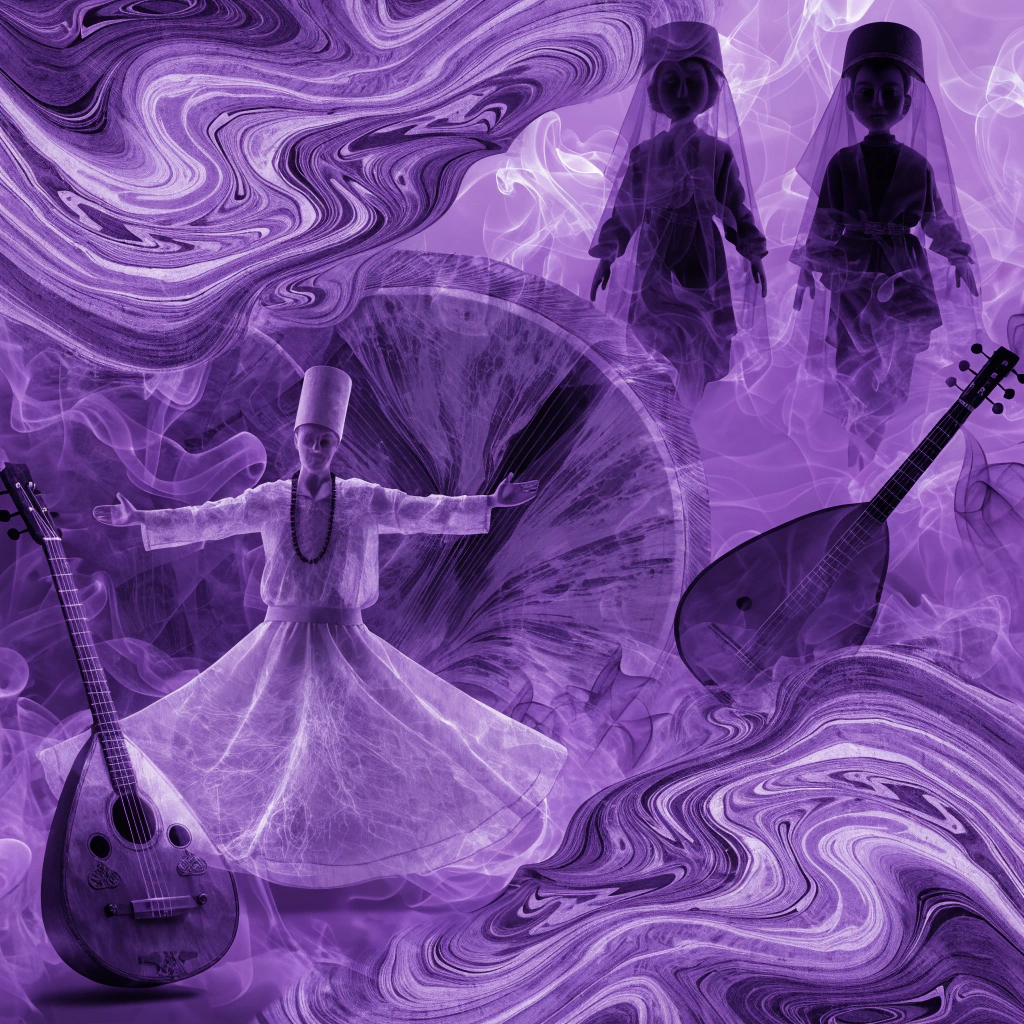
Le théâtre d'ombres : Karagöz et Hacivat
Le théâtre d'ombres est une tradition en Turquie. Karagöz et Hacivat sont les deux personnages principaux. Ils sont très différents.
Karagöz est un homme simple et drôle. Il ne va pas à l'école. Hacivat est sérieux et éduqué. Il parle avec des mots compliqués.
Dans le spectacle, les deux amis discutent. Karagöz ne comprend pas Hacivat. Il y a beaucoup de confusions. Le public rit beaucoup. C'est un art magnifique. C'est une histoire très ancienne et populaire.
Point grammaire
Structure: Le présent de l'indicatif
"Karagöz et Hacivat sont les deux personnages principaux."
On utilise le présent pour parler de faits réels. Ici, le verbe 'être' décrit l'identité des personnages.
Structure: La négation (ne... pas)
"Il ne va pas à l'école."
Pour faire une phrase négative en français, on utilise 'ne' avant le verbe et 'pas' après le verbe.
Teste ta compréhension
10 questions · A1 Débutant · 1 aperçu gratuit
Teste ce que tu as appris dans cet article. Réponds à toutes les questions pour gagner des XP !
Où se passe cette tradition ?
Tu veux terminer le quiz ?
9 questions supplémentaires t'attendent. Inscris-toi gratuitement pour débloquer le quiz complet et gagner des XP !
S'inscrire gratuitementTu as dj un compte ? Connexion
Bien joué !
Continue à pratiquer !
Déjà terminé — pas de XP supplémentaire
Inscris-toi pour gagner des XPDétail des questions
Où se passe cette tradition ?
Ta réponse:
Bonne réponse: En Turquie
Karagöz est un homme très sérieux.
Ta réponse:
Bonne réponse: Faux
Que signifie le mot 'spectacle' ?
Ta réponse:
Bonne réponse: Une présentation pour le public
Le public _____ beaucoup pendant le spectacle.
Ta réponse:
Bonne réponse: rit
The Magic of Turkish Shadow Plays
Karagöz and Hacivat is a very old and famous shadow play in Turkey. People in the Ottoman Empire watched these plays for many years. To make the show, artists use puppets made of animal skin. They move the puppets behind a white screen with a light.
The play has two main characters. Karagöz is a funny and simple man. He is not educated, but he is very clever. Hacivat is more polite and educated than Karagöz. He uses difficult words and follows the rules.
The stories are usually about misunderstandings. Karagöz does not understand Hacivat's long words, so they have funny arguments. People love these shows because they are funnier than modern TV shows. Today, you can still see these plays during special holidays like Ramadan. It is an important part of Turkish culture.
Point grammaire
Structure: Comparatives
"Hacivat is more polite and educated than Karagöz."
We use 'more + adjective + than' for long adjectives to compare two people or things. It shows that one person has more of a quality than the other.
Structure: Past Simple
"People in the Ottoman Empire watched these plays for many years."
We use the past simple to talk about actions that finished in the past. For regular verbs like 'watch', we add '-ed' to the end of the verb.
Teste ta compréhension
11 questions · A2 mentaire · 1 aperçu gratuit
Teste ce que tu as appris dans cet article. Réponds à toutes les questions pour gagner des XP !
What are the puppets in the show made of?
Tu veux terminer le quiz ?
10 questions supplémentaires t'attendent. Inscris-toi gratuitement pour débloquer le quiz complet et gagner des XP !
S'inscrire gratuitementTu as dj un compte ? Connexion
Bien joué !
Continue à pratiquer !
Déjà terminé — pas de XP supplémentaire
Inscris-toi pour gagner des XPDétail des questions
What are the puppets in the show made of?
Ta réponse:
Bonne réponse: animal skin
Karagöz is a very polite man who uses difficult words.
Ta réponse:
Bonne réponse: Faux
What is a 'puppet'?
Ta réponse:
Bonne réponse: A doll moved by a person
Hacivat is more _____ than Karagöz.
Ta réponse:
Bonne réponse: educated
When can you still see these plays in Turkey today?
Ta réponse:
Bonne réponse: During Ramadan
Le Théâtre d'Ombres : Karagöz et Hacivat
Le théâtre d'ombres, qui s'appelle Karagöz et Hacivat, est une forme d'art turc très ancienne et fascinante. Ce spectacle traditionnel a été créé à l'époque de l'Empire ottoman pour amuser un public varié. Les deux personnages principaux représentent des classes sociales opposées, ce qui crée des situations comiques.
Karagöz est un homme simple, pauvre et honnête qui dit toujours ce qu'il pense sans filtre. Il n'a pas fait de longues études, mais il est très malin et possède un grand sens de l'humour. Au contraire, Hacivat est un personnage raffiné, instruit et parfois un peu pédant. Il appartient à la classe supérieure et utilise souvent un langage complexe que Karagöz ne comprend pas toujours.
La plupart des scènes sont basées sur des malentendus linguistiques. Comme Karagöz interprète mal les mots difficiles de Hacivat, il répond de manière absurde, ce qui fait rire les spectateurs. Les marionnettes, qui sont fabriquées en peau de chameau ou de buffle, sont manipulées avec adresse derrière un rideau blanc éclairé. Grâce à cette technique, le public ne voit que les ombres colorées et transparentes bouger sur l'écran.
Bien que le monde moderne ait changé nos habitudes de divertissement, cette tradition est encore protégée aujourd'hui. En 2009, le théâtre de Karagöz et Hacivat a été inscrit sur la liste du patrimoine culturel immatériel de l'humanité par l'UNESCO. C'est un trésor culturel qui continue d'unir les gens par le rire et la satire sociale, prouvant que l'humour est un langage universel qui traverse les siècles.
Point grammaire
Structure: La voix passive
"Ce spectacle traditionnel a été créé à l'époque de l'Empire ottoman."
On utilise la voix passive pour mettre l'accent sur l'action ou l'objet plutôt que sur le sujet. Elle se forme avec l'auxiliaire 'être' conjugué et le participe passé du verbe.
Structure: Les pronoms relatifs (qui / que)
"Karagöz est un homme simple, pauvre et honnête qui dit toujours ce qu'il pense."
'Qui' remplace un sujet et 'que' remplace un complément d'objet direct. Ils servent à relier deux phrases pour éviter les répétitions.
Teste ta compréhension
11 questions · B1 Intermédiaire · 1 aperçu gratuit
Teste ce que tu as appris dans cet article. Réponds à toutes les questions pour gagner des XP !
Qui est Karagöz dans le théâtre d'ombres ?
Tu veux terminer le quiz ?
10 questions supplémentaires t'attendent. Inscris-toi gratuitement pour débloquer le quiz complet et gagner des XP !
S'inscrire gratuitementTu as dj un compte ? Connexion
Bien joué !
Continue à pratiquer !
Déjà terminé — pas de XP supplémentaire
Inscris-toi pour gagner des XPDétail des questions
Qui est Karagöz dans le théâtre d'ombres ?
Ta réponse:
Bonne réponse: Un homme simple et drôle
Hacivat utilise un langage très simple que tout le monde comprend.
Ta réponse:
Bonne réponse: Faux
Que signifie le mot 'malin' ?
Ta réponse:
Bonne réponse: Être intelligent et astucieux
Les marionnettes sont fabriquées en _____ de chameau ou de buffle.
Ta réponse:
Bonne réponse: peau
Pourquoi le public rit-il pendant le spectacle ?
Ta réponse:
Bonne réponse: À cause des malentendus entre les personnages
The Shadowy Reflection of Ottoman Society: Karagöz and Hacivat
The tradition of Karagöz and Hacivat shadow theater stands as a quintessential pillar of Turkish cultural identity. Originating in the 14th century, this art form has fascinated audiences for generations, blending social commentary with slapstick humor. Legend has it that the characters were based on two construction workers in Bursa whose constant joking delayed the building of a mosque. Although the Sultan initially executed them for their negligence, he later regretted his decision, leading to the creation of puppets to keep their memory alive. Had the Sultan known the cultural legacy these two men would leave behind, he might have reconsidered his harsh judgment.
The play’s brilliance lies in the stark contrast between its two protagonists. Karagöz represents the common man—illiterate yet witty, impulsive, and remarkably honest. In contrast, Hacivat is the pedantic intellectual who belongs to the upper social hierarchy. He speaks in a sophisticated, often convoluted manner, using Persian and Arabic loanwords that Karagöz frequently misunderstands. This linguistic misinterpretation serves as the primary engine for the show’s satirical humor, as Karagöz’s 'street-smart' logic clashes with Hacivat’s academic arrogance.
Beyond the dialogue, the craftsmanship involved in the production is extraordinary. Each puppet is meticulously crafted from translucent camel or water buffalo hide, which is then treated and dyed with vibrant colors. These figures are manipulated by a single master performer, known as the 'Hayali,' who must be exceptionally articulate. Not only does the Hayali control every movement behind the screen, but he also provides unique voices and accents for a diverse cast of characters, ranging from regional travelers to mythical creatures.
While the Ottoman Empire has long since faded, the legacy of Karagöz and Hacivat persists. In 2009, UNESCO recognized the tradition as part of the Intangible Cultural Heritage of Humanity. In a modern era dominated by digital entertainment, this shadow play remains a vital reminder of the power of storytelling. It provides an analytical lens through which we can view historical social structures, while simultaneously offering timeless laughter that transcends class boundaries. Ultimately, the play proves that even in the shadows, the most profound truths about human nature can be revealed.
Point grammaire
Structure: Inverted Third Conditional
"Had the Sultan known the cultural legacy these two men would leave behind, he might have reconsidered his harsh judgment."
This structure is used to talk about hypothetical situations in the past. By starting with 'Had' instead of 'If the Sultan had known', the sentence becomes more formal and literary.
Structure: Passive Voice with Adverbs
"Each puppet is meticulously crafted from translucent camel or water buffalo hide."
The passive voice shifts focus onto the object (the puppet). The adverb 'meticulously' is placed before the past participle to describe the quality of the action.
Structure: Defining Relative Clauses
"Hacivat is the pedantic intellectual who belongs to the upper social hierarchy."
The relative clause 'who belongs to...' identifies exactly which type of intellectual Hacivat is. It is essential to the meaning of the sentence and does not require commas.
Teste ta compréhension
11 questions · B2 Intermédiaire supérieur · 1 aperçu gratuit
Teste ce que tu as appris dans cet article. Réponds à toutes les questions pour gagner des XP !
According to the legend, what was the original profession of Karagöz and Hacivat?
Tu veux terminer le quiz ?
10 questions supplémentaires t'attendent. Inscris-toi gratuitement pour débloquer le quiz complet et gagner des XP !
S'inscrire gratuitementTu as dj un compte ? Connexion
Bien joué !
Continue à pratiquer !
Déjà terminé — pas de XP supplémentaire
Inscris-toi pour gagner des XPDétail des questions
According to the legend, what was the original profession of Karagöz and Hacivat?
Ta réponse:
Bonne réponse: Construction workers
Karagöz is described as a highly educated character who uses complex vocabulary.
Ta réponse:
Bonne réponse: Faux
What is the meaning of 'quintessential'?
Ta réponse:
Bonne réponse: Representing the most perfect example
The puppets used in the performance are made from animal _____.
Ta réponse:
Bonne réponse: hide
What is the primary role of the 'Hayali' in the performance?
Ta réponse:
Bonne réponse: To manage all voices and movements behind the screen
L'Art de l'Ombre : Karagöz et Hacivat, Miroirs d'une Société Ottomane en Mutation
Bien que les origines de Karagöz et Hacivat demeurent nimbées de mystère, leur influence sur l'imaginaire collectif anatolien est indéniable. C’est dans l’effervescence des places publiques ottomanes que s’est cristallisée cette forme théâtrale unique, alliant satire sociale, bouffonnerie et finesse linguistique. Rarement aura-t-on vu un duo si parfaitement antinomique : Karagöz, le roturier à l'esprit vif mais sans instruction, s'oppose à Hacivat, le lettré dont le raffinement frise parfois le pédantisme.
Le spectacle repose sur une dynamique de confrontation constante. Karagöz, avec son langage cru et ses interprétations littérales, déconstruit systématiquement les discours alambiqués de son compère. Le moteur comique réside principalement dans le quiproquo. Lorsque Hacivat déclame des vers en turc ottoman, truffés de termes arabes et persans, Karagöz les transforme en expressions triviales, provoquant l'hilarité du public. Cette manipulation du langage n'est pas qu'un simple divertissement ; elle souligne le fossé culturel séparant l'élite administrative de la masse populaire.
Sur le plan technique, la fabrication des marionnettes relève d'un artisanat d'exception. Taillées dans des peaux de chameau ou de buffle traitées pour devenir translucides, les figurines sont peintes avec des couleurs vives. Projetées contre un écran de coton blanc éclairé par derrière, elles s'animent grâce à des tiges horizontales. La dextérité du marionnettiste, le « Hayali », est alors mise à rude épreuve : il doit non seulement manipuler les personnages, mais aussi moduler sa voix pour incarner une multitude de rôles, tout en improvisant selon les réactions de l'assistance.
Historiquement, le théâtre d'ombres jouissait d'une liberté d'expression surprenante. Sous le couvert de la caricature, les pièces abordaient des sujets tabous, critiquant les fonctionnaires corrompus ou les mœurs de l'époque. Toutefois, cette dimension subversive fut progressivement tempérée par la censure impériale, puis par l'émergence des médias modernes. Aujourd'hui, bien que le cinéma et la télévision aient supplanté les représentations de quartier, Karagöz et Hacivat demeurent des piliers de l'identité culturelle turque. Leur inscription au patrimoine culturel immatériel de l'humanité par l'UNESCO témoigne de la nécessité de préserver ce dialogue séculaire entre érudition et sagesse populaire. En définitive, cette lutte verbale incessante entre le savoir formel et l'instinct de survie continue de résonner comme une analyse pertinente des rapports de force sociaux.
Point grammaire
Structure: L'inversion du sujet après certains adverbes
"Rarement aura-t-on vu un duo si parfaitement antinomique."
Dans un registre soutenu, après des adverbes de fréquence ou de négation placés en début de phrase (rarement, à peine, peut-être), on inverse le sujet et le verbe pour accentuer l'effet dramatique.
Structure: La mise en relief avec 'C'est... que'
"C’est dans l’effervescence des places publiques ottomanes que s’est cristallisée cette forme théâtrale."
Cette structure de 'cleft sentence' permet de focaliser l'attention sur un complément (ici de lieu) pour souligner l'origine historique précise de l'action.
Structure: La concession avec 'Bien que' + subjonctif
"Bien que les origines de Karagöz et Hacivat demeurent nimbées de mystère..."
La locution 'bien que' introduit une proposition subordonnée de concession et exige l'emploi du subjonctif pour exprimer une nuance d'incertitude ou de fait admis.
Teste ta compréhension
12 questions · C1 Avancé · 1 aperçu gratuit
Teste ce que tu as appris dans cet article. Réponds à toutes les questions pour gagner des XP !
Quelle est la principale source de comique entre Karagöz et Hacivat ?
Tu veux terminer le quiz ?
11 questions supplémentaires t'attendent. Inscris-toi gratuitement pour débloquer le quiz complet et gagner des XP !
S'inscrire gratuitementTu as dj un compte ? Connexion
Bien joué !
Continue à pratiquer !
Déjà terminé — pas de XP supplémentaire
Inscris-toi pour gagner des XPDétail des questions
Quelle est la principale source de comique entre Karagöz et Hacivat ?
Ta réponse:
Bonne réponse: Les quiproquos linguistiques
Karagöz est présenté comme un personnage très éduqué utilisant un langage complexe.
Ta réponse:
Bonne réponse: Faux
Que signifie le terme 'alambiqué' dans le texte ?
Ta réponse:
Bonne réponse: Excessivement complexe et subtil
Le marionnettiste, appelé le 'Hayali', doit faire preuve d'une grande _____ pour animer les figurines.
Ta réponse:
Bonne réponse: dextérité
Quel était le rôle social historique de ce théâtre ?
Ta réponse:
Bonne réponse: Offrir une plateforme de critique sociale et politique
Les marionnettes sont fabriquées à partir de matières synthétiques modernes.
Ta réponse:
Bonne réponse: Faux
The Dialectical Spectacle: Karagöz and Hacivat as Socio-Cultural Archetypes
To perceive the Turkish shadow theatre, Karagöz and Hacivat, merely as a vestige of archaic entertainment would be to overlook its profound epistemological significance within the Ottoman socio-political landscape. This art form, which flourished from the 16th century onwards, serves as a sophisticated lens through which the complexities of an empire were scrutinized. At its core, the performance is built upon a fundamental dichotomy between its two titular protagonists. Karagöz, the eponymous hero, embodies the unrefined yet razor-sharp wit of the common folk. He is the champion of the vernacular, often employing a candid, if occasionally coarse, logic to dismantle the pretensions of his counterpart. Conversely, Hacivat represents the urban literati, characterized by a pedantic adherence to etiquette and a penchant for flowery, often convoluted, Ottoman Turkish. Rarely does a theatrical form encapsulate the tension between the grassroots and the elite with such poignant clarity as this shadow play does through their incessant bickering.
The technical nomenclature of the craft is as intricate as the narratives themselves. The puppets, known as 'tasvir', are meticulously fashioned from camel or water buffalo hide, treated until they achieve a translucent quality that allows vibrant colors to permeate the screen. The 'Hayali', or the master puppeteer, is a virtuoso who must possess not only the manual dexterity to manipulate several characters simultaneously but also the vocal range to imbue each with a distinct persona. It is imperative that the Hayali possess an encyclopedic knowledge of music, poetry, and local dialects, as the play is traditionally an improvisational tour de force. The performance space, ostensibly a simple white screen known as the 'ayna' (mirror), becomes a microcosm of the imperial capital, Istanbul. Here, a linguistic polyphony emerges, as characters representing various ethnicities and social strata—from the Zeybek to the Celebi—interact in a chaotic yet harmonized narrative structure.
Scholars have frequently noted that the play functions as a form of social safety valve. In an era where direct political dissent was often perilous, the shadow screen offered a sanctuary for satire. Through the deliberate obfuscation of reality provided by the shadows, the Hayali could critique the foibles of the ruling class and the absurdities of the bureaucracy. However, the play's significance transcends mere political commentary; it is steeped in Sufi mysticism. The 'Şeyh Küşteri' yard, named after the legendary founder of the craft, is viewed by initiates as a metaphor for the world itself—an ephemeral shadow play directed by a divine hand. In this context, the screen is the threshold between the manifest and the hidden, a concept that adds a layer of metaphysical erudition to what might otherwise be dismissed as slapstick comedy.
Were it not for the Hayali’s dexterity, the illusion of life within these two-dimensional figures would dissipate instantly. The survival of this tradition into the 21st century, eventually garnering a place on UNESCO's Representative List of the Intangible Cultural Heritage of Humanity, is a testament to its enduring relevance. While modern digital entertainment has largely supplanted the shadow play in the popular consciousness, the intellectual rigor required to appreciate the wordplay of Karagöz and Hacivat remains a benchmark for cultural literacy. The play continues to be an essential study in how linguistic barriers and class distinctions can be bridged—or at least hilariously highlighted—through the medium of light and shadow.
Point grammaire
Structure: Inversion after negative/restrictive expressions
"Rarely does a theatrical form encapsulate the tension between the grassroots and the elite with such poignant clarity..."
When restrictive adverbs like 'Rarely' or 'Seldom' start a sentence for emphasis, the auxiliary verb is placed before the subject. This creates a more formal, dramatic, and academic tone.
Structure: Subjunctive Mood for Necessity
"It is imperative that the Hayali possess an encyclopedic knowledge of music..."
The subjunctive 'possess' (not 'possesses') follows adjectives of urgency or importance. It is used to express that something is essential or required rather than a simple statement of fact.
Structure: Mixed/Inverted Conditional
"Were it not for the Hayali’s dexterity, the illusion of life within these two-dimensional figures would dissipate instantly."
This is a formal alternative to 'If it were not for...'. By omitting 'if' and inverting the subject and verb, the sentence gains a scholarly, high-level literary quality.
Teste ta compréhension
12 questions · C2 Maîtrise · 1 aperçu gratuit
Teste ce que tu as appris dans cet article. Réponds à toutes les questions pour gagner des XP !
According to the text, what is the primary contrast between Karagöz and Hacivat?
Tu veux terminer le quiz ?
11 questions supplémentaires t'attendent. Inscris-toi gratuitement pour débloquer le quiz complet et gagner des XP !
S'inscrire gratuitementTu as dj un compte ? Connexion
Bien joué !
Continue à pratiquer !
Déjà terminé — pas de XP supplémentaire
Inscris-toi pour gagner des XPDétail des questions
According to the text, what is the primary contrast between Karagöz and Hacivat?
Ta réponse:
Bonne réponse: Their social class and linguistic style
The 'Hayali' is only required to have manual skill in moving puppets.
Ta réponse:
Bonne réponse: Faux
Which word describes the use of complex, scholarly language to show off knowledge?
Ta réponse:
Bonne réponse: Pedantic
The play features a linguistic _____ because it includes many different dialects and ethnicities.
Ta réponse:
Bonne réponse: polyphony
What philosophical influence is mentioned as giving the play a metaphysical layer?
Ta réponse:
Bonne réponse: Sufi mysticism
The shadow screen was used as a safe way to express political dissent.
Ta réponse:
Bonne réponse: Vrai

