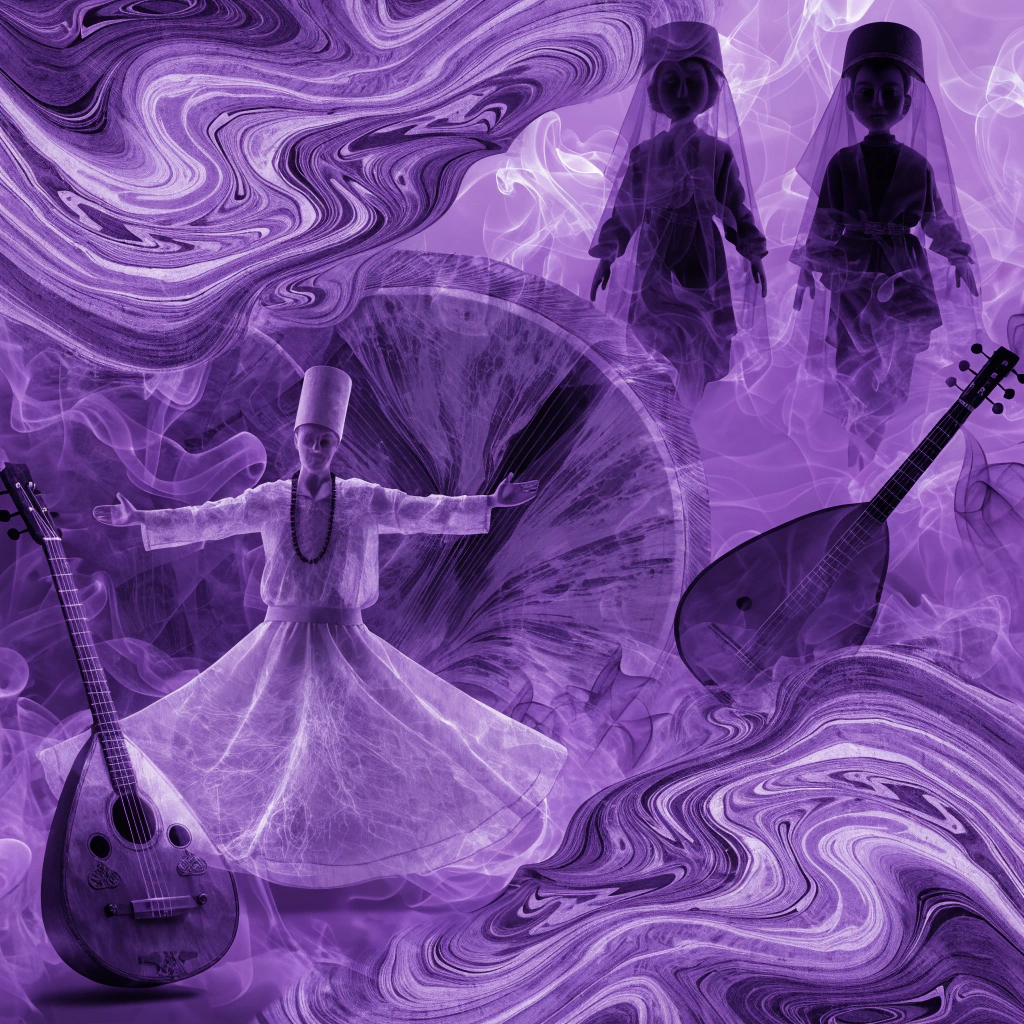
Karagöz and Hacivat: A Turkish Shadow Play
Karagöz and Hacivat are famous in Turkey. They are shadow puppets. They are made of leather. People watch the play at night. Karagöz is a funny man. He is a simple person. He is not a student. Hacivat is different. He is very smart and he reads many books. In the play, they talk a lot. Karagöz does not understand Hacivat. This is very funny for the people. Children and adults love the shadow play. It is a very old tradition in Turkey.
نکته دستوری
الگو: Present Simple (to be)
"Karagöz and Hacivat are famous in Turkey."
We use 'am', 'is', or 'are' to describe people or things. In this sentence, 'are' is used because there are two people.
الگو: Present Simple (Negative)
"Karagöz does not understand Hacivat."
To make a negative sentence with a verb, we use 'do not' or 'does not'. We use 'does not' for one person like Karagöz.
درک خود را بسنجید
10 سوال · A1 مبتدی · 1 پیشنمایش رایگان
آنچه از این مقاله آموختید را بسنجید. به همه سؤالات پاسخ دهید و XP کسب کنید!
Where is this shadow play from?
آیا میخواهید آزمون را تمام کنید؟
9 سؤال دیگر منتظر شماست. ثبتنام رایگان کنید تا آزمون کامل را باز کنید و XP کسب کنید!
ثبتنام رایگانقبلاً ثبتنام کردی؟ ورود
جزئیات سؤالات
Where is this shadow play from?
پاسخ شما:
پاسخ درست: Turkey
The puppets are made of paper.
پاسخ شما:
پاسخ درست: نادرست
What does 'funny' mean?
پاسخ شما:
پاسخ درست: Makes you laugh
Karagöz is a _____ man.
پاسخ شما:
پاسخ درست: funny
The Magic of Turkish Shadow Plays
Karagöz and Hacivat is a very old and famous shadow play in Turkey. People in the Ottoman Empire watched these plays for many years. To make the show, artists use puppets made of animal skin. They move the puppets behind a white screen with a light.
The play has two main characters. Karagöz is a funny and simple man. He is not educated, but he is very clever. Hacivat is more polite and educated than Karagöz. He uses difficult words and follows the rules.
The stories are usually about misunderstandings. Karagöz does not understand Hacivat's long words, so they have funny arguments. People love these shows because they are funnier than modern TV shows. Today, you can still see these plays during special holidays like Ramadan. It is an important part of Turkish culture.
نکته دستوری
الگو: Comparatives
"Hacivat is more polite and educated than Karagöz."
We use 'more + adjective + than' for long adjectives to compare two people or things. It shows that one person has more of a quality than the other.
الگو: Past Simple
"People in the Ottoman Empire watched these plays for many years."
We use the past simple to talk about actions that finished in the past. For regular verbs like 'watch', we add '-ed' to the end of the verb.
درک خود را بسنجید
11 سوال · A2 مقدماتی · 1 پیشنمایش رایگان
آنچه از این مقاله آموختید را بسنجید. به همه سؤالات پاسخ دهید و XP کسب کنید!
What are the puppets in the show made of?
آیا میخواهید آزمون را تمام کنید؟
10 سؤال دیگر منتظر شماست. ثبتنام رایگان کنید تا آزمون کامل را باز کنید و XP کسب کنید!
ثبتنام رایگانقبلاً ثبتنام کردی؟ ورود
جزئیات سؤالات
What are the puppets in the show made of?
پاسخ شما:
پاسخ درست: animal skin
Karagöz is a very polite man who uses difficult words.
پاسخ شما:
پاسخ درست: نادرست
What is a 'puppet'?
پاسخ شما:
پاسخ درست: A doll moved by a person
Hacivat is more _____ than Karagöz.
پاسخ شما:
پاسخ درست: educated
When can you still see these plays in Turkey today?
پاسخ شما:
پاسخ درست: During Ramadan
The Magic of Turkish Shadow Theatre: Karagöz and Hacivat
Karagöz and Hacivat is a traditional form of shadow theatre that has been popular in Turkey for many centuries. This art form was created during the Ottoman Empire and has entertained people of all ages for generations. The plays are performed using puppets which are made from animal skin. These puppets are held behind a white screen with a bright light behind them, creating shadows for the audience to see.
The stories focus on two main characters who represent different parts of society. Karagöz is a funny, uneducated man who often says exactly what he thinks. On the other hand, Hacivat is a well-educated and polite man who uses complex language. Most of the humor comes from the misunderstandings between them. Because Karagöz does not always understand Hacivat’s difficult words, he often repeats them incorrectly, which makes the audience laugh.
This traditional art has been protected by UNESCO as part of the world's cultural heritage. Although modern technology has changed how we spend our free time, Karagöz and Hacivat are still seen during special festivals like Ramadan. The puppets are moved by a master performer who must change his voice for every character. This requires a lot of skill and practice. In conclusion, Turkish shadow theatre is more than just a show; it is a bridge between the past and the present. It shows us that even if people have different backgrounds, they can still find reasons to laugh together.
نکته دستوری
الگو: Passive Voice
"The plays are performed using puppets which are made from animal skin."
The passive voice is used when the action is more important than the person doing it. It is formed with the verb 'to be' and the past participle of the main verb.
الگو: Relative Clauses
"Karagöz is a funny, uneducated man who often says exactly what he thinks."
Relative clauses start with words like 'who', 'which', or 'that' to give more information about a noun. In this case, 'who' describes the man.
درک خود را بسنجید
11 سوال · B1 متوسط · 1 پیشنمایش رایگان
آنچه از این مقاله آموختید را بسنجید. به همه سؤالات پاسخ دهید و XP کسب کنید!
What are the puppets made of?
آیا میخواهید آزمون را تمام کنید؟
10 سؤال دیگر منتظر شماست. ثبتنام رایگان کنید تا آزمون کامل را باز کنید و XP کسب کنید!
ثبتنام رایگانقبلاً ثبتنام کردی؟ ورود
جزئیات سؤالات
What are the puppets made of?
پاسخ شما:
پاسخ درست: Animal skin
Hacivat is an uneducated character who uses simple language.
پاسخ شما:
پاسخ درست: نادرست
What does 'heritage' mean?
پاسخ شما:
پاسخ درست: Traditions and history of a group
The puppets are moved by a master _____ who changes his voice.
پاسخ شما:
پاسخ درست: performer
What is the main source of humor in the plays?
پاسخ شما:
پاسخ درست: Misunderstandings between the characters
The Shadowy Reflection of Ottoman Society: Karagöz and Hacivat
The tradition of Karagöz and Hacivat shadow theater stands as a quintessential pillar of Turkish cultural identity. Originating in the 14th century, this art form has fascinated audiences for generations, blending social commentary with slapstick humor. Legend has it that the characters were based on two construction workers in Bursa whose constant joking delayed the building of a mosque. Although the Sultan initially executed them for their negligence, he later regretted his decision, leading to the creation of puppets to keep their memory alive. Had the Sultan known the cultural legacy these two men would leave behind, he might have reconsidered his harsh judgment.
The play’s brilliance lies in the stark contrast between its two protagonists. Karagöz represents the common man—illiterate yet witty, impulsive, and remarkably honest. In contrast, Hacivat is the pedantic intellectual who belongs to the upper social hierarchy. He speaks in a sophisticated, often convoluted manner, using Persian and Arabic loanwords that Karagöz frequently misunderstands. This linguistic misinterpretation serves as the primary engine for the show’s satirical humor, as Karagöz’s 'street-smart' logic clashes with Hacivat’s academic arrogance.
Beyond the dialogue, the craftsmanship involved in the production is extraordinary. Each puppet is meticulously crafted from translucent camel or water buffalo hide, which is then treated and dyed with vibrant colors. These figures are manipulated by a single master performer, known as the 'Hayali,' who must be exceptionally articulate. Not only does the Hayali control every movement behind the screen, but he also provides unique voices and accents for a diverse cast of characters, ranging from regional travelers to mythical creatures.
While the Ottoman Empire has long since faded, the legacy of Karagöz and Hacivat persists. In 2009, UNESCO recognized the tradition as part of the Intangible Cultural Heritage of Humanity. In a modern era dominated by digital entertainment, this shadow play remains a vital reminder of the power of storytelling. It provides an analytical lens through which we can view historical social structures, while simultaneously offering timeless laughter that transcends class boundaries. Ultimately, the play proves that even in the shadows, the most profound truths about human nature can be revealed.
نکته دستوری
الگو: Inverted Third Conditional
"Had the Sultan known the cultural legacy these two men would leave behind, he might have reconsidered his harsh judgment."
This structure is used to talk about hypothetical situations in the past. By starting with 'Had' instead of 'If the Sultan had known', the sentence becomes more formal and literary.
الگو: Passive Voice with Adverbs
"Each puppet is meticulously crafted from translucent camel or water buffalo hide."
The passive voice shifts focus onto the object (the puppet). The adverb 'meticulously' is placed before the past participle to describe the quality of the action.
الگو: Defining Relative Clauses
"Hacivat is the pedantic intellectual who belongs to the upper social hierarchy."
The relative clause 'who belongs to...' identifies exactly which type of intellectual Hacivat is. It is essential to the meaning of the sentence and does not require commas.
درک خود را بسنجید
11 سوال · B2 بالاتر از متوسط · 1 پیشنمایش رایگان
آنچه از این مقاله آموختید را بسنجید. به همه سؤالات پاسخ دهید و XP کسب کنید!
According to the legend, what was the original profession of Karagöz and Hacivat?
آیا میخواهید آزمون را تمام کنید؟
10 سؤال دیگر منتظر شماست. ثبتنام رایگان کنید تا آزمون کامل را باز کنید و XP کسب کنید!
ثبتنام رایگانقبلاً ثبتنام کردی؟ ورود
جزئیات سؤالات
According to the legend, what was the original profession of Karagöz and Hacivat?
پاسخ شما:
پاسخ درست: Construction workers
Karagöz is described as a highly educated character who uses complex vocabulary.
پاسخ شما:
پاسخ درست: نادرست
What is the meaning of 'quintessential'?
پاسخ شما:
پاسخ درست: Representing the most perfect example
The puppets used in the performance are made from animal _____.
پاسخ شما:
پاسخ درست: hide
What is the primary role of the 'Hayali' in the performance?
پاسخ شما:
پاسخ درست: To manage all voices and movements behind the screen
Echoes of the Ottoman Screen: The Socio-Cultural Dialectics of Karagöz and Hacivat
Seldom has a theatrical tradition captured the collective psyche of a nation as poignantly as the shadow puppetry of Karagöz and Hacivat. Emerging from the depths of the Ottoman era, this quintessential art form transcends mere entertainment, acting as a sophisticated vehicle for social commentary and linguistic play. At its heart, the performance relies on the projection of two-dimensional, camel-hide figures onto a translucent screen, illuminated from behind by a flickering lamp—a setup that underlines the inherent ephemerality of the human condition and the transient nature of political power.
The narrative arc of each play typically revolves around the interaction between two diametrically opposed characters who personify the internal contradictions of the empire. Karagöz, the eponymous hero, represents the illiterate yet street-smart commoner. His wit is unpolished, often ribald, and consistently used to subvert the authority of his counterpart. Conversely, Hacivat embodies the pedantic erudition of the urban elite. He is well-versed in poetry, music, and the complex etiquette of the court, yet he often lacks the practical wisdom and grounding that Karagöz possesses. It is through this linguistic dissonance that the comedy arises; Hacivat’s flowery prose is frequently misinterpreted—sometimes deliberately—by Karagöz, leading to a cascade of puns, slapstick humor, and social critique.
The sheer complexity of their banter serves as a microcosm of Ottoman social stratification. In an empire characterized by a diverse tapestry of ethnicities and social classes, the shadow play provided a neutral ground where societal tensions could be explored without fear of immediate retribution. What defines the essence of this art form is the interplay between these two archetypes, reflecting the broader dialectics of the society they inhabited. The puppet master, known as the hayali, must possess an extraordinary range of vocal mimicry and improvisational skills to breathe life into a myriad of characters, from the local drunkard to the foreign merchant, each representing a specific cog in the imperial machine.
Despite the historical shift toward Westernized theatrical forms and the advent of modern cinema, the legacy of Karagöz and Hacivat remains a cornerstone of Turkish cultural identity. The preservation of this intangible heritage requires more than just the mechanical replication of ancient scripts; it necessitates an understanding of the satirical spirit that originally fueled its popularity among the masses. In a world increasingly dominated by digital media and hyper-realistic visual effects, the tactile and communal experience of the shadow screen offers a poignant reminder of the power of minimalist storytelling. Furthermore, the adaptability of the characters allows them to remain relevant, as modern practitioners continue to integrate contemporary social issues, such as environmentalism or digital literacy, into their traditional frameworks.
Ultimately, Karagöz and Hacivat are more than mere puppets; they are enduring symbols of the human struggle to communicate across the chasms of class, education, and ideology. Whether through a biting critique of political corruption or a simple, absurd play on words, their dialogue continues to resonate with modern audiences. It is this unique blend of intellectual depth and accessible humor that ensures the shadows cast centuries ago still have much to illuminate about the complexities of modern life. By examining the friction between Hacivat’s rigid formalism and Karagöz’s chaotic spontaneity, we gain a deeper appreciation for the nuanced ways in which art reflects the human experience.
نکته دستوری
الگو: Inversion after Negative/Restrictive Adverbs
"Seldom has a theatrical tradition captured the collective psyche of a nation as poignantly as the shadow puppetry of Karagöz and Hacivat."
When words like 'seldom', 'never', or 'rarely' start a sentence, the auxiliary verb comes before the subject. This is used in formal writing to add emphasis or dramatic effect.
الگو: Cleft Sentences (What-clauses)
"What defines the essence of this art form is the interplay between these two archetypes."
Cleft sentences focus on specific information by splitting a sentence into two parts. A 'What-clause' acts as the subject to highlight the most important element of the statement.
الگو: Nominalisation
"The preservation of this intangible heritage requires more than just the mechanical replication of ancient scripts."
Nominalisation involves turning verbs (preserve, replicate) into nouns (preservation, replication). This creates a more formal, academic tone typical of C1-level English.
درک خود را بسنجید
12 سوال · C1 پیشرفته · 1 پیشنمایش رایگان
آنچه از این مقاله آموختید را بسنجید. به همه سؤالات پاسخ دهید و XP کسب کنید!
What is the primary source of humor in the Karagöz and Hacivat plays?
آیا میخواهید آزمون را تمام کنید؟
11 سؤال دیگر منتظر شماست. ثبتنام رایگان کنید تا آزمون کامل را باز کنید و XP کسب کنید!
ثبتنام رایگانقبلاً ثبتنام کردی؟ ورود
جزئیات سؤالات
What is the primary source of humor in the Karagöz and Hacivat plays?
پاسخ شما:
پاسخ درست: Linguistic misunderstandings and wordplay
Hacivat is portrayed as an uneducated member of the lower class.
پاسخ شما:
پاسخ درست: نادرست
Which word describes someone who is overly concerned with formal rules and academic details?
پاسخ شما:
پاسخ درست: Pedantic
The sheer complexity of their _____ serves as a microcosm of Ottoman social stratification.
پاسخ شما:
پاسخ درست: banter
What does the 'hayali' need to be successful?
پاسخ شما:
پاسخ درست: Vocal mimicry and improvisational skills
The shadow play served as a neutral ground to explore societal tensions.
پاسخ شما:
پاسخ درست: درست
The Dialectical Spectacle: Karagöz and Hacivat as Socio-Cultural Archetypes
To perceive the Turkish shadow theatre, Karagöz and Hacivat, merely as a vestige of archaic entertainment would be to overlook its profound epistemological significance within the Ottoman socio-political landscape. This art form, which flourished from the 16th century onwards, serves as a sophisticated lens through which the complexities of an empire were scrutinized. At its core, the performance is built upon a fundamental dichotomy between its two titular protagonists. Karagöz, the eponymous hero, embodies the unrefined yet razor-sharp wit of the common folk. He is the champion of the vernacular, often employing a candid, if occasionally coarse, logic to dismantle the pretensions of his counterpart. Conversely, Hacivat represents the urban literati, characterized by a pedantic adherence to etiquette and a penchant for flowery, often convoluted, Ottoman Turkish. Rarely does a theatrical form encapsulate the tension between the grassroots and the elite with such poignant clarity as this shadow play does through their incessant bickering.
The technical nomenclature of the craft is as intricate as the narratives themselves. The puppets, known as 'tasvir', are meticulously fashioned from camel or water buffalo hide, treated until they achieve a translucent quality that allows vibrant colors to permeate the screen. The 'Hayali', or the master puppeteer, is a virtuoso who must possess not only the manual dexterity to manipulate several characters simultaneously but also the vocal range to imbue each with a distinct persona. It is imperative that the Hayali possess an encyclopedic knowledge of music, poetry, and local dialects, as the play is traditionally an improvisational tour de force. The performance space, ostensibly a simple white screen known as the 'ayna' (mirror), becomes a microcosm of the imperial capital, Istanbul. Here, a linguistic polyphony emerges, as characters representing various ethnicities and social strata—from the Zeybek to the Celebi—interact in a chaotic yet harmonized narrative structure.
Scholars have frequently noted that the play functions as a form of social safety valve. In an era where direct political dissent was often perilous, the shadow screen offered a sanctuary for satire. Through the deliberate obfuscation of reality provided by the shadows, the Hayali could critique the foibles of the ruling class and the absurdities of the bureaucracy. However, the play's significance transcends mere political commentary; it is steeped in Sufi mysticism. The 'Şeyh Küşteri' yard, named after the legendary founder of the craft, is viewed by initiates as a metaphor for the world itself—an ephemeral shadow play directed by a divine hand. In this context, the screen is the threshold between the manifest and the hidden, a concept that adds a layer of metaphysical erudition to what might otherwise be dismissed as slapstick comedy.
Were it not for the Hayali’s dexterity, the illusion of life within these two-dimensional figures would dissipate instantly. The survival of this tradition into the 21st century, eventually garnering a place on UNESCO's Representative List of the Intangible Cultural Heritage of Humanity, is a testament to its enduring relevance. While modern digital entertainment has largely supplanted the shadow play in the popular consciousness, the intellectual rigor required to appreciate the wordplay of Karagöz and Hacivat remains a benchmark for cultural literacy. The play continues to be an essential study in how linguistic barriers and class distinctions can be bridged—or at least hilariously highlighted—through the medium of light and shadow.
نکته دستوری
الگو: Inversion after negative/restrictive expressions
"Rarely does a theatrical form encapsulate the tension between the grassroots and the elite with such poignant clarity..."
When restrictive adverbs like 'Rarely' or 'Seldom' start a sentence for emphasis, the auxiliary verb is placed before the subject. This creates a more formal, dramatic, and academic tone.
الگو: Subjunctive Mood for Necessity
"It is imperative that the Hayali possess an encyclopedic knowledge of music..."
The subjunctive 'possess' (not 'possesses') follows adjectives of urgency or importance. It is used to express that something is essential or required rather than a simple statement of fact.
الگو: Mixed/Inverted Conditional
"Were it not for the Hayali’s dexterity, the illusion of life within these two-dimensional figures would dissipate instantly."
This is a formal alternative to 'If it were not for...'. By omitting 'if' and inverting the subject and verb, the sentence gains a scholarly, high-level literary quality.
درک خود را بسنجید
12 سوال · C2 تسلط · 1 پیشنمایش رایگان
آنچه از این مقاله آموختید را بسنجید. به همه سؤالات پاسخ دهید و XP کسب کنید!
According to the text, what is the primary contrast between Karagöz and Hacivat?
آیا میخواهید آزمون را تمام کنید؟
11 سؤال دیگر منتظر شماست. ثبتنام رایگان کنید تا آزمون کامل را باز کنید و XP کسب کنید!
ثبتنام رایگانقبلاً ثبتنام کردی؟ ورود
جزئیات سؤالات
According to the text, what is the primary contrast between Karagöz and Hacivat?
پاسخ شما:
پاسخ درست: Their social class and linguistic style
The 'Hayali' is only required to have manual skill in moving puppets.
پاسخ شما:
پاسخ درست: نادرست
Which word describes the use of complex, scholarly language to show off knowledge?
پاسخ شما:
پاسخ درست: Pedantic
The play features a linguistic _____ because it includes many different dialects and ethnicities.
پاسخ شما:
پاسخ درست: polyphony
What philosophical influence is mentioned as giving the play a metaphysical layer?
پاسخ شما:
پاسخ درست: Sufi mysticism
The shadow screen was used as a safe way to express political dissent.
پاسخ شما:
پاسخ درست: درست

