arrows en 30 secondes
- Arrows are physical projectiles used in archery, consisting of a shaft, a sharp head, and stabilizing feathers called fletching.
- The arrow symbol is a universal graphic used to indicate direction, movement, or logical relationships in navigation and design.
- On computers, arrows are found on keyboards as 'arrow keys' and as cursors to navigate digital interfaces and menus.
- Metaphorically, arrows represent directness, speed, or sharp impact, appearing in idioms like 'straight as an arrow' or 'arrow of time'.
The word arrows refers to a multifaceted concept that bridges the gap between ancient physical tools and modern symbolic communication. In its most literal sense, arrows are projectiles designed for use with a bow. These physical objects consist of several distinct parts: the arrowhead, which is the sharp point at the front; the shaft, which is the long body; the fletching, which are the feathers or plastic vanes at the back that provide stability during flight; and the nock, the notch at the very end that attaches to the bowstring. Historically, arrows were essential for survival, serving as primary tools for hunting game and as formidable weapons in warfare across nearly every human culture. From the flint-tipped arrows of the Neolithic era to the high-tech carbon fiber arrows used in modern Olympic archery, the physical arrow represents precision, velocity, and the extension of human reach.
- Physical Context
- In the context of sports and history, arrows are the primary ammunition for archers. They are stored in a container called a quiver and are released with significant force to hit a target.
Beyond the physical realm, the term arrows is ubiquitous in our visual landscape as a symbol. An arrow symbol consists of a line with a triangular or V-shaped head at one end. This graphic representation is one of the most powerful and universally understood icons in human history. It functions as a deictic sign, meaning it points to something specific in the environment or within a conceptual framework. We see arrows on road signs telling us to turn left or right, on floor stickers in grocery stores guiding traffic flow, and on digital screens as cursors or navigation buttons. The symbolic arrow communicates direction, movement, and relationship without the need for written language, making it a cornerstone of global communication design.
The hunter carefully placed one of his arrows into the bow, aiming for the center of the target with intense focus.
In modern technology, arrows are fundamental to user interfaces. The 'mouse' on your computer is often represented by a small white arrow. We use 'arrow keys' on our keyboards to move through text or navigate menus. In mathematics and logic, arrows represent implications or mappings between sets. For example, a right-pointing arrow might indicate that one variable leads to another. In social media, 'up-arrows' or 'down-arrows' are frequently used to indicate agreement, popularity, or voting. This transition from a lethal weapon to a digital tool for navigation highlights the evolution of human needs—from physical defense to information management.
- Symbolic Usage
- Arrows are used in diagrams to show the flow of a process. In a flowchart, an arrow connects one step to the next, indicating the logical progression of the system.
If you follow the painted arrows on the hospital floor, they will lead you directly to the radiology department.
Furthermore, the word is used metaphorically in literature and daily speech. We speak of the 'arrow of time' to describe the one-way direction of temporal progression. We might say someone's words were like 'poisoned arrows' if they were intended to hurt someone's feelings. In mythology, Cupid's arrows are said to cause people to fall in love. These metaphorical uses draw upon the arrow's characteristics of speed, direction, and impact. Whether we are talking about the physical object, the digital icon, or the metaphorical concept, arrows represent the human desire to point, to move, and to reach a specific destination or goal.
The presentation used red arrows to highlight the sharp decrease in company profits over the last fiscal quarter.
- Metaphorical Usage
- An 'arrow' can represent a sharp, direct thought or action. To be 'straight as an arrow' means to be extremely honest and morally upright.
The archer's quiver was full of feathered arrows, each one hand-crafted for maximum accuracy.
The GPS screen displayed several blue arrows indicating the fastest route through the city traffic.
Using the word arrows correctly requires an understanding of its grammatical role as a plural count noun. In most contexts, it functions as the subject or object of a sentence, describing either physical projectiles or symbolic indicators. When discussing archery, the word is often paired with verbs like 'shoot', 'release', 'aim', 'fire', or 'retrieve'. For example, 'The archer shot three arrows into the gold ring.' Here, 'arrows' is the direct object of the verb 'shot'. It is important to remember that 'arrows' is the plural form; the singular is 'arrow'. When you are referring to more than one, you must use the plural form to maintain subject-verb agreement or numerical consistency.
- Subject Position
- 'The arrows flew through the air with a whistling sound.' In this sentence, 'arrows' is the subject performing the action of flying.
In the realm of signs and symbols, 'arrows' often appears in sentences describing navigation or instructions. You will frequently find it used with verbs like 'point', 'indicate', 'show', 'guide', or 'mark'. A common sentence structure might be: 'The arrows on the map point toward the hidden treasure.' In this case, 'arrows' is the subject, and 'point' is the action they are symbolically performing. When giving directions, you might say, 'Follow the arrows to the exit.' This imperative sentence uses 'arrows' as the object of the preposition 'to', serving as the landmark for the listener to follow.
The designer added several neon arrows to the website to help users find the checkout button more easily.
Adjectives are frequently used to modify 'arrows' to provide more specific information. You might describe physical arrows as 'sharp', 'wooden', 'feathered', 'broken', or 'deadly'. Symbolic arrows might be described as 'directional', 'flashing', 'digital', 'colored', or 'pointing'. For instance, 'The flashing arrows warned the drivers of the construction zone ahead.' The adjective 'flashing' gives the reader a clear visual of the type of arrows being discussed. Similarly, in a technical context, you might refer to 'up and down arrows' when talking about keyboard keys or data trends. 'The up arrows on the stock market chart indicated a profitable day for investors.'
- Prepositional Phrases
- 'A quiver full of arrows' or 'a sign with arrows'. These phrases help specify the location or quantity of the arrows in a sentence.
The ancient cave paintings depicted hunters carrying bundles of arrows while chasing a herd of bison.
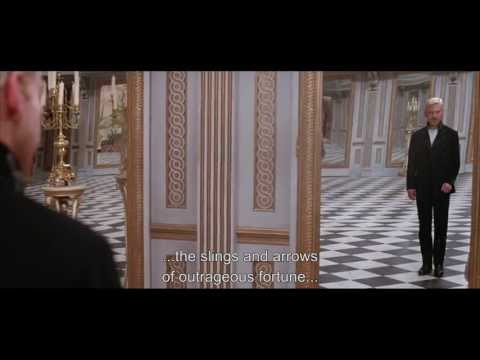
In more advanced usage, 'arrows' can be part of complex metaphorical structures. For example, 'The speaker's words were like arrows, piercing the heart of the controversy.' Here, the noun is used in a simile to compare the directness and impact of speech to the physical action of an arrow. Another example: 'The arrows of outrageous fortune,' a famous line from Shakespeare's Hamlet, uses 'arrows' to represent the painful and sudden attacks of bad luck. When using the word this way, ensure that the comparison is clear to the reader, as metaphorical 'arrows' always imply a sense of direction, speed, and sharp impact.
During the storm, the rain fell in sheets that looked like silver arrows striking the pavement.
- Compound Nouns
- Words like 'arrowheads', 'arrowsmith', and 'arrowroot' are related but distinct. Be careful not to use 'arrows' when you specifically mean just the tip (arrowhead).
The museum display featured a collection of bronze arrows recovered from a shipwreck off the coast of Greece.
You need to use the left and right arrows on your remote control to change the settings on the television.
The word arrows is heard in a surprisingly wide variety of environments, ranging from high-stakes sports commentary to mundane daily interactions. One of the most common places to hear the word is in the context of navigation and travel. If you are lost and asking for directions, someone might say, 'Just follow the yellow arrows on the ground, and they will take you to the train station.' In this scenario, the word is used as a concrete reference to a visual guide. Similarly, GPS systems and navigation apps often use the word in their voice instructions: 'In two hundred meters, follow the arrows toward the highway entrance.' Here, the word is synonymous with 'indicators' or 'signs'.
- Navigation and Travel
- Commonly heard in airports, train stations, and large office buildings where directional signage is critical for moving people efficiently.
In the world of sports, particularly archery and darts, 'arrows' is a core part of the vocabulary. During an archery competition, a commentator might say, 'She has three arrows left to shoot, and she needs a perfect score to win.' In the United Kingdom, you will often hear 'arrows' used in pubs when people are playing darts. A player might shout, 'Great arrows!' to a teammate who has just scored a high point. In these contexts, the word carries a sense of excitement, skill, and competition. It refers to the physical objects being thrown or shot with precision toward a target.
'The archer's arrows were so consistent that they all landed within an inch of each other,' the announcer remarked.
You will also hear 'arrows' frequently in professional and academic settings, especially during presentations and meetings. When a speaker is using a slideshow, they might say, 'As you can see by the red arrows on this graph, our sales have been increasing steadily since January.' In this case, the arrows are visual aids used to draw attention to specific data points. In a design or engineering meeting, a developer might say, 'We need to make these arrows more prominent so the user knows where to click.' Here, the word refers to elements of the user interface (UI) that guide the user's experience.
- Digital and Tech
- Heard in tech support or coding tutorials: 'Use the arrow keys to scroll down' or 'The arrow function in JavaScript is a shorthand for writing functions.'
'Click on the small arrows next to the folder name to expand the list of files,' the IT technician explained.
In historical and cultural discussions, 'arrows' is a staple word. In a history class, a teacher might describe the Battle of Agincourt by saying, 'The English longbowmen rained thousands of arrows down upon the French cavalry.' In a museum, a tour guide might point to an exhibit and say, 'These flint arrows were used by indigenous tribes for hunting deer thousands of years ago.' In these settings, the word evokes images of the past, traditional craftsmanship, and ancient methods of survival. It connects the listener to a time when the arrow was a cutting-edge piece of technology.
'The museum's collection of Native American arrows shows an incredible variety of stone-knapping techniques,' the guide noted.
- Literary and Mythological
- Heard in storytelling: 'Cupid released his golden arrows,' or 'The hero's arrows never missed their mark.'
The weather forecaster pointed to the swirling arrows on the screen to show the path of the approaching hurricane.
'Make sure the arrows on the battery are aligned with the symbols in the compartment,' the instruction manual stated.
One of the most frequent mistakes learners make with the word arrows is confusing it with the singular form 'arrow' in contexts where the plural is required. For example, a student might say, 'There are many arrow on the sign.' Because 'arrow' is a countable noun, it must take the plural 's' when referring to more than one. This is a basic but common error in subject-verb agreement and noun-number consistency. Another common confusion arises between the word 'arrow' and the word 'bow'. While they are used together, they are distinct objects. You shoot an arrow from a bow. You do not 'shoot a bow' in the same way you shoot an arrow.
- Singular vs. Plural
- Incorrect: 'I followed the arrow on the floor to find the exit.' (If there were multiple signs). Correct: 'I followed the arrows on the floor.'
Another mistake involves the pronunciation and spelling of related words. Learners sometimes confuse 'arrows' with 'errors'. While they sound somewhat similar in certain accents, their meanings are entirely different. An 'error' is a mistake, while an 'arrow' is a pointer or a projectile. Saying 'There are many arrows in your essay' would imply that the student has drawn directional symbols all over their paper, rather than making mistakes in their writing. Additionally, the word 'narrow' is sometimes confused with 'arrow' due to the similar spelling. 'Narrow' is an adjective meaning thin or limited in width, whereas 'arrow' is a noun.
Incorrect: 'The archer put the bow into the quiver.' Correct: 'The archer put the arrows into the quiver.'
In the context of computer usage, people sometimes misidentify 'arrow keys'. A common mistake is calling them 'direction buttons' or 'moving keys'. While these descriptions are technically accurate, the standard term in English is 'arrow keys'. Using the wrong term can lead to confusion when following technical instructions or troubleshooting computer issues. Furthermore, when describing symbols, some learners use 'arrows' to describe any kind of line or pointer. However, an arrow specifically has a head (the pointer) and a tail (the line). A simple line without a head is just a line, not an arrow.
- Confusion with 'Harrow'
- A 'harrow' is a piece of farm equipment. While the words sound similar, they are never interchangeable. 'Arrows' are for archery; 'harrows' are for soil.
Incorrect: 'Please use the up-pointer to scroll.' Correct: 'Please use the up-arrow to scroll.'
Finally, a subtle mistake occurs in the metaphorical use of the word. Some people use 'straight as an arrow' to mean someone is physically thin. While an arrow is thin, the idiom 'straight as an arrow' almost exclusively refers to a person's honesty or moral integrity. If you want to describe someone's physical appearance, it is better to use words like 'slender' or 'thin'. Using 'straight as an arrow' for physical thinness might be understood, but it misses the primary idiomatic meaning of being an honorable and truthful person. Understanding these nuances helps in using the word with the precision of an archer hitting a bullseye.
Incorrect: 'He is so straight as an arrow that he needs to eat more.' Correct: 'He is so thin that he needs to eat more.'
- Vocabulary Precision
- Don't confuse 'arrows' with 'darts'. While both are thrown, 'arrows' are shot from a bow, and 'darts' are thrown by hand in a specific game.
Incorrect: 'The arrows of the book were very interesting.' Correct: 'The errors in the book were very interesting.'
Incorrect: 'The road was very arrow.' Correct: 'The road was very narrow.'
When looking for alternatives to the word arrows, it is essential to consider whether you are referring to the physical object or the symbolic representation. If you are discussing physical projectiles, similar words include 'bolts', 'darts', 'shafts', and 'missiles'. A 'bolt' is specifically a short, heavy arrow used with a crossbow. 'Darts' are smaller and usually thrown by hand, though the word is sometimes used interchangeably with arrows in casual British English. 'Shaft' refers to the main body of the arrow but is often used as a metonym for the whole object in poetic or technical archery contexts. 'Missile' is a much broader term for any object thrown or projected at a target, though in modern usage, it usually refers to self-propelled weapons.
- Physical Alternatives
- 'Bolts' (for crossbows), 'Darts' (hand-thrown), 'Shafts' (the body of the arrow), 'Projectiles' (general term).
In the context of symbols and indicators, the word 'arrows' can be replaced by 'pointers', 'indicators', 'markers', 'signs', or 'vectors'. A 'pointer' is a general term for anything that shows position or direction, such as a cursor on a screen. 'Indicator' is often used in technical or automotive contexts (like 'turn indicators' on a car). 'Marker' refers to a physical or digital sign that identifies a location. 'Sign' is a broad category that includes arrows but also text and other icons. In mathematics and physics, 'vector' is a precise term for a quantity that has both magnitude and direction, often represented graphically by an arrow.
The software uses small pointers to show the user which menu item is currently selected.
When describing the act of pointing or directing, verbs like 'signal', 'denote', 'guide', and 'direct' can serve as alternatives to phrases involving 'arrows'. Instead of saying 'The arrows show the way', you could say 'The signs guide the visitors'. This shift in vocabulary can make your writing more varied and precise depending on the formality of the situation. For example, in a scientific paper, you might use 'vectors' to describe wind patterns, whereas in a children's book, you would stick with 'arrows' for its simplicity and immediate visual clarity.
- Symbolic Alternatives
- 'Pointers' (UI/UX), 'Indicators' (Technical), 'Signs' (General), 'Vectors' (Scientific/Mathematical).
The weather map was covered in vectors representing the speed and direction of the ocean currents.
Furthermore, in metaphorical contexts, 'arrows' can be replaced by words like 'barbs', 'darts', or 'stings'. If someone makes a hurtful comment, you might say they were 'throwing barbs' at you. This evokes the same sense of a sharp, targeted, and painful attack that 'arrows' does. In literature, the 'slings and arrows of outrageous fortune' is a famous phrase, but a modern writer might use 'the trials and tribulations' or 'the sudden blows of fate' to convey a similar meaning without the archaic imagery. Choosing the right alternative depends on the tone you wish to set—archaic and poetic, or modern and direct.
Despite the verbal barbs from the audience, the politician remained calm and focused on his speech.
- Metaphorical Alternatives
- 'Barbs' (hurtful comments), 'Darts' (quick, sharp actions), 'Blows' (sudden negative events).
The archer inspected the shafts of his arrows to ensure none of them were warped or cracked.
The dashboard features several indicators that flash when the car's engine needs maintenance.
How Formal Is It?
Le savais-tu ?
The symbol of the arrow as a directional sign didn't become common until the 18th century. Before that, people often used a drawing of a hand with a pointing finger, known as a 'manicule'.
Guide de prononciation
- Pronouncing it like 'errors' (/ˈer.ərz/).
- Dropping the 'z' sound at the end and saying 'arrow'.
- Pronouncing the 'ow' like the 'ow' in 'now' instead of 'low'.
- Failing to pronounce the double 'r' clearly.
- Confusing the vowel sound with 'arrows' and 'harrows'.
Niveau de difficulté
The word is visually recognizable and common in most texts.
Spelling with double 'r' can be tricky for some learners.
Pronunciation is straightforward but can be confused with 'errors'.
Easily understood in context, though 'arrow' and 'arrows' sound similar.
Quoi apprendre ensuite
Prérequis
Apprends ensuite
Avancé
Grammaire à connaître
Pluralization of Countable Nouns
One arrow, two arrows.
Noun Adjuncts
Using 'arrow' to modify another noun, as in 'arrow keys'.
Subject-Verb Agreement
The arrows point (not points) to the exit.
Prepositional Phrases for Direction
Arrows toward the city, arrows on the floor.
Similes with 'As...As'
As straight as an arrow.
Exemples par niveau
Look at the red arrows on the wall.
Regardez les flèches rouges sur le mur.
Plural noun 'arrows' follows the adjective 'red'.
The arrows show the way to the park.
Les flèches indiquent le chemin vers le parc.
The subject 'arrows' takes the plural verb 'show'.
I have two arrows for my bow.
J'ai deux flèches pour mon arc.
Numerical adjective 'two' requires the plural form 'arrows'.
Follow the blue arrows on the floor.
Suivez les flèches bleues sur le sol.
Imperative sentence using 'arrows' as the object.
The arrows point to the exit.
Les flèches pointent vers la sortie.
Present simple tense with a plural subject.
There are arrows on the computer screen.
Il y a des flèches sur l'écran de l'ordinateur.
'There are' is used with the plural noun 'arrows'.
He drew three arrows in his notebook.
Il a dessiné trois flèches dans son cahier.
Past simple tense 'drew' with a plural object.
Do you see the arrows on the map?
Vois-tu les flèches sur la carte ?
Question form using 'do' and plural 'arrows'.
The archer shot many arrows at the target.
L'archer a tiré de nombreuses flèches sur la cible.
Quantifier 'many' used with the countable plural noun 'arrows'.
Use the arrow keys to move the character.
Utilisez les touches fléchées pour déplacer le personnage.
'Arrow' acts as a noun adjunct modifying 'keys'.
The road signs have large white arrows.
Les panneaux de signalisation ont de grandes flèches blanches.
Plural noun 'arrows' modified by adjectives 'large' and 'white'.
Cupid shoots arrows to make people fall in love.
Cupidon tire des flèches pour faire tomber les gens amoureux.
Present simple tense describing a habitual action.
The arrows in the book help you understand the story.
Les flèches dans le livre vous aident à comprendre l'histoire.
Prepositional phrase 'in the book' modifies 'arrows'.
He found some old arrows in the attic.
Il a trouvé de vieilles flèches dans le grenier.
Determiner 'some' used with the plural noun 'arrows'.
The arrows on the remote control are for the volume.
Les flèches sur la télécommande servent pour le volume.
Plural subject 'arrows' matches the plural verb 'are'.
Please don't touch the sharp arrows.
S'il vous plaît, ne touchez pas aux flèches tranchantes.
Negative imperative with an adjective 'sharp'.
The arrows on the chart indicate a rise in temperature.
Les flèches sur le graphique indiquent une hausse de la température.
The verb 'indicate' is used here to describe the symbolic function.
Archers used to make their own arrows from wood and feathers.
Les archers fabriquaient autrefois leurs propres flèches avec du bois et des plumes.
'Used to' describes a past habit involving 'arrows'.
Follow the arrows to find the nearest emergency exit.
Suivez les flèches pour trouver la sortie de secours la plus proche.
The infinitive 'to find' expresses the purpose of following the arrows.
The arrows in this diagram show how the water flows through the pipes.
Les flèches de ce schéma montrent comment l'eau circule dans les tuyaux.
Relative clause 'how the water flows' explains the arrows' function.
He is as straight as an arrow and would never lie to you.
Il est honnête comme tout et ne vous mentirait jamais.
Idiomatic simile using 'arrow' to describe character.
The museum has a collection of ancient bronze arrows.
Le musée possède une collection d'anciennes flèches en bronze.
Compound noun phrase 'ancient bronze arrows'.
You can use the arrows on your keyboard to navigate the menu.
Vous pouvez utiliser les flèches de votre clavier pour naviguer dans le menu.
Modal verb 'can' expresses possibility.
The arrows on the floor were painted to guide the marathon runners.
Les flèches au sol ont été peintes pour guider les coureurs du marathon.
Passive voice 'were painted' used with the plural subject.
The arrows in the flowchart represent the logical sequence of the software.
Les flèches dans l'organigramme représentent la séquence logique du logiciel.
The verb 'represent' denotes the symbolic meaning of the arrows.
The archer carefully inspected each of his arrows for any signs of damage.
L'archer a soigneusement inspecté chacune de ses flèches pour détecter tout signe de dommage.
'Each of his arrows' treats the plural group as individual units.
The flashing arrows on the highway warned drivers of the upcoming detour.
Les flèches clignotantes sur l'autoroute ont averti les conducteurs de la déviation à venir.
The participle 'flashing' acts as an adjective.
In physics, vectors are often represented by arrows to show direction and magnitude.
En physique, les vecteurs sont souvent représentés par des flèches pour montrer la direction et l'amplitude.
Technical usage of 'arrows' as a representation of vectors.
The arrows of time only point in one direction: toward the future.
Les flèches du temps ne pointent que dans une seule direction : vers l'avenir.
Metaphorical and scientific usage of the term.
The designer used subtle arrows to improve the user's navigation experience.
Le concepteur a utilisé des flèches subtiles pour améliorer l'expérience de navigation de l'utilisateur.
The adjective 'subtle' modifies the plural noun 'arrows'.
Thousands of arrows were released simultaneously, darkening the sky during the battle.
Des milliers de flèches ont été lancées simultanément, obscurcissant le ciel pendant la bataille.
Quantifier 'thousands of' emphasizes the large number.
The arrows on the map were color-coded to distinguish between different hiking trails.
Les flèches sur la carte étaient codées par couleur pour distinguer les différents sentiers de randonnée.
Compound adjective 'color-coded' modifies the subject.
The arrows in the semiotic analysis serve as indexical signs pointing to the referent.
Les flèches dans l'analyse sémiotique servent de signes indexicaux pointant vers le référent.
Academic register using specialized terminology like 'indexical signs'.
The archer's quiver contained arrows tipped with various specialized heads for different game.
Le carquois de l'archer contenait des flèches munies de diverses pointes spécialisées pour différents gibiers.
Complex sentence structure with a past participle phrase 'tipped with'.
The 'slings and arrows of outrageous fortune' is a metaphor for the hardships of life.
Les « flèches de la fortune outrageante » est une métaphore des épreuves de la vie.
Literary quotation used as a noun phrase.
The arrows on the dashboard indicated that the vehicle's four-wheel drive was engaged.
Les flèches sur le tableau de bord indiquaient que le mode quatre roues motrices du véhicule était activé.
Subordinate 'that' clause follows the verb 'indicated'.
He had several arrows in his quiver, including a backup plan if the merger failed.
Il avait plusieurs cordes à son arc, y compris un plan de secours si la fusion échouait.
Idiomatic usage of 'arrows in his quiver' to mean resources.
The arrows of the wind patterns on the meteorological map suggested an approaching cyclone.
Les flèches des configurations de vent sur la carte météorologique suggéraient l'approche d'un cyclone.
Complex noun phrase as the subject.
The arrows in the mathematical proof denoted the implication from one theorem to the next.
Les flèches dans la preuve mathématique dénotaient l'implication d'un théorème à l'autre.
The verb 'denoted' is used in a formal, academic context.
The arrows of criticism were directed at the administration's handling of the crisis.
Les flèches de la critique étaient dirigées contre la gestion de la crise par l'administration.
Metaphorical usage where 'arrows' represents verbal attacks.
The asymmetrical nature of the arrow of time remains one of the most profound mysteries in physics.
La nature asymétrique de la flèche du temps reste l'un des mystères les plus profonds de la physique.
Abstract scientific concept used as a complex subject.
The author's prose was peppered with verbal arrows, each aimed with devastating precision at his rivals.
La prose de l'auteur était parsemée de flèches verbales, chacune lancée avec une précision dévastatrice contre ses rivaux.
Extended metaphor using 'arrows' to describe rhetorical skill.
In the labyrinthine corridors of the ancient palace, faded arrows offered the only hope of escape.
Dans les couloirs labyrinthiques du palais antique, des flèches décolorées offraient le seul espoir de s'échapper.
Literary and descriptive use of 'arrows' in a narrative context.
The arrows in the schematic diagram delineate the intricate pathways of the neural network.
Les flèches du schéma délimitent les voies complexes du réseau neuronal.
The verb 'delineate' provides a high-level description of the arrows' function.
The politician's 'straight as an arrow' reputation was called into question by the recent scandal.
La réputation d'honnêteté absolue du politicien a été remise en question par le récent scandale.
Idiomatic expression used as a modifier for 'reputation'.
The arrows of the Gini coefficient graph illustrate the widening gap in wealth distribution.
Les flèches du graphique du coefficient de Gini illustrent l'écart croissant dans la répartition des richesses.
Usage of 'arrows' in a sophisticated socio-economic context.
The archer's mastery was such that his arrows seemed to defy the laws of ballistics.
La maîtrise de l'archer était telle que ses flèches semblaient défier les lois de la balistique.
Formal structure 'was such that' followed by a result clause.
The semiotician argued that the arrows were not merely directional but ontological in their significance.
Le sémioticien a soutenu que les flèches n'étaient pas seulement directionnelles mais ontologiques dans leur signification.
Highly academic register with philosophical terminology.
Collocations courantes
Phrases Courantes
— To move in the direction indicated by the symbols.
If you follow the arrows, you won't get lost.
— The four keys on a keyboard used for moving the cursor.
Press the left arrow key to go back.
— Arrows that are no longer functional; also a military term for lost nuclear weapons.
The field was littered with broken arrows after the battle.
— Lights shaped like arrows that blink to get attention.
The flashing arrows told us to change lanes.
— Symbols specifically used to show which way to go.
The mall has directional arrows on every corner.
— Arrows that have been set on fire before being shot.
The attackers used fire arrows to burn the wooden gates.
— Something that has arrow symbols placed on it for guidance.
The boxes were marked with arrows showing which side should be up.
— A group of arrows tied together.
He carried a bundle of arrows to the archery range.
— Bright, glowing signs shaped like arrows.
The diner had neon arrows pointing to the entrance.
— An instruction to interact with arrow icons on a screen.
Click the arrows to see more photos in the gallery.
Souvent confondu avec
They sound similar but 'errors' are mistakes, while 'arrows' are pointers.
Spelled similarly, but 'narrow' means thin and 'arrow' is a noun.
A 'harrow' is a farming tool; 'arrows' are for archery.
Expressions idiomatiques
— Extremely honest, morally upright, or physically very straight.
You can trust him with the money; he's straight as an arrow.
Informal/Neutral— An additional resource, skill, or plan that can be used if needed.
Learning to code is just another arrow in my quiver for the job market.
Professional/Neutral— The concept that time only moves in one direction, from past to future.
Entropy is often cited as the reason for the arrow of time.
Academic/Scientific— Adversities, troubles, or criticisms that one must endure.
She handled the slings and arrows of the political campaign with grace.
Literary— A code name for an accident involving nuclear weapons that does not create the risk of war.
The movie 'Broken Arrow' is about a stolen nuclear missile.
Military/Technical— Moving very quickly and directly toward a goal.
As soon as the bell rang, the children ran out of the school like an arrow from a bow.
Literary— To be deeply in love or deeply hurt by someone.
He felt as though he had an arrow in the heart after she left.
Poetic— Words or actions intended to cause significant emotional pain.
Her poisoned arrows of sarcasm ruined the dinner party.
Metaphorical— A mark used by the British government to identify government property.
The old prison uniforms were marked with the broad arrow.
Historical/British— To use your final resource or make your last attempt at something.
He knew he had shot his last arrow when the bank refused the loan.
InformalFacile à confondre
Both are pointed projectiles thrown at a target.
Arrows are shot from a bow; darts are thrown by hand.
He shoots arrows in the field but throws darts in the pub.
Both are used in bow-like weapons.
Bolts are specifically for crossbows and are usually shorter and heavier.
The crossbow uses bolts, not traditional arrows.
Both show direction.
An arrow is a specific shape; a pointer can be anything that points (like a finger).
All arrows are pointers, but not all pointers are arrows.
Arrows are often found on signs.
A sign is the whole board; the arrow is the symbol on the board.
The sign has two white arrows on it.
In math, they look the same.
An arrow is the drawing; a vector is the mathematical concept it represents.
We use arrows to draw the vectors in physics class.
Structures de phrases
The [color] arrows are [location].
The red arrows are on the wall.
Follow the arrows to [verb/noun].
Follow the arrows to find the exit.
The arrows on the [noun] indicate [noun].
The arrows on the chart indicate a price increase.
Using the [noun], the archer shot [number] arrows.
Using the longbow, the archer shot five arrows.
The arrows serve as a metaphor for [abstract noun].
The arrows serve as a metaphor for the passage of time.
The semiotic function of the arrows is to [verb].
The semiotic function of the arrows is to delineate the flow of power.
He is as [adjective] as an arrow.
He is as straight as an arrow.
The [noun] was marked with [adjective] arrows.
The trail was marked with yellow arrows.
Famille de mots
Noms
Verbes
Adjectifs
Apparenté
Comment l'utiliser
Very high in both physical and digital navigation contexts.
-
Using 'arrow' for plural.
→
There are many arrows.
Since 'arrow' is a countable noun, you must add 's' when there is more than one.
-
Confusing 'arrows' with 'errors'.
→
I followed the arrows to the room.
Errors are mistakes; arrows are pointers. They sound similar but have completely different meanings.
-
Saying 'shoot a bow' instead of 'shoot an arrow'.
→
He shot an arrow from the bow.
The arrow is the object that is actually projected through the air.
-
Using 'straight as an arrow' for physical thinness.
→
He is very thin.
While an arrow is thin, the idiom almost always refers to a person's honesty or moral character.
-
Spelling it 'arows'.
→
Arrows.
The word requires a double 'r' to be spelled correctly.
Astuces
Countable Noun
Always remember that 'arrows' is countable. Use 'many' or 'few', never 'much'. For example, 'There are many arrows on the sign,' not 'There is much arrows.'
Double R
Don't forget the double 'r' in arrows. It's a common mistake to spell it with only one 'r'. Think of the two 'r's as two arrows standing next to each other.
Directional Clarity
When giving directions in writing, always specify the direction of the arrows (e.g., 'the left-pointing arrows') to ensure your reader doesn't get confused.
Arrow vs. Bow
Never confuse the arrow with the bow. The bow is the launcher, and the arrow is the projectile. You shoot the arrow *with* the bow.
Honesty
Use 'straight as an arrow' to describe someone's character. It's a very positive way to say someone is trustworthy and never lies.
Keyboard Navigation
In many software programs, holding 'Shift' while using the arrow keys allows you to highlight text. This is a great 'arrow' to have in your digital quiver!
Universal Symbol
Remember that arrows are a universal language. If you are in a foreign country and don't know the language, look for arrows to find exits, toilets, or trains.
The 'Z' Sound
Make sure to pronounce the 's' at the end of 'arrows' as a 'z' sound (/z/). This makes your speech sound more natural and clear to native speakers.
Flowcharts
When making a flowchart, use arrows to show the direction of the process. An arrow always points from the cause to the effect.
Ancient Tech
Think of arrows as the 'bullets' of the ancient world. They were the primary long-range technology for thousands of years before gunpowder was invented.
Mémorise-le
Moyen mnémotechnique
Think of the 'A' in Arrows as the tip of an arrow pointing up. The two 'r's look like the feathers (fletching) on the side of the shaft.
Association visuelle
Imagine a bright neon arrow pointing toward a target. The arrow is fast, sharp, and tells you exactly where to look.
Word Web
Défi
Try to count how many arrows you see today—on road signs, on your computer, or in logos. Write down three sentences describing where you saw them.
Origine du mot
The word 'arrow' comes from the Old English 'arwe', which originated from a Proto-Germanic root 'arhwō'. It is related to the Latin word 'arcus', which means 'bow'.
Sens originel : The original meaning referred specifically to the projectile used with a bow.
GermanicContexte culturel
While arrows are historical weapons, they are now primarily seen as sporting equipment or symbols. Be mindful when discussing them in contexts of historical conflict.
In the UK, 'arrows' is a very common slang term for the game of darts, often played in pubs.
Pratique dans la vie réelle
Contextes réels
Archery
- Nock the arrow
- Release the arrow
- Retrieve the arrows
- A quiver of arrows
Navigation
- Follow the arrows
- Directional arrows
- Arrows on the map
- Pointed arrows
Computing
- Arrow keys
- Mouse arrow
- Click the arrows
- Up and down arrows
Business/Data
- Arrows on the chart
- Trend arrows
- Flowchart arrows
- Arrows indicate growth
Darts (UK Slang)
- Play some arrows
- Great arrows!
- Throwing arrows
- Pub arrows
Amorces de conversation
"Have you ever tried archery and shot real arrows at a target?"
"Do you find the arrows in this building easy to follow, or are they confusing?"
"How often do you use the arrow keys on your keyboard instead of a mouse?"
"In your culture, are there any famous stories or myths involving bows and arrows?"
"Do you think arrows are the best symbol for showing direction, or is there something better?"
Sujets d'écriture
Describe a time when you followed arrows to find your way in a place you didn't know.
If you could have 'another arrow in your quiver' (a new skill), what would it be and why?
Write about a fictional character who is a master of using a bow and arrows.
Think about the 'arrow of time'. If you could reverse it for one day, what would you do?
Observe the arrows you see in your city today. Describe their colors, shapes, and purposes.
Questions fréquentes
10 questionsAn arrow consists of the arrowhead (the tip), the shaft (the long body), the fletching (the feathers), and the nock (the notch for the string). Each part is essential for the arrow's flight and accuracy. For example, the fletching helps the arrow spin and stay stable in the air.
While rare, 'arrow' can be used as a verb meaning to move as swiftly and directly as an arrow. For example, 'The car arrowed through the traffic.' However, it is much more common to use it as a noun. In most cases, you should stick to using it as a noun to avoid confusion.
This is an idiom that means someone is very honest and has high moral standards. It can also literally mean something is perfectly straight. For example, 'You can trust him; he's straight as an arrow.' It's a common way to praise someone's integrity.
Arrows have been used as directional symbols because they naturally point toward a target. Their shape, with a clear head and tail, makes it obvious which way they are 'looking'. This universal design is understood by people regardless of the language they speak.
An arrow is designed for a traditional bow or a longbow, while a bolt is designed for a crossbow. Bolts are usually shorter, heavier, and do not have the same fletching as arrows. In historical warfare, bolts were often used to pierce heavy armor.
Arrow keys are used to move the cursor or selection in four directions: up, down, left, and right. They are essential for navigating text documents, spreadsheets, and playing many types of computer games. They provide a simple way to control movement without a mouse.
Metaphorically, poisoned arrows are words or criticisms that are intended to be particularly hurtful or damaging. Just as a physical poisoned arrow causes more harm than a regular one, a 'poisoned' comment is designed to cause deep emotional pain. For example, 'His poisoned arrows of jealousy destroyed their friendship.'
Yes, in the UK, 'arrows' is a common slang term for the game of darts. You might hear someone say, 'Let's go play some arrows at the pub.' In this context, they are referring to the small darts thrown at a circular board.
This idiom means having an extra skill, resource, or plan that you can use if your first one fails. It comes from the idea of an archer having multiple arrows ready to shoot. For example, 'Having a degree in marketing is another arrow in my quiver for finding a job.'
The 'arrow of time' is a concept in physics that describes the one-way direction of time from the past to the future. It suggests that time is not reversible, much like an arrow shot from a bow cannot turn back in mid-air. It is a fundamental idea in understanding the universe.
Teste-toi 200 questions
Write a sentence using the word 'arrows' to describe a road sign.
Well written! Good try! Check the sample answer below.
Describe what an archer does with arrows.
Well written! Good try! Check the sample answer below.
Explain the meaning of the idiom 'straight as an arrow'.
Well written! Good try! Check the sample answer below.
How are arrows used in digital interfaces?
Well written! Good try! Check the sample answer below.
Write a short story about a hunter using arrows.
Well written! Good try! Check the sample answer below.
Compare physical arrows with symbolic arrows.
Well written! Good try! Check the sample answer below.
What is the 'arrow of time' and why is it important?
Well written! Good try! Check the sample answer below.
Describe the parts of an arrow and their functions.
Well written! Good try! Check the sample answer below.
Write a formal instruction using the word 'arrows'.
Well written! Good try! Check the sample answer below.
How do arrows function in a flowchart?
Well written! Good try! Check the sample answer below.
Create a dialogue between two people playing darts using the word 'arrows'.
Well written! Good try! Check the sample answer below.
Explain why arrows are a universal symbol.
Well written! Good try! Check the sample answer below.
Write a sentence using 'arrows' in a metaphorical sense.
Well written! Good try! Check the sample answer below.
Describe a weather map using the word 'arrows'.
Well written! Good try! Check the sample answer below.
What does 'another arrow in the quiver' mean in a business context?
Well written! Good try! Check the sample answer below.
Describe a computer keyboard using the word 'arrows'.
Well written! Good try! Check the sample answer below.
Write a sentence about Cupid's arrows.
Well written! Good try! Check the sample answer below.
Explain the difference between an arrow and a bolt.
Well written! Good try! Check the sample answer below.
Write a sentence about ancient arrows found in a museum.
Well written! Good try! Check the sample answer below.
How can arrows be used in a presentation?
Well written! Good try! Check the sample answer below.
Pronounce the word 'arrows' clearly.
Read this aloud:
Tu as dit :
Speech recognition is not supported in your browser. Try Chrome or Edge.
Tell a partner how to find the exit using the word 'arrows'.
Read this aloud:
Tu as dit :
Speech recognition is not supported in your browser. Try Chrome or Edge.
Describe an archer's equipment using 'arrows' and 'bow'.
Read this aloud:
Tu as dit :
Speech recognition is not supported in your browser. Try Chrome or Edge.
Use the idiom 'straight as an arrow' in a sentence about a friend.
Read this aloud:
Tu as dit :
Speech recognition is not supported in your browser. Try Chrome or Edge.
Explain where you might see arrows in a hospital.
Read this aloud:
Tu as dit :
Speech recognition is not supported in your browser. Try Chrome or Edge.
Discuss the importance of arrows in computer games.
Read this aloud:
Tu as dit :
Speech recognition is not supported in your browser. Try Chrome or Edge.
Describe the difference between an arrow and a dart.
Read this aloud:
Tu as dit :
Speech recognition is not supported in your browser. Try Chrome or Edge.
Explain the concept of the 'arrow of time' to a classmate.
Read this aloud:
Tu as dit :
Speech recognition is not supported in your browser. Try Chrome or Edge.
Talk about a famous movie character who uses arrows.
Read this aloud:
Tu as dit :
Speech recognition is not supported in your browser. Try Chrome or Edge.
Describe a flowchart you have used before, mentioning the arrows.
Read this aloud:
Tu as dit :
Speech recognition is not supported in your browser. Try Chrome or Edge.
Use 'another arrow in the quiver' to describe a skill you are learning.
Read this aloud:
Tu as dit :
Speech recognition is not supported in your browser. Try Chrome or Edge.
Explain how to use the arrow keys on a keyboard.
Read this aloud:
Tu as dit :
Speech recognition is not supported in your browser. Try Chrome or Edge.
Describe a road sign with arrows that you saw recently.
Read this aloud:
Tu as dit :
Speech recognition is not supported in your browser. Try Chrome or Edge.
Discuss the use of arrows in weather forecasting.
Read this aloud:
Tu as dit :
Speech recognition is not supported in your browser. Try Chrome or Edge.
Explain why arrows are used as symbols in many different cultures.
Read this aloud:
Tu as dit :
Speech recognition is not supported in your browser. Try Chrome or Edge.
Describe the parts of an arrow: head, shaft, and fletching.
Read this aloud:
Tu as dit :
Speech recognition is not supported in your browser. Try Chrome or Edge.
Talk about the history of arrows as weapons.
Read this aloud:
Tu as dit :
Speech recognition is not supported in your browser. Try Chrome or Edge.
Use 'arrows' in a sentence about a presentation you gave.
Read this aloud:
Tu as dit :
Speech recognition is not supported in your browser. Try Chrome or Edge.
Describe a quiver of arrows.
Read this aloud:
Tu as dit :
Speech recognition is not supported in your browser. Try Chrome or Edge.
Explain what 'poisoned arrows' are.
Read this aloud:
Tu as dit :
Speech recognition is not supported in your browser. Try Chrome or Edge.
Listen to the sentence: 'The archer shot three arrows.' How many arrows were shot?
Listen to the instruction: 'Follow the blue arrows.' What color are the arrows?
Listen to the phrase: 'Straight as an arrow.' What does it mean?
Listen to the speaker: 'Use the arrow keys to scroll.' What should you use?
Listen to the sentence: 'The quiver was full of arrows.' What was in the quiver?
Listen to the news: 'The arrows on the stock chart are pointing up.' What is happening to the stocks?
Listen to the story: 'Cupid shot his golden arrows.' Who shot the arrows?
Listen to the direction: 'Turn left where the arrows point.' Which way should you turn?
Listen to the archer: 'I need more arrows for the competition.' What does he need?
Listen to the professor: 'The arrow of time is a key concept.' What is the concept?
Listen to the warning: 'Watch out for the fire arrows!' What kind of arrows are they?
Listen to the tech support: 'Click the small arrows to expand the menu.' What do the arrows do?
Listen to the history guide: 'These arrows are made of flint.' What are they made of?
Listen to the sports announcer: 'He's throwing some great arrows tonight!' What game is he playing?
Listen to the idiom: 'He has another arrow in his quiver.' Does he have a backup plan?
/ 200 correct
Perfect score!
Summary
The word 'arrows' describes both a historical weapon and a modern navigational symbol. Whether you are shooting them from a bow or following them on a sign, arrows always represent a clear direction and a specific target. For example: 'Follow the arrows to the target.'
- Arrows are physical projectiles used in archery, consisting of a shaft, a sharp head, and stabilizing feathers called fletching.
- The arrow symbol is a universal graphic used to indicate direction, movement, or logical relationships in navigation and design.
- On computers, arrows are found on keyboards as 'arrow keys' and as cursors to navigate digital interfaces and menus.
- Metaphorically, arrows represent directness, speed, or sharp impact, appearing in idioms like 'straight as an arrow' or 'arrow of time'.
Countable Noun
Always remember that 'arrows' is countable. Use 'many' or 'few', never 'much'. For example, 'There are many arrows on the sign,' not 'There is much arrows.'
Double R
Don't forget the double 'r' in arrows. It's a common mistake to spell it with only one 'r'. Think of the two 'r's as two arrows standing next to each other.
Directional Clarity
When giving directions in writing, always specify the direction of the arrows (e.g., 'the left-pointing arrows') to ensure your reader doesn't get confused.
Arrow vs. Bow
Never confuse the arrow with the bow. The bow is the launcher, and the arrow is the projectile. You shoot the arrow *with* the bow.