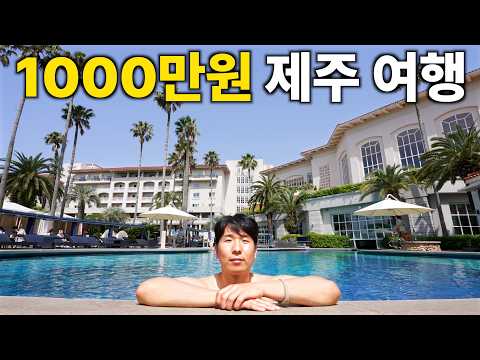
제주도에서 en 30 secondes
- Identifies Jeju Island as the location where an action takes place.
- Indicates Jeju Island as the starting point or origin of something.
- Must be used with active verbs, not static verbs of existence.
- Essential for discussing travel, tourism, and local Korean products.
The phrase 제주도에서 (Jeju-do-eseo) is a foundational yet versatile construction in the Korean language, combining the proper noun 제주도 (Jeju Island) with the multi-functional locative particle 에서 (-eseo). To understand this phrase, one must first appreciate the significance of Jeju Island itself—often referred to as the 'Hawaii of Korea.' It is a volcanic island known for its unique culture, basalt rocks, and scenic beauty. When you attach 에서 to it, you are specifically indicating that an action is taking place within the geographical boundaries of the island or that the island serves as the point of departure for a movement.
- Dynamic Location Marker
- In Korean grammar, 에서 is used primarily with active verbs. Unlike the particle 에 (-e), which often indicates a static state of being or a destination, 에서 signals that the subject is performing an activity. For example, if you are swimming, eating, or working in Jeju, you must use 제주도에서.
- The 'From' Function
- The second major function of 에서 is to denote the starting point of an action. If a flight is departing from Jeju or if a gift was sent from Jeju, 제주도에서 identifies the origin. This dual nature makes it one of the most frequently used phrases in travel and logistics contexts.
저는 제주도에서 한 달 동안 살고 싶어요. (I want to live in Jeju Island for a month.)
People use this phrase in a variety of social settings. In casual conversation, it often appears when discussing vacation plans or sharing photos on social media. In business, it might be used to discuss the sourcing of agricultural products like Hallabong oranges or black pork. Because Jeju is a distinct administrative province (Special Self-Governing Province), using the full name 제주도에서 carries a slightly more formal or descriptive tone than just saying 제주에서, though both are common.
Culturally, saying 제주도에서 evokes images of the sea, the Hallasan mountain, and a slower pace of life. For many Koreans living in the bustling metropolis of Seoul, this phrase represents an escape. When someone says they are 'in Jeju,' it usually implies they are on holiday, though the rise of 'workations' (work + vacation) has shifted this usage recently. You will also see this phrase prominently in news reports regarding the island's unique weather patterns, such as heavy snowfall in the mountains or typhoons approaching from the south.
제주도에서 온 편지에요. (This is a letter that came from Jeju Island.)
In summary, 제주도에서 is not just a location; it is a grammatical marker of action and origin tied to Korea's most famous island. Whether you are describing where you ate the best seafood of your life or explaining where your flight originated, this phrase is your essential tool for navigating Korean geography and grammar simultaneously.
Mastering the use of 제주도에서 requires an understanding of how Korean sentence structure integrates location and action. Unlike English, where 'in Jeju' or 'from Jeju' usually comes at the end of a sentence, Korean typically places the location near the beginning, following the subject. This provides immediate context for the listener. Let's explore the three primary ways this phrase functions in daily speech and writing.
- 1. Describing an Action (The 'At/In' Usage)
- When an activity happens in Jeju, 제주도에서 is followed by an action verb. This is the most common usage.
Structure: [Subject] + 제주도에서 + [Object] + [Action Verb]
Example: 친구들이 제주도에서 서핑을 해요. (Friends are surfing in Jeju Island.) - 2. Indicating Origin (The 'From' Usage)
- When something starts in Jeju and moves elsewhere, 제주도에서 acts as the starting point. This is often paired with verbs like 'come' (오다), 'depart' (출발하다), or 'send' (보내다).
Structure: 제주도에서 + [Verb of Movement]
Example: 비행기가 제주도에서 출발했어요. (The plane departed from Jeju Island.)
우리는 제주도에서 결혼식을 올렸습니다. (We held our wedding ceremony in Jeju Island.)
A key nuance to remember is the distinction between 제주도에서 and 제주도에. While both can be translated as 'in Jeju' in English, they are not interchangeable. Use 에 for existence (there is/are) or destination (going to). Use 에서 for doing something. For instance, 'I am in Jeju' (제주도에 있어요) vs. 'I am playing in Jeju' (제주도에서 놀아요). This distinction is vital for B1 learners to master to sound natural.
Furthermore, 제주도에서 can be used in comparative sentences. For example, if you want to say 'Life in Jeju is different from Seoul,' you might say '제주도에서의 삶은 서울과 달라요.' Notice the addition of the possessive particle 의 to turn the locative phrase into a noun modifier. This is an advanced but very useful construction.
어제 제주도에서 찍은 사진을 보여줄게요. (I'll show you the photos I took in Jeju Island yesterday.)
Finally, consider the emotional weight. Because Jeju is a premium destination, using 제주도에서 often invites follow-up questions about the weather, the food, or the scenery. It is a 'conversation starter' phrase. When you use it, be prepared to talk about '흑돼지' (black pork) or '바다' (the sea)!
The phrase 제주도에서 is ubiquitous in Korean daily life, media, and literature. Because Jeju Island is the nation's primary domestic tourism hub, the phrase appears in contexts ranging from weather forecasts to romantic dramas. Understanding where you will encounter this phrase helps in recognizing its various tones and implications.
- Travel and Tourism Media
- If you watch Korean travel shows like 'Battle Trip' or 'I Live Alone,' you will constantly hear celebrities saying 제주도에서. It is usually followed by descriptions of delicious food or beautiful landscapes. '제주도에서 꼭 먹어야 할 음식' (Food you must eat in Jeju) is a classic headline in travel blogs and magazines.
- Weather and News Reports
- Jeju's unique location south of the mainland means it has different weather. News anchors frequently start segments with, '오늘 제주도에서 첫눈이 내렸습니다' (Today, the first snow fell in Jeju Island) or '제주도에서 강한 바람이 불고 있습니다' (Strong winds are blowing in Jeju Island).
"제주도에서 보낸 귤 한 박스가 도착했어요!" (A box of tangerines sent from Jeju Island has arrived!)
In K-Dramas, Jeju is a frequent setting for romance or healing stories. Dramas like 'Our Blues' or 'Welcome to Samdal-ri' are set entirely on the island. In these shows, characters use 제주도에서 to discuss their local lives, their work as 'haenyeo' (female divers), or their desire to leave the island for Seoul. The phrase here carries a sense of community and local identity.
In literature and poetry, Jeju is often depicted as a place of exile (historically) or a place of spiritual renewal. Writers use 제주도에서 to ground their narratives in the island's unique topography—its stone walls, wind, and women. For a B1 learner, recognizing this phrase in a text immediately sets the stage for a story about nature, tradition, or a break from the ordinary.
"이번 여름 휴가는 제주도에서 보낼 계획이에요." (I plan to spend this summer vacation in Jeju Island.)
Lastly, in the digital age, 제주도에서 is a popular hashtag (#제주도에서). People use it on Instagram or YouTube to tag content filmed on the island. If you search this phrase, you will find thousands of videos of people cafe-hopping, hiking, or simply enjoying the ocean view. It is a phrase that bridges the gap between traditional grammar and modern digital expression.
While 제주도에서 might seem straightforward, English speakers and beginner Korean learners often stumble over its specific grammatical requirements. The most common errors involve confusing it with other particles or using it with the wrong types of verbs. Understanding these pitfalls will significantly improve your fluency.
- Mistake 1: Confusing '에서' with '에'
- This is the #1 mistake. Learners often say '제주도에서 있어요' to mean 'I am in Jeju.' However, 있다 (to be/exist) is a static verb, so it must take the particle 에.
Incorrect: 제주도에서 있어요.
Correct: 제주도에 있어요. - Mistake 2: Redundant Particle Usage
- Some learners try to combine 'to' and 'from' logic or add extra particles like '안' (inside) unnecessarily. While '제주도 안에서' (inside Jeju Island) is grammatically possible, it is often redundant because 제주도에서 already implies being within the island's bounds.
❌ 제주도에서 가요. (I'm going in Jeju - Incorrect if you mean 'to')
✅ 제주도에 가요. (I'm going to Jeju.)
Another subtle mistake is failing to realize that 에서 can mean both 'at' and 'from.' Context is king here. If you say '제주도에서 왔어요,' it clearly means 'I came from Jeju.' But if you say '제주도에서 놀았어요,' it means 'I played in Jeju.' Learners sometimes get confused when a sentence could theoretically mean both, but usually, the verb makes the meaning obvious.
Spelling and pronunciation can also be tricky. Ensure you don't drop the '도' (island) unless you are in a very casual setting. Also, the 's' sound in 'eseo' is soft. Some learners over-emphasize it, making it sound like 'ess-eo,' which can be confused with the past tense marker. Keep the 'eseo' light and connected to 'Jeju-do'.
❌ 제주도에서 살아요 (If you mean 'I live in Jeju' in a static sense, some people prefer '에', but '에서' is actually correct for the act of living! This is a common point of confusion even for advanced learners.)
Lastly, remember that 에서 is not used for time. You cannot say '3시에서' to mean 'at 3 o'clock.' It is strictly for physical locations or origins. For time, you must use 에 or 부터. Keeping these distinctions clear will help you navigate Korean grammar with the precision of a native speaker.
While 제주도에서 is the standard way to express 'in/from Jeju Island,' there are several alternatives and related phrases that can add nuance to your speech. Depending on whether you want to emphasize the interior of the island, the direction of travel, or a specific part of the island, you might choose a different expression.
- 제주도에 (Jeju-do-e)
- The most common alternative. Use this for destination ('to Jeju') or existence ('is in Jeju'). It lacks the 'action' or 'origin' nuance of 에서.
- 제주도내에서 (Jeju-do-nae-eseo)
- This means 'within Jeju Island.' It is more formal and specific, often used in administrative or logistical contexts, like 'delivery within the island' (제주도내 배송).
- 제주도로 (Jeju-do-ro)
- This indicates direction. 'Towards Jeju.' Use this when the focus is on the journey or the heading, rather than the arrival at the destination.
비교:
1. 제주도에서 일해요. (Working IN Jeju)
2. 제주도로 이사해요. (Moving TO Jeju)
Another set of alternatives involves being more specific about where on the island you are. Jeju is divided into 제주시 (Jeju City) in the north and 서귀포시 (Seogwipo City) in the south. So, you might say 서귀포에서 if you are specifically in the southern part. This shows a deeper knowledge of the island's geography.
In very casual speech, you might hear 제주도서 (Jeju-do-seo), where the '에' is contracted. This is common in fast-paced conversation but should be avoided in writing or formal speaking. Also, if you are referring to the island as a province, you might use 제주특별자치도에서, though this is strictly for official government documents.
"제주도에서 태어났어요." (I was born in Jeju Island.) vs "제주도 출신이에요." (I am from Jeju Island - using a noun phrase).
By understanding these alternatives, you can choose the exact word that fits your context. Whether you are filling out a shipping form, telling a story about your birth, or planning a move, knowing the difference between 에서, 에, and 로 will make your Korean sound sophisticated and precise.
How Formal Is It?
Le savais-tu ?
Jeju was once an independent kingdom called Tamna (탐라) before being fully annexed by the mainland dynasties. This is why it has such a distinct culture and dialect.
Guide de prononciation
- Pronouncing 'eseo' as 'essay-o'. It should be 'eh-suh'.
- Over-stressing the 'do' (island) part.
- Making the 'j' sound too sharp like a 'z'.
- Failing to connect the particles smoothly to the noun.
- Pronouncing 'eo' as 'oh' instead of 'uh'.
Niveau de difficulté
Easy to recognize as a proper noun + common particle.
Requires knowing when to use 'eseo' vs 'e'.
Pronunciation is straightforward.
Clear and distinct sounds.
Quoi apprendre ensuite
Prérequis
Apprends ensuite
Avancé
Grammaire à connaître
Locative Particle -에서 vs -에
제주도에서 놀다 (Play in Jeju) vs 제주도에 있다 (Be in Jeju)
Ablative Particle -에서 (From)
제주도에서 오다 (Come from Jeju)
Noun Modifying Particle -에서의
제주도에서의 추억 (Memories in Jeju)
Delimiter -만 with -에서
제주도에서만 볼 수 있다 (Can only see in Jeju)
From... To... (-에서 ... 까지)
제주도에서 서울까지 (From Jeju to Seoul)
Exemples par niveau
제주도에서 밥을 먹어요.
I eat a meal in Jeju Island.
Simple action verb '먹다' with the location marker '에서'.
저는 제주도에서 왔어요.
I came from Jeju Island.
Using '에서' to show the starting point (origin).
제주도에서 사진을 찍어요.
I take photos in Jeju Island.
Action '찍다' happening in the location.
친구는 제주도에서 자요.
My friend sleeps in Jeju Island.
The verb '자다' is an action occurring in Jeju.
제주도에서 바다를 봐요.
I look at the sea in Jeju Island.
The verb '보다' (to see/look) is the action.
우리는 제주도에서 놀아요.
We play in Jeju Island.
Collective action '놀다' in the location.
제주도에서 수영해요.
I swim in Jeju Island.
Specific activity '수영하다' using '에서'.
제주도에서 귤을 사요.
I buy tangerines in Jeju Island.
The action of buying '사다' at the location.
어제 제주도에서 친구를 만났어요.
I met a friend in Jeju Island yesterday.
Past tense action '만났다' in the location.
제주도에서 맛있는 음식을 많이 먹었어요.
I ate a lot of delicious food in Jeju Island.
Adjective '맛있는' modifying the object in the locative phrase.
비행기가 제주도에서 1시에 출발해요.
The plane departs from Jeju Island at 1 o'clock.
Using '에서' as the departure point with a specific time.
제주도에서 자전거를 탔어요.
I rode a bicycle in Jeju Island.
Action '탔다' (rode) in the location.
부모님이 제주도에서 선물을 보내셨어요.
My parents sent a gift from Jeju Island.
Honorific verb '보내셨다' with origin '에서'.
제주도에서 일주일 동안 여행할 거예요.
I will travel in Jeju Island for a week.
Future tense '여행할 거예요' with duration.
제주도에서 가장 높은 산은 한라산이에요.
The highest mountain in Jeju Island is Hallasan.
Superlative '가장 높은' within the location.
제주도에서 예쁜 카페에 갔어요.
I went to a pretty cafe in Jeju Island.
Even though '가다' usually takes '에', '에서' here marks the general area where the action of going to a specific spot happened.
제주도에서 한 달 살기를 하고 있어요.
I am doing a 'one-month stay' in Jeju Island.
Noun phrase '한 달 살기' as the object of the action.
제주도에서 찍은 사진을 블로그에 올렸어요.
I posted photos taken in Jeju Island on my blog.
Relative clause '제주도에서 찍은' modifying '사진'.
제주도에서만 볼 수 있는 꽃들이 많아요.
There are many flowers that can only be seen in Jeju Island.
Adding the delimiter '만' (only) to '에서'.
이번 학회는 제주도에서 개최될 예정입니다.
This conference is scheduled to be held in Jeju Island.
Passive/Formal '개최될 예정' with location.
제주도에서 나고 자란 친구가 있어요.
I have a friend who was born and raised in Jeju Island.
Compound verbs '나고 자란' (born and raised) in the location.
제주도에서 서울까지 비행기로 한 시간 걸려요.
It takes one hour by plane from Jeju Island to Seoul.
The '에서...까지' (from...to) structure.
제주도에서 드라마 촬영을 많이 한다고 들었어요.
I heard that they do a lot of drama filming in Jeju Island.
Indirect quotation '-고 들었어요' with location.
제주도에서의 생활은 정말 평화로워요.
Life in Jeju Island is truly peaceful.
Possessive '의' attached to '에서' to modify the noun '생활'.
제주도에서 발생하는 기상 이변에 대해 조사하고 있습니다.
I am investigating the abnormal weather phenomena occurring in Jeju Island.
Formal verb '발생하는' (occurring) with location.
그 영화의 주요 장면들은 모두 제주도에서 촬영되었습니다.
All the main scenes of that movie were filmed in Jeju Island.
Passive construction '촬영되었습니다'.
제주도에서 생산되는 농산물은 품질이 매우 뛰어납니다.
Agricultural products produced in Jeju Island are of very high quality.
Relative clause '제주도에서 생산되는' (produced in).
제주도에서 해녀들의 삶을 직접 체험해 볼 수 있습니다.
In Jeju Island, you can personally experience the lives of haenyeo (female divers).
Ability '수 있습니다' with experience verb '체험하다'.
그 소식은 제주도에서 시작되어 전국으로 퍼졌습니다.
That news started in Jeju Island and spread across the country.
Sequential action '시작되어' (started and...).
제주도에서 열리는 국제 포럼에 참석할 계획입니다.
I plan to attend an international forum held in Jeju Island.
Present continuous relative clause '열리는' (being held).
제주도에서만 느낄 수 있는 독특한 정취가 있습니다.
There is a unique atmosphere that can only be felt in Jeju Island.
Abstract noun '정취' (atmosphere/mood) with location.
제주도에서의 4.3 사건은 한국 현대사의 큰 아픔입니다.
The April 3rd Incident in Jeju Island is a great pain in modern Korean history.
Historical context with locative-possessive '에서의'.
제주도에서 추진 중인 신공항 건설 사업이 논란이 되고 있습니다.
The new airport construction project being promoted in Jeju Island is becoming controversial.
Complex noun phrase '추진 중인... 사업'.
본 연구는 제주도에서 자생하는 식물들의 약리 효과를 분석합니다.
This study analyzes the pharmacological effects of plants native to Jeju Island.
Scientific term '자생하는' (growing naturally/native).
제주도에서 전승되어 온 민속 신앙은 매우 독특한 형태를 띱니다.
The folk beliefs passed down in Jeju Island take a very unique form.
Perfective relative clause '전승되어 온' (passed down).
정부는 제주도에서 무비자 입국 제도를 시행하고 있습니다.
The government is implementing a visa-free entry system in Jeju Island.
Administrative term '시행하고 있습니다' (implementing).
제주도에서의 급격한 관광 개발은 환경 파괴라는 부작용을 낳았습니다.
Rapid tourism development in Jeju Island has resulted in the side effect of environmental destruction.
Causal relationship '낳았습니다' (gave birth to/resulted in).
그 작가는 제주도에서 보낸 유년 시절의 기억을 소설로 썼습니다.
The author wrote a novel based on memories of childhood spent in Jeju Island.
Past relative clause '보낸' (spent) modifying '유년 시절'.
제주도에서 관측된 이번 지진은 이례적으로 강도가 높았습니다.
The earthquake observed in Jeju Island this time was unusually high in intensity.
Passive relative clause '관측된' (observed).
제주도에서의 자치권 확대는 지방 분권의 중요한 사례입니다.
The expansion of autonomy in Jeju Island is an important case of local decentralization.
Political terminology '자치권 확대' and '지방 분권'.
제주도에서 발현되는 독자적인 언어 체계는 언어학적으로 가치가 높습니다.
The independent linguistic system manifested in Jeju Island is of high linguistic value.
Academic term '발현되는' (manifested).
지정학적 관점에서 제주도에서 수행되는 평화 외교의 역할이 막중합니다.
From a geopolitical perspective, the role of peace diplomacy conducted in Jeju Island is immense.
High-level vocabulary '지정학적', '수행되는', '막중합니다'.
제주도에서의 생태계 복원 사업은 생물 다양성 보존의 시금석이 될 것입니다.
The ecosystem restoration project in Jeju Island will be a touchstone for biodiversity conservation.
Metaphorical term '시금석' (touchstone).
제주도에서 빚어진 역사적 비극은 여전히 우리 사회의 과제로 남아 있습니다.
The historical tragedy that occurred in Jeju Island still remains a task for our society.
Literary verb '빚어진' (caused/created/occurred).
제주도에서의 탄소 중립 실천은 기후 위기 대응의 선구적인 모델입니다.
The practice of carbon neutrality in Jeju Island is a pioneering model for responding to the climate crisis.
Technical term '탄소 중립' (carbon neutral).
제주도에서 발굴된 유물들은 탐라국의 실체를 규명하는 데 결정적입니다.
The artifacts excavated in Jeju Island are decisive in identifying the reality of the Tamna Kingdom.
Historical term '발굴된' (excavated) and '규명하는' (identifying/investigating).
제주도에서의 정체성 정립은 다문화 사회로 진입하는 한국에 시사점을 줍니다.
The establishment of identity in Jeju Island provides implications for Korea as it enters a multicultural society.
Sociological term '정체성 정립' and '시사점'.
제주도에서 포착된 미세한 지각 변동은 화산 활동의 전조일 수 있습니다.
The minute crustal movements captured in Jeju Island could be a precursor to volcanic activity.
Scientific term '포착된' (captured) and '전조' (precursor).
Collocations courantes
Phrases Courantes
— A popular trend of living in Jeju for exactly one month to relax.
요즘 제주도에서 한 달 살기가 유행이에요.
— A gift sent from Jeju, usually food like oranges.
이건 제주도에서 온 선물이에요.
— Places you must visit in Jeju Island.
제주도에서 꼭 가봐야 할 곳을 추천해 주세요.
— To get lost in Jeju (often used metaphorically about its beauty).
제주도에서 길을 잃어도 행복할 것 같아요.
— A connection or relationship formed in Jeju.
우리는 제주도에서 만난 인연입니다.
— To enjoy a vacation in Jeju Island.
가족들과 제주도에서 휴가를 즐겼어요.
— The 'best photo of one's life' taken in Jeju.
제주도에서 인생샷을 많이 건졌어요.
— Directly sourced or brought from Jeju.
제주도에서 직접 공수한 재료로 만들었습니다.
— Climbing Mount Halla in Jeju Island.
제주도에서 한라산 등반은 필수 코스죠.
— The relaxation/leisure felt in Jeju Island.
제주도에서 느끼는 여유가 정말 좋아요.
Souvent confondu avec
Used for destination (to) or existence (at/in with static verbs).
Used for direction (towards).
Used for extent (until/as far as).
Expressions idiomatiques
— Like looking for a needle in a haystack (specifically looking for Mr. Kim in Jeju).
그 사람을 거기서 찾는 건 제주도에서 김 서방 찾기야.
Informal/Proverbial— To be blown away by Jeju's strong winds (can mean literally or metaphorically losing something).
내 모자가 제주도 바람에 날아갔어.
Informal— To be as hard as a Jeju basalt rock (referring to someone's stubbornness).
그의 고집은 제주도 돌처럼 굳어 있다.
Literary— To have a heart as wide as the Jeju sea.
그녀는 제주도 바다를 품은 듯한 사람이다.
Poetic— To be as fresh and bright as a Jeju tangerine.
그녀의 미소는 제주도 귤처럼 상큼해요.
Informal/Complimentary— To run as fast or energetically as a Jeju horse.
아이들이 제주도 말처럼 뛰어다녀요.
Casual— To be as strong and resilient as a Jeju female diver.
우리 할머니는 제주도 해녀처럼 강인하셨다.
Respectful— To be in a state of confusion (like walking in Jeju's thick mountain fog).
내 미래가 제주도 안개 속을 걷는 것 같아.
Metaphorical— To bloom beautifully like Jeju's canola flowers.
그녀의 재능이 제주도 유채꽃처럼 피어났다.
Poetic— The spirit of Jeju's 'Three Abundances' (Wind, Stones, Women) - meaning resilience.
우리는 제주도 삼다 정신으로 위기를 극복해야 합니다.
Formal/CulturalFacile à confondre
Both translate to 'in' or 'at' in English.
에서 is for actions and origins. 에 is for existence and destinations.
제주도에서 먹다 (Eat in Jeju) vs 제주도에 있다 (Be in Jeju).
They refer to the same place.
제주도 is the full name (Island). 제주 is the shortened name often used for the city or the province.
제주도에서 살다 vs 제주에서 살다 (Both okay, first is more specific).
Both can mean 'from'.
에서 is for physical locations. 부터 is for time or sequences.
제주도에서 오다 (From Jeju) vs 1시부터 (From 1 o'clock).
Both show possession/relation.
에서의 retains the locative meaning (in/from). 의 is just simple possession.
제주도에서의 추억 (Memories in Jeju) vs 제주도의 날씨 (Jeju's weather).
Both mean 'from'.
에서 is common for places. 로부터 is formal/written and used for abstract sources.
제주도에서 오다 vs 친구로부터 듣다 (Hear from a friend).
Structures de phrases
제주도에서 [Action]요.
제주도에서 놀아요.
제주도에서 [Object]을/를 [Action]었어요.
제주도에서 귤을 샀어요.
제주도에서 [Action]하는 동안 [Result].
제주도에서 여행하는 동안 비가 왔어요.
제주도에서 [Action]기 위해 [Plan].
제주도에서 쉬기 위해 휴가를 냈어요.
제주도에서 [Passive Verb]ㄴ/은 [Noun].
제주도에서 개최된 회의.
제주도에서의 [Noun]은/는 [Abstract Description].
제주도에서의 삶은 고립과 자유의 공존이다.
제주도에서 [Action]ㄴ/은 적이 있어요.
제주도에서 서핑을 한 적이 있어요.
제주도에서 [Origin Verb].
제주도에서 왔어요.
Famille de mots
Noms
Verbes
Adjectifs
Apparenté
Comment l'utiliser
Extremely high in travel and daily conversation.
-
제주도에서 있어요.
→
제주도에 있어요.
You cannot use '에서' with the static verb '있다' (to be/exist). Use '에' instead.
-
제주도에서 가요. (Meaning 'I'm going to Jeju')
→
제주도에 가요.
Using '에서' with '가다' means you are leaving FROM Jeju. To say 'to Jeju', use '에'.
-
제주도에서 3시.
→
제주도에서 3시에.
'에서' is for location, but you still need '에' for the specific time.
-
제주도에서 안에서.
→
제주도에서.
'안에서' (inside) is redundant when talking about an island unless you are specifically contrasting it with the coast.
-
제주도에서부터 왔어요.
→
제주도에서 왔어요.
While '에서부터' is grammatically correct, it is often too long and '에서' alone is more natural for simple origin.
Astuces
Action vs. State
Always check your verb. If it's an action (running, eating, buying), use '에서'. If it's a state (being, existing), use '에'.
Tangerine Talk
If you receive a box of tangerines, the sender will likely say '제주도에서 보냈어' (I sent it from Jeju). It's a classic Korean winter interaction.
Natural Contraction
In fast conversation, '제주도에서' can sound like '제주도서'. Don't be surprised if you hear the '에' disappear!
Setting the Scene
Start your travel diary entries with '제주도에서...' to immediately ground your reader in the location.
Context Clues
When you hear '에서', immediately look for the verb. It will tell you if the speaker is talking about being 'at' Jeju or coming 'from' Jeju.
The 'Do' in Jeju-do
Remember that '도' (島) means island. Many Korean islands end in '도', and they all use '에서' the same way.
Airport Logic
At the airport, '제주도에서' usually means 'from Jeju' (arrivals), while '제주도로' means 'to Jeju' (departures).
Combining Particles
You can add '도' (also) to get '제주도에서도' (also in Jeju). This is great for comparisons.
Hashtagging
Use #제주도에서 on your photos. It's the most natural way to tag your location in Korean.
Soft 'S'
The 's' in 'eseo' is soft. Avoid making it sound like a double 'ss' unless you want to sound like you're using past tense.
Mémorise-le
Moyen mnémotechnique
Imagine yourself 'D-O-ing' (do) an 'E-S-S-A-Y' (eseo) on a beach in Jeju. Action + Location!
Association visuelle
Visualize a bright orange tangerine (Jeju) with a little 'Action' movie clapperboard sitting on it (eseo).
Word Web
Défi
Try to write three sentences about what you would do in Jeju using '제주도에서' and three different action verbs.
Origine du mot
The name 'Jeju' (済州) dates back to the Goryeo Dynasty. 'Je' (済) means 'to cross' or 'ferry,' and 'Ju' (州) means 'province' or 'state.' Together, it refers to the province across the sea.
Sens originel : The district/state reached by crossing the water.
Sino-Korean (Hanja) + Korean Particle.Contexte culturel
Be respectful when discussing the 4.3 Incident, as it is a deeply tragic part of the island's history.
English speakers often compare Jeju to Hawaii or the Canary Islands. Understanding it as a 'resort island' helps contextualize the phrase.
Pratique dans la vie réelle
Contextes réels
Travel Planning
- 제주도에서 뭐 할까요?
- 제주도에서 3박 4일 있을 거예요.
- 제주도에서 차를 빌려야 해요.
- 제주도에서 유명한 맛집이 어디예요?
Sharing Experiences
- 제주도에서 정말 즐거웠어요.
- 제주도에서 찍은 사진이에요.
- 제주도에서 선물을 샀어요.
- 제주도에서 날씨가 좋았어요.
Logistics/Shipping
- 제주도에서 택배가 왔어요.
- 제주도에서 배송비가 추가돼요.
- 제주도에서 물건을 보냈습니다.
- 제주도에서 출발하는 배편입니다.
Work/Business
- 제주도에서 회의가 있어요.
- 제주도에서 사업을 하고 있습니다.
- 제주도에서 지사를 운영해요.
- 제주도에서 워크숍을 진행합니다.
Daily Life/Small Talk
- 제주도에서 살면 어때요?
- 제주도에서 태어났어요?
- 제주도에서 한 달만 살고 싶다.
- 제주도에서 귤이 많이 나요.
Amorces de conversation
"제주도에서 가장 기억에 남는 장소는 어디예요? (Where is the most memorable place in Jeju?)"
"제주도에서 흑돼지 먹어본 적 있어요? (Have you ever tried black pork in Jeju?)"
"제주도에서 한 달 동안 살 수 있다면 무엇을 하고 싶어요? (If you could live in Jeju for a month, what would you want to do?)"
"제주도에서 찍은 사진 중에서 제일 좋아하는 사진을 보여주세요. (Please show me your favorite photo taken in Jeju.)"
"제주도에서 한라산에 올라가 본 적이 있나요? (Have you ever climbed Mount Halla in Jeju?)"
Sujets d'écriture
내가 제주도에서 보낸 최고의 하루에 대해 써보세요. (Write about the best day you spent in Jeju.)
제주도에서 살게 된다면 어떤 집에서 살고 싶은지 묘사해 보세요. (Describe what kind of house you'd want to live in if you lived in Jeju.)
제주도에서만 느낄 수 있는 특별한 점은 무엇이라고 생각하나요? (What do you think is special about Jeju that can only be felt there?)
제주도에서 온 친구에게 묻고 싶은 질문 5가지를 적어보세요. (Write 5 questions you want to ask a friend from Jeju.)
제주도에서 여행하며 겪은 재미있는 에피소드를 적어보세요. (Write a funny episode you experienced while traveling in Jeju.)
Questions fréquentes
10 questionsGenerally, no. '있다' (to be) is a static verb, so you should use '제주도에 있어요.' However, if '있다' is used in the sense of 'staying for an event' (e.g., 'I will be at the festival in Jeju'), some speakers might use '에서', but '에' is safer for learners.
'제주도에서' specifically mentions the 'island' (도), making it slightly more descriptive. '제주에서' is the shortened version and is very common in daily speech. Both are correct.
No, it can also mean 'from'. For example, '제주도에서 왔어요' means 'I came from Jeju.' The meaning depends on the verb that follows.
You add the particle '만' (only) to '에서', resulting in '제주도에서만'. Example: '제주도에서만 볼 수 있어요' (You can only see it in Jeju).
If you say '제주도에서 가요', it means you are leaving FROM Jeju to go somewhere else. If you want to say 'I am going TO Jeju', you must use '제주도에 가요'.
It is neutral. It can be used in both formal and informal settings. The formality is usually determined by the verb ending (e.g., -요 or -습니다).
You can say '제주도에서 살아요.' Even though living might seem static, '살다' is treated as an active process in Korean, so '에서' is correct and very common.
You would replace '제주도' with the city name, like '제주시에서' (in Jeju City) or '서귀포에서' (in Seogwipo).
No. '에서' is only for physical locations. For time, use '에' (at) or '부터' (from).
There isn't a specific slang word, but in text messaging, people might write '제주서' to save time.
Teste-toi 200 questions
Write 'I ate black pork in Jeju Island' in Korean.
Well written! Good try! Check the sample answer below.
Write 'I came from Jeju Island' in Korean.
Well written! Good try! Check the sample answer below.
Write 'I want to live in Jeju Island' in Korean.
Well written! Good try! Check the sample answer below.
Write 'I took many photos in Jeju Island' in Korean.
Well written! Good try! Check the sample answer below.
Write 'A gift arrived from Jeju Island' in Korean.
Well written! Good try! Check the sample answer below.
Write 'Let's meet in Jeju Island' in Korean.
Well written! Good try! Check the sample answer below.
Write 'The weather in Jeju Island was good' in Korean.
Well written! Good try! Check the sample answer below.
Write 'I am traveling in Jeju Island' in Korean.
Well written! Good try! Check the sample answer below.
Write 'I bought tangerines in Jeju Island' in Korean.
Well written! Good try! Check the sample answer below.
Write 'I hiked Hallasan in Jeju Island' in Korean.
Well written! Good try! Check the sample answer below.
Write 'I am doing a one-month stay in Jeju' in Korean.
Well written! Good try! Check the sample answer below.
Write 'This is a photo taken in Jeju' in Korean.
Well written! Good try! Check the sample answer below.
Write 'The plane departs from Jeju at 2 PM' in Korean.
Well written! Good try! Check the sample answer below.
Write 'I met my husband in Jeju' in Korean.
Well written! Good try! Check the sample answer below.
Write 'It is only available in Jeju' in Korean.
Well written! Good try! Check the sample answer below.
Write 'I swam in the Jeju sea' in Korean.
Well written! Good try! Check the sample answer below.
Write 'I learned diving in Jeju' in Korean.
Well written! Good try! Check the sample answer below.
Write 'The festival is held in Jeju' in Korean.
Well written! Good try! Check the sample answer below.
Write 'I sent a letter from Jeju' in Korean.
Well written! Good try! Check the sample answer below.
Write 'Life in Jeju is peaceful' in Korean.
Well written! Good try! Check the sample answer below.
Say 'I am in Jeju Island' (using correct particle for existence).
Read this aloud:
Tu as dit :
Speech recognition is not supported in your browser. Try Chrome or Edge.
Say 'I am eating in Jeju Island'.
Read this aloud:
Tu as dit :
Speech recognition is not supported in your browser. Try Chrome or Edge.
Say 'I came from Jeju Island'.
Read this aloud:
Tu as dit :
Speech recognition is not supported in your browser. Try Chrome or Edge.
Say 'I took photos in Jeju Island'.
Read this aloud:
Tu as dit :
Speech recognition is not supported in your browser. Try Chrome or Edge.
Say 'I live in Jeju Island'.
Read this aloud:
Tu as dit :
Speech recognition is not supported in your browser. Try Chrome or Edge.
Say 'I want to go to Jeju Island'.
Read this aloud:
Tu as dit :
Speech recognition is not supported in your browser. Try Chrome or Edge.
Say 'I bought this in Jeju Island'.
Read this aloud:
Tu as dit :
Speech recognition is not supported in your browser. Try Chrome or Edge.
Say 'The weather in Jeju is good'.
Read this aloud:
Tu as dit :
Speech recognition is not supported in your browser. Try Chrome or Edge.
Say 'I met a friend in Jeju'.
Read this aloud:
Tu as dit :
Speech recognition is not supported in your browser. Try Chrome or Edge.
Say 'I am traveling in Jeju'.
Read this aloud:
Tu as dit :
Speech recognition is not supported in your browser. Try Chrome or Edge.
Say 'I like the sea in Jeju'.
Read this aloud:
Tu as dit :
Speech recognition is not supported in your browser. Try Chrome or Edge.
Say 'I sent a gift from Jeju'.
Read this aloud:
Tu as dit :
Speech recognition is not supported in your browser. Try Chrome or Edge.
Say 'I am doing a one-month stay in Jeju'.
Read this aloud:
Tu as dit :
Speech recognition is not supported in your browser. Try Chrome or Edge.
Say 'I climbed Hallasan in Jeju'.
Read this aloud:
Tu as dit :
Speech recognition is not supported in your browser. Try Chrome or Edge.
Say 'I ate black pork in Jeju'.
Read this aloud:
Tu as dit :
Speech recognition is not supported in your browser. Try Chrome or Edge.
Say 'I saw haenyeo in Jeju'.
Read this aloud:
Tu as dit :
Speech recognition is not supported in your browser. Try Chrome or Edge.
Say 'I rode a horse in Jeju'.
Read this aloud:
Tu as dit :
Speech recognition is not supported in your browser. Try Chrome or Edge.
Say 'I am happy in Jeju'.
Read this aloud:
Tu as dit :
Speech recognition is not supported in your browser. Try Chrome or Edge.
Say 'Let's meet in Jeju'.
Read this aloud:
Tu as dit :
Speech recognition is not supported in your browser. Try Chrome or Edge.
Say 'I will return from Jeju tomorrow'.
Read this aloud:
Tu as dit :
Speech recognition is not supported in your browser. Try Chrome or Edge.
Listen and identify the location: '제주도에서 왔어요.'
Listen and identify the action: '제주도에서 수영해요.'
Listen and identify the object: '제주도에서 귤을 샀어요.'
Listen and identify the time: '제주도에서 1시에 출발해요.'
Listen and identify the person: '제주도에서 친구를 만났어요.'
Listen and identify the activity: '제주도에서 등산했어요.'
Listen and identify the feeling: '제주도에서 정말 즐거웠어요.'
Listen and identify the duration: '제주도에서 한 달 동안 살았어요.'
Listen and identify the source: '제주도에서 온 편지에요.'
Listen and identify the weather: '제주도에서 바람이 많이 불어요.'
Listen and identify the transportation: '제주도에서 비행기를 탔어요.'
Listen and identify the food: '제주도에서 흑돼지를 먹었어요.'
Listen and identify the plan: '제주도에서 휴가를 보낼 거예요.'
Listen and identify the origin: '제주도에서 직접 공수했어요.'
Listen and identify the event: '제주도에서 학회가 열립니다.'
/ 200 correct
Perfect score!
Summary
The phrase '제주도에서' is your go-to expression for describing any activity you do on Jeju Island or identifying it as your point of departure. Example: '제주도에서 만나요' (Let's meet in Jeju Island).
- Identifies Jeju Island as the location where an action takes place.
- Indicates Jeju Island as the starting point or origin of something.
- Must be used with active verbs, not static verbs of existence.
- Essential for discussing travel, tourism, and local Korean products.
Action vs. State
Always check your verb. If it's an action (running, eating, buying), use '에서'. If it's a state (being, existing), use '에'.
Tangerine Talk
If you receive a box of tangerines, the sender will likely say '제주도에서 보냈어' (I sent it from Jeju). It's a classic Korean winter interaction.
Natural Contraction
In fast conversation, '제주도에서' can sound like '제주도서'. Don't be surprised if you hear the '에' disappear!
Setting the Scene
Start your travel diary entries with '제주도에서...' to immediately ground your reader in the location.