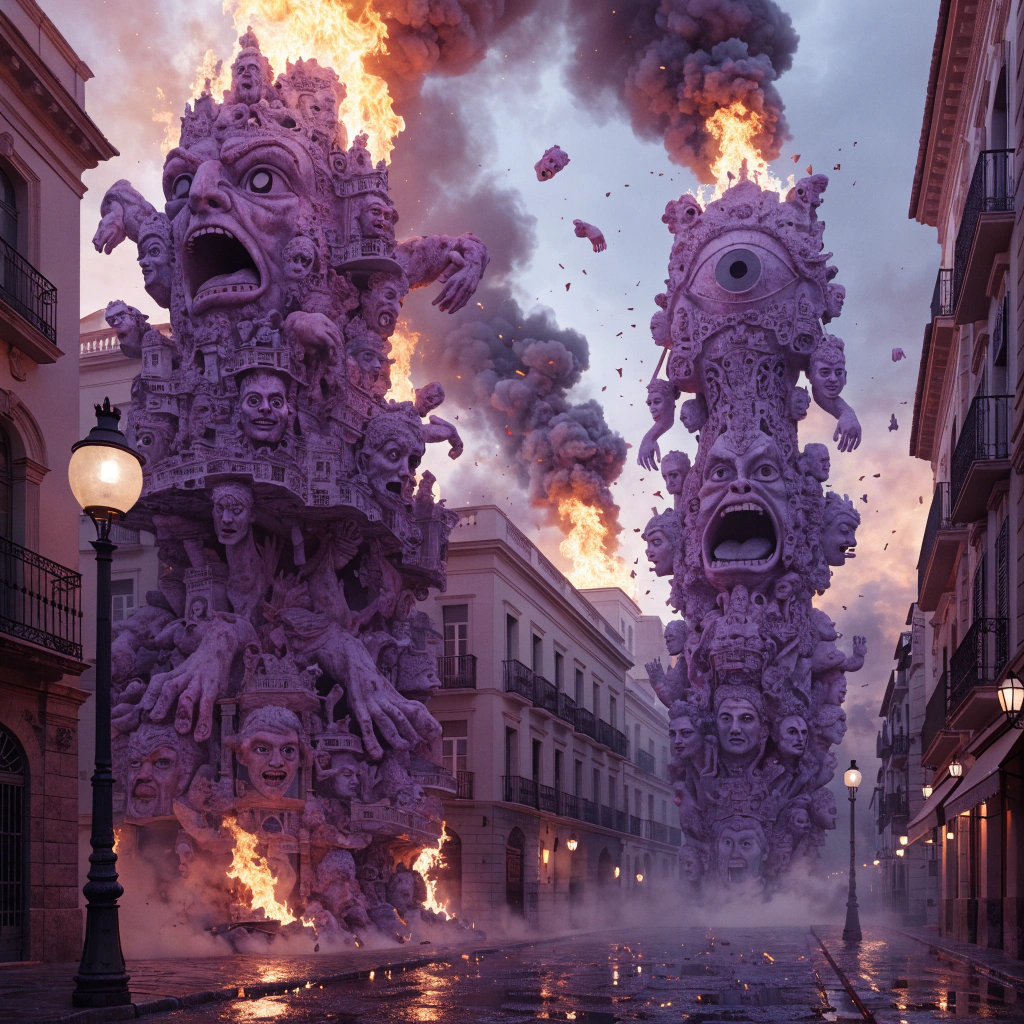
バレンシアの楽しいお祭り:ファリャス
スペインにバレンシアという町があります。3月、この町で「ファリャス」というお祭りがあります。これはとても有名で、楽しいお祭りです。
大きい人形がたくさんあります。人形はとてもきれいです。人々は人形を見ます。夜、人形を燃やします。火が大きいです。
ファリャスは火の祭りです。みんなでこのお祭りを楽しみます。バレンシアは元気になります。
文法スポットライト
パターン: 〜という〜
"バレンシアという町"
名前を紹介するときに使います。「AというB」は「Aという名前のB」という意味です。例えば、「犬という動物」は「犬という名前の動物」です。
パターン: 〜があります
"大きい人形がたくさんあります。"
物があることを言います。場所や数を説明するときによく使います。例えば、「ここに本があります」は「ここに本がある」という意味です。
理解度をチェック
10 問 · A1 初級 · 無料プレビュー 1回
この記事で学んだことをテストしよう。全問正解してXPを獲得!
問題の内訳
ファリャスはどこでありますか?
あなたの回答:
正解: バレンシア
ファリャスは1月のお祭りです。
あなたの回答:
正解: 間違い
「有名」の意味は何ですか?
あなたの回答:
正解: 多くの人が知っている
夜、人形を_____。
あなたの回答:
正解: 燃やします
スペインの火祭り:ファヤス
「ファヤス」はスペインのバレンシアという街で毎年3月に行われる大きなお祭りです。これは、サン・ホセという聖人を祝う火の祭りです。バレンシアの街は、このお祭りの時、とてもにぎやかになります。
お祭りでは、「ファヤス」という大きな人形が街のあちこちに作られます。これらの人形は、たくさんの「ニノット」という小さな人形からできています。ニノットは、面白い顔や有名な人の形をしていて、人々はそれを見て笑います。ファヤスはとても高くて、芸術作品のようです。
お祭りの最後の日、これらの美しいファヤスは全部燃やされます。火はとてもきれいで、そして少し悲しいです。でも、これは新しい春を始めるための大切な意味があります。
ファヤスは、火と芸術と人々の心が一つになる、とてもユニークで有名なお祭りです。毎年、世界中からたくさんの人がこのお祭りを見に来ます。
文法スポットライト
パターン: 〜て、〜ます/でした
"ニノットは、面白い顔や有名な人の形をしていて、人々はそれを見て笑います。"
「〜て」形は、二つの文や動作をつなぐときに使います。前の動作が終わってから次の動作が起こることを示したり、状態を説明したりします。この文では「形をしている」という状態と「笑う」という動作をつないでいます。
パターン: 〜からできています
"これらの人形は、たくさんの「ニノット」という小さな人形からできています。"
「〜からできています」は、何かが何の材料や部分から作られているか、成り立っているかを説明するときに使います。この文では、大きな人形が小さな人形から作られていることを示しています。
理解度をチェック
11 問 · A2 初級 · 無料プレビュー 1回
この記事で学んだことをテストしよう。全問正解してXPを獲得!
問題の内訳
ファヤスはいつ行われますか?
あなたの回答:
正解: 3月
ファヤスはスペインのバレンシアという街で行われます。
あなたの回答:
正解: 正しい
「燃やす」はどういう意味ですか?
あなたの回答:
正解: 火をつける
ファヤスは毎年_____に行われるお祭りです。
あなたの回答:
正解: 3月
お祭りの最後の日、ファヤスはどうなりますか?
あなたの回答:
正解: 燃やされます
スペインの火祭り:バレンシアの「ファリャス」
スペインのバレンシア市では、毎年3月に「ファリャス」というお祭りが開催されます。これは大工の守護聖人である聖ヨセフを祝う、とてもユニークで賑やかなお祭りです。この期間中、街は炎と芸術、そして地域社会の活気に満ちた場所に変わります。
ファリャスの最も特徴的な部分は、「ファリャ」と呼ばれる巨大な彫刻です。これらは、政治家や有名人、あるいは社会の一般的なタイプの人々を面白く、時には批判的に描いた「ニノット」という人形で作られています。ニノットは木や紙、ワックスなどで作られ、物語を語るように街のあちこちに飾られます。これらの彫刻はとても大きく、時には数階建てのビルの高さにもなります。人々は数ヶ月かけてこれらのファリャを丁寧に作ります。
お祭りのクライマックスは、「クレマ」(燃焼)と呼ばれます。3月19日の夜、街中のすべてのファリャが燃やされます。これは新しい春の始まりを象徴し、過去の悪いことを清める意味があります。炎が夜空を明るく照らし、人々は花火や音楽と共にこの瞬間を楽しみます。
ファリャスは、ただのお祭りではありません。それはバレンシアの豊かな文化と伝統、そして人々の創造性を世界に示す大切なイベントです。もしあなたがスペインを訪れる機会があれば、ぜひこの素晴らしい火の芸術を体験してみてください。きっと忘れられない思い出になるでしょう。
文法スポットライト
パターン: 受け身(〜られます/〜れます)
"スペインのバレンシア市では、毎年3月に「ファリャス」というお祭りが開催されます。"
この形は、動作の受け身を表します。誰かに何かをされる状況や、自然に何かが起こる状況を説明するのに使います。動詞のグループによって形が変わりますが、ここでは「開催する」の受け身形「開催される」が使われています。
パターン: 名詞を修飾する節(〜という名詞 / 動詞の普通形+名詞)
"ファリャスの最も特徴的な部分は、「ファリャ」と呼ばれる巨大な彫刻です。"
この文法は、名詞を詳しく説明するときに使われます。「〜という名詞」や「〜と呼ばれる名詞」は、その名詞の名前や内容を説明するのに便利です。また、「動詞の普通形+名詞」は、その名詞がどのような動作をするか、またはされたかを説明します。
理解度をチェック
11 問 · B1 中級 · 無料プレビュー 1回
この記事で学んだことをテストしよう。全問正解してXPを獲得!
ファリャスはいつ開催されますか?
問題の内訳
ファリャスはいつ開催されますか?
あなたの回答:
正解: 3月
ファリャスでは、小さい人形だけが飾られます。
あなたの回答:
正解: 間違い
記事の中で、「クレマ」とは何ですか?
あなたの回答:
正解: 彫刻を燃やすこと
ファリャスは、大工の守護聖人である聖ヨセフを______お祭りです。
あなたの回答:
正解: 祝う
ファリャスのお祭りがあるのはスペインのどの都市ですか?
あなたの回答:
正解: バレンシア
The Fiery Tradition of Valencia: Art, Satire, and Ash
Every March, the Mediterranean city of Valencia undergoes a dramatic transformation as it prepares for Las Fallas, a festival of fire that has been celebrated for centuries. Primarily held to commemorate Saint Joseph, the patron saint of carpenters, the event has evolved from a simple tradition into a world-renowned display of art and social commentary. Historically, carpenters would burn old wood and scraps at the end of winter; today, this practice has manifested as a sophisticated urban gallery.
The heart of the festival lies in the creation of the 'fallas'—monumental structures made of wood and papier-mâché. These figures, often reaching several stories in height, are populated by 'ninots,' which are smaller individual puppets. These ninots frequently depict politicians and celebrities, serving as satirical critiques of contemporary society. Despite the immense craftsmanship required to build them, these structures are ultimately ephemeral, designed for a singular, explosive purpose. The artists, known as 'falleros,' spend months in workshops meticulously painting and sculpting these figures, which often address controversial themes with a biting sense of humor.
Throughout the week, the city is filled with the thunderous sound of the 'mascletà,' a daily pyrotechnic display that emphasizes rhythm and acoustic power over visual color. While tourists might find the noise overwhelming, locals consider the vibrations an essential part of the Valencian identity. Furthermore, the streets are crowded with participants wearing elaborate traditional costumes, reinforcing the sense of community heritage. This period is characterized by a constant sensory bombardment, from the smell of gunpowder to the sight of millions of flowers offered to the Virgin Mary.
The festival reaches its climax on the night of March 19th during the 'Cremà.' In a symbolic act of renewal, every monument in the city is set ablaze. Having spent an entire year meticulously planning and constructing these masterpieces, the artists must stand by as their work is incinerated. This ritual represents the transition from winter to spring and the rejection of the old to make way for the new. Although only one 'ninot' is spared from the flames each year by public vote, the spirit of the festival remains unextinguished.
In 2016, UNESCO recognized Las Fallas as part of the Intangible Cultural Heritage of Humanity. This status highlights the festival’s importance not just as a tourist attraction, but as a complex social phenomenon that combines traditional craftsmanship with modern artistic expression. Consequently, Valencia continues to draw global crowds who are eager to witness this unique intersection of art, satire, and ash.
文法スポットライト
パターン: Present Perfect Continuous
"a festival of fire that has been celebrated for centuries."
This tense is used to describe an action that started in the past and is still continuing or has a strong connection to the present. It is formed using 'has/have been' + the '-ing' form of the verb.
パターン: Passive Voice
"every monument in the city is set ablaze."
The passive voice is used when the focus is on the action or the object being acted upon, rather than the person performing the action. It is formed with the verb 'to be' and the past participle.
パターン: Perfect Participle Clause
"Having spent an entire year meticulously planning and constructing these masterpieces, the artists must stand by..."
This structure is used to show that one action was completed before another began. It adds a formal tone and provides context or reasons for the following clause.
理解度をチェック
11 問 · B2 中上級 · 無料プレビュー 1回
この記事で学んだことをテストしよう。全問正解してXPを獲得!
What is the primary symbolic reason for burning the monuments during the Cremà?
問題の内訳
What is the primary symbolic reason for burning the monuments during the Cremà?
あなたの回答:
正解: To represent renewal and the transition to spring
Ninots are exclusively used to depict religious figures and saints.
あなたの回答:
正解: 間違い
What does 'ephemeral' mean?
あなたの回答:
正解: Lasting for a very short time
The festival reaches its _____ on the night of March 19th during the 'Cremà.'
あなたの回答:
正解: climax
What distinguishes the 'mascletà' from typical firework displays?
あなたの回答:
正解: It focuses on rhythm and sound rather than color
情熱と風刺が燃え上がる祭典:バレンシアの火祭り「ファヤス」の深層
スペイン東部の地中海沿いに位置するバレンシア市は、毎年3月、世界でも類を見ない壮大な祭典「ファヤス」に沸き返ります。この祭りは、単なる地域のお祭りという枠を超え、芸術、風刺、そして地域社会の絆が火花を散らす、まさに生命力に満ちた文化現象と言えましょう。その起源は、大工の守護聖人である聖ヨセフを祝う伝統に根ざしており、冬の終わりに不要な木材を燃やす習慣が、やがて巨大な造形物を焼き払う現在の形へと昇華していったとされています。
ファヤスの主役は何と言っても「ファヤ」と呼ばれる巨大な人形、あるいはモニュメント群です。これらは数ヶ月をかけて専門の職人集団「ファジェロ」によって制作され、中には数階建てのビルに匹敵する高さに達するものも珍しくありません。各ファヤは、その年の政治や社会問題、有名人などを痛烈なユーモアと鋭い批判精神をもって風刺した「ニノット」と呼ばれる個々の人形たちで構成されています。街角の至る所に突如として現れるこれらのファヤは、まるで野外美術館さながらの様相を呈し、訪れる人々の目を楽しませるとともに、思考を促す触媒としての役割も果たします。その精緻な造形と色彩の豊かさは、一見すると純粋な芸術作品のようでありながら、その裏には社会に対する痛烈なメッセージが込められているのです。
祭りの間、バレンシアの街は活気に満ち溢れます。伝統的な衣装をまとった人々が行進し、花火が夜空を彩り、パエリアの香りが街中に漂います。しかし、ファヤスの真骨頂は、最終日の深夜に訪れる「クレマ」(火祭り)にこそあります。この夜、何ヶ月もの労力と情熱が注ぎ込まれてきたファヤの全てが、一斉に火を放たれ、炎と煙の中にその姿を消していくのです。この瞬間は、はかなくも美しい、まさに「生と死、創造と破壊」の象徴であり、見る者に強烈な印象を与えます。子どもたちのファヤである「ファヤ・インファンティル」は少し早い時間に燃やされますが、これもまた、世代を超えて受け継がれる文化の連続性を感じさせる一幕です。
ファヤスは、単なる観光イベントではありません。それは、バレンシアの人々が自らの歴史、文化、そして共同体意識を再確認し、次世代へと継承していくための重要な儀式なのです。現代社会において、これほど大規模かつ公然と風刺が行われる祭りは稀有であり、その自由な表現の精神は高く評価されるべきでしょう。燃え尽きることで新たな創造へと繋がる、この循環がファヤスの本質であり、世界中の人々を魅了し続ける理由に他なりません。この祭りを通じて、私たちは芸術の力、共同体の結束、そして変化を受け入れることの美しさを改めて見出すことができるのではないでしょうか。
文法スポットライト
パターン: ~と言えましょう
"この祭りは、単なる地域のお祭りという枠を超え、芸術、風刺、そして地域社会の絆が火花を散らす、まさに生命力に満ちた文化現象と言えましょう。"
「~と言えましょう」は、「~と言えるでしょう」の丁寧かつやや改まった表現です。話し手の推量や結論を丁寧に述べる際に用いられ、客観的な見解を示す場面でよく使われます。動詞の辞書形や名詞の後に接続します。
パターン: ~に他なりません
"この循環がファヤスの本質であり、世界中の人々を魅了し続ける理由に他なりません。"
「~に他なりません」は、「~である」という断定を強調する表現です。「~であるに違いない」「~以外のものではない」という意味合いを持ち、結論や本質を力強く述べる際に用いられます。名詞や動詞の終止形に接続します。
パターン: ~さながらの様相を呈し
"街角の至る所に突如として現れるこれらのファヤは、まるで野外美術館さながらの様相を呈し、訪れる人々の目を楽しませるとともに、思考を促す触媒としての役割も果たします。"
「~さながら」は「~そっくり」や「~のようだ」という意味で、比喩を強調する際に使われます。「様相を呈する」は「ある状態や様子を示す」という硬い表現で、二つを組み合わせることで、まるで~であるかのような状況を客観的かつ具体的に描写します。
理解度をチェック
12 問 · C1 上級 · 無料プレビュー 1回
この記事で学んだことをテストしよう。全問正解してXPを獲得!
ファヤスの祭りは毎年いつ、どこで開催されますか?
問題の内訳
ファヤスの祭りは毎年いつ、どこで開催されますか?
あなたの回答:
正解: 毎年3月にバレンシアで
ファヤスの起源は、大工の守護聖人である聖ヨセフを祝う伝統に根ざしています。
あなたの回答:
正解: 正しい
記事に出てくる「痛烈」という言葉の最も適切な意味は何ですか?
あなたの回答:
正解: 批判や攻撃が非常に厳しく、心に深く突き刺さるようなさま
ファヤスは、単なる観光イベントではありません。それは、バレンシアの人々が自らの歴史、文化、そして共同体意識を再確認し、次世代へと継承していくための重要な_____なのです。
あなたの回答:
正解: 儀式
「ニノット」とは何ですか?
あなたの回答:
正解: ファヤを構成する、政治や社会を風刺した個々の人形のこと
子どもたちのファヤである「ファヤ・インファンティル」は、大人のファヤよりも遅い時間に燃やされます。
あなたの回答:
正解: 間違い
The Ephemeral Metamorphosis of Valencia: An Analytical Inquiry into the Socio-Cultural Tapestry of Las Fallas
Should one venture into the labyrinthine streets of Valencia during the vernal equinox, one is confronted with a spectacle that defies mundane classification. Las Fallas is not merely a festival; it is a profound socio-political exorcism, an ephemeral metamorphosis where the city is reclaimed by its populace through the medium of fire and satire. At its core, the celebration commemorates Saint Joseph, the patron saint of carpenters, yet its contemporary manifestation has evolved into a sophisticated critique of the global zeitgeist. To understand Las Fallas is to acknowledge the intrinsic human proclivity for creation and destruction, a cycle that finds its most visceral expression in the towering monuments known as fallas.
These structures, often reaching dizzying heights of several stories, are populated by ninots—caricatured figures that serve as the primary vehicles for iconoclasm. These are not merely artistic endeavors; they are sharp-tongued commentaries on the political landscape, celebrities, and social archetypes. The craftsmanship involved is staggering, requiring months of labor by specialized artisans who blend traditional carpentry with modern materials. Yet, there is a poignant irony inherent in the process: the more exquisite the detail, the more profound the loss when the entire structure is eventually consigned to the flames. It is imperative that the observer recognize this as a deliberate act of detachment, a rejection of the permanence that modern society so desperately seeks to commodify.
The sensory experience of Las Fallas is dominated by a rhythmic cacophony. The Mascletà, a daily pyrotechnic display, is perhaps the most misunderstood element by the uninitiated. It is not a fireworks show in the visual sense, but rather a composition of sound—a percussive architecture that vibrates through the very marrow of the spectators. This auditory onslaught serves as a precursor to the final act of the festival. One might argue that the collective adrenaline fostered by these explosions acts as a psychological priming for the catharsis of the final night.
On the night of San José, the city undergoes La Cremà. It is through this destruction that the festival achieves its ultimate purpose. As the fallas are engulfed in fire, the satirical effigy of the past year’s grievances is purged. This is not a mournful event; rather, it is a celebratory release. The flames do not signify an end, but a necessary clearing of the slate for the following year's innovations. Critics might view the ecological and financial cost as excessive, but for the Valencian people, the sovereignty of tradition over utilitarian logic remains absolute.
Furthermore, the festival functions as a vital organ of community cohesion. The 'comissions falleres'—neighborhood associations—work year-round to fund and organize their respective monuments. This grassroots involvement ensures that the festival remains insulated from total commercialization, preserving a sense of local identity in an increasingly homogenized world. Even if the evanescent nature of the art seems paradoxical in an era of digital archiving, Las Fallas persists as a testament to the power of the tangible and the temporal. It is a reminder that some truths are best expressed through their own disappearance, leaving behind only the ash of memory and the anticipation of renewal.
文法スポットライト
パターン: Inverted Conditionals
"Should one venture into the labyrinthine streets of Valencia during the vernal equinox, one is confronted with a spectacle that defies mundane classification."
This formal structure replaces 'if' by inverting the subject and the auxiliary verb 'should'. It is used in C2 level prose to add a scholarly or literary tone to hypothetical situations.
パターン: Subjunctive Mood
"It is imperative that the observer recognize this as a deliberate act of detachment."
The subjunctive 'recognize' (rather than 'recognizes') is used after adjectives of urgency or importance. It emphasizes the necessity of the action in a formal context.
パターン: Cleft Sentences
"It is through this destruction that the festival achieves its ultimate purpose."
This structure focuses on a specific part of the sentence (the method of destruction) by starting with 'It is... that'. It is a rhetorical device used to emphasize the most important information.
理解度をチェック
12 問 · C2 マスター · 無料プレビュー 1回
この記事で学んだことをテストしよう。全問正解してXPを獲得!
What is the author's primary perspective on the destruction of the 'fallas'?
問題の内訳
What is the author's primary perspective on the destruction of the 'fallas'?
あなたの回答:
正解: It is a necessary act of socio-political catharsis and renewal.
The Mascletà is described as a visual fireworks display intended for entertainment.
あなたの回答:
正解: 間違い
Which word describes the defining spirit or mood of a particular historical period?
あなたの回答:
正解: Zeitgeist
The author argues that the festival remains insulated from commercialization due to _____ involvement.
あなたの回答:
正解: grassroots
How does the author characterize the 'ninots'?
あなたの回答:
正解: As satirical vehicles for criticizing contemporary society.
The 'comissions falleres' are neighborhood associations that work throughout the year.
あなたの回答:
正解: 正しい
「ファヤス」 は 楽しい お祭り です
これは スペイン の お祭り です。 名前 は ファヤス です。 バレンシア で 3月 に あります。 大きい 人形 が たくさん あります。 火 も あります。 とても 楽しい です。
文法スポットライト
パターン: Noun です
"これは スペイン の お祭り です。"
「です」は、文 の 終わり に 使う 言葉 です。これ は 何か を 説明 する 時 に 使います。例えば、「これ は ペン です。」
理解度をチェック
9 問 · A0 プレビギナー · 無料プレビュー 1回
この記事で学んだことをテストしよう。全問正解してXPを獲得!
お祭り の 名前 は 何 ですか。
問題の内訳
お祭り の 名前 は 何 ですか。
あなたの回答:
正解: ファヤス
お祭り は 3月 に あります。
あなたの回答:
正解: 正しい
「大きい」 の 意味 は 何 ですか。
あなたの回答:
正解: Big

