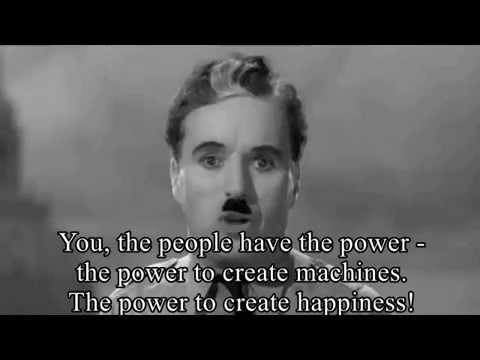
machines 30秒で
- Machines are devices with moving parts or electronic circuits that use energy to perform specific tasks efficiently.
- They range from simple tools like pulleys to complex systems like computers and industrial robots.
- The word is a plural count noun, requiring plural verbs and pronouns in a sentence.
- Metaphorically, 'machines' can describe highly organized systems, such as political or marketing organizations.
The word machines refers to complex mechanical or electronic systems designed to perform specific tasks by converting energy into functional output. In the modern era, machines are the backbone of human civilization, ranging from the simple pulleys used in ancient construction to the sophisticated quantum computers of the twenty-first century. When we speak of machines, we are generally referring to entities that possess moving parts or internal circuitry that automates a process which would otherwise require significant manual human effort. The term is ubiquitous in industrial, domestic, and scientific contexts. For instance, in a factory setting, machines are the massive assembly lines that weld car frames; in a household, they are the appliances like dishwashers and dryers that simplify daily chores. The evolution of machines has transitioned from purely mechanical devices, which relied on physical gears and levers, to electronic and digital machines that process information at lightning speed. Understanding the word machines requires recognizing that it implies a level of complexity beyond a simple tool; while a hammer is a tool, a pneumatic nail gun is a machine because it utilizes an external power source to automate the driving of nails.
- Industrial Context
- In manufacturing, machines are the primary drivers of production, enabling mass manufacturing and precision engineering that humans cannot achieve alone.
The factory floor was filled with the rhythmic humming of heavy machines working in perfect unison.
Furthermore, the word is often used metaphorically to describe systems or organizations that function with cold, calculated efficiency. We might refer to a political party as a 'political machine' if it operates with a highly organized, almost mechanical precision to win elections. This metaphorical usage highlights the predictable, repetitive, and often impersonal nature of machines. In the realm of science fiction and philosophy, machines often represent the intersection of humanity and technology, raising questions about where biological life ends and artificial intelligence begins. When you use the word machines, you are invoking a history of human ingenuity and the desire to transcend physical limitations through engineering. Whether you are talking about the 'machines of war' or 'simple machines' taught in elementary physics, the core concept remains the same: a device that makes work easier or more efficient by leveraging physical or logical principles.
- Domestic Context
- Household machines like washing machines and refrigerators have fundamentally changed the domestic landscape, freeing up hours of labor for individuals.
Modern machines are increasingly integrated with smart technology, allowing them to communicate with our phones.
In academic and technical writing, machines are categorized by their function and energy source. We have hydraulic machines, thermal machines, and electrical machines. Each category serves a distinct purpose in the global economy. The transition from the first industrial revolution, which focused on steam-powered machines, to the fourth industrial revolution, which focuses on cyber-physical systems, illustrates the rapid advancement of this concept. Today, we even speak of 'learning machines' in the context of machine learning and artificial intelligence, where the 'machine' is not a physical object with gears but a set of algorithms running on a processor. This expansion of the definition shows how deeply the concept of the machine is embedded in our understanding of progress and logic. When people use this word, they are often acknowledging the power of technology to reshape the world, for better or for worse, by replacing manual labor with automated precision.
- Scientific Context
- In physics, the six simple machines—lever, wheel and axle, pulley, inclined plane, wedge, and screw—form the basis of all complex mechanical devices.
Even the most complex machines can be broken down into combinations of these fundamental mechanical advantages.
Ultimately, machines are the tools of the modern age. They represent the culmination of thousands of years of human trial and error. From the printing press that revolutionized the spread of knowledge to the medical machines that save lives in hospitals every day, machines are inseparable from the human experience. They are not just objects; they are the physical manifestation of human problem-solving. When you observe the world around you, you will see machines everywhere: the elevator that lifts you to your office, the car that drives you home, and the computer you use to read this text. Each of these machines is a testament to our ability to manipulate the physical world to suit our needs and desires.
Using the word machines correctly involves understanding its role as a plural count noun. Because it is plural, it must always be paired with plural verb forms and plural pronouns. For example, you would say 'The machines are running,' not 'The machines is running.' This distinction is crucial for maintaining grammatical accuracy in both spoken and written English. Furthermore, 'machines' is often modified by adjectives that describe their function, state, or complexity. Common modifiers include 'heavy,' 'industrial,' 'complex,' 'broken,' 'automated,' and 'sophisticated.' When you describe a factory, you might say, 'The facility is equipped with heavy machines that process raw steel.' Here, 'heavy' provides a clear picture of the scale and power of the equipment being discussed.
- Subject-Verb Agreement
- Always use plural verbs: 'The machines require maintenance' vs. 'The machine requires maintenance.'
These machines operate twenty-four hours a day to meet the high demand for the product.
In more complex sentence structures, 'machines' can serve as the object of a preposition or the direct object of a verb. For instance, 'The engineer is specialized in repairing textile machines.' In this case, 'textile' acts as a noun adjunct, specifying the type of machines. You can also use 'machines' in passive voice constructions, which are common in technical writing: 'New machines were installed in the laboratory last month.' This shifts the focus from who installed them to the machines themselves. Additionally, the word can be used in the possessive form, though it is less common than using 'of' phrases. 'The machines' components' is grammatically correct, but 'the components of the machines' often sounds more natural in formal writing.
- Using Adjectives
- Descriptive adjectives help specify the nature of the machines: 'autonomous machines,' 'legacy machines,' or 'efficient machines.'
We need to replace these outdated machines with more energy-efficient models.
When writing about technology, you might encounter the phrase 'man vs. machine.' In this context, 'machine' is often used in the singular to represent technology as a whole, but 'machines' can be used to refer to the specific devices involved. For example, 'In the future, machines will perform most of the tasks currently done by humans.' This sentence uses 'machines' to generalize about a group of various technological entities. Another important aspect of usage is the distinction between 'machines' and 'engines.' While all engines are machines, not all machines are engines. An engine specifically generates power, while a machine uses power to do work. Therefore, you would say 'The machines are powered by electric engines,' showing the relationship between the two terms.
- Prepositional Phrases
- Common phrases include 'parts for machines,' 'power for machines,' and 'operators of machines.'
The technician is responsible for the maintenance of all machines in the assembly line.
Finally, consider the register of your sentence. In informal settings, you might call a complex machine a 'contraption' or a 'gadget.' In formal or technical settings, 'machines' or 'systems' is more appropriate. For instance, 'The vending machines in the lobby are out of order' is a neutral, everyday sentence. In contrast, 'The centrifugal machines utilized in the enrichment process are highly sensitive' is a formal, scientific sentence. By choosing the right modifiers and surrounding vocabulary, you can tailor the use of 'machines' to fit any context perfectly. Remember that the word 'machines' carries a sense of functionality and purpose, so ensure that the context of your sentence supports this meaning.
The word machines is heard in a vast array of environments, from the mundane to the highly specialized. In daily life, you will hear it most frequently in the context of household appliances. People talk about their 'washing machines,' 'sewing machines,' and 'coffee machines.' These are the devices that populate our homes and simplify our lives. If you visit a gym, the instructor might tell you to 'start on the weight machines' or 'clean the machines after use.' In these settings, the word is used to categorize specific pieces of equipment designed for physical exercise. Similarly, in public spaces, you might hear announcements about 'ticket machines' at a train station or 'vending machines' in a shopping mall. In all these instances, 'machines' serves as a clear, functional label for automated service providers.
- Workplace Dialogue
- In offices, you might hear: 'The copy machines are jammed again,' or 'We need to upgrade our server machines.'
'Please make sure all machines are powered down before you leave the workshop,' the supervisor shouted.
In the news and media, the word 'machines' often appears in discussions about the future of work and artificial intelligence. You will hear journalists and experts talk about 'intelligent machines' or 'autonomous machines' like self-driving cars and drones. These discussions often center on the societal impact of these technologies, such as the fear that 'machines will take our jobs.' In this context, the word takes on a more abstract and sometimes slightly threatening tone, representing the force of automation. You will also hear the word in political commentary, where 'political machines' are discussed as powerful organizations that control votes and influence. This metaphorical use is common in history documentaries and political science lectures, where it describes the efficient but often corrupt systems of urban politics in the late 19th and early 20th centuries.
- Scientific Media
- Documentaries about space exploration often mention 'robotic machines' or 'scientific machines' used to explore Mars.
The narrator explained how these machines can survive the harsh environment of outer space.
In pop culture, particularly in science fiction movies and books, 'machines' is a central theme. From the 'Terminator' series to 'The Matrix,' machines are often portrayed as sentient beings that have rebelled against their human creators. You will hear characters refer to 'the machines' as a collective enemy. This has deeply influenced how the word is perceived in popular consciousness, often associating it with cold logic and a lack of emotion. Conversely, in the world of music, the band 'Rage Against the Machine' uses the word to symbolize the oppressive structures of government and corporate power. Whether it's a technician talking about 'legacy machines' in a server room or a philosopher discussing 'Turing machines,' the word is a constant presence in our discourse about the world we have built.
- Educational Settings
- Teachers use the word when explaining physics: 'Today we will study how simple machines multiply force.'
'Without these machines, the pyramids could never have been built,' the historian noted.
Finally, in the business world, you will hear about 'marketing machines' or 'sales machines.' These terms describe departments or strategies that are so well-organized and effective that they seem to run themselves. When a CEO says, 'We've built a world-class sales machine,' they are praising the efficiency and reliability of their team and processes. This shows the versatility of the word, moving from a physical object to a metaphor for excellence and systematic success. No matter where you are—in a lab, a factory, a gym, or a boardroom—the word 'machines' is a fundamental part of the vocabulary used to describe how things work and how we get things done.
One of the most frequent errors learners make with the word machines is confusing it with the uncountable noun 'machinery.' While they are related, they are used differently in sentences. 'Machines' refers to individual, countable units. You can have one machine, two machines, or many machines. 'Machinery,' on the other hand, is a collective term that refers to machines in general or the working parts of a machine. You cannot say 'I saw three machineries'; instead, you must say 'I saw three pieces of machinery' or simply 'I saw three machines.' This is a classic count vs. non-count noun mistake that can make a speaker sound less fluent. For example, 'The factory has a lot of machines' is correct, and 'The factory has a lot of machinery' is also correct, but 'The factory has many machineries' is incorrect.
- Countable vs. Uncountable
- Use 'machines' for specific items you can count. Use 'machinery' for a general group or internal parts.
Incorrect: We need to buy new machineries for the plant. Correct: We need to buy new machines for the plant.
Another common mistake is the confusion between 'machines' and 'engines' or 'motors.' While these terms are related, they are not interchangeable. An engine or a motor is a specific type of machine that converts energy (like heat or electricity) into motion. A machine is a broader term that includes anything from a simple lever to a complex computer. If you call a washing machine an 'engine,' people will be confused. Similarly, if you refer to a car's engine as a 'machine,' it is technically correct but lacks the precision expected in mechanical contexts. It is better to say 'The car's engine is powerful' rather than 'The car's machine is powerful.' Precision in vocabulary helps convey your meaning more effectively, especially in technical fields.
- Subject-Verb Agreement Errors
- Learners often forget the 's' at the end of 'machines' when talking about multiple items, or they use a singular verb with the plural noun.
Incorrect: The machines works well. Correct: The machines work well.
A third mistake involves the pronunciation and spelling. Some learners might confuse 'machines' with 'mechanics.' 'Mechanics' are the people who fix machines, or the branch of physics that deals with motion. You cannot say 'I am going to fix the mechanics' if you mean the devices. You fix the machines. Also, the spelling of 'machines' can be tricky because of the 'ch' which sounds like 'sh' (/məˈʃiːnz/). Some might try to spell it with an 'sh' or forget the 'e' at the end. Ensuring you have the correct spelling and pronunciation is vital for clear communication. Furthermore, avoid using 'machines' as a verb. While you can 'machine' a part (meaning to shape it with a machine), this is a specialized technical use. In general English, 'machines' is almost always a noun.
- Overgeneralization
- Don't call every electronic device a 'machine'. A smartphone is usually called a 'device' or 'phone', not a 'machine'.
Incorrect: I lost my calling machine. Correct: I lost my phone.
Lastly, be careful with the word 'machine' in compound nouns. For example, 'washing machine' is a fixed phrase. You shouldn't say 'wash machine' or 'clothes machine.' Similarly, 'answering machine' and 'vending machine' are specific terms. Using the wrong first word can make you sound unnatural. Also, remember that 'machines' is the plural of 'machine.' If you are talking about only one, you must drop the 's.' It sounds simple, but in the heat of conversation, it's easy to mix up singular and plural forms. By paying attention to these common pitfalls—countability, precision, spelling, and fixed phrases—you can use the word 'machines' with the confidence of a native speaker.
While machines is a very useful and common word, there are many synonyms and related terms that can provide more precision or variety in your writing and speech. The most direct alternative is often equipment. However, 'equipment' is uncountable and usually refers to a set of tools or devices needed for a specific purpose. For example, 'The laboratory has state-of-the-art equipment.' This includes the machines, but also the glassware, computers, and furniture. Another close synonym is apparatus. This word is more formal and often used in scientific or technical contexts to describe a complex set of equipment or a specific machine used for an experiment. 'The breathing apparatus was essential for the divers.' Here, 'apparatus' sounds more professional than 'machine.'
- Machines vs. Devices
- 'Devices' usually refers to smaller, often electronic items like phones or tablets. 'Machines' usually implies something larger or more mechanical.
While a smartphone is a device, a car assembly robot is a machine.
In the world of technology, gadget and gizmo are informal words for small, clever machines or devices. You might call a new, innovative kitchen tool a 'gadget.' These words often imply that the item is novel or perhaps a bit unnecessary. On the other end of the spectrum, mechanism refers to the internal parts of a machine that make it work. You might say, 'The clock's mechanism is very intricate.' This focuses on the gears and springs inside rather than the whole object. Instrument is another alternative, typically used for machines that measure something or are used for delicate work, like 'surgical instruments' or 'musical instruments.' Using 'instrument' suggests a high level of precision and skill in its operation.
- Machines vs. Implements
- 'Implements' is an old-fashioned or formal word for tools, often used in agriculture (e.g., 'farming implements').
The museum displayed ancient agricultural implements alongside modern harvesting machines.
When discussing automation, automaton or robot are specific types of machines. A robot is a machine capable of carrying out a complex series of actions automatically, especially one programmable by a computer. An automaton is a more traditional term for a self-operating machine, often one that mimics human or animal movement. In business, you might hear the word infrastructure, which refers to the underlying system of machines and facilities that support an organization or city. 'The city's infrastructure includes its power plants and water treatment machines.' By choosing between these alternatives—equipment, apparatus, device, gadget, mechanism, instrument, robot, or infrastructure—you can convey a much more specific meaning than by simply using 'machines' every time.
- Machines vs. Engines
- Engines are the power source; machines are the whole system that uses that power to perform a task.
The steam engine was the heart of the industrial machines of the 19th century.
In summary, the choice of word depends on the context and the specific characteristics of the machine you are describing. If it's small and electronic, 'device' is best. If it's large and industrial, 'machinery' or 'equipment' works well. If it's precise and scientific, 'instrument' or 'apparatus' is appropriate. If it's a part of a larger whole, 'mechanism' or 'unit' is the way to go. Expanding your vocabulary in this way allows you to describe the world with greater clarity and sophistication, showing that you understand the subtle differences between the many 'machines' that make up our modern existence.
How Formal Is It?
豆知識
The phrase 'Deus ex machina' (God from the machine) comes from the Greek theater where a machine (a crane) was literally used to bring an actor playing a god onto the stage to solve the plot's problems.
発音ガイド
- Pronouncing the 'ch' as 'k' (like in 'mechanic'). It should be 'sh'.
- Stressing the first syllable (MA-chines).
- Pronouncing the final 's' as an 's' instead of a 'z'.
- Shortening the 'ee' sound in the second syllable.
- Adding an extra syllable at the end.
難易度
Common word, but technical contexts can be harder.
Spelling and countability (vs machinery) are key.
Pronunciation of 'ch' as 'sh' is a common hurdle.
Easily recognized in context.
次に学ぶべきこと
前提知識
次に学ぶ
上級
知っておくべき文法
Plural Noun Agreement
The machines *are* (not is) ready.
Countable vs Uncountable
Many machines vs Much machinery.
Noun Adjuncts
Coffee machines, where 'coffee' describes the type.
Passive Voice
The machines were built in Germany.
Compound Nouns
Washing machine is a single concept.
レベル別の例文
I have two washing machines.
J'ai deux machines à laver.
Plural noun 'machines' follows the number 'two'.
The coffee machines are in the kitchen.
Les machines à café sont dans la cuisine.
Use 'are' with the plural 'machines'.
Do you like big machines?
Aimes-tu les grandes machines ?
Question form with 'do'.
These machines make toys.
Ces machines fabriquent des jouets.
Demonstrative 'these' matches plural 'machines'.
The machines are very loud.
Les machines sont très bruyantes.
Adjective 'loud' describes the noun.
We use machines every day.
Nous utilisons des machines tous les jours.
Simple present tense.
Are the machines broken?
Les machines sont-elles en panne ?
Inverted question structure.
Look at those machines!
Regarde ces machines-là !
Imperative sentence.
The factory uses many machines to build cars.
L'usine utilise de nombreuses machines pour construire des voitures.
Quantifier 'many' with plural noun.
Vending machines sell snacks and drinks.
Les distributeurs automatiques vendent des collations et des boissons.
Compound noun 'vending machines'.
He knows how to fix these machines.
Il sait comment réparer ces machines.
Infinitive 'to fix' after 'knows how'.
Modern machines are faster than old ones.
Les machines modernes sont plus rapides que les anciennes.
Comparative structure 'faster than'.
The gym has many exercise machines.
La salle de sport dispose de nombreuses machines d'exercice.
Noun adjunct 'exercise' modifies 'machines'.
Please do not touch the machines.
S'il vous plaît, ne touchez pas aux machines.
Negative imperative.
The machines stop at five o'clock.
Les machines s'arrêtent à cinq heures.
Subject-verb agreement.
Where are the ticket machines?
Où sont les bornes de billets ?
Interrogative 'where'.
Industrial machines have revolutionized the textile industry.
Les machines industrielles ont révolutionné l'industrie textile.
Present perfect tense 'have revolutionized'.
The technician is responsible for maintaining the machines.
Le technicien est responsable de l'entretien des machines.
Gerund 'maintaining' after preposition 'for'.
Some machines can perform tasks more accurately than humans.
Certaines machines peuvent effectuer des tâches plus précisément que les humains.
Adverb 'accurately' modifying 'perform'.
We need to invest in more efficient machines.
Nous devons investir dans des machines plus efficaces.
Adjective 'efficient' in a comparative sense.
The noise from the machines was deafening.
Le bruit des machines était assourdissant.
Prepositional phrase 'from the machines'.
These machines are designed to save time.
Ces machines sont conçues pour gagner du temps.
Passive voice 'are designed'.
The company produces high-tech machines for hospitals.
L'entreprise produit des machines de haute technologie pour les hôpitaux.
Compound adjective 'high-tech'.
How many machines does the factory operate?
Combien de machines l'usine fait-elle fonctionner ?
Question with 'how many' and auxiliary 'does'.
The political machines of the 19th century were incredibly powerful.
Les machines politiques du XIXe siècle étaient incroyablement puissantes.
Metaphorical use of 'machines'.
Autonomous machines are becoming a reality in the transport sector.
Les machines autonomes deviennent une réalité dans le secteur des transports.
Present continuous 'are becoming'.
The complexity of these machines requires specialized training.
La complexité de ces machines nécessite une formation spécialisée.
Abstract noun 'complexity' as subject.
The machines were calibrated to within a fraction of a millimeter.
Les machines ont été calibrées à une fraction de millimètre près.
Passive voice with precise adverbial phrase.
Despite their age, the machines are still in perfect working order.
Malgré leur âge, les machines sont toujours en parfait état de marche.
Concessive phrase 'Despite their age'.
The integration of machines into daily life has changed our habits.
L'intégration des machines dans la vie quotidienne a changé nos habitudes.
Noun phrase 'integration of machines'.
They are developing machines that can learn from their environment.
Ils développent des machines capables d'apprendre de leur environnement.
Relative clause 'that can learn'.
The cost of repairing the machines exceeded the budget.
Le coût de réparation des machines a dépassé le budget.
Gerund 'repairing' as part of a noun phrase.
The sheer scale of the industrial machines was awe-inspiring.
L'ampleur même des machines industrielles était impressionnante.
Adjective 'sheer' for emphasis.
Philosophers debate whether machines can ever truly possess consciousness.
Les philosophes débattent de la question de savoir si les machines pourront un jour véritablement posséder une conscience.
Subordinate clause 'whether machines...'.
The bureaucratic machines of modern states can be difficult to navigate.
Les machines bureaucratiques des États modernes peuvent être difficiles à naviguer.
Metaphorical use in political science.
These machines operate on the principle of centrifugal force.
Ces machines fonctionnent sur le principe de la force centrifuge.
Technical prepositional phrase 'on the principle of'.
The advent of intelligent machines poses significant ethical challenges.
L'avènement des machines intelligentes pose des défis éthiques importants.
Formal noun 'advent'.
The machines were meticulously disassembled for inspection.
Les machines ont été méticuleusement démontées pour inspection.
Adverb 'meticulously' modifying passive verb.
We must consider the environmental impact of these massive machines.
Nous devons tenir compte de l'impact environnemental de ces machines massives.
Modal verb 'must' for necessity.
The machines' output has doubled since the software update.
La production des machines a doublé depuis la mise à jour du logiciel.
Possessive plural 'machines''.
The machinic assemblages described by Deleuze offer a new way to view society.
Les agencements machiniques décrits par Deleuze offrent une nouvelle façon de voir la société.
Specialized philosophical terminology.
The global financial machines operate at speeds beyond human comprehension.
Les machines financières mondiales fonctionnent à des vitesses dépassant l'entendement humain.
Metaphorical use in economics.
The 'ghost in the machine' remains a central problem in the philosophy of mind.
Le 'fantôme dans la machine' reste un problème central dans la philosophie de l'esprit.
Idiomatic philosophical phrase.
These machines are the progeny of centuries of mathematical inquiry.
Ces machines sont le fruit de siècles de recherche mathématique.
Literary word 'progeny'.
The relentless grinding of the machines provided a somber soundtrack to the era.
Le grincement incessant des machines constituait une bande-son sombre pour l'époque.
Evocative literary description.
The machines' obsolescence was planned from the moment of their inception.
L'obsolescence des machines était prévue dès leur conception.
Complex noun phrase with 'obsolescence' and 'inception'.
One might argue that humans are merely biological machines.
On pourrait soutenir que les humains ne sont que des machines biologiques.
Subjunctive/conditional 'might argue'.
The machines' intricate mechanisms were a marvel of Victorian engineering.
Les mécanismes complexes des machines étaient une merveille de l'ingénierie victorienne.
Double possessive/adjective structure.
よく使う組み合わせ
よく使うフレーズ
— The conflict or comparison between human ability and technological power.
The movie explores the theme of man vs. machine.
— An organization or system that works very smoothly and efficiently.
Our office runs like a well-oiled machine.
— A person who feels insignificant within a large organization.
He felt like just another cog in the machine.
— To protest against oppressive societal or political systems.
The youth are beginning to rage against the machine.
— The idea that there is a soul or consciousness within a physical body or system.
The glitch in the software felt like a ghost in the machine.
— A type of AI that allows software to learn from data.
Machine learning is used to recommend movies.
— A device that records phone messages when you are away.
Leave a message on my answering machine.
— A fictional machine used to travel through time.
He wished he had a time machine to fix his mistakes.
— A disciplined political organization that controls votes.
The city's political machine was hard to beat.
よく混同される語
Machinery is uncountable and collective; machines are countable and individual.
Mechanics are people who fix things or a branch of physics; machines are the things themselves.
Engines create power; machines use power to do work.
慣用句と表現
— To work very hard and consistently without stopping.
He's been working like a machine to finish the project.
informal— The established system or government, often viewed negatively.
You can't fight the machine alone.
informal/political— Something (often a car) that is very powerful or impressive.
That new sports car is a mean machine.
slang— An unexpected power or event saving a seemingly hopeless situation.
The hero's rescue was a bit of a deus ex machina.
literary— To do something very rapidly, like firing a machine gun.
She machine-gunned questions at the witness.
informal— A term for the human body, emphasizing its mechanical nature.
The book explores the vulnerabilities of the soft machine.
literary— Similar to 'cog in the machine', an insignificant part of a whole.
I'm tired of being a cog in the wheel.
neutral— To make a process run more smoothly, often through money or influence.
They had to grease the wheels to get the permit.
informal— Being planned or produced (like a machine being built).
A new movie is in the works.
neutral— To start over because a previous attempt failed (common in engineering).
The machine failed, so it's back to the drawing board.
neutral間違えやすい
Similar meaning and root.
Machinery is uncountable. You say 'much machinery' but 'many machines'. Machinery often refers to the internal parts or the concept of machines in general.
The factory's machinery is outdated, but the individual machines still work.
Both are man-made objects that do work.
Device is usually smaller and electronic (phone, remote). Machine is usually larger and mechanical (lathe, car).
I use my mobile device to control the washing machine.
Both help do work.
A tool is simple and usually hand-held (hammer, screwdriver). A machine is complex with multiple parts and a power source.
He used a tool to fix the machine.
Both refer to equipment.
Apparatus is more formal and often refers to a group of things working together for a specific scientific or technical purpose.
The laboratory apparatus included several specialized machines.
Both are mechanical.
An engine is a specific machine that converts fuel or energy into motion. A machine is a broader category.
The car is a machine that contains an internal combustion engine.
文型パターン
I have a [machine].
I have a washing machine.
These machines are [adjective].
These machines are very old.
Machines are used for [verb-ing].
Machines are used for making cars.
The [noun] of the machines is [adjective].
The maintenance of the machines is expensive.
The advent of [adjective] machines has [verb-ed].
The advent of autonomous machines has changed logistics.
One must consider the [abstract noun] of the machines.
One must consider the ethical implications of the machines.
It is difficult to [verb] these machines.
It is difficult to operate these machines.
Where can I find the [type] machines?
Where can I find the ticket machines?
語族
名詞
動詞
形容詞
関連
使い方
Very high in both spoken and written English.
-
The machines is broken.
→
The machines are broken.
Machines is a plural noun and requires a plural verb.
-
I saw many machineries.
→
I saw many machines.
Machinery is uncountable; machines is the countable plural form.
-
He is a good mechanic machine.
→
He is a good machine operator.
A 'mechanic' is a person; a 'machine' is an object. You don't combine them this way.
-
I need to fix my car machine.
→
I need to fix my car engine.
While an engine is a machine, 'car engine' is the standard and more precise term.
-
The machines's parts are old.
→
The machines' parts are old.
For plural possessive ending in 's', just add an apostrophe.
ヒント
Plurality
Always remember that 'machines' is plural. Use 'are', 'were', and 'have' with it. Never say 'The machines is working'.
Countability
Don't confuse 'machines' with 'machinery'. Use 'machines' when you can count them (1, 2, 3) and 'machinery' for a general group.
The 'SH' sound
The 'ch' in 'machines' sounds like 'sh'. Practice saying 'she' and then 'machines' to get the sound right.
Specifics
In technical writing, try to name the specific machine (e.g., 'lathe', 'centrifuge') instead of just using the general word 'machine'.
Metaphors
Use 'well-oiled machine' to compliment a team's efficiency. It's a very common and positive idiom in business.
Ending
Remember the 'e' at the end of 'machine'. It's a common mistake to forget it, especially in the plural form 'machines'.
Workplace
In a factory, 'machines' usually refers to production equipment. In an office, it usually refers to printers or servers.
Sci-Fi
When watching sci-fi, 'The Machines' often refers to a robotic army. This is a very common trope in English-speaking media.
Simple Machines
If you are studying science, learn the six 'simple machines'. It's a fundamental part of basic physics vocabulary.
Stress
Put the emphasis on the second part: ma-CHINES. Saying MA-chines will sound very strange to native speakers.
暗記しよう
記憶術
Think of 'MA' making 'CHINES' (like 'sheens'). Machines make things shine and work fast.
視覚的連想
Imagine a giant washing machine with gears on the outside and a computer screen on the front.
Word Web
チャレンジ
Try to name five machines in your house and five machines in your city without using the word 'device'.
語源
The word 'machine' comes from the Middle French 'machine', which in turn comes from the Latin 'machina'. The Latin word was derived from the Ancient Greek 'makhana', meaning 'device' or 'contrivance'.
元の意味: In Ancient Greece, it referred to a device used to lift heavy weights or a theatrical crane used to lower gods onto the stage.
Indo-European (Hellenic to Italic to Romance to Germanic/English).文化的な背景
Be careful when calling people 'machines'; it can be a compliment for hard work or an insult for lacking emotion.
The 'Industrial Revolution' is a major historical topic where machines are central.
実生活で練習する
実際の使用場面
In a factory
- assembly line machines
- safety guards
- operating manual
- production rate
At home
- kitchen appliances
- laundry machines
- energy rating
- user guide
At the gym
- weight machines
- cardio machines
- adjust the seat
- set the resistance
In technology
- computing machines
- machine learning
- virtual machine
- hardware
In politics
- political machine
- party organization
- voter turnout
- systemic efficiency
会話のきっかけ
"Do you think machines will eventually do all human jobs?"
"What is the most useful machine in your house?"
"Have you ever had a machine break down at a really bad time?"
"Do you prefer using machines or doing things by hand?"
"What kind of machines do you think we will have in 50 years?"
日記のテーマ
Describe a day in your life if all the machines suddenly stopped working.
Write about a machine you find fascinating and explain how it works.
Reflect on whether machines make us more or less connected to each other.
Imagine you are a machine. Describe your daily routine and your purpose.
Discuss the pros and cons of the increasing use of machines in healthcare.
よくある質問
10 問Yes, 'machines' is the plural form of the countable noun 'machine'. You can say one machine, two machines, or many machines. This is different from 'machinery', which is uncountable. For example, 'We have five machines in the shop.' You would never say 'five machineries'.
A tool is usually a simple, hand-held object like a hammer or a saw. A machine is more complex, having multiple moving parts and often requiring an external power source like electricity or fuel. While a screwdriver is a tool, an electric drill is a machine. The complexity and power source are the main differences.
Yes, computers are often referred to as machines, especially in technical contexts. You might hear about 'server machines' or 'computing machines'. However, in everyday conversation, people usually prefer the words 'computer', 'laptop', or 'device'. 'Machine' sounds more technical or old-fashioned when applied to a PC.
It is pronounced /məˈʃiːnz/. The 'ch' makes a 'sh' sound, like in 'shoe'. The stress is on the second syllable: ma-CHINES. Many learners mistakenly pronounce the 'ch' like a 'k' (as in 'mechanic'), but that is incorrect for this word. The final 's' sounds like a 'z'.
A 'political machine' is a metaphor for a highly organized political group that controls a large number of votes and has significant influence. It operates with mechanical efficiency to maintain power. It doesn't involve actual gears or engines, but rather a systematic way of managing people and politics.
It is two words: 'washing machine'. It is a compound noun. Even though it refers to a single object, you must write it as two separate words. The plural is 'washing machines'. You should not hyphenate it unless it is acting as an adjective before another noun.
Yes, 'to machine' is a verb used in manufacturing. it means to shape or finish a piece of metal or other material using a machine tool like a lathe or mill. For example, 'The part was machined to a high level of precision.' This is a specialized technical usage.
In physics, simple machines are the basic mechanical devices that change the direction or magnitude of a force. There are six: the lever, wheel and axle, pulley, inclined plane, wedge, and screw. All complex machines are built using combinations of these six simple machines.
This is a common theme in literature and film that explores the tension between human nature and technology. It often asks whether machines will eventually surpass or replace humans. It's a way of personifying technology as a single entity or force that competes with humanity.
Machine learning is a branch of artificial intelligence (AI) where 'machines' (computers) use algorithms to analyze data, learn from it, and make decisions or predictions. It is called 'machine' learning because the computer improves its performance automatically without being explicitly programmed for every task.
自分をテスト 200 問
Describe three machines you use every day and what they do.
Well written! Good try! Check the sample answer below.
Explain the advantages of using machines in a factory.
Well written! Good try! Check the sample answer below.
Do you think machines will ever be as smart as humans? Why or why not?
Well written! Good try! Check the sample answer below.
Write a short story about a world where all machines stop working.
Well written! Good try! Check the sample answer below.
Compare 'machines' and 'tools'. What are the main differences?
Well written! Good try! Check the sample answer below.
Discuss the impact of machines on the environment.
Well written! Good try! Check the sample answer below.
What does it mean to be a 'cog in the machine'? Have you ever felt this way?
Well written! Good try! Check the sample answer below.
Describe the evolution of machines from the 19th century to today.
Well written! Good try! Check the sample answer below.
Write a formal email requesting repairs for the office machines.
Well written! Good try! Check the sample answer below.
How has machine learning changed the way we use technology?
Well written! Good try! Check the sample answer below.
Describe your favorite machine and how it makes your life easier.
Well written! Good try! Check the sample answer below.
Discuss the ethical implications of autonomous machines (like self-driving cars).
Well written! Good try! Check the sample answer below.
Write a dialogue between a mechanic and a customer with broken machines.
Well written! Good try! Check the sample answer below.
What are 'simple machines' and why are they important?
Well written! Good try! Check the sample answer below.
Explain the metaphor 'a well-oiled machine' with an example.
Well written! Good try! Check the sample answer below.
How did machines change the lives of women in the 20th century?
Well written! Good try! Check the sample answer below.
Describe the machines you might find in a modern hospital.
Well written! Good try! Check the sample answer below.
Write a review of a new machine or gadget you recently bought.
Well written! Good try! Check the sample answer below.
Should we fear the rise of intelligent machines? Argue your point.
Well written! Good try! Check the sample answer below.
List five compound nouns using the word 'machine' and use them in sentences.
Well written! Good try! Check the sample answer below.
Talk about a machine you couldn't live without for two minutes.
Read this aloud:
あなたの回答:
Speech recognition is not supported in your browser. Try Chrome or Edge.
Describe the machines in your kitchen to a partner.
Read this aloud:
あなたの回答:
Speech recognition is not supported in your browser. Try Chrome or Edge.
Debate the topic: 'Are machines making us lazy?'
Read this aloud:
あなたの回答:
Speech recognition is not supported in your browser. Try Chrome or Edge.
Explain how a simple machine like a pulley works.
Read this aloud:
あなたの回答:
Speech recognition is not supported in your browser. Try Chrome or Edge.
Role-play: You are a salesperson selling a new coffee machine.
Read this aloud:
あなたの回答:
Speech recognition is not supported in your browser. Try Chrome or Edge.
Discuss the pros and cons of self-checkout machines in supermarkets.
Read this aloud:
あなたの回答:
Speech recognition is not supported in your browser. Try Chrome or Edge.
Give a short presentation on the history of the steam engine.
Read this aloud:
あなたの回答:
Speech recognition is not supported in your browser. Try Chrome or Edge.
Describe the most complex machine you have ever seen.
Read this aloud:
あなたの回答:
Speech recognition is not supported in your browser. Try Chrome or Edge.
Talk about a time a machine broke down and what you did.
Read this aloud:
あなたの回答:
Speech recognition is not supported in your browser. Try Chrome or Edge.
Discuss the role of machines in your favorite hobby.
Read this aloud:
あなたの回答:
Speech recognition is not supported in your browser. Try Chrome or Edge.
Explain the meaning of 'well-oiled machine' to a friend.
Read this aloud:
あなたの回答:
Speech recognition is not supported in your browser. Try Chrome or Edge.
Predict what kind of machines will be in homes in the year 2100.
Read this aloud:
あなたの回答:
Speech recognition is not supported in your browser. Try Chrome or Edge.
Describe the sounds of a busy factory floor.
Read this aloud:
あなたの回答:
Speech recognition is not supported in your browser. Try Chrome or Edge.
Talk about the importance of safety when using heavy machines.
Read this aloud:
あなたの回答:
Speech recognition is not supported in your browser. Try Chrome or Edge.
Discuss how machines have changed the way we travel.
Read this aloud:
あなたの回答:
Speech recognition is not supported in your browser. Try Chrome or Edge.
Role-play: A technician explaining to a boss why the machines are down.
Read this aloud:
あなたの回答:
Speech recognition is not supported in your browser. Try Chrome or Edge.
Describe the machines you see at a construction site.
Read this aloud:
あなたの回答:
Speech recognition is not supported in your browser. Try Chrome or Edge.
Talk about the 'ghost in the machine' concept in your own words.
Read this aloud:
あなたの回答:
Speech recognition is not supported in your browser. Try Chrome or Edge.
Explain the difference between a machine and a tool to a child.
Read this aloud:
あなたの回答:
Speech recognition is not supported in your browser. Try Chrome or Edge.
Discuss the impact of the printing press machine on history.
Read this aloud:
あなたの回答:
Speech recognition is not supported in your browser. Try Chrome or Edge.
Listen to a recording of factory sounds and identify when the machines start and stop.
Listen to a short talk about the Industrial Revolution and list the machines mentioned.
Listen to a technician's instructions on how to use a machine and follow the steps.
Listen to a news report about machine learning and answer three questions.
Listen to a podcast about the 'man vs. machine' theme and summarize the guest's opinion.
Listen to a commercial for a new washing machine and identify the key features.
Listen to a lecture on simple machines and draw a diagram of a pulley.
Listen to a dialogue between two people at a gym discussing exercise machines.
Listen to a weather report for a factory and hear if the machines are affected.
Listen to an interview with a roboticist about autonomous machines.
Listen to a series of sentences and identify if 'machines' is used correctly.
Listen to a story about a time machine and identify the main character's goal.
Listen to a supervisor giving a safety briefing about heavy machines.
Listen to a song that mentions machines and discuss the lyrics.
Listen to a description of an old machine and try to guess what it is.
/ 200 correct
Perfect score!
Summary
Machines are essential tools of modern life that automate labor and increase precision. For example, 'The factory installed new machines to speed up production,' shows how they are used to improve efficiency.
- Machines are devices with moving parts or electronic circuits that use energy to perform specific tasks efficiently.
- They range from simple tools like pulleys to complex systems like computers and industrial robots.
- The word is a plural count noun, requiring plural verbs and pronouns in a sentence.
- Metaphorically, 'machines' can describe highly organized systems, such as political or marketing organizations.
Plurality
Always remember that 'machines' is plural. Use 'are', 'were', and 'have' with it. Never say 'The machines is working'.
Countability
Don't confuse 'machines' with 'machinery'. Use 'machines' when you can count them (1, 2, 3) and 'machinery' for a general group.
The 'SH' sound
The 'ch' in 'machines' sounds like 'sh'. Practice saying 'she' and then 'machines' to get the sound right.
Specifics
In technical writing, try to name the specific machine (e.g., 'lathe', 'centrifuge') instead of just using the general word 'machine'.