wizard 30秒で
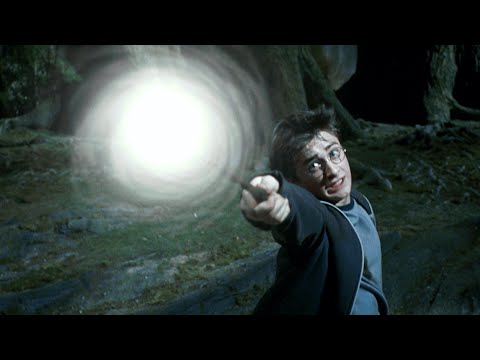
- A wizard is a magical person from fantasy stories, often depicted as wise and powerful.
- The term is widely used as a metaphor for someone with extraordinary skills or expertise.
- In technology, a 'wizard' is a software tool that guides users through a setup process.
- The word originates from 'wise,' highlighting the connection between knowledge and mastery.
The word wizard is a multifaceted noun that has evolved significantly from its linguistic roots to its modern-day applications. At its most fundamental level, a wizard is a person who possesses magical powers, often depicted in folklore, mythology, and modern fantasy literature as a wise, elderly figure wearing robes and carrying a staff or wand. However, the utility of the word extends far beyond the realm of dragons and spells. In contemporary English, 'wizard' is frequently employed as a metaphor to describe an individual who exhibits extraordinary skill, profound expertise, or almost supernatural competence in a specific domain. Whether someone is a 'financial wizard' navigating the complexities of the stock market or a 'tech wizard' who can fix any computer glitch in seconds, the term conveys a sense of awe and respect for their mastery.
- The Archetypal Magician
- In the context of fantasy, a wizard is a practitioner of magic. Unlike a 'sorcerer' who might be born with innate power, or a 'warlock' which sometimes carries negative connotations of betrayal, a wizard is often seen as a scholar of the arcane. They study ancient scrolls, learn complex incantations, and understand the deep laws of the universe. This connection to knowledge is vital, as the word itself is derived from the Middle English word 'wys,' meaning wise.
The old wizard raised his staff, and a blinding light filled the cavern, scattering the goblins.
- The Modern Expert
- When used in a professional or social setting, calling someone a wizard is a high compliment. It suggests that their talent is so great that it seems like magic to the uninitiated. For example, a 'math wizard' can solve differential equations mentally, while a 'marketing wizard' can turn a failing brand into a household name overnight. This usage highlights the 'how did they do that?' factor of high-level performance.
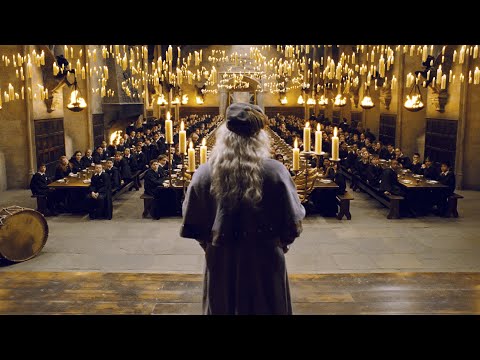
Culturally, the wizard represents the 'Wise Old Man' archetype described by Carl Jung. This figure serves as a mentor to the hero, providing the knowledge or the magical tool necessary to complete a quest. Think of Gandalf in *The Lord of the Rings* or Albus Dumbledore in *Harry Potter*. They are not just powerful; they are repositories of history and ethics. In a broader sense, we use 'wizard' whenever we want to emphasize that someone's skill level has transcended the ordinary and entered the realm of the extraordinary. It is a word that bridges the gap between our ancient love for myth and our modern respect for specialized expertise.
She is a total wizard with Excel; she created a dashboard that automated our entire monthly reporting process.
- Historical Evolution
- In the 15th century, a wizard was simply a very wise man. By the 16th century, the meaning shifted toward the occult, implying someone who had knowledge of secret or hidden things, often involving the supernatural. Today, the word has been largely 'rehabilitated' from its darker associations with witchcraft trials and is now viewed with a sense of wonder or professional admiration.
The wizard of Menlo Park was a nickname given to Thomas Edison because of his incredible inventions.
He’s a pinball wizard, there has to be a twist; a pinball wizard's got such a supple wrist.
In summary, 'wizard' is a word that captures the essence of mastery. Whether that mastery is over the elements of a fictional world or the elements of a complex spreadsheet, the word suggests a level of competence that is both rare and inspiring. It is used in storytelling to ground the fantastic and in daily life to elevate the exceptional.
Using the word wizard effectively requires understanding the context—whether you are speaking about literal magic or metaphorical skill. Because it is a noun, it typically functions as the subject or object of a sentence, but it is frequently modified by another noun to specify the area of expertise. This 'Noun + Wizard' construction is one of the most common ways the word appears in modern English. For example, 'financial wizard,' 'tech wizard,' and 'culinary wizard' are all standard collocations that immediately tell the listener what the person is good at.
- Literal Usage (Fantasy/Fiction)
- When writing or speaking about fiction, 'wizard' is often paired with verbs of action related to magic, such as 'cast,' 'conjure,' 'enchant,' or 'divine.' It is also common to see it used with descriptive adjectives like 'ancient,' 'powerful,' 'mysterious,' or 'reclusive.' In these sentences, the wizard is a character with agency over the supernatural.
The wizard spent decades in his tower, pouring over dusty tomes to find the counter-spell.
- Metaphorical Usage (Skill/Expertise)
- In a professional context, 'wizard' is used to emphasize the speed and ease with which someone completes a difficult task. It is often used with the preposition 'at' or 'with.' For instance, 'He is a wizard at coding' or 'She is a wizard with a paintbrush.' This structure highlights the tool or the field in which the person excels.
Our new lead developer is a wizard at optimizing database queries, reducing lag by fifty percent.
When using 'wizard' to describe a person's skill, it is important to ensure the tone is complimentary. While it is almost always positive, using it sarcastically (e.g., 'Oh, you're a real wizard, aren't you?') can imply that someone has made a silly mistake. However, in 99% of cases, it is a mark of high esteem. In technical writing, specifically in software documentation, 'wizard' refers to a specific UI pattern. You might see sentences like, 'Follow the installation wizard to complete the setup.' Here, the 'wizard' is the software itself, acting as a guide.
If you get stuck, the configuration wizard will prompt you for the necessary network credentials.
- Sentence Patterns
- 1. [Subject] is a [Field] wizard. (e.g., 'He is a guitar wizard.')
2. [Subject] is a wizard at [Activity]. (e.g., 'She is a wizard at negotiating.')
3. The [Adjective] wizard [Verb]. (e.g., 'The powerful wizard vanished.')
The financial wizard managed to double the university's endowment in just five years.
The wizard of the keyboard, he could type 150 words per minute without a single error.
By mastering these patterns, you can use 'wizard' to add color and emphasis to your descriptions of talented people, or accurately describe the mechanics of a fantasy world. It is a versatile word that rewards creative application.
The word wizard is ubiquitous in modern culture, appearing in everything from high-fantasy cinema to corporate boardrooms. Understanding where you are likely to encounter it helps in grasping its various shades of meaning. The most obvious place is in entertainment. The global success of franchises like *Harry Potter*, *The Lord of the Rings*, and *The Witcher* has kept the traditional meaning of 'wizard' at the forefront of the public consciousness. In these contexts, the word is spoken with gravity, representing power, age, and often a heavy burden of responsibility.
- In Popular Media
- You will hear 'wizard' in movies, video games (like *World of Warcraft* or *Dungeons & Dragons*), and novels. In these settings, characters might debate the 'wizard's council' or seek out a 'renegade wizard.' The word here is literal and carries the weight of the supernatural world-building.
'You're a wizard, Harry,' is perhaps the most famous use of the word in 21st-century cinema.
- In the Tech Industry
- In Silicon Valley and IT departments worldwide, 'wizard' is a common term of endearment for a highly skilled programmer. You might hear a manager say, 'We need a CSS wizard to fix this layout.' Additionally, older versions of Windows and other operating systems frequently used 'Wizards' for tasks like 'Add a Printer' or 'Install Software.' While the term 'assistant' or 'setup' is more common now, 'wizard' remains in the vocabulary of many veteran tech workers.
The installation wizard will guide you through the process of setting up your new router.
In business and finance, the word is used to describe people who can make sense of data that others find baffling. A 'spreadsheet wizard' or a 'financial wizard' is someone who can find patterns and opportunities where others only see noise. This usage is common in news articles, business profiles, and performance reviews. It suggests that the person's talent is so high that it borders on the inexplicable. You might also hear it in casual conversation when someone does something impressive but small, like 'You're a wizard for finding my keys!'
The wizard of Wall Street predicted the market crash months before it actually happened.
- In Music and Art
- Rock music has a long history with the word. From Black Sabbath's song 'The Wizard' to The Who's 'Pinball Wizard,' the term is used to describe characters with hypnotic or extraordinary abilities. In art, a 'color wizard' might be someone who has an uncanny ability to mix and apply hues.
Jimi Hendrix was often described as a guitar wizard because of his innovative playing style.
The special effects wizard won an Oscar for his work on the sci-fi epic.
Ultimately, you hear 'wizard' whenever there is a need to describe someone who has mastered a craft to such a degree that it seems to defy the laws of normal human effort. It is a word of celebration and recognition.
While wizard is a relatively straightforward noun, there are several nuances and common pitfalls that learners should be aware of. The most frequent errors involve confusing 'wizard' with other terms for magical practitioners, using the wrong gender associations, or misapplying the word in formal versus informal contexts. Understanding these distinctions will help you use the word with the precision of a native speaker.
- Confusing Wizard with Witch, Sorcerer, or Mage
- In many fantasy systems, these words are not interchangeable. A 'wizard' usually learns magic through study (academic). A 'sorcerer' often has innate, biological magic. A 'mage' is a more general, often high-status term. A 'witch' is traditionally female, though in modern contexts like *Harry Potter*, 'wizard' and 'witch' are simply gendered counterparts for the same role. Using 'wizard' for a female character is increasingly common and acceptable, but using 'witch' for a male character can sometimes be seen as an error or a specific stylistic choice.
Incorrect: He is a powerful witch who lives in the forest. (Better: He is a powerful wizard...)
- Overusing the Metaphor in Formal Writing
- In a formal academic paper or a serious legal document, calling someone a 'wizard' can come across as unprofessional or overly colloquial. While it is a compliment, it lacks the clinical precision required for such environments. Instead of 'He is a legal wizard,' use 'He is an exceptionally skilled attorney' or 'He possesses profound legal expertise.'
Informal: She's a wizard at math. Formal: She demonstrates exceptional mathematical proficiency.
Another mistake is failing to use the correct preposition when describing skill. While 'wizard at' and 'wizard with' are both common, they are used differently. Use 'at' for activities (wizard at playing chess) and 'with' for tools or objects (wizard with a camera). Using 'of' is also possible but usually refers to a domain (wizard of finance). Mixing these up won't usually cause a misunderstanding, but it can sound slightly 'off' to a native ear.
Correct: He is a wizard with computers. Incorrect: He is a wizard on computers.
- Misunderstanding the Tech Term
- Some younger users might not realize that a 'wizard' in a computer context is a specific type of interface. If someone says, 'Run the wizard,' they aren't asking you to find a magical person; they are telling you to open a specific setup program. Confusing this with a general search or a manual configuration can lead to technical errors.
The software wizard simplifies the process of connecting to the cloud server.
Is he a wizard or just a regular expert? There's a big difference in expectations!
By keeping these common mistakes in mind, you can ensure that your use of 'wizard' is always appropriate, accurate, and impactful. Whether you're writing a fantasy novel or a LinkedIn recommendation, precision matters.
The word wizard exists within a rich ecosystem of synonyms and related terms. Depending on whether you are referring to magic or skill, the alternatives you choose can significantly alter the tone and nuance of your sentence. Exploring these alternatives allows for more precise communication and avoids repetitive language.
- Magical Synonyms
- 1. **Mage**: Often used in high fantasy to denote a person of great magical power and scholarly status. It feels more formal and ancient than 'wizard.'
2. **Sorcerer**: Implies innate power, often more dramatic or potentially dangerous. Sorcerers 'wield' power, while wizards 'study' it.
3. **Warlock**: Historically meant 'oath-breaker.' In modern fiction, it often refers to a male magic user who gained power through a pact with a supernatural entity.
4. **Magician**: In the real world, this usually refers to a stage performer who uses illusions and sleight of hand. In fiction, it can be a synonym for wizard but often feels less 'heavy.'
While the wizard studied his books, the sorcerer simply felt the energy flowing through his veins.
- Skill-Based Synonyms
- 1. **Prodigy**: Someone, usually young, with exceptional qualities or abilities. 'He is a piano prodigy.'
2. **Virtuoso**: A person highly skilled in music or another artistic pursuit. 'She is a violin virtuoso.'
3. **Whiz**: An informal term for someone who is very good at something. 'He's a math whiz.' This is the closest informal equivalent to 'wizard.'
4. **Expert**: A neutral, professional term for someone with comprehensive knowledge. 'She is an expert in cybersecurity.'
He’s not just an expert; he’s a total wizard when it comes to troubleshooting network issues.
In a technical or corporate setting, you might also consider words like **guru**, **maven**, or **ace**. A 'marketing guru' suggests someone who is not only skilled but also a leader or teacher in the field. A 'fashion maven' implies someone with deep knowledge and influence. An 'ace pilot' suggests someone who is the best at what they do. Each of these carries a slightly different 'flavor' than 'wizard,' which remains the most 'magical' and awe-inspiring of the bunch.
The tech guru gave a keynote speech that inspired the entire audience of developers.
- Comparisons at a Glance
- - **Wizard vs. Whiz**: Wizard is more impressive; whiz is more casual.
- **Wizard vs. Expert**: Wizard implies a touch of 'magic' or inexplicable skill; expert implies deep study and certification.
- **Wizard vs. Magician**: Wizard is usually fictional/supernatural; magician is usually a real-world performer.
She is a virtuoso on the cello, but a wizard in the recording studio.
The maven of the culinary world, he knew exactly which spices would elevate the dish.
By understanding these alternatives, you can tailor your language to your specific audience and purpose. Whether you want to sound professional, casual, or epic, there is a word that fits perfectly alongside or in place of 'wizard.'
How Formal Is It?
豆知識
The suffix '-ard' usually has a negative connotation in English, but 'wizard' is one of the few words where it became associated with something positive or impressive.
発音ガイド
- Pronouncing the 'a' in 'zard' like the 'a' in 'car'. It should be a schwa sound /ə/.
- Adding an extra syllable at the end.
- Making the 'z' sound like an 's'. It should be a voiced 'z'.
- Confusing the pronunciation with 'lizard'. They rhyme, but the first letter is different.
- Over-emphasizing the 'd' at the end.
難易度
Easy to recognize in context due to popular culture.
Requires understanding of metaphorical vs. literal use.
Simple pronunciation with clear stress.
Distinct sound, unlikely to be confused with other words.
次に学ぶべきこと
前提知識
次に学ぶ
上級
知っておくべき文法
Noun as Adjective
In 'math wizard,' the noun 'math' acts as an adjective to describe the type of wizard.
Prepositional Choice
Use 'at' for skills (wizard at chess) and 'with' for tools (wizard with a hammer).
Possessive Nouns
The wizard's hat (singular) vs. the wizards' hats (plural).
Agent Nouns with -ard
Understanding the suffix '-ard' in words like wizard, coward, and drunkard.
Gender-Neutral Nouns
Using 'wizard' as a gender-neutral term in modern professional contexts.
レベル別の例文
The wizard has a long white beard.
Le sorcier a une longue barbe blanche.
Subject + Verb + Object
He is a good wizard.
C'est un bon sorcier.
Adjective before noun
The wizard uses a magic wand.
Le sorcier utilise une baguette magique.
Present simple tense
I see a wizard in the book.
Je vois un sorcier dans le livre.
Prepositional phrase 'in the book'
Can the wizard fly?
Le sorcier peut-il voler ?
Question with 'can'
The wizard lives in a big tower.
Le sorcier vit dans une grande tour.
Third person singular -s
The wizard wears a blue robe.
Le sorcier porte une robe bleue.
Color adjective before noun
The little boy wants to be a wizard.
Le petit garçon veut être un sorcier.
Infinitive 'to be'
My uncle is a computer wizard.
Mon oncle est un as de l'informatique.
Metaphorical use of 'wizard'
The wizard made the rabbit disappear.
Le sorcier a fait disparaître le lapin.
Past simple 'made'
She is a wizard at playing the piano.
Elle est une pro du piano.
Preposition 'at' + gerund
We need a math wizard to help us.
Nous avons besoin d'un génie des maths pour nous aider.
Noun as adjective 'math wizard'
The movie is about a young wizard.
Le film parle d'un jeune sorcier.
Preposition 'about'
Is he a real wizard or a performer?
Est-ce un vrai sorcier ou un artiste ?
Alternative question
The wizard's hat is very tall.
Le chapeau du sorcier est très grand.
Possessive 's
He became a wizard after many years of study.
Il est devenu sorcier après de nombreuses années d'études.
Past simple 'became'
The financial wizard saved the company from bankruptcy.
L'as de la finance a sauvé l'entreprise de la faillite.
Compound noun 'financial wizard'
Follow the installation wizard to set up the software.
Suivez l'assistant d'installation pour configurer le logiciel.
Technical use of 'wizard'
He is a wizard with a camera, capturing amazing shots.
C'est un magicien avec un appareil photo, il prend des clichés incroyables.
Preposition 'with' for tools
The ancient wizard guarded the secret entrance.
Le vieux sorcier gardait l'entrée secrète.
Adjective 'ancient' for age
She's a marketing wizard who knows exactly what people want.
C'est une pro du marketing qui sait exactement ce que les gens veulent.
Relative clause 'who knows...'
The wizard cast a spell to protect the village.
Le sorcier a jeté un sort pour protéger le village.
Verb 'cast' used with 'spell'
I'm no wizard, but I can try to fix your bike.
Je ne suis pas un génie, mais je peux essayer de réparer ton vélo.
Negative 'no wizard' for modesty
The wizard's apprentice learned how to brew potions.
L'apprenti du sorcier a appris à préparer des potions.
Noun 'apprentice' related to 'wizard'
The technical wizardry behind the new app is truly impressive.
La prouesse technique derrière la nouvelle application est vraiment impressionnante.
Noun 'wizardry' (the skill itself)
He was hailed as a wizard of the stock market.
Il a été salué comme un génie de la bourse.
Passive voice 'was hailed'
The wizard's influence extended far beyond the kingdom's borders.
L'influence du sorcier s'étendait bien au-delà des frontières du royaume.
Possessive and complex sentence structure
She is a wizard at navigating complex social situations.
Elle est très douée pour gérer les situations sociales complexes.
Abstract use of 'wizard at'
The special effects wizard created a realistic dragon for the film.
Le magicien des effets spéciaux a créé un dragon réaliste pour le film.
Specific professional role
The wizard stood atop the mountain, summoning the storm.
Le sorcier se tenait au sommet de la montagne, invoquant la tempête.
Participle phrase 'summoning the storm'
Many people consider him a wizard of modern architecture.
Beaucoup de gens le considèrent comme un génie de l'architecture moderne.
Verb 'consider' + object + complement
The wizard's council met to discuss the rising threat.
Le conseil des sorciers s'est réuni pour discuter de la menace croissante.
Collective noun 'council'
The CEO's financial wizardry allowed the firm to weather the economic storm.
Le génie financier du PDG a permis à l'entreprise de surmonter la tempête économique.
Metaphorical 'weather the storm'
Thomas Edison, often called the Wizard of Menlo Park, revolutionized modern life.
Thomas Edison, souvent appelé le sorcier de Menlo Park, a révolutionné la vie moderne.
Appositive phrase
The wizard's cryptic warnings were often ignored by the headstrong king.
Les avertissements cryptiques du sorcier étaient souvent ignorés par le roi têtu.
Adjective 'cryptic' and 'headstrong'
She is a wizard of prose, crafting sentences that sing with clarity.
C'est une magicienne de la prose, façonnant des phrases qui chantent avec clarté.
Metaphorical use in literature
The software's wizard-driven interface made it accessible to non-experts.
L'interface pilotée par assistant du logiciel l'a rendu accessible aux non-experts.
Compound adjective 'wizard-driven'
He navigated the legal loopholes like a wizard, finding solutions where others saw dead ends.
Il a navigué dans les failles juridiques comme un sorcier, trouvant des solutions là où d'autres voyaient des impasses.
Simile 'like a wizard'
The wizard's legacy lived on through the ancient library he founded.
L'héritage du sorcier a perduré grâce à l'ancienne bibliothèque qu'il a fondée.
Noun 'legacy'
To the uninitiated, the coder's speed seemed like pure wizardry.
Pour les non-initiés, la vitesse du codeur semblait être de la pure magie.
Phrase 'to the uninitiated'
The diplomat's wizardry in reconciling the warring factions was nothing short of miraculous.
Le génie du diplomate pour réconcilier les factions belligérantes était tout simplement miraculeux.
Idiom 'nothing short of'
The wizard archetype serves as a psychological anchor for the hero's journey.
L'archétype du sorcier sert d'ancrage psychologique pour le voyage du héros.
Academic terminology 'archetype'
His wizard-like ability to anticipate market shifts made him a billionaire by thirty.
Sa capacité quasi-magique à anticiper les fluctuations du marché a fait de lui un milliardaire à trente ans.
Suffix '-like' to form an adjective
The novel deconstructs the traditional wizard, portraying him as a flawed and weary scholar.
Le roman déconstruit le sorcier traditionnel, le dépeignant comme un érudit imparfait et las.
Literary analysis verb 'deconstructs'
The wizardry of the cinematographer transformed the mundane landscape into a dreamscape.
Le génie du directeur de la photographie a transformé le paysage banal en un paysage onirique.
Noun 'wizardry' applied to art
She approached the problem with the meticulousness of a wizard preparing a dangerous ritual.
Elle a abordé le problème avec la minutie d'un sorcier préparant un rituel dangereux.
Complex comparison
The wizard's staff was not merely a tool, but an extension of his very will.
Le bâton du sorcier n'était pas seulement un outil, mais une extension de sa volonté même.
Correlative conjunction 'not merely... but...'
In the realm of theoretical physics, he is regarded as a wizard of the highest order.
Dans le domaine de la physique théorique, il est considéré comme un génie du plus haut niveau.
Prepositional phrase 'of the highest order'
よく使う組み合わせ
よく使うフレーズ
— A common compliment given when someone does something impressive or solves a problem quickly.
You found my lost keys! You're a wizard!
— A way to describe someone as an expert in a specific area.
He is a wizard of the keyboard.
— Advice that is very wise or helpful, often coming from an experienced person.
I followed my mentor's wizardly advice and succeeded.
— To start a software setup program.
Just run the wizard and it will install automatically.
— Someone who is learning from a master, often implying a steep learning curve.
He felt like a wizard's apprentice during his first week at the lab.
— Something that seems impossible or incredibly impressive.
The way she handled the crisis was pure wizardry.
— The ability to do something perfectly or with great skill.
The garden needs a wizard's touch to look beautiful again.
— A famous cultural reference to the character who is not what he seems.
He's like the Wizard of Oz, all talk and no substance.
— The nickname for inventor Thomas Edison.
Edison was known as the Wizard of Menlo Park for his many inventions.
— An old-fashioned British term for an excellent idea.
That's a wizard idea for the school play!
よく混同される語
They rhyme, but a lizard is a reptile, and a wizard is a person.
They rhyme, but a blizzard is a snowstorm.
Traditionally the female version, but 'wizard' is often used for all genders now.
慣用句と表現
— Someone who is exceptionally good at pinball, or by extension, any game or specific task.
He's a pinball wizard on that new arcade machine.
Informal— The use of clever and sometimes complex methods to manage money.
The company's survival was due to some creative financial wizardry.
Neutral— Someone who has total control over a specific tool.
She is a wizard of the cello.
Neutral— Doing something with incredible ease and skill.
He fixed the engine like a wizard.
Informal— A complex or mysterious mixture of things.
The soup was a wizard's brew of strange spices.
Literary— A place of isolation and intense study.
He spent the weekend in his office, his own private wizard's tower.
Metaphorical— A tool that seems to solve problems instantly.
There is no wizard's wand to fix the economy overnight.
Metaphorical— A promise or statement that carries great weight.
I give you my wizard's word that the task will be done.
Literary— Deep, often unconventional knowledge.
We relied on the old gardener's wizard's wisdom.
Neutral— A task that requires extreme skill or seems impossible.
Restoring this old painting is truly wizard's work.
Neutral間違えやすい
Both do magic.
Wizards usually learn magic from books; sorcerers are often born with it.
The wizard read his spellbook, while the sorcerer just waved his hand.
Both involve magic.
A magician usually performs tricks/illusions; a wizard has real supernatural power (in fiction).
The magician pulled a rabbit from a hat, but the wizard turned the hat into a rabbit.
Both are magic users.
Mage is more formal and often used in video games to describe a class of character.
The fire mage joined the party to fight the dragon.
Both are male magic users.
Warlock often implies dark magic or a pact with a demon.
The warlock used forbidden magic to curse the land.
Both describe high intelligence.
Genius is about brain power; wizard is about the 'magical' application of skill.
He is a math genius, but a wizard at teaching it to others.
文型パターン
The [Adjective] wizard [Verb].
The old wizard sleeps.
[Subject] is a [Noun] wizard.
He is a computer wizard.
[Subject] is a wizard at [Gerund].
She is a wizard at fixing bikes.
The [Noun] wizardry of [Subject] is [Adjective].
The financial wizardry of the CEO is impressive.
To the uninitiated, [Subject] seems like [Noun].
To the uninitiated, his coding seems like pure wizardry.
[Subject] approached [Noun] with the [Noun] of a wizard.
She approached the task with the meticulousness of a wizard.
Follow the [Noun] wizard to [Verb].
Follow the setup wizard to install the app.
He is a wizard with [Noun].
He is a wizard with a paintbrush.
語族
名詞
動詞
形容詞
関連
使い方
Common in fiction, technology, and casual compliments.
-
He is a wizard on math.
→
He is a wizard at math.
We use 'at' for subjects or activities.
-
The wizards hat was blue.
→
The wizard's hat was blue.
You need an apostrophe for possession.
-
She is a powerful witch of finance.
→
She is a financial wizard.
In professional metaphors, 'wizard' is the standard term for all genders. 'Witch' is rarely used this way.
-
I need to open the installation magician.
→
I need to open the installation wizard.
In computing, the specific term is 'wizard,' not 'magician.'
-
He is a wizard with playing guitar.
→
He is a wizard at playing guitar.
Use 'at' with the -ing form of a verb.
ヒント
Complimenting Skills
Use 'wizard' when someone does something so well it seems impossible. It's stronger than 'expert.'
Prepositions Matter
Remember: Wizard AT (action) and Wizard WITH (tool). 'Wizard at coding' vs 'Wizard with a laptop.'
Fantasy Nuance
In stories, use 'wizard' for characters who study and 'sorcerer' for those with innate power.
Software Wizards
If a computer asks you to 'start the wizard,' don't look for a person. It's just a setup tool.
Wise Roots
Remember that 'wizard' comes from 'wise.' This helps you remember it's about knowledge.
Famous Wizards
Mentioning Gandalf or Dumbledore is a great way to help people understand the literal meaning.
Metaphorical Power
Use 'financial wizard' or 'marketing wizard' to make your business writing more descriptive.
Enthusiasm
When using 'wizard' as a compliment, say it with energy to show you are impressed.
Context Clues
If you hear 'wizard' in a movie, it's likely literal. In an office, it's metaphorical.
One 'Z'
Don't confuse 'wizard' with 'blizzard.' Wizard has one 'z', blizzard has two.
暗記しよう
記憶術
Think of a 'Wise' man with a 'Beard' -> Wiz-ard. The 'Wiz' is for wisdom, and the 'ard' is like the end of 'beard.'
視覚的連想
Imagine a man in a pointy hat solving a Rubik's cube in one second. He is a wizard at puzzles.
Word Web
チャレンジ
Try to use 'wizard' to compliment three different people today for three different skills.
語源
The word 'wizard' comes from the Middle English word 'wys,' which means 'wise.' It was formed by adding the suffix '-ard,' which often denotes a person who performs a specific action or possesses a certain quality (like 'drunkard' or 'coward').
元の意味: Originally, in the 15th century, a wizard was simply a 'wise man' or a philosopher. It did not have magical connotations until later.
Germanic (English)文化的な背景
The word is generally safe and non-offensive. In very religious contexts, some might associate it with the occult, but this is rare in modern secular society.
In the UK and US, 'wizard' is almost always a positive term. It is a common 'geek' culture word.
実生活で練習する
実際の使用場面
Fantasy Literature
- Cast a spell
- Ancient scrolls
- Magical staff
- Wizard's tower
Workplace/Professional
- Financial wizard
- Excel wizard
- Problem-solving wizard
- Marketing wizard
Computing
- Installation wizard
- Setup wizard
- Configuration wizard
- Wizard interface
Sports/Gaming
- Pinball wizard
- Ball-handling wizard
- Gaming wizard
- Wizard class
Compliments
- You're a wizard!
- Total wizardry
- Wizard with a...
- Wizard at...
会話のきっかけ
"Who is your favorite wizard from a book or movie?"
"If you could be a wizard at any one skill, what would it be?"
"Do you think 'wizard' is a good word to describe a tech expert?"
"Have you ever used an installation wizard that was actually confusing?"
"If you met a real wizard, what would be the first question you'd ask?"
日記のテーマ
Describe a time when you felt like a wizard because you solved a very difficult problem.
Write a short story about a wizard who lives in a modern city instead of a fantasy world.
Who is the biggest 'wizard' in your life (someone with amazing skills)? Describe their talent.
If you had to design a 'Life Wizard' software to help people, what steps would it include?
Reflect on the difference between being 'wise' and being a 'wizard.' Are they the same thing?
よくある質問
10 問Yes, in modern English, 'wizard' is often used as a gender-neutral term for an expert. In fantasy, 'witch' is the traditional female counterpart, but many modern stories use 'wizard' for anyone who studies magic.
It is a computer program that helps you install software by asking you questions and doing the work for you. It 'magically' handles the complex parts of the setup.
Almost always, yes! It means you are exceptionally good at something. However, if said with a sarcastic tone, it could be an insult.
It comes from the word 'wise.' A wizard was originally just a 'wise man.' The magical meaning came later.
In most fantasy stories, wizards study magic in books, while sorcerers have magic inside them naturally. Wizards are like scientists of magic.
It is very rare now. You might hear it in old movies or books from the 1940s to mean 'excellent.' Modern British people don't use it this way much.
Common ones include 'financial wizard,' 'tech wizard,' 'math wizard,' and 'installation wizard.'
It is pronounced WIZ-ard. The second part sounds like 'urd' in 'bird.' The stress is on the first part.
Wizardry is the noun for the magic or the amazing skill that a wizard has. 'His wizardry on the guitar was amazing.'
Yes, as a compliment for someone's skill. For example, 'She's a wizard with our budget.' It's a bit informal but usually very well-received.
自分をテスト 200 問
Write a sentence using 'wizard' to describe someone's skill with a computer.
Well written! Good try! Check the sample answer below.
Describe a wizard from a book you have read.
Well written! Good try! Check the sample answer below.
Write a short paragraph about a 'financial wizard.'
Well written! Good try! Check the sample answer below.
Explain the difference between a wizard and a magician.
Well written! Good try! Check the sample answer below.
Use the word 'wizardry' in a sentence about technology.
Well written! Good try! Check the sample answer below.
Write a compliment to a colleague using the word 'wizard.'
Well written! Good try! Check the sample answer below.
Describe a 'wizard's tower' using three adjectives.
Well written! Good try! Check the sample answer below.
Write a sentence using 'wizard' as a British slang term.
Well written! Good try! Check the sample answer below.
Create a character name for a wizard and describe their specialty.
Well written! Good try! Check the sample answer below.
Write a sentence using the phrase 'wizard's apprentice.'
Well written! Good try! Check the sample answer below.
Use 'wizard at' in a sentence about a hobby.
Well written! Good try! Check the sample answer below.
Write a sentence about an 'installation wizard.'
Well written! Good try! Check the sample answer below.
Describe a 'math wizard's' typical day.
Well written! Good try! Check the sample answer below.
Write a sentence using 'wizard' to describe a chef.
Well written! Good try! Check the sample answer below.
Use 'wizard with' in a sentence about a photographer.
Well written! Good try! Check the sample answer below.
Write a sentence about the 'Wizard of Oz.'
Well written! Good try! Check the sample answer below.
Explain why 'wizard' comes from the word 'wise.'
Well written! Good try! Check the sample answer below.
Write a sentence about a 'marketing wizard.'
Well written! Good try! Check the sample answer below.
Use 'pure wizardry' to describe a sports play.
Well written! Good try! Check the sample answer below.
Write a short dialogue between two people using the word 'wizard.'
Well written! Good try! Check the sample answer below.
Pronounce the word 'wizard' out loud.
Read this aloud:
あなたの回答:
Speech recognition is not supported in your browser. Try Chrome or Edge.
Tell a 30-second story about a wizard.
Read this aloud:
あなたの回答:
Speech recognition is not supported in your browser. Try Chrome or Edge.
Compliment a friend's skill using the word 'wizard.'
Read this aloud:
あなたの回答:
Speech recognition is not supported in your browser. Try Chrome or Edge.
Explain what a 'tech wizard' is to a child.
Read this aloud:
あなたの回答:
Speech recognition is not supported in your browser. Try Chrome or Edge.
Discuss your favorite wizard from a movie.
Read this aloud:
あなたの回答:
Speech recognition is not supported in your browser. Try Chrome or Edge.
Use 'wizard at' and 'wizard with' in two different sentences.
Read this aloud:
あなたの回答:
Speech recognition is not supported in your browser. Try Chrome or Edge.
Describe the appearance of a traditional wizard.
Read this aloud:
あなたの回答:
Speech recognition is not supported in your browser. Try Chrome or Edge.
What skill would you like to be a wizard at?
Read this aloud:
あなたの回答:
Speech recognition is not supported in your browser. Try Chrome or Edge.
Explain the etymology of 'wizard' simply.
Read this aloud:
あなたの回答:
Speech recognition is not supported in your browser. Try Chrome or Edge.
Is there a 'wizard' in your family? Who and why?
Read this aloud:
あなたの回答:
Speech recognition is not supported in your browser. Try Chrome or Edge.
What does 'pure wizardry' mean to you?
Read this aloud:
あなたの回答:
Speech recognition is not supported in your browser. Try Chrome or Edge.
How would you describe Thomas Edison's nickname?
Read this aloud:
あなたの回答:
Speech recognition is not supported in your browser. Try Chrome or Edge.
Why is an installation program called a 'wizard'?
Read this aloud:
あなたの回答:
Speech recognition is not supported in your browser. Try Chrome or Edge.
Can you use 'wizard' in a sarcastic way? Give an example.
Read this aloud:
あなたの回答:
Speech recognition is not supported in your browser. Try Chrome or Edge.
What is the difference between a wizard and a witch in modern use?
Read this aloud:
あなたの回答:
Speech recognition is not supported in your browser. Try Chrome or Edge.
What are the two syllables in 'wizard'?
Read this aloud:
あなたの回答:
Speech recognition is not supported in your browser. Try Chrome or Edge.
Name three things a wizard might have in his house.
Read this aloud:
あなたの回答:
Speech recognition is not supported in your browser. Try Chrome or Edge.
How do you feel about the word 'wizard'? Is it a strong word?
Read this aloud:
あなたの回答:
Speech recognition is not supported in your browser. Try Chrome or Edge.
What is a 'financial wizard'?
Read this aloud:
あなたの回答:
Speech recognition is not supported in your browser. Try Chrome or Edge.
Give a synonym for 'wizard' that is informal.
Read this aloud:
あなたの回答:
Speech recognition is not supported in your browser. Try Chrome or Edge.
Listen to the sentence: 'The wizard cast a spell.' What did the wizard do?
Listen: 'He's a wizard at math.' Is he good or bad at math?
Listen: 'Run the installation wizard.' What should the person do?
Listen: 'She's a wizard with a camera.' What is her tool?
Listen: 'The financial wizardry saved us.' What saved them?
Listen: 'He's no wizard, but he's okay.' Is he an expert?
Listen: 'The ancient wizard spoke.' How old is the wizard?
Listen: 'It was pure wizardry.' Was the task difficult or easy?
Listen: 'The wizard's apprentice failed.' Who failed?
Listen: 'That's a wizard idea!' What does it mean?
Listen: 'The Wizard of Oz is a fraud.' Is the wizard real?
Listen: 'He's a wizard of the keyboard.' How fast does he type?
Listen: 'The wizard's hat is blue.' What color is the hat?
Listen: 'I need a marketing wizard.' What kind of help is needed?
Listen: 'The wizardry of the film was amazing.' What was amazing?
/ 200 correct
Perfect score!
Summary
The word 'wizard' bridges the gap between ancient myth and modern mastery. Whether describing a literal magician like Gandalf or a metaphorical 'financial wizard,' it signifies a level of skill so high it seems magical. Example: 'He is a wizard with data analysis.'
- A wizard is a magical person from fantasy stories, often depicted as wise and powerful.
- The term is widely used as a metaphor for someone with extraordinary skills or expertise.
- In technology, a 'wizard' is a software tool that guides users through a setup process.
- The word originates from 'wise,' highlighting the connection between knowledge and mastery.
Complimenting Skills
Use 'wizard' when someone does something so well it seems impossible. It's stronger than 'expert.'
Prepositions Matter
Remember: Wizard AT (action) and Wizard WITH (tool). 'Wizard at coding' vs 'Wizard with a laptop.'
Fantasy Nuance
In stories, use 'wizard' for characters who study and 'sorcerer' for those with innate power.
Software Wizards
If a computer asks you to 'start the wizard,' don't look for a person. It's just a setup tool.