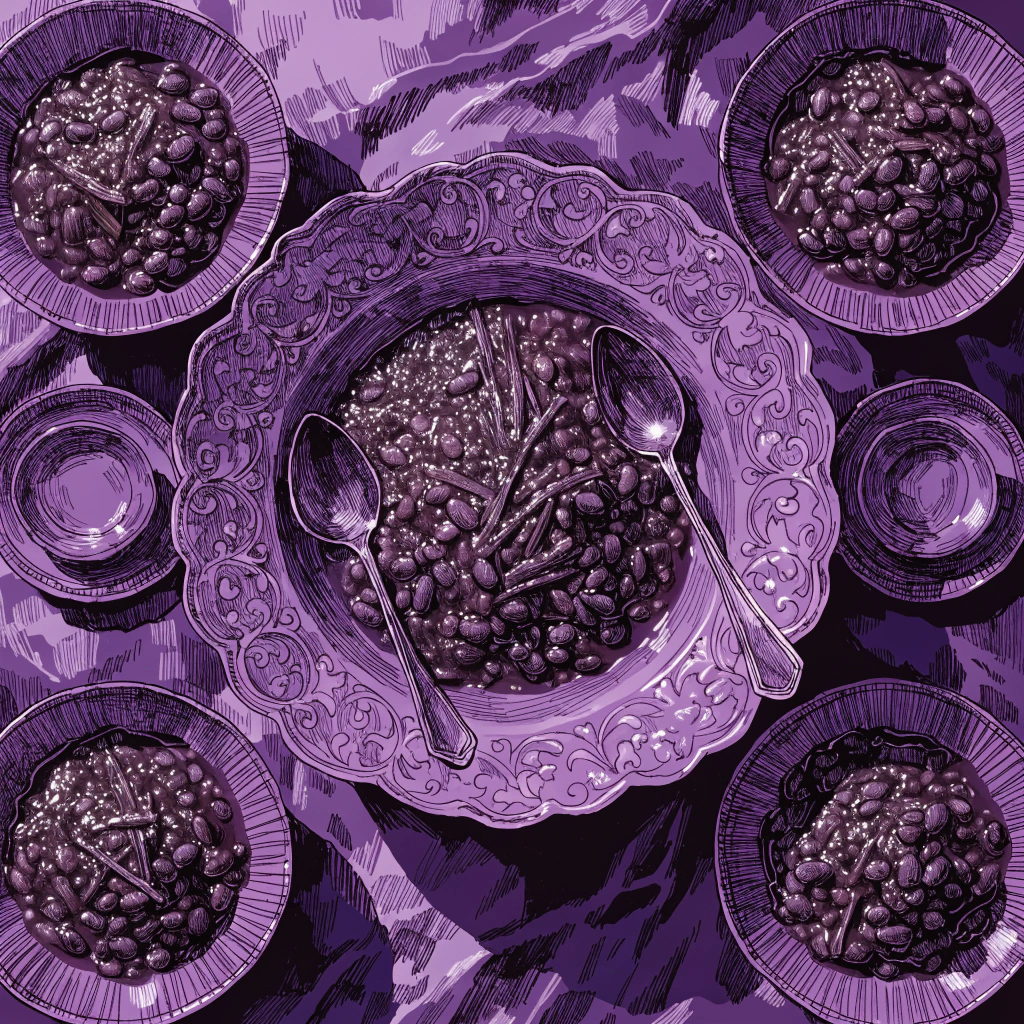
Ghormeh Sabzi: A Special Meal from Iran
Ghormeh Sabzi is a very famous food in Iran. Many people call it the national dish. It is a delicious green stew. It is very old and important in Persian culture.
This dish has many healthy ingredients. It has meat, red beans, and many green herbs. The herbs give the stew a dark green color. People cook the stew slowly for many hours.
Iranian families eat Ghormeh Sabzi with white rice. It has a special smell and a great taste. Many people eat this meal on Fridays with their family. It is a favorite food for everyone.
문법 스포트라이트
패턴: Present Simple with 'Be'
"Ghormeh Sabzi is a very famous food in Iran."
We use the verb 'to be' (am/is/are) to describe a person, place, or thing. In this sentence, 'is' describes the food.
패턴: Present Simple with Action Verbs
"Iranian families eat Ghormeh Sabzi with white rice."
We use the base form of the verb for habits or general truths. Here, 'eat' shows what people usually do.
이해도를 테스트하세요
10 질문 · A1 초급 · 무료 미리보기 1회
이 기사에서 배운 내용을 테스트하세요. 모든 질문에 답하여 XP를 획득하세요!
What color is Ghormeh Sabzi?
문제별 결과
What color is Ghormeh Sabzi?
내 답변:
정답: Green
People cook the stew very fast.
내 답변:
정답: 거짓
What are herbs?
내 답변:
정답: Plants used for flavor
It is a _____ food for everyone.
내 답변:
정답: favorite
Ghormeh Sabzi: The National Dish of Iran
Ghormeh Sabzi is the most famous dish in Iran. It is a green stew with a very long history. People started cooking this meal more than a thousand years ago. The name comes from two words: "Ghormeh" means meat and "Sabzi" means herbs.
To make this dish, cooks use many fresh herbs like parsley and cilantro. They also add beans, dried limes, and lamb or beef. The cooking process is slow because the flavors need time to mix together. While it cooks, the kitchen smells wonderful.
Iranian families often eat Ghormeh Sabzi on Fridays. This day is a holiday in Iran, so families have time to stay together. Many people believe this stew is better than any other food because it reminds them of their childhood. It is a special part of Iranian culture.
문법 스포트라이트
패턴: Superlative Adjectives
"Ghormeh Sabzi is the most famous dish in Iran."
We use 'the most' with long adjectives to compare one thing with many others. It shows that this dish has the highest level of fame.
패턴: Comparative Adjectives
"Many people believe this stew is better than any other food."
We use 'better than' to compare two things. 'Better' is the irregular comparative form of the adjective 'good'.
이해도를 테스트하세요
11 질문 · A2 초등급 · 무료 미리보기 1회
이 기사에서 배운 내용을 테스트하세요. 모든 질문에 답하여 XP를 획득하세요!
How old is the dish Ghormeh Sabzi?
문제별 결과
How old is the dish Ghormeh Sabzi?
내 답변:
정답: More than 1,000 years
Ghormeh Sabzi is a red stew.
내 답변:
정답: 거짓
What does the word 'Sabzi' mean in English?
내 답변:
정답: Herbs
Ghormeh Sabzi is the most _____ dish in Iran.
내 답변:
정답: famous
On which day do Iranian families usually eat this dish together?
내 답변:
정답: Fridays
이란의 대표 음식: 고르메 사브지, 깊은 맛의 유산
이란에는 오랜 역사와 깊은 문화를 담고 있는 특별한 음식이 있습니다. 바로 '고르메 사브지'입니다. 이 음식은 단순한 한 끼 식사를 넘어, 이란 사람들의 삶과 문화를 보여주는 중요한 상징으로 여겨져 왔습니다. 많은 이란 사람들이 고르메 사브지를 '국민 음식'이라고 부르며 자랑스러워합니다.
고르메 사브지는 수천 년 전부터 이란 유목민들의 전통에서 유래했다고 알려져 있습니다. 그 이름 또한 매우 흥미로운데요, '고르메'는 '오래 끓인 고기'를, '사브지'는 '채소'를 뜻합니다. 이름처럼 고기와 여러 가지 신선한 채소를 함께 넣고 천천히 끓여 만드는 스튜 종류의 음식입니다. 이 요리의 준비 과정은 많은 정성과 시간이 필요합니다.
이 요리의 가장 큰 특징은 깊고 진한 초록색입니다. 파슬리, 고수, 시금치 등 다양한 허브를 정성스럽게 다져 넣기 때문에 이런 색깔이 나타납니다. 여기에 양고기나 소고기, 그리고 붉은 콩이나 강낭콩 같은 콩 종류를 넣고 오랜 시간 동안 은근하게 끓이면 깊은 맛이 완성됩니다. 보통 밥과 함께 먹으며, 특별한 날이나 가족 모임에 자주 등장합니다. 마치 한국의 김치찌개나 된장찌개처럼 이란 사람들에게는 일상적이면서도 특별한 의미를 지니고 있습니다.
고르메 사브지를 만드는 과정은 시간이 오래 걸리고 정성이 많이 필요하지만, 이란 사람들은 이 음식을 통해 가족과의 유대감을 느끼고, 전통을 이어간다고 생각합니다. 실제로 이란의 부엌에서는 어머니나 할머니가 대가족을 위해 이 요리를 몇 시간 동안 정성껏 준비해 왔습니다. 이란을 방문하는 여행객들에게도 고르메 사브지는 꼭 맛봐야 할 음식으로 추천되고 있습니다. 이처럼 고르메 사브지는 이란의 맛과 문화를 동시에 경험할 수 있게 해주는 소중한 유산입니다.
문법 스포트라이트
패턴: -(으)ㄴ/는/던 N (관형절)
"이란에는 오랜 역사와 깊은 문화를 담고 있는 특별한 음식이 있습니다."
동사 뒤에 '-(으)ㄴ', '-는', '-던'을 붙여 뒤에 오는 명사를 꾸며줄 때 사용합니다. '-(으)ㄴ'은 과거, '-는'은 현재, '-던'은 과거의 반복이나 회상을 나타냅니다. 문장을 더 길고 풍부하게 만들 수 있습니다.
패턴: -아/어지다 (피동 표현)
"이 음식은 단순한 한 끼 식사를 넘어, 이란 사람들의 삶과 문화를 보여주는 중요한 상징으로 여겨져 왔습니다."
동사에 '아/어지다'를 붙여 주어가 어떤 행동을 당하거나, 저절로 그렇게 되는 수동의 의미를 나타냅니다. 주어가 스스로 하는 행동이 아님을 표현할 때 사용됩니다. '알려지다', '만들어지다' 등 다양한 동사에 활용됩니다.
이해도를 테스트하세요
11 질문 · B1 중급 · 무료 미리보기 1회
이 기사에서 배운 내용을 테스트하세요. 모든 질문에 답하여 XP를 획득하세요!
고르메 사브지는 이란에서 어떤 의미를 가지고 있습니까?
문제별 결과
고르메 사브지는 이란에서 어떤 의미를 가지고 있습니까?
내 답변:
정답: 문화적 상징이자 국민 음식
고르메 사브지는 준비하는 데 시간이 오래 걸리지 않는 간단한 요리입니다.
내 답변:
정답: 거짓
'유래하다'의 의미는 무엇입니까?
내 답변:
정답: 어떤 사물이나 현상이 처음으로 생겨나다
고르메 사브지는 이란의 맛과 문화를 동시에 경험할 수 있게 해주는 소중한 ____ 입니다.
내 답변:
정답: 유산
고르메 사브지의 가장 큰 특징 중 하나인 색깔은 무엇입니까?
내 답변:
정답: 초록색
Ghormeh Sabzi: The Culinary Heartbeat of Persian Identity
Ghormeh Sabzi is widely regarded as the national dish of Iran, representing a sophisticated blend of history, tradition, and culinary expertise. While many international cuisines are defined by their speed and convenience, this deep green herb stew stands as a testament to the Iranian philosophy of 'slow food.' The dish's name, derived from 'Ghormeh' (meaning braised meat) and 'Sabzi' (meaning herbs), provides a literal description of its primary components, yet it fails to capture the intricate labor required for its preparation. Historically, the dish is believed to have evolved from the nomadic traditions of ancient Persia, where shepherds would preserve meat by braising it and mixing it with wild mountain herbs. Over centuries, this rustic survival meal was refined within urban kitchens, eventually reaching its current state of culinary perfection.
The process typically begins with the meticulous selection and chopping of various herbs, including parsley, cilantro, and leeks. These are then sautéed until they reach a specific shade of dark green, a step that is crucial for achieving the stew's characteristic depth of flavor. If the herbs were to be overcooked, the dish would become bitter; conversely, undercooking them would result in a lack of complexity. This delicate balance highlights the skill required by the cook. Furthermore, the inclusion of 'limoo amani' (dried limes) introduces a unique acidic profile that offsets the richness of the red meat and kidney beans. These limes are pierced before being added to the pot, allowing the stew's juices to permeate the fruit and extract its citrusy essence. Over several hours of simmering, the ingredients meld together, creating a harmonious symphony of tastes that is often served alongside fluffy saffron-infused rice.
Beyond its nutritional value, Ghormeh Sabzi serves a vital social function. It is frequently the centerpiece of family gatherings and formal celebrations, symbolizing hospitality and communal unity. In a rapidly globalizing world where fast-paced lifestyles are becoming the norm, the persistence of such a time-consuming dish suggests a profound commitment to cultural heritage. Consequently, the aroma of Ghormeh Sabzi wafting through an Iranian household is not merely a sign of a pending meal, but rather an invitation to participate in a thousand-year-old legacy. Ultimately, the dish transcends its status as a mere recipe, evolving into a sensory experience that defines the Persian kitchen.
문법 스포트라이트
패턴: Passive Voice
"Ghormeh Sabzi is widely regarded as the national dish of Iran..."
The passive voice is used here to focus on the dish itself rather than the people who regard it. It is formed using the verb 'to be' and the past participle 'regarded'.
패턴: Second Conditional (Hypothetical)
"If the herbs were to be overcooked, the dish would become bitter..."
This structure uses 'if' + were to + base verb followed by 'would' to describe a hypothetical situation and its result. It emphasizes the precision required in the cooking process.
패턴: Present Participle Clauses
"...creating a harmonious symphony of tastes that is often served alongside fluffy saffron-infused rice."
The participle 'creating' introduces a clause that explains the result of the previous action (simmering). This helps to combine ideas and improve the flow of the text.
이해도를 테스트하세요
11 질문 · B2 중상급 · 무료 미리보기 1회
이 기사에서 배운 내용을 테스트하세요. 모든 질문에 답하여 XP를 획득하세요!
What does the name 'Ghormeh' specifically refer to in the context of the dish?
문제별 결과
What does the name 'Ghormeh' specifically refer to in the context of the dish?
내 답변:
정답: The braised meat
The dish originated in modern urban fast-food restaurants.
내 답변:
정답: 거짓
What does 'permeate' mean?
내 답변:
정답: To spread throughout something
The dish is frequently the _____ of family gatherings and formal celebrations.
내 답변:
정답: centerpiece
Why are the dried limes pierced before being added to the stew?
내 답변:
정답: To allow juices to enter and extract flavor
The Alchemical Symbiosis of Ghormeh Sabzi: A Cultural Paradigm
Seldom does a dish encapsulate the historical trajectory of a nation as poignantly as Ghormeh Sabzi. To the uninitiated, it may appear as a simple, dark green stew, but to the Persian palate, it represents an indelible link to a nomadic past and a sophisticated culinary evolution. This dish’s ubiquity across Iran’s diverse provinces suggests a unifying cultural force, one that transcends regional dialects and socio-economic divides. The preparation of Ghormeh Sabzi is a meticulous endeavor, requiring hours of labor that defy the modern paradigm of convenience food. It is the slow-burn maturation of the 'limon omani'—dried Persian limes—that imparts that characteristic, tangy depth, creating a flavor profile that is both pungent and nuanced.
Historically, the dish’s roots are buried deep within the pastoralist traditions of ancient Persia. Nomadic tribes, necessitated by their migratory lifestyles, perfected the art of preserving herbs and meat, leading to the early iterations of this slow-cooked marvel. What distinguishes this stew from its counterparts is the alchemical symbiosis of its constituent parts. The foundation lies in the 'Sabzi', a blend of herbs including parsley, coriander, and leeks, but the soul of the dish is undoubtedly the fenugreek. Only when the herbs have been sautéed to a precise shade of obsidian does the dish truly begin to take shape. This sautéing process is critical; if the herbs are undercooked, the stew lacks depth; if scorched, it becomes irredeemably bitter. This delicate balance mirrors the intricacies of Persian diplomacy and social etiquette, where subtlety and restraint are paramount.
The meticulous preparation and the subsequent slow-simmering process are indicative of the Iranian virtue of patience. In a world increasingly dominated by the ephemeral, the hours spent waiting for the kidney beans to soften and the meat to become tender offer a form of culinary meditation. Furthermore, the dish invites a critical analysis of Iranian identity. While its core components remain constant, every household claims a unique, nuanced variation, often passed down through maternal lineages. This tension between tradition and individual interpretation ensures that Ghormeh Sabzi remains a living document of Persian heritage.
The accompaniment of 'chelow'—fluffy, saffron-infused rice—is not merely a side dish but a structural necessity. The rice provides a neutral canvas upon which the intense, complex flavors of the stew can be projected. The contrast between the verdant stew and the golden crust of the 'tahdig' offers a textural juxtaposition that is essential to the authentic experience. Ultimately, the dish is not merely sustenance; it is a sensory manifestation of a civilization that values depth, time, and the harmonious blending of disparate elements. To eat Ghormeh Sabzi is to consume a thousand years of history, layered with the aromatic whispers of the Iranian plateau.
문법 스포트라이트
패턴: Negative Inversion
"Seldom does a dish encapsulate the historical trajectory of a nation as poignantly as Ghormeh Sabzi."
Inversion is used after negative or restrictive adverbs like 'seldom' to create emphasis. The auxiliary verb 'does' moves before the subject 'a dish'.
패턴: Cleft Sentences
"It is the slow-burn maturation of the 'limon omani'—dried Persian limes—that imparts that characteristic, tangy depth."
This structure (It + is/was + subject + that/who) focuses on a specific part of the sentence to highlight its importance, in this case, the maturation process.
패턴: Nominalisation
"The meticulous preparation and the subsequent slow-simmering process are indicative of the Iranian virtue of patience."
Turning verbs (prepare, simmer) into nouns (preparation, simmering) allows the writer to discuss complex actions as abstract concepts, typical of academic and advanced C1 writing.
이해도를 테스트하세요
12 질문 · C1 고급 · 무료 미리보기 1회
이 기사에서 배운 내용을 테스트하세요. 모든 질문에 답하여 XP를 획득하세요!
What is the primary argument regarding Ghormeh Sabzi's cultural role?
문제별 결과
What is the primary argument regarding Ghormeh Sabzi's cultural role?
내 답변:
정답: It serves as a unifying icon across diverse Iranian regions.
The sautéing of herbs is a minor step that does not significantly affect the final taste.
내 답변:
정답: 거짓
Which word describes a dark, glass-like volcanic color used to describe the herbs?
내 답변:
정답: Obsidian
The dish's _____ across Iran suggests a unifying cultural force.
내 답변:
정답: ubiquity
Which ingredient is described as the 'soul' of the dish?
내 답변:
정답: Fenugreek
The article suggests that Ghormeh Sabzi has remained unchanged for a thousand years without any individual variation.
내 답변:
정답: 거짓
The Gastronomic Palimpsest: Deciphering the Ontological Significance of Ghormeh Sabzi in the Persian Consciousness
To analyze the culinary landscape of Iran without acknowledging the central role of Ghormeh Sabzi would be to eviscerate the very heart of Persian heritage. Seldom does a dish encapsulate the collective identity of a nation as poignantly as this herbaceous stew, which functions as a gastronomic palimpsest, layered with centuries of history, nomadic tradition, and domestic ritual. Far from being a mere source of sustenance, Ghormeh Sabzi represents a profound intersection of botanical knowledge and temporal patience, reflecting a cultural proclivity for complexity and depth. The dish is essentially an olfactory journey, one that requires the practitioner to engage in a form of culinary alchemy that transforms humble ingredients into something transcendent.
The historical trajectory of Ghormeh Sabzi is as labyrinthine as the flavors it produces. Its lineage can be traced back over a millennium, originating from the nomadic tribes of ancient Persia who sought to preserve meat by braising it in large quantities of herbs. This technique was not merely a matter of survival but an early expression of a sophisticated understanding of regional flora. As these nomadic practices transitioned into the more sedentary environments of the Safavid and Qajar courts, the dish underwent a refinement that solidified its status as the quintessence of the Persian kitchen. It is this historical continuity that imbues the stew with its symbolic weight; to consume it is to participate in a lineage of endurance and adaptation.
The preparation of Ghormeh Sabzi is an arduous undertaking, demanding a meticulous attention to detail that defies the modern impulse toward convenience. The foundation of the stew lies in its 'sabzi'—a specific blend of parsley, cilantro, chives, and fenugreek. It is imperative that the herb mixture be sautéed until its vibrant green yields to a deep, forest-like hue, a process that requires a delicate balance of heat and timing. Should the herbs be scorched, the entire dish is rendered bitter; should they be under-sautéed, the stew lacks the requisite depth. This phase of preparation is a testament to the virtue of patience, as the ephemeral aromas of the fresh herbs are slowly concentrated into a rich, savory essence.
Central to the dish's unique profile is the 'Limoo Amani,' or dried lime. These sun-dried citruses introduce a complex acidity that cuts through the richness of the braised meat and red kidney beans. The dried lime serves as a dialectical counterpoint to the earthy herbs, providing a sharp, bitter-sour note that is the defining idiosyncrasy of the dish. Were one to excise this herbaceous stew from the Persian table, or even merely omit the dried lime, the resulting cultural void would be palpable. The lime must be pierced to allow the simmering broth to penetrate its core, releasing an essence that is both ancient and invigorating. This slow-cooking process, known in Persian as 'ja oftadan,' refers to the moment the stew reaches a state of perfect cohesion, where the oil rises to the surface, signaling that the ingredients have finally harmonized.
In the contemporary era, Ghormeh Sabzi has transcended the borders of Iran, following the diaspora across the globe. For many Iranians living abroad, the aroma of sautéing fenugreek is a powerful mnemonic device, capable of collapsing the distance between their current residence and their ancestral home. It serves as a unifying thread that binds generations together, regardless of their geographical location. Ultimately, Ghormeh Sabzi is not just a meal; it is an ontological anchor, a constant in a world of flux, and a celebration of the enduring power of Persian civilization through the medium of taste.
문법 스포트라이트
패턴: Negative Inversion
"Seldom does a dish encapsulate the collective identity of a nation as poignantly as Ghormeh Sabzi."
This structure places a negative or restrictive adverbial at the beginning of the sentence for emphasis, requiring the auxiliary verb to come before the subject.
패턴: Present Subjunctive
"It is imperative that the herb mixture be sautéed until its vibrant green yields to a deep, forest-like hue."
The subjunctive 'be sautéed' is used after adjectives expressing urgency or importance (imperative) to indicate a required action rather than a statement of fact.
패턴: Inverted Conditional (Type 2)
"Were one to excise this herbaceous stew from the Persian table, the resulting cultural void would be palpable."
This formal structure replaces 'If one were to...' with 'Were one to...', used for hypothetical situations in academic or literary prose.
이해도를 테스트하세요
12 질문 · C2 마스터 · 무료 미리보기 1회
이 기사에서 배운 내용을 테스트하세요. 모든 질문에 답하여 XP를 획득하세요!
What does the author suggest by calling Ghormeh Sabzi a 'gastronomic palimpsest'?
문제별 결과
What does the author suggest by calling Ghormeh Sabzi a 'gastronomic palimpsest'?
내 답변:
정답: It is a culinary artifact that retains traces of its long historical evolution.
The dish originated in the urban kitchens of the Safavid and Qajar courts.
내 답변:
정답: 거짓
What does 'ephemeral' mean in the context of the article?
내 답변:
정답: Lasting for a short duration
The author notes that if the herbs are scorched, the dish becomes ____.
내 답변:
정답: bitter
What is the primary function of the 'Limoo Amani' according to the text?
내 답변:
정답: To provide a complex acidic and bitter-sour counterpoint to the herbs.
The term 'ja oftadan' refers to the moment when the ingredients in the stew have perfectly harmonized.
내 답변:
정답: 참

