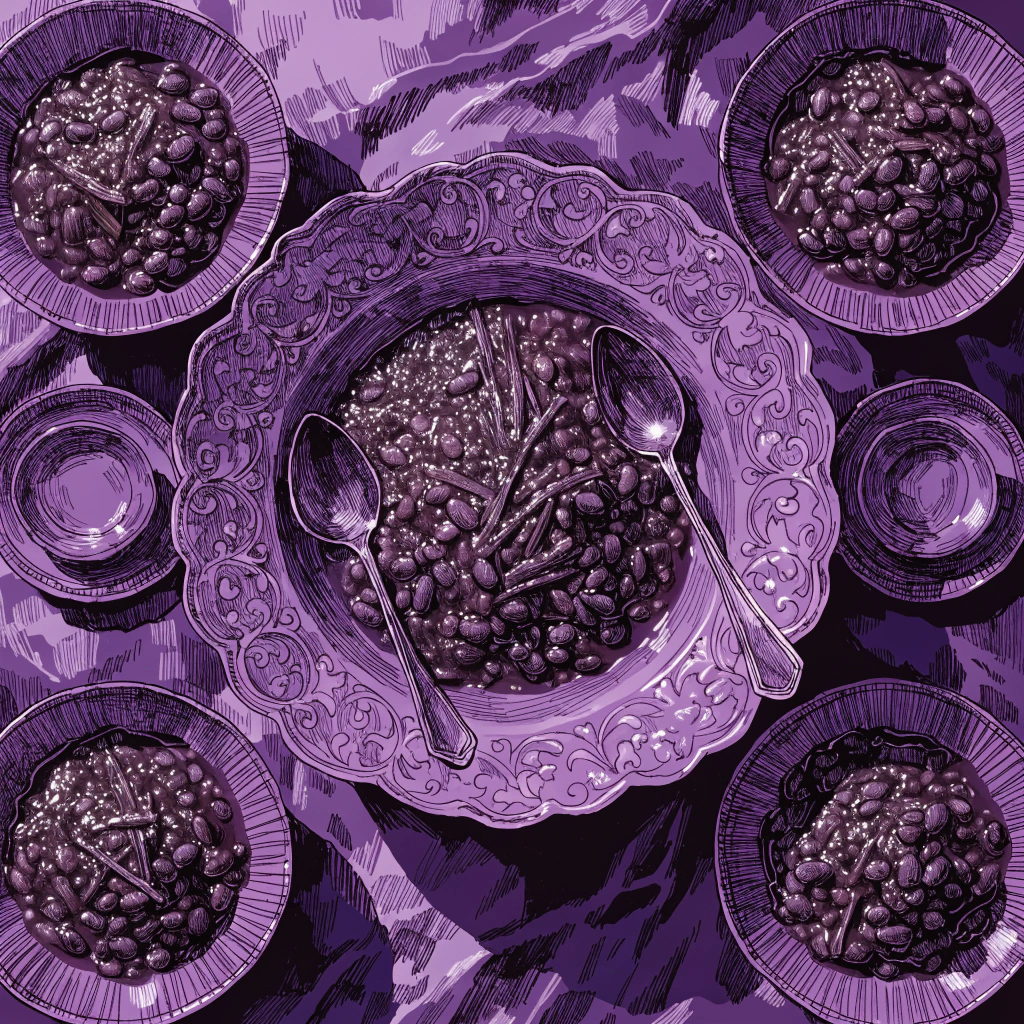
Ghormeh Sabzi: Un Plato Verde de Irán
Ghormeh Sabzi es un plato especial de Irán. Es un guiso muy famoso. Su nombre significa 'estofado de hierbas'. Este plato es de color verde oscuro. Tiene muchas hierbas frescas y también carne. Las personas en Irán preparan Ghormeh Sabzi con mucho amor. Es una comida muy antigua. La gente come Ghormeh Sabzi en sus casas. Es un símbolo de la cultura de Irán. ¡Es muy sabroso y a muchos les gusta!
Gramática destacada
Patrón: El verbo 'Ser' (presente)
"Ghormeh Sabzi es un plato especial de Irán."
Usamos el verbo 'ser' para hablar de la identidad o el origen de algo. En este caso, 'es' es la forma para 'él/ella/usted' y significa 'is' en inglés.
Patrón: Artículos definidos (el/la/los/las)
"Las personas en Irán preparan Ghormeh Sabzi con mucho amor."
Los artículos definidos ('el', 'la', 'los', 'las') se usan para hablar de algo específico. 'Las' se usa con sustantivos femeninos plurales, como 'personas'.
Pon a prueba tu comprensión
10 preguntas · A1 Principiante · 1 vista previa gratis
Pon a prueba lo que aprendiste en este artículo. ¡Responde todas las preguntas para ganar XP!
¿De dónde es el plato Ghormeh Sabzi?
¿Quieres terminar el quiz?
9 preguntas más te esperan. ¡Regístrate gratis para desbloquear el quiz completo y ganar XP!
Regístrate gratis¿Ya tienes cuenta? Acceder
Desglose de preguntas
¿De dónde es el plato Ghormeh Sabzi?
Tu respuesta:
Respuesta correcta: De Irán
El Ghormeh Sabzi es de color azul.
Tu respuesta:
Respuesta correcta: Falso
¿Qué significa la palabra 'guiso'?
Tu respuesta:
Respuesta correcta: Una comida caliente con carne y verduras
Ghormeh Sabzi es un plato _____ de Irán.
Tu respuesta:
Respuesta correcta: especial
Ghormeh Sabzi: El Sabor de Irán
Ghormeh Sabzi es un plato muy famoso en Irán. Mucha gente dice que es el plato nacional, ¡es como un icono cultural! Es un estofado de color verde oscuro. Su historia es muy antigua, de más de mil años, y viene de las tradiciones nómadas. El nombre "Ghormeh" significa 'estofado' o 'carne cocinada lentamente' y "Sabzi" significa 'hierbas'. Así, es un "estofado de hierbas" muy especial.
Para preparar este plato, se necesitan muchas hierbas frescas, como perejil, cilantro y puerros. También lleva trozos de carne, que puede ser de cordero o de ternera, y frijoles rojos o blancos. La preparación es un trabajo largo y requiere mucho tiempo y paciencia. Se cocina lentamente durante varias horas para que todos los sabores se mezclen muy bien. Este proceso da al plato su color verde profundo y su sabor agridulce único.
Ghormeh Sabzi no es solo una comida; es una experiencia y una parte importante de la cultura iraní. Las familias lo comen juntas, especialmente los fines de semana o en celebraciones. Es un plato delicioso y representa la rica tradición culinaria de Irán. Probarlo es descubrir un poco del alma de este país.
Gramática destacada
Patrón: Pretérito Indefinido (Pasado Simple)
"Su historia fue muy antigua, de más de mil años."
Usamos el pretérito indefinido para hablar de acciones que empezaron y terminaron en un momento específico del pasado. Por ejemplo, 'fue' es la forma del verbo 'ser' en pretérito indefinido.
Patrón: Comparativo de cantidad: 'más de'
"Su historia es muy antigua, de más de mil años."
Usamos 'más de' para indicar que una cantidad o número es superior a otro. Se utiliza con números o cantidades específicas para comparar.
Pon a prueba tu comprensión
11 preguntas · A2 Básico · 1 vista previa gratis
Pon a prueba lo que aprendiste en este artículo. ¡Responde todas las preguntas para ganar XP!
¿Qué significa la palabra "Sabzi" en el nombre del plato?
¿Quieres terminar el quiz?
10 preguntas más te esperan. ¡Regístrate gratis para desbloquear el quiz completo y ganar XP!
Regístrate gratis¿Ya tienes cuenta? Acceder
Desglose de preguntas
¿Qué significa la palabra "Sabzi" en el nombre del plato?
Tu respuesta:
Respuesta correcta: hierbas
La preparación de Ghormeh Sabzi es muy rápida.
Tu respuesta:
Respuesta correcta: Falso
¿Qué significa "antigua" en el contexto del artículo?
Tu respuesta:
Respuesta correcta: vieja
Ghormeh Sabzi es un plato muy ______ en Irán.
Tu respuesta:
Respuesta correcta: famoso
¿Qué tipo de ingredientes principales se usan en Ghormeh Sabzi?
Tu respuesta:
Respuesta correcta: hierbas frescas y carne
Ghormeh Sabzi: El Alma de la Cocina Persa
Ghormeh Sabzi es mucho más que un simple estofado en Irán; es una verdadera experiencia cultural y sensorial que define la cocina persa. A menudo, este plato de color verde intenso es considerado el estofado nacional, y su historia ha perdurado por más de mil años, evolucionando desde las tradiciones nómadas de la antigua Persia. Su popularidad es inmensa y se disfruta en celebraciones y reuniones familiares importantes.
El nombre del plato proviene de 'Ghormeh', que significa carne estofada o braseada, y 'Sabzi', que se refiere a las hierbas. Esto refleja los dos componentes principales de esta deliciosa preparación. Las hierbas frescas son la esencia del Ghormeh Sabzi. Se utilizan espinacas, perejil, cilantro y puerro, entre otras, las cuales son picadas muy finas y luego cocinadas lentamente hasta que sueltan todo su aroma y sabor.
La preparación del Ghormeh Sabzi es un trabajo que requiere paciencia y amor. Primero, la carne de cordero o ternera se ha cocinado lentamente con cebolla hasta que está tierna. Después, las hierbas se han salteado cuidadosamente y se añaden a la carne junto con judías rojas y limones secos (llamados "limu Omani"), que le dan un toque ácido y único. Todo se cocina a fuego lento durante horas, permitiendo que los sabores se mezclen y profundicen, creando una salsa espesa y rica. Este proceso lento es fundamental para su sabor característico.
Este estofado se sirve tradicionalmente con arroz basmati, conocido como 'chelow'. Cada familia iraní tiene su propia receta y secretos para el Ghormeh Sabzi perfecto, lo que lo convierte en un plato lleno de tradición y orgullo. Es una comida que une a las familias y celebra la rica herencia culinaria de Irán, pasando de generación en generación.
Gramática destacada
Patrón: La Voz Pasiva con "ser"
"A menudo, este plato de color verde intenso es considerado el estofado nacional."
Usamos la voz pasiva con "ser" para decir que una acción se realiza a algo o alguien, sin importar quién la hace. Se forma con el verbo "ser" (en este caso, "es") más el participio pasado del verbo principal ("considerado").
Patrón: El Presente Perfecto
"Su historia ha perdurado por más de mil años."
El presente perfecto se usa para hablar de acciones que comenzaron en el pasado y continúan en el presente, o de experiencias pasadas sin un momento específico. Se forma con el verbo "haber" en presente ("ha") y el participio pasado del verbo principal ("perdurado").
Pon a prueba tu comprensión
11 preguntas · B1 Intermedio · 1 vista previa gratis
Pon a prueba lo que aprendiste en este artículo. ¡Responde todas las preguntas para ganar XP!
¿Qué significa la palabra 'Sabzi' en el nombre del plato?
¿Quieres terminar el quiz?
10 preguntas más te esperan. ¡Regístrate gratis para desbloquear el quiz completo y ganar XP!
Regístrate gratis¿Ya tienes cuenta? Acceder
Desglose de preguntas
¿Qué significa la palabra 'Sabzi' en el nombre del plato?
Tu respuesta:
Respuesta correcta: Hierbas
La preparación del Ghormeh Sabzi es un proceso rápido y sencillo.
Tu respuesta:
Respuesta correcta: Falso
¿Qué significa 'paciencia'?
Tu respuesta:
Respuesta correcta: La capacidad de esperar con calma o de hacer algo sin prisa.
El Ghormeh Sabzi es considerado el estofado __________ de Irán.
Tu respuesta:
Respuesta correcta: nacional
¿Con qué se sirve tradicionalmente el Ghormeh Sabzi?
Tu respuesta:
Respuesta correcta: Arroz basmati
Ghormeh Sabzi: The Culinary Heartbeat of Persian Identity
Ghormeh Sabzi is widely regarded as the national dish of Iran, representing a sophisticated blend of history, tradition, and culinary expertise. While many international cuisines are defined by their speed and convenience, this deep green herb stew stands as a testament to the Iranian philosophy of 'slow food.' The dish's name, derived from 'Ghormeh' (meaning braised meat) and 'Sabzi' (meaning herbs), provides a literal description of its primary components, yet it fails to capture the intricate labor required for its preparation. Historically, the dish is believed to have evolved from the nomadic traditions of ancient Persia, where shepherds would preserve meat by braising it and mixing it with wild mountain herbs. Over centuries, this rustic survival meal was refined within urban kitchens, eventually reaching its current state of culinary perfection.
The process typically begins with the meticulous selection and chopping of various herbs, including parsley, cilantro, and leeks. These are then sautéed until they reach a specific shade of dark green, a step that is crucial for achieving the stew's characteristic depth of flavor. If the herbs were to be overcooked, the dish would become bitter; conversely, undercooking them would result in a lack of complexity. This delicate balance highlights the skill required by the cook. Furthermore, the inclusion of 'limoo amani' (dried limes) introduces a unique acidic profile that offsets the richness of the red meat and kidney beans. These limes are pierced before being added to the pot, allowing the stew's juices to permeate the fruit and extract its citrusy essence. Over several hours of simmering, the ingredients meld together, creating a harmonious symphony of tastes that is often served alongside fluffy saffron-infused rice.
Beyond its nutritional value, Ghormeh Sabzi serves a vital social function. It is frequently the centerpiece of family gatherings and formal celebrations, symbolizing hospitality and communal unity. In a rapidly globalizing world where fast-paced lifestyles are becoming the norm, the persistence of such a time-consuming dish suggests a profound commitment to cultural heritage. Consequently, the aroma of Ghormeh Sabzi wafting through an Iranian household is not merely a sign of a pending meal, but rather an invitation to participate in a thousand-year-old legacy. Ultimately, the dish transcends its status as a mere recipe, evolving into a sensory experience that defines the Persian kitchen.
Gramática destacada
Patrón: Passive Voice
"Ghormeh Sabzi is widely regarded as the national dish of Iran..."
The passive voice is used here to focus on the dish itself rather than the people who regard it. It is formed using the verb 'to be' and the past participle 'regarded'.
Patrón: Second Conditional (Hypothetical)
"If the herbs were to be overcooked, the dish would become bitter..."
This structure uses 'if' + were to + base verb followed by 'would' to describe a hypothetical situation and its result. It emphasizes the precision required in the cooking process.
Patrón: Present Participle Clauses
"...creating a harmonious symphony of tastes that is often served alongside fluffy saffron-infused rice."
The participle 'creating' introduces a clause that explains the result of the previous action (simmering). This helps to combine ideas and improve the flow of the text.
Pon a prueba tu comprensión
11 preguntas · B2 Intermedio alto · 1 vista previa gratis
Pon a prueba lo que aprendiste en este artículo. ¡Responde todas las preguntas para ganar XP!
What does the name 'Ghormeh' specifically refer to in the context of the dish?
¿Quieres terminar el quiz?
10 preguntas más te esperan. ¡Regístrate gratis para desbloquear el quiz completo y ganar XP!
Regístrate gratis¿Ya tienes cuenta? Acceder
Desglose de preguntas
What does the name 'Ghormeh' specifically refer to in the context of the dish?
Tu respuesta:
Respuesta correcta: The braised meat
The dish originated in modern urban fast-food restaurants.
Tu respuesta:
Respuesta correcta: Falso
What does 'permeate' mean?
Tu respuesta:
Respuesta correcta: To spread throughout something
The dish is frequently the _____ of family gatherings and formal celebrations.
Tu respuesta:
Respuesta correcta: centerpiece
Why are the dried limes pierced before being added to the stew?
Tu respuesta:
Respuesta correcta: To allow juices to enter and extract flavor
Ghormeh Sabzi: El Alma Verde de la Gastronomía Persa
Pocas son las recetas que, como el Ghormeh Sabzi, trascienden la mera función alimenticia para erigirse en auténticos emblemas culturales de una nación. Este guiso de un verde profundo no es solo un plato en Irán; es una experiencia sensorial, un pilar inamovible de la cocina persa y, para muchos, su plato nacional por excelencia. Su historia, que se extiende a lo largo de más de mil años, se entrelaza con las tradiciones nómadas de la antigua Persia, un legado culinario que ha sabido perdurar y evolucionar.
La etimología de su nombre ya nos revela la esencia de su composición: 'Ghormeh' se traduce como estofado o carne braseada, mientras que 'Sabzi' alude directamente a las hierbas. Esta denominación, por sí misma, subraya el protagonismo indiscutible de los vegetales frescos en su elaboración. La preparación de este manjar es, indudablemente, una labor de amor que exige paciencia y meticulosidad, iniciándose con la selección y el picado finísimo de una profusión de hierbas frescas, entre las que destacan el perejil, el cilantro, el puerro o la cebolleta y, de forma crucial, el fenogreco, que le confiere un aroma y sabor inconfundibles.
Es precisamente el largo y cuidadoso proceso de saltear estas hierbas lo que dota al Ghormeh Sabzi de su distintivo color verde oscuro y su sabor complejo y profundo. No basta con cocinarlas; han de ser sofritas hasta que suelten sus aceites y se oscurezcan, un paso que, aunque pueda parecer tedioso, es fundamental para el perfil aromático final del guiso. A esta base herbácea se le añaden trozos de carne (tradicionalmente cordero o ternera), alubias rojas o pintas, y un ingrediente estrella que aporta una acidez cítrica sublime: los limones secos persas, conocidos como 'limu Omani'. Estos se perforan antes de incorporarlos al guiso para que liberen su sabor durante la cocción lenta.
El secreto del Ghormeh Sabzi reside en su cocción a fuego lento durante varias horas. Este proceso no solo permite que los sabores se fusionen y profundicen, sino que también garantiza que la carne quede tierna y las alubias adquieran la textura perfecta. El resultado es un guiso espeso, fragante y de un sabor umami complejo, con notas terrosas de las hierbas, la riqueza de la carne y el toque ácido de los limones secos. Se sirve tradicionalmente con arroz basmati cocido al vapor, a menudo en forma de 'chelow' (arroz blanco esponjoso) o 'polo' (arroz mezclado con otros ingredientes).
Más allá de su exquisito sabor, el Ghormeh Sabzi encarna valores profundos de la cultura iraní. Se le asocia con la hospitalidad, las reuniones familiares y la celebración de las tradiciones. Preparar y compartir este plato es una expresión de afecto y un vínculo con el pasado. Para cualquier visitante, probar el Ghormeh Sabzi no es solo degustar una comida; es sumergirse en la historia, la generosidad y el alma de Irán. Verdaderamente, la elaboración de este guiso es un arte que se transmite de generación en generación, un testimonio viviente de la riqueza culinaria persa que sigue deleitando paladares en todo el mundo.
Gramática destacada
Patrón: Inversión del Sujeto
"Pocas son las recetas que, como el Ghormeh Sabzi, trascienden la mera función alimenticia para erigirse en auténticos emblemas culturales de una nación."
Esta estructura, donde el verbo precede al sujeto ('son las recetas'), se usa para enfatizar el sujeto o para crear un estilo más formal y literario. Es común en contextos donde se presenta información o se hace una afirmación categórica.
Patrón: Oración Hendida (Cleft Sentence)
"Es precisamente el largo y cuidadoso proceso de saltear estas hierbas lo que dota al Ghormeh Sabzi de su distintivo color verde oscuro y su sabor complejo y profundo."
Las oraciones hendidas ('Es X lo que Y') se utilizan para poner énfasis en una parte específica de la oración. En este caso, se destaca 'el proceso de saltear las hierbas' como la causa principal del color y sabor del plato, aislando la información clave.
Patrón: Nominalización
"La elaboración de este manjar es, indudablemente, una labor de amor que exige paciencia y meticulosidad."
La nominalización consiste en transformar un verbo o un adjetivo en un sustantivo ('elaborar' -> 'elaboración'). Esto permite expresar ideas de forma más concisa y abstracta, elevando el nivel de formalidad y complejidad del discurso.
Pon a prueba tu comprensión
12 preguntas · C1 Avanzado · 1 vista previa gratis
Pon a prueba lo que aprendiste en este artículo. ¡Responde todas las preguntas para ganar XP!
¿Cuál de las siguientes afirmaciones describe mejor el Ghormeh Sabzi según el artículo?
¿Quieres terminar el quiz?
11 preguntas más te esperan. ¡Regístrate gratis para desbloquear el quiz completo y ganar XP!
Regístrate gratis¿Ya tienes cuenta? Acceder
Desglose de preguntas
¿Cuál de las siguientes afirmaciones describe mejor el Ghormeh Sabzi según el artículo?
Tu respuesta:
Respuesta correcta: Es un guiso persa con un profundo significado cultural y una larga historia.
El fenogreco es una hierba crucial que le da al Ghormeh Sabzi un aroma y sabor inconfundibles.
Tu respuesta:
Respuesta correcta: Verdadero
¿Qué significa 'meticulosidad' en el contexto del artículo?
Tu respuesta:
Respuesta correcta: Cuidado y atención extrema a los detalles.
Los limones secos persas, conocidos como 'limu Omani', aportan una acidez cítrica ______ al guiso.
Tu respuesta:
Respuesta correcta: sublime
¿Por qué es fundamental saltear las hierbas durante un largo tiempo?
Tu respuesta:
Respuesta correcta: Para que suelten sus aceites y se oscurezcan, mejorando el perfil aromático.
El Ghormeh Sabzi se sirve tradicionalmente con pasta o fideos.
Tu respuesta:
Respuesta correcta: Falso
The Gastronomic Palimpsest: Deciphering the Ontological Significance of Ghormeh Sabzi in the Persian Consciousness
To analyze the culinary landscape of Iran without acknowledging the central role of Ghormeh Sabzi would be to eviscerate the very heart of Persian heritage. Seldom does a dish encapsulate the collective identity of a nation as poignantly as this herbaceous stew, which functions as a gastronomic palimpsest, layered with centuries of history, nomadic tradition, and domestic ritual. Far from being a mere source of sustenance, Ghormeh Sabzi represents a profound intersection of botanical knowledge and temporal patience, reflecting a cultural proclivity for complexity and depth. The dish is essentially an olfactory journey, one that requires the practitioner to engage in a form of culinary alchemy that transforms humble ingredients into something transcendent.
The historical trajectory of Ghormeh Sabzi is as labyrinthine as the flavors it produces. Its lineage can be traced back over a millennium, originating from the nomadic tribes of ancient Persia who sought to preserve meat by braising it in large quantities of herbs. This technique was not merely a matter of survival but an early expression of a sophisticated understanding of regional flora. As these nomadic practices transitioned into the more sedentary environments of the Safavid and Qajar courts, the dish underwent a refinement that solidified its status as the quintessence of the Persian kitchen. It is this historical continuity that imbues the stew with its symbolic weight; to consume it is to participate in a lineage of endurance and adaptation.
The preparation of Ghormeh Sabzi is an arduous undertaking, demanding a meticulous attention to detail that defies the modern impulse toward convenience. The foundation of the stew lies in its 'sabzi'—a specific blend of parsley, cilantro, chives, and fenugreek. It is imperative that the herb mixture be sautéed until its vibrant green yields to a deep, forest-like hue, a process that requires a delicate balance of heat and timing. Should the herbs be scorched, the entire dish is rendered bitter; should they be under-sautéed, the stew lacks the requisite depth. This phase of preparation is a testament to the virtue of patience, as the ephemeral aromas of the fresh herbs are slowly concentrated into a rich, savory essence.
Central to the dish's unique profile is the 'Limoo Amani,' or dried lime. These sun-dried citruses introduce a complex acidity that cuts through the richness of the braised meat and red kidney beans. The dried lime serves as a dialectical counterpoint to the earthy herbs, providing a sharp, bitter-sour note that is the defining idiosyncrasy of the dish. Were one to excise this herbaceous stew from the Persian table, or even merely omit the dried lime, the resulting cultural void would be palpable. The lime must be pierced to allow the simmering broth to penetrate its core, releasing an essence that is both ancient and invigorating. This slow-cooking process, known in Persian as 'ja oftadan,' refers to the moment the stew reaches a state of perfect cohesion, where the oil rises to the surface, signaling that the ingredients have finally harmonized.
In the contemporary era, Ghormeh Sabzi has transcended the borders of Iran, following the diaspora across the globe. For many Iranians living abroad, the aroma of sautéing fenugreek is a powerful mnemonic device, capable of collapsing the distance between their current residence and their ancestral home. It serves as a unifying thread that binds generations together, regardless of their geographical location. Ultimately, Ghormeh Sabzi is not just a meal; it is an ontological anchor, a constant in a world of flux, and a celebration of the enduring power of Persian civilization through the medium of taste.
Gramática destacada
Patrón: Negative Inversion
"Seldom does a dish encapsulate the collective identity of a nation as poignantly as Ghormeh Sabzi."
This structure places a negative or restrictive adverbial at the beginning of the sentence for emphasis, requiring the auxiliary verb to come before the subject.
Patrón: Present Subjunctive
"It is imperative that the herb mixture be sautéed until its vibrant green yields to a deep, forest-like hue."
The subjunctive 'be sautéed' is used after adjectives expressing urgency or importance (imperative) to indicate a required action rather than a statement of fact.
Patrón: Inverted Conditional (Type 2)
"Were one to excise this herbaceous stew from the Persian table, the resulting cultural void would be palpable."
This formal structure replaces 'If one were to...' with 'Were one to...', used for hypothetical situations in academic or literary prose.
Pon a prueba tu comprensión
12 preguntas · C2 Dominio · 1 vista previa gratis
Pon a prueba lo que aprendiste en este artículo. ¡Responde todas las preguntas para ganar XP!
What does the author suggest by calling Ghormeh Sabzi a 'gastronomic palimpsest'?
¿Quieres terminar el quiz?
11 preguntas más te esperan. ¡Regístrate gratis para desbloquear el quiz completo y ganar XP!
Regístrate gratis¿Ya tienes cuenta? Acceder
Desglose de preguntas
What does the author suggest by calling Ghormeh Sabzi a 'gastronomic palimpsest'?
Tu respuesta:
Respuesta correcta: It is a culinary artifact that retains traces of its long historical evolution.
The dish originated in the urban kitchens of the Safavid and Qajar courts.
Tu respuesta:
Respuesta correcta: Falso
What does 'ephemeral' mean in the context of the article?
Tu respuesta:
Respuesta correcta: Lasting for a short duration
The author notes that if the herbs are scorched, the dish becomes ____.
Tu respuesta:
Respuesta correcta: bitter
What is the primary function of the 'Limoo Amani' according to the text?
Tu respuesta:
Respuesta correcta: To provide a complex acidic and bitter-sour counterpoint to the herbs.
The term 'ja oftadan' refers to the moment when the ingredients in the stew have perfectly harmonized.
Tu respuesta:
Respuesta correcta: Verdadero

