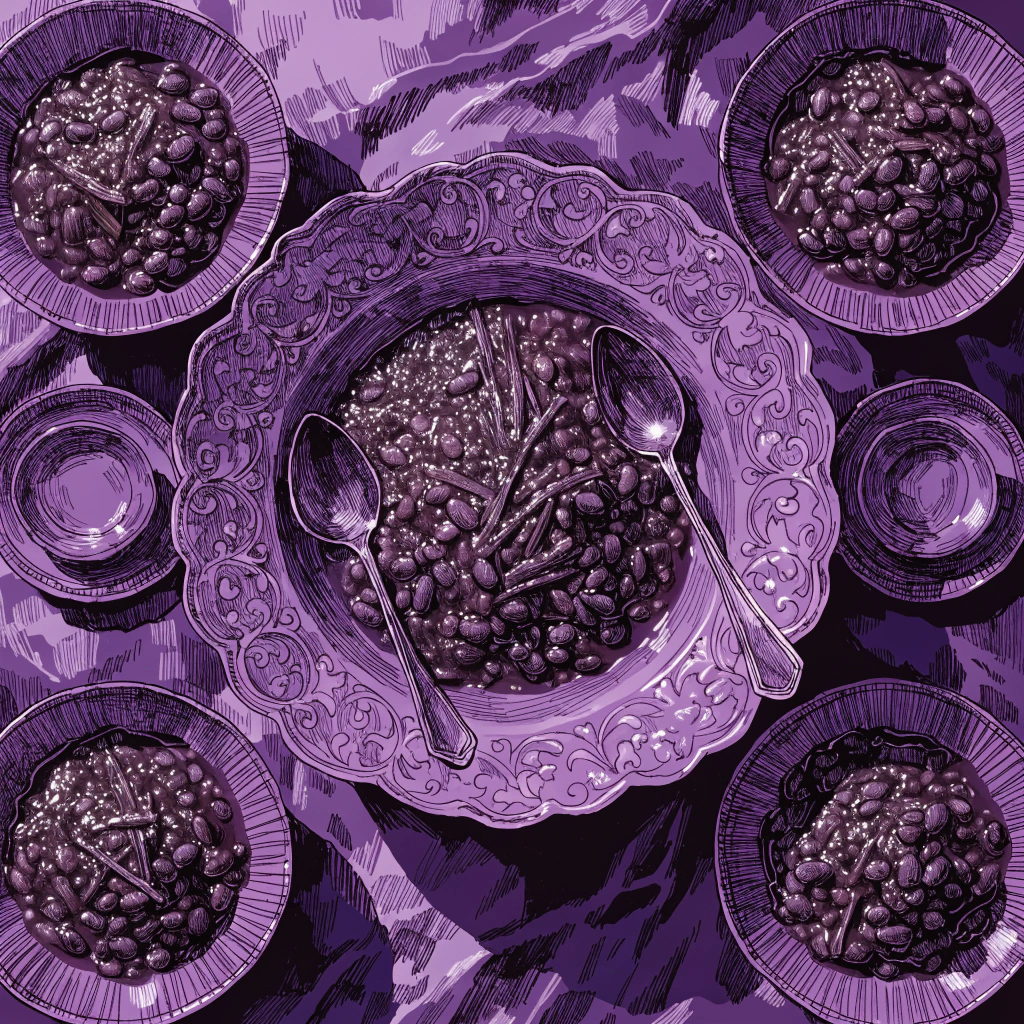
Ghormeh Sabzi: A Special Meal from Iran
Ghormeh Sabzi is a very famous food in Iran. Many people call it the national dish. It is a delicious green stew. It is very old and important in Persian culture.
This dish has many healthy ingredients. It has meat, red beans, and many green herbs. The herbs give the stew a dark green color. People cook the stew slowly for many hours.
Iranian families eat Ghormeh Sabzi with white rice. It has a special smell and a great taste. Many people eat this meal on Fridays with their family. It is a favorite food for everyone.
Gramática em destaque
Padrão: Present Simple with 'Be'
"Ghormeh Sabzi is a very famous food in Iran."
We use the verb 'to be' (am/is/are) to describe a person, place, or thing. In this sentence, 'is' describes the food.
Padrão: Present Simple with Action Verbs
"Iranian families eat Ghormeh Sabzi with white rice."
We use the base form of the verb for habits or general truths. Here, 'eat' shows what people usually do.
Teste sua compreensão
10 perguntas · A1 Iniciante · 1 pré-visualização grátis
Teste o que aprendeu neste artigo. Responda todas as perguntas para ganhar XP!
What color is Ghormeh Sabzi?
Quer finalizar o quiz?
9 perguntas a mais estão esperando por você. Cadastre-se grátis para desbloquear o quiz completo e ganhar XP!
Cadastrar grátisJá tem conta? Entrar
Detalhamento das perguntas
What color is Ghormeh Sabzi?
Sua resposta:
Resposta correta: Green
People cook the stew very fast.
Sua resposta:
Resposta correta: Falso
What are herbs?
Sua resposta:
Resposta correta: Plants used for flavor
It is a _____ food for everyone.
Sua resposta:
Resposta correta: favorite
Ghormeh Sabzi: The National Dish of Iran
Ghormeh Sabzi is the most famous dish in Iran. It is a green stew with a very long history. People started cooking this meal more than a thousand years ago. The name comes from two words: "Ghormeh" means meat and "Sabzi" means herbs.
To make this dish, cooks use many fresh herbs like parsley and cilantro. They also add beans, dried limes, and lamb or beef. The cooking process is slow because the flavors need time to mix together. While it cooks, the kitchen smells wonderful.
Iranian families often eat Ghormeh Sabzi on Fridays. This day is a holiday in Iran, so families have time to stay together. Many people believe this stew is better than any other food because it reminds them of their childhood. It is a special part of Iranian culture.
Gramática em destaque
Padrão: Superlative Adjectives
"Ghormeh Sabzi is the most famous dish in Iran."
We use 'the most' with long adjectives to compare one thing with many others. It shows that this dish has the highest level of fame.
Padrão: Comparative Adjectives
"Many people believe this stew is better than any other food."
We use 'better than' to compare two things. 'Better' is the irregular comparative form of the adjective 'good'.
Teste sua compreensão
11 perguntas · A2 Elementar · 1 pré-visualização grátis
Teste o que aprendeu neste artigo. Responda todas as perguntas para ganhar XP!
How old is the dish Ghormeh Sabzi?
Quer finalizar o quiz?
10 perguntas a mais estão esperando por você. Cadastre-se grátis para desbloquear o quiz completo e ganhar XP!
Cadastrar grátisJá tem conta? Entrar
Detalhamento das perguntas
How old is the dish Ghormeh Sabzi?
Sua resposta:
Resposta correta: More than 1,000 years
Ghormeh Sabzi is a red stew.
Sua resposta:
Resposta correta: Falso
What does the word 'Sabzi' mean in English?
Sua resposta:
Resposta correta: Herbs
Ghormeh Sabzi is the most _____ dish in Iran.
Sua resposta:
Resposta correta: famous
On which day do Iranian families usually eat this dish together?
Sua resposta:
Resposta correta: Fridays
Ghormeh Sabzi: The Heart of Iranian Cuisine
Ghormeh Sabzi is known as the national dish of Iran. It is a deep green stew that has been enjoyed by families for over a thousand years. The name comes from two words: 'ghormeh', which means stewed meat, and 'sabzi', which means herbs. This meal is more than just food; it is a symbol of Persian culture and history.
The preparation of the dish is a slow process that requires a lot of patience. First, a large variety of fresh herbs, such as parsley, cilantro, and chives, are chopped and fried. Then, they are mixed with red kidney beans, onions, and pieces of lamb or beef. A very important ingredient is the dried lime, which gives the stew a unique, sour taste. These ingredients are simmered together for several hours until the flavors have blended perfectly.
In Iran, this stew is usually served with fluffy saffron rice. It has been cooked for special occasions and family gatherings for many generations. Many people believe that the taste actually improves if it is eaten the next day! Because it takes so much time to prepare, it is often described as a 'labor of love.' If you visit an Iranian home, you will likely be offered this delicious meal, which represents the warmth and hospitality of the country. This tradition shows how food can connect people to their ancient nomadic roots.
Gramática em destaque
Padrão: Present Perfect Passive
"It has been enjoyed by families for over a thousand years."
This pattern is used to talk about an action that started in the past and continues to be true, where the focus is on the object receiving the action. It is formed using 'has/have + been + past participle'.
Padrão: Relative Clauses
"The name comes from two words: 'ghormeh', which means stewed meat, and 'sabzi', which means herbs."
Relative clauses give more information about a noun. 'Which' is used here to provide a definition or extra detail about the Persian words mentioned.
Teste sua compreensão
11 perguntas · B1 Intermediário · 1 pré-visualização grátis
Teste o que aprendeu neste artigo. Responda todas as perguntas para ganhar XP!
What are the two main components of the dish's name?
Quer finalizar o quiz?
10 perguntas a mais estão esperando por você. Cadastre-se grátis para desbloquear o quiz completo e ganhar XP!
Cadastrar grátisJá tem conta? Entrar
Detalhamento das perguntas
What are the two main components of the dish's name?
Sua resposta:
Resposta correta: Meat and herbs
Ghormeh Sabzi is a dish that can be prepared very quickly.
Sua resposta:
Resposta correta: Falso
What is the definition of 'hospitality'?
Sua resposta:
Resposta correta: Friendly and generous treatment of guests
Because it takes so much time to prepare, it is often described as a labor of _____.
Sua resposta:
Resposta correta: love
Which ingredient gives the stew its sour flavor?
Sua resposta:
Resposta correta: Dried lime
Ghormeh Sabzi: The Culinary Heartbeat of Persian Identity
Ghormeh Sabzi is widely regarded as the national dish of Iran, representing a sophisticated blend of history, tradition, and culinary expertise. While many international cuisines are defined by their speed and convenience, this deep green herb stew stands as a testament to the Iranian philosophy of 'slow food.' The dish's name, derived from 'Ghormeh' (meaning braised meat) and 'Sabzi' (meaning herbs), provides a literal description of its primary components, yet it fails to capture the intricate labor required for its preparation. Historically, the dish is believed to have evolved from the nomadic traditions of ancient Persia, where shepherds would preserve meat by braising it and mixing it with wild mountain herbs. Over centuries, this rustic survival meal was refined within urban kitchens, eventually reaching its current state of culinary perfection.
The process typically begins with the meticulous selection and chopping of various herbs, including parsley, cilantro, and leeks. These are then sautéed until they reach a specific shade of dark green, a step that is crucial for achieving the stew's characteristic depth of flavor. If the herbs were to be overcooked, the dish would become bitter; conversely, undercooking them would result in a lack of complexity. This delicate balance highlights the skill required by the cook. Furthermore, the inclusion of 'limoo amani' (dried limes) introduces a unique acidic profile that offsets the richness of the red meat and kidney beans. These limes are pierced before being added to the pot, allowing the stew's juices to permeate the fruit and extract its citrusy essence. Over several hours of simmering, the ingredients meld together, creating a harmonious symphony of tastes that is often served alongside fluffy saffron-infused rice.
Beyond its nutritional value, Ghormeh Sabzi serves a vital social function. It is frequently the centerpiece of family gatherings and formal celebrations, symbolizing hospitality and communal unity. In a rapidly globalizing world where fast-paced lifestyles are becoming the norm, the persistence of such a time-consuming dish suggests a profound commitment to cultural heritage. Consequently, the aroma of Ghormeh Sabzi wafting through an Iranian household is not merely a sign of a pending meal, but rather an invitation to participate in a thousand-year-old legacy. Ultimately, the dish transcends its status as a mere recipe, evolving into a sensory experience that defines the Persian kitchen.
Gramática em destaque
Padrão: Passive Voice
"Ghormeh Sabzi is widely regarded as the national dish of Iran..."
The passive voice is used here to focus on the dish itself rather than the people who regard it. It is formed using the verb 'to be' and the past participle 'regarded'.
Padrão: Second Conditional (Hypothetical)
"If the herbs were to be overcooked, the dish would become bitter..."
This structure uses 'if' + were to + base verb followed by 'would' to describe a hypothetical situation and its result. It emphasizes the precision required in the cooking process.
Padrão: Present Participle Clauses
"...creating a harmonious symphony of tastes that is often served alongside fluffy saffron-infused rice."
The participle 'creating' introduces a clause that explains the result of the previous action (simmering). This helps to combine ideas and improve the flow of the text.
Teste sua compreensão
11 perguntas · B2 Intermediário superior · 1 pré-visualização grátis
Teste o que aprendeu neste artigo. Responda todas as perguntas para ganhar XP!
What does the name 'Ghormeh' specifically refer to in the context of the dish?
Quer finalizar o quiz?
10 perguntas a mais estão esperando por você. Cadastre-se grátis para desbloquear o quiz completo e ganhar XP!
Cadastrar grátisJá tem conta? Entrar
Detalhamento das perguntas
What does the name 'Ghormeh' specifically refer to in the context of the dish?
Sua resposta:
Resposta correta: The braised meat
The dish originated in modern urban fast-food restaurants.
Sua resposta:
Resposta correta: Falso
What does 'permeate' mean?
Sua resposta:
Resposta correta: To spread throughout something
The dish is frequently the _____ of family gatherings and formal celebrations.
Sua resposta:
Resposta correta: centerpiece
Why are the dried limes pierced before being added to the stew?
Sua resposta:
Resposta correta: To allow juices to enter and extract flavor
The Alchemical Symbiosis of Ghormeh Sabzi: A Cultural Paradigm
Seldom does a dish encapsulate the historical trajectory of a nation as poignantly as Ghormeh Sabzi. To the uninitiated, it may appear as a simple, dark green stew, but to the Persian palate, it represents an indelible link to a nomadic past and a sophisticated culinary evolution. This dish’s ubiquity across Iran’s diverse provinces suggests a unifying cultural force, one that transcends regional dialects and socio-economic divides. The preparation of Ghormeh Sabzi is a meticulous endeavor, requiring hours of labor that defy the modern paradigm of convenience food. It is the slow-burn maturation of the 'limon omani'—dried Persian limes—that imparts that characteristic, tangy depth, creating a flavor profile that is both pungent and nuanced.
Historically, the dish’s roots are buried deep within the pastoralist traditions of ancient Persia. Nomadic tribes, necessitated by their migratory lifestyles, perfected the art of preserving herbs and meat, leading to the early iterations of this slow-cooked marvel. What distinguishes this stew from its counterparts is the alchemical symbiosis of its constituent parts. The foundation lies in the 'Sabzi', a blend of herbs including parsley, coriander, and leeks, but the soul of the dish is undoubtedly the fenugreek. Only when the herbs have been sautéed to a precise shade of obsidian does the dish truly begin to take shape. This sautéing process is critical; if the herbs are undercooked, the stew lacks depth; if scorched, it becomes irredeemably bitter. This delicate balance mirrors the intricacies of Persian diplomacy and social etiquette, where subtlety and restraint are paramount.
The meticulous preparation and the subsequent slow-simmering process are indicative of the Iranian virtue of patience. In a world increasingly dominated by the ephemeral, the hours spent waiting for the kidney beans to soften and the meat to become tender offer a form of culinary meditation. Furthermore, the dish invites a critical analysis of Iranian identity. While its core components remain constant, every household claims a unique, nuanced variation, often passed down through maternal lineages. This tension between tradition and individual interpretation ensures that Ghormeh Sabzi remains a living document of Persian heritage.
The accompaniment of 'chelow'—fluffy, saffron-infused rice—is not merely a side dish but a structural necessity. The rice provides a neutral canvas upon which the intense, complex flavors of the stew can be projected. The contrast between the verdant stew and the golden crust of the 'tahdig' offers a textural juxtaposition that is essential to the authentic experience. Ultimately, the dish is not merely sustenance; it is a sensory manifestation of a civilization that values depth, time, and the harmonious blending of disparate elements. To eat Ghormeh Sabzi is to consume a thousand years of history, layered with the aromatic whispers of the Iranian plateau.
Gramática em destaque
Padrão: Negative Inversion
"Seldom does a dish encapsulate the historical trajectory of a nation as poignantly as Ghormeh Sabzi."
Inversion is used after negative or restrictive adverbs like 'seldom' to create emphasis. The auxiliary verb 'does' moves before the subject 'a dish'.
Padrão: Cleft Sentences
"It is the slow-burn maturation of the 'limon omani'—dried Persian limes—that imparts that characteristic, tangy depth."
This structure (It + is/was + subject + that/who) focuses on a specific part of the sentence to highlight its importance, in this case, the maturation process.
Padrão: Nominalisation
"The meticulous preparation and the subsequent slow-simmering process are indicative of the Iranian virtue of patience."
Turning verbs (prepare, simmer) into nouns (preparation, simmering) allows the writer to discuss complex actions as abstract concepts, typical of academic and advanced C1 writing.
Teste sua compreensão
12 perguntas · C1 Avançado · 1 pré-visualização grátis
Teste o que aprendeu neste artigo. Responda todas as perguntas para ganhar XP!
What is the primary argument regarding Ghormeh Sabzi's cultural role?
Quer finalizar o quiz?
11 perguntas a mais estão esperando por você. Cadastre-se grátis para desbloquear o quiz completo e ganhar XP!
Cadastrar grátisJá tem conta? Entrar
Detalhamento das perguntas
What is the primary argument regarding Ghormeh Sabzi's cultural role?
Sua resposta:
Resposta correta: It serves as a unifying icon across diverse Iranian regions.
The sautéing of herbs is a minor step that does not significantly affect the final taste.
Sua resposta:
Resposta correta: Falso
Which word describes a dark, glass-like volcanic color used to describe the herbs?
Sua resposta:
Resposta correta: Obsidian
The dish's _____ across Iran suggests a unifying cultural force.
Sua resposta:
Resposta correta: ubiquity
Which ingredient is described as the 'soul' of the dish?
Sua resposta:
Resposta correta: Fenugreek
The article suggests that Ghormeh Sabzi has remained unchanged for a thousand years without any individual variation.
Sua resposta:
Resposta correta: Falso
Ghormeh Sabzi: A Epítome da Culinária Persa e um Legado de Sabores Milenares
No vasto e multifacetado tapeçar da gastronomia mundial, poucos pratos logram transcender o mero sustento para se consubstanciar em um verdadeiro ícone cultural. O Ghormeh Sabzi, estofado verde-escuro que adorna as mesas iranianas com uma ubiquidade quase ritualística, é, sem sombra de dúvida, um desses paradigmas. Mais do que uma simples refeição, ele representa um legado milenar, uma narrativa de paladares e aromas que se entrelaçam com a própria identidade persa, evocando memórias ancestrais e a profundidade de uma tradição culinária que remonta a mais de mil anos.
A etimologia do prato já nos oferece uma panorâmica de sua essência: 'Ghormeh' denota carne estufada ou braseada, enquanto 'Sabzi' refere-se explicitamente às ervas. A fusão desses termos não apenas nomeia o prato, mas também sublinha seus dois pilares fundamentais. Originalmente concebido nas tradições nômades da antiga Pérsia, onde a conservação de alimentos era crucial e o cozimento lento em panelas de barro uma prática comum, o Ghormeh Sabzi evoluiu, mas a sua alma permaneceu intacta, um testemunho da resiliência e adaptabilidade cultural.
A preparação deste estofado é, por si só, uma odisseia de dedicação e meticulosidade. Não se trata meramente de combinar ingredientes; é um labor de amor que se inicia na seleção e no tratamento das ervas frescas – salsa, coentro, cebolinha, feno-grego e, ocasionalmente, espinafre ou acelga. Estas são picadas finamente e, em seguida, refogadas por um tempo considerável, até que a umidade se evapore por completo e seu pigmento verde intenso se transforme num tom quase azeitonado, liberando óleos essenciais e uma fragrância inebriante que preenche o ambiente. Este processo meticuloso é crucial para o perfil de sabor único do Ghormeh Sabzi, conferindo-lhe uma complexidade terrosa e ligeiramente amarga que é sua marca registrada.
Simultaneamente, cubos de carne de carneiro ou boi são dourados e depois cozidos lentamente, garantindo uma textura tenra que se desfaz na boca. Os feijões, geralmente vermelhos ou fradinhos, são incorporados à mistura, contribuindo com sua consistência e um sutil toque amiláceo. Contudo, o elemento que verdadeiramente eleva o Ghormeh Sabzi a um patamar de excelência gustativa é a inclusão de limões secos persas, ou 'limoo amani'. Estes, com sua acidez profunda e notas cítricas defumadas, infundem o estofado com um sabor agridoce inconfundível, equilibrando a riqueza das ervas e da carne e adicionando uma camada de sofisticação que é difícil de replicar. Poder-se-ia argumentar que a ausência deste ingrediente desvirtuaria a autenticidade do prato, tal é sua importância.
O resultado final é uma iguaria de cor verde-escura profunda, quase preta, com um aroma que oscila entre o herbáceo, o cítrico e o terroso, e um sabor que é simultaneamente robusto e delicado, ácido e untuoso. Servido tradicionalmente com arroz basmati ('chelo') e acompanhado por iogurte fresco e pão plano, o Ghormeh Sabzi não é apenas uma refeição; é uma experiência sensorial que engaja todos os sentidos e convida à contemplação da riqueza da cultura persa. É um prato que, na sua simplicidade aparente, encapsula a sofisticação de uma civilização e a capacidade de transformar ingredientes humildes em uma obra-prima culinária. A sua persistência através dos séculos é uma prova eloquente de seu apelo universal e de seu lugar inabalável no coração do povo iraniano, sendo um verdadeiro patrimônio gastronômico que merece ser celebrado e apreciado em toda a sua magnificência.
Gramática em destaque
Padrão: Uso do Subjuntivo em Orações Subordinadas Adverbiais Finais
"Contudo, o elemento que verdadeiramente eleva o Ghormeh Sabzi a um patamar de excelência gustativa é a inclusão de limões secos persas, ou 'limoo amani'. Estes, com sua acidez profunda e notas cítricas defumadas, infundem o estofado com um sabor agridoce inconfundível, equilibrando a riqueza das ervas e da carne e adicionando uma camada de sofisticação que é difícil de replicar."
O subjuntivo é empregado aqui para expressar propósito ou objetivo ('para que se replicar' ou 'a fim de que se replique'). Embora a frase não use explicitamente 'para que', a ideia de 'que é difícil de replicar' implica uma finalidade ou resultado desejado que é desafiador de alcançar, exigindo o subjuntivo para indicar essa possibilidade ou irrealidade.
Padrão: Construções Impessoais com 'se' (Poder-se-ia)
"Poder-se-ia argumentar que a ausência deste ingrediente desvirtuaria a autenticidade do prato, tal é sua importância."
Esta construção impessoal com 'se' ('poder-se-ia') é comum em contextos formais e acadêmicos. Ela permite expressar uma possibilidade ou uma opinião de forma generalizada, sem atribuir a ação a um sujeito específico, conferindo um tom de objetividade e hedging acadêmico.
Padrão: Uso de Gerúndio para Expressar Concomitância ou Meio
"Mais do que uma simples refeição, ele representa um legado milenar, uma narrativa de paladares e aromas que se entrelaçam com a própria identidade persa, evocando memórias ancestrais e a profundidade de uma tradição culinária que remonta a mais de mil anos."
O gerúndio ('evocando') é utilizado para indicar uma ação simultânea ou um meio pelo qual algo é realizado. Neste caso, 'evocando' descreve o que a narrativa de paladares e aromas faz ao se entrelaçar com a identidade persa, adicionando uma camada de explicação sobre o efeito dessa interconexão.
Teste sua compreensão
12 perguntas · C2 Domínio · 1 pré-visualização grátis
Teste o que aprendeu neste artigo. Responda todas as perguntas para ganhar XP!
Qual é a principal razão pela qual o Ghormeh Sabzi é considerado um ícone cultural no Irã?
Quer finalizar o quiz?
11 perguntas a mais estão esperando por você. Cadastre-se grátis para desbloquear o quiz completo e ganhar XP!
Cadastrar grátisJá tem conta? Entrar
Detalhamento das perguntas
Qual é a principal razão pela qual o Ghormeh Sabzi é considerado um ícone cultural no Irã?
Sua resposta:
Resposta correta: Por sua profunda conexão com a identidade persa e sua longa história.
A etimologia de 'Ghormeh Sabzi' revela que o prato é composto principalmente por carne e ervas.
Sua resposta:
Resposta correta: Verdadeiro
Qual palavra descreve a qualidade de algo que está presente em toda parte ou aparece em muitos lugares ao mesmo tempo?
Sua resposta:
Resposta correta: ubiquidade
A preparação do Ghormeh Sabzi é descrita como uma odisseia de dedicação e __________.
Sua resposta:
Resposta correta: meticulosidade
Qual ingrediente é crucial para o perfil de sabor agridoce e sofisticado do Ghormeh Sabzi?
Sua resposta:
Resposta correta: Os limões secos persas ('limoo amani').
O refogado das ervas para o Ghormeh Sabzi deve ser breve para manter sua cor verde vibrante.
Sua resposta:
Resposta correta: Falso

