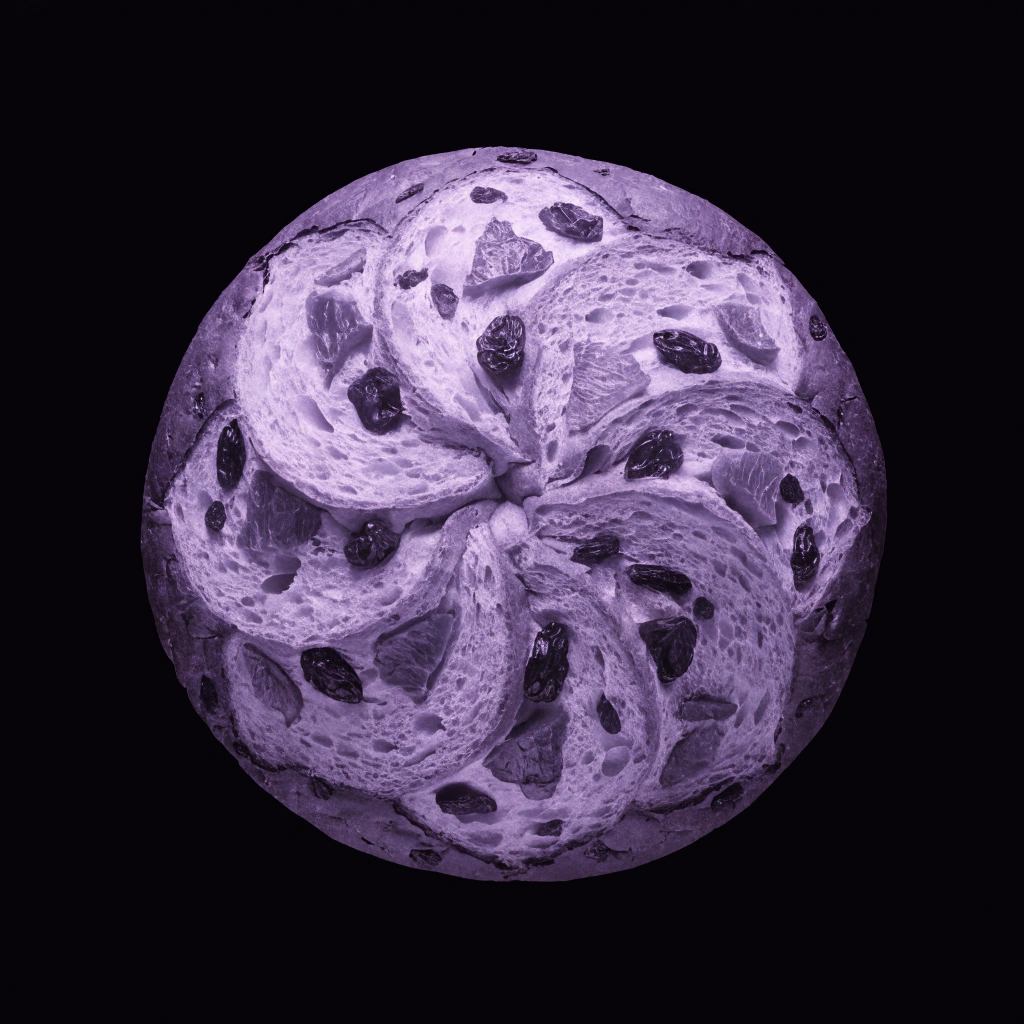
Panettone: The Famous Italian Cake
Panettone is a famous cake from Italy. It comes from the city of Milan. People eat this sweet bread at Christmas. It is very tall and soft.
The story starts long ago. A young boy named Toni works in a kitchen. One day, the chef burns the dessert. Toni makes a new cake with flour, eggs, and sugar. He adds raisins and sweet fruit.
The cake is a big success. Now, families in Italy love Panettone. It is a special tradition every December.
문법 스포트라이트
패턴: Present Simple (To Be)
"Panettone is a famous cake from Italy."
We use 'is' for one person or thing to describe it. In this sentence, it describes what Panettone is.
패턴: Present Simple (Third Person Singular)
"Toni works in a kitchen."
We add an 's' to the verb when the subject is he, she, or it. Here, 'Toni' is a 'he', so we say 'works'.
이해도를 테스트하세요
10 질문 · A1 초급 · 무료 미리보기 1회
이 기사에서 배운 내용을 테스트하세요. 모든 질문에 답하여 XP를 획득하세요!
Where is Panettone from?
문제별 결과
Where is Panettone from?
내 답변:
정답: Milan
People eat Panettone at Christmas.
내 답변:
정답: 참
What does 'sweet' mean?
내 답변:
정답: Tasting like sugar
Panettone is a tall and soft _____.
내 답변:
정답: bread
Panettone: The Famous Christmas Cake of Italy
Panettone is a very famous Italian cake. It comes from the city of Milan. It is not a small cake; it is very tall and soft. People usually eat it during the Christmas season with their families. It is sweeter than bread because it has sugar and dried fruit inside.
There is a famous story about this cake. Long ago, a young cook called Toni worked in a palace. One day, the head chef burned the important Christmas dessert. Toni was worried, but he had a plan. He used some leftover ingredients like flour, eggs, raisins, and orange peel to make a new bread.
The Duke loved the bread and called it 'Pane di Toni,' which means Toni's bread. Today, we call it Panettone. It is harder to make than other cakes because the baker must wait a long time for the bread to rise. However, the result is beautiful and light.
문법 스포트라이트
패턴: Comparatives (Adjective + -er + than)
"It is sweeter than bread because it has sugar and dried fruit inside."
We use comparatives to compare two things. For short adjectives, we add '-er' to the end and use 'than' before the second thing.
패턴: Past Simple (Regular and Irregular)
"Toni was worried, but he had a plan."
We use the past simple to talk about finished actions in the past. 'Was' is the past of 'is', and 'had' is the past of 'have'.
이해도를 테스트하세요
11 질문 · A2 초등급 · 무료 미리보기 1회
이 기사에서 배운 내용을 테스트하세요. 모든 질문에 답하여 XP를 획득하세요!
Where does Panettone come from?
문제별 결과
Where does Panettone come from?
내 답변:
정답: Milan
Toni was the head chef of the palace.
내 답변:
정답: 거짓
What are 'raisins'?
내 답변:
정답: Dried grapes
Panettone is ______ than normal bread.
내 답변:
정답: sweeter
Why is Panettone difficult to make?
내 답변:
정답: The baker must wait a long time for it to rise
The Sweet Legend of Milanese Panettone
Panettone is a famous Italian sweet bread that has become a symbol of the Christmas season. This tall, dome-shaped cake originated in Milan, a city in northern Italy. Today, it is enjoyed by families all over the world during the winter holidays.
The history of Panettone is linked to a popular legend from the 15th century. According to the story, a large banquet was held at the court of Ludovico il Moro, the Duke of Milan. Unfortunately, the head chef accidentally burned the official dessert. Toni, who was a young kitchen assistant, offered a solution. He had prepared a simple loaf of bread using leftover ingredients like flour, eggs, sugar, and raisins. The Duke loved this 'Pane di Toni' (Toni’s bread), which eventually became known as Panettone.
Making an authentic Panettone is a difficult task that requires patience. The dough is fermented for several days to create its light and airy texture. Traditional recipes include candied fruit and raisins, which provide a sweet and unique flavor. Because the process is so long, most people prefer to buy it from professional bakeries rather than making it at home.
In recent years, Panettone has been exported to many different countries. It is often served in thin slices and eaten with hot coffee or sweet sparkling wine. Although new flavors like chocolate or pistachio have been introduced, the classic recipe remains the most popular choice for traditional celebrations.
문법 스포트라이트
패턴: Passive Voice
"The dough is fermented for several days to create its light and airy texture."
The passive voice is used when the action is more important than who is doing it. It is formed with the verb 'to be' and the past participle.
패턴: Relative Clauses
"Toni, who was a young kitchen assistant, offered a solution."
Relative clauses give more information about a person or thing. 'Who' is used for people and 'which' is used for objects or ideas.
이해도를 테스트하세요
11 질문 · B1 중급 · 무료 미리보기 1회
이 기사에서 배운 내용을 테스트하세요. 모든 질문에 답하여 XP를 획득하세요!
Where did Panettone originally come from?
문제별 결과
Where did Panettone originally come from?
내 답변:
정답: Milan
The head chef at the Duke's court created the original Panettone recipe.
내 답변:
정답: 거짓
What does 'assistant' mean?
내 답변:
정답: A person who helps someone else do a job
Traditional Panettone includes raisins and _____ fruit.
내 답변:
정답: candied
Why do most people buy Panettone instead of making it?
내 답변:
정답: The process is very long and difficult
Panettone: The Architectural Sweetness of an Italian Christmas
In the heart of Milan, as the winter frost begins to settle over the cobblestone streets, a specific aroma fills the air, signaling the arrival of the holiday season. Panettone, an emblematic sweet bread, has transcended its humble origins to become a global symbol of Italian festivities. While many consider it a mere cake, it is actually a meticulous feat of baking that requires patience, precision, and a deep respect for tradition.
The history of this towering delicacy is shrouded in legendary accounts. The most enduring myth dates back to the 15th-century court of Ludovico il Moro. It is said that during a grand Christmas banquet, the head chef inadvertently burned the intended dessert. In a moment of desperation, a young scullery boy named Toni offered a simple loaf he had prepared using leftover ingredients: flour, eggs, sugar, raisins, and candied citrus peel. If Toni had not intervened with his 'Pane di Toni' (Toni’s bread), the feast might have ended in disaster. Instead, the guests were enchanted by its airy texture and rich flavor, giving birth to what we now call Panettone.
Beyond the mythology, the production of Panettone is a complex scientific process. Unlike standard breads, Panettone relies on a natural leavening process known as sourdough fermentation. This procedure, which can last several days, ensures the bread remains moist and develops its distinctive dome shape. Artisanal bakers often hang the cakes upside down after baking to prevent the structure from collapsing under its own weight. This level of dedication explains why high-quality Panettone is often regarded as a luxury item.
In contemporary society, the consumption of Panettone has expanded far beyond the borders of Lombardy. While industrialization has made it accessible to the masses, there remains a significant demand for traditional methods. Connoisseurs argue that the nuances of flavor—provided by high-quality butter and naturally cured fruits—cannot be replicated by machines. Consequently, Panettone serves as a bridge between Italy’s historical culinary identity and the modern global market, proving that some traditions are worth preserving through the centuries.
문법 스포트라이트
패턴: Third Conditional
"If Toni had not intervened with his 'Pane di Toni', the feast might have ended in disaster."
This structure is used to talk about hypothetical situations in the past. It uses 'if' + past perfect, followed by 'would/might have' + past participle to describe a result that did not actually happen.
패턴: Passive Voice
"Panettone is often regarded as a luxury item."
The passive voice is used here to focus on the bread itself rather than who is doing the regarding. It is formed using the verb 'to be' and the past participle of the main verb.
패턴: Non-defining Relative Clauses
"This procedure, which can last several days, ensures the bread remains moist..."
These clauses add extra information to a sentence that is already grammatically complete. They are separated by commas and use relative pronouns like 'which' or 'who'.
이해도를 테스트하세요
11 질문 · B2 중상급 · 무료 미리보기 1회
이 기사에서 배운 내용을 테스트하세요. 모든 질문에 답하여 XP를 획득하세요!
According to the legend, why did Toni create the first Panettone?
문제별 결과
According to the legend, why did Toni create the first Panettone?
내 답변:
정답: The head chef accidentally burned the original dessert.
Panettone is primarily made using industrial chemical leavening agents.
내 답변:
정답: 거짓
What does 'meticulous' mean in the context of the article?
내 답변:
정답: A process requiring extreme care and precision.
The history of this delicacy is _____ in legendary accounts.
내 답변:
정답: shrouded
Why do artisanal bakers hang Panettone upside down after it is baked?
내 답변:
정답: To keep the dome from collapsing.
The Architectural Grandeur of the Milanese Panettone: A Culinary Legacy Re-examined
Seldom has a culinary mishap yielded such an enduring cultural icon as the Panettone. Born in the 15th-century court of Ludovico il Moro, this Milanese masterpiece is far more than a mere festive loaf; it is a towering architectural feat of baking that defines the Italian Christmas season. It is not until one examines the painstaking process of its creation that the true magnitude of its craftsmanship becomes apparent. The legend of Toni, the humble kitchen assistant who allegedly saved a royal banquet with an enriched bread, serves as a charming narrative foundation. However, the reality of Panettone's evolution is a sophisticated interplay of industrial innovation and the fierce preservation of artisanal techniques.
Central to the panettone’s identity is the 'lievito madre', or mother yeast. The meticulous cultivation of this living culture requires a level of dedication bordering on the obsessive. Unlike standard breads, which may utilize commercial yeast for rapid results, a traditional panettone relies on the slow, natural fermentation of this sourdough starter. What distinguishes a premium panettone from its mass-produced counterparts is the absolute absence of chemical additives, relying instead on the biochemical complexity of the starter. Only through this three-day odyssey of rising and resting does the dough achieve its characteristic aerated structure and nuanced flavor profile.
Furthermore, the socio-economic implications of its production are noteworthy. While industrialization has democratized access to this once-exclusive luxury, ensuring that every Italian household can grace their table with a 'cupola,' it has also sparked a potent resurgence in artisanal demand. Discerning consumers now seek out 'panettone artigianale,' valuing the provenance of ingredients—from the sun-drenched citrus zest of Sicily to the finest churned butter of the Alps. This shift reflects a broader global trend: the rejection of industrial homogenization in favor of regional authenticity and transparent supply chains.
It is the inversion of traditional baking norms that makes Panettone so structurally unique. Upon exiting the oven, the loaves must be hung upside down using special metal skewers to prevent their delicate, buttery crumb from collapsing under its own weight. This final, gravity-defying act is a testament to the cake's inherent fragility. Indeed, were it not for this rigorous cooling method, the towering height that defines the aesthetic of the Milanese Christmas would be unattainable. The physics of the cake are as demanding as the chemistry of its fermentation.
The contemporary landscape of Panettone is also marked by a tension between tradition and avant-garde experimentation. Purists argue that the inclusion of exotic fillings—ranging from salted caramel to pistachio cream—dilutes the integrity of the original recipe. Conversely, innovators suggest that for a tradition to remain vibrant, it must adapt to the evolving palates of a globalized audience. This debate underscores the panettone’s status not just as food, but as a living cultural text.
In contemporary Italy, the panettone remains an immovable pillar of the 'Natale' experience. Its persistence suggests that certain cultural artifacts are resistant to the erosion of time, provided they are underpinned by a genuine commitment to quality. Ultimately, to consume a slice of panettone is to engage with a history that is as rich, complex, and layered as the bread itself.
문법 스포트라이트
패턴: Negative Inversion
"Seldom has a culinary mishap yielded such an enduring cultural icon as the Panettone."
This structure is used for emphasis and formal tone. When a negative or limiting adverbial (like 'seldom') starts a sentence, the auxiliary verb moves before the subject.
패턴: Cleft Sentences
"It is not until one examines the painstaking process of its creation that the true magnitude of its craftsmanship becomes apparent."
Cleft sentences (It is/was... that...) are used to focus on specific information. Here, it emphasizes the timing and the necessity of examination to understand the craft.
패턴: Inverted Conditionals
"Indeed, were it not for this rigorous cooling method, the towering height that defines the aesthetic of the Milanese Christmas would be unattainable."
This is a formal alternative to 'If it were not for...'. It uses inversion of the verb 'were' and the subject to express a hypothetical condition in the past or present.
이해도를 테스트하세요
12 질문 · C1 고급 · 무료 미리보기 1회
이 기사에서 배운 내용을 테스트하세요. 모든 질문에 답하여 XP를 획득하세요!
What is the primary reason panettone must be cooled upside down?
문제별 결과
What is the primary reason panettone must be cooled upside down?
내 답변:
정답: To prevent the light, buttery structure from collapsing
The article suggests that industrialization has had a purely negative impact on the tradition of panettone.
내 답변:
정답: 거짓
What does 'provenance' refer to in the context of the article?
내 답변:
정답: The origin and history of the ingredients
The meticulous _____ of the 'lievito madre' is essential for a high-quality panettone.
내 답변:
정답: cultivation
According to the text, what is a major point of contention between traditionalists and innovators?
내 답변:
정답: The inclusion of modern, non-traditional fillings
A traditional panettone can take up to three days to complete.
내 답변:
정답: 참
The Architectural Gastronomy of the Panettone: A Milanese Cultural Hegemony
The panettone, a towering edifice of leavened dough and candied citrus, represents far more than a mere seasonal indulgence; it is a pinnacle of Milanese artisanal rigor and a testament to the complex chemistry of slow-fermented confectionery. While its contemporary ubiquity might suggest a humble origin, the panettone is, in fact, a product of fastidious labor and scientific precision that borders on the obsessive. Its history is inextricably linked with the court of Ludovico il Moro in 15th-century Milan, though the narrative of its inception is often obscured by layers of romanticized myth-making. The most enduring legend involves a kitchen assistant named Toni, whose serendipitous use of leftover ingredients purportedly saved a ducal banquet. However, were one to peel back these folkloric layers, one would find that the panettone’s true provenance lies in the socio-economic evolution of Milanese baking guilds and the eventual industrialization that allowed this ephemeral luxury to reach the burgeoning middle classes.
Technically speaking, the panettone is an architectural feat. It relies on a 'lievito madre'—a natural mother yeast that is nurtured with such devotion that it is often treated as a living heirloom. The fermentation process is an arduous seventy-two-hour cycle, requiring precise temperature control to manage the osmotic tension within the dough. It is within this extended fermentation that the complex flavor profile develops, characterized by a subtle acidity that balances the richness of the butter and egg yolks. Seldom does a culinary artifact command such reverence that its structural integrity must be protected by cooling the finished product upside down; this prevents the airy, gluten-supported crumb from collapsing under its own weight. This fastidious attention to detail ensures that the resulting bread is both light and robust, a dichotomy that few other baked goods can claim to resolve.
In the modern era, the panettone has become a focal point of a burgeoning debate regarding cultural hegemony and artisanal protectionism. As mass-produced versions flood the global market, reaching as far as South America, the Italian Ministry of Agricultural, Food and Forestry Policies has sought to implement strict regulations to safeguard the traditional recipe. These decrees stipulate the exact percentages of butter, raisins, and candied peel required for a product to legally bear the name 'Panettone.' One might posit that these measures are a necessary defense against the dilution of heritage, ensuring that the idiosyncratic nature of the Milanese original is not lost to the forces of globalization. Nevertheless, the panettone remains a sacrosanct element of the Italian festive identity, a slow-food icon that continues to challenge the fast-paced nature of modern consumption. Its enduring legacy is a reminder that some of the most profound cultural expressions are found not in marble or ink, but in the rigorous transformation of flour and water.
문법 스포트라이트
패턴: Negative Inversion
"Seldom does a culinary artifact command such reverence that its structural integrity must be protected..."
When a sentence begins with a negative or restrictive adverb like 'seldom' or 'rarely', the subject and auxiliary verb are inverted. This is used in formal or academic writing to add emphasis and rhetorical weight.
패턴: Subjunctive Mood (Conditionals)
"Were one to peel back these folkloric layers, one would find that the panettone’s true provenance lies..."
The use of 'were' instead of 'was' in a conditional clause indicates a hypothetical or formal speculation. It is a hallmark of C2-level proficiency, used to discuss possibilities with a detached, analytical tone.
패턴: Cleft Sentences for Emphasis
"It is within this extended fermentation that the complex flavor profile develops..."
A cleft sentence (It + is/was + [emphasized part] + that/who) is used to focus on a specific piece of information. Here, it emphasizes the importance of the fermentation process over other factors.
이해도를 테스트하세요
12 질문 · C2 마스터 · 무료 미리보기 1회
이 기사에서 배운 내용을 테스트하세요. 모든 질문에 답하여 XP를 획득하세요!
What is the author's primary perspective on the legend of Toni?
문제별 결과
What is the author's primary perspective on the legend of Toni?
내 답변:
정답: It is a narrative construction used to romanticize and democratize its history.
The panettone is cooled upside down to prevent the crumb from collapsing.
내 답변:
정답: 참
Which word describes something that is 'regarded as too important to be interfered with'?
내 답변:
정답: Sacrosanct
Seldom _____ a culinary artifact command such reverence.
내 답변:
정답: does
According to the text, why are there strict ministerial decrees regarding panettone?
내 답변:
정답: To protect the traditional recipe from dilution and safeguard heritage.
The fermentation cycle for a traditional panettone is usually less than twenty-four hours.
내 답변:
정답: 거짓

