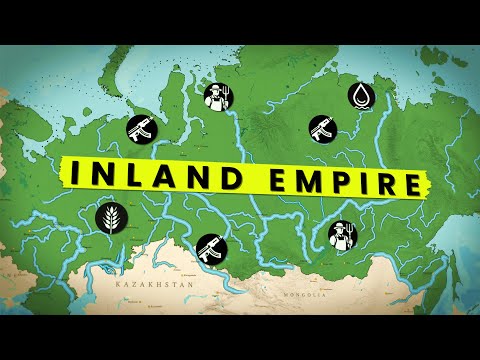
asia 30초 만에
- Asia is the largest continent by land area.
- It is home to over 4.5 billion people.
- The continent is divided into several major regions.
- It is a central hub for global economy and culture.
Asia is the primary designation for the world's largest and most populous continent, a massive landmass that encompasses a staggering variety of cultures, climates, and topographies. When people use the word Asia, they are usually referring to the geographic region that stretches from the eastern Mediterranean Sea to the Pacific Ocean, and from the Arctic Circle down to the tropical islands of the Indian Ocean. It is a term used in geography, politics, economics, and everyday conversation to describe a part of the world that is home to more than half of the human population. Understanding Asia requires recognizing its immense diversity; it is not a monolithic entity but a collection of distinct regions including East Asia, Southeast Asia, South Asia, Central Asia, and Western Asia (often called the Middle East).
- Geographic Scope
- Asia covers about 30% of Earth's total land area and is bounded by the Arctic, Pacific, and Indian Oceans. It is separated from Europe by the Ural Mountains and from Africa by the Suez Canal.
Many of the world's oldest civilizations began in Asia, specifically in the valleys of the Indus, Yangtze, and Tigris-Euphrates rivers.
In daily use, the word is often employed to categorize origin, travel destinations, or economic markets. For example, a business might discuss 'expanding into Asia,' or a student might study 'the history of Asia.' It is important to note that because the continent is so large, speakers often use more specific regional terms to avoid being too vague. However, as a general noun, it serves as the foundational label for this vast part of the globe. Linguistically, it functions as a proper noun, meaning it must always be capitalized in English. It does not typically take an article (we say 'in Asia,' not 'in the Asia'), except when used as a modifier in specific titles or descriptions.
The biodiversity found across Asia ranges from the Siberian tiger in the north to the orangutans of the Indonesian rainforests.
- Economic Significance
- In the 21st century, the term is frequently linked to the 'Asian Century,' a predicted period of Asian cultural and economic dominance led by powers like China, India, and Japan.
Technological innovation in Asia has transformed global telecommunications and manufacturing industries over the last few decades.
Furthermore, the term appears in various institutional names, such as the 'Asian Development Bank' or the 'Association of Southeast Asian Nations' (ASEAN). In these contexts, it signifies a collective regional identity or a specific geopolitical grouping. For learners, the word is one of the first geographic terms encountered because of its global importance. It is a stable, high-frequency noun that rarely changes its meaning, though the boundaries of what constitutes 'Asia' can sometimes be debated in a transcontinental context (like Turkey or Russia).
Traveling across Asia offers a unique opportunity to witness the juxtaposition of ancient temples and futuristic skyscrapers.
- Cultural Variety
- Asia is the birthplace of many major world religions, including Buddhism, Christianity, Hinduism, Islam, and Judaism, making it a central point of study for global theology.
The Silk Road was an ancient network of trade routes that connected Asia with the Mediterranean world, facilitating cultural exchange.
Using the word Asia in a sentence is relatively straightforward because it is a proper noun that functions as a singular entity. However, there are specific grammatical patterns and collocations that can help you sound more natural. The most common preposition used with Asia is 'in' to indicate location. For example, 'I live in Asia' or 'The company is based in Asia.' When talking about movement or direction, 'to' or 'across' are frequently used, such as 'We are flying to Asia next week' or 'The explorer traveled across Asia on foot.' Because it is a proper noun, it does not require an indefinite article (a/an) or a definite article (the) in most cases.
- Common Prepositions
- Use 'in' for location, 'to' for destination, 'from' for origin, and 'throughout' or 'across' for wide coverage.
The monsoon season affects many countries in Asia during the summer months.
Another important aspect of using the word is understanding its regional modifiers. Because Asia is so large, speakers often specify which part they are talking about by placing an adjective before the noun. Common examples include 'East Asia,' 'Southeast Asia,' 'South Asia,' 'Central Asia,' and 'North Asia.' In these instances, both words are capitalized because they form a specific geographic name. For example, 'Vietnam is located in Southeast Asia.' You might also see it used as a possessive, though this is less common than using the adjective 'Asian.' For instance, 'Asia's economy is growing rapidly' is correct, but 'The Asian economy is growing rapidly' is often preferred in formal writing.
Investors are looking toward Asia for new opportunities in the tech sector.
- As a Modifier
- While 'Asian' is the adjective, 'Asia' can sometimes act as a noun adjunct in titles like 'Asia Cup' or 'Asia Pacific region'.
The summit brought together leaders from across Asia to discuss climate change.
In academic or professional contexts, you might encounter the term 'Asia-Pacific' (often abbreviated as APAC). This refers to the part of the world in or near the Western Pacific Ocean, typically including much of East Asia, Southeast Asia, and Oceania. When writing about this, ensure you use a hyphen. Additionally, when listing continents, Asia is usually listed first or second due to its size and alphabetical order. For example, 'The seven continents are Asia, Africa, North America, South America, Antarctica, Europe, and Australia.'
Rice is a staple food for billions of people living in Asia.
- Comparative Usage
- When comparing sizes, you might say, 'Asia is significantly larger than Europe' or 'Asia is the most populous continent.'
The cultural diversity within Asia is so vast that it is difficult to make generalizations about the continent.
The word Asia is ubiquitous in modern discourse, appearing in global news headlines, educational materials, and business reports daily. In the realm of international news, you will hear it mentioned in discussions about geopolitical shifts, trade agreements, and environmental challenges. News anchors might report on 'rising tensions in East Asia' or 'economic growth across Asia.' Because the continent is a major driver of the global economy, financial news outlets like Bloomberg or the Wall Street Journal frequently use the term to describe market trends and investment climates. You will often hear phrases like 'the Asia-Pacific markets' or 'Asian emerging economies.'
- News and Media
- Journalists use 'Asia' to frame stories ranging from the Olympic Games to humanitarian efforts and political summits.
'Reporting live from Singapore, the hub of financial activity in Southeast Asia.'
In educational settings, from primary schools to universities, 'Asia' is a fundamental term in geography, history, and social studies. Students learn about the 'history of Asia,' the 'geography of Asia,' and 'Asian literature.' Teachers use the word to help students categorize the world's landmasses and understand the distribution of human populations. In academic research, scholars might specialize in 'Asian Studies,' a field dedicated to the languages, cultures, and politics of the continent. If you are watching a documentary on National Geographic or the BBC, you will frequently hear the word used to describe the natural habitats of various species or the history of ancient empires like the Mongols or the Mughals.
The documentary explores the diverse landscapes of Asia, from the Gobi Desert to the Himalayas.
- Travel and Tourism
- Travelers often say they are 'backpacking through Asia,' usually referring to the popular route through Thailand, Vietnam, and Cambodia.
'I've always wanted to explore the ancient ruins scattered throughout Asia.'
In the business world, 'Asia' is a key term in strategic planning. Multinational corporations often have an 'Asia-Pacific headquarters' or an 'Asia division.' During corporate meetings, you might hear executives discuss 'supply chains in Asia' or 'consumer behavior in Asia.' The term is also common in the tech industry, as many of the world's leading hardware and software companies are located there. Whether it's a discussion about manufacturing in China, software development in India, or robotics in Japan, the word 'Asia' serves as the overarching geographic anchor for these conversations.
The company's latest report highlights a significant increase in sales across Asia.
- Cultural Conversations
- In casual conversation, people use 'Asia' to talk about food, movies (like 'Crazy Rich Asians'), or music (like K-pop or J-pop), which have gained global popularity.
Many popular culinary trends in the West actually originated in various parts of Asia.
While Asia is a common word, learners often make several recurring mistakes when using it in English. The most frequent error is failing to capitalize the word. Since 'Asia' is a proper noun—the name of a specific place—it must always start with a capital 'A'. Writing 'asia' in lowercase is grammatically incorrect in all contexts. Another common mistake is the misuse of articles. Learners often want to say 'the Asia' because they might use an article with the name of their own country or because they are thinking of 'the United States' or 'the United Kingdom.' However, continents like Asia, Europe, and Africa do not take an article. You should say 'I am going to Asia,' not 'I am going to the Asia.'
- Capitalization
- Incorrect: I want to visit asia. Correct: I want to visit Asia.
Incorrect: He has lived in the Asia for ten years. Correct: He has lived in Asia for ten years.
A more nuanced mistake involves confusing the noun 'Asia' with the adjective 'Asian.' 'Asia' refers to the place, while 'Asian' refers to the people, cultures, or things from that place. For example, you should say 'Asian food' (adjective + noun) rather than 'Asia food.' Conversely, you should say 'The population of Asia' (noun) rather than 'The population of Asian.' Using the wrong form can make a sentence sound awkward or confusing. Additionally, learners sometimes over-generalize the term. Because Asia is so diverse, using the word to describe a single culture or habit can be inaccurate. For instance, saying 'In Asia, people eat with chopsticks' is only partially true, as many people in South and Western Asia do not traditionally use chopsticks.
Incorrect: I love Asia culture. Correct: I love Asian culture.
- Noun vs. Adjective
- Use 'Asia' as the destination or subject. Use 'Asian' to describe something or someone from there.
Incorrect: The Asia economy is booming. Correct: The economy of Asia is booming (or) The Asian economy is booming.
Another error is the incorrect use of prepositions. While 'in' is the most common, learners sometimes use 'at' or 'on.' You cannot be 'at Asia' or 'on Asia' (unless you are physically on top of a map). Always use 'in' for being within the continent. Furthermore, when talking about countries that span two continents, like Russia or Turkey, some people mistakenly categorize them as being only in Asia or only in Europe. While this is more of a geographic error than a linguistic one, it often leads to confusion in conversation. Finally, avoid using the term 'the Orient' or 'Oriental' to refer to Asia or its people; these terms are considered outdated and often offensive in modern English. Stick to 'Asia' and 'Asian.'
Incorrect: We arrived at Asia yesterday. Correct: We arrived in Asia yesterday.
- Geopolitical Nuance
- Avoid treating Asia as a single country. It is a continent with vastly different political systems, languages, and religions.
Incorrect: What is the capital of Asia? Correct: Asia does not have a capital because it is a continent, not a country.
While Asia is the standard name for the continent, there are several related terms and alternatives used depending on the context. One common term is 'Eurasia,' which refers to the combined landmass of Europe and Asia. This is often used in geological, historical, or geopolitical discussions where the distinction between the two continents is less relevant than their physical connection. Another term is the 'Far East,' which historically referred to East Asia, Southeast Asia, and the Russian Far East. However, this term is increasingly seen as Eurocentric (viewing the world from a European perspective) and is less common in modern academic or formal writing.
- Asia vs. Eurasia
- 'Asia' is a cultural and political continent. 'Eurasia' is the continuous physical landmass. Use 'Eurasia' when discussing tectonic plates or ancient migrations.
The term Eurasia is often used in geography to describe the single largest landmass on the planet, including both Europe and Asia.
In economic and political contexts, the term 'Asia-Pacific' (APAC) is a very frequent alternative. It includes Asia as well as the nations bordering the Pacific Ocean, such as Australia and sometimes the west coast of the Americas. This is the preferred term for many international organizations. Another regional alternative is 'the Levant' or 'the Near East,' which refers to Western Asia (the Middle East). While these terms overlap with Asia, they are more specific. Similarly, 'the Indian Subcontinent' is a term used for South Asia, emphasizing its distinct tectonic and cultural history. When choosing an alternative, always consider the perspective of your audience and the level of specificity required.
Many global corporations divide their operations into regions like EMEA (Europe, Middle East, Africa) and Asia-Pacific.
- Regional Specifics
- Instead of 'Asia', you might use 'Southeast Asia' for countries like Thailand and Indonesia, or 'East Asia' for China, Japan, and Korea.
The cultural influence of East Asia can be seen globally through its cinema and technology.
There is also the term 'the Orient,' which was once the standard Western term for Asia. Today, it is largely considered archaic and is often avoided because of its colonial connotations. In modern English, 'Asia' has replaced it as the respectful and accurate term. When discussing the people of Asia, 'Asians' is the standard noun, but in the UK, 'Asian' often specifically implies people of South Asian descent, whereas in the US, it often implies people of East Asian descent. To avoid confusion, using more specific terms like 'South Asian' or 'East Asian' is often the best practice in international communication.
Scholars now prefer the term 'Asian Studies' over the older 'Oriental Studies' to reflect a more modern and respectful approach to Asia.
- Comparison: Asia vs. The East
- 'Asia' is a precise geographic term. 'The East' is a relative term that depends on where the speaker is located (usually in the West).
While 'the East' is a common literary trope, Asia is the correct term for use in maps and official documents.
How Formal Is It?
재미있는 사실
Asia is the only continent that starts and ends with the same letter, a trait it shares with Africa, Antarctica, and Australia.
발음 가이드
- Pronouncing the 's' as a hard 'z' (A-zia).
- Pronouncing the 's' as a hard 'sh' (A-sha).
- Putting the stress on the second syllable (ai-SHA).
- Using a short 'a' sound at the beginning (ah-sia).
- Adding an extra syllable (a-si-a).
난이도
Very easy to recognize as a major geographic name.
Easy, but must remember to capitalize the 'A'.
Simple pronunciation, though the 'zh' sound can be tricky for some.
Highly recognizable in news and conversation.
다음에 무엇을 배울까
선수 학습
다음에 배울 것
고급
알아야 할 문법
Capitalization of Proper Nouns
Always write 'Asia' with a capital A.
No Article with Continents
Say 'I am in Asia,' not 'I am in the Asia.'
Adjective Formation
Change 'Asia' to 'Asian' when describing a noun (e.g., Asian food).
Prepositions of Place
Use 'in' for continents.
Compound Proper Nouns
Capitalize both words in 'South Asia'.
수준별 예문
Asia is very big.
L'Asie est très grande.
Proper noun, capitalized.
I live in Asia.
J'habite en Asie.
Use 'in' for location.
China is in Asia.
La Chine est en Asie.
Subject-verb-prepositional phrase.
Is Japan in Asia?
Le Japon est-il en Asie ?
Question form.
Asia has many people.
L'Asie compte beaucoup d'habitants.
Third-person singular verb 'has'.
We are going to Asia.
Nous allons en Asie.
Use 'to' for destination.
Asia is a continent.
L'Asie est un continent.
Noun as a complement.
I like Asia.
J'aime l'Asie.
Simple transitive verb.
Asia is the largest continent in the world.
L'Asie est le plus grand continent du monde.
Superlative adjective 'largest'.
There are many different countries in Asia.
Il y a beaucoup de pays différents en Asie.
'There are' for plural existence.
Mount Everest is the highest mountain in Asia.
Le mont Everest est la plus haute montagne d'Asie.
Proper noun used as a location.
Many tourists visit Asia every year.
De nombreux touristes visitent l'Asie chaque année.
Present simple for habitual action.
Asia is famous for its delicious food.
L'Asie est célèbre pour sa nourriture délicieuse.
Adjective phrase 'famous for'.
Rice grows in many parts of Asia.
Le riz pousse dans de nombreuses régions d'Asie.
Prepositional phrase 'in many parts of'.
She wants to travel across Asia by train.
Elle veut traverser l'Asie en train.
Preposition 'across' for movement.
The climate in Asia varies from north to south.
Le climat en Asie varie du nord au sud.
Verb 'varies' showing change.
Asia is home to more than half of the world's population.
L'Asie abrite plus de la moitié de la population mondiale.
Idiomatic phrase 'is home to'.
Economic growth in Asia has been very fast recently.
La croissance économique en Asie a été très rapide récemment.
Present perfect tense.
They are studying the history of ancient Asia.
Ils étudient l'histoire de l'Asie ancienne.
Noun phrase 'the history of'.
Southeast Asia is a popular destination for backpackers.
L'Asie du Sud-Est est une destination populaire pour les routards.
Compound proper noun.
The Silk Road connected Europe and Asia for centuries.
La route de la soie a relié l'Europe et l'Asie pendant des siècles.
Past simple tense.
Many tech companies have moved their factories to Asia.
De nombreuses entreprises technologiques ont déplacé leurs usines en Asie.
Present perfect with 'to'.
Cultural traditions in Asia are incredibly diverse.
Les traditions culturelles en Asie sont incroyablement diverses.
Adverb 'incredibly' modifying 'diverse'.
Asia's influence on global fashion is increasing.
L'influence de l'Asie sur la mode mondiale augmente.
Possessive form 'Asia's'.
The geopolitical landscape of Asia is changing rapidly.
Le paysage géopolitique de l'Asie évolue rapidement.
Complex subject phrase.
Investors are focusing on emerging markets throughout Asia.
Les investisseurs se concentrent sur les marchés émergents dans toute l'Asie.
Preposition 'throughout' for emphasis.
Asia is often divided into five or six sub-regions.
L'Asie est souvent divisée en cinq ou six sous-régions.
Passive voice 'is divided'.
The summit aimed to promote peace and stability in Asia.
Le sommet visait à promouvoir la paix et la stabilité en Asie.
Infinitive of purpose.
Urbanization is a major trend occurring across Asia.
L'urbanisation est une tendance majeure qui se produit dans toute l'Asie.
Present participle 'occurring'.
The biodiversity found in Asia is under threat from climate change.
La biodiversité que l'on trouve en Asie est menacée par le changement climatique.
Reduced relative clause 'found in'.
Asia-Pacific trade agreements are vital for the global economy.
Les accords commerciaux Asie-Pacifique sont vitaux pour l'économie mondiale.
Hyphenated compound adjective.
The history of Asia is marked by the rise and fall of great empires.
L'histoire de l'Asie est marquée par la montée et la chute de grands empires.
Passive voice with 'by'.
The concept of 'Asia' has evolved significantly over the centuries.
Le concept d'« Asie » a considérablement évolué au fil des siècles.
Abstract noun usage.
Scholars debate the exact borders that define Asia and Europe.
Les chercheurs débattent des frontières exactes qui définissent l'Asie et l'Europe.
Relative clause 'that define'.
The 'Asian Century' refers to the projected dominance of Asia in global affairs.
Le « siècle asiatique » fait référence à la domination projetée de l'Asie dans les affaires mondiales.
Specific terminological usage.
Asia's diverse religious heritage has shaped its social structures.
L'héritage religieux diversifié de l'Asie a façonné ses structures sociales.
Possessive with complex noun phrase.
The integration of markets across Asia remains a complex challenge.
L'intégration des marchés à travers l'Asie reste un défi complexe.
Gerund phrase as subject.
Environmental degradation in Asia poses a risk to global sustainability.
La dégradation de l'environnement en Asie pose un risque pour la durabilité mondiale.
Subject-verb agreement with abstract noun.
The migration patterns within Asia are driven by economic disparities.
Les schémas migratoires au sein de l'Asie sont dictés par les disparités économiques.
Passive voice with 'driven by'.
Asia's rapid technological advancement has disrupted traditional industries.
L'avancement technologique rapide de l'Asie a perturbé les industries traditionnelles.
Present perfect with disruptive verb.
The sheer heterogeneity of Asia precludes any simplistic generalizations.
L'hétérogénéité même de l'Asie exclut toute généralisation simpliste.
Advanced vocabulary 'heterogeneity' and 'precludes'.
Asia serves as a focal point for contemporary discourse on post-colonialism.
L'Asie sert de point focal pour le discours contemporain sur le postcolonialisme.
Metaphorical usage 'focal point'.
The transcontinental nature of some nations blurs the boundaries of Asia.
La nature transcontinentale de certaines nations brouille les frontières de l'Asie.
Subject-verb-object with abstract concepts.
Asia's role in the global supply chain is both indispensable and volatile.
Le rôle de l'Asie dans la chaîne d'approvisionnement mondiale est à la fois indispensable et volatil.
Correlative conjunction 'both... and'.
The philosophical traditions of Asia offer alternative perspectives on modernity.
Les traditions philosophiques de l'Asie offrent des perspectives alternatives sur la modernité.
Plural subject with abstract object.
Tensions in the South China Sea reflect broader power struggles in Asia.
Les tensions en mer de Chine méridionale reflètent des luttes de pouvoir plus larges en Asie.
Reflexive verb 'reflect'.
The demographic dividend in parts of Asia could drive future growth.
Le dividende démographique dans certaines parties de l'Asie pourrait stimuler la croissance future.
Economic terminology 'demographic dividend'.
Asia's linguistic landscape is a testament to its rich and varied history.
Le paysage linguistique de l'Asie témoigne de son histoire riche et variée.
Idiomatic 'testament to'.
자주 쓰는 조합
자주 쓰는 구문
— The increasing economic and political power of the continent.
Many books discuss the rise of Asia.
— The traditions and customs of people from Asia.
I am interested in learning about Asian culture.
— The growth and progress of Asian nations.
The bank supports Asian development projects.
자주 혼동되는 단어
Asian is the adjective; Asia is the noun. Don't say 'Asia food'.
Eurasia includes Europe; Asia does not.
The Orient is an outdated and potentially offensive term for Asia.
관용어 및 표현
— The 21st century, predicted to be dominated by Asian influence.
Many believe we are now living in the Asian Century.
Academic/Journalistic— Something of great value (China being a major part of Asia).
I wouldn't do that for all the tea in China.
Informal— The highly developed economies of certain Asian nations.
South Korea was one of the original Tiger Economies.
Economic— The historic trade route connecting Asia and Europe.
The Silk Road was essential for cultural exchange.
Historical— A traditional Western term for East and Southeast Asia.
He spent years traveling in the Far East.
Old-fashioned— A traditional term for Western Asia (the Middle East).
The Near East is the cradle of civilization.
Historical— A political concept emphasizing collectivism and respect for authority.
The debate over Asian values was prominent in the 1990s.
Political— The high-altitude regions of Central Asia (Tibet/Pamirs).
Tibet is often called the Roof of the World.
Literary— A traditional name for China, the heart of East Asia.
China has historically viewed itself as the Middle Kingdom.
Historical— A poetic name for Japan, located in the east of Asia.
Japan is known as the Land of the Rising Sun.
Poetic혼동하기 쉬운
Both refer to the same region.
Asia is the place (noun); Asian describes something from that place (adjective).
I am from Asia. I like Asian food.
They share a landmass.
Eurasia is the combined continent of Europe and Asia.
The mountain range is in Eurasia.
It sounds like Asia.
ASEAN is a specific political organization of Southeast Asian nations.
Thailand is a member of ASEAN.
Similar suffix.
Australasia refers to Australia, New Zealand, and neighboring islands.
He is traveling through Australasia.
Similar root.
Asiatic is a more scientific or technical adjective, often used for plants/animals.
The Asiatic lion is an endangered species.
문장 패턴
[Subject] is in Asia.
India is in Asia.
Asia is the [Superlative] continent.
Asia is the largest continent.
There are many [Noun] in Asia.
There are many languages in Asia.
[Noun] throughout Asia is [Adjective].
Economic growth throughout Asia is impressive.
The [Abstract Noun] of Asia reflects [Concept].
The history of Asia reflects a complex heritage.
Asia's [Noun] is characterized by [Noun].
Asia's landscape is characterized by extreme diversity.
I want to go to Asia.
I want to go to Asia.
Asia is home to [Group].
Asia is home to billions of people.
어휘 가족
명사
형용사
관련
사용법
Extremely high in all domains of English.
-
i want to go to asia.
→
I want to go to Asia.
Proper nouns must always be capitalized.
-
He is from the Asia.
→
He is from Asia.
Continents do not take the definite article 'the'.
-
I like Asia food.
→
I like Asian food.
Use the adjective 'Asian' to describe nouns like food or culture.
-
What is the capital of Asia?
→
What are some capitals of countries in Asia?
Asia is a continent, not a country, so it has no single capital.
-
He lives at Asia.
→
He lives in Asia.
The correct preposition for a continent is 'in'.
팁
Capitalization
Always capitalize Asia. It is a proper noun. Forgetting this is a very common mistake for beginners.
Noun vs Adjective
Use 'Asia' for the place and 'Asian' for the people or things. For example: 'I went to Asia' but 'I ate Asian food'.
Regional Names
Learn regional names like 'Southeast Asia' to be more specific in your conversations and writing.
The 'zh' Sound
The 's' in Asia sounds like the 's' in 'treasure' or 'vision'. Practice this soft sound.
Not a Country
Never ask 'What is the capital of Asia?' because it is a continent, not a single country.
No Articles
Don't say 'the Asia'. Just say 'Asia'. This makes your English sound much more natural.
Diversity
Remember that Asia is incredibly diverse. Avoid making broad statements that assume everyone in Asia is the same.
APAC
In business, you will often see 'APAC'. This stands for Asia-Pacific and is a very common professional term.
Regional Accents
Be aware that speakers from different parts of Asia may have different English accents.
Map Study
Spend a few minutes looking at a map of Asia to understand where the major countries are located.
암기하기
기억법
Remember 'A-S-I-A': Always Super Immense Area. This helps you remember it is the largest continent.
시각적 연상
Imagine a giant letter 'A' shaped like a mountain (the Himalayas) sitting in the middle of a huge map.
Word Web
챌린지
Try to name five countries in Asia and one famous landmark for each without looking at a map.
어원
The word 'Asia' comes from the Ancient Greek word Ἀσία (Asía). It was originally used by the Greeks to refer to the eastern shore of the Aegean Sea, and later to the region of Anatolia (modern-day Turkey).
원래 의미: The exact root is debated, but it may come from the Akkadian word 'asu', meaning 'to go out' or 'to rise', referring to the sun rising in the east.
Indo-European (via Greek and Latin).문화적 맥락
Avoid using the term 'Oriental' to describe people, as it is considered offensive and dated. Use 'Asian' or specific nationalities instead.
In the UK, 'Asian' often refers to people from South Asia, while in the US and Australia, it usually refers to people from East Asia.
실생활에서 연습하기
실제 사용 상황
Geography Class
- Locate Asia on the map
- The borders of Asia
- Major rivers in Asia
- Mountain ranges in Asia
Travel Planning
- Traveling to Asia
- Best time to visit Asia
- Flights to Asia
- Backpacking through Asia
Business/Finance
- The Asian market
- Investing in Asia
- Asia-Pacific headquarters
- Supply chains in Asia
History
- Ancient civilizations of Asia
- The history of Asia
- Trade routes in Asia
- Dynasties of Asia
Cooking/Food
- Flavors of Asia
- Common ingredients in Asia
- Street food in Asia
- Traditional dishes from Asia
대화 시작하기
"Have you ever traveled to any countries in Asia?"
"What is your favorite type of food from Asia?"
"Which country in Asia would you most like to visit and why?"
"Do you think Asia will be the most important region in the future?"
"What are some famous landmarks in Asia that you know about?"
일기 주제
Write about a country in Asia that interests you and explain why.
Describe how your life might be different if you lived in a large city in Asia.
Reflect on the cultural influence of Asia in your own country (food, music, movies).
Imagine you are traveling across Asia by train. What do you see out the window?
Discuss the importance of Asia in the global fight against climate change.
자주 묻는 질문
10 질문No, Asia is a continent. It is a large landmass that contains many different countries, such as China, India, and Japan. It does not have a single government or capital city.
There are approximately 48 countries in Asia, though the exact number can vary depending on how certain regions and transcontinental countries are classified.
Russia is the largest country by land area that is partly in Asia, but China is often considered the largest country entirely within the continent.
No, you should not use 'the' before Asia. Correct usage is 'I am visiting Asia' or 'Life in Asia is diverse.'
Yes, the Middle East is geographically located in Western Asia. However, it is often discussed as a separate cultural and political region.
Mandarin Chinese is the most spoken language in Asia by number of native speakers, followed by Hindi and English.
The name comes from the Ancient Greek word 'Asía,' which originally referred to the eastern lands across the Aegean Sea.
Southeast Asia is a sub-region of Asia consisting of countries like Thailand, Vietnam, Indonesia, and the Philippines, located south of China and east of India.
Yes, Asia is by far the most populous continent, containing about 60% of the total human population.
Asia is bounded by the Arctic Ocean to the north, the Pacific to the east, the Indian Ocean to the south, and the Ural Mountains and Suez Canal to the west.
셀프 테스트 180 질문
Write a sentence using the word 'Asia' and the word 'largest'.
Well written! Good try! Check the sample answer below.
Describe one country in Asia that you would like to visit.
Well written! Good try! Check the sample answer below.
Explain why Asia is important for the global economy.
Well written! Good try! Check the sample answer below.
Compare the geography of North Asia with Southeast Asia.
Well written! Good try! Check the sample answer below.
Discuss the impact of the Silk Road on cultural exchange between Asia and Europe.
Well written! Good try! Check the sample answer below.
Write a short paragraph about the diversity of languages in Asia.
Well written! Good try! Check the sample answer below.
What does the term 'Asian Century' mean to you?
Well written! Good try! Check the sample answer below.
Write a sentence using 'Asia' as a proper noun and 'Asian' as an adjective.
Well written! Good try! Check the sample answer below.
Explain the significance of the Himalayas in Asia.
Well written! Good try! Check the sample answer below.
Describe the climate variety found across the continent of Asia.
Well written! Good try! Check the sample answer below.
Write a letter to a friend about your imaginary trip to Asia.
Well written! Good try! Check the sample answer below.
Discuss the challenges of urbanization in large Asian cities.
Well written! Good try! Check the sample answer below.
What are some common misconceptions about Asia?
Well written! Good try! Check the sample answer below.
Write five facts about the continent of Asia.
Well written! Good try! Check the sample answer below.
How has technology changed life in Asia in the last 20 years?
Well written! Good try! Check the sample answer below.
Analyze the role of Asia in global climate policy.
Well written! Good try! Check the sample answer below.
Write a dialogue between two people planning a trip to Asia.
Well written! Good try! Check the sample answer below.
Explain the difference between 'Asia' and 'Eurasia'.
Well written! Good try! Check the sample answer below.
Describe the importance of the oceans surrounding Asia.
Well written! Good try! Check the sample answer below.
Write a poem about the landscapes of Asia.
Well written! Good try! Check the sample answer below.
Pronounce the word 'Asia' correctly.
Read this aloud:
당신의 답변:
Speech recognition is not supported in your browser. Try Chrome or Edge.
Name three countries in Asia.
Read this aloud:
당신의 답변:
Speech recognition is not supported in your browser. Try Chrome or Edge.
Describe the location of Asia on a map.
Read this aloud:
당신의 답변:
Speech recognition is not supported in your browser. Try Chrome or Edge.
Talk about an Asian food you like.
Read this aloud:
당신의 답변:
Speech recognition is not supported in your browser. Try Chrome or Edge.
Explain why many people want to travel to Asia.
Read this aloud:
당신의 답변:
Speech recognition is not supported in your browser. Try Chrome or Edge.
Discuss the importance of Asia in the world today.
Read this aloud:
당신의 답변:
Speech recognition is not supported in your browser. Try Chrome or Edge.
Describe a famous landmark in Asia.
Read this aloud:
당신의 답변:
Speech recognition is not supported in your browser. Try Chrome or Edge.
What are the different regions of Asia?
Read this aloud:
당신의 답변:
Speech recognition is not supported in your browser. Try Chrome or Edge.
Talk about the climate in different parts of Asia.
Read this aloud:
당신의 답변:
Speech recognition is not supported in your browser. Try Chrome or Edge.
How does Asia influence global culture?
Read this aloud:
당신의 답변:
Speech recognition is not supported in your browser. Try Chrome or Edge.
What are some challenges facing Asia in the future?
Read this aloud:
당신의 답변:
Speech recognition is not supported in your browser. Try Chrome or Edge.
Explain the term 'Asia-Pacific'.
Read this aloud:
당신의 답변:
Speech recognition is not supported in your browser. Try Chrome or Edge.
Compare two different countries in Asia.
Read this aloud:
당신의 답변:
Speech recognition is not supported in your browser. Try Chrome or Edge.
Tell a short story about a trip to Asia.
Read this aloud:
당신의 답변:
Speech recognition is not supported in your browser. Try Chrome or Edge.
Discuss the role of technology in Asian development.
Read this aloud:
당신의 답변:
Speech recognition is not supported in your browser. Try Chrome or Edge.
What is the significance of the Silk Road?
Read this aloud:
당신의 답변:
Speech recognition is not supported in your browser. Try Chrome or Edge.
Talk about the population density in Asia.
Read this aloud:
당신의 답변:
Speech recognition is not supported in your browser. Try Chrome or Edge.
How do you pronounce 'Asian' compared to 'Asia'?
Read this aloud:
당신의 답변:
Speech recognition is not supported in your browser. Try Chrome or Edge.
What are some major religions that started in Asia?
Read this aloud:
당신의 답변:
Speech recognition is not supported in your browser. Try Chrome or Edge.
Describe the variety of wildlife in Asia.
Read this aloud:
당신의 답변:
Speech recognition is not supported in your browser. Try Chrome or Edge.
Listen and identify the word: 'Asia'.
Listen to the sentence: 'Asia is a large continent.' What is Asia?
Listen to the sentence: 'We are traveling to Asia next month.' When are they traveling?
Listen to the sentence: 'The population of Asia is over four billion.' How many people live in Asia?
Listen to the sentence: 'Southeast Asia is famous for its beaches.' What is Southeast Asia famous for?
Listen to the sentence: 'The economy of Asia is growing fast.' What is happening to the economy?
Listen to the sentence: 'Mount Everest is the highest peak in Asia.' What is Mount Everest?
Listen to the sentence: 'Many tech companies are based in Asia.' Where are many tech companies based?
Listen to the sentence: 'Asia-Pacific markets opened higher today.' Which markets opened higher?
Listen to the sentence: 'The cultural diversity of Asia is immense.' What is immense?
Listen to the sentence: 'Monsoons are a key feature of the climate in South Asia.' What is a key feature?
Listen to the sentence: 'Rice is grown throughout Asia.' Where is rice grown?
Listen to the sentence: 'The Silk Road linked Asia with the West.' What did the Silk Road link?
Listen to the sentence: 'Urbanization is transforming Asia's landscape.' What is transforming the landscape?
Listen to the sentence: 'Asia is the largest of the seven continents.' How many continents are there?
/ 180 correct
Perfect score!
Summary
Asia is a vast, diverse continent that is essential to understanding global geography, history, and economics. For example, knowing that Asia contains both the highest mountains and some of the largest cities helps one appreciate its immense scale.
- Asia is the largest continent by land area.
- It is home to over 4.5 billion people.
- The continent is divided into several major regions.
- It is a central hub for global economy and culture.
Capitalization
Always capitalize Asia. It is a proper noun. Forgetting this is a very common mistake for beginners.
Noun vs Adjective
Use 'Asia' for the place and 'Asian' for the people or things. For example: 'I went to Asia' but 'I ate Asian food'.
Regional Names
Learn regional names like 'Southeast Asia' to be more specific in your conversations and writing.
The 'zh' Sound
The 's' in Asia sounds like the 's' in 'treasure' or 'vision'. Practice this soft sound.