lock 30초 만에
- Lock is a verb used to describe securing physical objects like doors or cars with keys, ensuring safety and preventing unauthorized access in daily life.
- In digital contexts, it refers to protecting devices or accounts with passwords or PINs, a crucial aspect of modern personal and professional security.
- Metaphorically, it describes becoming fixed in a position, state, or agreement, such as 'locking in' a price or 'locking horns' during a heated argument.
- It also describes mechanical states where parts become immovable, such as brakes 'locking up,' which is vital in technical and safety-related discussions.
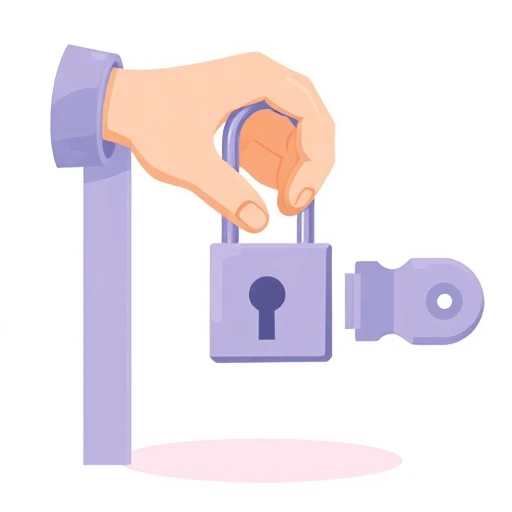
The verb lock is a fundamental action word in English that primarily describes the act of securing something so that it cannot be opened, moved, or accessed without a specific tool, code, or permission. While we most often associate it with physical keys and doors, its usage has evolved significantly in the digital age and carries profound metaphorical weight in various professional and social contexts. Understanding 'lock' involves recognizing it as both a physical safeguard and a state of being fixed or unchangeable.
- Physical Security
- To fasten a door, window, or container using a mechanical device. This is the most common usage, emphasizing safety and privacy. When you lock your house, you are creating a physical barrier against the outside world.
Please lock the front door before you go to bed tonight.
Beyond the home, we 'lock' bicycles to posts, 'lock' valuables in safes, and 'lock' cars using remote fobs. The action implies a transition from a state of accessibility to a state of restriction. In a broader sense, 'lock' can also refer to parts of a mechanism becoming jammed or intentionally fixed. For instance, if a car's brakes 'lock,' they stop rotating entirely, often causing a skid. This transition from movement to stasis is a key conceptual pillar of the word.
- Digital Contexts
- To restrict access to a computer system, user account, or specific file. This often happens automatically after too many failed password attempts, or manually to protect sensitive data.
The system will lock your account if you enter the wrong PIN three times.
Metaphorically, 'lock' describes situations where people are committed to a specific path or are in a state of conflict that cannot be easily resolved. We speak of 'locking horns' when two people argue intensely, or being 'locked into a contract' when legal obligations prevent one from changing their mind. This sense of being 'locked' suggests a loss of flexibility or a forced commitment. It is also used in sports and physical activities, such as 'locking' your joints (keeping them straight and rigid) or 'locking' onto a target in aviation or gaming.
- Physical Stance
- To hold a part of the body in a fixed, rigid position. For example, a gymnast might lock their elbows to maintain a handstand, or a person might lock their gaze with another to show intense focus.
She locked eyes with him across the crowded room, conveying a silent message.
Finally, 'lock' is used in logistics and environmental contexts. A 'lock' in a canal is a device used for raising and lowering boats between levels of different water draughts. While this is a noun, the verb 'to lock' can describe the process of moving a boat through these chambers. In every sense, 'lock' implies a controlled state, a boundary, or a definitive halt to free movement, making it one of the most versatile verbs for describing control and security in the English language.
The gears locked together, bringing the entire machine to a grinding halt.
Investors often lock in their profits by selling stocks when the price is high.
Using the verb lock correctly requires attention to whether you are describing a physical action, a digital state, or a metaphorical condition. It is a regular verb (lock, locked, locked), which makes its conjugation straightforward, but its interaction with prepositions (phrasal verbs) is where the complexity lies. This section explores the grammatical patterns and common structures that will help you master its use in everyday and professional English.
- Transitive Use (Lock + Object)
- The most common pattern is 'lock + [noun]'. You lock a door, a car, a safe, or a phone. The focus is on the object being secured.
I always lock my bicycle to the railing to prevent it from being stolen.
When using 'lock' with people, it often involves prepositions like 'in' or 'out'. To 'lock someone in' means to confine them, while to 'lock someone out' means to prevent them from entering. These can be literal (locking a room) or figurative (locking someone out of a computer system or a conversation). Note the word order: you can 'lock the cat in' or 'lock in the cat,' but with pronouns, it must be 'lock him in' or 'lock them out.'
- Intransitive Use (The Subject Locks)
- Sometimes the subject itself performs the action of becoming fixed. We say 'the door locks automatically' or 'the wheels locked.' Here, no direct object is needed.
The steering wheel locked suddenly, making it impossible to turn the car.
In business and finance, 'lock' is frequently paired with 'in'. To 'lock in a price' or 'lock in a rate' means to make a fixed agreement that cannot be changed later, even if market conditions fluctuate. This is a crucial term for contracts and investments. Similarly, 'lock away' suggests putting something (or someone) in a secure place for a long time, often used for long-term investments or prison sentences.
- Passive Voice
- The passive form 'to be locked' is extremely common to describe a state. 'The door is locked' describes the current condition rather than the action of locking it.
I couldn't get into the building because all the entrances were locked for the holiday.
In more advanced contexts, 'lock' is used with 'onto'. To 'lock onto' something means to find it and follow it closely, like a missile tracking a target or a person focusing intensely on an idea. This implies a high level of precision and commitment. Whether you are locking a suitcase or locking in a mortgage rate, the verb consistently conveys the idea of moving from a flexible state to a fixed, secure, or restricted one.
The predator locked onto its prey and began the chase.
Make sure you lock your computer whenever you leave your desk.
The verb lock is ubiquitous in daily life, appearing in environments ranging from the high-security atmosphere of a bank to the casual setting of a family home. Because it deals with security, privacy, and control, it is a word that carries significant weight in conversation. You will hear it in various registers, from the strict commands of a security guard to the technical jargon of a software developer.
- At Home and in Public
- Daily routines often revolve around locking. Parents tell children to 'lock the door,' and travelers remind each other to 'lock the suitcases.' It's a word associated with the end of a day or the start of a journey.
'Did you lock the car?' is perhaps one of the most frequently asked questions in modern life.
In the workplace, especially in offices, 'lock' is used regarding digital security. IT departments frequently send emails reminding employees to 'lock their workstations' when they step away. In manufacturing or mechanical work, 'lock' is a safety term. 'Lockout-tagout' is a standard safety procedure where machines are physically locked to prevent them from starting while being repaired. Here, the word is synonymous with life-saving precautions.
- Sports and Competition
- In wrestling or martial arts, 'locking' a limb or a hold is a key technique. In team sports, commentators might say a team has 'locked in' a playoff spot, meaning their position is now guaranteed and cannot be lost.
The two wrestlers locked arms in a desperate struggle for dominance.
In the world of finance and real estate, you'll hear 'lock' used in discussions about interest rates. When someone is buying a house, they might 'lock in a mortgage rate' to protect themselves against future increases. This usage is very common in professional negotiations. In creative fields, a director might say a film is 'picture locked,' meaning no further edits will be made to the visual sequence. This signals the transition to the next phase of production, like sound mixing.
- Technical and Scientific
- In chemistry or biology, molecules can 'lock' into receptors. In engineering, parts are designed to 'lock' together to ensure structural integrity. The word implies a perfect fit and a secure bond.
The enzyme locks onto the substrate like a key into a lock.
Whether it's the click of a physical bolt, the beep of a car alarm, or the legal finality of a contract, the word 'lock' is the sound and signal of security and completion. It is a word that provides a sense of certainty in an uncertain world, which is why it appears so frequently in both our most mundane tasks and our most critical professional agreements.
Don't forget to lock your screen before you go to lunch.
The city was locked in a heatwave for three straight weeks.
While lock seems simple, English learners often encounter pitfalls related to its distinction from similar verbs like 'close' or 'shut,' as well as the specific nuances of its phrasal verb forms. Misusing 'lock' can lead to confusion about whether a space is merely closed or actually secured against entry. This section highlights the most frequent errors and how to avoid them to ensure your communication is precise.
- Lock vs. Close/Shut
- The most common mistake is using 'close' when 'lock' is required. 'Close' means to move a door to its frame; 'lock' means to secure it with a key or bolt. You can close a door without locking it, but you usually can't lock a door without closing it first.
Incorrect: I closed the door with my key.
Correct: I locked the door with my key.
Another frequent error involves the prepositions 'in' and 'out'. Learners sometimes swap them, leading to the opposite of the intended meaning. If you 'lock yourself in,' you are inside and cannot get out. If you 'lock yourself out,' you are outside and cannot get in (usually because you forgot your keys). This distinction is vital in emergency or frustrating situations.
- The 'Lock' vs. 'Blocked' Confusion
- In digital contexts, learners sometimes say a website is 'locked' when they mean it is 'blocked.' A 'locked' account is usually yours but inaccessible; a 'blocked' website is one your network or government won't let you visit at all.
Incorrect: The office firewall locked Facebook.
Correct: The office firewall blocked Facebook.
In mechanical contexts, 'locked' and 'stuck' are related but different. If a drawer is 'locked,' it is intentionally secured. If it is 'stuck,' it won't open because of a physical obstruction or damage. Using 'locked' for a broken drawer might lead someone to look for a key that doesn't exist. Similarly, avoid using 'lock' when you mean 'fasten' for things like seatbelts; we 'buckle' or 'fasten' seatbelts, though they do 'lock' into place once clicked.
- Preposition Errors with 'Lock'
- Learners often forget the 'to' when locking something to a fixed object. You don't 'lock your bike the fence'; you 'lock your bike to the fence.'
She locked her luggage to the train seat for safety.
Finally, be careful with the phrase 'lock in'. While it means to fix a price or a person, using it incorrectly in a social context (e.g., 'I locked in my friend') might sound like you physically imprisoned them rather than simply confirming a plan. In most social planning, 'confirm' or 'finalize' is better, unless you are specifically talking about a 'lock-in' event (like a sleepover in a gym).
The wheels locked up during the emergency stop, causing the car to slide.
I locked my keys in the car, so I had to call a locksmith.
The English language offers many synonyms for lock, each carrying a slightly different nuance of security, method, or formality. Choosing the right alternative can make your writing more descriptive and your speech more precise. Whether you are talking about a simple latch or a high-tech security system, these alternatives provide the necessary variety to express the exact nature of the 'locking' action.
- Secure
- A more formal and broader term. While 'lock' specifically implies a mechanical device, 'secure' means to make something safe in any way, including tying it down or guarding it.
Please secure all exits before leaving the facility.
'Bolt' and 'Latch' are more specific. To 'bolt' a door implies using a heavy sliding bar, suggesting a higher level of security than a simple lock. To 'latch' a door means to close it so that it stays shut but isn't necessarily locked with a key. 'Fasten' is a general term used for things like belts, buttons, or lids, where security is needed but not necessarily against theft.
- Fasten
- To attach or join two things together. This is used for seatbelts, clothing, and general attachments. It lacks the 'security' connotation of 'lock'.
He fastened the strap of his helmet before starting the motorcycle.
In metaphorical contexts, 'fix' or 'stabilize' can replace 'lock.' Instead of 'locking in a price,' you might 'fix the price.' Instead of 'locking your gaze,' you might 'steady your gaze.' In digital terms, 'encrypt' is a more technical alternative to 'lock' when referring to data protection. While 'locking' a file might just mean adding a password, 'encrypting' it involves complex mathematical protection.
- Clasp
- To hold something tightly or to fasten with a small device like on jewelry. It suggests a more delicate or personal action than 'lock'.
She clasped the necklace around her neck.
Finally, 'immobilize' is a powerful alternative when 'lock' refers to something becoming immovable. Instead of saying 'the wheels locked,' a technical report might say 'the wheels were immobilized.' This sounds more professional and precise in engineering or medical contexts. By understanding these nuances, you can move beyond the basic verb 'lock' and use the word that best fits the specific situation you are describing.
The heavy gates were barred from the inside to keep the intruders out.
The contract binds the two companies into a long-term partnership.
How Formal Is It?
재미있는 사실
The use of 'lock' to describe a tuft of hair (as in 'a lock of hair') comes from a different Old English word, 'loce', but the two words eventually merged in spelling and sound.
발음 가이드
- Pronouncing the 'o' like 'u' (sounding like 'luck').
- Not making the final 'k' sound sharp enough.
- Confusing the vowel with 'look' (/lʊk/).
난이도
Very easy to recognize in most texts.
Simple conjugation, but phrasal verbs require practice.
Commonly used in daily conversation.
Clear pronunciation, though can be confused with 'luck' or 'look'.
다음에 무엇을 배울까
선수 학습
다음에 배울 것
고급
알아야 할 문법
Regular Verb Conjugation
I lock, he locks, we locked, they are locking.
Phrasal Verb Word Order
Lock the door up / Lock it up (Pronouns must go in the middle).
Passive Voice for States
The door is locked (describes the current condition).
Prepositional Use with 'To'
Lock the bike to the fence (not 'on' or 'at').
Zero Conditional for Automatic Actions
If you close the door, it locks automatically.
수준별 예문
I lock the door every night.
Je ferme la porte à clé chaque nuit.
Present simple tense for a routine.
Did you lock your car?
As-tu fermé ta voiture à clé ?
Question form using 'did'.
Please lock the box.
S'il vous plaît, fermez la boîte à clé.
Imperative form for a request.
He locked his bike to the tree.
Il a attaché son vélo à l'arbre avec un cadenas.
Past simple tense with the preposition 'to'.
I can't lock my phone.
Je ne peux pas verrouiller mon téléphone.
Negative modal 'can't' followed by the base verb.
She locks her diary in a drawer.
Elle enferme son journal intime dans un tiroir.
Third person singular 's'.
The gate does not lock.
Le portail ne ferme pas à clé.
Negative present simple.
Wait, I need to lock up.
Attends, je dois tout fermer.
Phrasal verb 'lock up' meaning to secure a building.
I locked myself out of the house.
Je me suis enfermé dehors.
Reflexive pronoun with 'lock out'.
The computer locks automatically after five minutes.
L'ordinateur se verrouille automatiquement après cinq minutes.
Intransitive use with an adverb.
Don't forget to lock up the shop.
N'oublie pas de fermer le magasin.
Phrasal verb 'lock up' used in an imperative.
He locked the money in the safe.
Il a enfermé l'argent dans le coffre-fort.
Past simple with a direct object.
She locked her arms around the child.
Elle a serré l'enfant dans ses bras.
Metaphorical/physical use for holding tightly.
The wheels locked when he hit the brakes.
Les roues se sont bloquées quand il a freiné.
Intransitive use describing a mechanical failure.
You should lock away your passport.
Tu devrais mettre ton passeport en lieu sûr.
Phrasal verb 'lock away' for long-term security.
The door is locked from the inside.
La porte est fermée de l'intérieur.
Passive voice describing a state.
We managed to lock in a very low interest rate.
Nous avons réussi à bloquer un taux d'intérêt très bas.
Phrasal verb 'lock in' used in a financial context.
The two players locked horns over the referee's decision.
Les deux joueurs se sont affrontés à propos de la décision de l'arbitre.
Idiomatic expression 'lock horns'.
She locked eyes with him across the room.
Elle a croisé son regard à l'autre bout de la pièce.
Collocation 'lock eyes'.
The brakes locked up on the icy road.
Les freins se sont bloqués sur la route verglacée.
Phrasal verb 'lock up' for mechanical jamming.
The city was locked in a bitter struggle for power.
La ville était engagée dans une lutte acharnée pour le pouvoir.
Passive voice for a metaphorical state.
Make sure you lock the file before sending it.
Assurez-vous de verrouiller le fichier avant de l'envoyer.
Digital usage for file security.
The suspect was locked up for the night.
Le suspect a été enfermé pour la nuit.
Phrasal verb 'lock up' as a synonym for imprison.
The gears locked together perfectly.
Les engrenages se sont parfaitement emboîtés.
Describing a mechanical fit.
The company locked out the workers after the strike began.
L'entreprise a empêché les ouvriers d'entrer après le début de la grève.
Specific labor relations use of 'lock out'.
The missile locked onto the target's heat signature.
Le missile s'est verrouillé sur la signature thermique de la cible.
Phrasal verb 'lock onto' for tracking.
Investors are looking to lock in their gains before the market drops.
Les investisseurs cherchent à sécuriser leurs gains avant que le marché ne chute.
Financial usage for securing profits.
The agreement locks us into a five-year commitment.
L'accord nous lie par un engagement de cinq ans.
Metaphorical use for a binding obligation.
He locked his jaw in anger but said nothing.
Il a contracté sa mâchoire de colère mais n'a rien dit.
Physical description of emotional tension.
The software is designed to lock unauthorized users out.
Le logiciel est conçu pour empêcher les utilisateurs non autorisés d'entrer.
Phrasal verb 'lock out' in a digital security context.
The entire region was locked down during the emergency.
Toute la région a été confinée pendant l'urgence.
Phrasal verb 'lock down' for public safety.
The wheels of the trailer locked, causing it to jackknife.
Les roues de la remorque se sont bloquées, la faisant se mettre en portefeuille.
Technical description of a vehicle accident.
The film is finally picture locked, so we can start the sound mix.
Le montage image est enfin terminé, nous pouvons donc commencer le mixage son.
Industry-specific jargon (cinematography).
They sold the business lock, stock, and barrel.
Ils ont vendu l'entreprise en bloc, absolument tout.
Idiomatic use of 'lock' in a fixed phrase.
The two nations are locked in a diplomatic stalemate.
Les deux nations sont bloquées dans une impasse diplomatique.
Passive voice for a complex geopolitical state.
The enzyme locks the substrate into the correct orientation for the reaction.
L'enzyme bloque le substrat dans l'orientation correcte pour la réaction.
Scientific usage for molecular biology.
He felt locked into a career that no longer brought him joy.
Il se sentait prisonnier d'une carrière qui ne lui apportait plus de joie.
Psychological/metaphorical use for feeling trapped.
The pilot managed to lock onto the runway's beacon despite the fog.
Le pilote a réussi à se caler sur la balise de la piste malgré le brouillard.
Technical aviation usage.
The system will lock the database to prevent concurrent edits.
Le système verrouillera la base de données pour empêcher les modifications simultanées.
Technical computing usage for data integrity.
The old mechanism had locked solid after years of rust.
Le vieux mécanisme s'était complètement bloqué après des années de rouille.
Describing a permanent physical state.
The geopolitical architecture of the region has locked the parties into a zero-sum game.
L'architecture géopolitique de la région a enfermé les parties dans un jeu à somme nulle.
High-level metaphorical use in political science.
The patient was diagnosed with locked-in syndrome, possessing full consciousness but total paralysis.
Le patient a été diagnostiqué avec le syndrome d'enfermement, possédant une conscience totale mais une paralysie complète.
Specific medical terminology.
Her arguments were so tightly locked that no one could find a logical flaw.
Ses arguments étaient si bien ficelés que personne ne pouvait y trouver de faille logique.
Abstract use for intellectual consistency.
The contract was designed to lock out any potential competitors for a decade.
Le contrat a été conçu pour exclure tout concurrent potentiel pendant une décennie.
Strategic business usage of 'lock out'.
The tectonic plates had locked, building up immense pressure before the earthquake.
Les plaques tectoniques s'étaient bloquées, accumulant une pression immense avant le tremblement de terre.
Geological usage for physical tension.
The poem's rhythm is locked into a strict iambic pentameter.
Le rythme du poème est enfermé dans un pentamètre iambique strict.
Literary analysis usage.
He locked away his grief, refusing to let anyone see his pain.
Il a refoulé son chagrin, refusant de laisser quiconque voir sa douleur.
Metaphorical use for emotional repression.
The software architecture uses a mutex to lock resources during critical sections.
L'architecture logicielle utilise un mutex pour verrouiller les ressources pendant les sections critiques.
Highly technical computer science terminology.
동의어
반의어
자주 쓰는 조합
자주 쓰는 구문
— Kept very securely. Usually used with 'under'.
The secret documents are kept under lock and key.
— To secure all doors and windows of a building. Also means to put someone in prison.
The manager stayed late to lock up the store.
— To fix a price or agreement. Also to physically trap someone inside.
We managed to lock in a great deal on the flights.
— To prevent someone from entering. Also used when an employer stops workers from working.
The factory locked out the workers during the dispute.
— To restrict movement in an area for security reasons.
The school went into lock down during the police chase.
— To put something in a safe place for a long time. Also to imprison someone for a long time.
He locked away his childhood memories in a box.
— To find and track something or to focus intensely on an idea.
The camera locked onto the speaker's face.
— To engage in a fight or argument with someone.
I don't want to lock horns with the boss today.
— To look directly and intensely into someone else's eyes.
She locked eyes with the stranger across the platform.
— Including everything; completely.
They moved out of the house lock, stock, and barrel.
자주 혼동되는 단어
'Close' just means to move the door to the frame; 'lock' means to secure it so it can't be opened without a key.
'Block' means to obstruct a path or a website; 'lock' means to secure an account or a physical object.
A common pronunciation error. 'Luck' is about chance; 'lock' is about security.
관용어 및 표현
— To get into an argument or fight with someone.
The two lawyers locked horns over the evidence.
informal— Completely; including every part of something.
He sold his business lock, stock, and barrel.
neutral— Stored very securely.
The jewels are kept under lock and key in the vault.
neutral— To take precautions after the damage has already been done.
Installing cameras now is like locking the stable door after the horse has bolted.
neutral— To have complete control over something or to be certain to win.
The team seems to have a lock on the championship this year.
informal— To open a lock without a key, often using tools.
The thief tried to pick the lock on the back door.
neutral— To prepare for action or a difficult task.
Okay team, lock and load; the presentation starts in five minutes.
informal/slang— An event where people stay in a building overnight, or a situation where a customer is forced to continue using a product.
The church organized a youth lock-in for Friday night.
neutral— A situation where no progress can be made because of a disagreement.
The negotiations reached a deadlock after three days.
formal— A traffic jam where no one can move, or a political situation where no laws can be passed.
The city was in total gridlock during the transit strike.
neutral혼동하기 쉬운
Both involve closing a door.
A latch holds a door shut but doesn't require a key; a lock is a security device that requires a key or code.
The gate has a latch, but we added a padlock for extra security.
Both are used to secure doors.
A bolt is a specific type of lock that uses a sliding metal bar. 'Lock' is the general term.
He slid the bolt across the door after locking the handle.
Both mean to make something stay in place.
Fasten is used for clothes or belts; lock is used for security against theft or entry.
Fasten your seatbelt, and I'll lock the car doors.
Both mean to close something tightly.
Seal is used to keep air/liquid out or to show something hasn't been opened; lock is used to keep people out.
Seal the container before you lock it in the cupboard.
They are synonyms in many contexts.
Secure is more formal and can mean many things (tying down, guarding); lock specifically implies a mechanical device.
We need to secure the building by locking all the windows.
문장 패턴
Subject + lock + object
I lock the door.
Subject + lock + object + in/out
She locked the cat out.
Subject + lock + in + [noun phrase]
They locked in a low price.
Subject + lock + onto + [noun phrase]
The missile locked onto the plane.
Subject + be + locked + in + [abstract noun]
The countries were locked in a stalemate.
Subject + lock + up
He needs to lock up.
Subject + lock + [body part]
Don't lock your knees.
Subject + lock + [object] + away
Lock your jewelry away.
어휘 가족
명사
동사
형용사
관련
사용법
Extremely common in both spoken and written English.
-
I closed the door with my key.
→
I locked the door with my key.
Closing is just moving the door; locking is the act of securing it with a key.
-
I locked my keys out of the car.
→
I locked my keys in the car.
The keys are inside (in), and you are outside (out). You lock yourself out, but you lock your keys in.
-
The website is locked by the government.
→
The website is blocked by the government.
Use 'blocked' for websites or paths that are obstructed; 'locked' is for accounts or physical objects.
-
I locked my bike on the fence.
→
I locked my bike to the fence.
The correct preposition for attaching something to a fixed object with a lock is 'to'.
-
He lucked the door.
→
He locked the door.
'Luck' is a noun/verb about chance; 'lock' is the verb for security. They have different vowel sounds.
팁
Phrasal Verb Mastery
Remember that with phrasal verbs like 'lock up', if you use a pronoun (it, him, them), it must go between 'lock' and 'up'. Example: 'Lock it up', not 'Lock up it'.
Lock vs. Close
Always use 'lock' when a key is involved. Saying 'I closed the door with a key' sounds unnatural to native speakers.
The Short O
Keep the 'o' sound short. If you make it too long or like an 'oo', it might sound like 'look', which is a different word.
Digital Security
In IT, 'lock' is the most common verb for securing workstations. Use it in professional emails: 'Please lock your computers before leaving'.
Locking Horns
Use 'lock horns' to describe a professional or intellectual conflict, not just a physical fight. It's great for business English.
Lockout-Tagout
If you work in engineering, learn the term 'lockout'. it refers to the vital safety process of disabling machinery during maintenance.
Locking Eyes
This phrase is powerful in romantic or dramatic writing. It implies a connection that is much stronger than just 'looking at' someone.
Locking in Rates
When talking about mortgages or loans, 'lock in' is the standard term for securing a specific interest rate.
Locking To
When securing a bike or luggage to a fixed object, always use the preposition 'to'. 'I locked my bike to the post'.
Lock, Stock, and Barrel
Use this idiom to add emphasis when someone is selling or moving everything they own. It's a very colorful and common expression.
암기하기
기억법
Think of the 'L' in 'Lock' as a Lever that you pull to secure a door. The 'O' is the round hole where the key goes in.
시각적 연상
Imagine a giant golden key turning in a heavy iron door. Hear the 'click' sound as the bolt slides into place.
Word Web
챌린지
Try to use the verb 'lock' in three different ways today: once for a physical object, once for a digital device, and once in a phrasal verb like 'lock up'.
어원
The word 'lock' comes from the Old English 'loc', which referred to a bar, bolt, or enclosure. It has roots in Proto-Germanic '*luką', meaning an enclosure or a fastening device. It is related to the Old High German 'loh' and the Old Norse 'lok'.
원래 의미: Originally, it referred to a physical bar used to fasten a door or a lid, or the act of closing an enclosure.
Germanic문화적 맥락
Be aware that 'locked up' is a common slang for being in prison, which can be a sensitive topic.
In the US and UK, 'locking up' is a common phrase for closing a business at night. 'Lockdown' became a globally recognized term during the COVID-19 pandemic.
실생활에서 연습하기
실제 사용 상황
Home Security
- lock the front door
- double-lock the gate
- lock the windows
- leave the door unlocked
Technology
- lock your screen
- account is locked
- lock a file
- forgot the lock code
Business/Finance
- lock in a rate
- lock in a deal
- locked into a contract
- lock out competitors
Mechanical/Automotive
- brakes locked up
- lock the steering wheel
- central locking system
- lock the wheels
Physical/Sports
- lock your elbows
- lock your knees
- locked in a hold
- lock onto a target
대화 시작하기
"Have you ever accidentally locked yourself out of your own house?"
"Do you think it's important to lock your phone with a complex password?"
"In your country, do people usually lock their doors during the day?"
"How do you feel when you've locked in a great price for a vacation?"
"What's the best way to lock a bicycle to prevent it from being stolen?"
일기 주제
Describe a time when you were locked out of somewhere important. How did you feel and what did you do?
Write about a commitment or a 'deal' you have locked in recently. Why was it important to finalize it?
Reflect on the concept of security. Does locking things away make you feel safer or more restricted?
Imagine a world where nothing could be locked. How would society change?
Write a story that begins with the sound of a key turning in a lock.
자주 묻는 질문
10 질문It is a regular verb. The past tense and past participle are both 'locked'. For example, 'I locked the door yesterday' and 'The door has been locked for hours'.
'Lock in' means to trap someone or something inside, or to fix a price. 'Lock out' means to prevent someone from entering. For example, 'I locked my keys in the car' versus 'I am locked out of my house'.
Yes, it is the standard verb for securing a digital device. You can 'lock your screen' or 'lock your phone' with a passcode or fingerprint.
It is an idiom that means to get into a strong argument or disagreement with someone, like two bulls fighting with their horns. 'The two managers locked horns over the budget'.
You use 'be + locked'. For example, 'The door is locked' (present state) or 'The gate was locked' (past state). It is very common for describing security conditions.
A 'lockdown' is an emergency measure where people are required to stay where they are and buildings are secured. It became very common to discuss during the pandemic.
Yes, as a noun, it refers to the physical device (e.g., 'The lock is broken') or a section of a canal for boats, or a tuft of hair.
It means to make a final agreement on a price so that it cannot change later, even if the market price goes up or down. It's a way to ensure financial stability.
No, it can also mean to put someone in prison. 'The police locked up the thief'. It can also mean to secure a person's assets or money so they can't be spent.
'Shut' is a synonym for 'close'. You can shut a door without locking it. Locking is the extra step of using a key or bolt for security.
셀프 테스트 200 질문
Write a sentence about locking your front door.
Well written! Good try! Check the sample answer below.
Describe a time you locked yourself out.
Well written! Good try! Check the sample answer below.
Explain why people lock their computer screens.
Well written! Good try! Check the sample answer below.
Write a sentence using 'lock in a price'.
Well written! Good try! Check the sample answer below.
Use 'lock, stock, and barrel' in a business context.
Well written! Good try! Check the sample answer below.
Write a question asking someone if they locked the car.
Well written! Good try! Check the sample answer below.
Write a sentence using 'lock up'.
Well written! Good try! Check the sample answer below.
Write a sentence about 'locking eyes'.
Well written! Good try! Check the sample answer below.
Describe what happens when brakes lock up.
Well written! Good try! Check the sample answer below.
Write a sentence about a 'diplomatic deadlock'.
Well written! Good try! Check the sample answer below.
Write a sentence about a bicycle lock.
Well written! Good try! Check the sample answer below.
Write a sentence about locking valuables in a safe.
Well written! Good try! Check the sample answer below.
Write a sentence about a city-wide lockdown.
Well written! Good try! Check the sample answer below.
Use 'lock onto' in a sentence about technology.
Well written! Good try! Check the sample answer below.
Write a sentence about 'locked-in syndrome'.
Well written! Good try! Check the sample answer below.
Write a sentence about a locked window.
Well written! Good try! Check the sample answer below.
Write a sentence about locking a diary.
Well written! Good try! Check the sample answer below.
Write a sentence about 'locking horns' with a friend.
Well written! Good try! Check the sample answer below.
Write a sentence about being 'locked into a contract'.
Well written! Good try! Check the sample answer below.
Write a sentence about 'picture lock' in film.
Well written! Good try! Check the sample answer below.
Say: 'I lock the door every night.'
Read this aloud:
당신의 답변:
Speech recognition is not supported in your browser. Try Chrome or Edge.
Say: 'I locked my keys in the car.'
Read this aloud:
당신의 답변:
Speech recognition is not supported in your browser. Try Chrome or Edge.
Say: 'We need to lock in this price.'
Read this aloud:
당신의 답변:
Speech recognition is not supported in your browser. Try Chrome or Edge.
Say: 'The missile locked onto the target.'
Read this aloud:
당신의 답변:
Speech recognition is not supported in your browser. Try Chrome or Edge.
Say: 'They sold it lock, stock, and barrel.'
Read this aloud:
당신의 답변:
Speech recognition is not supported in your browser. Try Chrome or Edge.
Ask: 'Did you lock the car?'
Read this aloud:
당신의 답변:
Speech recognition is not supported in your browser. Try Chrome or Edge.
Say: 'I'll lock up before I leave.'
Read this aloud:
당신의 답변:
Speech recognition is not supported in your browser. Try Chrome or Edge.
Say: 'They locked eyes across the room.'
Read this aloud:
당신의 답변:
Speech recognition is not supported in your browser. Try Chrome or Edge.
Say: 'Don't lock your knees while standing.'
Read this aloud:
당신의 답변:
Speech recognition is not supported in your browser. Try Chrome or Edge.
Say: 'The talks have reached a deadlock.'
Read this aloud:
당신의 답변:
Speech recognition is not supported in your browser. Try Chrome or Edge.
Say: 'Please lock the window.'
Read this aloud:
당신의 답변:
Speech recognition is not supported in your browser. Try Chrome or Edge.
Say: 'I am locked out of my house.'
Read this aloud:
당신의 답변:
Speech recognition is not supported in your browser. Try Chrome or Edge.
Say: 'The brakes locked up suddenly.'
Read this aloud:
당신의 답변:
Speech recognition is not supported in your browser. Try Chrome or Edge.
Say: 'The factory locked out the workers.'
Read this aloud:
당신의 답변:
Speech recognition is not supported in your browser. Try Chrome or Edge.
Say: 'He has locked-in syndrome.'
Read this aloud:
당신의 답변:
Speech recognition is not supported in your browser. Try Chrome or Edge.
Say: 'Lock the box with the key.'
Read this aloud:
당신의 답변:
Speech recognition is not supported in your browser. Try Chrome or Edge.
Say: 'Lock away your passport.'
Read this aloud:
당신의 답변:
Speech recognition is not supported in your browser. Try Chrome or Edge.
Say: 'Lock your screen before lunch.'
Read this aloud:
당신의 답변:
Speech recognition is not supported in your browser. Try Chrome or Edge.
Say: 'We are locked into a contract.'
Read this aloud:
당신의 답변:
Speech recognition is not supported in your browser. Try Chrome or Edge.
Say: 'The film is picture locked.'
Read this aloud:
당신의 답변:
Speech recognition is not supported in your browser. Try Chrome or Edge.
Listen and identify: 'I locked the door.' (Action: Locking a door)
Listen and identify: 'He's locked out.' (Situation: Someone outside a door)
Listen and identify: 'Lock in the price.' (Context: Business negotiation)
Listen and identify: 'The brakes locked up.' (Context: Car accident)
Listen and identify: 'Lock, stock, and barrel.' (Meaning: Everything)
Listen and identify: 'Did you lock it?' (Question about security)
Listen and identify: 'Lock up the shop.' (Action: Closing a business)
Listen and identify: 'They locked eyes.' (Context: Social interaction)
Listen and identify: 'Locked into a deal.' (Context: Legal commitment)
Listen and identify: 'A diplomatic deadlock.' (Context: International politics)
Listen and identify: 'Lock the gate.' (Command for safety)
Listen and identify: 'Locked in the safe.' (Location of valuables)
Listen and identify: 'Lock your computer.' (IT security advice)
Listen and identify: 'Lock onto the signal.' (Technical tracking)
Listen and identify: 'Locked-in syndrome.' (Medical diagnosis)
/ 200 correct
Perfect score!
Summary
The verb 'lock' is essential for discussing security and stability. Whether you are literally turning a key in a door or figuratively 'locking in' a business deal, it always implies a transition from an open, flexible state to one that is secure and fixed. Example: 'Always lock your computer when you leave your desk.'
- Lock is a verb used to describe securing physical objects like doors or cars with keys, ensuring safety and preventing unauthorized access in daily life.
- In digital contexts, it refers to protecting devices or accounts with passwords or PINs, a crucial aspect of modern personal and professional security.
- Metaphorically, it describes becoming fixed in a position, state, or agreement, such as 'locking in' a price or 'locking horns' during a heated argument.
- It also describes mechanical states where parts become immovable, such as brakes 'locking up,' which is vital in technical and safety-related discussions.
Phrasal Verb Mastery
Remember that with phrasal verbs like 'lock up', if you use a pronoun (it, him, them), it must go between 'lock' and 'up'. Example: 'Lock it up', not 'Lock up it'.
Lock vs. Close
Always use 'lock' when a key is involved. Saying 'I closed the door with a key' sounds unnatural to native speakers.
The Short O
Keep the 'o' sound short. If you make it too long or like an 'oo', it might sound like 'look', which is a different word.
Digital Security
In IT, 'lock' is the most common verb for securing workstations. Use it in professional emails: 'Please lock your computers before leaving'.