relaxed 30초 만에
- Relaxed describes a state of being calm and free from any stress or anxiety.
- It can be used for people, places, atmospheres, and even rules or laws.
- It is a positive word that suggests comfort, ease, and a lack of tension.
- Commonly used in daily life to describe feelings after rest or informal settings.
The adjective 'relaxed' is a multifaceted term that primarily describes a state of being free from tension, anxiety, or stress. When we speak of a person being relaxed, we are often referring to their physiological and psychological state. Physically, a relaxed person exhibits loose muscles, a steady heart rate, and a calm demeanor. Psychologically, it implies a mind that is not preoccupied with worries or the pressures of immediate tasks. This word is ubiquitous in English because it captures a universal human desire: the absence of conflict and the presence of peace. Beyond the individual, 'relaxed' describes environments and rules. A relaxed atmosphere in a restaurant suggests that customers do not need to follow strict etiquette or wear formal clothing. Similarly, relaxed rules or regulations are those that are not strictly enforced or are lenient in nature. The term is essential for B1 learners because it moves beyond the simple 'happy' or 'sad' to describe a specific quality of experience. It is used in professional contexts to describe a leadership style, in social contexts to describe a party, and in personal contexts to describe one's own feelings after a long day of work.
- Physical State
- Refers to the body being at ease, without muscular tension or a high heart rate, often achieved through rest or meditation.
After the long yoga session, Sarah felt completely relaxed and ready for sleep.
- Atmospheric Quality
- Describes a setting that is informal, comfortable, and lacks the pressure of strict social codes or expectations.
The cafe has a very relaxed vibe, making it a great place to study.
In a broader sense, 'relaxed' can also describe a lack of strictness in policies or laws. For instance, a government might have relaxed immigration laws, or a school might have a relaxed dress code. In these instances, the word suggests a move away from rigidity toward flexibility. It is important to note that while 'relaxed' is generally positive, in some professional contexts, it might be used slightly negatively to imply a lack of focus or discipline, though this is less common than its positive connotation of being 'chill' or 'composed'. When you use 'relaxed', you are communicating a sense of comfort that is easily understood across all English-speaking cultures. Whether you are describing a vacation, a friend's personality, or the way a fabric hangs on a chair, 'relaxed' provides a clear image of ease and lack of strain. It is one of those versatile adjectives that fits into almost any conversation, from the most casual chat to a descriptive piece of literature.
- Policy and Rules
- Indicates a reduction in strictness or the implementation of more lenient guidelines in a formal system.
The company adopted a more relaxed approach to remote work after the successful pilot program.
He has a relaxed attitude toward deadlines, which sometimes frustrates his more punctual colleagues.
The athlete looked relaxed and confident as she stepped onto the track for the final race.
Using 'relaxed' correctly requires an understanding of its role as an adjective. It can be used both before a noun (attributive position) and after a linking verb like 'be', 'feel', or 'seem' (predicative position). For example, 'a relaxed man' and 'the man is relaxed' are both grammatically correct. When describing people, 'relaxed' usually follows a verb of perception: 'You look relaxed,' 'I feel relaxed,' or 'She seems relaxed.' This usage focuses on the internal state or outward appearance of a person. It is also frequently modified by adverbs of degree to show how much ease a person feels. Common modifiers include 'very', 'completely', 'totally', 'quite', and 'relatively'. For instance, 'I am totally relaxed' emphasizes a complete lack of stress. In contrast, when describing things like clothing or environments, 'relaxed' often appears directly before the noun: 'relaxed-fit jeans,' 'a relaxed atmosphere,' or 'a relaxed style.' In these cases, it describes the inherent quality of the object or setting.
- With Linking Verbs
- Used after verbs like 'feel', 'look', or 'become' to describe a change in state or a current condition.
She became much more relaxed once the exams were over.
- Attributive Usage
- Placed directly before a noun to describe a characteristic of that noun, such as 'a relaxed pace'.
We took a relaxed stroll through the park on Sunday afternoon.
Furthermore, 'relaxed' can be used in the comparative and superlative forms: 'more relaxed' and 'most relaxed'. While 'relaxeder' and 'relaxedest' are technically possible in some dialects, they are generally considered non-standard in modern English. It is much safer and more common to use 'more' and 'most'. For example, 'I feel more relaxed today than I did yesterday.' This allows for a comparison of states of ease. Another important aspect is the use of 'relaxed' in compound adjectives, such as 'relaxed-fit' or 'relaxed-looking'. These are often hyphenated when they appear before a noun. In academic or formal writing, 'relaxed' might be used to describe a loosening of constraints: 'The researchers noted a relaxed correlation between the two variables.' This demonstrates the word's flexibility in moving from personal emotion to abstract concepts. Understanding these structural patterns helps learners integrate the word naturally into their speech and writing, ensuring they sound fluent and precise.
- Comparative Forms
- Used to compare the level of ease between two different times, people, or situations.
This year's holiday was even more relaxed than the last one.
The manager has a relaxed way of speaking that puts everyone at ease.
He sat in a relaxed position with his legs crossed and his arms behind his head.
You will encounter the word 'relaxed' in a vast array of real-world scenarios, ranging from casual conversations to professional environments and media. In daily life, friends often use it to describe their plans or their current mood. You might hear someone say, 'Let's just have a relaxed evening at home,' implying a night without formal plans, fancy clothes, or stress. In the workplace, 'relaxed' is frequently used to describe company culture. A 'relaxed work environment' is one where the dress code might be casual, the hierarchy is less rigid, and employees are encouraged to manage their own time. This is a common selling point in job advertisements for tech startups and creative agencies. In the world of fashion and retail, 'relaxed' is a technical term. You will see 'relaxed-fit' on labels for jeans, trousers, and shirts, indicating that the garment is cut more generously to provide comfort and a casual look. This is distinct from 'slim-fit' or 'regular-fit'.
- Social Contexts
- Commonly used to describe low-pressure social gatherings or a person's easygoing nature.
The wedding reception was surprisingly relaxed, with guests mingling freely on the lawn.
- Professional Contexts
- Used to describe management styles or office cultures that prioritize flexibility over formality.
Our boss has a relaxed management style, trusting us to get our work done without constant supervision.
In media and entertainment, 'relaxed' is often used by interviewers to describe their subjects. A 'relaxed interview' is one where the guest feels comfortable enough to share personal stories or jokes. Sports commentators also use the word to describe athletes who are performing well under pressure. They might say a golfer looks 'relaxed' on the green, meaning they aren't letting the high stakes affect their technique. Furthermore, in news reporting, you might hear about 'relaxed restrictions' regarding travel or public health, indicating a return to normalcy. The word also appears in music reviews to describe a 'relaxed tempo' or a 'relaxed vocal style,' suggesting a performance that isn't rushed or forced. By paying attention to these different contexts, you can see how 'relaxed' functions as a versatile tool for describing anything that is easy, informal, or free from the constraints of stress and rigidity.
- Retail and Fashion
- A specific term used to describe clothing that is cut for comfort rather than a tight fit.
I prefer wearing relaxed-fit trousers when I'm traveling on long flights.
The atmosphere in the studio was relaxed, which helped the band record their best tracks.
After the announcement, there was a relaxed feeling among the staff members.
One of the most frequent errors English learners make with 'relaxed' is confusing it with 'relaxing'. This is a classic example of the -ed vs. -ing adjective confusion. 'Relaxed' describes a feeling or a state that a person (or sometimes an animal) experiences. For example, 'I feel relaxed.' On the other hand, 'relaxing' describes the thing that causes that feeling. For example, 'The music is relaxing.' A common mistake is saying 'I am very relaxing,' which actually means you are a person who makes others feel calm, rather than feeling calm yourself. Another common error involves the preposition that follows 'relaxed'. While you can be 'relaxed about' something (like a deadline), learners sometimes incorrectly use 'relaxed of' or 'relaxed with'. 'About' is the most natural preposition to use when specifying the cause of the ease. For example, 'He is very relaxed about his upcoming surgery,' means he is not worried about it.
- -ed vs. -ing Confusion
- Mistaking the internal feeling (relaxed) for the external cause (relaxing).
Incorrect: The spa was very relaxed. Correct: The spa was very relaxing.
- Preposition Errors
- Using the wrong preposition after the adjective when describing the source of the relaxation.
Incorrect: He is relaxed with the rules. Correct: He is relaxed about the rules.
Additionally, learners sometimes use 'relaxed' when they should use 'calm' or 'quiet'. While related, 'relaxed' specifically implies a lack of tension, whereas 'calm' might imply a lack of movement or noise, and 'quiet' refers only to sound. For example, a library is quiet, but it might not be relaxed if everyone is stressed about their exams. Another subtle mistake is using 'relaxed' to describe a person's physical ability to move, where 'flexible' would be more appropriate. If someone can touch their toes, they are flexible, not relaxed (though being relaxed might help them be flexible!). Finally, avoid overusing 'relaxed' in formal academic writing where more precise terms like 'lenient', 'informal', or 'unconstrained' might be more suitable. By being aware of these nuances, you can avoid common pitfalls and use 'relaxed' with the confidence of a native speaker.
- Synonym Overuse
- Using 'relaxed' as a catch-all for 'calm', 'quiet', or 'easy' without considering the specific nuance.
Incorrect: The library was very relaxed. Correct: The library was very quiet.
She tried to stay relaxed during the interview, but her hands were shaking.
The government's relaxed stance on the issue was criticized by many.
To truly master the word 'relaxed', it is helpful to understand its synonyms and how they differ in nuance. 'Calm' is perhaps the closest synonym, but it often implies a deeper sense of stillness, especially in the face of potential chaos. You might stay 'calm' during an emergency, but you wouldn't necessarily be 'relaxed'. 'Laid-back' is a more informal alternative, often used to describe a person's overall personality rather than a temporary state. A 'laid-back' person is someone who is habitually relaxed and doesn't get upset easily. 'Easygoing' is similar to 'laid-back' but focuses more on a person's willingness to go along with others' plans without making a fuss. 'Serene' is a more poetic and elevated synonym, often used to describe beautiful landscapes or a profound sense of inner peace. It suggests a higher level of tranquility than 'relaxed'.
- Relaxed vs. Calm
- 'Relaxed' is about the absence of tension; 'calm' is about the presence of peace, often during stress.
He remained calm during the storm, but he didn't feel relaxed until it was over.
- Relaxed vs. Laid-back
- 'Relaxed' can be temporary; 'laid-back' is usually a permanent personality trait.
She is a very laid-back person who never seems to worry about anything.
In more formal or technical contexts, you might use 'unconstrained' or 'lenient'. 'Unconstrained' suggests a lack of physical or logical limits, while 'lenient' specifically refers to a person in authority who is not strict. For example, a 'lenient judge' might give a light sentence, which is a form of being 'relaxed' about the rules. Another interesting alternative is 'composed', which describes someone who has their emotions under control. While a composed person might look relaxed, 'composed' implies a conscious effort to remain steady, whereas 'relaxed' feels more natural and effortless. Finally, 'mellow' is a great word for describing a state of relaxation that is often associated with age, music, or a pleasant physical sensation. A 'mellow' mood is one that is soft, sweet, and entirely free from harshness. By choosing the right synonym, you can add precision and color to your English descriptions.
- Relaxed vs. Lenient
- 'Relaxed' describes the state of rules; 'lenient' describes the person who enforces them.
The teacher was lenient with the students, allowing them to submit their work late.
The music had a mellow sound that made the whole room feel more relaxed.
After the yoga class, the students had a serene expression on their faces.
How Formal Is It?
재미있는 사실
The word 'relaxed' originally referred to physical loosening of muscles or ropes before it was used to describe a mental state in the 15th century.
발음 가이드
- Pronouncing the 'ed' as a separate syllable (re-lax-ed).
- Using a 'd' sound instead of a 't' sound at the end.
- Stressing the first syllable.
난이도
Easy to recognize in most texts.
Requires care not to confuse with 'relaxing'.
Commonly used and easy to pronounce.
Clear sound, though the 't' at the end can be soft.
다음에 무엇을 배울까
선수 학습
다음에 배울 것
고급
알아야 할 문법
Adjectives ending in -ed vs -ing
I am relaxed (feeling) vs. The music is relaxing (cause).
Linking verbs
She feels relaxed. (Relaxed describes the subject 'She').
Adverbs of degree
I am extremely relaxed.
Attributive vs Predicative
A relaxed man (attributive) vs. The man is relaxed (predicative).
Comparative adjectives
I am more relaxed today than yesterday.
수준별 예문
I feel relaxed today.
Je me sens détendu aujourd'hui.
Subject + feel + adjective.
The cat is relaxed.
Le chat est détendu.
Subject + is + adjective.
Are you relaxed?
Es-tu détendu ?
Question form with 'be'.
It is a relaxed day.
C'est une journée détendue.
Adjective before a noun.
He is not relaxed.
Il n'est pas détendu.
Negative form with 'not'.
The music is relaxed.
La musique est détendue.
Describing an abstract noun.
We are relaxed at home.
Nous sommes détendus à la maison.
Plural subject.
She looks relaxed.
Elle a l'air détendue.
Using 'look' as a linking verb.
The park is a relaxed place.
Le parc est un endroit détendu.
Adjective describing a location.
My friend is very relaxed.
Mon ami est très détendu.
Using 'very' as a modifier.
I want to have a relaxed weekend.
Je veux passer un week-end détendu.
Adjective describing a time period.
The teacher is relaxed about the homework.
Le professeur est décontracté concernant les devoirs.
Using 'about' to show the cause.
She felt relaxed after her bath.
Elle s'est sentie détendue après son bain.
Past tense of 'feel'.
Is the atmosphere relaxed there?
L'ambiance est-elle détendue là-bas ?
Describing 'atmosphere'.
They had a relaxed dinner.
Ils ont eu un dîner détendu.
Adjective describing an event.
You should try to stay relaxed.
Tu devrais essayer de rester détendu.
Using 'stay' as a linking verb.
The company has a relaxed dress code.
L'entreprise a un code vestimentaire décontracté.
Describing a set of rules.
He has a very relaxed attitude toward life.
Il a une attitude très décontractée envers la vie.
Describing a personality trait.
I'm much more relaxed now that the project is finished.
Je suis beaucoup plus détendu maintenant que le projet est terminé.
Comparative form 'more relaxed'.
The hotel provides a relaxed environment for guests.
L'hôtel offre un environnement détendu aux clients.
Describing a professional setting.
She spoke in a relaxed tone of voice.
Elle a parlé d'un ton de voix détendu.
Describing a manner of speaking.
We spent a relaxed afternoon by the pool.
Nous avons passé un après-midi détendu au bord de la piscine.
Adjective describing a duration.
The rules are quite relaxed in this club.
Les règles sont assez souples dans ce club.
Using 'quite' as a modifier.
He looked relaxed despite the pressure.
Il avait l'air détendu malgré la pression.
Using 'despite' for contrast.
The government has relaxed the travel restrictions.
Le gouvernement a assoupli les restrictions de voyage.
Note: This is the verb form 'relaxed' (past tense).
She maintained a relaxed posture throughout the interview.
Elle a gardé une posture détendue tout au long de l'entretien.
Describing physical stance.
The atmosphere was relaxed and informal.
L'ambiance était détendue et informelle.
Pairing with another adjective.
He gave a relaxed performance on stage.
Il a donné une performance décontractée sur scène.
Describing a professional act.
The team took a relaxed approach to the first half of the game.
L'équipe a adopté une approche décontractée pour la première moitié du match.
Describing a strategy.
The legislation was relaxed to encourage investment.
La législation a été assouplie pour encourager l'investissement.
Passive voice with the verb form.
I prefer a relaxed fit for my jeans.
Je préfère une coupe décontractée pour mes jeans.
Compound adjective usage.
His relaxed manner made him very popular.
Ses manières décontractées le rendaient très populaire.
Describing social behavior.
The author's relaxed prose style is very engaging.
Le style de prose décontracté de l'auteur est très attrayant.
Describing literary style.
There is a relaxed relationship between the two departments.
Il existe une relation détendue entre les deux départements.
Describing organizational dynamics.
He was surprisingly relaxed about the potential loss of his job.
Il était étonnamment serein face à la perte potentielle de son emploi.
Using 'surprisingly' for emphasis.
The garden's design has a relaxed, natural feel.
La conception du jardin a une sensation naturelle et détendue.
Describing aesthetic quality.
The relaxed pace of life in the village was a welcome change.
Le rythme de vie paisible du village était un changement bienvenu.
Describing a way of life.
The constraints on the project were relaxed last week.
Les contraintes sur le projet ont été levées la semaine dernière.
Verb form in a formal context.
She has a relaxed, almost nonchalant, way of handling crises.
Elle a une façon de gérer les crises détendue, presque nonchalante.
Using 'nonchalant' as a comparison.
The interview was conducted in a relaxed, conversational manner.
L'entretien s'est déroulé de manière détendue et conversationnelle.
Describing a formal process.
The relaxed regulatory environment fostered rapid innovation.
L'environnement réglementaire assoupli a favorisé une innovation rapide.
Describing economic conditions.
His relaxed grip on the steering wheel suggested total confidence.
Sa prise détendue sur le volant suggérait une confiance totale.
Describing a physical action with symbolic meaning.
The poem is characterized by its relaxed meter and informal diction.
Le poème se caractérise par son mètre souple et sa diction informelle.
Technical literary description.
The patient exhibited a relaxed physiological response to the stimulus.
Le patient a montré une réponse physiologique détendue au stimulus.
Scientific/medical context.
The diplomat's relaxed demeanor masked a sharp and calculating mind.
Le comportement décontracté du diplomate masquait un esprit vif et calculateur.
Describing psychological complexity.
The relaxed standards of evidence in the case were controversial.
Les normes de preuve assouplies dans l'affaire étaient controversées.
Legal context.
She found the relaxed social hierarchy of the commune liberating.
Elle a trouvé libératrice la hiérarchie sociale souple de la commune.
Sociological description.
The artist used relaxed brushstrokes to create a sense of movement.
L'artiste a utilisé des coups de pinceau souples pour créer un sentiment de mouvement.
Artistic technique description.
동의어
반의어
자주 쓰는 조합
자주 쓰는 구문
— Doing something without hurry or stress.
The meeting was conducted in a relaxed manner.
— A lifestyle that is not busy or stressful.
They moved to the country for a more relaxed way of life.
— Not worried or concerned about a specific thing.
She is very relaxed about the mess in her room.
— To ensure a situation stays informal and low-pressure.
Let's keep the party relaxed and simple.
— A common pairing to describe someone performing well.
The speaker appeared relaxed and confident.
— A way of sitting or standing that shows no tension.
He sat in a relaxed posture with his hands in his pockets.
— A mental condition free from worry.
Meditation helps me achieve a relaxed state of mind.
— Instructions that are not very strict.
The company issued relaxed guidelines for the project.
자주 혼동되는 단어
Relaxing is the cause; relaxed is the feeling.
Calm is more about being quiet or still; relaxed is about being free from tension.
Lazy is negative (not wanting to work); relaxed is positive (being at ease).
관용어 및 표현
— To relax completely, often after being angry or stressed.
You need to chill out and stop worrying.
informal— To behave in a free and relaxed way and enjoy yourself.
It's the weekend, so let your hair down!
informal— To relax and not work too hard.
The doctor told him to take it easy for a few weeks.
neutral— To stop doing things and relax.
After work, I like to kick back and watch TV.
informal— Feeling confident and relaxed, not nervous.
He was at ease with the famous actors.
neutral— To gradually relax after a period of excitement or hard work.
It takes me an hour to wind down before bed.
neutral— Very calm and relaxed, especially in a difficult situation.
She was cool as a cucumber during the interview.
informal— To sit down and relax, especially with your feet supported.
Go home and put your feet up.
informal— To stop what you are doing for a short time to rest.
Let's take a breather before we continue.
neutral혼동하기 쉬운
Both come from the same verb.
Relaxing describes the thing (a relaxing bath). Relaxed describes the person (I am relaxed).
The bath was relaxing, so I felt relaxed.
They both mean not stressed.
Calm often implies staying steady during a storm. Relaxed implies a general state of ease.
He stayed calm during the fire, but he wasn't relaxed until it was out.
Both can describe physical states.
Loose describes physical objects or muscles. Relaxed describes the person or atmosphere.
The rope is loose, but the man is relaxed.
Sometimes used interchangeably in slang.
Easy describes a task that is not hard. Relaxed describes a feeling or atmosphere.
The test was easy, so I felt relaxed.
Relaxed places are often quiet.
Quiet only refers to sound. Relaxed refers to the feeling of the place.
The library is quiet, but it's not relaxed because everyone is studying hard.
문장 패턴
I am relaxed.
I am relaxed.
I feel relaxed after [noun/gerund].
I feel relaxed after swimming.
It was a relaxed [noun].
It was a relaxed party.
He is relaxed about [noun].
He is relaxed about the test.
[Noun] has a relaxed [noun].
The office has a relaxed culture.
Looking relaxed, [subject] [verb].
Looking relaxed, she began her speech.
The [noun] was characterized by a relaxed [noun].
The era was characterized by a relaxed social code.
A relaxed [noun] facilitates [noun].
A relaxed regulatory environment facilitates growth.
어휘 가족
명사
동사
형용사
관련
사용법
Very high in both spoken and written English.
-
I am very relaxing today.
→
I am very relaxed today.
You are describing your feeling, so use the -ed ending.
-
The movie was very relaxed.
→
The movie was very relaxing.
The movie is the cause of the feeling, so use the -ing ending.
-
He is relaxed of the news.
→
He is relaxed about the news.
Use the preposition 'about' to connect the feeling to its cause.
-
I feel more relaxeder now.
→
I feel more relaxed now.
'Relaxed' is a long adjective, so use 'more' for comparisons.
-
The library is a relaxed place.
→
The library is a quiet place.
While a library can be relaxed, 'quiet' is usually more accurate if you mean there is no noise.
팁
The -ed Rule
Always use 'relaxed' when you are describing a person's feelings. 'I am relaxed' is the standard way to express this state.
Pairing with Adverbs
Use adverbs like 'completely', 'totally', or 'utterly' to emphasize how relaxed you are. This adds depth to your descriptions.
Natural Phrasing
Instead of just saying 'I'm okay', say 'I'm feeling quite relaxed' to sound more like a native speaker during a conversation about your day.
Setting the Scene
Use 'relaxed' to describe the atmosphere of a room. 'The soft lighting created a relaxed atmosphere' is a great descriptive sentence.
Workplace Context
In a job interview, saying you have a 'relaxed but focused' approach is a good way to show you are calm under pressure but still professional.
Identify the 't'
The final 'ed' in 'relaxed' is pronounced as a 't'. Practice saying 'relax-t' to improve your listening and speaking accuracy.
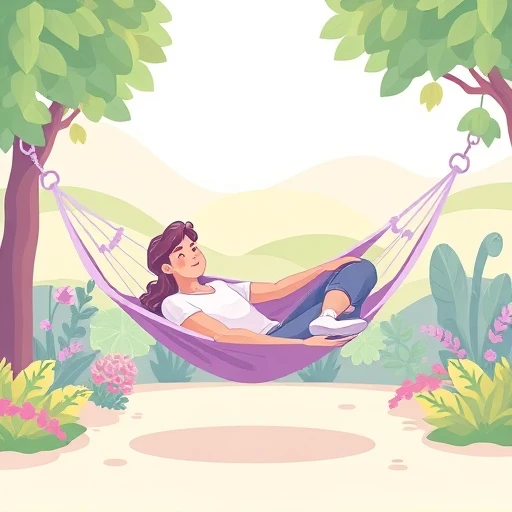
The Hammock Image
Whenever you think of the word 'relaxed', visualize a hammock. It's the ultimate symbol of being relaxed and will help you remember the word.
Relaxed vs. Calm
Use 'relaxed' for general comfort and 'calm' for when things are potentially stressful but you are staying steady.
Avoid Overuse
If you've used 'relaxed' once, try 'mellow' or 'easygoing' for the next description to keep your writing interesting.
Putting Others at Ease
A 'relaxed manner' is a great trait. Describing someone this way suggests they are friendly and easy to talk to.
암기하기
기억법
Think of a 'RE-LAX' chair. When you sit in it, you are 'RE-LAXED'.
시각적 연상
Imagine a person lying in a hammock between two palm trees on a sunny beach.
Word Web
챌린지
Try to use the word 'relaxed' in three different ways today: about yourself, about a place, and about a rule.
어원
The word comes from the Latin 'relaxare', which means 'to loosen' or 'to stretch out again'. It entered Middle English through the Old French 'relaxer'.
원래 의미: To make something less tight or to release someone from a duty.
Latinate / Romance origin.문화적 맥락
Be careful using 'relaxed' to describe someone's work if they are actually being lazy; it can be a polite euphemism.
In the US and UK, 'relaxed' is a common adjective in job descriptions to attract employees who value work-life balance.
실생활에서 연습하기
실제 사용 상황
On Vacation
- I feel so relaxed.
- A relaxed atmosphere.
- A relaxed pace.
- Finally relaxed.
At Work
- Relaxed dress code.
- Relaxed management style.
- Relaxed environment.
- Relaxed deadlines.
Describing People
- A relaxed person.
- He looks relaxed.
- She has a relaxed manner.
- Stay relaxed.
Clothing
- Relaxed fit.
- Relaxed style.
- Relaxed look.
- Relaxed clothing.
Health
- Relaxed muscles.
- Relaxed state.
- Relaxed breathing.
- Feel relaxed.
대화 시작하기
"What is the most relaxed place you have ever visited?"
"Do you feel more relaxed in the morning or in the evening?"
"How do you stay relaxed when you have a lot of work to do?"
"Is your workplace more formal or more relaxed?"
"What kind of music makes you feel the most relaxed?"
일기 주제
Describe a time when you felt completely relaxed. Where were you and what were you doing?
Write about a person you know who has a very relaxed attitude toward life.
How does your body feel when you are relaxed compared to when you are stressed?
Do you think it is important for a home to have a relaxed atmosphere? Why?
What are three things you can do this week to feel more relaxed?
자주 묻는 질문
10 질문Yes, but it means you are currently in the process of doing something to relax (like sitting on the sofa). 'I am relaxed' describes your state of being.
It is almost always positive, meaning calm and happy. However, in a very strict job, it might be used negatively to mean 'not serious enough'.
'Relaxed' can be a temporary feeling, while 'laid-back' is usually a permanent part of someone's personality.
You say the rules are 'relaxed', which means they are not strict or are easy to follow.
Yes, you can say a dog or a cat is relaxed when they are lying down and looking peaceful.
In clothing, it means the clothes are a bit bigger and more comfortable, not tight against the body.
The most common preposition is 'about', as in 'He is relaxed about his grades'.
No, you should use 'more relaxed' to compare two things.
Yes, a 'relaxed sound' or 'relaxed music' is music that is slow and peaceful.
No. 'Relaxed' is a happy feeling of peace. 'Bored' is a negative feeling of having nothing interesting to do.
셀프 테스트 180 질문
Write a sentence about how you feel on Sunday.
Well written! Good try! Check the sample answer below.
Describe a relaxed place you know.
Well written! Good try! Check the sample answer below.
What is your favorite way to get relaxed?
Well written! Good try! Check the sample answer below.
Compare your mood today with your mood yesterday.
Well written! Good try! Check the sample answer below.
Write about a person who is very relaxed.
Well written! Good try! Check the sample answer below.
Describe a relaxed work environment.
Well written! Good try! Check the sample answer below.
Why is it important to stay relaxed during an interview?
Well written! Good try! Check the sample answer below.
Write a short story about a relaxed vacation.
Well written! Good try! Check the sample answer below.
What are the benefits of a relaxed management style?
Well written! Good try! Check the sample answer below.
How do you feel when the rules are too relaxed?
Well written! Good try! Check the sample answer below.
Describe a relaxed atmosphere in a restaurant.
Well written! Good try! Check the sample answer below.
Write a sentence using 'relaxed' and 'confident'.
Well written! Good try! Check the sample answer below.
What does a relaxed weekend look like for you?
Well written! Good try! Check the sample answer below.
Explain the difference between 'relaxed' and 'relaxing'.
Well written! Good try! Check the sample answer below.
Write a sentence about relaxed clothing.
Well written! Good try! Check the sample answer below.
How can you help a friend feel more relaxed?
Well written! Good try! Check the sample answer below.
Describe a relaxed pace of life.
Well written! Good try! Check the sample answer below.
Write a sentence about relaxed regulations.
Well written! Good try! Check the sample answer below.
What makes a person look relaxed?
Well written! Good try! Check the sample answer below.
Write a sentence about a relaxed cat.
Well written! Good try! Check the sample answer below.
Say: 'I feel very relaxed today.'
Read this aloud:
당신의 답변:
Speech recognition is not supported in your browser. Try Chrome or Edge.
Describe your favorite relaxed place.
Read this aloud:
당신의 답변:
Speech recognition is not supported in your browser. Try Chrome or Edge.
Tell me about a relaxed person you know.
Read this aloud:
당신의 답변:
Speech recognition is not supported in your browser. Try Chrome or Edge.
How do you feel after a long day?
Read this aloud:
당신의 답변:
Speech recognition is not supported in your browser. Try Chrome or Edge.
What makes a cafe feel relaxed?
Read this aloud:
당신의 답변:
Speech recognition is not supported in your browser. Try Chrome or Edge.
Do you prefer a formal or relaxed workplace?
Read this aloud:
당신의 답변:
Speech recognition is not supported in your browser. Try Chrome or Edge.
Say: 'The atmosphere here is very relaxed.'
Read this aloud:
당신의 답변:
Speech recognition is not supported in your browser. Try Chrome or Edge.
What do you do to stay relaxed?
Read this aloud:
당신의 답변:
Speech recognition is not supported in your browser. Try Chrome or Edge.
How does a relaxed person act?
Read this aloud:
당신의 답변:
Speech recognition is not supported in your browser. Try Chrome or Edge.
Say: 'He has a very relaxed attitude.'
Read this aloud:
당신의 답변:
Speech recognition is not supported in your browser. Try Chrome or Edge.
Describe a relaxed weekend plan.
Read this aloud:
당신의 답변:
Speech recognition is not supported in your browser. Try Chrome or Edge.
Why is being relaxed good for your health?
Read this aloud:
당신의 답변:
Speech recognition is not supported in your browser. Try Chrome or Edge.
Say: 'I am more relaxed now.'
Read this aloud:
당신의 답변:
Speech recognition is not supported in your browser. Try Chrome or Edge.
What is a 'relaxed fit' in clothing?
Read this aloud:
당신의 답변:
Speech recognition is not supported in your browser. Try Chrome or Edge.
Tell me about a relaxed party you went to.
Read this aloud:
당신의 답변:
Speech recognition is not supported in your browser. Try Chrome or Edge.
How can you tell if someone is relaxed?
Read this aloud:
당신의 답변:
Speech recognition is not supported in your browser. Try Chrome or Edge.
Say: 'Try to stay relaxed.'
Read this aloud:
당신의 답변:
Speech recognition is not supported in your browser. Try Chrome or Edge.
What is the opposite of relaxed?
Read this aloud:
당신의 답변:
Speech recognition is not supported in your browser. Try Chrome or Edge.
Do you like relaxed rules?
Read this aloud:
당신의 답변:
Speech recognition is not supported in your browser. Try Chrome or Edge.
Say: 'It was a relaxed afternoon.'
Read this aloud:
당신의 답변:
Speech recognition is not supported in your browser. Try Chrome or Edge.
Listen to the sentence: 'I am so relaxed.' What is the speaker feeling?
Listen: 'The rules are very relaxed here.' Are the rules strict?
Listen: 'He has a relaxed manner.' How does he behave?
Listen: 'I feel more relaxed now.' Is the speaker more or less stressed?
Listen: 'The atmosphere was relaxed.' What was the vibe?
Listen: 'She looked relaxed on stage.' Was she nervous?
Listen: 'It's a relaxed-fit shirt.' Is the shirt tight?
Listen: 'He is relaxed about the news.' Is he worried?
Listen: 'We had a relaxed day.' What kind of day was it?
Listen: 'The pace was relaxed.' Was it fast?
Listen: 'She has a relaxed style.' What is her style like?
Listen: 'The government relaxed the law.' What happened to the law?
Listen: 'I'm completely relaxed.' How relaxed is the speaker?
Listen: 'The music is so relaxing.' What is the music doing?
Listen: 'Stay relaxed during the test.' What is the advice?
/ 180 correct
Perfect score!
Summary
The word 'relaxed' is essential for describing a lack of tension. Example: 'After a long bath, I felt completely relaxed,' shows how it describes a positive emotional and physical state.
- Relaxed describes a state of being calm and free from any stress or anxiety.
- It can be used for people, places, atmospheres, and even rules or laws.
- It is a positive word that suggests comfort, ease, and a lack of tension.
- Commonly used in daily life to describe feelings after rest or informal settings.
The -ed Rule
Always use 'relaxed' when you are describing a person's feelings. 'I am relaxed' is the standard way to express this state.
Pairing with Adverbs
Use adverbs like 'completely', 'totally', or 'utterly' to emphasize how relaxed you are. This adds depth to your descriptions.
Natural Phrasing
Instead of just saying 'I'm okay', say 'I'm feeling quite relaxed' to sound more like a native speaker during a conversation about your day.
Setting the Scene
Use 'relaxed' to describe the atmosphere of a room. 'The soft lighting created a relaxed atmosphere' is a great descriptive sentence.