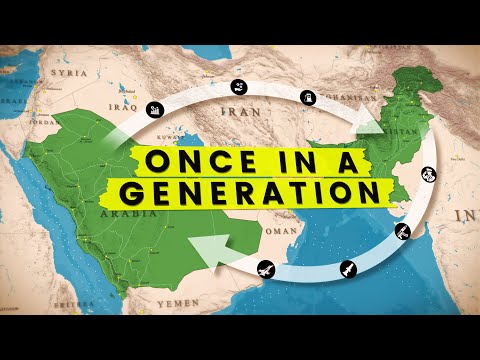
saudi 30초 만에
- Saudi is a proper adjective used to describe anything related to the Kingdom of Saudi Arabia, including its people, culture, and government policies.
- It must always be capitalized and is commonly used in news, business, and travel contexts to provide specific national identification.
- The word is distinct from 'Arab' (ethnicity) and 'Arabic' (language), focusing specifically on the national identity of the kingdom.
- In modern usage, it is frequently associated with economic diversification, global energy markets, and significant social reforms under Vision 2030.
The adjective Saudi is a proper adjective derived from the name of the ruling dynasty of Saudi Arabia, the House of Saud. In its most fundamental sense, it describes anything that pertains to the Kingdom of Saudi Arabia, a sovereign state located in Western Asia that constitutes the bulk of the Arabian Peninsula. When people use this word, they are typically referring to the nationality of individuals, the specific cultural practices of the region, the official policies of the government, or the vast economic entities that originate from the country. Understanding the term requires a grasp of both its political and cultural dimensions. Politically, it signifies the modern state established in 1932 by King Abdulaziz Al Saud. Culturally, it encompasses a rich tapestry of traditions, from the nomadic heritage of the Bedouin to the sophisticated urban developments of modern-day Riyadh and Jeddah. It is important to distinguish 'Saudi' from 'Arab' or 'Arabic'; while 'Arab' refers to an ethnic group and 'Arabic' to a language, 'Saudi' specifically denotes the national identity and state-related attributes of this specific kingdom.
- National Identity
- Relating to the citizens or the sovereign territory of the Kingdom of Saudi Arabia.
- Economic Context
- Often used to describe the nation's massive energy sector, specifically the oil industry and the sovereign wealth fund.
- Cultural Nuance
- Pertaining to the specific customs, dress (like the thobe and abaya), and culinary traditions unique to the kingdom.
In contemporary discourse, the word 'Saudi' is frequently encountered in international news regarding global energy markets, Middle Eastern diplomacy, and large-scale infrastructure projects like Vision 2030. It is a word that carries significant weight in the realms of finance and religion, given the country's role as the world's leading oil exporter and the custodian of the Two Holy Mosques in Mecca and Medina. When a person says they are 'Saudi', they are expressing a national pride that is deeply intertwined with the history of the unification of the peninsula. In academic and formal writing, the word is always capitalized, as it is derived from a proper noun. It is used to modify a wide variety of nouns, ranging from 'Saudi diplomacy' to 'Saudi architecture'.
The Saudi government has announced several new initiatives to promote international tourism in the Red Sea region.
Beyond the formal and political, the word is used in everyday conversation to describe products or experiences. For instance, 'Saudi coffee' (Gahwa) refers to a specific preparation of lightly roasted coffee beans infused with cardamom and saffron, served in small cups. This usage highlights how the adjective serves as a brand of quality and tradition. In the sports world, 'Saudi' is often used to describe the national football team or the domestic professional league, which has gained significant global attention recently. The term is also used in social contexts to describe the hospitality (Karam) that is a hallmark of the culture. Whether discussing the 'Saudi desert' or 'Saudi youth', the adjective provides a specific geographical and cultural anchor that distinguishes the subject from the broader Arab world.
Historically, the term has evolved alongside the state. Before the 20th century, people might have identified more with their specific region (like Hejaz or Najd) or their tribe. However, since the unification, 'Saudi' has become the overarching national identity. In international relations, the 'Saudi' position on various issues is a frequent topic of analysis. The word is also used to describe the specific dialect of Arabic spoken in the kingdom, although 'Saudi Arabic' is actually a collection of several regional dialects. In business, 'Saudi Aramco' is perhaps the most famous use of the word, representing one of the largest companies in the world by revenue. The adjective thus bridges the gap between ancient desert traditions and the cutting-edge technological ambitions of the 21st century.
Many international students are interested in learning more about Saudi culture and the rapid changes occurring in the country.
To use the word correctly, one must be sensitive to its specific application. For example, while all Saudis are Arabs, not all Arabs are Saudis. Using the term 'Saudi' to describe someone from Egypt or Jordan would be factually incorrect. Similarly, while the official language is Arabic, referring to the language itself as 'Saudi' is less common than calling it 'the Saudi dialect'. In fashion, 'Saudi style' might refer to the specific way a headscarf (ghutra) is folded or the intricate embroidery on a cloak (bisht). The word is versatile, appearing in contexts ranging from high-stakes geopolitics to the simple description of a local date variety. It is a word that signifies a blend of religious significance, economic power, and a rapidly evolving social landscape.
The Saudi Riyal is the official currency used throughout the kingdom.
In conclusion, 'Saudi' is an essential adjective for anyone discussing the Middle East, global energy, or Islamic history. It serves as a precise identifier for a nation that plays a pivotal role on the world stage. Whether you are talking about 'Saudi oil', 'Saudi citizens', or 'Saudi history', the word provides the necessary specificity to ground your conversation in the reality of this unique and influential kingdom. As the country continues to open up through its various 'Vision' programs, the frequency and variety of the word's usage in global media are only expected to increase, making it a vital part of the modern English lexicon.
Using the adjective Saudi in a sentence requires an understanding of its role as a proper adjective. It almost always precedes the noun it modifies, functioning as an attributive adjective. For example, in the phrase 'Saudi tradition', the word 'Saudi' provides the specific cultural context for the noun 'tradition'. It is rarely used as a predicative adjective (e.g., 'The man is Saudi') without the accompanying noun 'citizen' or 'national', although in informal speech, people might say 'He is Saudi'. However, for clarity and formality, it is better to use it as a modifier. Because it is a proper adjective, it must always be capitalized, regardless of where it appears in the sentence. This is a common point of error for English learners who might forget to capitalize adjectives derived from country names.
- Attributive Use
- The Saudi delegation arrived at the summit early this morning.
- Descriptive Use
- We enjoyed a traditional Saudi meal consisting of kabsa and dates.
- Official Titles
- The Saudi Arabian Oil Group is commonly known as Aramco.
When constructing sentences, it is helpful to pair 'Saudi' with nouns that reflect the country's main sectors: energy, religion, government, and culture. For instance, 'Saudi crude oil' is a common collocation in economic reports. In a religious context, one might speak of the 'Saudi authorities' managing the pilgrimage. In a cultural context, 'Saudi hospitality' is a frequent subject of travel writing. The word can also be used to describe geographic features, such as the 'Saudi desert' or the 'Saudi coastline'. When using the word to describe people, 'Saudi nationals' or 'Saudi citizens' are the preferred formal terms. Using the word 'Saudis' as a plural noun is also standard when referring to the people as a whole.
The Saudi landscape is characterized by vast deserts and modern, high-tech cities.
Another important aspect of using 'Saudi' is understanding its relationship with the full name of the country. While the country is 'Saudi Arabia', the adjective is simply 'Saudi'. You would say 'Saudi laws' rather than 'Saudi Arabia laws'. However, in very formal or legal documents, you might see 'Saudi Arabian', as in 'The Saudi Arabian government'. In most daily, journalistic, and business contexts, 'Saudi' is the standard and more concise choice. It is also worth noting that 'Saudi' can be used to describe abstract concepts, such as 'Saudi influence' or 'Saudi interests', which are common in political science and international relations. These phrases describe the impact or the goals of the kingdom on the global stage.
In complex sentences, 'Saudi' can be part of a compound subject or object. For example: 'Both Saudi and Emirati officials attended the regional security conference.' Here, 'Saudi' is used alongside another national adjective to show a shared action or status. It can also be modified by adverbs, though this is less common. One might say 'distinctly Saudi' to emphasize that something is uniquely characteristic of the kingdom. For example: 'The architecture of the new museum is distinctly Saudi, blending modern lines with traditional mud-brick styles.' This use of the adjective helps to define the specific character of an object or idea by linking it directly to the nation's identity.
Recent Saudi reforms have significantly increased the participation of women in the workforce.
When writing about history, 'Saudi' is used to distinguish the three different Saudi states. A historian might write about the 'First Saudi State' (1744–1818) to provide chronological clarity. In the context of the modern world, 'Saudi' is often paired with 'Vision 2030', the country's strategic framework for economic diversification. Sentences like 'The Saudi Vision 2030 plan aims to reduce the country's reliance on oil' are ubiquitous in modern business journalism. This demonstrates how the adjective is not just a static label but is actively used to describe the forward-looking goals of the nation. Whether you are a student, a business professional, or a casual reader, mastering the use of 'Saudi' allows for precise and respectful communication about one of the world's most significant countries.
The Saudi capital, Riyadh, is undergoing a massive transformation with new metro lines and public parks.
Finally, it is useful to consider the negative or interrogative forms. 'Is this a Saudi company?' or 'The project did not receive Saudi funding.' These sentences follow standard English rules for adjectives. The key is consistency in capitalization and a clear understanding of what the adjective refers to. By using 'Saudi' correctly, you avoid the ambiguity that comes from using broader terms like 'Middle Eastern' or 'Arab' when you specifically mean something related to the Kingdom of Saudi Arabia. This precision is valued in professional and academic settings where accuracy is paramount.
The word Saudi is a staple of international news broadcasts, financial reports, and cultural documentaries. If you tune into a news channel like the BBC, CNN, or Al Jazeera, you will frequently hear the word 'Saudi' in the context of global energy prices. Because the kingdom is a leading member of OPEC (the Organization of the Petroleum Exporting Countries), any change in 'Saudi oil production' has an immediate impact on the global economy. News anchors often discuss 'Saudi policy' regarding regional stability or 'Saudi investments' in global technology firms. In these contexts, the word represents a major geopolitical and economic force that affects people's lives far beyond the borders of the Arabian Peninsula.
- Financial News
- Analysts often discuss the performance of the Saudi stock market (Tadawul) and the country's sovereign wealth fund (PIF).
- Travel and Tourism
- Travelers hear the word when booking flights on Saudi Arabian Airlines (Saudia) or when discussing Saudi visa requirements.
- Sports Broadcasting
- With the recent influx of international stars into the Saudi Pro League, the word is now common in sports commentary.
In the world of religion, 'Saudi' is heard every year during the Hajj and Umrah seasons. Millions of Muslims from around the globe travel to the kingdom, and they often refer to the 'Saudi authorities' who manage the logistics of these massive gatherings. Religious scholars and pilgrims alike discuss 'Saudi regulations' regarding the holy sites. In this setting, the word is associated with the country's unique role as the heart of the Islamic world. Even for those who are not religious, the cultural impact of these events makes 'Saudi' a common term in discussions about global religious practices and logistics.
The Saudi national football team's victory in the World Cup was a historic moment for the entire region.
You will also hear 'Saudi' in the context of high-end fashion and luxury. 'Saudi designers' are increasingly making a name for themselves on the international stage, blending traditional motifs with contemporary styles. In cities like Paris, London, and New York, the 'Saudi market' is recognized as a significant consumer of luxury goods. This usage of the word highlights the economic power and evolving tastes of the Saudi population. Similarly, in the culinary world, 'Saudi cuisine' is gaining recognition as foodies explore the flavors of the Middle East. You might hear a chef talk about 'Saudi spices' or the specific way 'Saudi dates' are harvested and processed.
In academic and scientific circles, 'Saudi' is heard in discussions about renewable energy and environmental conservation. The 'Saudi Green Initiative' is a major topic of conversation among environmentalists and policy makers. Scientists might discuss 'Saudi research' into desalination or solar power, as the country invests heavily in sustainable technologies. In these environments, the word is linked to innovation and the transition toward a post-oil economy. This reflects a shift in how the word is perceived, moving from a focus solely on fossil fuels to a broader emphasis on technological and environmental leadership.
I recently attended a lecture on Saudi history, which covered the unification of the kingdom in the early 20th century.
Finally, in the realm of social media and pop culture, 'Saudi' is a frequent hashtag and keyword. Influencers often share their experiences of 'Saudi nightlife' in cities like Riyadh or their visits to 'Saudi heritage sites' like Al-Ula. This digital presence has made the word more familiar to younger generations worldwide, who see a side of the country that is often different from traditional news portrayals. Whether it is through a travel vlog, a business podcast, or a news report, the word 'Saudi' is an omnipresent term that describes a nation in the midst of profound change and global engagement.
The Saudi film industry is growing rapidly, with several local productions receiving international acclaim.
In summary, 'Saudi' is a word you will hear in almost every sector of global society. Its meaning is multifaceted, covering everything from the price of a gallon of gas to the preservation of ancient history. By paying attention to the context in which it is used, you can gain a deeper understanding of the kingdom's role in the world today. It is a word that signifies power, tradition, and a bold vision for the future, making it one of the most important adjectives in contemporary English.
One of the most frequent mistakes English learners make with the word Saudi is failing to capitalize it. Because it is a proper adjective derived from a proper noun (the House of Saud), it must always begin with a capital 'S'. Writing 'saudi' with a lowercase letter is grammatically incorrect and can be seen as a sign of poor attention to detail. This rule applies regardless of whether the word is used as an adjective (Saudi culture) or as a plural noun (the Saudis). Another common error is confusing 'Saudi' with 'Arab' or 'Arabic'. While they are related, they are not interchangeable. 'Arab' refers to an ethnic group that spans many countries, while 'Saudi' specifically refers to the nationality of someone from Saudi Arabia. Similarly, 'Arabic' is the name of the language, not the adjective for the people or the country.
- Capitalization
- Incorrect: He is a saudi citizen. Correct: He is a Saudi citizen.
- Nationality vs. Ethnicity
- Incorrect: All Arabs are Saudi. Correct: Saudi is a specific nationality within the Arab world.
- Language vs. Adjective
- Incorrect: I am learning the Saudi language. Correct: I am learning Arabic, specifically the Saudi dialect.
Another subtle mistake involves the use of 'Saudi' versus 'Saudi Arabian'. While both are technically correct, 'Saudi' is more common as an adjective in modern usage. However, 'Saudi Arabian' is often used in formal titles, such as 'The Saudi Arabian Monetary Authority'. A common mistake is to use 'Saudi Arabia' as an adjective, as in 'the Saudi Arabia government'. In English, the name of the country should not be used as an adjective if a proper adjective exists. Therefore, 'the Saudi government' or 'the Saudi Arabian government' is the correct form. This is a rule that applies to most countries (e.g., 'French wine' instead of 'France wine').
Mistake: I really like saudi food. Correction: I really like Saudi food.
Mispronunciation is also a common issue. Some speakers might place the stress on the wrong syllable or mispronounce the 'au' sound. In English, the standard pronunciation is /'saʊdi/ or /'sɔːdi/. The first syllable should be stressed. Another error is using 'Saudi' to refer to the entire Arabian Peninsula. While Saudi Arabia is the largest country on the peninsula, it is not the only one. Referring to someone from Kuwait or Oman as 'Saudi' is a significant factual error. It is important to be precise about geographic and political boundaries when using national adjectives.
In writing, people sometimes over-apply the term 'Saudi' to things that are broader. For example, 'Saudi Islam' is a phrase sometimes used by outsiders, but it can be misleading. While the kingdom has a specific approach to Islamic practice, the religion itself is universal. It is often more accurate to speak of 'religious practices in Saudi Arabia' or 'the Saudi interpretation of Islamic law'. Precision in these matters shows a deeper understanding of the subject and avoids overgeneralization. Similarly, 'Saudi oil' is a correct term, but 'Saudi energy' might be more accurate if you are also referring to the country's growing solar and wind sectors.
Mistake: He is an Arabic businessman from Riyadh. Correction: He is a Saudi businessman from Riyadh.
Finally, there is the mistake of using 'Saudi' as a noun in the singular to refer to a person. While 'the Saudis' is acceptable for the plural, saying 'He is a Saudi' is common but sometimes considered slightly less formal than 'He is a Saudi national' or 'He is a Saudi citizen'. In professional writing, it is usually better to use the adjective form with a noun. By avoiding these common pitfalls, you can ensure that your use of the word 'Saudi' is accurate, respectful, and grammatically sound. This attention to detail is particularly important in international business and diplomatic contexts where national identities are highly significant.
Mistake: The Saudi Arabia economy is growing. Correction: The Saudi economy is growing.
In summary, the most important things to remember are: always capitalize, distinguish between nationality and ethnicity, use the adjective form rather than the country name as a modifier, and be precise about the geographic scope. These simple rules will help you use 'Saudi' correctly in any situation, from a casual conversation to a formal academic paper.
When discussing the Kingdom of Saudi Arabia, there are several words that are similar to Saudi but have distinct meanings and applications. Understanding these differences is key to precise communication. The most common alternative is 'Saudi Arabian'. As mentioned before, 'Saudi Arabian' is often used in more formal or official contexts. For example, 'The Saudi Arabian government' sounds slightly more formal than 'The Saudi government'. However, in most journalistic and everyday contexts, 'Saudi' is the preferred, more concise term. Another related term is 'Arabian'. While 'Saudi' refers to the modern state, 'Arabian' refers to the entire peninsula. You might talk about 'Arabian horses' or the 'Arabian desert', which spans several countries including Saudi Arabia, Yemen, and Oman.
- Saudi vs. Arab
- 'Saudi' is a nationality (from Saudi Arabia); 'Arab' is an ethnicity (found across 22 countries).
- Saudi vs. Khaleeji
- 'Saudi' is specific to one country; 'Khaleeji' refers to the culture and people of the Gulf states (GCC).
- Saudi vs. Middle Eastern
- 'Saudi' is specific; 'Middle Eastern' is a broad regional term including non-Arab countries like Iran and Turkey.
Another important term is 'Khaleeji'. This word comes from the Arabic word for 'gulf' (Khalij) and refers to the culture, music, and people of the Arabian Gulf states, which include Saudi Arabia, Kuwait, the UAE, Qatar, Bahrain, and Oman. While a Saudi person is 'Khaleeji', not all 'Khaleejis' are Saudi. Using 'Khaleeji' can be a way to describe cultural traits that are shared across the region, such as specific styles of music or traditional dress. However, if you are referring to something specifically related to the laws or government of Saudi Arabia, 'Saudi' is the only correct term. In business, you might hear the term 'GCC' (Gulf Cooperation Council) used as an adjective, as in 'GCC markets', which includes Saudi Arabia as its largest member.
While the Saudi economy is the largest in the region, it shares many characteristics with other Khaleeji nations.
In a historical context, you might encounter the word 'Wahhabi'. This refers to a specific religious movement within Islam that has been influential in Saudi Arabia. However, this term is often used by outsiders and can be controversial or misunderstood. In modern Saudi Arabia, people generally prefer to be described simply as 'Muslim' or to have their practices described as 'Salafi'. When writing or speaking, it is usually better to use 'Saudi' to describe the national or state-related aspects and to use specific religious terms only when discussing theology. Using 'Saudi' as a catch-all for religious views can be an oversimplification that misses the diversity of thought within the kingdom.
Geographically, 'Peninsular' is another alternative, though it is much more technical and less common. It refers to anything related to the Arabian Peninsula. In a scientific paper about the flora and fauna of the region, you might see 'Peninsular species'. However, in 99% of cases, 'Saudi' or 'Arabian' will be more appropriate. It is also worth mentioning 'Hijazi' and 'Najdi', which refer to the two main regions of Saudi Arabia. Someone might say 'Hijazi coffee' to refer to the specific style of coffee from the western region (Hejaz). These regional adjectives provide a level of detail that 'Saudi' does not, reflecting the internal diversity of the country.
The Saudi government works closely with its GCC partners on regional security issues.
Finally, in the context of the language, 'Saudi Arabic' is the specific term for the dialects spoken in the kingdom. While 'Arabic' is the general term, 'Saudi Arabic' acknowledges the unique vocabulary and pronunciation found in the country. In summary, while 'Saudi' is the most common and versatile term, being aware of alternatives like 'Saudi Arabian', 'Arabian', 'Khaleeji', and regional terms like 'Najdi' or 'Hijazi' will allow you to speak and write about the country with much greater precision and cultural sensitivity.
Many people confuse Saudi culture with a generic 'Arab' culture, but the kingdom has many unique traditions.
By choosing the right word for the right context, you demonstrate a sophisticated understanding of the Middle East. Whether you are discussing politics, culture, or geography, the distinction between 'Saudi' and its related terms is essential for clear and accurate communication.
How Formal Is It?
재미있는 사실
Saudi Arabia is one of the few countries in the world named after its ruling family. The name was officially adopted when the kingdom was unified in 1932.
발음 가이드
- Pronouncing the 'au' like 'ay' (Say-di).
- Stressing the second syllable (sau-DI).
- Pronouncing the 's' like a 'z' (Zau-di).
- Making the 'au' sound too long like 'ah' (Sah-di).
- Mispronouncing the 'i' as a long 'eye' (Sau-dye).
난이도
Easy to recognize in texts, though context might be complex.
Requires remembering to capitalize and using it as an adjective correctly.
Pronunciation is straightforward for most learners.
Commonly heard in international media.
다음에 무엇을 배울까
선수 학습
다음에 배울 것
고급
알아야 할 문법
Proper Adjectives
Always capitalize adjectives derived from proper nouns, like 'Saudi'.
Attributive Adjectives
Place 'Saudi' before the noun it modifies, e.g., 'Saudi laws'.
Nationalities as Nouns
Use 'Saudis' to refer to the people as a group.
Compound Adjectives
Use a hyphen for compound forms like 'Saudi-led'.
Articles with Nationalities
Use 'the' when referring to the people as a whole: 'The Saudis'.
수준별 예문
My friend is Saudi.
Mon ami est saoudien.
Subject + Verb + Adjective (Nationality).
I like Saudi dates.
J'aime les dattes saoudiennes.
Adjective 'Saudi' modifies the noun 'dates'.
The Saudi flag is green.
Le drapeau saoudien est vert.
Proper adjective 'Saudi' must be capitalized.
Is he Saudi?
Est-il saoudien ?
Interrogative sentence using the adjective 'Saudi'.
She lives in a Saudi city.
Elle vit dans une ville saoudienne.
Adjective 'Saudi' modifies 'city'.
This is a Saudi coffee pot.
C'est une cafetière saoudienne.
Adjective 'Saudi' describes the origin of the object.
Saudi people are very kind.
Les Saoudiens sont très gentils.
Adjective 'Saudi' modifies the plural noun 'people'.
I want to visit a Saudi desert.
Je veux visiter un désert saoudien.
Adjective 'Saudi' specifies the location of the desert.
The Saudi airline is very comfortable.
La compagnie aérienne saoudienne est très confortable.
Using 'Saudi' to describe a specific service.
We are studying Saudi history today.
Nous étudions l'histoire saoudienne aujourd'hui.
Adjective 'Saudi' used in an academic context.
The Saudi Riyal is the currency.
Le riyal saoudien est la monnaie.
Proper adjective used for a specific currency name.
He wears a Saudi thobe.
Il porte un thobe saoudien.
Describing traditional clothing.
Many Saudi students study abroad.
Beaucoup d'étudiants saoudiens étudient à l'étranger.
Quantifier 'many' + Adjective 'Saudi' + Noun 'students'.
The Saudi summer is very hot.
L'été saoudien est très chaud.
Describing the climate of the country.
I saw a Saudi documentary last night.
J'ai vu un documentaire saoudien hier soir.
Adjective 'Saudi' describes the origin of the film.
They are a Saudi family.
Ils sont une famille saoudienne.
Adjective 'Saudi' modifies 'family'.
The Saudi government is investing in new technology.
Le gouvernement saoudien investit dans les nouvelles technologies.
Formal use of 'Saudi' to describe a state entity.
Saudi Vision 2030 is a plan for the future.
Saudi Vision 2030 est un plan pour l'avenir.
Using 'Saudi' as part of a proper name for a national project.
We need to follow Saudi customs when we visit.
Nous devons suivre les coutumes saoudiennes lors de notre visite.
Discussing social norms and etiquette.
The Saudi economy depends on oil exports.
L'économie saoudienne dépend des exportations de pétrole.
Economic context using 'Saudi' as a modifier.
Saudi women are entering the workforce in large numbers.
Les femmes saoudiennes entrent sur le marché du travail en grand nombre.
Describing social changes within the population.
The Saudi football team played very well.
L'équipe de football saoudienne a très bien joué.
Sports context for the adjective.
I am reading a book by a Saudi author.
Je lis un livre d'un auteur saoudien.
Describing the nationality of a creative professional.
The Saudi authorities are managing the pilgrimage.
Les autorités saoudiennes gèrent le pèlerinage.
Formal term for government officials.
The Saudi foreign minister met with his counterparts in London.
Le ministre saoudien des Affaires étrangères a rencontré ses homologues à Londres.
Diplomatic title using 'Saudi'.
Saudi oil production has a major impact on global prices.
La production de pétrole saoudienne a un impact majeur sur les prix mondiaux.
Complex economic relationship.
The Saudi legal system is based on Islamic law.
Le système juridique saoudien est basé sur la loi islamique.
Discussing institutional structures.
Saudi architecture often blends tradition with modernity.
L'architecture saoudienne mélange souvent tradition et modernité.
Analyzing cultural and aesthetic trends.
The Saudi sovereign wealth fund is one of the largest in the world.
Le fonds souverain saoudien est l'un des plus importants au monde.
Financial terminology.
Many Saudi students are pursuing degrees in engineering.
De nombreux étudiants saoudiens poursuivent des diplômes en ingénierie.
Describing educational trends.
The Saudi-led coalition announced a new initiative.
La coalition dirigée par l'Arabie saoudite a annoncé une nouvelle initiative.
Compound adjective 'Saudi-led'.
Saudi cultural festivals are becoming more popular internationally.
Les festivals culturels saoudiens deviennent plus populaires à l'échelle internationale.
Discussing global cultural presence.
The Saudi geopolitical strategy focuses on regional stability.
La stratégie géopolitique saoudienne se concentre sur la stabilité régionale.
Advanced political terminology.
Saudi fiscal policy is undergoing a significant transformation.
La politique budgétaire saoudienne subit une transformation significative.
Discussing economic management at a high level.
The nuances of Saudi diplomatic protocol are quite complex.
Les nuances du protocole diplomatique saoudien sont assez complexes.
Focusing on subtle cultural and political details.
Saudi urban planning is increasingly focused on sustainability.
L'urbanisme saoudien est de plus en plus axé sur la durabilité.
Specialized professional context.
The Saudi literary scene has seen a surge in female voices.
La scène littéraire saoudienne a connu une augmentation des voix féminines.
Analyzing social and cultural shifts.
Saudi influence in the energy market remains unparalleled.
L'influence saoudienne sur le marché de l'énergie reste inégalée.
Abstract noun 'influence' modified by 'Saudi'.
The Saudi state has historically played a central role in the region.
L'État saoudien a historiquement joué un rôle central dans la région.
Historical and political analysis.
Saudi educational reforms aim to foster critical thinking.
Les réformes éducatives saoudiennes visent à favoriser la pensée critique.
Discussing policy goals and outcomes.
The Saudi existential security paradigm is deeply rooted in history.
Le paradigme de sécurité existentielle saoudien est profondément enraciné dans l'histoire.
Highly abstract and specialized terminology.
The semiotics of Saudi national identity are evolving rapidly.
La sémiotique de l'identité nationale saoudienne évolue rapidement.
Academic analysis of cultural symbols.
Saudi fiscal diversification is a cornerstone of the new economic era.
La diversification budgétaire saoudienne est une pierre angulaire de la nouvelle ère économique.
Metaphorical and technical economic language.
The Saudi-Iranian rapprochement has significant regional implications.
Le rapprochement saoudo-iranien a des implications régionales significatives.
Complex diplomatic terminology.
Saudi architectural vernacular is being reimagined for the 21st century.
Le vernaculaire architectural saoudien est en train d'être réimaginé pour le 21e siècle.
Specialized architectural and historical language.
The Saudi social contract is being renegotiated through Vision 2030.
Le contrat social saoudien est en train d'être renégocié à travers Vision 2030.
Sociopolitical theory applied to a specific context.
Saudi soft power is projected through global sports and entertainment.
Le soft power saoudien est projeté à travers les sports et le divertissement mondiaux.
International relations theory.
The Saudi monarchy's historical legitimacy is tied to the holy sites.
La légitimité historique de la monarchie saoudienne est liée aux lieux saints.
Analyzing the foundations of political power.
동의어
반의어
자주 쓰는 조합
자주 쓰는 구문
— A group of countries working together under the leadership of Saudi Arabia.
The Saudi-led coalition issued a joint statement.
— The top professional football league in Saudi Arabia.
Many famous players have joined the Saudi Pro League.
— The national oil and gas company of Saudi Arabia.
Saudi Aramco is one of the world's most profitable companies.
— A traditional way of preparing coffee in Saudi Arabia, often with cardamom.
Would you like some Saudi coffee and dates?
— The specific way Arabic is spoken within Saudi Arabia.
He speaks the Saudi dialect very fluently.
— The political and economic relationship between Saudi Arabia and the United States.
Saudi-US relations have a long history.
— The historical and cultural legacy of the Saudi people.
The museum showcases Saudi heritage through the ages.
— The younger generation of people in Saudi Arabia.
The Saudi youth are very tech-savvy.
— The business and consumer environment within Saudi Arabia.
The Saudi market offers many opportunities for investors.
— The holiday celebrating the unification of the kingdom on September 23rd.
The streets were decorated for Saudi National Day.
자주 혼동되는 단어
Arab is an ethnicity; Saudi is a nationality. Not all Arabs are Saudi.
Arabic is the language; Saudi is the adjective for the country and people.
Arabian refers to the whole peninsula; Saudi refers specifically to the kingdom.
관용어 및 표현
— Used to describe extreme generosity and warmth towards guests.
Their home was a perfect example of Saudi hospitality.
General— Sometimes used metaphorically to refer to high-quality oil.
The region is famous for its 'Saudi gold'.
Informal/Metaphorical— A humorous way to refer to a more relaxed approach to punctuality (though becoming less common).
Don't worry, we are on Saudi time.
Slang/Informal— Doing things according to the specific customs or policies of the kingdom.
They handled the negotiations the Saudi way.
Neutral— Referring to the deep-seated pride and loyalty of a Saudi person.
He has a true Saudi heart.
Poetic— Referring to the specific shade of green on the national flag.
The building was lit up in Saudi green.
Neutral— A high level of quality or a specific regulation set by the kingdom.
This project meets the Saudi standard for safety.
Business— A link or relationship involving Saudi interests or people.
The investigation revealed a Saudi connection.
Journalistic— The aspirations and goals of the modern Saudi generation.
She is working hard to achieve the Saudi dream.
Informal— The physical land or territory of Saudi Arabia.
It was his first time stepping on Saudi soil.
Formal/Poetic혼동하기 쉬운
Both relate to the same region and people.
Arab refers to the ethnic and linguistic group across many nations. Saudi refers specifically to the citizens and state of Saudi Arabia.
He is an Arab, but his nationality is Saudi.
They sound similar and both start with 'A' or 'S'.
Arabic is the name of the language. You cannot say 'I speak Saudi' (unless referring to a dialect).
She is Saudi and she speaks Arabic.
Both are adjectives for the region.
Arabian is geographic (Arabian Peninsula). Saudi is political (Kingdom of Saudi Arabia).
The Arabian Sea borders the Saudi coast.
Both describe people from the same area.
Khaleeji refers to the broader Gulf region (multiple countries). Saudi is specific to one.
He wears a Khaleeji style thobe, as he is Saudi.
Saudi Arabia is an Islamic country.
Islamic refers to the religion (global). Saudi refers to the nation (specific).
Saudi laws are based on Islamic principles.
문장 패턴
I am [Nationality].
I am Saudi.
This is [Nationality] [Noun].
This is Saudi coffee.
The [Nationality] [Noun] is [Adjective].
The Saudi economy is strong.
Due to [Nationality] [Noun], [Result].
Due to Saudi oil production, prices fell.
The [Nationality] [Noun] reflects [Concept].
The Saudi architecture reflects cultural heritage.
In light of [Nationality] [Noun], [Analysis].
In light of Saudi fiscal policy, the market stabilized.
Many [Nationality] [Noun] [Verb].
Many Saudi students study abroad.
I like [Nationality] [Noun].
I like Saudi food.
어휘 가족
명사
동사
형용사
관련
사용법
Common in news, business, and travel contexts.
-
Using 'saudi' with a lowercase 's'.
→
Saudi
Proper adjectives must always be capitalized in English.
-
Saying 'I speak Saudi'.
→
I speak Arabic.
Saudi is a nationality, not the name of the language.
-
Calling an Egyptian person 'Saudi'.
→
Calling them 'Arab' or 'Egyptian'.
Saudi refers specifically to the nationality of Saudi Arabia.
-
Using 'Saudi Arabia' as an adjective (e.g., Saudi Arabia food).
→
Saudi food.
Use the adjective form 'Saudi' to modify nouns.
-
Confusing 'Saudi' with 'Arabian' in a political context.
→
Saudi government.
'Arabian' is geographic; 'Saudi' is political and refers to the state.
팁
Capitalization is Key
Always capitalize the 'S' in Saudi. It's a proper adjective and failing to do so is a major grammatical error.
Saudi vs. Arab
Remember that Saudi is a nationality and Arab is an ethnicity. Use Saudi when referring specifically to the country of Saudi Arabia.
Saudi Coffee
If you are invited to a Saudi home, you will likely be served 'Saudi coffee' (Gahwa). It's a key part of their hospitality.
Vision 2030
In business contexts, the phrase 'Saudi Vision 2030' is very common. Knowing this will help you understand modern Saudi economic discussions.
Arabian Peninsula
Don't confuse Saudi with the whole Arabian Peninsula. Saudi Arabia is the largest country there, but not the only one.
Stress the First Syllable
Make sure to say SAU-di, not sau-DI. Correct stress makes your English sound more natural.
Adjective Use
Use 'Saudi' as an adjective before nouns like 'citizens', 'laws', or 'history' for clear and accurate writing.
Saudi Hospitality
The phrase 'Saudi hospitality' is a common collocation. Use it to describe the generous nature of people from the kingdom.
Saudi Authorities
In news reports, you will often hear 'Saudi authorities'. This is a formal way to refer to the government or police.
House of Saud
Knowing that 'Saudi' comes from the 'House of Saud' family name helps you understand why it's a proper adjective.
암기하기
기억법
Think of 'Saudi' as 'South' + 'D' (Desert). It's the big country in the South with lots of Desert. Or remember: 'S' is for Saud, the family that started it all.
시각적 연상
Imagine a green flag with a white sword and Arabic writing. This is the Saudi flag, and it helps you link the word to the visual identity of the nation.
Word Web
챌린지
Try to use the word 'Saudi' in three different sentences today: one about food, one about a person, and one about the news.
어원
The word 'Saudi' comes from the name of the House of Saud (Al Saud), the ruling royal family of Saudi Arabia. The family is named after its 18th-century ancestor, Saud bin Muhammad bin Muqrin.
원래 의미: The name 'Saud' itself is an Arabic name meaning 'fortunate' or 'blessed'.
Semitic (Arabic) origin, adapted into English as a proper adjective.문화적 맥락
Be careful not to use 'Saudi' as a synonym for 'Arab'. Also, avoid using it as a noun for a person in a way that might sound dismissive; 'Saudi national' is safer.
In the West, 'Saudi' is often first encountered in news about oil or politics, but this is changing as the country promotes its tourism and sports sectors.
실생활에서 연습하기
실제 사용 상황
Business
- Saudi market trends
- Saudi investment opportunities
- Saudi labor laws
- Saudi business etiquette
Travel
- Saudi tourist visa
- Saudi heritage sites
- Saudi local transport
- Saudi weather conditions
Politics
- Saudi foreign policy
- Saudi domestic reforms
- Saudi regional influence
- Saudi government initiatives
Culture
- Saudi traditional food
- Saudi social norms
- Saudi religious practices
- Saudi arts and music
Sports
- Saudi national team
- Saudi football league
- Saudi sports infrastructure
- Saudi international athletes
대화 시작하기
"Have you ever tried traditional Saudi coffee and dates?"
"What do you know about the Saudi Vision 2030 plan?"
"I'm interested in visiting Saudi Arabia; do you know any good Saudi travel tips?"
"The Saudi football team did quite well in the last tournament, didn't they?"
"I was reading about the new Saudi city, The Line. What do you think of it?"
일기 주제
Write about what you imagine a day in a Saudi city like Riyadh would be like.
Compare and contrast Saudi culture with your own culture. What are the main differences?
How has your perception of Saudi Arabia changed after learning more about it?
If you were a Saudi entrepreneur, what kind of business would you start under Vision 2030?
Describe the importance of Saudi hospitality and how it might feel to be a guest there.
자주 묻는 질문
10 질문Yes, 'Saudi' is a proper adjective derived from the House of Saud, so it must always be capitalized in English, just like 'American' or 'French'.
Saudi is a nationality referring to someone from Saudi Arabia. Arab is an ethnic group that includes people from many different countries in the Middle East and North Africa.
No, you should say 'I speak Arabic'. You can say 'I speak the Saudi dialect of Arabic' if you want to be more specific about the regional variation.
Both are correct. 'Saudi' is more common in everyday and journalistic use, while 'Saudi Arabian' is often used in formal or official titles.
In English, it is usually pronounced /'saʊdi/ (rhymes with 'howdy') or /'sɔːdi/ (rhymes with 'Gaudi'). The stress is on the first syllable.
The name 'Saud' is an Arabic name that means 'fortunate' or 'blessed'. The country is named after the ruling Al Saud family.
It is primarily an adjective (e.g., Saudi culture), but it can also be used as a noun in the plural ('the Saudis') to refer to the people.
Common Saudi foods include Kabsa (a rice and meat dish), Jareesh, and various types of dates, often served with Saudi coffee.
It is a strategic framework to reduce Saudi Arabia's dependence on oil, diversify its economy, and develop public service sectors such as health, education, and tourism.
Technically no, the language is Arabic. However, people often use 'Saudi Arabic' to refer to the specific dialects spoken within the kingdom.
셀프 테스트 200 질문
Write a sentence using 'Saudi' to describe a person.
Well written! Good try! Check the sample answer below.
Describe your favorite Saudi food in two sentences.
Well written! Good try! Check the sample answer below.
Write a short paragraph about Saudi hospitality.
Well written! Good try! Check the sample answer below.
Explain the importance of Saudi Vision 2030 for the country's future.
Well written! Good try! Check the sample answer below.
Compare the role of Saudi Arabia in the global energy market to another country.
Well written! Good try! Check the sample answer below.
Write a formal letter to a Saudi business partner.
Well written! Good try! Check the sample answer below.
Describe the geographic diversity of the Saudi landscape.
Well written! Good try! Check the sample answer below.
Discuss the impact of Saudi social reforms on the youth.
Well written! Good try! Check the sample answer below.
Write a travel itinerary for a week in Saudi Arabia.
Well written! Good try! Check the sample answer below.
Analyze the semiotics of the Saudi flag.
Well written! Good try! Check the sample answer below.
Write a dialogue between a tourist and a Saudi guide.
Well written! Good try! Check the sample answer below.
Explain the difference between 'Saudi' and 'Arab'.
Well written! Good try! Check the sample answer below.
Describe a traditional Saudi wedding ceremony.
Well written! Good try! Check the sample answer below.
Discuss the challenges of economic diversification in Saudi Arabia.
Well written! Good try! Check the sample answer below.
Write a review of a Saudi film or book.
Well written! Good try! Check the sample answer below.
Describe the significance of Mecca and Medina in Saudi Arabia.
Well written! Good try! Check the sample answer below.
Write a short essay on Saudi architectural history.
Well written! Good try! Check the sample answer below.
Discuss the future of Saudi-European relations.
Well written! Good try! Check the sample answer below.
Write a blog post about 'Saudi style' in fashion.
Well written! Good try! Check the sample answer below.
Explain the importance of the Saudi Green Initiative.
Well written! Good try! Check the sample answer below.
Introduce yourself and mention if you have any Saudi friends.
Read this aloud:
당신의 답변:
Speech recognition is not supported in your browser. Try Chrome or Edge.
Talk about a country you want to visit, like Saudi Arabia.
Read this aloud:
당신의 답변:
Speech recognition is not supported in your browser. Try Chrome or Edge.
Describe a traditional Saudi dish you have tried or would like to try.
Read this aloud:
당신의 답변:
Speech recognition is not supported in your browser. Try Chrome or Edge.
Discuss the importance of oil in the Saudi economy.
Read this aloud:
당신의 답변:
Speech recognition is not supported in your browser. Try Chrome or Edge.
Give a short presentation on Saudi Vision 2030.
Read this aloud:
당신의 답변:
Speech recognition is not supported in your browser. Try Chrome or Edge.
Debate the pros and cons of rapid social change in a country like Saudi Arabia.
Read this aloud:
당신의 답변:
Speech recognition is not supported in your browser. Try Chrome or Edge.
Explain the difference between 'Saudi' and 'Arab' to a friend.
Read this aloud:
당신의 답변:
Speech recognition is not supported in your browser. Try Chrome or Edge.
Talk about the role of Saudi Arabia in international sports.
Read this aloud:
당신의 답변:
Speech recognition is not supported in your browser. Try Chrome or Edge.
Describe the experience of visiting a Saudi heritage site.
Read this aloud:
당신의 답변:
Speech recognition is not supported in your browser. Try Chrome or Edge.
Discuss the impact of the Saudi Green Initiative on the environment.
Read this aloud:
당신의 답변:
Speech recognition is not supported in your browser. Try Chrome or Edge.
Tell a story about a time you experienced Saudi hospitality.
Read this aloud:
당신의 답변:
Speech recognition is not supported in your browser. Try Chrome or Edge.
Explain the significance of the Saudi flag.
Read this aloud:
당신의 답변:
Speech recognition is not supported in your browser. Try Chrome or Edge.
Talk about the changes in Saudi society over the last decade.
Read this aloud:
당신의 답변:
Speech recognition is not supported in your browser. Try Chrome or Edge.
Discuss the future of the Saudi film industry.
Read this aloud:
당신의 답변:
Speech recognition is not supported in your browser. Try Chrome or Edge.
Analyze the importance of the Saudi-US relationship.
Read this aloud:
당신의 답변:
Speech recognition is not supported in your browser. Try Chrome or Edge.
Describe a traditional Saudi thobe.
Read this aloud:
당신의 답변:
Speech recognition is not supported in your browser. Try Chrome or Edge.
Talk about the importance of the Hajj in Saudi Arabia.
Read this aloud:
당신의 답변:
Speech recognition is not supported in your browser. Try Chrome or Edge.
Discuss the challenges of urban planning in Saudi cities.
Read this aloud:
당신의 답변:
Speech recognition is not supported in your browser. Try Chrome or Edge.
Explain the concept of 'Saudization' in the workforce.
Read this aloud:
당신의 답변:
Speech recognition is not supported in your browser. Try Chrome or Edge.
Talk about your favorite Saudi athlete or celebrity.
Read this aloud:
당신의 답변:
Speech recognition is not supported in your browser. Try Chrome or Edge.
Listen to a news clip about 'Saudi oil' and identify if production is increasing or decreasing.
Listen to a travel vlog about Riyadh and list three things the person saw.
Listen to a conversation about 'Saudi coffee' and identify the ingredients mentioned.
Listen to a speech about Vision 2030 and identify the main goals.
Listen to a weather report for a Saudi city and identify the temperature.
Listen to a podcast about Saudi history and identify the year the kingdom was unified.
Listen to an interview with a Saudi entrepreneur and identify their business type.
Listen to a description of the Saudi flag and identify the colors.
Listen to a report on the Saudi Pro League and identify the teams mentioned.
Listen to a lecture on Saudi architecture and identify the materials used.
Listen to a dialogue about Saudi customs and identify one thing you should do when visiting.
Listen to a news brief on Saudi foreign policy and identify the countries involved.
Listen to a poem about the Saudi desert and identify the imagery used.
Listen to a guide explaining Saudi visa rules and identify the requirements.
Listen to a discussion on Saudi social media trends and identify the popular platforms.
/ 200 correct
Perfect score!
Summary
The word 'Saudi' is the essential adjective for identifying the nationality, culture, and state-related aspects of Saudi Arabia. For example: 'The Saudi delegation discussed the new trade agreement.'
- Saudi is a proper adjective used to describe anything related to the Kingdom of Saudi Arabia, including its people, culture, and government policies.
- It must always be capitalized and is commonly used in news, business, and travel contexts to provide specific national identification.
- The word is distinct from 'Arab' (ethnicity) and 'Arabic' (language), focusing specifically on the national identity of the kingdom.
- In modern usage, it is frequently associated with economic diversification, global energy markets, and significant social reforms under Vision 2030.
Capitalization is Key
Always capitalize the 'S' in Saudi. It's a proper adjective and failing to do so is a major grammatical error.
Saudi vs. Arab
Remember that Saudi is a nationality and Arab is an ethnicity. Use Saudi when referring specifically to the country of Saudi Arabia.
Saudi Coffee
If you are invited to a Saudi home, you will likely be served 'Saudi coffee' (Gahwa). It's a key part of their hospitality.
Vision 2030
In business contexts, the phrase 'Saudi Vision 2030' is very common. Knowing this will help you understand modern Saudi economic discussions.