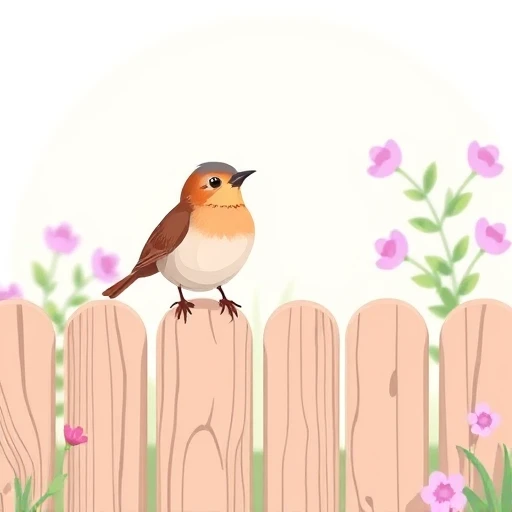
sparrow 30초 만에
- A sparrow is a small, ubiquitous bird known for its brown plumage and social nature.
- Commonly found in urban areas, sparrows are highly adaptable and live close to humans.
- They are recognized by their stout beaks, chirping sounds, and hopping movement on the ground.
- The sparrow holds significant cultural and symbolic value as an emblem of the everyday.
The term sparrow refers to a wide variety of small, passerine birds that belong to the family Passeridae. While there are many species, the one most people are familiar with is the House Sparrow (Passer domesticus). These birds are characterized by their modest size, typically measuring about 16 centimeters in length, and their predominantly brown, grey, and black plumage. They are perhaps the most ubiquitous birds in the world, having successfully colonized almost every continent alongside human civilization. People use the word 'sparrow' not just to identify a biological entity, but often to evoke a sense of the common, the humble, and the resilient. In urban environments, sparrows are the background noise of the morning, their persistent chirping providing a soundtrack to city life. They are social creatures, often seen in large groups known as 'hosts' or 'quarrels,' which reflects their lively and sometimes argumentative nature when competing for food or nesting sites. The word is used in scientific contexts to describe specific avian behaviors, in literary contexts to symbolize insignificance or divine care, and in everyday speech to describe the small birds seen hopping around outdoor cafes or nesting in the eaves of houses.
- Physical Description
- A small bird with a sturdy, conical beak designed for crushing seeds. Males often have a distinctive black bib and grey crown, while females are more uniformly sandy-brown.
As I sat on the park bench, a solitary sparrow landed just inches from my feet, searching for crumbs.
Beyond their physical presence, sparrows represent a biological success story. They are 'synanthropes,' meaning they benefit from living in close proximity to humans. This relationship has lasted for thousands of years, dating back to the dawn of agriculture. When people talk about sparrows, they are often talking about the intersection of nature and the built environment. In many cultures, the sparrow is seen as a symbol of the common person—hardworking, unassuming, and always present. Because they are so common, they are frequently used as a baseline for comparison in birdwatching; if a bird is 'sparrow-sized,' it gives a clear mental image to the listener. The word is also used in various idiomatic expressions, such as 'to eat like a sparrow,' which means to eat very little, though in reality, these birds are quite opportunistic and active foragers. They are known for their dust-bathing behavior, where they vigorously flap their wings in dry soil to clean their feathers, a sight that is common in gardens and parks. Their nesting habits are equally well-known; they are opportunistic builders, utilizing everything from dried grass to discarded bits of string and feathers to create messy, globular nests in crevices, birdhouses, or thick shrubbery.
- Social Behavior
- Sparrows are highly gregarious. They forage together, bathe together, and roost together in large, noisy groups, which helps protect them from predators.
The hedge was alive with the sound of a dozen sparrows settling in for the night.
In recent years, the word 'sparrow' has also appeared more frequently in conservation discussions. In many parts of Europe and Asia, sparrow populations have seen a dramatic decline, leading to concerns about urban biodiversity. This has turned the 'common' sparrow into a subject of scientific study and public concern. When people use the word today, it might be in the context of 'World Sparrow Day' (March 20th), an initiative aimed at raising awareness about these birds and their habitat needs. This shift from being an overlooked pest to a protected neighbor shows how our relationship with the word and the animal has evolved. Furthermore, in literature and film, the sparrow often serves as a metaphor for freedom or the soul. For instance, in Hamlet, Shakespeare writes, 'there's a special providence in the fall of a sparrow,' suggesting that even the smallest life is under divine watch. This depth of meaning makes the word 'sparrow' much more than just a label for a bird; it is a word rich with cultural, historical, and ecological significance. Whether you are describing the bird that steals a fry from your plate or the subject of a classical poem, the word carries a weight of familiarity and resilience that few other animal names possess.
- Habitat
- While they prefer open woodlands and grasslands, they are most famously associated with human-altered landscapes like farms, suburbs, and city centers.
A sparrow had built its nest in the crook of the old neon sign above the diner.
The sparrow is often used as a symbol of the common man in folk tales.
Despite the winter chill, the sparrow remained active, searching for seeds in the snow.
Using the word sparrow correctly involves understanding its role as a countable noun and its common associations with specific verbs and adjectives. In a literal sense, you will most often find it as the subject of actions related to movement and sound. For example, sparrows 'hop,' 'flit,' 'dart,' 'perch,' and 'chirp.' Because they are small and quick, verbs that imply rapid, light movement are particularly appropriate. You might say, 'The sparrow flitted from branch to branch,' or 'A group of sparrows chirped incessantly in the eaves.' When describing them, adjectives like 'unassuming,' 'drab,' 'common,' 'social,' and 'resilient' are frequently used. For instance, 'The drab plumage of the female sparrow helps her blend into the nest.' In a grammatical sense, 'sparrow' follows standard pluralization rules, becoming 'sparrows.' It can also be used as a modifier in compound nouns, such as 'sparrowhawk' (a bird of prey that hunts sparrows) or 'sparrow egg.'
- Action Verbs
- Common verbs: hop, chirp, nest, forage, flutter, perch, scrounge, twitter.
I watched a sparrow hop across the patio, eyeing my sandwich with interest.
In more figurative or literary contexts, 'sparrow' is used to emphasize smallness or vulnerability. If you describe someone as having the 'heart of a sparrow,' you might mean they are easily frightened, or conversely, that they are small but brave. In poetry, the sparrow often represents the fleeting nature of life or the beauty in the mundane. When writing about sparrows, it is important to distinguish between the general category and specific species if the context is scientific. However, in general English, 'sparrow' almost always refers to the House Sparrow unless specified otherwise (e.g., Song Sparrow, Tree Sparrow). You can also use the word in comparisons, such as 'as common as a sparrow' or 'small as a sparrow.' In terms of sentence structure, 'sparrow' often appears in prepositional phrases describing location: 'the sparrow on the fence,' 'the sparrow in the bush,' or 'the sparrow under the eaves.' It is also common to see it in the possessive form: 'the sparrow's nest' or 'the sparrow's song.'
- Descriptive Adjectives
- Common adjectives: small, brown, chirpy, ubiquitous, urban, hardy, gregarious.
The sparrow's constant twittering provided a cheerful background to the garden party.
Furthermore, the word can be used in the context of collective nouns. While 'flock' is standard, 'a host of sparrows' or 'a quarrel of sparrows' adds a more descriptive, poetic flair to your writing. 'Quarrel' is particularly apt because of the noisy, competitive way sparrows interact. In academic or technical writing, you might use the term 'passerine' or 'passerid' to be more precise, but 'sparrow' remains the standard for general communication. When constructing complex sentences, 'sparrow' can serve as the anchor for descriptive clauses: 'The sparrow, which had been resting on the wire, suddenly took flight as the cat approached.' This structure allows you to provide more detail about the bird's state or environment. Whether you are writing a nature journal, a story, or a simple observation, the word 'sparrow' is a versatile tool for grounding your descriptions in the everyday world. It is a word that requires little explanation because of the bird's global presence, making it an excellent choice for clear, evocative communication.
- Collective Nouns
- A flock of sparrows, a host of sparrows, a quarrel of sparrows, a tribe of sparrows.
A quarrel of sparrows erupted over a single crust of bread dropped on the sidewalk.
The tiny sparrow looked almost invisible against the grey stone of the cathedral.
Every morning, the same sparrow visits my windowsill for its daily offering of seeds.
The word sparrow is a staple of everyday English, but its frequency and context vary depending on where you are. In urban and suburban settings, you will hear it most often in casual conversation about nature or the environment. A parent might point out a 'sparrow' to a child in the park, or a gardener might complain about 'sparrows' eating their seedlings. In these contexts, the word is used with a high degree of familiarity. You will also encounter the word frequently in nature documentaries and educational programs, where it is used to describe avian behavior, migration patterns (or lack thereof), and the challenges of urban wildlife. In the UK and parts of Europe, you might hear it in the news or on radio programs discussing the 'State of the UK's Birds,' as the decline of the House Sparrow has become a significant ecological talking point. This has elevated the word from a simple noun to a symbol of environmental health.
- Media Contexts
- Nature documentaries, environmental news reports, children's educational books, and birdwatching guides.
'The sparrow population in London has plummeted by over 70% in the last few decades,' the reporter noted.
In literature and the arts, the word 'sparrow' has a long and storied history. You will find it in the works of William Shakespeare, John Keats, and Emily Dickinson. In these settings, the word is often used metaphorically. For example, in Christian tradition and the Bible, the sparrow is mentioned as a creature of little value to men but of great value to God, leading to the famous hymn 'His Eye Is on the Sparrow.' Consequently, you might hear the word in religious sermons or see it in spiritual literature. In modern pop culture, the word is perhaps most famously associated with the character Captain Jack Sparrow from the *Pirates of the Caribbean* franchise. Here, the name 'Sparrow' is chosen to reflect the character's elusive, nimble, and somewhat common yet resilient nature. This has given the word a new layer of recognition among younger generations, though they may associate it more with a pirate than a bird. You will also hear the word in folk songs and traditional music, where the sparrow often plays the role of a messenger or a witness to human drama.
- Literary and Cultural References
- Shakespeare's Hamlet, the Bible (Matthew 10:29), the hymn 'His Eye Is on the Sparrow,' and Captain Jack Sparrow.
The old folk song told the story of a sparrow that carried a secret message across the sea.
In scientific and academic circles, the word is used with more precision. Ornithologists (bird scientists) will use 'sparrow' to refer to members of the Passeridae family, but they will almost always qualify it with a specific species name like 'Song Sparrow' or 'White-throated Sparrow.' If you are attending a lecture on ecology or biology, you will hear the word in the context of 'interspecific competition' or 'urban adaptation.' Furthermore, in the culinary world (though rare today), 'sparrow' might appear in historical cookbooks or discussions of traditional rural diets, particularly in parts of Europe and Asia where small birds were once a food source. Finally, in the world of fashion and design, 'sparrow' is sometimes used as a color name to describe a specific shade of muted, warm grey-brown. Whether in a park, a library, a cinema, or a laboratory, the word 'sparrow' is a constant presence, reflecting the bird's own status as a global citizen.
- Common Phrases
- 'Eat like a sparrow,' 'cockney sparrow,' 'sparrow's fart' (slang for dawn), 'sparrow-sized.'
The professor explained that the sparrow is an excellent model for studying urban evolution.
The choir sang a beautiful rendition of 'His Eye Is on the Sparrow' during the service.
I woke up at sparrow's fart to catch the early train to the city.
While the word sparrow is relatively straightforward, there are several common mistakes and areas of confusion that learners and even native speakers should be aware of. The most frequent error is misidentification. Because 'sparrow' is often used as a generic term for any small, brown bird, people frequently mislabel finches, wrens, or dunnocks as sparrows. In birdwatching circles, these are often jokingly referred to as 'LBJs' or 'Little Brown Jobs.' To avoid this mistake, it's helpful to look for the sparrow's specific features: a thick, seed-cracking beak and a somewhat chunky body. Another common mistake involves the plural form. While 'sparrows' is the correct plural, some learners might mistakenly apply irregular plural rules or forget the 's' in collective contexts. For example, saying 'a flock of sparrow' instead of 'a flock of sparrows.'
- Identification Errors
- Confusing sparrows with finches (which have more colorful plumage) or wrens (which are smaller with cocked tails).
Incorrect: 'Look at that colorful sparrow!' (It was likely a goldfinch).
There is also a geographical confusion regarding the term. In North America, the birds called 'sparrows' (like the Song Sparrow or Chipping Sparrow) belong to the family Passerellidae, which are not closely related to the 'Old World sparrows' (family Passeridae) found in Europe and Asia. While the word is the same, the biological lineage is different. This can lead to confusion in scientific or international contexts. Another area of potential error is the use of the idiom 'to eat like a sparrow.' Many people use this to mean someone eats very little, but they might misapply it to someone who eats slowly or daintily. The emphasis should be on the *quantity* of food, not the manner of eating. Additionally, the slang term 'sparrow's fart' (meaning very early in the morning) is quite informal and potentially offensive in polite or formal company, so it should be used with caution.
- Grammatical Pitfalls
- Ensure subject-verb agreement: 'The sparrow chirps' (singular) vs. 'The sparrows chirp' (plural).
Incorrect: 'The sparrow are nesting in the roof.' (Should be 'is nesting' or 'sparrows are').
Spelling can also be a minor hurdle, particularly the double 'r.' Some might spell it 'sparow' or 'sparrowe' (the latter being an archaic spelling). In writing, it is important to stick to the modern 'sparrow.' Furthermore, when using the word as a metaphor, ensure the context is clear. Calling someone a 'sparrow' without context might be confusing—are you calling them small, common, or a pirate? Finally, avoid overusing the word when describing a scene. If you have already established that there are sparrows present, use pronouns like 'they' or 'the birds' to avoid repetitive phrasing. By keeping these points in mind, you can use the word 'sparrow' with precision and confidence, avoiding the common traps that many fall into. Whether you are identifying a bird in your garden or using it as a literary device, accuracy is key to effective communication.
- Spelling and Pronunciation
- Spelling: S-P-A-R-R-O-W. Pronunciation: /ˈspær.əʊ/ (UK) or /ˈsper.oʊ/ (US). Don't forget the second 'r'!
Incorrect: 'I saw a sparow in the garden today.'
The sparrow is often confused with the dunnock, but the dunnock has a thinner, insect-eating beak.
When writing about sparrows, avoid the common mistake of thinking they are all the same species.
When you want to describe a small bird but 'sparrow' isn't quite the right fit, or if you want to avoid repetition, there are several alternatives and similar words you can use. The most direct biological alternatives are the names of other small passerine birds. A finch is often confused with a sparrow, but finches are generally more colorful (like the Goldfinch or Chaffinch) and have slightly different beak shapes. A wren is much smaller than a sparrow, with a distinctive cocked tail and a very loud, complex song. A dunnock is often called a 'hedge sparrow,' but it is not a true sparrow; it has a finer beak and a more nervous, shuffling gait. Using these specific names can add precision to your writing and show a deeper knowledge of the natural world.
- Finch vs. Sparrow
- Finches are often more brightly colored and have more specialized beaks for different types of seeds. Sparrows are generally more muted in color.
While the sparrow is brown and grey, the goldfinch boasts vibrant yellow and red feathers.
If you are looking for more general terms, words like songbird or passerine can be used. 'Songbird' is a pleasant, general term for any bird with a musical call, while 'passerine' is the technical term for perching birds. In a more poetic or informal context, you might use the word birdie (often used with children) or fledgling (specifically for a young bird that has just left the nest). If you are focusing on the bird's size, you could use adjectives like diminutive or petite. For example, 'A diminutive bird landed on the windowsill.' In literature, the word avian is often used as an adjective to describe things related to birds, such as 'avian behavior' or 'avian flu.'
- Wren vs. Sparrow
- Wrens are smaller, more secretive, and often have their tails pointed upwards, unlike the more visible and social sparrow.
The sparrow was joined at the feeder by a tiny, energetic wren.
Another set of alternatives comes from the bird's behavior. If you are describing a bird that is scavaging for food, you might call it a scavenger or a forager. If it is living in a city, you might call it urban wildlife. In some contexts, particularly where they are unwanted, sparrows might be referred to as pests or nuisances, though this is less common today. When comparing the sparrow to other common birds, the starling and the pigeon are the most frequent companions in urban environments. Starlings are larger and have iridescent feathers, while pigeons are much larger and have a different body shape. By understanding these alternatives, you can choose the word that best fits the specific image or tone you want to convey. Whether you need a technical term, a poetic alternative, or a more specific bird name, the English language offers a rich palette of words to complement or replace 'sparrow.'
- Starling vs. Sparrow
- Starlings are larger, have pointed wings, and often move in massive, swirling groups called murmurations, which sparrows do not do.
A lone sparrow looked tiny compared to the glossy, speckled starling perched nearby.
The sparrow is the quintessential urban bird, perfectly adapted to life among humans.
While some see them as common, the sparrow possesses a quiet beauty that is often overlooked.
How Formal Is It?
재미있는 사실
In ancient Greek, the word for sparrow was 'strouthos,' which could also refer to an ostrich (the 'big sparrow')! This shows how the concept of 'bird' was often anchored to the familiar sparrow.
발음 가이드
- Pronouncing it as 'spah-row' (forgetting the 'r' sound).
- Stress on the second syllable: spar-ROW.
- Confusing the 'a' sound with 'ah' like in 'car'.
- Merging the two 'r's into a single soft sound.
- Ending with a short 'o' sound instead of a long 'oh'.
난이도
The word is short and common, making it easy to recognize in text.
The double 'r' can sometimes be a spelling challenge for beginners.
Pronunciation is relatively straightforward, though the 'r' sounds vary by dialect.
Easily distinguishable in conversation due to its unique phonetic structure.
다음에 무엇을 배울까
선수 학습
다음에 배울 것
고급
알아야 할 문법
Pluralization of nouns ending in 'ow'
Sparrow -> Sparrows (just add 's').
Use of definite vs. indefinite articles with animals
A sparrow (any sparrow) vs. The sparrow (the specific one we are talking about).
Collective nouns for birds
A flock of sparrows.
Possessive form for singular nouns
The sparrow's wing.
Adjectives before nouns
The small, brown sparrow.
수준별 예문
The sparrow is small.
Le moineau est petit.
Simple subject-verb-adjective structure.
I see a brown sparrow.
Je vois un moineau brun.
Use of 'a' before a consonant sound.
The sparrow eats seeds.
Le moineau mange des graines.
Present simple for a general fact.
A sparrow can fly.
Un moineau peut voler.
Modal verb 'can' for ability.
The sparrow is in the park.
Le moineau est dans le parc.
Preposition 'in' for location.
Two sparrows are on the fence.
Deux moineaux sont sur la clôture.
Plural 'sparrows' with 'are'.
The sparrow says 'chirp'.
Le moineau dit 'cuicui'.
Onomatopoeia for bird sounds.
Is that a sparrow?
Est-ce un moineau ?
Question form using 'is'.
The sparrow is hopping on the grass.
Le moineau sautille sur l'herbe.
Present continuous for an action happening now.
Sparrows like to live near people.
Les moineaux aiment vivre près des gens.
Plural noun used for general preference.
There are many sparrows in the garden.
Il y a beaucoup de moineaux dans le jardin.
'There are' used for plural existence.
The sparrow found a piece of bread.
Le moineau a trouvé un morceau de pain.
Past simple for a completed action.
I heard a sparrow chirping this morning.
J'ai entendu un moineau pépier ce matin.
Verb of perception followed by a participle.
The sparrow is smaller than a pigeon.
Le moineau est plus petit qu'un pigeon.
Comparative adjective 'smaller than'.
Do sparrows fly south in winter?
Les moineaux s'envolent-ils vers le sud en hiver ?
Question in present simple.
The sparrow's nest is in the tree.
Le nid du moineau est dans l'arbre.
Possessive 's.
A sparrow landed on the table while we were eating lunch.
Un moineau s'est posé sur la table pendant que nous déjeunions.
Past simple interrupted by past continuous.
The sparrow is a very adaptable bird that thrives in cities.
Le moineau est un oiseau très adaptable qui prospère dans les villes.
Relative clause starting with 'that'.
If you leave crumbs, the sparrows will definitely come.
Si vous laissez des miettes, les moineaux viendront certainement.
First conditional (if + present, will + verb).
The male sparrow has a black patch on its throat.
Le moineau mâle a une tache noire sur la gorge.
Descriptive use of 'has'.
I've noticed fewer sparrows in the neighborhood lately.
J'ai remarqué moins de moineaux dans le quartier ces derniers temps.
Present perfect for a trend.
Sparrows are known for being very social and noisy.
Les moineaux sont connus pour être très sociaux et bruyants.
Passive voice 'are known for'.
She feeds the sparrows every day at the same time.
Elle nourrit les moineaux tous les jours à la même heure.
Adverbial phrase of frequency.
The sparrow flew away as soon as the cat appeared.
Le moineau s'est envolé dès que le chat est apparu.
Conjunction 'as soon as'.
Despite their small size, sparrows are incredibly hardy creatures.
Malgré leur petite taille, les moineaux sont des créatures incroyablement robustes.
Prepositional phrase 'Despite their...'.
The sparrow population has been declining in many urban areas.
La population de moineaux a diminué dans de nombreuses zones urbaines.
Present perfect continuous for an ongoing process.
Sparrows often nest in the crevices of old buildings.
Les moineaux nichent souvent dans les crevasses des vieux bâtiments.
Adverb of frequency 'often' before the verb.
The sparrow's ability to live alongside humans is quite remarkable.
La capacité du moineau à vivre aux côtés des humains est tout à fait remarquable.
Noun phrase as subject.
Having found a source of food, the sparrow chirped to alert the others.
Ayant trouvé une source de nourriture, le moineau a pépier pour alerter les autres.
Perfect participle clause.
The sparrow is often used as a symbol of the common man in literature.
Le moineau est souvent utilisé comme symbole de l'homme du commun dans la littérature.
Passive voice with 'used as'.
Few birds are as ubiquitous as the humble sparrow.
Peu d'oiseaux sont aussi omniprésents que l'humble moineau.
Comparative structure 'as... as'.
The sparrow flitted nervously between the branches of the oak tree.
Le moineau voletait nerveusement entre les branches du chêne.
Adverb 'nervously' modifying the verb.
The house sparrow is a classic example of a synanthropic species.
Le moineau domestique est un exemple classique d'espèce synanthrope.
Use of specialized biological terminology.
Ornithologists are studying the impact of urban noise on sparrow communication.
Les ornithologues étudient l'impact du bruit urbain sur la communication des moineaux.
Present continuous for current research.
The sparrow's modest plumage belies its complex social hierarchy.
Le plumage modeste du moineau cache sa hiérarchie sociale complexe.
Advanced verb 'belies'.
In many cultures, the sparrow represents the soul or a divine messenger.
Dans de nombreuses cultures, le moineau représente l'âme ou un messager divin.
Abstract noun usage.
The rapid decline of sparrows in London has sparked widespread concern.
Le déclin rapide des moineaux à Londres a suscité une inquiétude généralisée.
Noun phrase 'rapid decline' as subject.
Sparrows exhibit a remarkable degree of behavioral plasticity.
Les moineaux font preuve d'un degré remarquable de plasticité comportementale.
Scientific terminology.
The sparrow's song, though simple, is integral to the urban soundscape.
Le chant du moineau, bien que simple, fait partie intégrante du paysage sonore urbain.
Concessive clause 'though simple'.
Should the sparrow disappear, the local ecosystem would suffer.
Si le moineau venait à disparaître, l'écosystème local en souffrirait.
Inverted conditional for formal tone.
The ubiquity of the sparrow often leads to its being overlooked by casual observers.
L'omniprésence du moineau conduit souvent à ce qu'il soit négligé par les observateurs occasionnels.
Gerund phrase 'its being overlooked'.
Catullus's poems famously lament the death of a beloved pet sparrow.
Les poèmes de Catulle déplorent notoirement la mort d'un moineau domestique bien-aimé.
Historical and literary reference.
The sparrow's evolutionary success is predicated on its commensal relationship with humans.
Le succès évolutif du moineau repose sur sa relation commensale avec les humains.
Advanced phrase 'is predicated on'.
Anthropogenic factors have significantly altered the sparrow's traditional nesting habits.
Les facteurs anthropiques ont considérablement modifié les habitudes de nidification traditionnelles du moineau.
Formal academic vocabulary.
The sparrow's role in the 'Great Sparrow Campaign' serves as a cautionary tale of ecological interference.
Le rôle du moineau dans la 'Grande Campagne du Moineau' sert de mise en garde contre l'interférence écologique.
Complex noun phrase as subject.
One must appreciate the nuanced variations in plumage among different sparrow subspecies.
Il faut apprécier les variations nuancées de plumage entre les différentes sous-espèces de moineaux.
Use of 'one' as an impersonal pronoun.
The sparrow's chirping is a quintessential element of the pastoral idyll.
Le pépiniement du moineau est un élément quintessentiel de l'idylle pastorale.
High-level literary vocabulary.
Notwithstanding its commonality, the sparrow possesses a resilient charm that endures.
Malgré sa banalité, le moineau possède un charme résilient qui perdure.
Concessive preposition 'Notwithstanding'.
자주 쓰는 조합
자주 쓰는 구문
— Very frequent or easy to find. Used to describe something that is not rare.
In this part of town, old bicycles are as common as a sparrow.
— Something very light. Used to emphasize the lightness of an object.
The package was so light, it felt like a sparrow's weight.
— To talk in a lively, high-pitched, or incessant manner.
The children were chirping like sparrows after the party.
— A standard measurement for describing the size of other small birds.
The bird we saw was sparrow-sized with a yellow chest.
— To observe something very closely and alertly.
The cat watched the mouse like a sparrow watching for seeds.
— A specific type of hawk that preys on small birds like sparrows.
A sparrow hawk was circling above the garden.
— A small, speckled egg laid by a sparrow.
The children found a broken sparrow egg on the path.
— The small, soft feathers of a sparrow.
The nest was lined with soft sparrow feathers.
— A group of sparrows living and nesting together in one area.
There is a large sparrow colony in the ivy on that wall.
— Having the appearance or characteristics of a sparrow.
The bird had a sparrow-like beak but different coloring.
자주 혼동되는 단어
Finches are often more colorful and have different beak shapes, but are similar in size.
Wrens are smaller, more secretive, and usually have an upright tail.
Also called a 'hedge sparrow,' but it has a thinner beak and different behavior.
관용어 및 표현
— To eat very small amounts of food. Often used to describe someone with a small appetite.
My sister eats like a sparrow; she barely finished half her salad.
informal— Very early in the morning, at the crack of dawn. Common in British and Australian English.
We had to be up at sparrow's fart to catch the flight.
slang/informal— A cheerful, lively, and talkative person from the East End of London.
She's a real cockney sparrow, always full of stories and jokes.
informal/regional— A reference to divine care for even the smallest and most insignificant creatures.
The old woman found comfort in the thought that his eye is on the sparrow.
literary/religious— Nothing happens, however small, without it being known or planned by a higher power.
He believed that not a sparrow falls without a reason.
literary/religious— A variation of 'a bird in the hand,' meaning something certain is better than something better but uncertain.
I'll take the job offer now; a sparrow in the hand is worth two in the bush.
informal— To be easily frightened or timid, or conversely, to be small but brave.
He may be small, but he has the heart of a sparrow when it comes to defending his friends.
poetic— To be flighty, scatterbrained, or not very intelligent.
Don't be so sparrow-brained; focus on the task at hand.
informal/derogatory— To move quickly and restlessly from one thing or place to another.
She flitted like a sparrow from guest to guest at the party.
descriptive— A poetic collective noun for sparrows, reflecting their noisy and argumentative social behavior.
A quarrel of sparrows erupted over the spilled grain.
literary혼동하기 쉬운
Similar sounding name and both are small birds.
Swallows have long, pointed wings and forked tails, and they spend most of their time flying to catch insects, whereas sparrows hop on the ground.
The swallow swooped over the lake, while the sparrow hopped on the path.
Both are common urban birds that live in groups.
Starlings are larger, have iridescent black feathers with spots, and move in much larger, more coordinated flocks.
A starling is much noisier and more aggressive than a sparrow.
Both are common garden birds.
Robins (in Europe) have a bright red breast and are much more territorial and solitary than the social sparrow.
The robin stood alone on the spade, but the sparrows were all together in the hedge.
Very similar size and shape.
Finches usually have more vibrant colors (yellow, red, green) and more specialized beaks for specific seeds.
The goldfinch has bright yellow wings, unlike the brown sparrow.
Both are brown birds found in gardens.
Thrushes are significantly larger than sparrows and have spotted breasts.
The thrush was hunting for snails, while the sparrow was looking for seeds.
문장 패턴
The [noun] is [adjective].
The sparrow is brown.
I see a [noun] [verb-ing].
I see a sparrow hopping.
A [noun] is a bird that [verb].
A sparrow is a bird that lives in cities.
Despite being [adjective], the [noun] is [adjective].
Despite being small, the sparrow is very brave.
The [noun] serves as a [noun] for [noun].
The sparrow serves as a metaphor for the common man.
The ubiquity of the [noun] [verb] its [noun].
The ubiquity of the sparrow belies its complex social structure.
There are [number] [noun]s on the [noun].
There are five sparrows on the roof.
The [noun] has [noun].
The sparrow has small wings.
어휘 가족
명사
형용사
관련
사용법
Very high in both written and spoken English.
-
Spelling it 'sparow'.
→
sparrow
The word requires a double 'r'. Think of the 'row' at the end like a 'row' of birds on a wire.
-
Using 'sparrow' for any small bird.
→
Use the specific name if known (e.g., finch, wren).
While common, calling every small bird a sparrow is technically incorrect. Look for the thick beak to be sure.
-
Saying 'a flock of sparrow'.
→
a flock of sparrows
After 'a flock of', you must use the plural form of the noun.
-
Confusing 'sparrow' with 'swallow'.
→
sparrow (for the hopping bird), swallow (for the flying bird).
They sound similar but are very different birds. Swallows are sleek flyers; sparrows are chunky hoppers.
-
Using 'sparrow's fart' in a formal meeting.
→
at dawn / very early
This is a slang term and is too informal for professional or polite settings.
팁
Look for the Beak
A sparrow has a short, thick, conical beak. This is a key feature that helps distinguish it from other small birds like wrens or warblers that have thinner beaks.
Watch the Movement
Sparrows almost always hop on the ground rather than walking. If you see a small brown bird running or walking one foot at a time, it's probably not a sparrow.
Check the Group
Sparrows are rarely alone. If you see a single small bird, look around; there are likely several more nearby in a bush or on a roof.
Attracting Sparrows
To attract sparrows to your garden, provide a mix of small seeds like millet and sunflower hearts. They also love a shallow birdbath for drinking and cleaning their feathers.
Capture the Action
Sparrows move very fast. To get a good photo, use a fast shutter speed and try to catch them when they are perched momentarily on a branch or fence.
Provide Nesting Sites
Because modern buildings have fewer crevices, sparrows struggle to find nests. Installing a 'sparrow terrace' (a birdhouse with multiple compartments) can help them.
Use the Name
When you see a sparrow, say the word out loud. 'There is a sparrow.' This helps reinforce the vocabulary in your memory through physical action.
Compare Sizes
Use the sparrow as your 'standard' for bird size. When you see a new bird, ask yourself: 'Is it bigger or smaller than a sparrow?' This is how expert birders think.
Listen for the Chirp
The sparrow's chirp is a simple, repetitive 'cheep' or 'chirrup.' Learning this sound will help you find them even when they are hidden in thick leaves.
Be Specific
Instead of just writing 'a bird,' write 'a sparrow.' It adds a specific image to your reader's mind and makes your writing feel more grounded and authentic.
암기하기
기억법
Think of a 'SPARE' bird that is 'ROW'ing through the air. Sparrows are so common they seem like 'spare' birds you see everywhere.
시각적 연상
Imagine a small, brown bird hopping on a 'row' of seeds in a garden. The 'S' shape of its hopping path can remind you of the start of the word.
Word Web
챌린지
Try to spot a sparrow today and describe three things it is doing using the word 'sparrow' in each sentence.
어원
The word 'sparrow' comes from the Old English 'spearwa,' which is of Germanic origin. It is related to the Old High German 'sparo' and the Old Norse 'spörr.' The root is believed to be Proto-Indo-European, meaning 'to flutter' or 'to quiver,' reflecting the bird's characteristic movement.
원래 의미: Originally, the term was used more broadly to refer to any small bird, not just the specific family we recognize today.
Germanic문화적 맥락
Generally a positive or neutral term, but 'sparrow's fart' can be considered mildly vulgar in some contexts.
In the UK, the house sparrow is a 'Red List' species due to population decline, making it a focus of conservation.
실생활에서 연습하기
실제 사용 상황
In a park
- Look at the sparrows!
- Don't feed the sparrows.
- A sparrow is on the bench.
- The sparrows are fighting over bread.
Birdwatching
- Is that a house sparrow?
- Check the markings on the sparrow.
- It's just a common sparrow.
- I spotted a rare tree sparrow.
At home
- A sparrow nested in the eaves.
- The sparrows are at the feeder.
- Clean up the sparrow droppings.
- I like the sound of sparrows in the morning.
In literature
- The sparrow symbolizes the humble.
- A metaphor involving a sparrow.
- The fall of a sparrow.
- The poet compares her to a sparrow.
Environmental science
- Sparrow population decline.
- Urban sparrow habitats.
- The sparrow as an indicator species.
- Conservation of the house sparrow.
대화 시작하기
"Have you noticed how many sparrows live in this city?"
"Do you think sparrows are cute or just annoying pests?"
"I saw a sparrow building a nest in a very strange place today."
"Did you know that sparrow populations are actually going down in some countries?"
"What's your favorite kind of small bird? I've always liked sparrows."
일기 주제
Describe a time you watched a sparrow. What was it doing and how did it make you feel?
If a sparrow could talk, what do you think it would say about the people in your city?
Write a short story from the perspective of a sparrow trying to find food in a busy train station.
Why do you think the sparrow is such a common symbol in poetry and religion?
Compare the life of a city sparrow to the life of a sparrow living on a quiet farm.
자주 묻는 질문
10 질문Sparrows are primarily granivorous, meaning they eat seeds and grains. However, they are opportunistic feeders and will also eat crumbs, scraps of food left by humans, and insects, especially during the breeding season when they need protein for their chicks.
Sparrows usually roost in thick bushes, hedges, or in the crevices of buildings. They are social sleepers and often huddle together in large groups to stay warm and protect themselves from predators during the night.
While the house sparrow is still very common globally, its population has seen a significant decline in many urban areas, particularly in Europe. This has led to it being placed on conservation watchlists in countries like the UK.
In the wild, most sparrows only live for about 2 to 5 years due to predators and harsh weather. However, some individuals have been known to live much longer, with the oldest recorded wild house sparrow reaching nearly 16 years.
In many countries, it is illegal to keep wild birds like sparrows as pets without a special permit. They are wild animals and thrive best in their natural environment where they can socialize with other birds.
Sparrows use chirping to communicate with their flock. They chirp to signal the discovery of food, to warn of predators, to attract mates, and to maintain social bonds within the group. It is their primary way of staying connected.
Most house sparrows are non-migratory and stay in the same general area year-round. However, some other species of sparrows, particularly those in North America, do migrate long distances between their breeding and wintering grounds.
Male house sparrows are more brightly colored with a grey crown, white cheeks, and a distinctive black 'bib' on their throat and chest. Females are more plain, with sandy-brown feathers and a pale stripe behind the eye.
The name comes from the Old English word 'spearwa,' which originally meant any small bird. Over time, the name became specifically associated with the family of birds we now call sparrows.
Yes, sparrows are very fond of birdhouses and will readily nest in them. They prefer houses with a small entry hole that protects them from larger birds and predators. They often fill the house with a messy pile of grass and feathers.
셀프 테스트 180 질문
Write a short paragraph describing a sparrow you might see in a park.
Well written! Good try! Check the sample answer below.
Explain the meaning of the idiom 'eat like a sparrow' and give an example sentence.
Well written! Good try! Check the sample answer below.
Compare and contrast a sparrow with a pigeon in terms of size, color, and behavior.
Well written! Good try! Check the sample answer below.
Discuss the cultural significance of the sparrow in literature or religion.
Well written! Good try! Check the sample answer below.
Write a story from the perspective of a sparrow living in a busy city center.
Well written! Good try! Check the sample answer below.
Describe the physical differences between a male and a female house sparrow.
Well written! Good try! Check the sample answer below.
Why do you think sparrows have been so successful at living alongside humans?
Well written! Good try! Check the sample answer below.
Write a dialogue between two people birdwatching in a garden, using the word 'sparrow' at least three times.
Well written! Good try! Check the sample answer below.
Explain the ecological impact of the 'Great Sparrow Campaign' in China.
Well written! Good try! Check the sample answer below.
Describe a sparrow's nest and where you might find one.
Well written! Good try! Check the sample answer below.
Write a poem about a sparrow in the winter.
Well written! Good try! Check the sample answer below.
What are the common mistakes people make when identifying sparrows?
Well written! Good try! Check the sample answer below.
How has the sparrow population changed in urban areas, and why?
Well written! Good try! Check the sample answer below.
Write a formal letter to a local council requesting more birdhouses for sparrows.
Well written! Good try! Check the sample answer below.
Describe the sounds and movements of a flock of sparrows.
Well written! Good try! Check the sample answer below.
Explain the term 'synanthrope' using the sparrow as an example.
Well written! Good try! Check the sample answer below.
What does the phrase 'sparrow's fart' mean, and where is it used?
Well written! Good try! Check the sample answer below.
Write a short guide for children on how to identify a sparrow.
Well written! Good try! Check the sample answer below.
Discuss the role of the sparrow in Shakespeare's Hamlet.
Well written! Good try! Check the sample answer below.
Describe a day in the life of a sparrow on a farm.
Well written! Good try! Check the sample answer below.
Describe a sparrow to a partner using at least three adjectives.
Read this aloud:
당신의 답변:
Speech recognition is not supported in your browser. Try Chrome or Edge.
Tell a short story about a sparrow you saw recently.
Read this aloud:
당신의 답변:
Speech recognition is not supported in your browser. Try Chrome or Edge.
Discuss why sparrows are so common in cities.
Read this aloud:
당신의 답변:
Speech recognition is not supported in your browser. Try Chrome or Edge.
Debate whether sparrows should be considered pests or protected wildlife.
Read this aloud:
당신의 답변:
Speech recognition is not supported in your browser. Try Chrome or Edge.
Explain the meaning and origin of the word 'sparrow' to a friend.
Read this aloud:
당신의 답변:
Speech recognition is not supported in your browser. Try Chrome or Edge.
Pronounce the word 'sparrow' correctly in both UK and US English.
Read this aloud:
당신의 답변:
Speech recognition is not supported in your browser. Try Chrome or Edge.
Use the idiom 'eat like a sparrow' in a sentence about someone you know.
Read this aloud:
당신의 답변:
Speech recognition is not supported in your browser. Try Chrome or Edge.
Describe the sounds a sparrow makes.
Read this aloud:
당신의 답변:
Speech recognition is not supported in your browser. Try Chrome or Edge.
Explain how to tell a male sparrow from a female sparrow.
Read this aloud:
당신의 답변:
Speech recognition is not supported in your browser. Try Chrome or Edge.
Discuss the symbolic meaning of sparrows in different cultures.
Read this aloud:
당신의 답변:
Speech recognition is not supported in your browser. Try Chrome or Edge.
Roleplay a conversation between a birdwatcher and a beginner.
Read this aloud:
당신의 답변:
Speech recognition is not supported in your browser. Try Chrome or Edge.
Talk about the decline of sparrow populations and what can be done.
Read this aloud:
당신의 답변:
Speech recognition is not supported in your browser. Try Chrome or Edge.
Describe a sparrow's nest and its location.
Read this aloud:
당신의 답변:
Speech recognition is not supported in your browser. Try Chrome or Edge.
Explain the slang term 'sparrow's fart' and when to use it.
Read this aloud:
당신의 답변:
Speech recognition is not supported in your browser. Try Chrome or Edge.
Compare a sparrow to another bird of your choice.
Read this aloud:
당신의 답변:
Speech recognition is not supported in your browser. Try Chrome or Edge.
Tell a joke or a short anecdote involving a sparrow.
Read this aloud:
당신의 답변:
Speech recognition is not supported in your browser. Try Chrome or Edge.
Describe the movement of a sparrow hopping on the ground.
Read this aloud:
당신의 답변:
Speech recognition is not supported in your browser. Try Chrome or Edge.
Discuss the impact of human cities on sparrow evolution.
Read this aloud:
당신의 답변:
Speech recognition is not supported in your browser. Try Chrome or Edge.
What would you do if you found an injured sparrow?
Read this aloud:
당신의 답변:
Speech recognition is not supported in your browser. Try Chrome or Edge.
Summarize the key takeaway about sparrows from this lesson.
Read this aloud:
당신의 답변:
Speech recognition is not supported in your browser. Try Chrome or Edge.
Listen to a recording of bird sounds and identify the sparrow's chirp.
Listen to a short description of a bird and decide if it is a sparrow.
Listen to a news report about bird populations and note the statistics for sparrows.
Listen to a poem about a sparrow and identify the metaphors used.
Listen to a lecture on urban ecology and explain the sparrow's role.
Listen to the pronunciation of 'sparrow' in different accents.
Listen to a dialogue and identify the idiom used.
Listen to a description of a sparrow's nest and draw it.
Listen to a story about a sparrow and answer three comprehension questions.
Listen to a scientific classification of the sparrow.
Listen to instructions on how to build a sparrow house.
Listen for the word 'sparrow' in a fast-paced conversation.
Listen to a song about a bird and decide if it's a sparrow.
Listen to a debate about urban wildlife.
Listen to a list of birds and count how many times 'sparrow' is mentioned.
/ 180 correct
Perfect score!
Summary
The sparrow is a resilient and social bird that has successfully integrated into human environments worldwide. For example, 'The house sparrow is so common in London that it has become a symbol of the city's wildlife.'
- A sparrow is a small, ubiquitous bird known for its brown plumage and social nature.
- Commonly found in urban areas, sparrows are highly adaptable and live close to humans.
- They are recognized by their stout beaks, chirping sounds, and hopping movement on the ground.
- The sparrow holds significant cultural and symbolic value as an emblem of the everyday.
Look for the Beak
A sparrow has a short, thick, conical beak. This is a key feature that helps distinguish it from other small birds like wrens or warblers that have thinner beaks.
Watch the Movement
Sparrows almost always hop on the ground rather than walking. If you see a small brown bird running or walking one foot at a time, it's probably not a sparrow.
Check the Group
Sparrows are rarely alone. If you see a single small bird, look around; there are likely several more nearby in a bush or on a roof.
Attracting Sparrows
To attract sparrows to your garden, provide a mix of small seeds like millet and sunflower hearts. They also love a shallow birdbath for drinking and cleaning their feathers.