









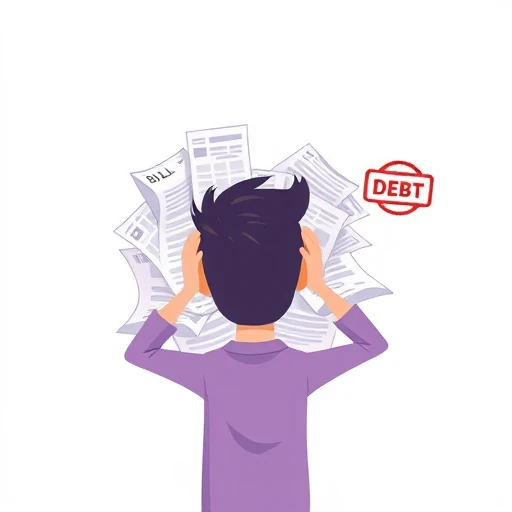
debt in 30 Seconds
- Debt is the state of owing money or an obligation to another party.
- It can be financial (loans) or metaphorical (gratitude or moral duty).
- The word features a silent 'b' and is pronounced like 'det'.
- Common phrases include 'in debt,' 'pay off debt,' and 'national debt.'
The word debt refers to an obligation, typically financial, where one party owes something to another. At its core, it is a promise of future payment or performance. While we most commonly associate it with money—such as credit card balances, student loans, or mortgages—the concept extends into the moral and social spheres. When you borrow a friend's car and return it with a full tank of gas, you are acknowledging a social debt. In a broader sense, debt is the engine of the modern economy, allowing individuals and nations to invest in the future by using capital they do not yet possess. However, the weight of debt can be a significant psychological and social burden, leading to the common phrase 'drowning in debt.'
- Financial Context
- In banking, debt is an amount of money borrowed by one party from another, often with the agreement that it will be paid back with interest. This interest is the cost of borrowing.
- Moral Obligation
- A 'debt of gratitude' occurs when someone performs a significant favor for you, creating an intangible feeling that you owe them your support or a future favor in return.
- Legal Standing
- Legally, debt is a binding contract. Failure to repay can lead to litigation, repossession of assets, or a decrease in creditworthiness.
After years of overspending, the family found themselves struggling to manage their mounting debt.
Historically, the concept of debt predates the invention of physical money. Early societies operated on complex systems of mutual credit and gift-giving, where 'owing' someone was a way of maintaining social bonds. Today, the word is used in everything from personal finance blogs to high-level geopolitical discussions about 'national debt.' Understanding debt is crucial for B1 learners because it appears frequently in news, literature, and daily conversations about work and life. It is important to note the silent 'b' in the spelling, which often trips up non-native speakers. Despite the 'b' being present, the word is pronounced exactly like 'det.'
The company was forced into liquidation because it could no longer service its debts.
- Technical Usage
- In accounting, debt is recorded on the liabilities side of a balance sheet, representing a claim against the company's assets.
He felt a deep debt of gratitude toward the surgeon who saved his life.
The government is under pressure to reduce the national debt.
She is finally out of debt after working three jobs for two years.
Using 'debt' correctly requires an understanding of its grammatical patterns and common collocations. It is most frequently used with the prepositions 'in' and 'to'. For example, you are 'in debt' (a state of being) and you owe a debt 'to' someone (the recipient). When talking about the amount, we use 'of'. A 'debt of $500' is standard. In more formal writing, you might encounter 'indebtedness,' but 'debt' remains the workhorse for both formal and informal contexts. It is also important to distinguish between the noun 'debt' and the person who owes it, the 'debtor.' Interestingly, the 'b' in debtor is also silent.
- Prepositional Phrases
- 'In debt' describes the condition. 'Out of debt' describes the resolution. 'Deep in debt' emphasizes the severity.
The startup is heavily in debt to its initial investors.
Verbs play a crucial role in how we describe the lifecycle of a debt. You 'incur' or 'contract' a debt when you first borrow. You 'owe' it while it exists. You 'service' a debt when you make regular interest payments. Finally, you 'repay,' 'settle,' 'clear,' or 'discharge' a debt when you pay it back. In more unfortunate circumstances, a debt might be 'written off' by a bank if they believe it will never be paid. For B1 learners, mastering 'pay off a debt' and 'be in debt' provides a solid foundation for most conversations about money.
It took them ten years to clear their mortgage debt.
- Adjective Modifiers
- Common adjectives include 'massive,' 'mounting,' 'crippling,' 'outstanding,' and 'unpaid.'
The country's outstanding debt has reached record levels this year.
By serving his sentence, he has paid his debt to society.
We owe a great debt to the pioneers of this technology.
In the real world, 'debt' is a constant presence in news cycles and personal life. You will hear it most frequently in financial news, where anchors discuss 'debt ceilings,' 'sovereign debt,' and 'debt-to-GDP ratios.' These terms might sound complex, but they all boil down to the same core concept: money owed. In a more personal setting, you'll hear friends talking about 'student debt' or 'credit card debt.' It is a word that carries a lot of emotional weight; in many cultures, being in debt is seen as a source of stress or even shame, while in others, it is viewed as a strategic tool for growth.
- The News
- 'The government is debating whether to raise the debt limit to avoid a default.'
- Personal Finance
- 'I'm trying to consolidate my debts into one low-interest loan.'
The headline read: 'Global debt hits an all-time high as interest rates rise.'
In literature and film, debt is often used as a plot device. Think of a character who owes money to a dangerous loan shark, or a family trying to save their farm from the bank. This 'debt-driven' narrative is a staple of drama because it creates immediate tension and a clear goal for the protagonist. Furthermore, in professional environments, you'll hear about 'technical debt.' This is a fascinating metaphorical use in software engineering, referring to the future cost of choosing an easy but limited solution now instead of a better approach that would take longer.
The project was delayed because we had to fix too much technical debt from the previous version.
- Pop Culture
- Songs and movies often use debt as a metaphor for being trapped or needing to escape one's past.
He was so far in debt that he had to sell his most prized possessions.
The charity is struggling to stay out of debt during the economic downturn.
I have a debt of honor to fulfill before I can leave this city.
The most frequent mistake with 'debt' is, without a doubt, the pronunciation. Many learners try to pronounce the 'b,' saying /debt/ instead of the correct /det/. This is because the 'b' was added back into the English spelling in the 16th century to reflect its Latin roots (debitum), even though the 'b' had already disappeared from the spoken French word (dette) that English had originally borrowed. Another common error involves the use of 'debt' versus 'loan.' While they are related, they are not interchangeable. A 'loan' is the act of lending or the specific agreement, whereas 'debt' is the state of owing the money or the total amount owed.
- Pronunciation Error
- Saying the 'b'. Remember: Debt rhymes with 'net,' 'set,' and 'met.'
- Confusing Loan/Debt
- Incorrect: 'I have a debt from the bank.' Correct: 'I have a loan from the bank' or 'I am in debt to the bank.'
Wrong: He paid his debt (pronounced with a 'b'). Right: He paid his debt (pronounced /det/).
Grammatically, learners often struggle with the countability of 'debt.' When you are talking about the general concept or the state of owing money, it is uncountable: 'He is in debt.' However, when you are referring to specific, individual sums of money owed to different people or entities, it becomes countable: 'He has many debts.' Another subtle mistake is using 'debt' when 'bill' is more appropriate. A 'bill' is a request for payment for services recently rendered (like a restaurant bill), whereas 'debt' implies a more long-term or significant obligation.
Incorrect: I made a big debt at the casino. Correct: I ran up a big debt at the casino.
- Preposition Pitfalls
- Don't say 'debt with the bank.' Use 'debt to the bank.'
Incorrect: My debt with my brother is paid. Correct: My debt to my brother is paid.
The company is indebted to its creditors for their patience.
She has a debt of five thousand dollars (not 'a debt with five thousand dollars').
While 'debt' is the most common term, several synonyms offer more precision depending on the context. 'Liability' is a formal term used in business and law to describe any financial obligation or debt. 'Arrears' specifically refers to money that is owed and should have been paid earlier (e.g., 'rent arrears'). 'Deficit' is often used in a macro-context to describe when spending exceeds income, often leading to debt. Understanding these nuances helps you choose the right word for the right situation.
- Debt vs. Liability
- Debt is usually a specific sum of borrowed money. Liability is a broader term for any legal or financial responsibility.
- Debt vs. Arrears
- All arrears are debts, but not all debts are arrears. Arrears are specifically late payments.
- Debt vs. Obligation
- Obligation is the most general term, covering moral, legal, and financial duties.
The company's total liabilities far outweigh its assets.
In informal contexts, you might hear people use 'IOU' (I Owe You), which is a informal document acknowledging a debt. In more academic or formal settings, 'indebtedness' is used to describe the state of being in debt. If you want to sound more positive, you might use 'leverage' in a business context, which refers to using borrowed money to increase the potential return of an investment. However, 'debt' remains the most direct and clear term for most situations.
He is in arrears with his child support payments.
- Register Comparison
- Informal: 'I owe him one.' Neutral: 'I am in debt.' Formal: 'I am indebted to him.'
The national deficit has grown significantly this quarter.
She felt a moral obligation to help her neighbor.
The athlete's success is a tribute to his coach (sometimes used as a positive 'debt').
How Formal Is It?
Fun Fact
The silent 'b' in 'debt' is a 'learned spelling.' It was added by Renaissance writers to make the word look more like its Latin root 'debitum,' even though the 'b' had been silent for centuries in French and English.
Pronunciation Guide
- Pronouncing the 'b' (saying 'debt' with a 'b' sound).
- Using a long 'e' sound (like 'deet').
- Confusing it with 'death' (different ending sound).
- Adding an extra syllable (like 'de-bet').
- Failing to pronounce the final 't' clearly.
Difficulty Rating
Common in news and books, but requires understanding context.
Spelling with the silent 'b' can be tricky.
Pronunciation is the biggest challenge for learners.
Easy to recognize once you know the 'b' is silent.
What to Learn Next
Prerequisites
Learn Next
Advanced
Grammar to Know
Silent Letters
The 'b' in debt is silent, similar to the 'b' in 'doubt' or 'subtle'.
Prepositional Phrases
Use 'in debt' to describe a state, and 'to' to indicate the creditor.
Countable vs Uncountable
Use 'debt' for the general concept and 'debts' for specific instances.
Phrasal Verbs
'Pay off' is commonly used with debt to mean complete repayment.
Collocation with Verbs
Verbs like 'incur', 'run up', and 'settle' are specific to debt.
Examples by Level
I have a small debt.
J'ai une petite dette.
Simple subject-verb-object.
He owes a debt to his brother.
Il doit une dette à son frère.
Uses 'to' for the person owed.
Is the debt paid?
La dette est-elle payée ?
Passive question.
I do not like debt.
Je n'aime pas les dettes.
Negative statement.
She has no debt.
Elle n'a pas de dette.
Using 'no' as a determiner.
The debt is five dollars.
La dette est de cinq dollars.
Linking verb 'is'.
Please pay your debt.
S'il vous plaît, payez votre dette.
Imperative mood.
We have a big debt.
Nous avons une grosse dette.
Adjective 'big' modifying 'debt'.
He is in debt to the bank.
Il est endetté auprès de la banque.
Phrase 'in debt to'.
They are trying to pay off their debt.
Ils essaient de rembourser leur dette.
Phrasal verb 'pay off'.
I have a lot of credit card debt.
J'ai beaucoup de dettes de carte de crédit.
Compound noun usage.
She forgot about her debt.
Elle a oublié sa dette.
Past tense verb.
Can you help me with my debt?
Peux-tu m'aider avec ma dette ?
Modal verb 'can' for request.
The debt is growing every month.
La dette augmente chaque mois.
Present continuous tense.
It is hard to live with debt.
C'est dur de vivre avec des dettes.
It-is-adjective-to-infinitive pattern.
He paid his debt yesterday.
Il a payé sa dette hier.
Past simple with time adverb.
Many students struggle with student loan debt.
Beaucoup d'étudiants luttent contre la dette des prêts étudiants.
Struggle with + noun.
He owes a debt of gratitude to his teacher.
Il a une dette de reconnaissance envers son professeur.
Metaphorical 'debt of gratitude'.
The company ran up a huge debt in its first year.
L'entreprise a accumulé une dette énorme au cours de sa première année.
Idiomatic 'run up a debt'.
She managed to clear all her debts within two years.
Elle a réussi à éponger toutes ses dettes en deux ans.
Manage to + infinitive.
National debt is a major issue in the upcoming election.
La dette nationale est un problème majeur lors des prochaines élections.
Uncountable use in a political context.
They are deep in debt and don't know what to do.
Ils sont lourdement endettés et ne savent pas quoi faire.
Adjective 'deep' modifying the phrase.
The bank decided to write off the small debt.
La banque a décidé d'annuler la petite dette.
Phrasal verb 'write off'.
Is it possible to be completely out of debt?
Est-il possible d'être complètement libéré de ses dettes ?
Phrase 'out of debt'.
The country's debt-to-GDP ratio is becoming unsustainable.
Le ratio dette/PIB du pays devient insoutenable.
Compound technical term.
He felt a moral debt to return the favor.
Il se sentait moralement obligé de rendre la pareille.
Adjective 'moral' modifying 'debt'.
The government is under pressure to reduce the public debt.
Le gouvernement est sous pression pour réduire la dette publique.
Under pressure to + verb.
Outstanding debts must be settled before the merger can proceed.
Les dettes impayées doivent être réglées avant que la fusion ne puisse avoir lieu.
Passive voice with modal 'must'.
The film explores the crushing weight of ancestral debt.
Le film explore le poids écrasant de la dette ancestrale.
Abstract metaphorical use.
Debt consolidation might be a viable option for you.
Le regroupement de crédits pourrait être une option viable pour vous.
Gerund phrase as subject.
He has finally paid his debt to society after five years in prison.
Il a enfin payé sa dette à la société après cinq ans de prison.
Fixed idiom 'debt to society'.
The company's assets are not enough to cover its debts.
Les actifs de l'entreprise ne suffisent pas à couvrir ses dettes.
Verb 'cover' used with debt.
The sovereign debt crisis sent shockwaves through the global markets.
La crise de la dette souveraine a provoqué une onde de choc sur les marchés mondiaux.
Sophisticated financial terminology.
The author acknowledges a significant intellectual debt to Foucault.
L'auteur reconnaît une dette intellectuelle importante envers Foucault.
Academic 'intellectual debt'.
The restructuring of the national debt was a prerequisite for the bailout.
La restructuration de la dette nationale était une condition préalable au sauvetage.
Complex noun phrases.
They are trapped in a cycle of debt and poverty.
Ils sont piégés dans un cycle de dette et de pauvreté.
Sociological concept 'cycle of debt'.
The legal team is investigating the validity of the alleged debt.
L'équipe juridique enquête sur la validité de la dette présumée.
Formal adjective 'alleged'.
The sheer magnitude of the debt is difficult to comprehend.
L'ampleur même de la dette est difficile à comprendre.
Emphasis using 'sheer magnitude'.
The agreement includes a clause for the forgiveness of certain debts.
L'accord comprend une clause de remise de certaines dettes.
Legal term 'debt forgiveness'.
He views his talent as a debt he must repay through hard work.
Il considère son talent comme une dette qu'il doit rembourser par le travail acharné.
Philosophical metaphor.
The intricate web of cross-border debt obligations complicates the bankruptcy proceedings.
Le réseau complexe d'obligations de dette transfrontalières complique la procédure de faillite.
Highly complex sentence structure.
One might argue that we owe an existential debt to the environment that sustains us.
On pourrait soutenir que nous avons une dette existentielle envers l'environnement qui nous fait vivre.
Existential/philosophical register.
The proliferation of collateralized debt obligations was a catalyst for the financial meltdown.
La prolifération des obligations adossées à des créances a été un catalyseur de l'effondrement financier.
Specific historical/economic jargon.
The poem serves as a poignant meditation on the debt of memory.
Le poème sert de méditation poignante sur la dette de la mémoire.
Literary/abstract usage.
The government's fiscal policy is hamstrung by the necessity of servicing the legacy debt.
La politique budgétaire du gouvernement est paralysée par la nécessité d'assurer le service de la dette héritée.
Advanced vocabulary like 'hamstrung' and 'legacy debt'.
The nuances of debt subordination are often lost on the casual observer.
Les nuances de la subordination de la dette échappent souvent à l'observateur occasionnel.
Formal academic tone.
The discourse surrounding debt has shifted from moral failing to systemic necessity.
Le discours entourant la dette est passé d'une faute morale à une nécessité systémique.
Abstract sociological analysis.
The debtor's prison, once a staple of Victorian society, remains a potent symbol of the cruelty of debt.
La prison pour dettes, autrefois un élément de base de la société victorienne, reste un symbole puissant de la cruauté de la dette.
Historical/symbolic reference.
Synonyms
Antonyms
Common Collocations
Common Phrases
— A feeling of being very thankful to someone.
I owe her a huge debt of gratitude for her help.
— To serve a prison sentence for a crime.
He has paid his debt to society.
— The psychological or financial weight of owing money.
The burden of debt was too much for him.
— To officially say that a debt does not have to be paid.
The lender agreed to cancel the debt.
Often Confused With
A loan is the money given; debt is the state of owing it.
A bill is a request for payment; debt is often a longer-term obligation.
Sometimes confused by beginners due to similar spelling/sound, but completely different meanings.
Idioms & Expressions
— To be in debt or losing money (from red ink in accounting).
Our company has been in the red for three months.
informal/business— To just manage to survive financially despite having debt.
With the new job, I can finally keep my head above water.
informal— A debt that is not legally binding but must be paid to maintain one's reputation.
He considered the gambling loss a debt of honor.
formal— To feel that you owe someone a debt of gratitude.
I don't want to be beholden to anyone for my success.
formal— To face the consequences of one's actions, often financial ones.
After months of spending, it's time to pay the piper.
informal— To be responsible for paying a debt.
If the business fails, I'm on the hook for the loan.
informal— To be overwhelmed by the amount of money owed.
He felt like he was drowning in debt after the medical bills arrived.
informal— To take money from one source to pay a debt to another.
Using one credit card to pay another is just robbing Peter to pay Paul.
informal— To continue existing or functioning despite being expected to fail (often due to debt).
The company is living on borrowed time.
informal— Sometimes used to mean settling all outstanding debts or accounts.
We need to square the circle before we can move on.
informalEasily Confused
Both involve money borrowed.
A loan is the specific agreement or act of lending. Debt is the total amount you owe or the state you are in.
I took out a loan, and now I have a debt of $10,000.
They are two sides of the same coin.
Credit is the ability to borrow; debt is what you have once you have used that credit.
He has good credit, but he also has a lot of debt.
Both refer to a lack of money.
A deficit is the difference between income and spending in a specific period. Debt is the total accumulated amount owed over time.
The annual deficit added to the total national debt.
Both mean money is owed.
Arrears specifically means money that is late or overdue. Debt can be money that is owed but not yet due.
He is in debt for his car, but he is in arrears on his rent.
Both mean a financial obligation.
Liability is a broader term used in business for anything a company owes. Debt is usually specifically borrowed money.
The company's liabilities include its debts and its future tax payments.
Sentence Patterns
I have a [adjective] debt.
I have a small debt.
I am in debt to [person/entity].
I am in debt to the bank.
It took [time] to pay off the debt.
It took five years to pay off the debt.
I owe a debt of gratitude to [person].
I owe a debt of gratitude to my parents.
The [noun] is struggling with mounting debt.
The company is struggling with mounting debt.
The [adjective] debt crisis has led to [consequence].
The sovereign debt crisis has led to economic instability.
Debt [noun] is a viable strategy for [purpose].
Debt consolidation is a viable strategy for managing finances.
The nuances of [technical term] debt are [adjective].
The nuances of subordinated debt are quite complex.
Word Family
Nouns
Verbs
Adjectives
Related
How to Use It
Very high in news, finance, and daily life.
-
Pronouncing the 'b'.
→
Pronouncing it as /det/.
The 'b' is a silent letter added for historical reasons and is never spoken.
-
Saying 'I have a debt with the bank'.
→
I have a debt to the bank.
The preposition 'to' is used to indicate the person or entity that is owed.
-
Using 'debt' instead of 'loan' for the act of borrowing.
→
I took out a loan.
'Loan' is the action/contract; 'debt' is the resulting state.
-
Saying 'I made a debt'.
→
I incurred a debt or I ran up a debt.
'Make' is not the standard verb used with debt.
-
Confusing 'debt' and 'death'.
→
Using the correct word for the context.
The final sounds /t/ and /θ/ are different and change the meaning entirely.
Tips
Silent B
The 'b' is silent. Think of it as 'DET'. This is the most important thing to remember for speaking.
Prepositions
Remember: 'in debt' (state) and 'debt to' (person). Using the wrong preposition is a common mistake.
Collocations
Learn verbs like 'run up', 'clear', and 'settle' to sound more natural when talking about debt.
Countability
Use 'debt' for the general idea and 'debts' for specific bills or loans you owe.
Gratitude
Use 'debt of gratitude' in formal thank-you notes or speeches to show deep appreciation.
Liability
In a professional setting, 'liability' is often a better, more formal word than 'debt'.
The B is there
Even though you don't say it, you must write the 'b'. It comes from the Latin 'debitum'.
In the red
Use 'in the red' to describe a business that is losing money and going into debt.
Context Clues
If you hear 'det' in a financial context, it's almost certainly 'debt'.
Sensitivity
Be aware that debt is a stressful topic for many; use the word carefully in personal conversations.
Memorize It
Mnemonic
Think of the word 'DET'. D-E-T. The 'B' is a 'Bank' that took your money, so it's silent because you don't want to talk about it.
Visual Association
Imagine a person carrying a giant, heavy letter 'D' on their back. The 'D' stands for Debt and it's weighing them down.
Word Web
Challenge
Try to use the word 'debt' in three different sentences today: one about money, one about gratitude, and one about a friend.
Word Origin
The word 'debt' comes from the Old French word 'dette,' which itself derived from the Latin 'debitum,' meaning 'something owed.' The 'b' was added back into the English spelling in the 16th century by scholars who wanted to show the word's Latin origin, even though it was never pronounced in English.
Original meaning: Something owed; a duty or obligation.
Indo-European (Latin -> French -> English)Cultural Context
Be careful when discussing personal debt, as it can be a sensitive or stressful topic for many people.
In the US and UK, 'student debt' is a major cultural and political talking point due to the high cost of university.
Practice in Real Life
Real-World Contexts
Personal Finance
- credit card debt
- pay off debt
- monthly payments
- interest rates
Education
- student loans
- tuition fees
- educational debt
- repayment plan
Business
- corporate debt
- liabilities
- debt-to-equity
- servicing debt
Politics/Economics
- national debt
- public spending
- debt ceiling
- sovereign debt
Social/Moral
- debt of gratitude
- owing a favor
- moral obligation
- repaying kindness
Conversation Starters
"Do you think it's okay for students to take on a lot of debt for university?"
"How do you usually manage your monthly bills and debts?"
"Have you ever owed a 'debt of gratitude' to someone who helped you?"
"What is the best way for a country to reduce its national debt?"
"Do you prefer to save money before buying something or use credit and pay the debt later?"
Journal Prompts
Write about a time you borrowed something and felt the weight of the debt until you returned it.
Discuss your views on whether debt is a useful tool or a dangerous trap in modern life.
Reflect on a 'debt of gratitude' you owe to someone in your past. How could you repay them?
Imagine a world where money and debt did not exist. How would society function?
Write a letter to your future self about your financial goals and staying out of debt.
Frequently Asked Questions
10 questionsNo, in modern English, the 'b' in debt is always silent. It is pronounced exactly like 'det'.
Yes, 'debts' is used when referring to several different sums of money owed to different people or organizations.
It is a metaphorical phrase meaning you feel very thankful to someone and feel you should do something nice for them in return.
A loan is the act of borrowing or the specific contract. Debt is the state of owing the money or the total amount owed.
It is the total amount of money that a country's government has borrowed and not yet paid back.
You use it to describe a person's state, like 'He is in debt to his friends' or 'The company is heavily in debt.'
A person or company whose job is to collect money that people owe to other businesses.
It means a lender decides that a debt will never be paid and stops trying to collect it, removing it from their records.
Not necessarily. In business and personal finance, debt can be used as a tool to invest in things like a home or a company that will grow in value.
It is a term in software development for the future cost of choosing an easy but messy solution now instead of a better, more time-consuming one.
Test Yourself 180 questions
Write a sentence using 'debt' in a financial context.
Well written! Good try! Check the sample answer below.
Write a sentence using 'debt of gratitude'.
Well written! Good try! Check the sample answer below.
Explain the difference between a loan and a debt.
Well written! Good try! Check the sample answer below.
Write a short paragraph about the dangers of credit card debt.
Well written! Good try! Check the sample answer below.
Use the phrase 'run up a debt' in a sentence.
Well written! Good try! Check the sample answer below.
Describe what 'national debt' means in your own words.
Well written! Good try! Check the sample answer below.
Write a sentence about someone who is 'debt-free'.
Well written! Good try! Check the sample answer below.
Use 'indebted' in a formal sentence.
Well written! Good try! Check the sample answer below.
Write a sentence about 'technical debt'.
Well written! Good try! Check the sample answer below.
Explain why the 'b' in debt is silent.
Well written! Good try! Check the sample answer below.
Write a sentence using 'in the red'.
Well written! Good try! Check the sample answer below.
Use 'outstanding debt' in a business context.
Well written! Good try! Check the sample answer below.
Write a sentence about 'paying one's debt to society'.
Well written! Good try! Check the sample answer below.
Describe a situation where someone might owe a 'moral debt'.
Well written! Good try! Check the sample answer below.
Use 'debt consolidation' in a sentence.
Well written! Good try! Check the sample answer below.
Write a sentence using 'arrears'.
Well written! Good try! Check the sample answer below.
Explain the phrase 'rob Peter to pay Paul'.
Well written! Good try! Check the sample answer below.
Write a sentence about 'sovereign debt'.
Well written! Good try! Check the sample answer below.
Use 'crippling debt' in a sentence.
Well written! Good try! Check the sample answer below.
Write a sentence about 'debt relief'.
Well written! Good try! Check the sample answer below.
Pronounce the word 'debt' clearly.
Read this aloud:
You said:
Speech recognition is not supported in your browser. Try Chrome or Edge.
Explain what 'in debt' means to a friend.
Read this aloud:
You said:
Speech recognition is not supported in your browser. Try Chrome or Edge.
Talk about a time you owed someone a favor.
Read this aloud:
You said:
Speech recognition is not supported in your browser. Try Chrome or Edge.
Discuss the pros and cons of student debt.
Read this aloud:
You said:
Speech recognition is not supported in your browser. Try Chrome or Edge.
Explain the phrase 'debt of gratitude'.
Read this aloud:
You said:
Speech recognition is not supported in your browser. Try Chrome or Edge.
Describe how a person might get into debt.
Read this aloud:
You said:
Speech recognition is not supported in your browser. Try Chrome or Edge.
What is 'national debt' in your country?
Read this aloud:
You said:
Speech recognition is not supported in your browser. Try Chrome or Edge.
How do you feel about borrowing money?
Read this aloud:
You said:
Speech recognition is not supported in your browser. Try Chrome or Edge.
Explain 'technical debt' to a non-programmer.
Read this aloud:
You said:
Speech recognition is not supported in your browser. Try Chrome or Edge.
What does 'paying your debt to society' mean?
Read this aloud:
You said:
Speech recognition is not supported in your browser. Try Chrome or Edge.
How can someone get out of debt?
Read this aloud:
You said:
Speech recognition is not supported in your browser. Try Chrome or Edge.
Is debt always a bad thing? Why or why not?
Read this aloud:
You said:
Speech recognition is not supported in your browser. Try Chrome or Edge.
What is a 'debt collector'?
Read this aloud:
You said:
Speech recognition is not supported in your browser. Try Chrome or Edge.
Explain 'debt consolidation'.
Read this aloud:
You said:
Speech recognition is not supported in your browser. Try Chrome or Edge.
What is 'sovereign debt'?
Read this aloud:
You said:
Speech recognition is not supported in your browser. Try Chrome or Edge.
What rhymes with 'debt'?
Read this aloud:
You said:
Speech recognition is not supported in your browser. Try Chrome or Edge.
Use 'in the red' in a sentence.
Read this aloud:
You said:
Speech recognition is not supported in your browser. Try Chrome or Edge.
What is 'bad debt'?
Read this aloud:
You said:
Speech recognition is not supported in your browser. Try Chrome or Edge.
How do you spell 'debt'?
Read this aloud:
You said:
Speech recognition is not supported in your browser. Try Chrome or Edge.
What is a 'moral debt'?
Read this aloud:
You said:
Speech recognition is not supported in your browser. Try Chrome or Edge.
Identify the word: 'He is in ___.'
Does the speaker pronounce the 'b' in debt?
What amount of debt did the speaker mention?
Is the person in the audio happy or sad about their debt?
What phrase did the speaker use: 'in debt' or 'out of debt'?
Who does the speaker owe money to?
What is the speaker's advice about debt?
What type of debt is being discussed (student, national, etc.)?
Did the speaker say 'debt' or 'death'?
What verb did the speaker use with debt?
Is the debt mentioned large or small?
What is the tone of the news report about national debt?
How many times was the word 'debt' used in the clip?
What does the speaker mean by 'debt of gratitude'?
Identify the silent letter in the word 'debt'.
/ 180 correct
Perfect score!
Summary
Debt is a fundamental concept in finance and social interaction, representing a future obligation. For example, 'After buying his first home, Mark had a significant mortgage debt to manage.'
- Debt is the state of owing money or an obligation to another party.
- It can be financial (loans) or metaphorical (gratitude or moral duty).
- The word features a silent 'b' and is pronounced like 'det'.
- Common phrases include 'in debt,' 'pay off debt,' and 'national debt.'
Silent B
The 'b' is silent. Think of it as 'DET'. This is the most important thing to remember for speaking.
Prepositions
Remember: 'in debt' (state) and 'debt to' (person). Using the wrong preposition is a common mistake.
Collocations
Learn verbs like 'run up', 'clear', and 'settle' to sound more natural when talking about debt.
Countability
Use 'debt' for the general idea and 'debts' for specific bills or loans you owe.
Example
The company has accumulated a significant amount of debt.
Related Content

This Word in Other Languages
More Money words
inflation
B2Inflation is a general increase in prices and a fall in the purchasing value of money. It essentially means that you can buy fewer goods and services with the same amount of money than you could before.
finance
C1The management, creation, and study of money, banking, credit, investments, assets, and liabilities that make up financial systems. It encompasses both the professional industry dedicated to capital management and the academic discipline exploring market dynamics.
worth
B1The value or importance of something, often measured by money, quality, or the benefit it provides. It also describes whether an action is useful or enjoyable enough to justify the time, effort, or money spent on it.
broke
B2To be without money; experiencing a complete lack of funds, often used to describe a temporary state before one receives a paycheck or more money. In a broader context, it can describe a business that has become insolvent or bankrupt.
budget
B2A budget is a formal financial plan that estimates the amount of money earned and spent over a specific period of time. It acts as a guide for managing resources, ensuring that expenditures do not exceed the available funds for a project, household, or organization.
richer
B1The comparative form of 'rich', indicating a greater degree of wealth, resources, or valuable possessions. It also describes something that has more of a particular quality, such as being more intense in flavor, color, or detail.
deflation
B2The reduction of the general level of prices in an economy, often associated with a contraction in the supply of money. It also refers to the physical process of air or gas escaping from a container like a tire or balloon.
costs
B1The amount of money needed to buy, do, or make something, often used in the plural to refer to business expenses or legal fees. It can also refer to the third-person singular form of the verb 'cost', meaning to require a payment or sacrifice.
prices
B1The plural of 'price', which is the amount of money expected, required, or given in payment for something. 'Prices' is used when referring to the cost of multiple goods or services, or to the general level of cost in a market or store.
bill
B1A statement of money owed for goods or services supplied, or a draft of a proposed law presented to parliament. It can also refer to a piece of paper money.

