









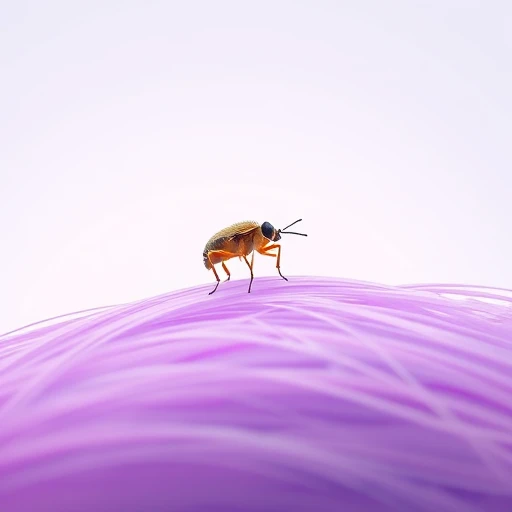
lice in 30 Seconds
- Lice are tiny, wingless parasitic insects that live on hosts.
- The word is the plural of 'louse' and is used for infestations.
- Commonly found in children's hair, causing itching and social concern.
- Spread through direct contact; treated with special shampoos and combs.
The word lice refers to a group of small, wingless, parasitic insects that belong to the order Phthiraptera. These organisms are specialized to live on the bodies of mammals and birds, feeding primarily on blood or skin debris. In a human context, when people speak of lice, they are almost always referring to one of three types: head lice, body lice, or pubic lice. The most common encounter for the average person occurs in educational settings, where head lice outbreaks among children are a frequent occurrence. Understanding the word requires recognizing that it is the plural form of louse. While the singular form is rarely used in casual conversation because these insects are almost never found alone, the plural form dominates the vocabulary of parents, teachers, and healthcare professionals.
- Biological Classification
- Lice are obligate ectoparasites, meaning they must live on the outside of a host to survive. They lack wings and have evolved specialized claws to grip hair shafts or clothing fibers tightly.
The school nurse conducted a thorough inspection to ensure no students were carrying lice after the winter break.
The usage of the word often carries a heavy social weight. Historically and culturally, the presence of lice has been unfairly associated with a lack of cleanliness or poverty. However, modern medical science emphasizes that head lice, in particular, do not discriminate based on hygiene; they are simply looking for a warm host. This shift in understanding has changed how the word is used in public health messaging, moving away from shame and toward practical management. You will hear this word in clinical settings, where doctors discuss treatments like pediculicides, and in domestic settings, where families navigate the tedious process of 'nitpicking'—the manual removal of lice eggs.
- Social Context
- In many cultures, mentioning lice can cause an immediate 'sympathetic itch' response, where listeners begin to scratch their heads just by hearing the word.
The term lice is often used metaphorically in literature to describe something parasitic or bothersome.
Furthermore, the word extends into the animal kingdom. Farmers and pet owners use it to describe infestations in livestock or poultry. In these contexts, the word is used with a more technical, economic tone, as lice can affect the health and productivity of animals. Whether in a school, a clinic, or a farm, the word 'lice' signals a need for immediate intervention and specialized cleaning protocols. It is a word that bridges the gap between biology, medicine, and daily social life, often acting as a catalyst for community-wide health discussions.
During the war, soldiers frequently suffered from body lice, which spread diseases like trench fever.
- Common Phrasings
- 'Infested with lice', 'lice treatment', 'lice comb', and 'head lice outbreak' are the most frequent word pairings.
She spent the entire weekend washing bedding to get rid of the lice.
Many people mistakenly believe that lice can jump from one person to another.
Using the word lice correctly in a sentence requires a solid grasp of its status as an irregular plural noun. Unlike most English nouns that add an 's' to become plural, 'louse' transforms into 'lice'. This means that when you use 'lice' as the subject of a sentence, you must use plural verb forms. For example, you should say 'The lice are spreading' rather than 'The lice is spreading'. This grammatical nuance is one of the most common points of confusion for English learners. Because 'lice' usually appear in large numbers, the singular 'louse' is quite rare in everyday speech, making 'lice' the default term for most discussions regarding these parasites.
- Subject-Verb Agreement
- Always treat 'lice' as a plural count noun. Example: 'Lice thrive in warm environments near the scalp.'
After the camping trip, we realized the dog had brought lice into the house.
In terms of sentence structure, 'lice' is frequently paired with verbs of infestation, discovery, and elimination. You might 'detect' lice, 'treat' lice, or 'eliminate' lice. It is also common to see it used as a modifier in compound nouns like 'lice shampoo' or 'lice comb'. In these cases, the word describes the purpose of the object. When describing the state of a person or animal, the adjective 'lousy' is the derived form, though in modern English, 'lousy' is much more commonly used to mean 'bad' or 'poor quality' rather than 'infested with lice'. To avoid confusion, it is better to say 'infested with lice' if you are speaking literally.
- Common Verbs
- Infest, spread, eradicate, comb, detect, and treat are the primary verbs used with lice.
The pharmacist recommended a specific lotion to kill the lice and their eggs.
In more formal or scientific writing, you will see 'lice' used in the context of public health reports or biological studies. Here, the word might be accompanied by its Latin names or specific classifications. For instance, a report might state, 'The prevalence of Pediculus humanus capitis (head lice) has increased in urban areas.' In informal settings, the word is often used in exclamations of frustration or concern. Parents might say, 'Oh no, not lice again!' This reflects the recurring and stubborn nature of the problem. Whether you are writing a formal medical paper or a text message to a friend, maintaining the plural agreement is key to sounding natural and accurate.
It is a myth that lice prefer dirty hair; they actually find it easier to attach to clean hair.
- Prepositional Use
- We often use 'with' or 'of'—e.g., 'an infestation of lice' or 'covered with lice'.
The vet checked the stray cat for fleas and lice before allowing it into the shelter.
Because lice cannot fly or jump, they are mostly spread through direct head-to-head contact.
The word lice is most frequently heard in environments where children congregate. Elementary schools are perhaps the most common 'ground zero' for this word. You will hear it in announcements from the principal, in hushed conversations between worried parents at the school gate, and in the nurse's office. In these settings, the word often triggers a sense of urgency and collective action. Schools frequently have 'no-nit' policies, and the word 'lice' becomes a central term in the administrative and medical protocols used to manage the situation. If you are a parent, hearing the word 'lice' usually means a long evening of laundry and hair combing is ahead of you.
- Educational Settings
- Schools often send home 'lice alerts' to inform parents of a potential outbreak in the classroom.
'We have a confirmed case of head lice in the third grade,' the email began.
Another common place to hear the word is in pharmacies and the personal care aisles of supermarkets. Customers often ask pharmacists for the most effective 'lice treatments' or 'lice kits'. In this context, the word is used in a practical, solution-oriented way. Pharmacists might discuss the difference between chemical treatments and natural remedies, or explain how to use a 'lice comb' effectively. You might also hear the word in professional hair salons, although many salons have strict policies against treating clients who have active lice infestations for health and safety reasons. Stylists are trained to recognize the signs of lice and will use the word discreetly to inform a client of the issue.
- Medical Contexts
- Dermatologists and general practitioners use the word when diagnosing pediculosis, the medical term for a lice infestation.
The doctor explained that lice are not a sign of poor hygiene but rather a common childhood nuisance.
In historical documentaries or literature, the word 'lice' often appears to illustrate the hardships of the past. It is used to describe the living conditions in overcrowded cities, military camps, or prisons. In these narratives, lice are more than just a nuisance; they are vectors for disease and symbols of suffering. This historical usage provides a stark contrast to the modern, mostly harmless (though annoying) head lice we discuss today. Finally, you might hear the word in the context of animal husbandry. Farmers discuss 'sheep lice' or 'cattle lice' when talking about the health of their herds. In all these varied contexts, the word 'lice' consistently points to a parasitic relationship that requires attention and management.
The documentary detailed how lice contributed to the spread of typhus during the 19th century.
- Veterinary Use
- Veterinarians use the word when discussing skin parasites in dogs, cats, and livestock.
If you notice your pet scratching excessively, it might be worth checking for fleas or lice.
The word lice is often used in a whisper to avoid embarrassing the person being discussed.
One of the most frequent mistakes people make with the word lice is related to its grammatical number. Because the word refers to a group of small things, many learners mistakenly treat it as an uncountable noun (like 'sand' or 'water') or as a singular noun (like 'team'). This leads to errors in subject-verb agreement. For example, saying 'The lice is gone' is incorrect; the correct form is 'The lice are gone'. Similarly, some people try to pluralize the word further by saying 'lices', which is not a word in standard English. Remembering that 'lice' is already the plural of 'louse' is the best way to avoid these common pitfalls.
- Grammar Error: 'Lices'
- Mistake: 'I found three lices on the comb.' Correct: 'I found three lice on the comb.'
It is a common error to think that lice can be treated with regular shampoo alone.
Another mistake involves the pronunciation and spelling confusion with the word 'rice'. For speakers of languages that do not distinguish clearly between the 'l' and 'r' sounds, 'lice' and 'rice' can be easily confused. This can lead to some very awkward or humorous misunderstandings, especially in a kitchen or restaurant setting. In terms of spelling, 'lice' is sometimes confused with 'lies' (the plural of 'lie' or the verb form). While they sound somewhat similar, their meanings are entirely unrelated. Paying close attention to the 'c' versus the 's' in the spelling can help distinguish the parasitic insect from the act of being untruthful.
- Confusing 'Lice' and 'Nits'
- People often use the terms interchangeably, but 'nits' are the eggs, while 'lice' are the hatched insects.
Many people wrongly assume that lice are a sign of being 'dirty', which leads to unnecessary social stigma.
A conceptual mistake is the belief that lice can jump or fly. This misconception often leads to unnecessary panic. Lice can only crawl. They are spread through direct contact or by sharing items like hats, brushes, or headphones. Understanding the mechanics of how lice move can help in accurately using the word when explaining how an infestation occurred. Finally, people sometimes use 'lousy' to describe someone with lice, but as mentioned before, this is archaic. In modern English, 'lousy' almost always means 'terrible'. If you say 'He is lousy', people will think you are criticizing his character or performance, not his scalp health.
Don't make the mistake of thinking lice can live for a long time away from a human host; they usually die within 24-48 hours.
- Spelling Confusion
- Be careful not to spell it 'lyce' or 'lies'. The correct spelling is 'L-I-C-E'.
The most common mistake in treating lice is failing to do a second treatment to kill newly hatched nits.
Using the word lice as a singular noun is a grammatical error that marks a non-native speaker.
When discussing parasites, several words are often used alongside or in place of lice, depending on the context. The most common 'cousins' of lice in everyday language are fleas, mites, and ticks. While they are all parasites, they have distinct characteristics. Fleas are known for their jumping ability and are often associated with pets. Ticks are larger, arachnids rather than insects, and are famous for burrowing into the skin and potentially carrying Lyme disease. Mites are microscopic and are often associated with skin conditions like scabies. Knowing the difference between these terms is essential for accurate communication in medical or domestic situations.
- Lice vs. Fleas
- Lice crawl and stay on the host; fleas jump and can live in carpets or furniture for long periods.
The child was scratching his head, so we checked for lice, not fleas.
In a more technical or medical context, you might encounter the term 'pediculosis'. This is the formal name for a lice infestation. While you wouldn't use this in a casual chat with a friend, you will see it on medical forms or in health brochures. Another related term is 'nits'. As previously mentioned, nits are the eggs of lice. In many conversations, people say 'checking for lice' when they are actually looking for nits, as the eggs are often easier to spot than the fast-moving insects themselves. The phrase 'nitpicking' has even entered the general lexicon to mean focusing on small, unimportant details, reflecting the meticulous work required to remove lice eggs.
- Lice vs. Bedbugs
- Lice live on the person; bedbugs live in the environment (mattresses, cracks) and come out to feed at night.
Identifying the difference between lice and dandruff is a common challenge for parents.
For those looking for more descriptive or informal alternatives, words like 'creepy-crawlies' or 'bugs' are sometimes used, especially when talking to children to make the situation feel less scary. However, 'lice' remains the most precise and widely understood term. In some dialects, you might hear 'cooties', a slang term often used by children to refer to imaginary germs or lice, though this is more of a social construct than a biological one. When writing or speaking, choosing between 'lice' and its alternatives depends entirely on whether you need to be scientifically accurate, medically formal, or colloquially accessible.
The vet confirmed it was lice and prescribed a medicated wash for the cattle.
- Synonyms in Context
- Parasites (General), Pediculosis (Medical), Nits (Eggs), Vermin (Historical/Pejorative).
While lice are annoying, they do not carry the same disease risks as ticks in North America.
The term 'head lice' is specific to the scalp, distinguishing them from body or pubic varieties.
How Formal Is It?
Fun Fact
The irregular plural 'lice' (from 'louse') follows the same ancient Germanic pattern as 'mice' (from 'mouse') and 'geese' (from 'goose').
Pronunciation Guide
- Pronouncing it as 'lease'.
- Confusing it with 'rice' (r/l confusion).
- Pronouncing the 'c' as a 'k' sound.
- Adding an extra syllable like 'li-ces'.
- Confusing it with 'lies' (z sound at the end).
Difficulty Rating
Easy to recognize but can be confused with 'rice' or 'lies'.
The irregular plural 'louse/lice' is a common stumbling block.
Simple pronunciation, but requires clear 'L' and 'S' sounds.
Easily understood in context, though 'nits' is often heard alongside it.
What to Learn Next
Prerequisites
Learn Next
Advanced
Grammar to Know
Irregular Plurals (Mutation)
louse -> lice, mouse -> mice
Subject-Verb Agreement with Plural Nouns
The lice are (not is) difficult to remove.
Compound Nouns
Head lice, lice comb, lice treatment.
Zero Article with General Plurals
Lice are parasites.
Prepositional Phrases
An infestation of lice.
Examples by Level
The little girl has lice in her hair.
The girl has small bugs in her hair.
Lice is plural.
Do you have lice?
Are there bugs in your hair?
Question form with 'do'.
Lice are very small.
The bugs are not big.
Use 'are' with lice.
My head is itchy because of lice.
The bugs make me scratch.
Preposition 'because of'.
The nurse looks for lice.
The nurse checks the hair.
Present simple tense.
I see two lice.
I see two bugs.
Lice is used for any number more than one.
Lice do not jump.
The bugs only crawl.
Negative statement.
Wash your hair to kill lice.
Use water and soap for the bugs.
Imperative sentence.
The school sent a letter about head lice.
A message from school about hair bugs.
Compound noun 'head lice'.
You can get lice from sharing a hat.
Sharing clothes spreads the bugs.
Modal verb 'can' for possibility.
We need special shampoo for the lice.
Medicine soap for the bugs.
Noun phrase 'special shampoo'.
Lice are difficult to see.
It is hard to find them.
Adjective 'difficult' describing the noun.
She found lice on her brother's head.
She saw bugs on him.
Past simple 'found'.
Don't worry, lice are common.
Many people get them.
Common adjective usage.
The lice eggs are called nits.
The baby bugs in eggs.
Passive voice 'are called'.
He used a comb to remove the lice.
A tool to take out the bugs.
Infinitive of purpose 'to remove'.
Lice infestations are common in primary schools.
Many kids in school get them.
Plural subject and verb agreement.
It took three hours to comb all the lice out.
A long time to clean the hair.
Phrasal verb 'comb out'.
The pharmacist recommended a treatment for lice.
The medicine man gave advice.
Reporting verb 'recommended'.
Lice cannot survive long without a human host.
They die quickly off the body.
Prepositional phrase 'without a host'.
She was embarrassed to tell her friends about the lice.
She felt shy about the bugs.
Adjective 'embarrassed' followed by infinitive.
Check your hair for lice after the camping trip.
Look for bugs after sleeping outside.
Imperative for advice.
Lice are not a sign of poor hygiene.
Being dirty does not cause them.
Negative definition.
The lice were spreading quickly through the class.
Many kids were getting them fast.
Past continuous tense.
The prevalence of lice has increased in recent years.
More people have them now.
Formal noun 'prevalence'.
Some lice have developed resistance to common shampoos.
The bugs don't die from old medicine.
Present perfect tense.
The doctor diagnosed the patient with body lice.
The doctor found bugs on the body.
Verb 'diagnose' with 'with'.
Lice are considered ectoparasites because they live on the skin.
They are outside parasites.
Conjunction 'because' introducing a reason.
Effective lice management requires treating the whole family.
Everyone needs the medicine.
Gerund 'treating' as an object.
The history of lice is closely linked to human migration.
Bugs moved with people in the past.
Passive construction 'is linked'.
Manual removal of lice is often more effective than chemicals.
Using a comb is better than soap.
Comparative 'more effective than'.
Lice are wingless insects that feed on blood.
Bugs with no wings that eat blood.
Relative clause 'that feed on blood'.
The social stigma surrounding lice can cause significant anxiety.
People feel bad because of the bugs.
Complex noun phrase as subject.
Researchers are studying the DNA of lice to track ancient movements.
Scientists use bugs to learn history.
Present continuous for ongoing research.
Public health campaigns aim to educate parents about lice prevention.
Government helps parents learn.
Infinitive of purpose 'to educate'.
The presence of body lice can be an indicator of severe neglect.
Bugs on the body show a big problem.
Modal 'can be' for possibility.
Lice have evolved specialized claws for gripping different types of hair.
Bugs changed to hold hair better.
Present perfect for evolutionary change.
The economic impact of lice outbreaks in schools is often underestimated.
The cost of the bugs is high.
Passive voice 'is underestimated'.
Lice are highly host-specific, meaning they cannot survive on other species.
They only live on one kind of animal.
Adjective 'host-specific'.
The term 'nitpicking' originates from the meticulous removal of lice eggs.
The word comes from cleaning bugs.
Verb 'originates' with 'from'.
The co-evolution of humans and lice provides a unique window into our past.
Bugs and humans changed together.
Abstract subject 'co-evolution'.
Lice infestations in the trenches of WWI were a major vector for typhus.
Bugs in the war spread sickness.
Historical context with 'vector'.
The pharmacological approach to lice treatment is shifting due to resistance.
Medicine is changing because bugs are strong.
Adjective 'pharmacological'.
Lice morphology is exquisitely adapted to the environment of the human scalp.
The bug's body fits the head perfectly.
Adverb 'exquisitely' modifying 'adapted'.
The psychological burden of recurring lice can be taxing for caregivers.
It is hard for parents' minds.
Metaphorical use of 'burden'.
Lice are often used as a model organism in studies of parasitic adaptation.
Scientists use them to study parasites.
Technical term 'model organism'.
The eradication of lice in institutional settings requires rigorous protocols.
Killing all bugs needs strict rules.
Formal noun 'eradication'.
Lice remain a ubiquitous challenge for public health systems worldwide.
Bugs are a problem everywhere.
Adjective 'ubiquitous'.
Synonyms
Antonyms
Common Collocations
Common Phrases
— Having a large number of lice living on the body or hair.
The stray dog was heavily infested with lice.
— Being completely clear of any lice or nits.
The school requires students to be lice-free before returning.
— The act of inspecting someone's hair for signs of the insects.
The nurse spent the morning checking for lice.
— The technical term for nits.
You must remove all the lice eggs to prevent a re-infestation.
— A specific type of lice found in the pubic region, also known as crabs.
Pubic lice are usually transmitted through sexual contact.
— Steps taken to avoid getting lice.
Tying back long hair is a good method of lice prevention.
— A box containing shampoo, a comb, and instructions for treatment.
I picked up a lice kit on my way home.
— A set of rules, usually in a school, regarding how to handle infestations.
The school's lice policy is very strict.
— The stages of life from egg to adult louse.
Understanding the lice cycle helps in timing the treatments.
— To successfully eliminate an infestation.
It took us weeks to finally get rid of the lice.
Often Confused With
Confused in pronunciation by some non-native speakers.
Confused in spelling and sometimes pronunciation (s vs z).
Both are parasites, but fleas jump and lice crawl.
Idioms & Expressions
— Focusing on small, insignificant details or faults.
Stop nitpicking my report and look at the main ideas.
common— To be full of or teeming with something (usually something bad).
This place is lousy with tourists in the summer.
informal— A contemptible or unpleasant person.
He's a real louse for leaving her like that.
informal/dated— Very numerous or crowded together.
The protesters were as thick as lice in the square.
archaic— Something that is out of place or unwelcome in a busy environment.
His presence felt like lice in a beehive.
rare— To have a secret or a nagging thought.
He's had a louse in his ear about that project all week.
archaic— To search something very carefully (related to the action of using a lice comb).
The police combed through the evidence.
common— Very bad or unpleasant weather.
We had lousy weather for the entire vacation.
informal— Perfectly clean or without any minor flaws.
The presentation was nit-free and very professional.
informal— To perform a tedious, repetitive task.
Sorting these files feels like picking lice.
metaphoricalEasily Confused
Singular vs Plural
Louse is one; lice is two or more.
I found one louse, but there are probably more lice.
Egg vs Insect
Nits are the eggs; lice are the insects.
You have to remove the nits so they don't turn into lice.
Visual similarity
Dandruff flakes off; lice/nits stick to the hair.
It's not dandruff; it's actually lice.
Both are small parasites
Mites are often microscopic; lice are visible to the eye.
Scabies is caused by mites, not lice.
Both are parasites
Ticks are arachnids and larger; lice are insects.
Check for ticks after the woods, but check for lice after school.
Sentence Patterns
I have [noun].
I have lice.
The [noun] are [adjective].
The lice are small.
It is hard to [verb] [noun].
It is hard to kill lice.
[Noun] can be spread by [gerund].
Lice can be spread by sharing hats.
The [noun] infestation was [adjective].
The lice infestation was widespread.
Due to [noun], the [noun] [verb].
Due to resistance, the lice survived.
She used [noun] to [verb].
She used shampoo to treat lice.
Don't [verb] the [noun].
Don't touch the lice.
Word Family
Nouns
Verbs
Adjectives
Related
How to Use It
Common in parenting and educational contexts.
-
The lice is itchy.
→
The lice are itchy.
Lice is a plural noun and requires a plural verb.
-
I found a lice.
→
I found a louse.
Use the singular 'louse' when referring to just one insect.
-
She has many lices.
→
She has many lice.
'Lice' is already plural; do not add an 's'.
-
Lice can jump from head to head.
→
Lice crawl from head to head.
Lice do not have the anatomy to jump or fly.
-
He is lousy.
→
He has lice.
'Lousy' now means 'bad', not 'having lice' in modern English.
Tips
Check Weekly
During school months, check your child's hair once a week to catch lice early.
Plural Verb
Always use 'are' or 'have' with lice. Example: 'The lice are gone.'
No Sharing
Teach children not to share hats, brushes, or hair ties to prevent spreading lice.
Hot Water
Wash bedding and hats in hot water (60°C) to kill any remaining lice.
Don't Shame
Remember that anyone can get lice; it is not a sign of being dirty.
Second Dose
Always do a second treatment 7-9 days after the first to kill newly hatched lice.
Bright Light
Use a bright light or sunlight when checking for lice to see the tiny insects better.
Host Specific
Don't worry about your pets getting your head lice; they are safe.
Nitpicking
Use the word 'nitpicking' in your writing to describe someone being too critical.
Avoid Pesticides
Use only approved treatments; never use dangerous chemicals like gasoline to treat lice.
Memorize It
Mnemonic
Lice are like Mice; they are small, plural, and you don't want them in your house!
Visual Association
Imagine a tiny insect holding a tiny 'L' shaped ladder to climb up a hair strand.
Word Web
Challenge
Try to explain the difference between a 'louse' and 'lice' to a friend without using the word 'bug'.
Word Origin
Derived from the Old English word 'lūs', which has roots in Proto-Germanic '*lūs'. It is a very ancient word in the English language.
Original meaning: The word has always referred to the small parasitic insect.
GermanicCultural Context
Be careful when using the word around parents; it can cause embarrassment or panic.
In the UK and US, schools often have 'nit nurses' or 'lice checks' after holidays.
Practice in Real Life
Real-World Contexts
School
- lice check
- sent home with lice
- outbreak in class
- no-nit policy
Pharmacy
- lice shampoo
- lice comb
- over-the-counter treatment
- kill the eggs
History
- trench lice
- spread of disease
- living conditions
- delousing stations
Biology
- host-specific
- wingless insect
- life cycle
- blood-feeding
Home
- wash the bedding
- comb out the nits
- itchy scalp
- check the kids
Conversation Starters
"Have you ever had to deal with a lice outbreak at your school?"
"What is the most effective way to get rid of lice in your opinion?"
"Why do you think there is such a social stigma around having lice?"
"Do you know the difference between head lice and other types of parasites?"
"How would you react if you found out your child had lice?"
Journal Prompts
Describe a time you or someone you know had lice. How did it feel?
Write a short story about a louse trying to find a new home.
Research the history of lice in WWI and summarize your findings.
Argue for or against 'no-nit' policies in elementary schools.
Explain the biological adaptation of lice to the human scalp.
Frequently Asked Questions
10 questionsNo, lice cannot jump or fly. They only have legs for crawling and claws for gripping hair. They spread through direct contact.
Actually, no. Lice find it easier to attach their eggs to clean hair. Hygiene is not a factor in getting head lice.
On a human host, they can live for about 30 days. Off a host, they usually die within 24 to 48 hours.
No. Lice are host-specific. Human lice only live on humans, and dog lice only live on dogs.
Nits are the eggs of lice. They are tiny, oval-shaped, and usually glued to the hair shaft near the scalp.
Lice is the plural form. The singular form is 'louse', but it is much less common.
Head lice do not spread disease. However, body lice can spread diseases like typhus and trench fever.
Treatment usually involves medicated shampoo and meticulous combing with a fine-toothed comb to remove nits.
The itching is an allergic reaction to the saliva of the lice when they bite the scalp to feed on blood.
Head lice cannot survive long on carpets. They need the warmth and food source of a human head to stay alive.
Test Yourself 108 questions
Describe the steps you would take if you found lice in your hair.
Well written! Good try! Check the sample answer below.
Explain why the stigma around lice is scientifically incorrect.
Well written! Good try! Check the sample answer below.
Write a short dialogue between a school nurse and a parent about a lice outbreak.
Well written! Good try! Check the sample answer below.
Compare and contrast head lice and fleas.
Well written! Good try! Check the sample answer below.
Write a formal email to parents informing them of a lice case in the classroom.
Well written! Good try! Check the sample answer below.
Describe the physical appearance and movement of lice.
Well written! Good try! Check the sample answer below.
Discuss the historical impact of body lice on soldiers during wartime.
Well written! Good try! Check the sample answer below.
Write a creative story from the perspective of a louse looking for a new host.
Well written! Good try! Check the sample answer below.
Pronounce the word 'lice' and use it in a sentence about school.
Read this aloud:
You said:
Speech recognition is not supported in your browser. Try Chrome or Edge.
Explain the difference between a louse and lice.
Read this aloud:
You said:
Speech recognition is not supported in your browser. Try Chrome or Edge.
Listen and write: 'The children were checked for lice after the summer camp.'
/ 108 correct
Perfect score!
Summary
Lice are a common, though harmless, parasitic nuisance primarily affecting school-aged children. Remember that 'lice' is plural, and the most effective way to manage them is through consistent treatment and manual removal of their eggs, known as nits.
- Lice are tiny, wingless parasitic insects that live on hosts.
- The word is the plural of 'louse' and is used for infestations.
- Commonly found in children's hair, causing itching and social concern.
- Spread through direct contact; treated with special shampoos and combs.
Check Weekly
During school months, check your child's hair once a week to catch lice early.
Plural Verb
Always use 'are' or 'have' with lice. Example: 'The lice are gone.'
No Sharing
Teach children not to share hats, brushes, or hair ties to prevent spreading lice.
Hot Water
Wash bedding and hats in hot water (60°C) to kill any remaining lice.
Example
The school sent a letter home because several students had head lice.
Related Content
See it in Videos
Learn it in Context
Related Phrases
More Animals words
mice
B1Mice are small rodents characterized by a pointed snout, large rounded ears, and a long, usually hairless tail. It is the irregular plural form of the word 'mouse'.
penguins
B1Penguins are flightless aquatic birds that live almost exclusively in the Southern Hemisphere, particularly in Antarctica. They are well-known for their black and white tuxedo-like appearance and their ability to swim expertly in cold ocean waters.
bedbugs
B1Small, reddish-brown parasitic insects that feed on the blood of humans and animals, typically while they sleep. They are known for living in the cracks and crevices of beds, furniture, and walls.
bedbug
B1A bedbug is a small, reddish-brown, nocturnal insect that feeds on the blood of humans and other warm-blooded animals, typically found in mattresses, furniture, or cracks in walls. These parasitic creatures are a common nuisance, especially in hotels, apartments, and dormitories, causing itchy bites and significant discomfort to their hosts. The term often carries a strong negative connotation, evoking feelings of disgust, infestation, and a lack of cleanliness, even though their presence doesn't necessarily indicate poor hygiene.
goose
B1A large water bird with a long neck, short legs, webbed feet, and a broad bill, typically larger than a duck and smaller than a swan. It can also refer to the meat of this bird or, informally, a foolish or silly person.
dogs
A1The plural form of dog. 'Dogs' refers to domesticated carnivorous mammals that are commonly kept as pets, used for work, or for hunting. They are known for their loyalty, companionship, and diverse breeds.
octopus
B1An octopus is a sea animal with a soft oval body and eight long arms called tentacles. It is known for its high intelligence, ability to change color for camouflage, and releasing ink when threatened.
breeding
B2Breeding refers to the process of producing offspring, especially in a controlled or systematic way for animals or plants. It can also describe the upbringing or education of a person that results in refined social manners.
den
B1A wild animal's hidden home, such as a cave or a hole in the ground; also, a small, comfortable room in a house used for relaxation, hobbies, or private work.
asp
B1A small, highly venomous snake found in North Africa and Europe. It is historically famous for its association with the death of the Egyptian Queen Cleopatra.

