









nemo in 30 Seconds
- Nemo is a Latin word meaning 'no one' or 'nobody,' primarily used in law, literature, and geography.
- In law, it appears in maxims like 'nemo dat,' which means no one can give what they don't own.
- In literature, it is the name of Jules Verne's famous Captain Nemo, symbolizing a man who has rejected society.
- In modern culture, it is most famous as the name of the clownfish in Pixar's 'Finding Nemo.'
The word nemo is a fascinating linguistic artifact that has traveled from the ancient streets of Rome into the modern lexicon of law, literature, and popular culture. At its core, it is a Latin pronoun meaning 'no one' or 'nobody'. In English, it is rarely used as a simple substitute for 'nobody' in casual conversation; instead, it functions as a high-register loanword, a proper noun, or a technical term in legal philosophy. When you encounter nemo, you are likely engaging with a text that values precision, historical depth, or a sense of mystery. It is a word that defines itself by absence—the absence of a person, the absence of an owner, or the absence of a known identity.
- Legal Context
- In the realm of jurisprudence, nemo is the cornerstone of several foundational maxims. The most famous is nemo dat quod non habet, which translates to 'no one gives what they do not have.' This principle dictates that a person cannot transfer ownership of an item if they do not legally own it themselves. Another critical phrase is nemo judex in causa sua, meaning 'no one should be a judge in their own cause,' which is the bedrock of judicial impartiality and the rule against bias.
The court applied the principle of nemo dat to ensure the stolen property was returned to its rightful owner despite the subsequent sale.
Beyond the courtroom, nemo took on a legendary status through Jules Verne’s 1870 novel, Twenty Thousand Leagues Under the Sea. Captain Nemo, the commander of the Nautilus, chose this name specifically because it means 'no one.' By adopting this moniker, he signaled his total rejection of national identity and his withdrawal from the terrestrial world of men. He became a ghost in the machine of the ocean, a man without a country, and a figure of profound intellectual and social isolation. This literary usage transformed nemo from a mere pronoun into a symbol of the 'outsider' or the 'anonymous rebel.'
- Etymological Roots
- The word is a contraction of the Old Latin ne (not) and hemo (man/human being). Thus, etymologically, nemo literally means 'not a man.' This provides a deep philosophical layer to the word, suggesting not just the absence of a person, but the negation of humanity or social standing.
In the Odyssey, Odysseus tells the Cyclops Polyphemus that his name is nemo (Outis in Greek), a clever trick that prevents the giant from calling for help.
In modern times, the word has been softened by the 2003 film Finding Nemo. Here, the name serves as a gentle irony; the character is a small, vulnerable fish who is very much 'someone' to his father. However, the Latin meaning still lingers in the background for scholars, suggesting the vastness of the ocean where one can easily become 'no one.' Whether used in a high-stakes legal battle over property rights or in a discussion about 19th-century science fiction, nemo remains a powerful tool for describing the void where an identity should be. It is a word of negation that, paradoxically, has a very strong presence in the English language.
- Philosophical Usage
- Philosophers sometimes use nemo to discuss the concept of the 'universal subject'—a person who represents everyone and therefore no one in particular. It is the ultimate abstraction of the human individual into a state of pure anonymity.
The existentialist poet argued that in the modern city, every man is a nemo, lost in the crowd of millions.
To master the use of nemo, one must understand its dual nature. It is both a void and a name. It is the 'nobody' of the law and the 'Captain' of the sea. It is a word that requires context to breathe; without the surrounding legal or literary framework, it risks being misunderstood as a simple typo or a random name. However, when placed correctly, it adds a layer of classical authority and intellectual sophistication to your writing that few other words can match.
Using nemo correctly in English requires a nuanced understanding of its specific domains. You cannot simply swap 'nobody' for 'nemo' in a sentence like 'Nemo showed up to the party' unless you are making a very specific literary joke or referring to a person actually named Nemo. Instead, its use is typically restricted to formal legal writing, academic discourse on Latin maxims, or creative writing that draws on classical or science-fiction themes. Understanding these boundaries is key to using the word with C2-level precision.
- The Legal 'Nemo'
- When using nemo in a legal context, it almost always appears as part of a multi-word Latin phrase. You should treat these phrases as set units of meaning. For example, when discussing property disputes, you might write: 'The defendant's argument fails on the basis of nemo dat.' Here, nemo acts as a shorthand for the entire principle of title transfer. It is essential to keep the Latin italicized to indicate its status as a foreign loan-phrase.
The principle of nemo judex ensures that no administrator can preside over a hearing in which they have a financial interest.
In literary and creative contexts, nemo is often used as a proper noun to evoke the characteristics of Jules Verne’s protagonist. If you are describing a character who is reclusive, brilliant, and disconnected from society, you might call them a 'modern-day Nemo.' In this case, the word functions as an eponym. You are not saying the person is 'nobody,' but rather that they share the 'nobody-ness' and the seafaring mystery of the famous Captain. This usage is common in book reviews, character analyses, and high-brow journalism.
- Grammatical Function
- In Latin, nemo is a pronoun. In English, when used in phrases like nemo dat, it functions as part of a noun phrase. It does not take an English plural (you wouldn't say 'nemos' to mean many nobodies in a legal sense), and it rarely takes articles like 'the' or 'a' unless you are referring to a specific person named Nemo.
By signing the document as Nemo, the whistleblower maintained their anonymity while still providing a formal signature.
Another sophisticated use of nemo is in philosophical or theological writing. It can be used to represent the 'void' of human presence. For instance: 'In the vast silence of the cathedral, there was only nemo.' This is a highly stylistic choice, using the Latin word to create a sense of ancient, hallowed emptiness that the English word 'nobody' cannot quite capture. It suggests a more profound, ontological absence. This is particularly effective in poetry or evocative prose where the rhythm and weight of the word matter as much as its literal meaning.
- Comparative Usage
- Compare 'Nobody was there' with 'The room was occupied by nemo.' The first is a standard statement of fact. The second is a deliberate, stylistic choice that invokes a sense of mystery or classical allusion. Use the latter only when you want to draw attention to the concept of 'nothingness' as a tangible entity.
The hacker used the handle Nemo to signify that they were a non-entity in the eyes of the corporate giant.
Finally, consider the tone. Nemo is a 'heavy' word. It carries the weight of centuries of Roman law and Victorian literature. If you use it in a lighthearted text, it will stand out as ironic or mock-heroic. If you use it in a serious text, it reinforces a tone of gravity and erudition. Always match the 'nemo' to the 'mood' of your writing to ensure it enhances rather than distracts from your message.
While nemo is not a word you will hear at the grocery store or in a casual chat at the bus stop, it has several very specific 'natural habitats' in the English-speaking world. If you move in legal, academic, or high-culture circles, you will encounter it more often than you might expect. Understanding these contexts will help you recognize the word and understand the specific 'flavor' of meaning it brings to each situation.
- The Law School and Courtroom
- The most common place to hear nemo is in a law school lecture hall. Law students are introduced to 'nemo dat' in their first year of property law. You might hear a professor say, 'The entire case hinges on the nemo dat rule.' In courtrooms, particularly in jurisdictions that follow Common Law (like the UK, USA, Canada, and Australia), judges may use these Latin maxims in their written or oral judgments to refer to established legal principles without having to re-explain the underlying logic every time.
Counsel argued that nemo tenetur se ipsum accusare, the right against self-incrimination, was violated during the interrogation.
In the world of literature and film studies, nemo is a frequent topic of discussion. Scholars analyzing Jules Verne's work will talk about 'the Nemo persona'—the idea of a man who has deleted his past and exists only as a function of his own will. You will also hear it in discussions of Homer's Odyssey, where the Latin translation of Odysseus's 'No-man' trick is often referred to as the 'Nemo' stratagem. In these contexts, the word is used to discuss themes of identity, anonymity, and the power of naming.
- Scientific and Taxonomic Naming
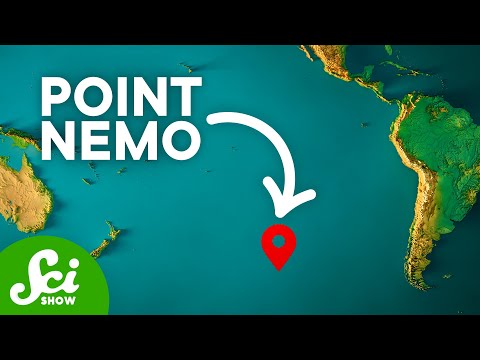
- Biologists and astronomers sometimes use nemo when naming things that are elusive or hard to find. There are species of spiders and insects with 'nemo' in their scientific names. In astronomy, 'Point Nemo' is the name given to the 'oceanic pole of inaccessibility'—the place in the ocean that is farthest from any land. It is literally the place where 'no one' is.
Space agencies often de-orbit decommissioned satellites so they crash near Point Nemo, ensuring no risk to human life.
You might also encounter nemo in religious contexts, specifically within the Catholic Church or other denominations that still use Latin in their liturgy or official documents. The phrase nemo venit ad Patrem nisi per me ('no one comes to the Father except through me') is a famous scriptural line. While most modern services are in the vernacular, the Latin version remains a point of reference for theologians and historians. Similarly, in classical music, many choral works (like masses or requiems) feature Latin texts where nemo appears as a standard pronoun.
- Cybersecurity and Anonymity
- In the digital age, 'Nemo' has become a popular pseudonym for hackers, whistleblowers, and activists. It serves as a modern-day 'Anonymous.' You might see it on forums like Reddit or in news reports about cyber-attacks where the perpetrator remains unknown. Using 'Nemo' as a handle is a conscious nod to both the Latin meaning and the rebellious spirit of Captain Nemo.
The manifesto was signed by Nemo, leaving the authorities with no clues as to the author's true identity.
In summary, nemo is a word that exists on the edges of the everyday. It is found in the depths of the ocean, the complexities of the law, the pages of classic novels, and the shadows of the internet. When you hear it, listen for the context: is it a rule of law, a reclusive captain, a remote point in the Pacific, or a small orange fish? Each 'Nemo' tells a different story of absence and identity.
Because nemo is a Latin loanword with very specific applications, it is easy to misuse if you treat it like a standard English pronoun. The most common errors involve using it in the wrong register, failing to capitalize it when necessary, or misunderstanding the grammar of the Latin phrases it inhabits. Avoiding these pitfalls is essential for maintaining a professional and erudite tone in your writing.
- Mistake 1: Using 'nemo' as a general synonym for 'nobody'
- This is the most frequent error. In English, nemo is not a functioning pronoun for everyday use. Writing 'Nemo called you today' instead of 'Nobody called you today' is incorrect unless the person's actual name is Nemo. It sounds pretentious or simply confusing to a native speaker. Use 'nobody' or 'no one' for 99% of situations.
Incorrect: nemo knows the answer to the test.
Correct: No one knows the answer to the test.
Another common mistake occurs in legal writing, where students might forget to include the full phrase. Writing 'The rule of nemo' is vague. You must specify which nemo maxim you are referring to, such as nemo dat or nemo judex. Without the qualifying words, the reader doesn't know which 'nobody' rule you are invoking. Furthermore, failing to italicize these Latin phrases is a stylistic error in formal legal and academic documents.
- Mistake 2: Confusing 'Nemo' with 'Anonymous'
- While they are related, they are not interchangeable. 'Anonymous' means the name is unknown. 'Nemo' means 'no one.' If a book is written by 'Anonymous,' it means a person wrote it but we don't know who. If a book were written by 'Nemo,' it would be a stylistic choice by the author to claim that 'no one' wrote it, often as a literary device. Using 'Nemo' to mean 'I don't know the name' in a police report, for example, would be incorrect; you should use 'unidentified' or 'unknown.'
The letter was sent by an anonymous source (not a 'nemo' source).
Capitalization is another area of confusion. When referring to the Latin pronoun in a phrase like nemo dat, it is lowercase (unless it starts the sentence). When referring to the character Captain Nemo or the fish, it must be capitalized as a proper noun. Confusing the two can change the meaning of your sentence. For example, 'I am looking for nemo' (the concept of no one) vs. 'I am looking for Nemo' (the character) are very different statements.
- Mistake 3: Overusing the word to sound 'smart'
- This is known as 'purple prose' or 'legalistic jargon.' Using nemo when a simple 'nobody' would do can make your writing feel stiff and unapproachable. Only use nemo when you are specifically referencing the Latin legal principles, the literary character, or the scientific location. In all other cases, stick to the English equivalent to ensure clarity and flow.
Pretentious: In this house, nemo goes to bed before ten.
Natural: In this house, nobody goes to bed before ten.
Finally, be careful with the pronunciation. In English, it is typically pronounced 'NEE-mo' (long E). Some people try to use a more 'Latin' pronunciation like 'NAY-mo,' but in an English-speaking legal or literary context, the standard 'NEE-mo' is the accepted norm. Using an overly 'authentic' Latin pronunciation can sometimes come across as affected or confusing to listeners who are used to the anglicized version.
While nemo has a unique place in the language, there are several words and phrases that share its semantic space. Depending on whether you are writing a legal brief, a novel, or a scientific paper, you might choose one of these alternatives to achieve a specific nuance. Understanding the subtle differences between these terms will help you select the perfect word for your context.
- Nemo vs. Nobody / No one
- 'Nobody' and 'no one' are the standard English equivalents. They are neutral and versatile. Use them for everyday communication. Nemo is reserved for formal, technical, or literary contexts. If 'nobody' is a plain t-shirt, nemo is a tuxedo—it's elegant but looks out of place at a backyard barbecue.
Comparison: 'Nobody saw the crime' (Standard) vs. 'The principle of nemo testis ensures a fair trial' (Technical).
Another close relative is nullus, another Latin word meaning 'none' or 'no.' While nemo refers specifically to people ('no person'), nullus is more general and can refer to things or people. In English law, you might see null (derived from nullus) used to describe a contract that has no legal force. Use 'null' when talking about the validity of things, and nemo when talking about the actions or rights of people.
- Nemo vs. Anonymous
- As discussed in the 'Common Mistakes' section, 'anonymous' refers to a person whose name is not known. Nemo refers to the state of being 'no one.' An anonymous person still exists and has an identity, we just don't know it. A 'nemo' (in the literary sense) is someone who has intentionally shed their identity. Use 'anonymous' for unknown authors and 'Nemo' for characters who reject society.
The whistleblower remained anonymous, but the captain lived as a Nemo.
In philosophical texts, you might encounter the term nonentity. A nonentity is a person or thing of no importance. While nemo means 'no one' in a literal or legal sense, 'nonentity' is often used as an insult or a way to describe someone's lack of social standing. Nemo is neutral or even powerful (like Captain Nemo), whereas 'nonentity' is almost always negative. Choose nemo for legal or literary mystery, and 'nonentity' for social commentary.
- Nemo vs. Cipher
- A 'cipher' is a person who has no influence or personality—a zero. Like nemo, it suggests a lack of substance. However, 'cipher' often implies that the person is being used by others or is simply boring. Nemo implies a more profound, perhaps chosen, state of non-existence. Use 'cipher' for a weak character and Nemo for a mysterious one.
He was a mere cipher in the corporate machine, but in his private journals, he was Nemo, the master of his own fate.
Finally, consider the phrase persona non grata. While it doesn't mean 'no one,' it describes a person who is 'not welcome.' It shares the Latin formality of nemo and is often used in similar high-level political or legal contexts. If you are describing someone who has been stripped of their status or rights, nemo might describe their legal state, while persona non grata describes their social state.
How Formal Is It?
Fun Fact
The word 'nemo' is actually more grammatically complex in Latin than it looks; it lacks certain cases (like the genitive and ablative), which are borrowed from the word 'nullus'.
Pronunciation Guide
- Pronouncing it as 'NEH-mo' (short E).
- Pronouncing it as 'NAY-mo' (trying to sound too Latin).
- Confusing the pronunciation with 'memo'.
- Adding an 's' at the end (Nemos) when not referring to multiple people named Nemo.
- Swallowing the final 'o' sound.
Difficulty Rating
Easy to read as a name, very hard to understand in legal Latin without training.
Requires knowledge of Latin phrases to use correctly in formal English.
Simple pronunciation, but rarely used in speech.
Must distinguish between the name and the legal term.
What to Learn Next
Prerequisites
Learn Next
Advanced
Grammar to Know
Latin Loanwords
Words like 'nemo' often retain their Latin meaning and are italicized.
Proper Nouns
When 'Nemo' is a name, it must be capitalized.
Subject-Verb Agreement
In 'nemo dat', 'dat' is the singular verb for the singular subject 'nemo'.
Appositives
The captain, Nemo, sailed the seas.
Possessives
Nemo's submarine was called the Nautilus.
Examples by Level
Nemo is a small fish.
Nemo est un petit poisson.
Nemo is used here as a proper noun (a name).
I see Nemo in the movie.
Je vois Nemo dans le film.
Nemo is the direct object of the verb 'see'.
Where is Nemo?
Où est Nemo ?
A simple question with the verb 'to be'.
Nemo has a red color.
Nemo a une couleur rouge.
Third person singular 'has'.
My friend likes Nemo.
Mon ami aime Nemo.
Subject-verb-object structure.
Nemo lives in the sea.
Nemo vit dans la mer.
Present simple for a general fact.
This is Nemo's home.
C'est la maison de Nemo.
Possessive 's' used with a name.
Goodbye, Nemo!
Au revoir, Nemo !
A simple exclamation.
Captain Nemo is a famous character.
Le capitaine Nemo est un personnage célèbre.
Using 'Captain' as a title for the proper noun.
The name Nemo means 'no one' in Latin.
Le nom Nemo signifie 'personne' en latin.
Explaining the meaning of a word.
Nemo was the captain of the Nautilus.
Nemo était le capitaine du Nautilus.
Past tense 'was'.
He chose the name Nemo to be a mystery.
Il a choisi le nom Nemo pour être un mystère.
Infinitive of purpose 'to be'.
Do you know the story of Nemo?
Connaissez-vous l'histoire de Nemo ?
Question with the auxiliary 'do'.
Nemo is a very old Latin word.
Nemo est un mot latin très ancien.
Adjective 'old' modifying 'word'.
Many people like the character Nemo.
Beaucoup de gens aiment le personnage Nemo.
Quantifier 'many' with plural 'people'.
Nemo traveled under the sea.
Nemo a voyagé sous la mer.
Past tense of a regular verb 'travel'.
The author used the name Nemo to symbolize anonymity.
L'auteur a utilisé le nom Nemo pour symboliser l'anonymat.
Using 'symbolize' to explain literary intent.
Point Nemo is the most remote place on Earth.
Le Point Nemo est l'endroit le plus reculé de la Terre.
Superlative 'the most remote'.
In the book, Nemo rejects all human society.
Dans le livre, Nemo rejette toute société humaine.
Present simple for literary analysis.
The word nemo is often found in legal phrases.
Le mot nemo se trouve souvent dans des expressions juridiques.
Passive voice 'is found'.
Odysseus called himself Nemo to trick the giant.
Ulysse s'est appelé Nemo pour tromper le géant.
Reflexive verb 'called himself'.
Is 'Nemo' a common name in your country?
Est-ce que 'Nemo' est un nom commun dans votre pays ?
Interrogative sentence.
The scientist discovered a new species and named it Nemo.
Le scientifique a découvert une nouvelle espèce et l'a nommée Nemo.
Compound sentence with two actions.
Nemo represents the idea of a man with no past.
Nemo représente l'idée d'un homme sans passé.
Verb 'represents' for abstract concepts.
The legal principle of nemo dat is fundamental to property law.
Le principe juridique de nemo dat est fondamental pour le droit de la propriété.
Using 'nemo dat' as a technical noun phrase.
By calling himself Nemo, the captain asserted his freedom from national laws.
En s'appelant Nemo, le capitaine a affirmé sa liberté vis-à-vis des lois nationales.
Gerund phrase 'By calling himself'.
Point Nemo serves as a graveyard for falling satellites.
Le Point Nemo sert de cimetière pour les satellites qui tombent.
Metaphorical use of 'graveyard'.
The defendant invoked the principle of nemo tenetur to remain silent.
Le défendeur a invoqué le principe de nemo tenetur pour garder le silence.
Verb 'invoked' used with a legal principle.
In his poetry, he often describes the city as a place of nemo.
Dans sa poésie, il décrit souvent la ville comme un lieu de nemo.
Using 'nemo' as a stylistic noun for 'nobody-ness'.
The contract was void because of a violation of nemo dat.
Le contrat était nul en raison d'une violation de nemo dat.
Causal clause 'because of'.
Nemo's isolation was both a choice and a punishment.
L'isolement de Nemo était à la fois un choix et une punition.
Correlative conjunction 'both... and'.
We must ensure that nemo judex is strictly followed in this hearing.
Nous devons nous assurer que nemo judex est strictement respecté lors de cette audience.
Noun clause 'that nemo judex is followed'.
The doctrine of nemo dat quod non habet protects the true owner of stolen goods.
La doctrine de nemo dat quod non habet protège le véritable propriétaire des biens volés.
Full Latin maxim used as a subject.
Verne’s Nemo is the archetypal misanthrope, retreating into the abyssal depths.
Le Nemo de Verne est le misanthrope archétypal, se retirant dans les profondeurs abyssales.
Advanced vocabulary: 'archetypal', 'misanthrope', 'abyssal'.
The philosophical concept of 'nemo' challenges our understanding of individual identity.
Le concept philosophique de 'nemo' remet en question notre compréhension de l'identité individuelle.
Abstract noun phrase.
The court's adherence to nemo judex in causa sua is vital for public trust.
L'adhésion de la cour à nemo judex in causa sua est vitale pour la confiance du public.
Possessive 'court's' with a complex Latin object.
Point Nemo’s geographical isolation makes it the perfect site for controlled re-entries.
L'isolement géographique du Point Nemo en fait le site idéal pour les rentrées contrôlées.
Complex sentence with multiple modifiers.
The hacker’s choice of 'Nemo' as a handle was a deliberate nod to classical literature.
Le choix du hacker de prendre 'Nemo' comme pseudonyme était un clin d'œil délibéré à la littérature classique.
Appositive 'as a handle'.
In the absence of a clear heir, the estate became a 'nemo' in the eyes of the law.
En l'absence d'un héritier clair, la succession est devenue un 'nemo' aux yeux de la loi.
Metaphorical use of 'nemo' to describe a legal state.
The poem explores the 'nemo' within us all—the part that remains unknown to others.
Le poème explore le 'nemo' en chacun de nous — la partie qui reste inconnue des autres.
Using 'nemo' as a psychological term.
The solicitor argued that the nemo dat rule was absolute, regardless of the buyer's good faith.
L'avocat a soutenu que la règle nemo dat était absolue, indépendamment de la bonne foi de l'acheteur.
Subordinate clause 'regardless of...'.
Captain Nemo’s Nautilus is a vessel of sovereign isolation, a mobile 'nemo' in a colonized world.
Le Nautilus du capitaine Nemo est un vaisseau d'isolement souverain, un 'nemo' mobile dans un monde colonisé.
Highly sophisticated metaphorical construction.
The ontological status of 'nemo' in existentialist thought suggests a radical freedom from social labels.
Le statut ontologique de 'nemo' dans la pensée existentialiste suggère une liberté radicale vis-à-vis des étiquettes sociales.
Academic terminology: 'ontological', 'existentialist'.
To invoke nemo judex is to appeal to the very essence of natural justice.
Invoquer nemo judex, c'est faire appel à l'essence même de la justice naturelle.
Infinitive phrase as a subject.
The spacecraft’s final resting place at Point Nemo ensures the preservation of terrestrial safety.
Le dernier lieu de repos de l'engin spatial au Point Nemo assure la préservation de la sécurité terrestre.
Formal noun-heavy construction.
The protagonist’s descent into anonymity was a journey toward becoming a true nemo.
La descente du protagoniste dans l'anonymat était un voyage pour devenir un véritable nemo.
Gerund 'becoming' with 'nemo' as a complement.
The legal maxim nemo tenetur se ipsum accusare is the shield of the accused in modern jurisprudence.
La maxime juridique nemo tenetur se ipsum accusare est le bouclier de l'accusé dans la jurisprudence moderne.
Appositive phrase describing the maxim.
In the grand theater of history, he was a nemo, yet his influence was felt for generations.
Dans le grand théâtre de l'histoire, il était un nemo, pourtant son influence s'est fait sentir pendant des générations.
Contrastive conjunction 'yet'.
Common Collocations
Common Phrases
— No one gives what they do not have. Used in property law.
Since the seller didn't own the car, the buyer got nothing due to nemo dat.
— No one should be a judge in their own cause. Used to prevent bias.
The mayor couldn't decide on the contract because of nemo judex.
— No one is bound to accuse himself. The right to remain silent.
The suspect relied on nemo tenetur during the trial.
— No one is happy before death. A philosophical reflection on life.
The tragic play ends with the line: nemo ante mortem beatus.
— No one provokes me with impunity. The motto of the Order of the Thistle.
The Scottish crest bears the words nemo me impune lacessit.
— No mortal is wise at all times. Everyone makes mistakes.
Forgive his error; remember that nemo mortalium omnibus horis sapit.
— No bad man is happy. A moralistic proverb.
The villain's misery proves the old saying, nemo malus felix.
— No one dances sober. A humorous Latin observation.
At the wedding, it was clear that nemo saltat sobrius.
— No one is without fault. A call for tolerance.
We should be kind, for nemo sine vitio est.
— No one is above the laws. A principle of equality.
Even the president must obey, for nemo est supra leges.
Often Confused With
Nemo is the Latin version; 'no one' is the everyday English version.
Anonymous means 'name unknown'; Nemo means 'no one' (often by choice).
Null refers to things/validity; Nemo refers to people/identity.
Idioms & Expressions
— To be a complete unknown or to live in total isolation.
After the scandal, he moved to the mountains to be a Nemo.
literary— The phenomenon where people buy clownfish after seeing the movie, often harming the species.
Conservationists warned about the Nemo effect on local reefs.
scientific/journalistic— Searching for something small or lost in a vast area.
Looking for my keys in this house is like finding my Nemo.
informal— Living as far away from other people as possible.
His Point Nemo existence was lonely but peaceful.
metaphorical— Sometimes used informally to refer to the 'nemo dat' rule in business.
You can't sell what you don't own; that's Nemo's law.
informal/legal— To claim anonymity or lack of involvement in a situation.
He played the Nemo card when asked who authorized the payment.
informal— A collection of knowledge that is hidden from the world.
The professor's private study was a true Nemo's library.
literary— Using anonymity to escape a difficult situation (referencing Odysseus).
He used the Nemo trick by not putting his name on the complaint.
literary— A signature that is illegible or clearly fake.
The document was worthless, signed with a Nemo signature.
informal— A humorous way to describe getting lost at sea or in a large crowd.
Trying to find the exit in this mall is Nemo's revenge.
slangEasily Confused
Similar spelling.
A memo is a short note; Nemo is a name or 'no one'.
I wrote a memo about Nemo.
People think it's one word.
It is a two-word Latin phrase meaning 'no one gives'.
The nemo dat rule applies here.
People think it's a real island.
It is a point in the ocean, not a piece of land.
There is nothing at Point Nemo but water.
It's the Greek version of Nemo.
Outis is Greek; Nemo is Latin. Both mean 'no one'.
Odysseus used the name Outis, which is Nemo in Latin.
Related Latin root.
Nullius is the genitive form (of no one); Nemo is nominative (no one).
Res nullius means 'property of no one'.
Sentence Patterns
Nemo is [adjective].
Nemo is orange.
His name is Nemo.
His name is Nemo.
Nemo means [meaning].
Nemo means no one.
The principle of [nemo phrase] is...
The principle of nemo dat is important.
By adopting the name Nemo, [subject]...
By adopting the name Nemo, the captain became a ghost.
The ontological void of nemo...
The ontological void of nemo defines the character's journey.
Invoking the [nemo maxim], the court...
Invoking the nemo judex maxim, the court dismissed the judge.
As a modern-day Nemo, he...
As a modern-day Nemo, he lived in a digital fortress.
Word Family
Nouns
Adjectives
Related
How to Use It
Rare in general English, common in legal and literary niches.
-
Using 'nemo' as a regular pronoun.
→
Using 'nobody' or 'no one'.
In English, 'nemo' is not a functioning pronoun for daily use. It is a name or a technical term.
-
Forgetting to capitalize the name.
→
Captain Nemo.
As a proper noun, it must always start with a capital letter.
-
Using 'nemo dat' to mean 'no data'.
→
No data available.
'Nemo dat' is a legal term about property, not a shortened version of 'no data'.
-
Misspelling it as 'Neemo'.
→
Nemo.
The Latin spelling is N-E-M-O. Adding an extra 'e' is a common mistake based on the pronunciation.
-
Using 'nemo' to mean 'anonymous'.
→
The author is anonymous.
While related, 'anonymous' is the correct term for an unknown person; 'nemo' is a stylistic or legal choice.
Tips
Legal Precision
When using 'nemo dat' in a legal essay, ensure you explain the context of the property transfer. It is one of the most important rules in commercial law, so using it correctly shows great expertise.
Character Analysis
If you are analyzing a character who is a loner, call them 'Nemo-esque.' This is a sophisticated way to compare them to Captain Nemo and suggests they have a deep, hidden past.
Point Nemo
Use 'Point Nemo' as a metaphor for extreme isolation. For example, 'His social life was a Point Nemo.' This is a very modern and clever way to use the word.
Capitalization
Always capitalize 'Nemo' when it's a name. If you're talking about the fish or the captain, it's 'Nemo.' If you're talking about the Latin phrase, it's 'nemo dat.' This is a small but vital detail.
Etymology
Remember that 'nemo' comes from 'ne' + 'homo' (not a man). This helps you remember that it refers specifically to the absence of a person, not just the absence of anything.
Avoid Pretentiousness
Don't use 'nemo' in casual emails. Saying 'Nemo is in the office' when you mean 'No one is in the office' will just confuse your colleagues and make you look like you're trying too hard.
Pop Culture Irony
When discussing the movie 'Finding Nemo,' mention the irony of the name. The movie is about finding 'no one,' which adds a layer of depth to the story of a father searching for his son.
Nemo Tenetur
In discussions about human rights, use 'nemo tenetur' to refer to the right against self-incrimination. It sounds much more professional than just saying 'the right to remain silent.'
Standard English
Stick to the 'NEE-mo' pronunciation. Even if you know Latin, using the Latin 'NAY-mo' in an English sentence can make it hard for others to understand you.
Italics
In formal papers, always italicize 'nemo' when it's part of a Latin phrase. This is the standard rule for foreign words that haven't been fully 'naturalized' into English.
Memorize It
Mnemonic
N-E-M-O: No Every Man Observed. (No one is seen).
Visual Association
Imagine a captain standing on a submarine, looking through a telescope at an empty ocean. He is 'No one' in the middle of 'Nowhere.'
Word Web
Challenge
Try to use 'nemo dat' correctly in a paragraph about a stolen bicycle.
Word Origin
Derived from the Latin word 'nemo', which is a contraction of 'ne' (not) and 'hemo' (an archaic form of 'homo', meaning man or human).
Original meaning: Literally 'not a man' or 'no human being.'
Italic -> Latin -> English (loanword).Cultural Context
No major sensitivities, but using it to refer to a person as 'nobody' can be seen as dehumanizing if not done in a literary context.
Most English speakers will first think of the Pixar movie, then Captain Nemo, and very few will know the Latin legal phrases.
Practice in Real Life
Real-World Contexts
Law School
- nemo dat rule
- nemo judex principle
- nemo tenetur right
- Latin maxims
Literary Analysis
- the Nemo persona
- Jules Verne's protagonist
- symbol of anonymity
- misanthropic character
Geography/Science
- Point Nemo
- oceanic pole of inaccessibility
- satellite graveyard
- remote location
Pop Culture
- Finding Nemo
- clownfish
- Pixar movie
- lost at sea
Cybersecurity
- Nemo pseudonym
- anonymous handle
- digital ghost
- unidentified hacker
Conversation Starters
"Did you know that the name Nemo actually means 'no one' in Latin?"
"Have you ever heard of Point Nemo, the place farthest from any land on Earth?"
"What do you think about Captain Nemo's decision to leave society behind?"
"In law, there's a rule called 'nemo dat'—do you know how it works?"
"Why do you think Pixar chose the name Nemo for the little fish?"
Journal Prompts
If you had to change your name to 'Nemo' and live in total anonymity, what would you miss most about your current life?
Describe a time when you felt like a 'Nemo'—a person that nobody noticed or recognized.
Discuss the importance of the 'nemo judex' principle (no one should judge their own case) in everyday life.
Write a short story about a character who discovers they are living at Point Nemo.
Analyze why the concept of 'no one' is so powerful in both law and literature.
Frequently Asked Questions
10 questionsYes, while it means 'no one' in Latin, it has been used as a real first name, though it is quite rare. It became famous as a name through Jules Verne's Captain Nemo and later the Pixar movie 'Finding Nemo.' In most cases today, it is seen as a fictional name.
In simple terms, 'nemo dat' means you cannot sell or give away something that you do not legally own. For example, if a thief steals a watch and sells it to you, the thief had no right to sell it, so you don't legally own it either. The true owner still has the right to get it back.
Point Nemo is located in the South Pacific Ocean. It is the 'oceanic pole of inaccessibility,' meaning it is the place on Earth that is farthest away from any land. It is so remote that the closest humans to it are often astronauts in the International Space Station when they fly overhead!
Captain Nemo chose the name because he wanted to leave his old life and identity behind. By calling himself 'No one,' he was telling the world that his past self no longer existed and that he was no longer a citizen of any country. It represents his total freedom and isolation.
Yes, in the Latin version of the Bible (the Vulgate), the word 'nemo' appears many times. A famous example is 'nemo venit ad Patrem nisi per me,' which means 'no one comes to the Father except through me.' It is a standard pronoun in Latin scripture.
Only if you are making a specific reference to Latin, law, or literature. If you just want to say 'nobody knows,' use 'nobody.' If you use 'nemo,' your reader will expect a deeper meaning or a reference to a specific principle or character.
Historically and in fiction, Nemo is almost always used as a male name (Captain Nemo, the little fish Nemo). However, since it literally means 'no one,' it could theoretically be gender-neutral, but it remains predominantly masculine in cultural usage.
It is a legal principle that says 'no one should be a judge in their own case.' This means that if a judge has a personal interest in a trial (like if their friend is the defendant), they are not allowed to oversee that trial because they might be biased.
Because it is so far from land and people, space agencies like NASA and the ESA deliberately crash old satellites and space stations into the ocean there. This ensures that no one is hurt by falling debris. The remains of hundreds of spacecraft are now at the bottom of the sea there.
No, it is not common in daily conversation. It is a specialized word used by lawyers, scientists, and people who enjoy classic literature. Most people only know it because of the movie 'Finding Nemo.'
Test Yourself 200 questions
Write a sentence using 'nemo dat' in a legal context.
Well written! Good try! Check the sample answer below.
Describe Captain Nemo in two sentences.
Well written! Good try! Check the sample answer below.
Explain the meaning of 'nemo judex in causa sua'.
Well written! Good try! Check the sample answer below.
Write a short paragraph about Point Nemo.
Well written! Good try! Check the sample answer below.
Use 'Nemo' as a pseudonym in a sentence.
Well written! Good try! Check the sample answer below.
Compare 'nobody' and 'nemo' in terms of usage.
Well written! Good try! Check the sample answer below.
Write a sentence using the motto 'Nemo me impune lacessit'.
Well written! Good try! Check the sample answer below.
Explain why Odysseus called himself Nemo.
Well written! Good try! Check the sample answer below.
Describe the 'Nemo effect' in environmental science.
Well written! Good try! Check the sample answer below.
Use 'nemo est supra leges' in a political context.
Well written! Good try! Check the sample answer below.
Create a dialogue between two law students discussing 'nemo dat'.
Well written! Good try! Check the sample answer below.
Write a poetic sentence using 'nemo' to mean a void.
Well written! Good try! Check the sample answer below.
Explain the etymology of 'nemo'.
Well written! Good try! Check the sample answer below.
Write a sentence about the fish Nemo's journey.
Well written! Good try! Check the sample answer below.
Use 'nemo tenetur' in a sentence about a trial.
Well written! Good try! Check the sample answer below.
Describe the Nautilus using the word 'Nemo'.
Well written! Good try! Check the sample answer below.
Explain the irony of the name Nemo in 'Finding Nemo'.
Well written! Good try! Check the sample answer below.
Write a sentence using 'nemo mortalium omnibus horis sapit'.
Well written! Good try! Check the sample answer below.
Describe a 'Nemo-esque' character.
Well written! Good try! Check the sample answer below.
Use 'Point Nemo' in a sentence about space travel.
Well written! Good try! Check the sample answer below.
Pronounce the word 'Nemo' clearly.
Read this aloud:
You said:
Speech recognition is not supported in your browser. Try Chrome or Edge.
Explain the meaning of 'nemo' in Latin.
Read this aloud:
You said:
Speech recognition is not supported in your browser. Try Chrome or Edge.
Who is Captain Nemo?
Read this aloud:
You said:
Speech recognition is not supported in your browser. Try Chrome or Edge.
What is 'nemo dat'?
Read this aloud:
You said:
Speech recognition is not supported in your browser. Try Chrome or Edge.
Where is Point Nemo?
Read this aloud:
You said:
Speech recognition is not supported in your browser. Try Chrome or Edge.
Why did Odysseus call himself Nemo?
Read this aloud:
You said:
Speech recognition is not supported in your browser. Try Chrome or Edge.
What is 'nemo judex'?
Read this aloud:
You said:
Speech recognition is not supported in your browser. Try Chrome or Edge.
Give an example of the 'Nemo effect'.
Read this aloud:
You said:
Speech recognition is not supported in your browser. Try Chrome or Edge.
What is the motto 'Nemo me impune lacessit'?
Read this aloud:
You said:
Speech recognition is not supported in your browser. Try Chrome or Edge.
How is 'nemo' used as a pseudonym?
Read this aloud:
You said:
Speech recognition is not supported in your browser. Try Chrome or Edge.
What does 'nemo est supra leges' mean?
Read this aloud:
You said:
Speech recognition is not supported in your browser. Try Chrome or Edge.
What is the etymology of 'nemo'?
Read this aloud:
You said:
Speech recognition is not supported in your browser. Try Chrome or Edge.
What is 'nemo tenetur'?
Read this aloud:
You said:
Speech recognition is not supported in your browser. Try Chrome or Edge.
Is 'nemo' used in daily English?
Read this aloud:
You said:
Speech recognition is not supported in your browser. Try Chrome or Edge.
What is the Nautilus?
Read this aloud:
You said:
Speech recognition is not supported in your browser. Try Chrome or Edge.
Why is Point Nemo a graveyard?
Read this aloud:
You said:
Speech recognition is not supported in your browser. Try Chrome or Edge.
What does 'nemo malus felix' mean?
Read this aloud:
You said:
Speech recognition is not supported in your browser. Try Chrome or Edge.
What is the stress of 'Nemo'?
Read this aloud:
You said:
Speech recognition is not supported in your browser. Try Chrome or Edge.
Can 'nemo' be a girl's name?
Read this aloud:
You said:
Speech recognition is not supported in your browser. Try Chrome or Edge.
What is 'nemo plus'?
Read this aloud:
You said:
Speech recognition is not supported in your browser. Try Chrome or Edge.
Listen to the sentence: 'The principle of nemo dat was applied.' What was applied?
Listen: 'Captain Nemo sailed the Nautilus.' Who sailed it?
Listen: 'Point Nemo is far away.' Is Point Nemo close or far?
Listen: 'Nemo means no one.' What does it mean?
Listen: 'The judge cited nemo judex.' What did the judge cite?
Listen: 'Finding Nemo is a Pixar film.' Who made the film?
Listen: 'Nemo tenetur is a right.' What is it?
Listen: 'He used the handle Nemo.' What did he use?
Listen: 'Nemo est supra leges.' Does this mean the law applies to everyone?
Listen: 'The Nemo effect harmed reefs.' What harmed the reefs?
Listen: 'Nemo malus felix is a proverb.' Is it a proverb or a law?
Listen: 'Point Nemo is in the Pacific.' Which ocean is it in?
Listen: 'Captain Nemo is reclusive.' Is he social or reclusive?
Listen: 'Nemo dat quod non habet.' How many words are in this phrase?
Listen: 'Nemo rhymes with demo.' What does it rhyme with?
The nemo dat rule say you can't sell it.
Subject-verb agreement: 'rule' is singular, so 'says' is required.
I am looking for nemo the fish.
Names must be capitalized.
Nemo mean no one in Latin.
Third person singular verb 'means'.
The judge followed the nemo judex's principle.
No possessive 's' is needed when using the Latin phrase as an adjective.
He is a Captain Nemo of the sea.
Definite article 'the' is better when referring to a specific famous figure.
Nemo dat quod non have.
The Latin word is 'habet', not 'have'.
Point Nemo is a island.
Use 'an' before a vowel, but also Point Nemo is a point in the water, not land.
Nemo me impune lacessit is English.
The phrase is in Latin, not English.
The hacker use Nemo as handle.
Past tense 'used' and missing article 'a'.
Nemo is plural for nobodies.
Nemo is a singular pronoun in Latin.
/ 200 correct
Perfect score!
Summary
Nemo is a sophisticated way to refer to 'no one' in legal and literary contexts. For example, 'The principle of nemo judex ensures that a judge cannot rule on their own case,' highlighting its role in maintaining justice and anonymity.
- Nemo is a Latin word meaning 'no one' or 'nobody,' primarily used in law, literature, and geography.
- In law, it appears in maxims like 'nemo dat,' which means no one can give what they don't own.
- In literature, it is the name of Jules Verne's famous Captain Nemo, symbolizing a man who has rejected society.
- In modern culture, it is most famous as the name of the clownfish in Pixar's 'Finding Nemo.'
Legal Precision
When using 'nemo dat' in a legal essay, ensure you explain the context of the property transfer. It is one of the most important rules in commercial law, so using it correctly shows great expertise.
Character Analysis
If you are analyzing a character who is a loner, call them 'Nemo-esque.' This is a sophisticated way to compare them to Captain Nemo and suggests they have a deep, hidden past.
Point Nemo
Use 'Point Nemo' as a metaphor for extreme isolation. For example, 'His social life was a Point Nemo.' This is a very modern and clever way to use the word.
Capitalization
Always capitalize 'Nemo' when it's a name. If you're talking about the fish or the captain, it's 'Nemo.' If you're talking about the Latin phrase, it's 'nemo dat.' This is a small but vital detail.
Example
Captain Nemo steered the Nautilus into the deep crevasse.
Related Content

Related Grammar Rules
More Law words
abfinor
C1A formal term denoting the absolute and final settlement of a legal dispute or the conclusive discharge of a financial obligation. It signifies the definitive point at which all parties are released from further claims or responsibilities regarding a specific matter.
abfortious
C1To abfortious is to strengthen a logical argument or a formal claim by providing additional, even more compelling evidence. It describes the process of reinforcing a conclusion so that it follows with even greater certainty than initially established.
abide
C1To accept or act in accordance with a rule, decision, or recommendation. It can also mean to tolerate or endure a person or situation, typically used in negative constructions.
abjugcy
C1The state or act of being unyoked or released from a bond, burden, or state of servitude. It describes a liberation from metaphorical yokes such as oppressive systems, heavy responsibilities, or restrictive contracts.
abolished
B2To formally put an end to a system, practice, or institution, especially one that has been in existence for a long time. The act of abolishing something is a decisive and official termination, often done by law or through an executive order.
abrogate
C1To formally repeal, abolish, or do away with a law, right, or formal agreement. It typically refers to an authoritative or official action taken to end the validity of a legal or political document.
abscond
C1To depart suddenly and secretly, often to avoid detection or arrest for an unlawful action. It is typically used when someone leaves a place with something they are not supposed to have, such as stolen money or information.
absolve
C1To formally declare someone free from guilt, obligation, or punishment, especially after a legal proceeding or a religious confession. It suggests a complete release from the consequences or blame associated with an action.
accomplice
C1An accomplice is a person who helps someone else commit a crime or a dishonest act. This individual is legally or morally responsible for their involvement, even if they were not the primary person performing the act.
accord
C1A formal agreement or treaty between parties, or a state of harmony and consistency between different things. As a verb, it means to grant someone power or status, or to be consistent with a particular fact or rule.

