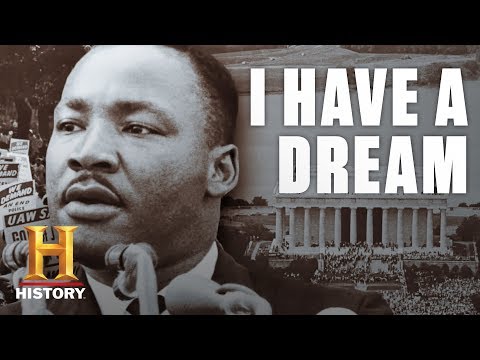
speech in 30 Seconds
- Speech is the biological ability to produce language sounds.
- It refers to a formal talk given to an audience.
- It is used in grammar to categorize words (parts of speech).
- It is a key concept in law (freedom of speech).
The term speech is a multifaceted noun that serves as the primary vehicle for human communication and social architecture. At its most fundamental biological level, speech refers to the physical and neurological ability of humans to translate internal thoughts, complex emotions, and abstract concepts into audible, articulated sounds. This process involves a sophisticated coordination of the diaphragm, lungs, vocal cords, tongue, and lips, all governed by the brain's language centers. When we discuss speech in this sense, we are often talking about the faculty itself—the very thing that distinguishes Homo sapiens from other species. For instance, a doctor might evaluate a child's speech development, or a scientist might study how speech evolved as a survival mechanism for early hominids. Beyond the biological, speech transitions into the realm of formal discourse. In this context, a speech is a structured, intentional address delivered to an audience. This can range from the high-stakes political oratory of a world leader to the intimate, often humorous toast given by a best man at a wedding. The word encapsulates both the raw power of sound and the refined art of rhetoric. It is used in academic settings to describe the 'parts of speech' (the building blocks of grammar) and in legal settings to discuss 'freedom of speech' (the right to express opinions without censorship). Whether it is the quiet murmur of a private conversation or the booming resonance of a stadium address, speech remains the most direct link between one human mind and another.
- The Faculty of Expression
- This refers to the innate human capacity to produce spoken language. It is often used in medical or developmental contexts, such as 'speech therapy' or 'delayed speech'. It focuses on the mechanics and the ability rather than a specific set of words.
- The Formal Address
- A 'speech' in this sense is a countable noun referring to a specific event where someone talks to a group. Examples include a graduation speech, a keynote speech at a conference, or a campaign speech by a politician.
- Style and Manner
- Speech can also describe the particular way someone talks—their accent, dialect, or choice of words. We might say someone has 'slurred speech' or 'refined speech', referring to the qualitative characteristics of their vocal output.
The activist's speech on environmental protection moved the entire audience to tears and inspired immediate local action.
In everyday life, you will encounter this word in various professional and social environments. In a business meeting, a manager might give a short speech to motivate the team before a big project launch. In a school setting, students often practice public speaking by delivering a speech in front of their classmates. The word is also deeply embedded in our legal and moral frameworks. The concept of 'free speech' is a cornerstone of many democratic societies, representing the liberty to speak one's mind. Furthermore, in literature and drama, a 'speech' can refer to a long passage of dialogue spoken by a single character, such as a soliloquy in a Shakespearean play. The versatility of the word allows it to cover everything from the most basic grunt of recognition to the most complex philosophical lecture. It is a word that bridges the gap between biology, sociology, and law.
After the accident, the patient worked tirelessly with a specialist to regain his speech and cognitive functions.
Historically, the study of speech—known as rhetoric—was considered one of the most important subjects in education. Ancient Greeks and Romans believed that the ability to craft a persuasive speech was the mark of a true citizen and leader. This tradition continues today in the form of debate clubs and public speaking workshops. When we analyze a speech, we look at the 'ethos' (credibility), 'pathos' (emotional appeal), and 'logos' (logic) used by the speaker. Even in the digital age, where text and video dominate, the 'live speech' remains a potent tool for influence. A viral TED Talk is, at its heart, a well-crafted speech. The word also appears in technical fields; for example, 'speech recognition' technology allows computers to understand and process human vocal input, turning spoken words into text or commands. This technological application highlights how the concept of speech is evolving from a purely human-to-human interaction into a human-to-machine interface.
The professor's speech was so dense with academic jargon that many students struggled to follow the main argument.
- Freedom of Speech
- A fundamental human right that allows individuals to express their ideas and opinions without fear of government retaliation or censorship.
- Speech Impediment
- A condition that affects a person's ability to produce sounds correctly or fluently, such as stuttering or a lisp.
During the trial, the lawyer's closing speech focused on the lack of physical evidence against the defendant.
Ultimately, 'speech' is about connection. It is the bridge between the internal world of the mind and the external world of society. Whether it is used to start a revolution, comfort a friend, or simply order a cup of coffee, speech is the tool we use to navigate our existence. It is both a common daily occurrence and a profound human achievement. Understanding the nuances of this word helps us appreciate the complexity of how we communicate and the importance of the voices we choose to use and listen to.
The silent film era ended abruptly with the introduction of 'talkies,' which brought synchronized speech to the silver screen.
Using the word speech correctly requires an understanding of its dual role as both a countable and an uncountable noun. When you are referring to a specific presentation or a formal talk, it is countable. You can 'give a speech,' 'write several speeches,' or 'listen to a long speech.' However, when you are referring to the general ability to speak or the act of speaking in the abstract, it is uncountable. For example, you would say 'speech is a human characteristic,' not 'a speech is a human characteristic' (unless you mean a specific talk). This distinction is crucial for grammatical accuracy. Furthermore, 'speech' often pairs with specific verbs like 'deliver,' 'make,' 'give,' or 'present.' You don't usually 'say a speech'; instead, you 'deliver' it. This section will explore these patterns and provide a comprehensive guide to integrating 'speech' into your vocabulary with precision and variety.
- Verbs Used with 'Speech'
- Common verbs include: deliver (formal), give (neutral), make (neutral), write (preparatory), and address (to a specific group). Example: 'She delivered an impassioned speech to the United Nations.'
- Adjectives Describing 'Speech'
- Adjectives can describe the quality (inspiring, dull, eloquent), the length (brief, lengthy, short), or the purpose (inaugural, keynote, farewell). Example: 'The CEO gave a brief speech during the holiday party.'
- Prepositional Phrases
- We often use 'about' or 'on' to indicate the topic. 'A speech on climate change' or 'a speech about his life experiences.' We also use 'to' for the audience: 'A speech to the graduating class.'
The politician's speech was broadcast live to millions of viewers across the country.
In academic and linguistic contexts, 'speech' is used to categorize words. The 'parts of speech' include nouns, verbs, adjectives, and so on. When writing about these, you might say, 'In this sentence, the word "run" functions as a different part of speech depending on the context.' Additionally, 'speech' is used in the phrase 'reported speech' or 'indirect speech' to describe how we recount what someone else has said. For example, 'He said that he was tired' is an example of indirect speech. Mastering these technical uses is essential for students of English grammar and literature. In more creative writing, 'speech' can be personified or used metaphorically. One might describe a 'speech of the heart' or 'the speech of the wind,' though these are less common in daily conversation. The word's flexibility allows it to fit into formal reports, casual anecdotes, and technical manuals alike.
To improve her public speaking, Sarah practiced her speech in front of a mirror every night for a week.
Consider the difference between 'speech' and 'speaking.' While 'speaking' is a gerund or participle focusing on the ongoing action, 'speech' is the noun that represents the result or the capacity. You would say 'Speaking in public is difficult,' but 'The speech she gave was difficult to follow.' Another common usage is in the context of 'speech therapy.' Here, 'speech' is a modifier for 'therapy,' indicating the specific area of focus. You wouldn't say 'speaking therapy.' Similarly, 'speech recognition' and 'speech synthesis' are fixed terms in technology. In social justice and law, 'hate speech' is a specific term referring to language that attacks or insults a group based on attributes like race or religion. This term is always uncountable. Understanding these collocations—words that naturally go together—is the key to sounding like a native speaker.
The king's speech was a turning point in the war, rallying the troops for the final battle.
- Direct vs. Indirect Speech
- Direct speech uses quotation marks to show exact words: "I am coming," he said. Indirect speech reports the idea: He said that he was coming.
- Figure of Speech
- A non-literal expression, like a metaphor or simile. Example: 'Calling him a "lion" is a figure of speech; it means he is brave.'
The professor asked us to identify every part of speech in the first paragraph of the essay.
Finally, let's look at 'speech' in the context of personal development. Many people fear public speaking more than anything else. To overcome this, they might join a group like Toastmasters to practice their 'speech delivery.' This involves working on volume, pace, and eye contact. In this sense, 'speech' is a skill to be honed. Whether you are writing a speech for a friend's birthday or analyzing a famous historical speech like Martin Luther King Jr.'s 'I Have a Dream,' you are engaging with the power of language to shape reality. By paying attention to how 'speech' is used in different contexts—from the courtroom to the classroom—you can expand your own communicative range and express yourself more effectively.
The software's speech synthesis is so realistic that it's hard to tell it's a computer talking.
The word speech is ubiquitous, appearing in a vast array of real-world settings. You will hear it most prominently in the world of politics and governance. Every year, many heads of state deliver a 'State of the Union' or 'State of the Nation' speech. These are high-profile events where the word is used constantly by news anchors, commentators, and the public. You'll hear phrases like 'The President's speech tonight will focus on the economy' or 'Critics were unimpressed by the candidate's speech.' In these contexts, 'speech' represents a formal declaration of policy and intent. Beyond the political stage, the word is a staple of the educational journey. From the 'valedictorian's speech' at high school graduation to the 'commencement speech' given by a guest celebrity at a university, these milestones are defined by the spoken word. Students often have to take a 'speech class' where they learn the fundamentals of communication. In these environments, 'speech' is both an event and a subject of study.
- In the Media
- News reports frequently discuss 'freedom of speech' issues, especially concerning social media moderation or protests. You'll also hear about 'hate speech' in discussions about online safety and community standards.
- In Healthcare
- If you visit a hospital or a clinic, you might see signs for 'Speech and Language Pathology.' Doctors often check a patient's 'speech' after a stroke or head injury to assess neurological health.
- In Technology
- When using a smartphone, you might interact with 'speech-to-text' features. Tech reviews often compare the 'speech recognition' capabilities of different virtual assistants like Siri, Alexa, or Google Assistant.
The documentary explored the history of the First Amendment and its protection of free speech in America.
Socially, 'speech' is a common topic at formal gatherings. At a wedding, the 'best man's speech' and the 'father of the bride's speech' are traditional highlights. People will often ask, 'Did you enjoy the speeches?' or 'Who is giving a speech tonight?' In these moments, 'speech' is associated with celebration, storytelling, and emotion. In a more casual setting, you might hear someone say, 'I was so surprised, I lost the power of speech!' This idiomatic use refers to being temporarily unable to talk due to shock or amazement. You might also hear the term 'figure of speech' when someone clarifies that they weren't being literal. For example, if someone says 'I'm so hungry I could eat a horse,' they might add, 'It's just a figure of speech.' This usage is very common in everyday conversation to prevent misunderstandings.
The coach gave a fiery speech in the locker room, which motivated the team to win the game in the second half.
In the legal system, 'speech' is a technical term with significant consequences. Lawyers argue about whether certain actions—like burning a flag or wearing a specific armband—constitute 'symbolic speech.' Courtroom dramas on TV often feature a lawyer's 'opening speech' or 'closing speech' (though these are technically called 'statements' or 'arguments' in many jurisdictions, the general public often refers to them as speeches). In literature and film, 'speech' is used to describe the dialogue and monologues that reveal character. A 'stirring speech' by a protagonist is a classic trope in epic movies. Even in the world of sports, a 'pep talk' is essentially a motivational speech given by a coach to their players. No matter where you are—in a courtroom, a classroom, a hospital, or a theater—the word 'speech' is there to describe the act of using our voices to change the world around us.
The actress thanked her family and her agent during her acceptance speech at the awards ceremony.
- Keynote Speech
- The main speech at a conference or convention, intended to set the tone and summarize the core message of the event.
- Speech Recognition
- The ability of a machine or program to identify words and phrases in spoken language and convert them to a machine-readable format.
The scientist's speech at the symposium was praised for making complex physics accessible to a general audience.
Finally, in the realm of linguistics and language learning, you will hear 'speech' used to describe the sounds of a language. A teacher might talk about 'connected speech'—the way words blend together when spoken naturally. You might hear about 'speech sounds' or 'phonemes.' For a language learner, understanding 'speech' isn't just about the words themselves, but about the rhythm, intonation, and flow of the spoken language. By paying attention to where and how the word 'speech' is used in these various contexts, you can gain a deeper understanding of its importance in human culture and communication.
The comedian's speech was interrupted several times by bursts of laughter from the crowd.
One of the most frequent errors learners make with the word speech is confusing it with the verb 'speak' or the noun 'speaking.' It is important to remember that 'speech' is a noun. You cannot 'speech' to someone; you 'speak' to them. Similarly, while 'speaking' is the act of using your voice, 'speech' is the faculty or the formal event. For example, saying 'I have a speaking tomorrow' is incorrect; it should be 'I have a speech tomorrow' or 'I am speaking tomorrow.' Another common mistake involves the countability of the word. As mentioned before, 'speech' is uncountable when referring to the general ability to talk, but countable when referring to a specific talk given to an audience. Learners often say 'He gave a very good speech' (correct) but might also say 'The child is learning his speeches' (incorrect, unless the child is an actor learning lines). If you mean the child is learning to talk, you should say 'The child is developing his speech.'
- Speech vs. Speak
- Mistake: 'I want to speech with you.' Correct: 'I want to speak with you.' 'Speech' is the noun; 'speak' is the verb.
- A Speech vs. Speech
- Mistake: 'Freedom of a speech is important.' Correct: 'Freedom of speech is important.' Use the uncountable form for general concepts.
- Deliver vs. Say
- Mistake: 'He said a long speech.' Correct: 'He delivered a long speech' or 'He gave a long speech.' 'Deliver' is the more formal and appropriate collocation.
Incorrect: The doctor is worried about the patient's speaks. Correct: The doctor is worried about the patient's speech.
Another area of confusion is the difference between 'speech' and 'talk.' While they are often synonyms, 'speech' usually implies a more formal, structured, and one-sided delivery. A 'talk' can be informal and interactive. For example, you might have a 'talk' with your friend about their problems, but you would give a 'speech' at their wedding. Using 'speech' in a casual setting can sound overly formal or even sarcastic. If you say, 'My dad gave me a speech about cleaning my room,' it implies he lectured you in a formal, perhaps annoying way. Furthermore, be careful with the phrase 'parts of speech.' It is always plural when referring to the category of words (nouns, verbs, etc.). Saying 'What part of speech is this word?' is correct, but 'What parts of speech is this word?' is incorrect because a single word usually belongs to one category at a time.
Incorrect: She has a very clear speaking. Correct: She has very clear speech.
There is also a common error regarding the pronunciation and spelling of the plural form, 'speeches.' Some learners might try to say 'speechs,' but the 'es' is necessary for both spelling and pronunciation (it adds an extra syllable: SPEE-chiz). In the technical realm, 'speech recognition' is often confused with 'voice recognition.' While they are related, 'speech recognition' focuses on identifying the words being said, whereas 'voice recognition' focuses on identifying the specific person who is speaking. Using these interchangeably in a technical report would be considered inaccurate. Finally, watch out for the idiom 'speech is silver, silence is golden.' Some learners might misquote it as 'speaking is silver.' While the meaning is clear, the traditional proverb uses 'speech.' By being mindful of these subtle distinctions and common pitfalls, you can use the word 'speech' with greater confidence and accuracy in both spoken and written English.
Incorrect: I am writing a speak for the conference. Correct: I am writing a speech for the conference.
- Hate Speech vs. Hateful Speech
- 'Hate speech' is a specific legal and social term. 'Hateful speech' is a general description. Use 'hate speech' when referring to the societal issue.
- Speechless vs. Without Speech
- 'Speechless' is an adjective meaning unable to speak due to emotion. 'Without speech' is a literal description of lacking the faculty. Example: 'The news left me speechless.'
Incorrect: The parts of speeches are important. Correct: The parts of speech are important.
In summary, the most important things to remember are: 'speech' is a noun, it has both countable and uncountable uses, it has specific verb collocations like 'deliver,' and it is distinct from 'speaking' and 'talk.' By keeping these points in mind, you will avoid the most common errors and communicate more effectively. Practice using the word in different contexts—describing a formal event, discussing a right like freedom of speech, or explaining a grammatical concept—to solidify your understanding and improve your fluency.
Incorrect: He has a speech impediment that makes it hard to speak. Correct: He has a speech impediment that makes it hard to talk. (Both are technically okay, but 'talk' avoids repeating the 'speech' root).
While speech is a very versatile word, there are many synonyms and related terms that can provide more specific meaning depending on the context. Choosing the right alternative can make your writing more precise and your speaking more sophisticated. For a formal address, words like 'address,' 'oration,' or 'lecture' might be more appropriate. An 'address' is a formal speech delivered to a specific group, often on a serious occasion (e.g., 'The President's address to the nation'). An 'oration' is a highly formal, stylized, and often dramatic speech, typically given at a ceremony or funeral. A 'lecture' is an educational speech intended to teach a specific subject. On the other hand, if the communication is less formal, words like 'talk,' 'presentation,' or 'chat' might be better. A 'talk' is often more conversational and less structured than a speech. A 'presentation' usually involves visual aids like slides and is common in business and academic settings. A 'chat' is entirely informal and personal.
- Speech vs. Address
- A 'speech' is general. An 'address' is more formal and usually directed at a specific audience for a specific purpose. You 'address' a crowd, but you 'give' a speech.
- Speech vs. Oration
- An 'oration' is a very formal and rhetorical type of speech. It implies a high level of skill and often a grand, ceremonial context. Think of ancient Roman orators.
- Speech vs. Lecture
- A 'lecture' is specifically for instruction. While a speech might inspire or persuade, a lecture is designed to inform and educate, usually in a classroom setting.
Instead of a formal speech, the author gave an informal talk about her writing process and answered questions from the audience.
In the context of the faculty of speaking, alternatives might include 'vocalization,' 'articulation,' or 'utterance.' 'Vocalization' refers to the production of sounds with the voice, which might not necessarily be words (e.g., a baby's vocalizations). 'Articulation' refers to the clarity and precision of speech sounds. 'Utterance' is a more technical linguistic term for anything that is spoken, from a single word to a long sentence. In legal and political contexts, 'expression' is often used as a broader alternative to 'speech.' For example, 'freedom of expression' includes not just spoken words but also writing, art, and symbolic actions. This is a crucial distinction in human rights law. When describing the style of someone's speech, you might use 'diction' (choice of words), 'elocution' (the skill of clear and expressive speech), or 'parlance' (a particular way of speaking, often associated with a specific group or profession).
The professor's articulation was so precise that even those at the back of the hall could hear every syllable.
For specific types of speeches, there are even more specialized terms. A 'soliloquy' is a speech in a play where a character speaks their thoughts aloud to themselves. A 'monologue' is a long speech by one actor in a play or movie. A 'eulogy' is a speech given at a funeral to praise the deceased. A 'toast' is a very short speech given before drinking to someone's health or success. A 'sermon' is a speech given by a religious leader during a service. By learning these specific terms, you can avoid overusing the word 'speech' and provide more detail in your descriptions. For example, saying 'He gave a moving eulogy' is much more descriptive than 'He gave a moving speech at the funeral.' Similarly, 'The priest delivered a powerful sermon' is more precise than 'The priest gave a powerful speech.'
The CEO's presentation included several charts and graphs to illustrate the company's growth over the last year.
- Speech vs. Monologue
- A monologue is a type of speech, but it is specifically used in the context of drama or performance where one person speaks for an extended period.
- Speech vs. Sermon
- A sermon is a religious speech. It usually has a moral or theological message and is delivered in a place of worship.
During the wedding reception, the best man's toast was both funny and sentimental, perfectly capturing the couple's relationship.
In conclusion, while 'speech' is the most common and versatile term, the English language offers a rich palette of alternatives. Whether you are looking for a more formal, more informal, or more specialized word, there is likely a synonym that fits your needs. By expanding your vocabulary to include these alternatives, you can communicate with greater nuance and clarity. Remember to consider the context, the audience, and the tone you want to convey when choosing between 'speech' and its many alternatives. This level of precision is what distinguishes an advanced learner from a beginner.
The politician's harangue against the new tax policy lasted for over an hour and alienated many moderate voters.
How Formal Is It?
Fun Fact
The word 'speech' is related to the German word 'Sprache'. Both come from the same ancient root meaning to talk.
Pronunciation Guide
- Pronouncing it like 'speak' with a 'k' sound at the end.
- Making the 'ee' sound too short, like in 'ship'.
- Adding an extra vowel sound at the end.
- Confusing it with 'spit'.
- Difficulty with the 'ch' sound, making it sound like 'sh'.
Difficulty Rating
Common word, easy to recognize in context.
Need to remember countability and plural form 'speeches'.
Pronunciation of 'ch' and 'ee' can be tricky for some.
Distinct sound, usually easy to hear.
What to Learn Next
Prerequisites
Learn Next
Advanced
Grammar to Know
Reported Speech
He said, 'I am happy' -> He said that he was happy.
Countable vs. Uncountable
I gave a speech (countable). Speech is a gift (uncountable).
Pluralization
One speech, two speeches (add -es).
Gerunds as Nouns
Speaking is fun (gerund). His speech was fun (noun).
Compound Nouns
Speech therapy, speech recognition.
Examples by Level
The teacher's speech is very clear.
La parole du professeur est très claire.
Uncountable noun referring to the way of talking.
Look at the speech bubble in the comic.
Regardez la bulle de texte dans la bande dessinée.
Compound noun 'speech bubble'.
He has good speech for a young boy.
Il parle bien pour un jeune garçon.
Uncountable noun referring to the faculty of speaking.
I like your speech.
J'aime ton discours.
Countable noun referring to a short talk.
We use speech to talk to friends.
Nous utilisons la parole pour parler à des amis.
Uncountable noun referring to the act of communication.
The baby's speech is just 'ba ba'.
La parole du bébé n'est que 'ba ba'.
Uncountable noun referring to early vocalization.
Her speech is slow today.
Sa parole est lente aujourd'hui.
Uncountable noun referring to the speed of talking.
I am learning English speech.
J'apprends la parole en anglais.
Uncountable noun referring to spoken language skills.
I gave a speech in my class today.
J'ai fait un discours dans ma classe aujourd'hui.
Countable noun with the verb 'give'.
The principal made a short speech.
Le directeur a fait un court discours.
Countable noun with the verb 'make'.
We studied the parts of speech in school.
Nous avons étudié les parties du discours à l'école.
Fixed phrase 'parts of speech'.
His speech was about his favorite sport.
Son discours portait sur son sport préféré.
Countable noun with the preposition 'about'.
She is going to speech therapy.
Elle va en orthophonie.
Compound noun 'speech therapy'.
The speech was very interesting to hear.
Le discours était très intéressant à entendre.
Countable noun with the adjective 'interesting'.
He practiced his speech many times.
Il a pratiqué son discours plusieurs fois.
Countable noun with the verb 'practice'.
The actor's speech was very loud.
La parole de l'acteur était très forte.
Uncountable noun referring to the volume of talking.
Freedom of speech is a basic right.
La liberté d'expression est un droit fondamental.
Uncountable noun in the phrase 'freedom of speech'.
The mayor delivered a speech at the park.
Le maire a prononcé un discours au parc.
Countable noun with the formal verb 'deliver'.
I don't understand reported speech yet.
Je ne comprends pas encore le discours rapporté.
Grammatical term 'reported speech'.
His slurred speech worried the doctor.
Sa parole pâteuse a inquiété le médecin.
Uncountable noun with the adjective 'slurred'.
It's just a figure of speech, don't worry.
C'est juste une façon de parler, ne t'inquiète pas.
Fixed phrase 'figure of speech'.
The candidate's speech was on the news.
Le discours du candidat était aux informations.
Countable noun referring to a political address.
She lost the power of speech from the shock.
Elle a perdu l'usage de la parole à cause du choc.
Idiomatic phrase 'power of speech'.
The graduation speech was very moving.
Le discours de remise des diplômes était très émouvant.
Countable noun with the adjective 'moving'.
The CEO gave an inspiring keynote speech.
Le PDG a prononcé un discours d'ouverture inspirant.
Compound noun 'keynote speech'.
The detective noticed a strange speech pattern.
Le détective a remarqué un étrange mode d'élocution.
Compound noun 'speech pattern'.
Hate speech is not allowed on this platform.
Les discours de haine ne sont pas autorisés sur cette plateforme.
Uncountable noun 'hate speech'.
The software has excellent speech recognition.
Le logiciel a une excellente reconnaissance vocale.
Compound noun 'speech recognition'.
His speech was full of academic jargon.
Son discours était plein de jargon académique.
Countable noun with the adjective 'academic'.
The lawyer's closing speech was powerful.
Le plaidoyer final de l'avocat était puissant.
Countable noun 'closing speech'.
We analyzed the rhetoric of the speech.
Nous avons analysé la rhétorique du discours.
Uncountable noun 'rhetoric' used with 'speech'.
The actress gave a brief acceptance speech.
L'actrice a prononcé un bref discours de remerciement.
Compound noun 'acceptance speech'.
The prosody of his speech was very melodic.
La prosodie de sa parole était très mélodique.
Technical term 'prosody' used with 'speech'.
She specializes in speech and language pathology.
Elle se spécialise en orthophonie.
Professional field 'speech and language pathology'.
The speech was a masterclass in political oratory.
Le discours était une leçon magistrale d'éloquence politique.
Uncountable noun 'oratory' used to describe the speech.
The patient suffered from impaired speech.
Le patient souffrait de troubles de la parole.
Adjective 'impaired' modifying 'speech'.
The philosopher discussed the nature of speech acts.
Le philosophe a discuté de la nature des actes de parole.
Linguistic term 'speech acts'.
The treaty protects all forms of symbolic speech.
Le traité protège toutes les formes de discours symbolique.
Legal term 'symbolic speech'.
The computer's speech synthesis is very realistic.
La synthèse vocale de l'ordinateur est très réaliste.
Technical term 'speech synthesis'.
The critic praised the play's eloquent speech.
Le critique a loué le discours éloquent de la pièce.
Uncountable noun referring to the quality of dialogue.
The performative nature of speech is fascinating.
La nature performative de la parole est fascinante.
Philosophical concept 'performative nature of speech'.
He analyzed the granular details of the speech.
Il a analysé les détails granulaires du discours.
Metaphorical use of 'granular' with 'speech'.
The evolution of human speech is still debated.
L'évolution de la parole humaine est encore débattue.
Scientific context of 'human speech'.
The orator's speech was a tour de force of rhetoric.
Le discours de l'orateur était un tour de force de rhétorique.
Idiomatic 'tour de force' used with 'speech'.
The study examined the paralanguage of speech.
L'étude a examiné le paralangage de la parole.
Technical term 'paralanguage'.
The speech was characterized by its dense syntax.
Le discours se caractérisait par sa syntaxe dense.
Linguistic term 'syntax' used to describe 'speech'.
Freedom of speech remains a contested legal concept.
La liberté d'expression reste un concept juridique contesté.
Advanced legal context for 'freedom of speech'.
The poet's speech was infused with archaic terms.
La parole du poète était imprégnée de termes archaïques.
Uncountable noun referring to the poet's style.
Synonyms
Antonyms
Common Collocations
Common Phrases
— It is often better to say nothing than to speak.
I decided not to argue; speech is silver, silence is golden.
— The right to express opinions.
They are fighting for freedom of speech in their country.
— The distinctive way someone talks.
The actor studied the character's speech pattern.
— The artificial production of human speech.
The computer uses speech synthesis to read the text.
— The first speech made by a new member of parliament.
The young politician gave her maiden speech today.
— A standard speech used by a politician on a campaign.
He gave his usual stump speech to the crowd.
Often Confused With
'Speak' is a verb; 'speech' is a noun. You speak a speech.
'Talk' is usually less formal and more interactive than a 'speech'.
'Language' is the system; 'speech' is the oral production of that system.
Idioms & Expressions
— To be unable to speak because of shock or surprise.
When she saw the diamond ring, she lost the power of speech.
neutral— A word or phrase used in a non-literal sense.
I didn't mean I was literally dying of laughter; it was just a figure of speech.
neutral— Speaking is good, but keeping quiet is often better.
Sometimes it's better not to comment; speech is silver, silence is golden.
literary— Simple, direct, and honest talk.
I appreciate your plain speech; I don't like complicated explanations.
neutral— Language that attacks a group based on attributes.
The platform has a strict policy against hate speech.
formal— The right to express any opinions without censorship.
The university is a place for free speech and debate.
formal— The conversion of spoken words into written text.
I use speech-to-text to write my emails while driving.
technical— The categories into which words are classified.
Learning the parts of speech is essential for grammar.
academic— A standard speech used by a politician during a campaign.
The candidate delivered his stump speech to a small crowd in Ohio.
political— The first speech made by a person in a new role, especially in parliament.
The new senator was nervous about her maiden speech.
formalEasily Confused
Same root, different part of speech.
'Speak' is the action (verb). 'Speech' is the result or the ability (noun).
I will speak (verb) at the event. My speech (noun) is ready.
Both are nouns related to talking.
'Speaking' is often the general activity. 'Speech' is the faculty or a specific event.
Public speaking is hard. The speech was long.
Both relate to sound from the mouth.
'Voice' is the sound itself. 'Speech' is the articulated words and meaning.
She has a beautiful voice. Her speech was very clear.
Both mean a formal talk.
'Address' is more formal and usually directed at a specific group for a specific reason.
The President's address to Congress.
Both are formal talks.
A 'lecture' is specifically for teaching a subject in an academic setting.
The professor gave a lecture on biology.
Sentence Patterns
The [noun]'s speech is [adjective].
The teacher's speech is clear.
I [verb] a speech.
I gave a speech.
[Noun] of speech is [adjective].
Freedom of speech is important.
He [verb] that [reported speech].
He said that he was tired.
The [adjective] speech was [adjective].
The keynote speech was inspiring.
The [technical noun] of speech is [adjective].
The prosody of speech is complex.
She specializes in [field].
She specializes in speech therapy.
The [abstract noun] nature of speech...
The performative nature of speech is key.
Word Family
Nouns
Verbs
Adjectives
Related
How to Use It
Very high in both spoken and written English.
-
I have a speaking tomorrow.
→
I have a speech tomorrow.
'Speaking' is an activity; 'speech' is the specific event.
-
The child is learning his speeches.
→
The child is learning to speak / developing his speech.
'Speeches' implies formal talks; 'speech' is the faculty.
-
He said a very good speech.
→
He gave/delivered a very good speech.
'Say' is not the correct verb to use with 'speech'.
-
Freedom of a speech is important.
→
Freedom of speech is important.
In this context, 'speech' is uncountable and does not need 'a'.
-
What parts of speech is this word?
→
What part of speech is this word?
A single word is usually only one part of speech.
Tips
Countability
Remember: 'He gave three speeches' (countable) but 'He lost his speech' (uncountable).
Verbs
Use 'deliver' or 'give' for a formal speech. Avoid 'say a speech'.
The 'CH' sound
Make sure the 'ch' at the end is sharp, like in 'church'.
Figure of Speech
Use this phrase when you want to explain that you are not being literal.
Speech vs. Voice
In tech, 'speech recognition' identifies words, while 'voice recognition' identifies the person.
Address
Use 'address' instead of 'speech' for very formal government or official talks.
Impediment
Use 'speech impediment' to describe a physical or neurological difficulty in speaking.
Parts of Speech
Always use 'parts of speech' (plural) when talking about the general category of words.
Toasts
A 'toast' is a very short, informal speech given before a drink.
Practice
To improve your 'speech delivery,' practice in front of a mirror or record yourself.
Memorize It
Mnemonic
SPEECH: Sounds Produced Every time Everyone Communicates Honestly.
Visual Association
Imagine a person standing at a podium with a microphone, or a speech bubble coming out of someone's mouth.
Word Web
Challenge
Try to use the word 'speech' in three different ways today: as a formal talk, as the ability to speak, and in the phrase 'parts of speech'.
Word Origin
From Old English 'spæc' or 'spēc', which comes from the verb 'sprecan' (to speak).
Original meaning: The act of speaking, a talk, or a language.
GermanicCultural Context
Be aware of the term 'hate speech' and its legal and social implications. Also, be sensitive when discussing 'speech impediments'.
Public speaking is often taught in schools from a young age in the UK and US.
Practice in Real Life
Real-World Contexts
Education
- give a speech
- parts of speech
- speech class
- graduation speech
Politics
- deliver a speech
- freedom of speech
- campaign speech
- keynote speech
Medicine
- speech therapy
- speech impediment
- slurred speech
- loss of speech
Technology
- speech recognition
- speech synthesis
- speech-to-text
- voice speech
Social Events
- wedding speech
- best man's speech
- make a toast
- short speech
Conversation Starters
"Have you ever had to give a speech in front of a large group?"
"What is the most inspiring speech you have ever heard?"
"Do you think freedom of speech should have any limits?"
"How do you feel about using speech recognition on your phone?"
"What are the most important parts of a good wedding speech?"
Journal Prompts
Write about a time you were speechless. What happened and why couldn't you talk?
If you had to give a 5-minute speech to the whole world, what would you say?
Describe the 'parts of speech' of your favorite sentence and why you like it.
Discuss the importance of freedom of speech in your own country.
Reflect on how your own speech patterns change depending on who you are talking to.
Frequently Asked Questions
10 questionsIt is both. Use 'a speech' for a specific talk (countable) and 'speech' for the general ability to talk (uncountable).
The plural is 'speeches'. Remember to add the 'es' and pronounce the extra syllable.
No, 'speech' is a noun. You should say 'I spoke to him' or 'I gave a speech to him'.
It is the legal right to express your opinions and ideas without being stopped by the government.
They are the categories of words in grammar, such as nouns, verbs, adjectives, and adverbs.
It is a way of telling someone what another person said without using their exact words (e.g., He said he was hungry).
It is a type of treatment to help people who have trouble speaking or communicating.
A 'speech' is usually more formal and structured, while a 'talk' is often more casual and interactive.
It is language that attacks or insults a group of people based on things like their race, religion, or gender.
It is a technology that allows you to talk to a device (like a phone) and have it understand your words.
Test Yourself 190 questions
Write a sentence about a teacher's speech.
Well written! Good try! Check the sample answer below.
Write a sentence about giving a speech in class.
Well written! Good try! Check the sample answer below.
Write a sentence using 'freedom of speech'.
Well written! Good try! Check the sample answer below.
Write a sentence about a keynote speech at a conference.
Well written! Good try! Check the sample answer below.
Write a sentence about speech recognition technology.
Well written! Good try! Check the sample answer below.
Write a sentence about a speech bubble.
Well written! Good try! Check the sample answer below.
Write a sentence about parts of speech.
Well written! Good try! Check the sample answer below.
Write a sentence using 'figure of speech'.
Well written! Good try! Check the sample answer below.
Write a sentence about a speech impediment.
Well written! Good try! Check the sample answer below.
Write a sentence about speech synthesis.
Well written! Good try! Check the sample answer below.
Write a sentence about a baby's speech.
Well written! Good try! Check the sample answer below.
Write a sentence about speech therapy.
Well written! Good try! Check the sample answer below.
Write a sentence about reported speech.
Well written! Good try! Check the sample answer below.
Write a sentence about hate speech.
Well written! Good try! Check the sample answer below.
Write a sentence about a eulogy.
Well written! Good try! Check the sample answer below.
Write a sentence about your own speech.
Well written! Good try! Check the sample answer below.
Write a sentence about a wedding speech.
Well written! Good try! Check the sample answer below.
Write a sentence about a moving speech.
Well written! Good try! Check the sample answer below.
Write a sentence about a politician's speech.
Well written! Good try! Check the sample answer below.
Write a sentence about a monologue.
Well written! Good try! Check the sample answer below.
Say: 'The teacher's speech is clear.'
Read this aloud:
You said:
Speech recognition is not supported in your browser. Try Chrome or Edge.
Say: 'I gave a speech in class.'
Read this aloud:
You said:
Speech recognition is not supported in your browser. Try Chrome or Edge.
Say: 'Freedom of speech is a basic right.'
Read this aloud:
You said:
Speech recognition is not supported in your browser. Try Chrome or Edge.
Say: 'The keynote speech was very inspiring.'
Read this aloud:
You said:
Speech recognition is not supported in your browser. Try Chrome or Edge.
Say: 'Speech recognition technology is very useful.'
Read this aloud:
You said:
Speech recognition is not supported in your browser. Try Chrome or Edge.
Say: 'Look at the speech bubble.'
Read this aloud:
You said:
Speech recognition is not supported in your browser. Try Chrome or Edge.
Say: 'Nouns are parts of speech.'
Read this aloud:
You said:
Speech recognition is not supported in your browser. Try Chrome or Edge.
Say: 'It's just a figure of speech.'
Read this aloud:
You said:
Speech recognition is not supported in your browser. Try Chrome or Edge.
Say: 'Hate speech is not allowed here.'
Read this aloud:
You said:
Speech recognition is not supported in your browser. Try Chrome or Edge.
Say: 'The patient has impaired speech.'
Read this aloud:
You said:
Speech recognition is not supported in your browser. Try Chrome or Edge.
Say: 'The baby's speech is sounds.'
Read this aloud:
You said:
Speech recognition is not supported in your browser. Try Chrome or Edge.
Say: 'She goes to speech therapy.'
Read this aloud:
You said:
Speech recognition is not supported in your browser. Try Chrome or Edge.
Say: 'He lost the power of speech.'
Read this aloud:
You said:
Speech recognition is not supported in your browser. Try Chrome or Edge.
Say: 'The speech recognition is excellent.'
Read this aloud:
You said:
Speech recognition is not supported in your browser. Try Chrome or Edge.
Say: 'The eulogy was very moving.'
Read this aloud:
You said:
Speech recognition is not supported in your browser. Try Chrome or Edge.
Say: 'My speech is slow.'
Read this aloud:
You said:
Speech recognition is not supported in your browser. Try Chrome or Edge.
Say: 'The principal made a speech.'
Read this aloud:
You said:
Speech recognition is not supported in your browser. Try Chrome or Edge.
Say: 'The graduation speech was long.'
Read this aloud:
You said:
Speech recognition is not supported in your browser. Try Chrome or Edge.
Say: 'The stump speech was the same.'
Read this aloud:
You said:
Speech recognition is not supported in your browser. Try Chrome or Edge.
Say: 'The monologue was the highlight.'
Read this aloud:
You said:
Speech recognition is not supported in your browser. Try Chrome or Edge.
Listen and write: 'Speech is good.'
Listen and write: 'I made a speech.'
Listen and write: 'Freedom of speech.'
Listen and write: 'Keynote speech today.'
Listen and write: 'Speech synthesis technology.'
Listen and write: 'Speech bubble.'
Listen and write: 'Parts of speech.'
Listen and write: 'Figure of speech.'
Listen and write: 'Hate speech policy.'
Listen and write: 'Impaired speech patterns.'
Listen and write: 'Baby speech.'
Listen and write: 'Speech therapy session.'
Listen and write: 'Power of speech.'
Listen and write: 'Speech recognition software.'
Listen and write: 'Moving eulogy speech.'
/ 190 correct
Perfect score!
Summary
The word 'speech' functions as both the general human faculty of speaking and a specific, formal address to an audience. For example, 'The child's speech is developing well' (faculty) versus 'The President gave a powerful speech' (address).
- Speech is the biological ability to produce language sounds.
- It refers to a formal talk given to an audience.
- It is used in grammar to categorize words (parts of speech).
- It is a key concept in law (freedom of speech).
Countability
Remember: 'He gave three speeches' (countable) but 'He lost his speech' (uncountable).
Verbs
Use 'deliver' or 'give' for a formal speech. Avoid 'say a speech'.
The 'CH' sound
Make sure the 'ch' at the end is sharp, like in 'church'.
Figure of Speech
Use this phrase when you want to explain that you are not being literal.