









spider in 30 Seconds
- A spider is an eight-legged arachnid that spins silk webs to catch prey.
- Spiders are found worldwide and are essential for controlling insect populations in ecosystems.
- Commonly confused with insects, spiders have two body segments and no wings or antennae.
- The word is used literally for the animal and metaphorically for complex networks or traps.
The word spider refers to a highly diverse group of air-breathing arthropods that belong to the class Arachnida. While many people colloquially refer to them as insects, it is scientifically crucial to distinguish them; spiders have eight legs, whereas insects have six. Furthermore, spiders lack antennae and wings, which are common features in the insect world. The term is most frequently used in everyday conversation to describe the small, often misunderstood creatures found in the corners of homes, gardens, and forests. People use this word when identifying the animal, expressing fear (arachnophobia), or discussing the remarkable biological engineering involved in their silk production. In a broader sense, the word evokes images of intricate webs, patience, and predatory precision. Spiders are found on every continent except Antarctica and have adapted to nearly every terrestrial habitat, from the driest deserts to the dampest caves. When someone mentions a spider, they might be talking about a tiny, harmless house spider or a large, formidable tarantula. The word carries a heavy weight in human culture, often associated with both creation—due to their weaving abilities—and danger, due to the venomous nature of certain species. In modern usage, the word has also expanded into technology and mythology, appearing in terms like 'web crawler' or 'spidering' the internet, and in iconic characters like Spider-Man. Understanding the word requires recognizing its biological reality as a predator that controls pest populations, as well as its symbolic role as a master weaver of fate and mystery.
- Biological Classification
- Spiders belong to the order Araneae, which is the largest order of arachnids and ranks seventh in total species diversity among all orders of organisms.
The garden spider sat motionless in the center of its complex, dew-covered web, waiting for a vibration to signal its next meal.
Beyond the literal animal, the word is used in various specialized fields. In mechanical engineering, a 'spider' can refer to a part with multiple radiating spokes or legs, such as a tripod or a specific type of gear assembly. In the context of the internet, a 'spider' is a program that systematically browses the World Wide Web, typically for the purpose of Web indexing. This metaphorical use highlights the spider's most famous attribute: its ability to navigate a vast, interconnected network. In social contexts, the word might be used to describe someone who is manipulative or who 'weaves a web' of lies, though this is more figurative. Children learn the word very early through nursery rhymes like 'Itsy Bitsy Spider,' which personifies the creature as persistent and resilient. In scientific discourse, the word is often preceded by specific descriptors like 'orb-weaver,' 'jumping,' or 'wolf' to specify the family or hunting style. The word is also central to discussions about ecology, as spiders are primary predators of insects, playing a vital role in maintaining the balance of ecosystems by preventing insect overpopulation. Whether used in a scream of terror or a lecture on biodiversity, the word 'spider' is a fundamental part of the English lexicon that bridges the gap between the natural world and human imagination.
- Anatomy
- A spider's body is divided into two main parts: the cephalothorax (head and thorax fused) and the abdomen, connected by a small, narrow pedicel.
I watched a tiny spider descend from the ceiling on a single, shimmering strand of silk.
In literature and film, the spider often serves as a symbol of patience and craftsmanship. J.R.R. Tolkien used giant spiders like Shelob to represent ancient, primal hunger and darkness, while E.B. White’s 'Charlotte’s Web' portrays the spider as a wise, loyal, and creative friend. These contrasting portrayals reflect the dual nature of how humans perceive spiders: as both terrifying monsters and miraculous builders. When using the word in writing, it is helpful to consider these connotations. A 'spider's touch' might imply something light and creepy, while a 'spider's web' suggests a complex trap or a beautiful piece of natural art. The word is also used in culinary contexts in some parts of the world, where certain species of spiders are considered a delicacy, though this is rare in Western cultures. In the realm of sports and hobbies, 'spider' can refer to a specific type of pool or billiards bridge used to reach over balls. The versatility of the word is a testament to how deeply these eight-legged creatures have integrated into the human experience. From the smallest crack in a wall to the largest digital networks, the spider is everywhere, and its name is a staple of clear, descriptive English communication.
- Silk Production
- Spiders produce silk from spinneret glands located at the tip of their abdomen. This silk is incredibly strong, often compared to steel in terms of tensile strength relative to its weight.
Scientists are studying the molecular structure of spider silk to develop new, ultra-strong synthetic materials for medical and industrial use.
Despite their fearsome reputation, most spiders are completely harmless to humans and provide a great service by eating mosquitoes.
The old attic was filled with dust and thick spider webs that clung to the rafters like ghostly curtains.
Using the word spider correctly involves understanding its grammatical role as a common noun and its typical associations with specific verbs and adjectives. As a countable noun, it requires an article (a, an, the) or a possessive pronoun (my, his, their) in the singular form. For example, you would say, 'I saw a spider,' not 'I saw spider.' In the plural, 'spiders' can be used generally: 'Spiders are fascinating creatures.' The word often acts as the subject of verbs that describe movement or biological actions. Common verbs include crawl, scuttle, spin, weave, trap, bite, and descend. For instance, 'The spider crawled up the wall' or 'A spider spun a web in the window.' These verbs help paint a vivid picture of the spider's activity. Adjectives used with spider often describe its appearance—hairy, tiny, giant, venomous, colorful—or the speaker's reaction to it—scary, creepy, intriguing. In more advanced English, you might use the word as a noun adjunct to modify another noun, such as 'spider bite,' 'spider silk,' or 'spider monkey.' This flexibility allows for precise descriptions in both casual and technical writing.
- Common Verb Pairings
- Spiders are frequently the subjects of verbs like 'weave' (creating a web), 'lurk' (waiting for prey), and 'scurry' (moving quickly).
If you find a spider in your house, it is often better to relocate it to the garden rather than killing it.
When constructing sentences, pay attention to the prepositional phrases that often follow 'spider.' You will frequently hear 'spider on the wall,' 'spider in the web,' or 'spider under the bed.' These phrases provide essential spatial context. In figurative language, the word 'spider' can be used to create powerful metaphors. For example, 'He was like a spider at the center of a vast political network,' implies someone who is quietly in control and aware of everything happening around them. The phrase 'spider's web' is often used to describe a complex or confusing situation: 'The detective was caught in a spider's web of lies and deceit.' In these cases, the word moves beyond biology into the realm of abstract concepts. Additionally, the word appears in many compound words and idioms. A 'spider-sense' (popularized by Spider-Man) refers to a vague feeling of danger. A 'spider-hole' is a camouflaged personal foxhole used in military contexts. Understanding these varied uses allows a learner to move from basic identification to nuanced expression. Whether you are writing a scientific report or a spooky story, the word 'spider' provides a wealth of descriptive possibilities.
- Noun Adjuncts
- The word 'spider' often modifies other nouns to create specific terms like 'spider mite,' 'spider plant,' and 'spider crane.'
The spider's ability to regenerate lost limbs is a subject of great interest to regenerative biologists.
In academic or scientific writing, the word 'spider' is often replaced by or used alongside 'arachnid' or the specific Latin name of a species. However, in general communication, 'spider' remains the standard. It is important to note the difference between 'spider' and 'insect' in formal contexts, as mixing them up can be seen as a factual error. For example, 'The spider, like other insects...' is technically incorrect. Instead, use 'The spider, like other arachnids...' or simply 'The spider, unlike insects...'. When describing the actions of a spider, use precise verbs to enhance your writing. Instead of saying 'The spider moved,' you could say 'The spider darted across the floor' or 'The spider dangled from a thread.' These choices make your English sound more natural and sophisticated. Finally, remember that 'spider' can also be used as a verb in some technical contexts (e.g., 'to spider a website'), though this is much less common than the noun form. By mastering these patterns, you can use the word 'spider' with confidence in any situation, from a casual chat to a formal presentation.
- Prepositional Usage
- Commonly used with: 'at' (at the center), 'on' (on the ceiling), 'through' (through the grass), 'with' (with eight legs).
A large, hairy spider was found lurking in the corner of the old, abandoned shed.
She carefully brushed the spider off her shoulder and watched it run away into the bushes.
The spider used its sticky silk to wrap the fly into a neat little bundle for later consumption.
The word spider is ubiquitous in English-speaking environments, appearing in a wide range of contexts from domestic life to high-tech industries. In a typical household, you might hear it during cleaning routines ('There's a spider in the bathtub!') or when children are playing outside. It is a staple of early childhood education, featured in countless songs, stories, and educational materials. Nursery rhymes like 'The Itsy Bitsy Spider' are among the first things English-speaking children learn, making the word one of the most recognizable in the language. In nature documentaries and science classrooms, the word is used to discuss biodiversity, predatory behavior, and the wonders of natural engineering. Narrators like David Attenborough have brought the word into millions of homes, describing the complex mating dances of jumping spiders or the lethal efficiency of the Sydney funnel-web spider. This scientific context often emphasizes the spider's importance to the environment, contrasting with the more fearful tone found in casual conversation.
- Pop Culture
- The word is central to the Marvel franchise, with 'Spider-Man' being one of the most famous fictional characters globally, influencing language with terms like 'web-slinging.'
In the movie, the hero was bitten by a radioactive spider, giving him incredible strength and agility.
In the world of technology and the internet, you will hear 'spider' used as a technical term. Search engines like Google use 'spiders' (also called bots or crawlers) to scan the internet and index pages. When tech professionals talk about 'spidering a site,' they are referring to this automated process of data collection. This usage has become so common that it is now a standard part of the IT vocabulary. You will also encounter the word in medical contexts, specifically when discussing 'spider veins'—small, damaged veins that appear on the surface of the legs or face, resembling a spider's web. In gardening and agriculture, the word comes up frequently when discussing pest control or beneficial organisms. Gardeners often welcome spiders because they eat aphids and other harmful insects. Conversely, they might talk about 'spider mites,' which are tiny pests that can damage plants. This variety of contexts—from the digital web to the garden web—shows how the word 'spider' has been adapted to describe anything that involves intricate networks or multi-legged structures.
- Literature and Folklore
- From the Greek myth of Arachne to the West African tales of Anansi, spiders have been central figures in human storytelling for millennia.
The folklore professor explained how the spider is often depicted as a trickster god in many African and Caribbean cultures.
In the news, the word 'spider' might appear in headlines about new species discoveries, unusual weather events (like 'spider rain' where thousands of spiders balloon through the air), or public health warnings about venomous species during certain seasons. In Australia, for instance, conversations about spiders are a part of daily life due to the presence of highly venomous species like the Redback. In these regions, the word is often used with a sense of caution and practical knowledge. In the fashion and textile industry, 'spider silk' is a hot topic as researchers try to replicate its properties for high-performance clothing. You might hear it in a TED talk about the future of materials or in a business meeting about sustainable manufacturing. Finally, the word is common in idioms and metaphors used by speakers of all ages. Whether it's a 'web of lies' or 'spinning a yarn' (which is related to weaving), the spider's influence on the English language is profound. By listening for the word in these different settings, you can appreciate its rich variety of meanings and the many ways it connects to our world.
- Technical/Industrial
- In the oil and gas industry, a 'spider' is a device used to hold the drill string in place while it is being lowered into or pulled out of a well.
The web developer checked the logs to see how many spiders had crawled the new site since it went live yesterday.
The doctor noted that the patient had several spider angiomas on their chest, which can sometimes indicate liver issues.
During the hike, we saw a massive spider web that spanned the entire width of the trail.
One of the most frequent mistakes English learners (and even native speakers) make is classifying the spider as an insect. While it might seem like a minor detail, in educational or scientific contexts, this is a significant error. Spiders are arachnids. The key differences are the number of legs (eight for spiders, six for insects) and body segments (two for spiders, three for insects). When writing or speaking, avoid saying things like 'The spider is my favorite insect.' Instead, use 'The spider is my favorite arachnid' or simply 'The spider is a fascinating creature.' Another common error involves the misuse of the words 'venomous' and 'poisonous.' Spiders are venomous, meaning they inject toxins through a bite. Something is poisonous if it is harmful when eaten or touched. So, you should say 'That is a venomous spider,' not 'That is a poisonous spider,' unless you are planning to eat it (which is generally not recommended!). This distinction is a hallmark of precise English usage.
- Insect vs. Arachnid
- Mistake: 'Look at that big insect!' (pointing at a spider). Correction: 'Look at that big spider!' or 'Look at that arachnid!'
Many people mistakenly believe that every spider bite is dangerous, but very few species are actually harmful to humans.
Spelling and pronunciation can also be tricky. Some learners might confuse 'spider' with 'spreader' or 'spyder' (the latter being a common brand name or a type of car, but not the animal). Ensure the 'i' is pronounced as a long vowel /aɪ/, like in 'sky' or 'pie.' In writing, the plural is 'spiders,' and the possessive is 'spider's' (singular) or 'spiders'' (plural). For example, 'the spider's web' (one spider) vs. 'the spiders' webs' (many spiders). Another mistake is overusing the word 'scary' to describe them. While many people find them frightening, using more descriptive adjectives like 'intricate,' 'predatory,' or 'elusive' can improve the quality of your English. Additionally, don't confuse the 'web' (the structure) with the 'silk' (the material). A spider spins silk to weave a web. Saying 'The spider is making a silk' is awkward; instead, say 'The spider is producing silk' or 'The spider is weaving a web.'
- Venomous vs. Poisonous
- Mistake: 'Is that spider poisonous?' Correction: 'Is that spider venomous?' (Venom is injected; poison is ingested).
It is a common spider myth that we swallow eight of them a year in our sleep; this is completely untrue.
Finally, be careful with the word in metaphorical contexts. While 'spinning a web' is a common idiom, 'spidering' as a verb is mostly limited to computer science. Using it in a sentence like 'She spidered through the crowd' is non-standard and might confuse listeners; 'weaved' or 'threaded' would be better choices. Also, remember that not all spiders make webs. Some, like wolf spiders or jumping spiders, hunt their prey on foot. Therefore, assuming every spider has a web is a factual mistake that can lead to imprecise descriptions. For example, 'The wolf spider sat in its web' is incorrect because wolf spiders don't build webs to catch prey. Instead, you could say 'The wolf spider waited in the grass.' Paying attention to these small details will help you use the word 'spider' more accurately and naturally in your English communication. By avoiding these common pitfalls, you demonstrate a deeper understanding of both the language and the natural world.
- Possessive Forms
- Mistake: 'The spiders web is beautiful.' Correction: 'The spider's web is beautiful.' (Need the apostrophe for possession).
The student lost points on the biology test for labeling the spider as a member of the insect family.
Be careful not to confuse the spider plant, which is a common houseplant, with an actual arachnid.
The phrase 'oh, what a tangled web we weave' is often associated with a spider, though it refers to human deception.
While spider is the most common and general term, there are many other words you can use depending on the level of specificity or the context you are in. If you want to be more scientific, the word arachnid is the best alternative. This category includes not only spiders but also scorpions, ticks, and mites. Using 'arachnid' makes your speech sound more formal and technically accurate. If you are talking about a specific type of spider, using its name—like tarantula, black widow, daddy longlegs, or orb-weaver—provides much more detail. For example, instead of saying 'There is a big spider,' you could say 'There is a tarantula.' This immediately gives the listener a clearer image of what you are seeing. In literary or poetic contexts, you might use words like weaver or spinner to emphasize the spider's creative abilities. These words focus on the action rather than the animal itself, which can add a nice stylistic touch to your writing.
- Arachnid vs. Spider
- 'Arachnid' is the broad class; 'Spider' is the specific order. All spiders are arachnids, but not all arachnids are spiders.
The scientist explained that while the harvestman looks like a spider, it actually belongs to a different group of arachnids.
There are also words for things that look like spiders but aren't. For instance, a harvestman (often called a daddy longlegs in some regions) is an arachnid but not a true spider because its body isn't divided into two distinct parts. Using the correct term here shows a high level of knowledge. In a more casual or slang-heavy environment, you might hear spiders referred to as creepy-crawlies. This is a childish or informal term for any small, crawling animal, including insects and spiders. It's useful when talking to children or when you want to emphasize the 'creepy' nature of the animal. Another related word is cobweb. While 'spider web' refers to the active structure used for hunting, 'cobweb' usually refers to old, dusty, abandoned webs found in corners. Knowing when to use 'cobweb' vs. 'spider web' can make your descriptions much more evocative. For example, 'The haunted house was draped in cobwebs' sounds much better than 'The haunted house was draped in spider webs.'
- Web vs. Cobweb
- A 'web' is usually functional and clean; a 'cobweb' is typically old, dusty, and no longer in use by a spider.
The antique shop was charming, though I had to brush away a few cobwebs from the old mirrors.
In technical fields, you might encounter terms like arthropod, which is the even broader group that includes arachnids, insects, and crustaceans. While you wouldn't usually call a spider an 'arthropod' in conversation, it's a useful word to know for reading scientific articles. For those interested in the study of spiders, the term is araneology, and a person who studies them is an araneologist. These are very specific terms that are great for expanding your academic vocabulary. On the other hand, if you're looking for a synonym that captures the fear some people feel, you might use beastie (Scottish origin, but used elsewhere) or simply pest. However, 'pest' is subjective, as many people consider spiders helpful. By understanding these alternatives, you can choose the word that best fits your audience and your purpose, whether you're trying to be precise, poetic, or just plain descriptive. The English language offers a wide palette of words to describe these eight-legged wonders, and knowing which one to pick is a key part of becoming a fluent speaker.
- Specialized Terms
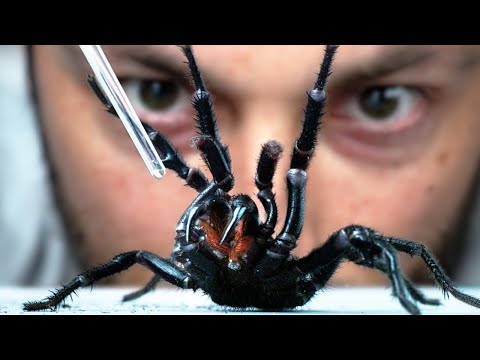
- 'Spinneret' (the organ that makes silk), 'Chelicerae' (the mouthparts/fangs), and 'Pedipalps' (the small leg-like appendages near the mouth).
The tarantula is often kept as a pet by exotic animal enthusiasts due to its impressive size and docile nature.
She described the tiny jumping spider as 'cute' because of its large eyes and curious behavior.
The weaver of the web had long since vanished, leaving behind only a fragile, silver skeleton of its work.
How Formal Is It?
Fun Fact
The scientific name for spiders, 'Araneae,' comes from the Greek myth of Arachne, a talented weaver who was turned into a spider by the goddess Athena.
Pronunciation Guide
- Pronouncing the 'i' like the 'i' in 'sit' (e.g., 'spid-er').
- Adding an extra syllable (e.g., 'spi-der-er').
- Confusing the 'd' with a 't' sound.
- Muffling the 'i' sound so it sounds like 'spay-der'.
- Over-emphasizing the second syllable.
Difficulty Rating
The word is very common and usually learned early.
Simple spelling and regular plural form.
The 'i' sound can be tricky for some learners.
Easily recognizable in most contexts.
What to Learn Next
Prerequisites
Learn Next
Advanced
Grammar to Know
Countable nouns require articles in the singular.
I saw *a* spider.
Plural nouns used generally do not need 'the'.
Spiders are arachnids.
Possessive 's for singular nouns.
The spider's web.
Subject-verb agreement.
The spider *spins* (singular) vs. Spiders *spin* (plural).
Adjective placement.
The *hairy* spider (before noun) vs. The spider is *hairy* (after linking verb).
Examples by Level
I see a small spider on the wall.
J'ai vu une petite araignée sur le mur.
Use 'a' before 'small spider'.
The spider has eight legs.
L'araignée a huit pattes.
Spiders always have eight legs.
A spider is in the garden.
Une araignée est dans le jardin.
Use 'in' for the garden.
The spider is black and brown.
L'araignée est noire et marron.
Adjectives come after 'is'.
Is that a big spider?
Est-ce une grosse araignée ?
Question form: 'Is that...'.
I do not like spiders.
Je n'aime pas les araignées.
Plural 'spiders' for general dislike.
The spider makes a web.
L'araignée fait une toile.
Present simple for a general fact.
Look! A spider is jumping.
Regarde ! Une araignée saute.
Present continuous for action happening now.
The spider is spinning a web to catch flies.
L'araignée tisse une toile pour attraper des mouches.
Use 'to + verb' for purpose.
I found a spider under my bed this morning.
J'ai trouvé une araignée sous mon lit ce matin.
Past simple 'found'.
Spiders are helpful because they eat mosquitoes.
Les araignées sont utiles car elles mangent les moustiques.
Use 'because' to give a reason.
Don't touch that spider; it might be dangerous.
Ne touche pas cette araignée ; elle pourrait être dangereuse.
Use 'might' for possibility.
The hairy spider moved very quickly across the floor.
L'araignée poilue s'est déplacée très rapidement sur le sol.
Adverb 'quickly' modifies the verb 'moved'.
My sister is very scared of spiders.
Ma sœur a très peur des araignées.
Phrase 'scared of' + noun.
There are many different kinds of spiders in the world.
Il existe de nombreuses sortes d'araignées dans le monde.
'There are' for plural existence.
The spider climbed up the water spout.
L'araignée a grimpé dans la gouttière.
Reference to the nursery rhyme.
While I was cleaning the attic, I saw a massive spider web.
Pendant que je nettoyais le grenier, j'ai vu une énorme toile d'araignée.
Past continuous 'was cleaning' with past simple 'saw'.
Arachnophobia is a common fear that many people share.
L'arachnophobie est une peur commune que beaucoup de gens partagent.
Relative clause 'that many people share'.
The spider patiently waited for its prey to get stuck in the silk.
L'araignée attendait patiemment que sa proie se coince dans la soie.
Adverb 'patiently' before the verb.
I read an interesting article about how spiders produce silk.
J'ai lu un article intéressant sur la façon dont les araignées produisent de la soie.
Noun clause 'how spiders produce silk'.
If you see a spider, you should try to put it outside.
Si vous voyez une araignée, vous devriez essayer de la mettre dehors.
First conditional: 'If + present, should + verb'.
The spider's web was covered in morning dew, making it look like diamonds.
La toile de l'araignée était couverte de rosée matinale, la faisant ressembler à des diamants.
Participle phrase 'making it look like...'.
Some spiders, like the wolf spider, do not build webs at all.
Certaines araignées, comme l'araignée-loup, ne construisent pas de toiles du tout.
Appositive 'like the wolf spider'.
The scientist carefully observed the spider's behavior in the lab.
Le scientifique a soigneusement observé le comportement de l'araignée dans le laboratoire.
Possessive 'spider's behavior'.
The intricate design of the spider's web is a marvel of natural engineering.
La conception complexe de la toile d'araignée est une merveille d'ingénierie naturelle.
Complex subject 'The intricate design of the spider's web'.
Spiders play a crucial role in maintaining the balance of the ecosystem.
Les araignées jouent un rôle crucial dans le maintien de l'équilibre de l'écosystème.
Gerund 'maintaining' after the preposition 'in'.
He felt like a spider at the center of a web, controlling every move.
Il se sentait comme une araignée au centre d'une toile, contrôlant chaque mouvement.
Metaphorical usage.
Although most spiders are venomous, only a few are dangerous to humans.
Bien que la plupart des araignées soient venimeuses, seules quelques-unes sont dangereuses pour l'homme.
Concession clause starting with 'Although'.
The spider's ability to produce silk has inspired new types of synthetic fibers.
La capacité de l'araignée à produire de la soie a inspiré de nouveaux types de fibres synthétiques.
Present perfect 'has inspired'.
She was caught in a spider's web of lies and didn't know how to escape.
Elle était prise dans une toile d'araignée de mensonges et ne savait pas comment s'en sortir.
Idiomatic expression.
The spider scuttled into a dark crevice before I could get a good look at it.
L'araignée s'est glissée dans une fente sombre avant que je ne puisse bien la voir.
Time clause 'before I could...'.
Researchers are studying the social behavior of certain spider species.
Les chercheurs étudient le comportement social de certaines espèces d'araignées.
Present continuous for ongoing research.
The spider's predatory efficiency is unmatched in the world of small invertebrates.
L'efficacité prédatrice de l'araignée est inégalée dans le monde des petits invertébrés.
Sophisticated vocabulary: 'predatory efficiency,' 'invertebrates'.
Arachnologists have identified thousands of spider species, each with unique hunting strategies.
Les arachnologues ont identifié des milliers d'espèces d'araignées, chacune ayant des stratégies de chasse uniques.
Absolute construction: 'each with unique hunting strategies'.
The poem uses the spider as a metaphor for the fragile yet resilient nature of the human spirit.
Le poème utilise l'araignée comme métaphore de la nature fragile mais résiliente de l'esprit humain.
Literary analysis context.
The tensile strength of spider silk exceeds that of high-grade steel.
La résistance à la traction de la soie d'araignée dépasse celle de l'acier de haute qualité.
Comparative structure 'exceeds that of'.
The spider's cephalothorax contains the brain, stomach, and the bases of the legs.
Le céphalothorax de l'araignée contient le cerveau, l'estomac et la base des pattes.
Technical terminology.
In many cultures, the spider is revered as a creator deity and a master of fate.
Dans de nombreuses cultures, l'araignée est vénérée comme une divinité créatrice et un maître du destin.
Passive voice 'is revered'.
The spider's intricate dance is a complex ritual designed to attract a mate.
La danse complexe de l'araignée est un rituel élaboré conçu pour attirer un partenaire.
Past participle 'designed' acting as an adjective.
Despite their ubiquity, spiders remain one of the most misunderstood groups of animals.
Malgré leur omniprésence, les araignées restent l'un des groupes d'animaux les plus mal compris.
Prepositional phrase 'Despite their ubiquity'.
The spider's silk, a proteinaceous fiber of unparalleled versatility, is a focal point of biomimetic research.
La soie d'araignée, une fibre protéique d'une polyvalence inégalée, est un point central de la recherche biomimétique.
Appositive phrase for detailed description.
The protagonist found himself ensnared in an arachnid-like web of corporate espionage.
Le protagoniste s'est retrouvé pris au piège dans une toile d'espionnage industriel semblable à celle d'un arachnide.
Advanced adjective 'arachnid-like' and verb 'ensnared'.
The evolutionary divergence of spiders from other chelicerates occurred hundreds of millions of years ago.
La divergence évolutive des araignées par rapport aux autres chélicérates s'est produite il y a des centaines de millions d'années.
Scientific precision.
Her movements were as deliberate and silent as a spider stalking its unsuspecting prey.
Ses mouvements étaient aussi délibérés et silencieux qu'une araignée traquant sa proie sans méfiance.
Extended simile.
The spider's spinnerets are capable of producing different types of silk for various functional requirements.
Les filières de l'araignée sont capables de produire différents types de soie pour diverses exigences fonctionnelles.
Adjective phrase 'capable of producing'.
The cultural archetype of the spider oscillates between the benevolent weaver and the malevolent predator.
L'archétype culturel de l'araignée oscille entre le tisserand bienveillant et le prédateur malveillant.
Sophisticated vocabulary: 'archetype,' 'oscillates,' 'benevolent,' 'malevolent'.
The sheer diversity of the Araneae order is a testament to the success of their evolutionary adaptations.
La diversité même de l'ordre des Araneae est un témoignage du succès de leurs adaptations évolutives.
Noun phrase 'The sheer diversity of...'.
To describe the internet as a 'web' is to acknowledge the spider-like architecture of interconnected nodes.
Décrire l'internet comme une 'toile', c'est reconnaître l'architecture de type araignée des nœuds interconnectés.
Infinitive as subject 'To describe...'.
Common Collocations
Common Phrases
— An intuitive feeling of danger or that something is wrong.
My spider sense told me not to go down that dark alley.
— A small, camouflaged hiding place or foxhole.
The soldiers were hiding in a spider hole in the forest.
— Small, damaged veins that look like a spider's web on the skin.
She went to the doctor to treat the spider veins on her legs.
— A reference to a famous children's nursery rhyme.
The toddler sang 'The Itsy Bitsy Spider' while playing.
— A type of small, mobile crane with four stabilizing legs.
They used a spider crane to lift the heavy glass panels.
— A tiny pest that lives on the undersides of plant leaves.
The roses are infested with spider mites.
— A type of marine crab with very long legs.
The Japanese spider crab is the largest living arthropod.
— A tall bridge used in pool or billiards to reach over balls.
He used the spider bridge to make a difficult shot.
— A visual way to organize information, like a mind map.
We drew a spider diagram to brainstorm ideas for the project.
— The process of a search engine bot crawling the web.
The new website is already being spidered by Google.
Often Confused With
Spiders have 8 legs; insects have 6. This is the most common confusion.
Both are arachnids, but scorpions have stingers and pincers.
These are tiny pests related to spiders but much smaller and usually found on plants.
Idioms & Expressions
— To create a complex series of dishonest statements.
The con artist spun a web of lies to steal the money.
informal/common— To be trapped in a complicated or difficult situation.
He was caught in a web of debt and couldn't find a way out.
neutral— A situation where a predator lures a victim into a trap.
It was a classic case of the spider and the fly, and he was the fly.
literary— A very complicated and confusing situation, often involving deception.
Oh, what a tangled web we weave when first we practice to deceive!
literary— To unknowingly enter a dangerous or tricky situation.
The detective felt like he was walking into a spider's web.
neutral— Having a strong intuition that something is about to happen.
My spider-sense is tingling; I think there's a surprise party waiting for me.
informal/pop-culture— To be very industrious and focused on a task.
She's been as busy as a spider getting the house ready for the guests.
informal— To carefully plan and execute a complex strategy.
The strategist began to weave a web of alliances across the region.
neutral— To be in a state of extreme agitation or restlessness.
He was like a spider in a bottle, unable to sit still for a second.
rare/literary— A very light, almost imperceptible touch.
The feather felt like a spider's touch on her skin.
poeticEasily Confused
Identical pronunciation.
'Spyder' is a brand name or car type; 'spider' is the animal.
He drives a Porsche Spyder, but he's afraid of a tiny spider.
Both relate to spinning.
A 'spinner' is anyone or anything that spins; a 'spider' is the specific animal.
The spider is a natural spinner of silk.
Both describe movement.
'Crawly' is an adjective; 'spider' is a noun.
The spider has a creepy-crawly movement.
Closely associated.
The 'web' is the home/trap; the 'spider' is the builder.
The spider is sitting in its web.
Scientific synonym.
'Arachnid' is the broader category (includes scorpions); 'spider' is specific.
Every spider is an arachnid.
Sentence Patterns
I see a [adjective] spider.
I see a black spider.
The spider is [verb-ing] a web.
The spider is spinning a web.
I am [adjective] of spiders.
I am terrified of spiders.
Spiders are known for [verb-ing] [noun].
Spiders are known for catching insects.
The [noun] of the spider is [adjective].
The predatory nature of the spider is fascinating.
Metaphorically speaking, the [noun] was a spider in a [noun].
Metaphorically speaking, the spy was a spider in a web of secrets.
There is a spider [preposition] the [noun].
There is a spider on the ceiling.
Do spiders [verb]?
Do spiders bite?
Word Family
Nouns
Verbs
Adjectives
Related
How to Use It
Common in daily life, science, and technology.
-
The spider is a scary insect.
→
The spider is a scary arachnid.
Spiders are not insects; they are arachnids. This is a common biological error.
-
I saw a spider's nest in the corner.
→
I saw a spider web in the corner.
Most spiders live in webs, not nests. 'Nest' is usually used for birds or some insects like wasps.
-
Is that spider poisonous?
→
Is that spider venomous?
Venom is injected via a bite; poison is harmful if eaten. Spiders are venomous.
-
The spider has six legs.
→
The spider has eight legs.
A defining characteristic of spiders is having eight legs.
-
I'm scared from spiders.
→
I'm scared of spiders.
The correct preposition to use with 'scared' or 'afraid' is 'of'.
Tips
Plural Form
The plural of 'spider' is 'spiders'. It follows the standard rule of adding an 's'.
Arachnid vs Insect
Always remember that a spider is an arachnid. Using this word correctly will make you sound more knowledgeable in science contexts.
Long 'I'
The 'i' in spider is a long sound, like in 'pie'. Practice saying 'The spider in the pie' to get the sound right.
Descriptive Verbs
Instead of just saying a spider 'moves', use 'scuttles', 'darts', or 'creeps' to add more flavor to your writing.
Symbolism
In English literature, spiders can represent both wisdom (like Charlotte) and danger (like Shelob). Consider the tone of your story when using a spider character.
Web vs Cobweb
Use 'web' for a spider's current home and 'cobweb' for old, dusty ones found in abandoned places.
Venomous vs Poisonous
Spiders are venomous (they bite). Use this word instead of 'poisonous' to be technically accurate.
Web of Lies
This is a great idiom to use when someone is being very dishonest and their lies are complicated.
Eight Legs
If you're ever unsure if a drawing is a spider, count the legs! If it has six, it's an insect.
Nursery Rhymes
Listening to 'The Itsy Bitsy Spider' is a fun way for beginners to hear the word used in a simple story.
Memorize It
Mnemonic
Think of the '8' in 'spider'—it has 8 legs! Also, 'S-P-I-D-E-R' stands for 'Spinning, Patient, Interesting, Detailed, Eight-legged, Remarkable.'
Visual Association
Visualize the letter 'S' as a curved spider body and the 'I' as a strand of silk hanging down.
Word Web
Challenge
Try to find five different adjectives to describe a spider today and use them in sentences.
Word Origin
The word 'spider' comes from the Old English 'spīthra,' which is related to the verb 'spinnan,' meaning 'to spin.' This reflects the animal's most famous characteristic: its ability to spin silk. It has cognates in other Germanic languages, such as the Middle Low German 'spinnere.'
Original meaning: The original meaning was literally 'the spinner.'
GermanicCultural Context
Be aware that many people have a genuine phobia (arachnophobia) and may be very uncomfortable with images or detailed talk of spiders.
Commonly featured in nursery rhymes like 'Itsy Bitsy Spider' and literature like 'Charlotte's Web.'
Practice in Real Life
Real-World Contexts
In the house
- There's a spider!
- Kill the spider.
- Put the spider outside.
- Spider in the bathtub.
In nature
- A spider web in the trees.
- Watch the spider hunt.
- Different types of spiders.
- Spiders eat bugs.
In science
- Spiders are arachnids.
- Spider silk is strong.
- Venomous spider species.
- The spider's anatomy.
In stories
- The giant spider.
- A clever spider.
- The spider's trap.
- Spinning a story.
In technology
- Search engine spider.
- Spidering the web.
- Web crawler.
- Digital spider.
Conversation Starters
"Are you afraid of spiders, or do you think they are interesting?"
"What would you do if you found a large spider in your bedroom?"
"Do you think spiders are helpful animals to have in a garden?"
"Have you ever seen a spider web covered in morning dew?"
"What is the most famous spider you know from a movie or book?"
Journal Prompts
Describe a time you saw a spider. What was it doing and how did you feel?
If you were a spider, what kind of web would you build and where would you live?
Write a story about a spider that becomes friends with a human.
Do you think spiders are misunderstood? Explain why or why not.
Research a specific type of spider and write five interesting facts about it.
Frequently Asked Questions
10 questionsAlmost all spiders have venom glands, which they use to paralyze their prey. However, only a very small percentage of spider species have venom that is harmful to humans. For example, most common house spiders are completely harmless.
A spider always has eight legs. This is one of the primary ways to distinguish them from insects, which have only six legs. If you see a small creature with six legs, it is not a spider.
No, not all spiders spin webs to catch prey. While many do, others like wolf spiders and jumping spiders hunt by chasing or ambushing their prey on the ground or on plants. However, almost all spiders can produce silk.
Most spiders are carnivores and primarily eat insects like flies, mosquitoes, and moths. Some larger spiders can even eat small lizards, frogs, or birds. They are very important for controlling the insect population.
No, a spider is not an insect. It is an arachnid. Insects have six legs, three body parts, and usually wings and antennae. Spiders have eight legs, two body parts, and no wings or antennae.
Spiders use silk for many purposes: building webs to catch food, protecting their eggs in sacs, making burrows, and even 'ballooning' through the air to travel to new places.
Most spiders live for about one to two years. However, some species, like certain tarantulas, can live for up to 20 or even 30 years in captivity.
Spiders do not have wings, so they cannot fly like birds or insects. However, some small spiders can 'balloon' by releasing a strand of silk that catches the wind, allowing them to travel long distances.
Most spiders have eight eyes, but their vision varies. Some, like jumping spiders, have excellent vision to help them hunt. Others, especially those that live in caves or rely on webs, have very poor vision and rely on touch and vibration.
The Goliath birdeater is generally considered the largest spider by mass, while the giant huntsman spider has the largest leg span, reaching up to 30 centimeters (12 inches).
Test Yourself 180 questions
Write a sentence using the word 'spider' and the word 'web'.
Well written! Good try! Check the sample answer below.
Describe a spider using three adjectives.
Well written! Good try! Check the sample answer below.
Why are spiders helpful in a garden? Write two sentences.
Well written! Good try! Check the sample answer below.
What would you do if you found a spider in your shoe?
Well written! Good try! Check the sample answer below.
Explain the difference between a spider and an insect.
Well written! Good try! Check the sample answer below.
Write a short story about a spider named Charlotte.
Well written! Good try! Check the sample answer below.
Discuss the pros and cons of having spiders in your home.
Well written! Good try! Check the sample answer below.
How has the image of the spider been used in movies?
Well written! Good try! Check the sample answer below.
Describe the process of a spider building a web in detail.
Well written! Good try! Check the sample answer below.
Analyze the symbolism of the spider in a myth or story you know.
Well written! Good try! Check the sample answer below.
Write a persuasive paragraph arguing for the protection of spiders.
Well written! Good try! Check the sample answer below.
Compare and contrast the hunting strategies of two different spider species.
Well written! Good try! Check the sample answer below.
Write a poem about a spider's web in the morning.
Well written! Good try! Check the sample answer below.
Explain the term 'arachnophobia' and how it affects people.
Well written! Good try! Check the sample answer below.
How is spider silk used in modern scientific research?
Well written! Good try! Check the sample answer below.
Describe a spider's anatomy using technical terms.
Well written! Good try! Check the sample answer below.
Write a dialogue between someone who loves spiders and someone who is afraid of them.
Well written! Good try! Check the sample answer below.
What is the meaning of the idiom 'spin a web of lies'?
Well written! Good try! Check the sample answer below.
Describe a 'spider diagram' and how it helps with brainstorming.
Well written! Good try! Check the sample answer below.
If you could have one 'spider power', what would it be and why?
Well written! Good try! Check the sample answer below.
Say the word 'spider' three times clearly.
Read this aloud:
You said:
Speech recognition is not supported in your browser. Try Chrome or Edge.
Describe a spider to a friend.
Read this aloud:
You said:
Speech recognition is not supported in your browser. Try Chrome or Edge.
Tell a story about a time you saw a spider.
Read this aloud:
You said:
Speech recognition is not supported in your browser. Try Chrome or Edge.
Explain why some people are afraid of spiders.
Read this aloud:
You said:
Speech recognition is not supported in your browser. Try Chrome or Edge.
Talk about the benefits of spiders in the environment.
Read this aloud:
You said:
Speech recognition is not supported in your browser. Try Chrome or Edge.
Describe how a spider builds its web.
Read this aloud:
You said:
Speech recognition is not supported in your browser. Try Chrome or Edge.
Discuss your favorite fictional spider character.
Read this aloud:
You said:
Speech recognition is not supported in your browser. Try Chrome or Edge.
Explain the difference between an insect and an arachnid.
Read this aloud:
You said:
Speech recognition is not supported in your browser. Try Chrome or Edge.
Give a short presentation on the properties of spider silk.
Read this aloud:
You said:
Speech recognition is not supported in your browser. Try Chrome or Edge.
Debate the importance of spiders versus the fear they cause.
Read this aloud:
You said:
Speech recognition is not supported in your browser. Try Chrome or Edge.
Discuss the use of spiders in mythology and folklore.
Read this aloud:
You said:
Speech recognition is not supported in your browser. Try Chrome or Edge.
Explain the concept of biomimicry using spiders as an example.
Read this aloud:
You said:
Speech recognition is not supported in your browser. Try Chrome or Edge.
How would you react if you saw a giant tarantula?
Read this aloud:
You said:
Speech recognition is not supported in your browser. Try Chrome or Edge.
What is 'spider-sense' and how is it used in pop culture?
Read this aloud:
You said:
Speech recognition is not supported in your browser. Try Chrome or Edge.
Describe a 'spider web' using at least five adjectives.
Read this aloud:
You said:
Speech recognition is not supported in your browser. Try Chrome or Edge.
Talk about the different types of spider webs you have seen.
Read this aloud:
You said:
Speech recognition is not supported in your browser. Try Chrome or Edge.
Discuss the ethical considerations of keeping spiders as pets.
Read this aloud:
You said:
Speech recognition is not supported in your browser. Try Chrome or Edge.
Explain the meaning of the idiom 'caught in a web'.
Read this aloud:
You said:
Speech recognition is not supported in your browser. Try Chrome or Edge.
How do spiders contribute to the biodiversity of a forest?
Read this aloud:
You said:
Speech recognition is not supported in your browser. Try Chrome or Edge.
What is the most interesting fact you know about spiders?
Read this aloud:
You said:
Speech recognition is not supported in your browser. Try Chrome or Edge.
Listen to the description: 'It has eight legs and spins silk.' What is it?
Listen to the song 'Itsy Bitsy Spider'. What happened to the spider when it rained?
Listen to a short talk about garden spiders. What do they eat?
Listen to a warning about a venomous spider. What should you do?
Listen to a podcast about arachnophobia. How many people are affected?
Listen to a scientist talk about spider silk. Why is it being studied?
Listen to a story about Anansi. What trick did he play?
Listen to a documentary clip about the Goliath birdeater. How big is it?
Listen to a lecture on spider anatomy. What are spinnerets?
Listen to a discussion on biomimicry. What product is inspired by spiders?
Listen to a poem about a spider. What does the spider represent?
Listen to a debate about pest control. What is the argument for spiders?
Listen to a description of a 'spider hole'. What is it used for?
Listen to a talk about 'spider veins'. Where do they appear?
Listen to a guide on how to catch a spider safely. What tools are needed?
/ 180 correct
Perfect score!
Summary
The word 'spider' identifies an eight-legged arachnid known for its silk-weaving and predatory skills. It is a vital ecological predator and a common cultural symbol of both fear and creativity. Example: 'The spider waited silently in its web for a fly to land.'
- A spider is an eight-legged arachnid that spins silk webs to catch prey.
- Spiders are found worldwide and are essential for controlling insect populations in ecosystems.
- Commonly confused with insects, spiders have two body segments and no wings or antennae.
- The word is used literally for the animal and metaphorically for complex networks or traps.
Plural Form
The plural of 'spider' is 'spiders'. It follows the standard rule of adding an 's'.
Arachnid vs Insect
Always remember that a spider is an arachnid. Using this word correctly will make you sound more knowledgeable in science contexts.
Long 'I'
The 'i' in spider is a long sound, like in 'pie'. Practice saying 'The spider in the pie' to get the sound right.
Descriptive Verbs
Instead of just saying a spider 'moves', use 'scuttles', 'darts', or 'creeps' to add more flavor to your writing.
Related Content

This Word in Other Languages
More Animals words
albatross
B2A large seabird with very long wings found mainly in the Southern Ocean; figuratively, it refers to a heavy burden or a psychological weight that prevents success or causes constant worry. This metaphorical usage is common in business and politics to describe a persistent problem or liability.
animal
A1An animal is a living organism that is not a plant or a fungus. They are typically able to move voluntarily, have a nervous system to react to their surroundings, and feed on other organic matter.
animals
A1Animals are multicellular, eukaryotic organisms that form the biological kingdom Animalia. They are living creatures that are not human or plants, ranging from microscopic organisms to the largest whales.
ant
A1An ant is a small, social insect known for living in highly organized colonies and working together to gather food. They are often seen walking in long lines and are famous for their ability to carry objects much heavier than their own bodies.
antelope
C1An antelope is a swift-moving deer-like mammal belonging to the bovidae family, characterized by its permanent, hollow horns and slender legs. These animals are typically found in the grasslands of Africa and parts of Asia, known for their remarkable agility and speed in escaping predators.
antiarchal
C1A member of the extinct order Antiarchi, which were heavily armored placoderm fish that lived during the Devonian period. They are primarily distinguished by their strange, jointed pectoral fins that resemble arthropod limbs and their box-like thoracic armor.
antler
C2A deciduous, branched, bony growth found on the heads of deer and their relatives, which is shed and regrown annually. Unlike horns, antlers are living tissue during growth (covered in velvet) and are used primarily for social display and combat during the mating season.
ants
A1Ants are small insects that live in highly organized social colonies, often found in large numbers on the ground. They are known for their strength, teamwork, and ability to carry food items much larger than their own body size.
ape
B2To mimic or imitate someone or something, often in a clumsy, unthinking, or mocking way. It can also refer to reacting with wild excitement or loss of emotional control in the common idiom 'go ape'.
arboreal
B2Arboreal describes animals that live in trees or things relating to trees. It is most commonly used in biological contexts to distinguish tree-dwelling species from those that live on the ground or in water.

