









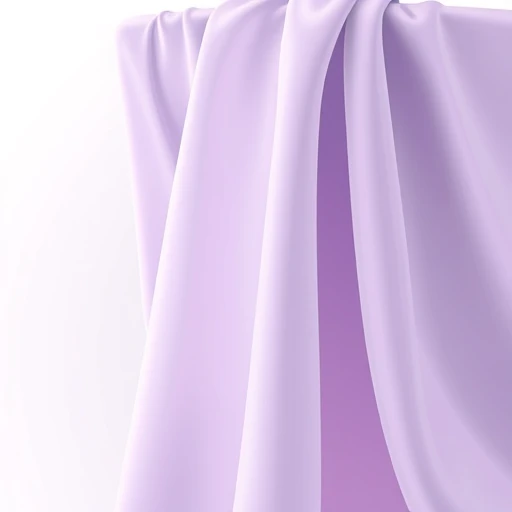
tiffany in 30 Seconds
- A thin, transparent gauze fabric made of silk or fine muslin, used historically for veils and decorations.
- Known for its extreme lightness and sheerness, often used in historical fashion and period costumes.
- Derived from the word 'Epiphany,' as it was traditionally sold during that religious feast day.
- Rarely used today, having been replaced by modern fabrics like chiffon, but still vital in textile history.
The word tiffany refers to a specific category of textile that is characterized by its extreme thinness, transparency, and gauze-like quality. Historically, this fabric was a staple in the wardrobes of the elite and the decorative arts of the seventeenth and eighteenth centuries. When you encounter the word in a historical or literary context, it describes a material so light that it often appears as a mere mist or a delicate haze over the skin or an object. It was traditionally made from silk, which provided a natural luster and strength despite its ethereal weight, though later iterations used fine muslin to achieve a similar effect for a broader market.
- Material Composition
- Tiffany is fundamentally a plain-weave fabric. Its defining characteristic is the high count of very fine threads spaced slightly apart to create a translucent effect. Unlike modern synthetics, historical tiffany relied on the natural elasticity and sheen of silk to maintain its structure without becoming brittle.
In contemporary usage, the word is rare outside of textile history, costume design, and high-end archival fashion. However, understanding its meaning is crucial for anyone reading classical literature or studying the evolution of fashion. It represents a period where the display of delicate craftsmanship was a primary indicator of social status. Because the fabric was so fragile, it was not intended for daily labor but for moments of ceremony, mourning, or high-fashion display. It was frequently used for veils, which needed to be breathable yet obscuring, and for the ruffles of shirts and dresses that required a soft, voluminous look without the heaviness of standard linen.
The portrait depicted the duchess with a collar of fine tiffany that seemed to float around her neck like a cloud.
The term also carries a religious and seasonal weight. The name itself is derived from 'Theophany,' another word for Epiphany, because the fabric was traditionally sold at fairs held during the feast of the Epiphany. This historical connection adds a layer of 'revelation' or 'showing' to the fabric's identity; it is a material that reveals as much as it hides. When a writer chooses to use this word instead of 'gauze' or 'chiffon,' they are often trying to evoke a specific sense of antiquity and refined elegance that modern terms lack.
- Visual Identification
- If you were to hold a piece of tiffany up to the light, you would see a distinct grid pattern of threads. It is stiffer than modern chiffon but much thinner than standard organza. It has a crisp hand-feel that allows it to hold shapes like pleats or ruffs remarkably well.
The artisan carefully layered the tiffany over the silk bodice to create a shimmering, multi-dimensional effect.
When people use this word today, they are usually specialists. A museum curator might use it to describe the neckerchief of a 1750s gown. A historical novelist might use it to describe the mourning veil of a widow in the 1800s. It is a word that breathes life into the sensory details of the past. It suggests a world of tactile luxury where the weight of a garment was as important as its color. To use the word 'tiffany' is to step into a world of candlelight, ballroom dances, and the meticulous labor of weavers who spent weeks creating a single yard of this transparent wonder.
Beneath the heavy velvet cloak, a glimpse of tiffany lining showed the wearer's attention to hidden luxury.
- Durability and Care
- Because of its fine nature, tiffany is incredibly delicate. It cannot be washed like standard cotton; it requires gentle steaming or specialized dry cleaning. In the past, it was often considered a 'disposable' luxury for the ultra-wealthy because it tore so easily.
The wind caught her tiffany scarf, making it dance like a ghost in the twilight.
In summary, tiffany is more than just a fabric; it is a linguistic bridge to a more decorative and delicate era of human history. It describes a specific intersection of material science and aesthetic desire—the quest to create something that is simultaneously present and absent, a fabric that covers the body while celebrating the light that passes through it. Whether you are analyzing a poem or designing a period costume, the word tiffany provides the precise vocabulary needed to describe the ultimate in sheer, historical elegance.
The antique doll was dressed in a miniature gown of faded tiffany, its threads still holding the shape of a bygone era.
Using the word tiffany correctly requires an understanding of its noun form and its specific application to textiles. It is almost always used to describe a physical object or a material component of a larger item. Because it is a mass noun (like 'silk' or 'cotton') but can also act as a count noun when referring to specific types or pieces, you have flexibility in how you structure your sentences. However, the most common usage is as a descriptive noun that identifies the substance of a garment or decorative element.
- As a Subject
- When tiffany is the subject of your sentence, you are usually describing its physical properties or its behavior in a specific environment. For example: 'The tiffany was so light that it fluttered with the slightest breath of air.'
One of the most effective ways to use 'tiffany' is in the context of layering. Because the fabric is transparent, it is rarely used alone for a full garment. Instead, it is used 'over' or 'under' other materials. When writing, you can use this to create vivid imagery. For instance, 'She wore a layer of black tiffany over her purple silk dress to signify her half-mourning status.' This sentence uses the word to provide both a visual detail and a social context, which is where the word truly shines in descriptive prose.
The window was draped in tiffany, softening the harsh sunlight into a gentle, pearlescent glow.
You can also use 'tiffany' as a modifier for other nouns, effectively acting like an adjective. You might talk about a 'tiffany veil,' a 'tiffany scarf,' or 'tiffany ribbons.' This is the most common way you will see the word used in fashion catalogs or historical descriptions. It immediately tells the reader that the item is sheer and delicate. For example: 'The tiffany ribbons on her bonnet were tied in intricate, translucent bows.'
- In Comparative Contexts
- You can use tiffany to establish a contrast between different textures. 'The contrast between the heavy, dark wool of his coat and the airy tiffany of her cravat was striking.' This helps build a sensory world for the reader.
He could see her eyes through the tiffany of her veil, sparkling with a mixture of mischief and tears.
In more technical or academic writing, you might use 'tiffany' to discuss the history of trade or manufacturing. 'The importation of tiffany from France became a point of contention among English weavers in the late 17th century.' Here, the word is used as a specific commodity. This usage is less about the beauty of the fabric and more about its role in the economy of the time.
The inventory listed three bolts of tiffany, valued for their exceptional fineness and clarity.
Finally, consider the emotional resonance of the word. Because tiffany is so thin and easily damaged, it can be used metaphorically to describe things that are fragile or fleeting. 'Their peace was as thin as tiffany, liable to tear at the slightest tension.' While this is a more creative use of the word, it relies on the reader's understanding of the physical properties of the fabric to make the metaphor work.
The morning mist hung over the lake like a sheet of tiffany, obscuring the distant shore.
- Describing Movement
- Tiffany doesn't just sit; it moves. Use verbs like 'billow,' 'float,' 'shimmer,' and 'drift' to describe how tiffany behaves in a sentence. 'The tiffany curtains billowed in the night breeze, casting long, ghostly shadows.'
She adjusted the tiffany trim on her sleeve, ensuring the delicate folds were perfectly aligned.
By incorporating 'tiffany' into your writing with these structures, you add a layer of sophistication and historical accuracy. It is a word that demands attention to detail and rewards the writer who uses it to describe the finer things in life.
In the modern world, you are unlikely to hear the word tiffany used to describe fabric in a casual conversation at a coffee shop. Instead, this word lives in specialized environments where history, art, and high fashion intersect. If you are a fan of period dramas, such as those set in the Regency or Victorian eras, you might hear a costume designer or a character referring to a 'tiffany' garment. It is a word that signals a specific time and place, usually one of elegance and social stratification.
- Museums and Galleries
- One of the most common places to encounter this word is in the descriptive placards of textile museums. Curators use the term to accurately identify the material of historical artifacts. You might see a label that reads: 'Evening Gown, circa 1780, featuring tiffany ruffles and silk embroidery.'
Another place where this word is frequently used is in the world of antique collecting and auctions. Dealers who specialize in vintage textiles or historical clothing must be precise in their descriptions. Using the word 'tiffany' instead of 'gauze' can significantly affect the perceived value and authenticity of an item. In these circles, 'tiffany' is a mark of quality and historical specificity. You might hear an auctioneer say, 'Next we have a rare 18th-century fan, its leaf made of hand-painted tiffany, remarkably well-preserved.'
The textile historian explained that tiffany was the preferred choice for summer veils due to its breathability.
In literature, especially in the works of authors like Jane Austen, Edith Wharton, or more modern historical novelists like Hilary Mantel, the word is used to set the scene. It provides a tactile detail that helps the reader visualize the characters' world. When an author mentions a character's 'tiffany scarf,' they are communicating something about that character's wealth and taste. You might hear this word during an audiobook or a literary discussion about the use of sensory details in historical fiction.
- Theatrical Costume Shops
- Behind the scenes of major theater productions or film sets, costume designers use 'tiffany' to describe the specific look they want to achieve. They might say, 'We need a tiffany-like gauze for the ghost's dress to make it look more ethereal under the stage lights.'
During the lecture on 17th-century trade, the professor noted that tiffany was a major export from the city of Lille.
Furthermore, in the world of high-end interior design, especially for those restoring historic homes, 'tiffany' might be mentioned in the context of window treatments. While modern sheer curtains are often made of polyester, a designer aiming for total historical accuracy might seek out true silk tiffany to recreate the exact light-filtering properties found in a 19th-century parlor.
The interior designer suggested using tiffany for the bed canopy to create a soft, romantic atmosphere.
Lastly, you might hear the word in academic settings, particularly in classes on the history of technology or the industrial revolution. The production of tiffany required specialized looms and highly skilled labor, making it a case study in the development of textile manufacturing. In this context, the word is used to discuss the technical capabilities of past civilizations. So, while 'tiffany' may not be a word you use to describe your everyday t-shirt, it is a word that remains vibrant and necessary in the realms of art, history, and craftsmanship.
In the documentary about the history of silk, the narrator described tiffany as the 'fabric of shadows and light.'
- Specialized Craft Communities
- Lace makers and traditional embroiderers still use tiffany as a base for their work. In these communities, the word is spoken with respect for the material's difficulty and beauty.
The artisan showed the class how to stretch the tiffany over the frame without snapping the delicate silk threads.
The most frequent mistake people make with the word tiffany is confusing it with the world-renowned jewelry company, Tiffany & Co. While the two names share a common origin (the surname Tiffany), they refer to completely different things in a modern context. If you are writing about a thin fabric and you capitalize the word 'Tiffany' in the middle of a sentence, your readers might assume you are talking about a product from the jewelry store, such as a 'Tiffany blue' ribbon, rather than the fabric itself. To avoid this, always keep the 't' lowercase when referring to the textile.
- Confusing with Chiffon or Organza
- While tiffany, chiffon, and organza are all sheer fabrics, they are not interchangeable. Chiffon is soft and limp, while organza is stiff and wiry. Tiffany sits somewhere in between; it has a slight crispness but is much finer and more transparent than standard organza. Using 'tiffany' to describe a modern polyester chiffon is technically incorrect and can confuse experts.
Another common error is misinterpreting the word as a color. Because 'Tiffany Blue' (a specific shade of robin's egg blue) is so famous, some people mistakenly use the word 'tiffany' to describe that color. For example, saying 'She wore a tiffany dress' might lead someone to think the dress is that specific shade of blue, rather than being made of the gauze-like fabric. If you mean the color, you must specify 'Tiffany blue.' If you mean the fabric, you should describe the material's properties to make it clear.
Incorrect: She wore a Tiffany scarf to the party. (Implies a brand name)
Correct: She wore a tiffany scarf to the party. (Refers to the fabric type)
Grammatically, some users treat 'tiffany' as an adjective rather than a noun. While it can function as a noun adjunct (like 'cotton shirt'), it is primarily a noun. Avoid saying 'The fabric was very tiffany.' Instead, say 'The fabric was tiffany' or 'It was a tiffany fabric.' This maintains the proper grammatical structure and ensures your writing sounds natural and professional.
- Overuse in Modern Settings
- Using the word 'tiffany' to describe modern, everyday clothing can seem pretentious or inaccurate. It is a word deeply rooted in history. Unless you are describing high-fashion couture or historical recreations, words like 'sheer' or 'mesh' are usually more appropriate for modern contexts.
The student mistakenly called the medical gauze tiffany, unaware that tiffany is strictly a decorative textile.
Finally, there is the mistake of mispronunciation. Because of the brand, people often emphasize the first syllable correctly but might assume the word has a different spelling when referring to the fabric. It is always spelled 'tiffany,' just like the name. Some older texts might use 'tiffinie,' but this is an archaic spelling that should be avoided in modern writing unless you are quoting a 17th-century source directly.
The novelist avoided using the word tiffany in her 21st-century thriller to prevent readers from thinking of jewelry.
- Historical Anachronism
- Be careful when using 'tiffany' in historical fiction set before the 16th century. While sheer fabrics existed, the specific term 'tiffany' didn't come into common English usage until later. Using it for a Viking-era story would be an anachronism.
The costume designer corrected the intern, explaining that the tiffany ruff was appropriate for the 1620s, not the 1420s.
When you want to describe a thin, transparent fabric but 'tiffany' doesn't quite fit the tone or era of your writing, there are several alternatives you can use. Each of these words carries its own specific nuance and historical weight. Understanding the differences between them will help you choose the most precise term for your needs.
- Gauze
- Gauze is the most common synonym for tiffany. However, gauze is a much broader term. It can refer to medical bandages, industrial filters, or simple cotton fabrics. Tiffany is specifically a high-quality, decorative gauze, usually made of silk. Use 'gauze' for general transparency and 'tiffany' for luxury or historical accuracy.
Another close relative is chiffon. Chiffon is a lightweight, plain-woven, sheer fabric made from cotton, silk, or synthetic fibers. The main difference is that chiffon is known for its soft, 'draping' quality. It flows and clings to the body. Tiffany, by contrast, is slightly stiffer and holds its shape better. If you are describing a modern evening gown that flows as the wearer walks, 'chiffon' is the better word. If you are describing a stiff, historical ruff or a structured veil, 'tiffany' is more accurate.
While the dress was made of heavy satin, the sleeves were finished with a delicate tiffany that provided a stark contrast in texture.
Organza is also very similar. Like tiffany, organza is sheer and has a crisp feel. However, organza is typically a bit thicker and more durable than true tiffany. Organza is often used today for bridal wear and party dresses because it can support the weight of beads and embroidery better than the more fragile tiffany. If you are describing a fabric that has a lot of 'body' and 'shine,' organza is a strong choice.
- Tulle
- Tulle is a fine, often stiff, netting made of silk, rayon, or nylon. It is most famous for its use in ballet tutus. While it is transparent like tiffany, tulle has a distinct hexagonal mesh structure, whereas tiffany is a traditional weave. Use 'tulle' when you want to describe something with a 'netted' look.
The dancer's costume featured layers of tiffany rather than tulle, giving it a more historical and sophisticated appearance.
For a more poetic or archaic feel, you might consider gossamer. Gossamer refers to anything very light, thin, and insubstantial, like a spider's web. While it is often used as an adjective, it can also be a noun referring to a very thin gauze. 'Gossamer' is more evocative and less technical than 'tiffany.' It is perfect for fantasy writing or highly romanticized descriptions where the exact type of weave doesn't matter as much as the feeling of lightness.
The sunlight filtered through the tiffany curtains, creating a pattern of gossamer light on the floor.
Finally, voile is a soft, sheer fabric, usually made of 100% cotton or cotton blends. It is much more common in modern home decor and summer clothing than tiffany. Voile is less transparent than tiffany and has a much more 'everyday' feel. If you are describing a comfortable summer shirt or a standard set of sheer curtains, 'voile' is likely the word you are looking for.
- Lawn
- Lawn is a plain-weave textile, originally of linen but now chiefly cotton. It is thin and semi-transparent but much more substantial than tiffany. It is often used for handkerchiefs and baby clothes.
She preferred the crispness of tiffany for her collars, finding lawn to be too heavy for the delicate lace work.
How Formal Is It?
Fun Fact
The famous jewelry store Tiffany & Co. was founded by Charles Lewis Tiffany, whose surname actually comes from this same textile-related root. In medieval times, the name 'Tiffany' was often given to children born on the Epiphany.
Pronunciation Guide
- Pronouncing it with only two syllables (TIF-nee).
- Over-emphasizing the middle 'a' sound.
- Confusing the pronunciation with the word 'tiffin' (a light meal).
- Putting the stress on the second or third syllable.
- Pronouncing the 'y' like 'eye' instead of 'ee'.
Difficulty Rating
Requires knowledge of historical or technical vocabulary.
Difficult to use correctly without sounding archaic or confusing it with the brand.
Rarely used in modern speech; might require explanation to the listener.
Easy to mishear as the name 'Tiffany' or the brand.
What to Learn Next
Prerequisites
Learn Next
Advanced
Grammar to Know
Noun Adjuncts
In 'tiffany veil,' the noun 'tiffany' acts like an adjective to describe the 'veil.'
Mass vs. Count Nouns
'The dress is made of tiffany' (mass) vs. 'The museum has several tiffanies' (count).
Capitalization of Proper Nouns
Use 'tiffany' for fabric and 'Tiffany' for the person or the brand.
Similes with 'As'
Using 'as thin as tiffany' to create a comparison.
Passive Voice in Descriptions
'The ruffs were crafted from fine tiffany' focuses on the material.
Examples by Level
The doll has a thin tiffany dress.
La poupée a une robe en tiffany fin.
Tiffany is used here as a noun describing the material.
I see a tiffany veil in the book.
Je vois un voile en tiffany dans le livre.
A1 learners should focus on 'tiffany' as a thing.
Is this tiffany or silk?
Est-ce du tiffany ou de la soie ?
This is a simple question comparing two materials.
The tiffany is very light.
Le tiffany est très léger.
Using 'the' before tiffany as a mass noun.
She likes her tiffany scarf.
Elle aime son écharpe en tiffany.
Tiffany acts as a modifier for the noun 'scarf'.
The king had tiffany on his shirt.
Le roi avait du tiffany sur sa chemise.
Tiffany is used to describe a part of a garment.
Tiffany is a type of cloth.
Le tiffany est un type de tissu.
A basic definition sentence.
Look at the tiffany ribbons.
Regardez les rubans en tiffany.
Plural use of the object modified by tiffany.
The bride wore a long tiffany veil.
La mariée portait un long voile en tiffany.
Common usage for wedding descriptions.
Tiffany was popular many years ago.
Le tiffany était populaire il y a de nombreuses années.
Using the past tense to show historical context.
You can see through the tiffany fabric.
On peut voir à travers le tissu tiffany.
Describing the property of transparency.
The museum has a tiffany fan.
Le musée possède un éventail en tiffany.
Tiffany as a noun adjunct.
It is a very delicate tiffany.
C'est un tiffany très délicat.
Using an adjective to describe the noun.
The curtains were made of tiffany.
Les rideaux étaient en tiffany.
Passive voice structure.
She bought a piece of tiffany.
Elle a acheté un morceau de tiffany.
Tiffany as a mass noun.
Is that tiffany or just gauze?
Est-ce du tiffany ou juste de la gaze ?
Comparing two similar nouns.
The historical costume used tiffany for the ruffs.
Le costume historique utilisait du tiffany pour les fraises.
Technical vocabulary for clothing parts.
Tiffany is a sheer gauze made of silk.
Le tiffany est une gaze transparente en soie.
A more detailed definition.
The light filtered softly through the tiffany.
La lumière filtrait doucement à travers le tiffany.
Describing an action and its effect.
She adjusted the tiffany trim on her gown.
Elle ajusta la bordure en tiffany de sa robe.
Focusing on a specific part of a garment.
The merchant sold tiffany at the winter fair.
Le marchand vendait du tiffany à la foire d'hiver.
Historical narrative usage.
Its transparency is the main feature of tiffany.
Sa transparence est la caractéristique principale du tiffany.
Abstract noun 'transparency' linked to tiffany.
They used tiffany to create a misty effect.
Ils ont utilisé du tiffany pour créer un effet de brume.
Describing the purpose of the material.
The tiffany was too fragile for daily wear.
Le tiffany était trop fragile pour être porté au quotidien.
Describing the durability of the material.
The artisan specialized in weaving fine tiffany.
L'artisan se spécialisait dans le tissage du tiffany fin.
Using a gerund 'weaving' with the noun.
Tiffany's name comes from the feast of Epiphany.
Le nom du tiffany vient de la fête de l'Épiphanie.
Etymological explanation in a sentence.
The portrait's detail showed the weave of the tiffany.
Le détail du portrait montrait la trame du tiffany.
Complex subject with possessive forms.
She draped the tiffany over the mirror for the wake.
Elle a drapé le tiffany sur le miroir pour la veillée funèbre.
Cultural usage in a specific context.
Tiffany is often confused with modern organza.
Le tiffany est souvent confondu avec l'organza moderne.
Passive voice with a comparison.
The dress required five yards of high-quality tiffany.
La robe nécessitait cinq yards de tiffany de haute qualité.
Using units of measurement with the noun.
The tiffany layers added volume without weight.
Les couches de tiffany ajoutaient du volume sans poids.
Describing the physical benefits of the fabric.
He described her beauty as being like tiffany.
Il décrivit sa beauté comme étant semblable au tiffany.
Simile usage in a literary context.
The tiffany's diaphanous nature made it ideal for veils.
La nature diaphane du tiffany le rendait idéal pour les voiles.
Using advanced vocabulary like 'diaphanous'.
Archival records mention tiffany as a luxury export.
Les archives mentionnent le tiffany comme une exportation de luxe.
Academic/historical register.
The use of tiffany signified a high social standing.
L'utilisation du tiffany signifiait un rang social élevé.
Discussing social implications of the word.
The tiffany was so fine it was almost imperceptible.
Le tiffany était si fin qu'il était presque imperceptible.
Result clause with 'so... that'.
The weaver struggled with the tiffany's low tensile strength.
Le tisserand luttait contre la faible résistance à la traction du tiffany.
Technical/scientific description.
She chose a tiffany lining to maintain the gown's lightness.
Elle a choisi une doublure en tiffany pour maintenir la légèreté de la robe.
Infinitive of purpose with a specific noun.
The tiffany's sheen was lost after years of poor storage.
Le lustre du tiffany a été perdu après des années de mauvais stockage.
Possessive noun with an abstract quality.
Critics praised the tiffany effects in the stage lighting.
Les critiques ont loué les effets de tiffany dans l'éclairage de scène.
Using the noun as a descriptor for an effect.
The tiffany's ethereal quality is a hallmark of the era.
La qualité éthérée du tiffany est une marque distinctive de l'époque.
High-level abstract analysis.
The textile's provenance was confirmed as authentic tiffany.
La provenance du textile a été confirmée comme étant du tiffany authentique.
Formal/Legal/Academic register.
The tiffany acted as a semiotic marker of mourning.
Le tiffany agissait comme un marqueur sémiotique du deuil.
Interdisciplinary academic usage.
The weaver's mastery was evident in the tiffany's uniformity.
La maîtrise du tisserand était évidente dans l'uniformité du tiffany.
Complex possessive and abstract noun structure.
Tiffany's fragility serves as a metaphor for the period's peace.
La fragilité du tiffany sert de métaphore pour la paix de la période.
Literary analysis/metaphorical usage.
The conservationist stabilized the tiffany with a fine mesh.
Le conservateur a stabilisé le tiffany avec un filet fin.
Technical conservation vocabulary.
The tiffany's translucency allowed for subtle color play.
La translucidité du tiffany permettait des jeux de couleurs subtils.
Advanced descriptive structure.
The sumptuary laws specifically targeted the use of tiffany.
Les lois somptuaires ciblaient spécifiquement l'utilisation du tiffany.
Historical/Legal context.
Common Collocations
Common Phrases
— Extremely thin or fragile. Used to describe physical objects or metaphorical concepts.
His excuses were as thin as tiffany.
— Covered with a sheer fabric. Often used in a romantic or decorative sense.
The room was draped in tiffany for the wedding.
— Seeing a small part of the fabric. Suggests something hidden or subtle.
A glimpse of tiffany showed beneath her heavy cloak.
— Enclosed in a delicate layer. Can imply protection or preciousness.
The gift was carefully wrapped in tiffany.
— Describing the light-reflecting quality of the silk fabric.
The shimmering tiffany caught the candlelight.
— A combination of two delicate materials. Often used to describe high-end fashion.
The dress was a beautiful mix of tiffany and lace.
— Old or worn fabric. Suggests a sense of history or decay.
The doll wore a dress of faded tiffany.
— Having the qualities of tiffany fabric. Used for modern comparisons.
The new synthetic material had a tiffany-like sheerness.
— The fabric with added decorative needlework.
The embroidered tiffany was the highlight of the collection.
— Ribbons made from the sheer fabric. Used for hair or gift wrapping.
She tied her hair with tiffany ribbons.
Often Confused With
The famous jewelry brand. Always capitalized.
A specific shade of blue associated with the brand, not the fabric.
A British-Indian word for a light meal or lunch.
Idioms & Expressions
— To easily understand someone's hidden motives or a weak deception.
I could see through his tiffany-thin lies immediately.
informal/metaphorical— A very fragile or temporary state of calm that is easily broken.
The two countries maintained a tiffany peace for only a few weeks.
literary— To pretend to be something while your true nature is still visible.
He wore a tiffany mask of politeness, but his anger was clear.
literary— Describing something that lacks substance or strength.
The plot of the movie was thin as tiffany.
neutral— Something that looks beautiful on the outside but is very fragile.
Their relationship was tiffany-wrapped but hollow inside.
metaphorical— To engage in a very delicate or complex task that requires great care.
Negotiating the treaty was like weaving tiffany.
literary— An excuse that is so poor it doesn't hide the truth at all.
Don't give me that tiffany excuse; I know where you were.
informal— A state of light confusion or a dreamlike feeling.
She lived her life under a tiffany cloud of nostalgia.
poetic— To break or fail very easily under pressure.
The old alliance began to tear like tiffany.
neutral— Extremely high quality and delicate.
The details on the miniature were tiffany-fine.
descriptiveEasily Confused
Both are sheer fabrics.
Chiffon is softer and drapes more, while tiffany is slightly stiffer and more historical.
The modern dress used chiffon, but the museum piece was made of tiffany.
Both are sheer and somewhat crisp.
Organza is usually thicker and more common in modern bridal wear.
Organza is easier to find in stores today than true tiffany.
Tiffany is a type of gauze.
Gauze is a general term; tiffany is a specific, high-quality decorative version.
All tiffany is gauze, but not all gauze is tiffany.
Both are used for veils.
Tulle is a net with holes; tiffany is a woven fabric.
The ballerina wore tulle, but the 18th-century bride wore tiffany.
Both are sheer and used for curtains.
Voile is usually cotton and less transparent than silk tiffany.
Voile is better for everyday curtains than the delicate tiffany.
Sentence Patterns
The [object] is [tiffany].
The scarf is tiffany.
She has a [tiffany] [object].
She has a tiffany veil.
The [object] was made of [tiffany].
The ruffles were made of tiffany.
[Tiffany] is a type of [gauze/fabric].
Tiffany is a type of thin gauze.
The [property] of the [tiffany] was [adjective].
The transparency of the tiffany was remarkable.
[Tiffany] served as a [metaphor/symbol] for [concept].
Tiffany served as a metaphor for her fragile health.
He [verb] the [tiffany] [object].
He adjusted the tiffany trim.
There was a [layer/piece] of [tiffany] over the [object].
There was a layer of tiffany over the silk.
Word Family
Nouns
Adjectives
Related
How to Use It
Very low in modern daily English; high in textile history and period literature.
-
Capitalizing 'tiffany' when referring to fabric.
→
Keep it lowercase: 'a tiffany veil.'
Capitalizing it makes it look like a brand name or a person's name, which is incorrect for the common noun.
-
Using 'tiffany' to describe a color.
→
Use 'Tiffany Blue' for the color.
Tiffany is a material, not a color. Using it alone to mean blue is confusing.
-
Confusing tiffany with medical gauze.
→
Use 'gauze' for medicine and 'tiffany' for fashion.
While they are related, tiffany is strictly a decorative and high-quality textile.
-
Using 'tiffany' for modern polyester fabrics.
→
Use 'chiffon' or 'sheer polyester.'
Tiffany specifically refers to silk or fine muslin, usually in a historical context.
-
Thinking tiffany is a type of jewelry.
→
Tiffany is a fabric; Tiffany & Co. sells jewelry.
This is the most common confusion due to the fame of the brand.
Tips
Historical Accuracy
Use 'tiffany' when writing about the 17th or 18th centuries to sound more authentic. It shows you know the specific textiles of the era.
Avoid Brand Confusion
If you use 'tiffany' in a story, make sure the context clearly points to fabric. Mentioning 'weaving' or 'sheerness' helps the reader understand.
Lowercase is Key
Remember that the fabric is a common noun. Keeping it lowercase is the best way to distinguish it from the proper noun 'Tiffany.'
Metaphorical Use
Because tiffany is so thin, it's a great word for describing things that are barely there, like a 'tiffany-thin' layer of frost.
Check the Era
Don't use 'tiffany' for modern clothing unless it's a very specific high-fashion piece. For modern clothes, 'sheer' or 'mesh' is better.
Link to Epiphany
To remember the word, link it to the 'Epiphany.' Both start with the same sound root and help you remember it's a 'special' fabric.
Three Syllables
Make sure to pronounce all three syllables: TIF-fa-ny. This makes the word sound more elegant and correct.
Look for Clues
When reading old books, if you see 'tiffany,' look for words like 'veil' or 'dress' nearby to confirm it's the fabric.
Clarify if Needed
If you use the word and someone looks confused, just say 'it's an old type of thin silk gauze.'
Picture the Weave
Think of a very fine screen door made of silk. That's the texture of tiffany. It's a grid you can see through.
Memorize It
Mnemonic
Think of 'Thin Tiffany.' The 'T' stands for Transparent, and the 'F' stands for Fabric. It's a Thin, Transparent Fabric.
Visual Association
Imagine a ghost wearing a very thin, see-through veil. That veil is made of tiffany. The fabric is so light it looks like it could float away.
Word Web
Challenge
Try to describe three things in your room using the word 'tiffany' as a metaphor for how thin or light they are. For example, 'The light from my lamp is as soft as tiffany.'
Word Origin
The word 'tiffany' comes from the Old French 'tiphanie,' which is derived from the Late Latin 'theophania' and the Greek 'theophaneia,' meaning 'manifestation of God' or 'Epiphany.' It was named this because the fabric was traditionally sold at fairs held on the feast of the Epiphany (January 6th).
Original meaning: A thin silk fabric associated with the feast of the Epiphany.
Indo-European (Greek -> Latin -> French -> English)Cultural Context
There are no major sensitivities, but be careful not to confuse the fabric with the brand in commercial writing to avoid trademark issues.
In the UK and US, the word is almost exclusively known as a name or a brand. Using it for fabric marks you as a specialist or a very well-read person.
Practice in Real Life
Real-World Contexts
Historical Fiction
- a tiffany veil
- trimmed in tiffany
- the sheerness of the tiffany
- layers of tiffany
Textile Conservation
- silk tiffany specimen
- weave density of tiffany
- tiffany degradation
- stabilizing the tiffany
Fashion Design
- tiffany-inspired gauze
- creating a tiffany effect
- sheer tiffany overlays
- lightweight tiffany
Museum Curatorship
- labeled as tiffany
- historical tiffany ruff
- tiffany from the 18th century
- displaying delicate tiffany
Poetry
- tiffany of the soul
- mist like tiffany
- the tiffany of dawn
- fragile as tiffany
Conversation Starters
"Did you know that 'tiffany' was actually a type of fabric long before it was a famous jewelry brand?"
"If you were designing a costume for a 17th-century play, would you use tiffany or modern chiffon?"
"Why do you think fabrics like tiffany have been replaced by synthetic materials in modern fashion?"
"Can you think of any other words that are both a name and a specific type of material?"
"How does the transparency of tiffany change the way we think about historical modesty?"
Journal Prompts
Describe a memory that feels as fragile and transparent as a piece of tiffany fabric.
Write a short story about a weaver in the 1600s who is trying to create the perfect piece of tiffany.
If you could own one item made of historical tiffany, what would it be and why?
Reflect on how the meaning of the word 'tiffany' has changed from a fabric to a luxury brand.
Imagine a world where everyone wears tiffany veils. How would society be different?
Frequently Asked Questions
10 questionsNo, 'tiffany' itself is a type of fabric. However, 'Tiffany Blue' is a very famous color associated with the jewelry brand Tiffany & Co. People often confuse the two, but in a textile context, tiffany refers to the material's sheerness, not its color.
It is very difficult to find fabric labeled as 'tiffany' in modern stores. You would likely need to look for 'silk gauze' or 'fine silk organza' to find something similar. True tiffany is mostly found in antique shops or museums.
The name comes from 'Theophany' or 'Epiphany.' Historically, this specific type of thin silk was sold at fairs that took place during the feast of the Epiphany in January.
Not exactly. While both are sheer, tiffany is a historical term for a slightly stiffer silk gauze, whereas chiffon is a modern term for a very soft, flowing fabric. They have different 'hands' or textures.
Tiffany is extremely delicate. Historically, it was rarely washed. Today, if you have an antique piece, it should only be handled by a professional textile conservator. Modern equivalents should be dry cleaned or very gently hand-washed.
Mostly, yes. Because it was made of silk and was very fragile, it was an expensive luxury. It was not practical for people who had to do manual labor.
Its most common uses were for veils, ruffles, collars, and decorative trimmings on dresses and hats. It was also used for lightweight summer scarves.
It is rarely used in mainstream fashion today. It is mostly used by costume designers, textile historians, and authors of historical fiction.
Yes, later versions of tiffany were made of very fine muslin (cotton), but the most prized and traditional tiffany was always made of silk.
When you are talking about the fabric, yes, it should be lowercase. When you are talking about the person or the jewelry brand, it should be capitalized: 'Tiffany.'
Test Yourself 180 questions
Write a sentence about a tiffany scarf.
Well written! Good try! Check the sample answer below.
Describe a tiffany veil in one sentence.
Well written! Good try! Check the sample answer below.
Explain why tiffany is used for decorations.
Well written! Good try! Check the sample answer below.
Compare tiffany to organza.
Well written! Good try! Check the sample answer below.
Discuss the historical significance of tiffany.
Well written! Good try! Check the sample answer below.
What is tiffany? (Simple answer)
Well written! Good try! Check the sample answer below.
Where can you find tiffany today?
Well written! Good try! Check the sample answer below.
Write a sentence using 'tiffany trim'.
Well written! Good try! Check the sample answer below.
Use 'as thin as tiffany' in a sentence.
Well written! Good try! Check the sample answer below.
Describe the etymology of the word tiffany.
Well written! Good try! Check the sample answer below.
Is tiffany for a hat or a shoe?
Well written! Good try! Check the sample answer below.
Is tiffany silk or wool?
Well written! Good try! Check the sample answer below.
What is a tiffany ruff?
Well written! Good try! Check the sample answer below.
Why is tiffany difficult to weave?
Well written! Good try! Check the sample answer below.
Write a metaphorical sentence about tiffany.
Well written! Good try! Check the sample answer below.
Can you see through tiffany?
Well written! Good try! Check the sample answer below.
What color is tiffany?
Well written! Good try! Check the sample answer below.
Who wore tiffany in the past?
Well written! Good try! Check the sample answer below.
Is tiffany used for bandages?
Well written! Good try! Check the sample answer below.
What is the weave of tiffany?
Well written! Good try! Check the sample answer below.
Say: 'The tiffany is thin.'
Read this aloud:
You said:
Speech recognition is not supported in your browser. Try Chrome or Edge.
Say: 'I like the tiffany veil.'
Read this aloud:
You said:
Speech recognition is not supported in your browser. Try Chrome or Edge.
Say: 'The ruffles are made of tiffany.'
Read this aloud:
You said:
Speech recognition is not supported in your browser. Try Chrome or Edge.
Say: 'Tiffany is a historical silk gauze.'
Read this aloud:
You said:
Speech recognition is not supported in your browser. Try Chrome or Edge.
Say: 'The tiffany's transparency is its hallmark.'
Read this aloud:
You said:
Speech recognition is not supported in your browser. Try Chrome or Edge.
Say: 'Thin cloth.'
Read this aloud:
You said:
Speech recognition is not supported in your browser. Try Chrome or Edge.
Say: 'Tiffany fan.'
Read this aloud:
You said:
Speech recognition is not supported in your browser. Try Chrome or Edge.
Say: 'Tiffany trim.'
Read this aloud:
You said:
Speech recognition is not supported in your browser. Try Chrome or Edge.
Say: 'Epiphany fair.'
Read this aloud:
You said:
Speech recognition is not supported in your browser. Try Chrome or Edge.
Say: 'Diaphanous material.'
Read this aloud:
You said:
Speech recognition is not supported in your browser. Try Chrome or Edge.
Say: 'Tiffany.'
Read this aloud:
You said:
Speech recognition is not supported in your browser. Try Chrome or Edge.
Say: 'See-through.'
Read this aloud:
You said:
Speech recognition is not supported in your browser. Try Chrome or Edge.
Say: 'Silk gauze.'
Read this aloud:
You said:
Speech recognition is not supported in your browser. Try Chrome or Edge.
Say: 'Transparent.'
Read this aloud:
You said:
Speech recognition is not supported in your browser. Try Chrome or Edge.
Say: 'Provenance.'
Read this aloud:
You said:
Speech recognition is not supported in your browser. Try Chrome or Edge.
Say: 'Light.'
Read this aloud:
You said:
Speech recognition is not supported in your browser. Try Chrome or Edge.
Say: 'Veil.'
Read this aloud:
You said:
Speech recognition is not supported in your browser. Try Chrome or Edge.
Say: 'Mourning.'
Read this aloud:
You said:
Speech recognition is not supported in your browser. Try Chrome or Edge.
Say: 'Organza.'
Read this aloud:
You said:
Speech recognition is not supported in your browser. Try Chrome or Edge.
Say: 'Tensile.'
Read this aloud:
You said:
Speech recognition is not supported in your browser. Try Chrome or Edge.
Listen and identify the word: 'tiffany'.
Listen: 'She wore a tiffany scarf.' What did she wear?
Listen: 'The trim is tiffany.' What is the trim made of?
Listen: 'Tiffany is a type of gauze.' What is tiffany?
Listen: 'The tiffany was sold at the Epiphany fair.' Where was it sold?
Listen: 'Thin cloth.'
Listen: 'See-through veil.'
Listen: 'Silk tiffany.'
Listen: 'Transparent gauze.'
Listen: 'Diaphanous textile.'
Listen: 'Tiffany ribbons.'
Listen: 'Tiffany fan.'
Listen: 'Tiffany ruffles.'
Listen: 'Tiffany curtains.'
Listen: 'Tiffany provenance.'
/ 180 correct
Perfect score!
Summary
Tiffany is a historical, ultra-sheer fabric that represents the pinnacle of delicate textile craftsmanship. For example, 'The 18th-century widow's veil was crafted from the finest black tiffany, signifying her status and grief through its translucent layers.'
- A thin, transparent gauze fabric made of silk or fine muslin, used historically for veils and decorations.
- Known for its extreme lightness and sheerness, often used in historical fashion and period costumes.
- Derived from the word 'Epiphany,' as it was traditionally sold during that religious feast day.
- Rarely used today, having been replaced by modern fabrics like chiffon, but still vital in textile history.
Historical Accuracy
Use 'tiffany' when writing about the 17th or 18th centuries to sound more authentic. It shows you know the specific textiles of the era.
Avoid Brand Confusion
If you use 'tiffany' in a story, make sure the context clearly points to fabric. Mentioning 'weaving' or 'sheerness' helps the reader understand.
Lowercase is Key
Remember that the fabric is a common noun. Keeping it lowercase is the best way to distinguish it from the proper noun 'Tiffany.'
Metaphorical Use
Because tiffany is so thin, it's a great word for describing things that are barely there, like a 'tiffany-thin' layer of frost.
Example
The historical costume featured a bodice trimmed with fine tiffany.
Related Content
See it in Videos

More Fashion words
lancome
B1A prestigious French luxury perfumes and cosmetics house that distributes products internationally. It is a proper noun referring to the specific brand name used for beauty and skincare products.
ribbon
A1A ribbon is a long, thin strip of fabric, plastic, or paper used for decoration or tying things. It is commonly used to wrap gifts, tie hair, or mark an achievement as a prize.
dyes
B2Substances, either natural or synthetic, used to change the color of something, especially fabric, hair, or food. It can also refer to the action of coloring something.
cosmetics
B1Cosmetics are substances or products used to enhance or alter the appearance of the face or the fragrance and texture of the body. They include a wide range of items such as makeup, skincare lotions, and perfumes designed for beautification and personal grooming.
adorn
C1To add beauty, elegance, or decoration to someone or something. It implies making an object more attractive or impressive through the addition of ornaments or features.
blusher
B2A cosmetic product, usually in the form of a powder or cream, used for giving a pink or reddish color to the cheeks. It is applied to create a healthier, more youthful, or contoured appearance on the face.
bouffant
B2A hairstyle characterized by hair being puffed out from the head in a rounded shape, often achieved through backcombing or using padding. It is a voluminous style that was especially popular in the mid-20th century.
bracelet
B2A piece of jewelry or an ornament worn around the wrist, which can be made of various materials like metal, leather, cloth, or beads. It can serve as a decorative accessory, a symbol of friendship, or a means of identification.
underpetite
C1A specialized retail and fashion category for individuals, specifically women, who are significantly shorter than the standard petite range, typically under 5 feet (152 cm) tall. It refers to both the specific sizing of the garments and the demographic of people who require shorter inseams and scaled-down proportions.
homovestary
C1Homovestary refers to the practice of wearing clothing that is typical or appropriate for one's own biological sex or gender identity, often in a context where such attire provides psychological or sexual gratification. It is a clinical term used primarily in psychology to distinguish this behavior from transvestism.

