Identifying People and Things
Chapter in 30 Seconds
Transform your Spanish by mastering pronouns to replace repetitive nouns for fluid, natural-sounding conversations.
- Identify the direct receiver of an action using me, te, lo, and la.
- Specify the recipient of an action with indirect object pronouns.
- Place pronouns correctly before the verb to sound like a native speaker.
What You'll Learn
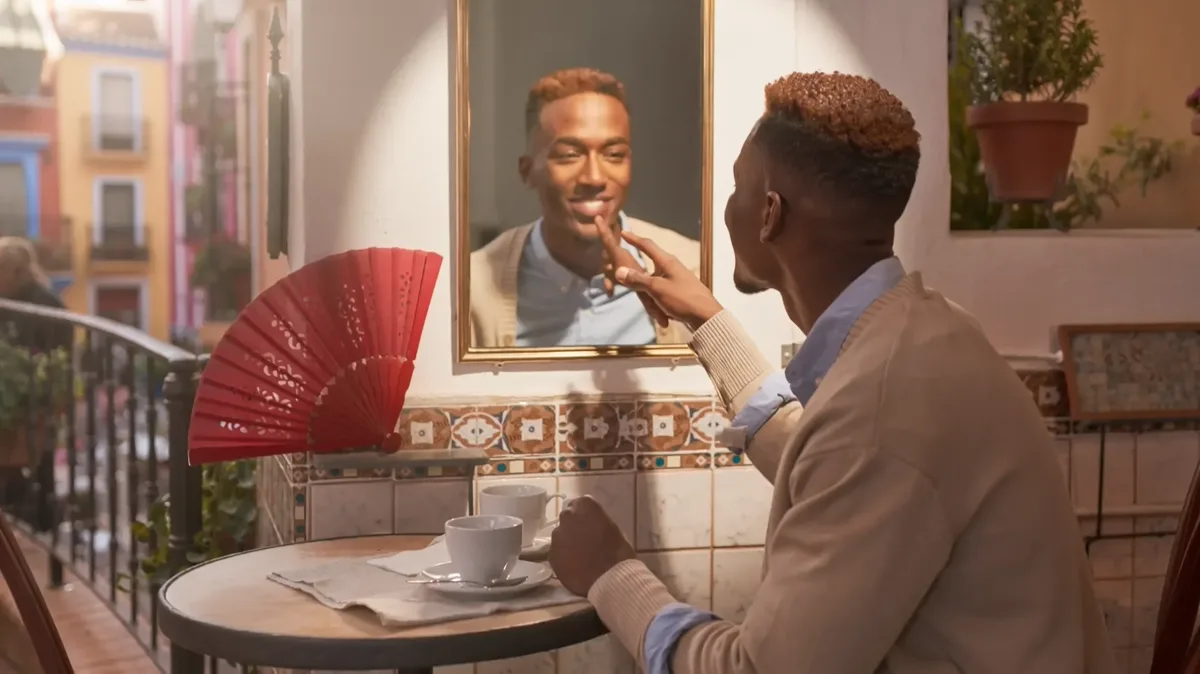
Hey there, language explorer! You've come a long way with your Spanish, building sentences and understanding the basics. Now, it's time to take your fluency up a notch and make your conversations sound much more natural. Ever felt like you're repeating yourself in Spanish? Like saying 'I saw the book, I read the book, I like the book...' over and over? Well, in this chapter, we're going to unlock a magical solution: 'Direct and Indirect Object Pronouns'! You'll learn how these small, super useful pronouns – like 'me', 'te', 'lo', 'la', and 'le' – can step in for nouns, making your sentences flow smoothly and sound completely authentic. We'll start with direct object pronouns, which help you say 'what' or 'who' directly receives the action. Instead of 'I like the shirt,' you'll effortlessly say 'I like it.' Then, we'll move on to indirect object pronouns, showing 'to whom' or 'for whom' an action is performed. So, instead of 'I wrote a letter to my friend,' you'll learn to say 'I wrote her a letter.' Imagine you're in a bustling Madrid cafe, telling your friend, 'This coffee is delicious!' and then you want to add, 'I saw this coffee yesterday in the same cafe.' Instead of repeating 'this coffee,' you'll simply say, 'I saw it yesterday!' Or you're shopping for your mom and confidently say, 'I bought this for her!' without needing to say her name again. With just four straightforward rules, you'll master placing these pronouns right before the verb, allowing you to speak like a true local. Your sentences will no longer sound repetitive or stiff, but fluid and engaging. Ready to make your Spanish more fluent than ever? Let's dive in!
-
Spanish Direct Object Pronouns: me, te, lo, laSwap repetitive nouns for matching pronouns placed right before the verb to speak Spanish like a local.
-
Spanish Indirect Object Pronouns: me, te, le...Indirect object pronouns identify who receives the result of an action, usually appearing right before the conjugated verb.
Learning Objectives
By the end of this chapter, you will be able to:
-
1
By the end you will be able to: Replace repetitive nouns with direct object pronouns in daily conversation.
-
2
By the end you will be able to: Correctly identify the person receiving an action using indirect pronouns.
Chapter Guide

Overview
How This Grammar Works

Common Mistakes
- 1✗ Wrong: *Ella ve el.*
- 1✗ Wrong: *Le quiero.* (I love him/her.)
- 1✗ Wrong: *Compré una camisa para él. Me gusta.*

Real Conversations
A
B
A
B
A
B
Quick FAQ
How do I know if I should use lo/la or le?
Lo/la are direct object pronouns (answering "what?" or "who?" is being acted upon). Le is an indirect object pronoun (answering "to whom?" or "for whom?" the action is done). Think: *I see it (direct)* vs. *I give to him (indirect)*.
Can me and te be both direct and indirect object pronouns?
Yes! Me and te (along with nos and os) are special because their form doesn't change whether they are direct or indirect. The context of the sentence clarifies their role.
Where exactly do these pronouns go when there are two verbs (e.g., "I want to see it")?
At the A2 level, the simplest rule is to place them *before the conjugated verb* (e.g., *Yo lo quiero ver* - I want to see it). You'll learn later that they can also attach to the infinitive or gerund (e.g., *Yo quiero verlo*), but for now, stick to the "before the conjugated verb" rule for consistency.

Cultural Context
Key Examples (4)
Tengo el enlace. **Lo** comparto ahora.
I have the link. I'm sharing it now.
Spanish Direct Object Pronouns: me, te, lo, laEsa canción es genial. ¿**La** escuchaste?
That song is great. Did you listen to it?
Spanish Direct Object Pronouns: me, te, lo, laMe mandas la ubicación por WhatsApp.
You send me the location via WhatsApp.
Spanish Indirect Object Pronouns: me, te, le...Le doy un 'like' a su foto de Instagram.
I give his/her Instagram photo a like.
Spanish Indirect Object Pronouns: me, te, le...Tips & Tricks (2)
Gender Check
The 'Le' Rule
Key Vocabulary (6)
Real-World Preview
The Cafe Encounter
Review Summary
- [Pronoun] + [Verb]
- [Pronoun] + [Verb]
Common Mistakes
In Spanish, the pronoun must be placed before the verb, not after.
You should use the indirect pronoun 'le' even when mentioning the person, to sound more natural.
Avoid repeating 'para mi madre' if the context is clear; use 'se lo' instead.
Rules in This Chapter (2)
Next Steps
You've conquered a huge hurdle today! Keep practicing, and these pronouns will become second nature.
Listen to a Spanish podcast and identify every pronoun you hear.
Quick Practice (6)
Find and fix the mistake:
La tengo la manzana.
frontend.learn_grammar.from_rule: Spanish Direct Object Pronouns: me, te, lo, la
Tengo el libro. ___ tengo.
frontend.learn_grammar.from_rule: Spanish Direct Object Pronouns: me, te, lo, la
Which is correct?
frontend.learn_grammar.from_rule: Spanish Indirect Object Pronouns: me, te, le...
Which is correct?
frontend.learn_grammar.from_rule: Spanish Direct Object Pronouns: me, te, lo, la
Find and fix the mistake:
Doy el regalo a ella.
frontend.learn_grammar.from_rule: Spanish Indirect Object Pronouns: me, te, le...
___ doy el libro a María.
frontend.learn_grammar.from_rule: Spanish Indirect Object Pronouns: me, te, le...
Score: /6

