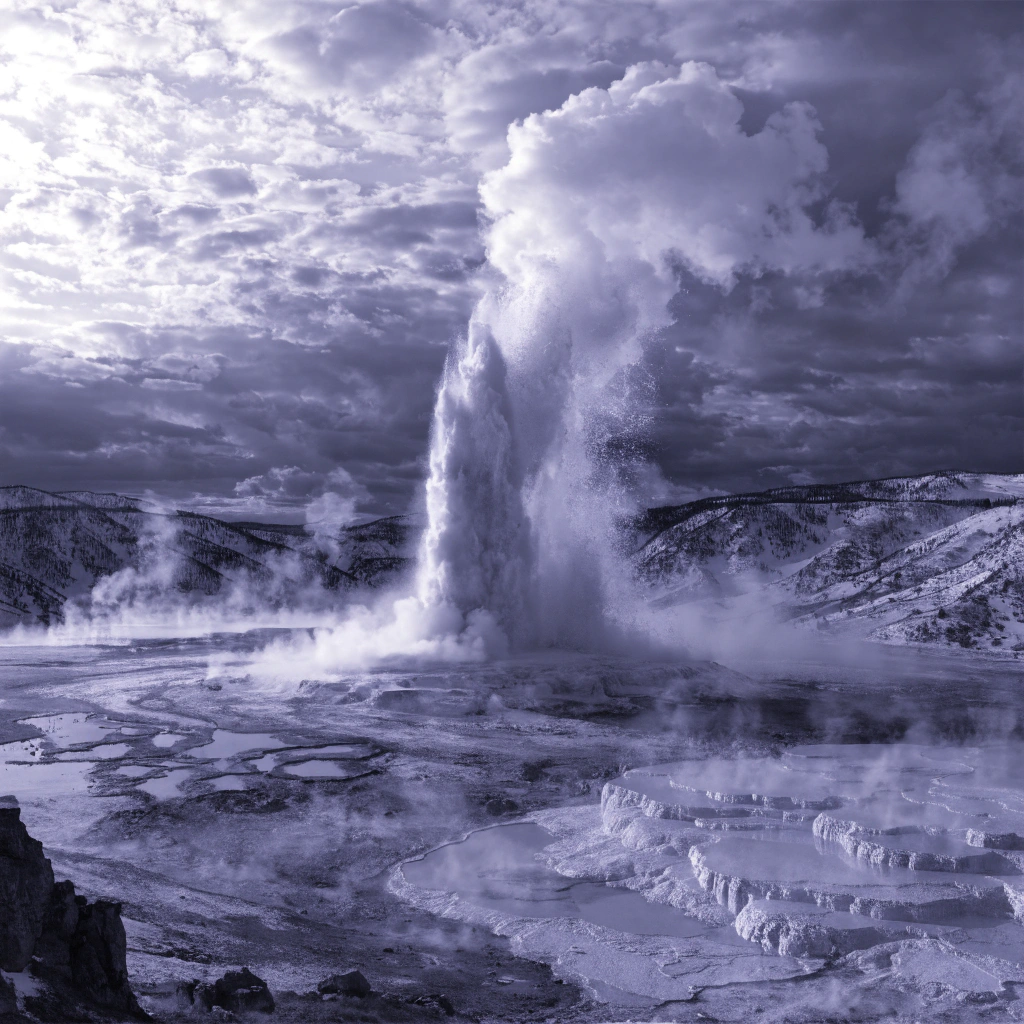
Yellowstone: Um Parque Grande e Famoso
Yellowstone é um parque muito grande. Ele fica nos Estados Unidos. Yellowstone é o primeiro parque nacional do mundo. Muitas pessoas visitam este parque famoso. No parque, há muita natureza bonita. Tem rios, montanhas e florestas. Também tem água quente que sai da terra, como gêiseres. O mais famoso é o Old Faithful. Você pode ver ursos, veados e bisões. Yellowstone é um lugar especial para ver a natureza e os animais.
Gramática em destaque
Padrão: O Verbo "Ser" (Presente)
"Yellowstone é um parque muito grande."
Usamos o verbo 'ser' para falar sobre o que algo ou alguém É. Ele descreve características permanentes. No presente, 'eu sou, você é, ele/ela/você é, nós somos, eles/elas/vocês são'.
Padrão: Verbos no Presente (Ações)
"Muitas pessoas visitam este parque famoso."
Usamos o presente para falar de ações que acontecem agora ou que são rotina. Por exemplo, 'visitar' (visito, visita, visitamos, visitam) mostra uma ação que as pessoas fazem regularmente.
Teste sua compreensão
10 perguntas · A1 Iniciante · 1 pré-visualização grátis
Teste o que aprendeu neste artigo. Responda todas as perguntas para ganhar XP!
Onde fica o parque Yellowstone?
Quer finalizar o quiz?
9 perguntas a mais estão esperando por você. Cadastre-se grátis para desbloquear o quiz completo e ganhar XP!
Cadastrar grátisJá tem conta? Entrar
Detalhamento das perguntas
Onde fica o parque Yellowstone?
Sua resposta:
Resposta correta: Nos Estados Unidos
Yellowstone é o primeiro parque nacional do mundo.
Sua resposta:
Resposta correta: Verdadeiro
O que significa 'famoso'?
Sua resposta:
Resposta correta: Conhecido por muitas pessoas
No parque, há muita natureza ___________.
Sua resposta:
Resposta correta: bonita
Yellowstone: The World's First National Park
Yellowstone is a very famous place in the United States. It became the first national park in the world on March 1, 1872. The park is very large and beautiful. It is in three states: Wyoming, Montana, and Idaho. Many people visit it every year because they love the fresh air and the trees.
There is a huge volcano under the ground. This volcano makes the water in the park very hot. You can see hot steam and colorful pools of water everywhere. One famous geyser is "Old Faithful." It shoots hot water into the air many times a day. It is more exciting than a normal fountain in a city.
Yellowstone is also a home for many animals. You can see big bears, wolves, and bison walking near the roads. The park is bigger than some small countries. Visitors must be careful because the animals are wild and strong. It is important to keep the park clean and safe for everyone.
Gramática em destaque
Padrão: Past Simple
"It became the first national park in the world on March 1, 1872."
We use the past simple for finished actions in the past. To form it with irregular verbs, we use the past form like 'became' instead of 'become'.
Padrão: Comparatives
"The park is bigger than some small countries."
We use comparatives to compare two things. For short adjectives like 'big', we add '-er' and use the word 'than'.
Teste sua compreensão
11 perguntas · A2 Elementar · 1 pré-visualização grátis
Teste o que aprendeu neste artigo. Responda todas as perguntas para ganhar XP!
Where is Yellowstone National Park located?
Quer finalizar o quiz?
10 perguntas a mais estão esperando por você. Cadastre-se grátis para desbloquear o quiz completo e ganhar XP!
Cadastrar grátisJá tem conta? Entrar
Detalhamento das perguntas
Where is Yellowstone National Park located?
Sua resposta:
Resposta correta: In the United States
Yellowstone was the first national park in the world.
Sua resposta:
Resposta correta: Verdadeiro
What does 'wild' mean?
Sua resposta:
Resposta correta: Living in nature and not controlled by humans
Old Faithful shoots hot _____ into the air.
Sua resposta:
Resposta correta: water
How many states is the park in?
Sua resposta:
Resposta correta: Three states
Yellowstone: The World’s First National Park
Yellowstone National Park, which is located in the western United States, is a place of incredible natural beauty. It was established in 1872, making it the first national park in the world. Since then, millions of people have visited this vast wilderness to see its unique features. The park covers parts of Wyoming, Montana, and Idaho, offering a home to many wild animals.
The park is famous for its geothermal activity because it sits on top of a giant sleeping volcano. This heat creates more than 10,000 natural wonders, including colorful hot springs and powerful geysers. Old Faithful, which is the most popular geyser, has erupted regularly for many years. Visitors are often amazed by the steam that rises from the ground.
Wildlife is another reason why people love Yellowstone. Large animals, such as grizzly bears, wolves, and bison, have lived in these forests for centuries. However, visitors are reminded to keep a safe distance from the animals. The park is carefully managed by experts who ensure that the environment is protected.
In recent years, many programs have been started to teach people about conservation. Yellowstone has become a symbol of how nature can be preserved for the future. If you enjoy hiking and exploring the outdoors, this park is a destination that should not be missed. It is truly a treasure that has been kept safe for everyone to enjoy.
Gramática em destaque
Padrão: The Passive Voice
"It was established in 1872, making it the first national park in the world."
The passive voice is used when the action is more important than who did it. It is formed using the verb 'to be' and the past participle of the main verb.
Padrão: Relative Clauses with 'Which'
"Yellowstone National Park, which is located in the western United States, is a place of incredible natural beauty."
A relative clause gives extra information about a noun. We use 'which' to add details about things or places.
Teste sua compreensão
11 perguntas · B1 Intermediário · 1 pré-visualização grátis
Teste o que aprendeu neste artigo. Responda todas as perguntas para ganhar XP!
Where is Yellowstone National Park located?
Quer finalizar o quiz?
10 perguntas a mais estão esperando por você. Cadastre-se grátis para desbloquear o quiz completo e ganhar XP!
Cadastrar grátisJá tem conta? Entrar
Detalhamento das perguntas
Where is Yellowstone National Park located?
Sua resposta:
Resposta correta: In parts of Wyoming, Montana, and Idaho
Yellowstone was the first national park to be created in the world.
Sua resposta:
Resposta correta: Verdadeiro
What does the word 'erupted' mean in the context of a geyser?
Sua resposta:
Resposta correta: To explode with steam and water
The park sits on top of a giant sleeping _____, which provides heat for the geysers.
Sua resposta:
Resposta correta: volcano
What is 'Old Faithful'?
Sua resposta:
Resposta correta: A popular geyser
Yellowstone: A Monument to Geological Might and Conservation History
Established in 1872, Yellowstone National Park stands as a testament to the pioneering spirit of environmental preservation. Spanning across the states of Wyoming, Montana, and Idaho, this vast wilderness was the first of its kind, fundamentally altering how humanity perceives the natural world. Although it was initially protected for its unique 'curiosities,' it has since become a global symbol of conservation. The park's creation marked a significant shift in legislative priorities, prioritizing the protection of nature over industrial exploitation.
At the heart of Yellowstone’s allure is its extraordinary geothermal activity. The park is situated atop the Yellowstone Caldera, a massive supervolcano that has shaped the landscape over millions of years. This subterranean heat source fuels more than 10,000 geothermal features, including the world-renowned Old Faithful geyser. Visitors are often mesmerized by the Grand Prismatic Spring, which displays a vibrant spectrum of colors caused by heat-loving bacteria. Furthermore, the sheer variety of these phenomena highlights the park’s geological significance and the constant power shifting beneath the earth's crust.
Beyond its geological wonders, Yellowstone serves as a critical sanctuary for diverse wildlife. The park’s ecosystem supports a wide array of species, including grizzly bears, bison, and elk. One of the most significant events in the park's history was the reintroduction of gray wolves in the 1990s. This initiative was not only a triumph for biodiversity but also a fascinating case study in ecological balance. Scientists observed that the presence of wolves helped regulate the elk population, which in turn allowed vegetation to flourish, demonstrating the intricate interconnectedness of all living things.
However, managing such a massive territory is not without its challenges. The park must constantly balance the needs of millions of annual tourists with the necessity of protecting fragile environments. Climate change also poses a significant threat, as rising temperatures could potentially alter the delicate timing of geothermal eruptions and seasonal migrations.
In conclusion, Yellowstone National Park remains an indispensable asset to our global heritage. By protecting such a unique landscape, we ensure that future generations can witness the raw power of nature. It serves as a reminder that while humanity has the power to exploit the earth, we also possess the capacity to preserve its most magnificent treasures.
Gramática em destaque
Padrão: Passive Voice
"The park is situated atop the Yellowstone Caldera..."
The passive voice is used here to focus on the location of the park rather than who put it there. It is formed using the verb 'to be' followed by the past participle.
Padrão: Present Perfect
"...it has since become a global symbol of conservation."
The present perfect is used to describe a state that started in the past and continues to the present. It emphasizes the current status of the park as a symbol.
Padrão: Correlative Conjunctions (Not only... but also)
"This initiative was not only a triumph for biodiversity but also a fascinating case study in ecological balance."
This structure is used to join two balanced phrases, emphasizing that both points are equally important. It adds a more formal and academic tone to the text.
Teste sua compreensão
11 perguntas · B2 Intermediário superior · 1 pré-visualização grátis
Teste o que aprendeu neste artigo. Responda todas as perguntas para ganhar XP!
What was the primary reason for Yellowstone's initial protection in 1872?
Quer finalizar o quiz?
10 perguntas a mais estão esperando por você. Cadastre-se grátis para desbloquear o quiz completo e ganhar XP!
Cadastrar grátisJá tem conta? Entrar
Detalhamento das perguntas
What was the primary reason for Yellowstone's initial protection in 1872?
Sua resposta:
Resposta correta: Unique curiosities and nature
Yellowstone National Park is located entirely within the state of Wyoming.
Sua resposta:
Resposta correta: Falso
What does the word 'phenomena' refer to in the text?
Sua resposta:
Resposta correta: Observable natural events
Yellowstone serves as a critical _____ for diverse wildlife like grizzly bears.
Sua resposta:
Resposta correta: sanctuary
How did the reintroduction of wolves affect the park's vegetation?
Sua resposta:
Resposta correta: It allowed vegetation to flourish by regulating elk.
Yellowstone: A Grandiosidade Selvagem e o Legado da Preservação
O Parque Nacional de Yellowstone, uma joia cravada no noroeste dos Estados Unidos, predominantemente no Wyoming, com extensões em Montana e Idaho, não é apenas um espetáculo da natureza; ele é, de fato, o berço do conceito de parque nacional, um paradigma que transformou irremediavelmente a percepção humana sobre a salvaguarda ambiental. Estabelecido em 1º de março de 1872, sua criação assinalou um marco indelével na história da conservação, inaugurando uma era de reconhecimento da necessidade intrínseca de proteger vastas extensões de terra por seu valor ecológico e cênico.
Ainda que sua beleza cênica seja inegável, o que verdadeiramente distingue Yellowstone é sua atividade geotérmica, a mais vasta e variada do planeta. Da colossal caldeira vulcânica, que jaz adormecida sob a superfície e lhe confere o título de supervulcão, emana a energia que alimenta mais de 10.000 fenômenos geotérmicos. É essa efervescência subterrânea que dá origem aos célebres gêiseres, fontes termais borbulhantes, poços de lama e fumarolas, pintando a paisagem com cores vibrantes e exalando vapores sulfurosos. O Old Faithful, talvez o mais icônico deles, ejeta água fervente com uma pontualidade quase ritualística, cativando milhões de visitantes anualmente e servindo como um testemunho eloquente da força vulcânica latente.
Contudo, a magnificência de Yellowstone não se restringe à sua geologia. O parque abriga uma biodiversidade surpreendente, constituindo um dos maiores e mais bem preservados ecossistemas de clima temperado do mundo. Lobos, ursos-pardos, alces, veados e, sobretudo, as icônicas manadas de bisões, que vagam livremente por suas planícies, encontram ali um santuário. A reintrodução dos lobos na década de 1990, por exemplo, demonstrou de forma inequívoca a complexidade e a resiliência dos ecossistemas, alterando dinâmicas populacionais e promovendo uma revitalização ambiental que antes parecia inatingível.
Para além de sua função de refúgio para a vida selvagem e laboratório natural para geólogos e biólogos, Yellowstone evoca uma profunda reflexão sobre o papel da humanidade na gestão do patrimônio natural. A sua existência, e a subsequente proliferação de parques nacionais por todo o globo, é um lembrete perene de que a prosperidade humana está intrinsecamente ligada à saúde do planeta. O gerenciamento de Yellowstone enfrenta desafios contemporâneos como as mudanças climáticas, o aumento do turismo e a preservação de espécies ameaçadas, exigindo uma abordagem multifacetada e uma vigilância constante.
É a percepção de sua vulnerabilidade, concomitante à sua grandiosidade, que nos impõe o imperativo da conservação. Yellowstone não é meramente um destino; é uma lição viva de ecologia, geologia e história, um legado que as gerações vindouras têm o direito de desfrutar e o dever de proteger. A sua mera existência suscita um senso de admiração e responsabilidade coletiva, consolidando-o como um símbolo primordial da beleza indomável e da capacidade regenerativa da Terra.
Gramática em destaque
Padrão: Nominalização
"A sua existência, e a subsequente proliferação de parques nacionais por todo o globo, é um lembrete perene de que a prosperidade humana está intrinsecamente ligada à saúde do planeta."
A nominalização é a transformação de verbos ou adjetivos em substantivos, como 'existir' em 'existência' ou 'próspero' em 'prosperidade'. Ela confere formalidade e densidade ao texto, permitindo expressar conceitos complexos de forma concisa e abstrata, característica do nível C1.
Padrão: Estrutura Cleft (Frase Partida)
"É essa efervescência subterrânea que dá origem aos célebres gêiseres..."
A estrutura cleft, ou frase partida, é usada para dar ênfase a uma parte específica da oração. Em português, geralmente utiliza-se 'É [elemento enfatizado] que...'. Isso permite ao escritor destacar informações cruciais, direcionando a atenção do leitor para o ponto mais relevante da mensagem.
Padrão: Inversão da Ordem Sintática
"Da colossal caldeira vulcânica, que jaz adormecida sob a superfície e lhe confere o título de supervulcão, emana a energia que alimenta mais de 10.000 fenômenos geotérmicos."
A inversão da ordem sintática padrão (sujeito-verbo-complemento) é uma característica de textos formais e complexos. Neste exemplo, o adjunto adverbial de lugar ('Da colossal caldeira vulcânica') precede o verbo ('emana') e o sujeito ('a energia'), criando um estilo mais sofisticado e poético, além de enfatizar o local de origem da energia.
Teste sua compreensão
12 perguntas · C1 Avançado · 1 pré-visualização grátis
Teste o que aprendeu neste artigo. Responda todas as perguntas para ganhar XP!
Qual é a principal característica que distingue Yellowstone de outros parques naturais, conforme o texto?
Quer finalizar o quiz?
11 perguntas a mais estão esperando por você. Cadastre-se grátis para desbloquear o quiz completo e ganhar XP!
Cadastrar grátisJá tem conta? Entrar
Detalhamento das perguntas
Qual é a principal característica que distingue Yellowstone de outros parques naturais, conforme o texto?
Sua resposta:
Resposta correta: Sua atividade geotérmica, a mais vasta do planeta.
Yellowstone foi o primeiro parque nacional a ser estabelecido no mundo.
Sua resposta:
Resposta correta: Verdadeiro
O que significa a palavra 'indelével' no contexto do artigo?
Sua resposta:
Resposta correta: Que deixa uma marca permanente e não se pode destruir.
O Old Faithful é um _________ que ejeta água fervente com pontualidade.
Sua resposta:
Resposta correta: gêiser
Qual é um dos desafios contemporâneos enfrentados pelo gerenciamento de Yellowstone?
Sua resposta:
Resposta correta: As mudanças climáticas e o aumento do turismo.
A reintrodução dos lobos em Yellowstone na década de 1990 não teve impacto significativo no ecossistema do parque.
Sua resposta:
Resposta correta: Falso
The Primordial Tapestry: Yellowstone and the Ontological Shift in Global Conservation
To contemplate the vast expanse of Yellowstone is to engage with a geological palimpsest, where the strata of time are laid bare by the relentless forces of magmatic upheaval and glacial retreat. Established on March 1, 1872, this sanctuary represents not merely a topographical anomaly but a profound shift in the human psyche—the genesis of a global conservationist ethos. One might argue that the park serves as a progenitor for all subsequent environmental stewardship, marking the moment humanity first sought to decouple natural splendor from the inexorable march of industrial utility. Were it not for the foresight of early preservationists, the subterranean wonders and geothermal manifestations of this region might have been consigned to the annals of lost heritage, sacrificed at the altar of unmitigated expansion.
At the heart of Yellowstone’s identity lies the caldera, a supervolcano of such latent volatility that its historical eruptions have reshaped the continent’s very physiognomy. This magmatic crucible fuels more than 10,000 geothermal features, ranging from the rhythmic fidelity of Old Faithful to the prismatic brilliance of the Grand Prismatic Spring. Such phenomena are not merely aesthetic marvels; they are windows into the primordial conditions of our planet. It is imperative that scientists continue to scrutinize these hydrothermal systems, for they may hold the key to understanding the extremophilic origins of life itself. The confluence of heat, mineral-rich waters, and ancient microbial mats creates an ecosystem of unparalleled complexity, where the boundaries between geology and biology become increasingly porous.
Beyond its subterranean turbulence, Yellowstone serves as a critical laboratory for studying the trophic cascade. The reintroduction of the gray wolf in the 1990s—a decision as controversial as it was ecologically transformative—demonstrated the profound impact of apex predators on an entire biosphere. By recalibrating the elk populations, the wolves indirectly facilitated the rejuvenation of willow and aspen stands, which in turn provided habitats for songbirds and beavers. This intricate web of interdependence underscores the fragility of endemic species and the necessity of holistic management. Seldom has a single ecological intervention yielded such a comprehensive restructuring of a landscape, suggesting that the restoration of a single keystone species can trigger a systemic renaissance.
However, the park’s current status is not without its existential threats. The paradox of the 'protected wilderness' is that its very popularity can lead to its degradation. Anthropogenic pressures, ranging from the subtle encroachments of climate change to the more visceral impact of mass tourism, necessitate a delicate balancing act. It is recommended that the park administration implement more stringent regulations to mitigate the carbon footprint of visitors while ensuring that the educational value of the park remains accessible. Should the delicate equilibrium between human appreciation and environmental integrity be compromised, we risk transforming these sacred grounds into a mere caricature of the wild.
In conclusion, Yellowstone stands as a testament to the enduring power of the natural world and the capacity of humanity to act as its guardian. It is a place where the ephemeral nature of human life meets the deep time of the Earth. Whether viewed through the lens of geological volatility or the lens of ecological resilience, the park remains an indispensable asset to our collective heritage. As we navigate the uncertainties of the Anthropocene, the lessons gleaned from this wilderness—of humility, interconnectedness, and the necessity of preservation—remain more pertinent than ever. It is through the continued protection of such primordial spaces that we might hope to reconcile our industrial ambitions with our biological roots.
Gramática em destaque
Padrão: Inverted Conditionals (Type 2/3)
"Were it not for the foresight of early preservationists, the subterranean wonders and geothermal manifestations of this region might have been consigned to the annals of lost heritage."
This structure replaces 'If it were not for' with an inverted 'Were it not for'. It is used in formal or academic English to express a hypothetical condition that did not happen.
Padrão: The Subjunctive Mood
"It is imperative that scientists continue to scrutinize these hydrothermal systems."
The subjunctive 'continue' (base form) is used after adjectives of urgency or importance like 'imperative', 'essential', or 'crucial'. It emphasizes necessity rather than fact.
Padrão: Negative Inversion for Emphasis
"Seldom has a single ecological intervention yielded such a comprehensive restructuring of a landscape."
By placing a negative adverb like 'Seldom' at the beginning of the sentence, the subject and auxiliary verb are inverted. This creates a rhetorical, emphatic effect common in C2-level prose.
Teste sua compreensão
12 perguntas · C2 Domínio · 1 pré-visualização grátis
Teste o que aprendeu neste artigo. Responda todas as perguntas para ganhar XP!
What does the author suggest by calling Yellowstone a 'geological palimpsest'?
Quer finalizar o quiz?
11 perguntas a mais estão esperando por você. Cadastre-se grátis para desbloquear o quiz completo e ganhar XP!
Cadastrar grátisJá tem conta? Entrar
Detalhamento das perguntas
What does the author suggest by calling Yellowstone a 'geological palimpsest'?
Sua resposta:
Resposta correta: The landscape contains visible evidence of different historical and geological eras.
The reintroduction of wolves in Yellowstone only affected the elk population and had no impact on other species.
Sua resposta:
Resposta correta: Falso
Which word is synonymous with 'the study of the nature of being' in the context of the article?
Sua resposta:
Resposta correta: Ontological
The historical eruptions of the Yellowstone _____ have significantly altered the continent's physical features.
Sua resposta:
Resposta correta: caldera
According to the text, what is the 'paradox' of protected wilderness?
Sua resposta:
Resposta correta: Its popularity and the resulting human presence can damage the very environment being protected.
The author believes that Yellowstone's geothermal features could provide insights into the beginnings of life on Earth.
Sua resposta:
Resposta correta: Verdadeiro

