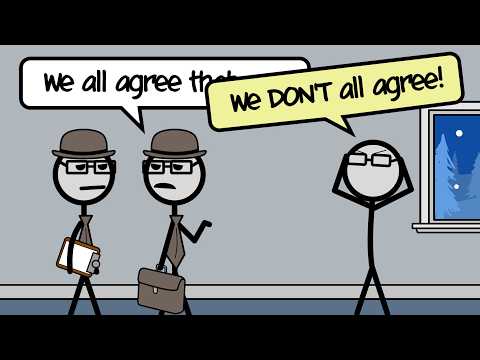
committees em 30 segundos
- Committees are specialized groups formed within a larger organization to handle specific tasks, research issues, or make formal recommendations to the main body.
- The word is the plural of 'committee' and is used in business, government, and social clubs to describe organized collective decision-making structures.
- Key characteristics include having a specific mandate, a chairperson, and the responsibility to report back to a parent organization or authority.
- Common types include standing (permanent) and ad hoc (temporary) committees, often found in contexts like finance, ethics, or legislative oversight.
The word committees refers to organized groups of individuals who have been specifically chosen, appointed, or elected to perform a particular function on behalf of a larger organization or authority. At its core, the concept of a committee is rooted in the idea of collective intelligence and shared responsibility. Instead of a single person making every decision, a committee allows for a diversity of perspectives, expertise, and oversight. You will encounter this word in almost every formal setting imaginable, from the small-scale governance of a local gardening club to the high-stakes legislative chambers of national governments. Committees are the 'engine rooms' of bureaucracy; they are where the detailed work of researching, debating, and drafting happens before a final proposal is presented to a larger body for a vote.
- Organizational Context
- In a corporate environment, committees might be formed to handle audit, compensation, or sustainability initiatives. These groups ensure that specific areas of the business receive focused attention from qualified members.
The plural form 'committees' highlights the multifaceted nature of large organizations. A single university, for example, does not just have one committee; it has dozens. There might be admissions committees, ethics committees, curriculum committees, and finance committees. Each of these groups operates with a specific 'mandate' or 'terms of reference,' which defines what they are allowed to do and what their goals are. When people use this word, they are often discussing the structural way an organization handles its workload or the process of delegation. If a problem is too complex for a general meeting, the common refrain is, 'Let's refer this to one of our specialized committees.'
The parliamentary committees spent several months reviewing the proposed environmental legislation before it was sent to the floor for a final vote.
Furthermore, committees serve a social and political function. They provide a platform for stakeholders to feel represented. In a community center, having various committees (such as a youth committee or a senior outreach committee) ensures that the needs of different demographics are addressed. However, the word can sometimes carry a slightly negative connotation in informal speech, implying a slow, bureaucratic process where 'too many cooks spoil the broth.' Despite this, they remain the primary vehicle for democratic and corporate governance worldwide.
- Types of Committees
- Standing committees are permanent, while 'ad hoc' or select committees are temporary and formed for a specific, one-time purpose.
The non-profit organization established three new committees to oversee fundraising, volunteer recruitment, and digital marketing.
In academic writing and formal reports, the term is essential for describing how decisions are reached. You might read about 'steering committees' that guide the direction of a project or 'search committees' tasked with finding a new CEO or university president. The use of the plural emphasizes the distribution of power across different domains of expertise.
- Functional Roles
- Members of committees are often called 'committee members' or 'committeemen/committeewomen.' The person in charge is the 'chair' or 'chairperson.'
Internal committees often struggle to find a balance between thorough discussion and timely action.
Local government committees provide a vital link between citizens and elected officials.
Using the word committees correctly requires an understanding of its role as a plural count noun. It typically functions as the subject or object of a sentence involving actions like forming, meeting, deciding, or reporting. Because committees are groups, the verbs associated with them often involve collective action. For instance, you 'serve on' a committee, you 'chair' a committee, or you 'report to' a committee. When discussing multiple groups, the plural 'committees' is used to show the breadth of an organization's structure.
- Common Verb Pairings
- Form, establish, appoint, dissolve, convene, adjourn, and mandate. For example: 'The board decided to establish several new committees to handle the merger.'
One of the most important aspects of using 'committees' in a sentence is the prepositional usage. We almost always say someone is 'on a committee' rather than 'in a committee,' though 'in' can be used when referring to the committee as a physical meeting space. For example, 'She has served on three different committees this year.' This suggests membership and active participation. If you are talking about the work they do, you might say, 'The committees are responsible for the budget oversight.'
Several committees were tasked with investigating the cause of the technical failure, each focusing on a different department.
In more complex sentences, 'committees' can be modified by adjectives that describe their purpose or status. Common modifiers include 'standing' (permanent), 'ad hoc' (temporary), 'joint' (involving two different bodies), and 'steering' (guiding). Using these modifiers helps clarify the specific nature of the groups you are discussing. For example, 'The joint committees of the Senate and the House met to resolve the discrepancies in the bill.' This level of detail is common in professional and academic writing.
- Prepositional Patterns
- 'Committees on [Topic]' (e.g., Committees on Foreign Affairs) or 'Committees for [Purpose]' (e.g., Committees for Social Justice).
The effectiveness of these committees depends largely on the clarity of their initial instructions.
When writing about the outcomes of these groups, you might use phrases like 'recommendations from the committees' or 'the findings of the committees.' This attributes the work to the collective group rather than any single individual. In a sentence like 'The various committees reached different conclusions,' the plural form emphasizes the diversity of thought and the possibility of disagreement between different specialized groups.
- Passive Voice Usage
- Committees are often the subject of passive constructions: 'The new rules were drafted by the committees.'
By dividing the workload among several committees, the council was able to address all agenda items in a single week.
The legislative committees are currently holding public hearings to gather feedback on the new tax proposal.
The word committees is a staple of news broadcasts, political discourse, and corporate communication. If you turn on a news channel like the BBC or CNN, you will frequently hear reporters talking about 'congressional committees' or 'parliamentary committees.' In these contexts, the word signifies the formal process of governance. It is where the 'real work' of making laws happens, away from the grand speeches of the main chamber. You might hear a news anchor say, 'The matter has been referred to the relevant committees for further investigation,' which usually means the process will take some time and involve expert testimony.
- In the News
- 'The Senate committees on intelligence and justice are launching a joint probe into the recent data breach.'
In the corporate world, you will hear 'committees' mentioned during annual general meetings (AGMs) or in internal company memos. Large corporations use committees to manage risk, ensure ethical compliance, and oversee executive pay. An employee might say, 'I have to prepare a presentation for the management committees next Tuesday.' Here, the word implies a high level of scrutiny and the need for professional preparation. It suggests that the decision-making power is distributed among a group of senior leaders rather than resting with just one manager.
During the press conference, the CEO emphasized that all major strategic shifts are first vetted by the appropriate internal committees.
Educational institutions are another place where you will constantly hear this word. Universities are famous for their complex web of committees. Students might hear about the 'disciplinary committees' or 'scholarship committees.' Faculty members often complain about the amount of time they spend in 'committee meetings.' In this context, the word is synonymous with the administrative life of the university. It represents the collaborative (and sometimes tedious) nature of academic governance where every department wants a seat at the table.
- Local Community
- 'The town hall is looking for volunteers to join the planning and zoning committees to help shape the city's future.'
International committees at the United Nations work tirelessly to coordinate global responses to climate change and humanitarian crises.
Finally, you will hear the word in the world of sports and entertainment. The Olympics, for example, is run by the International Olympic Committee (IOC), and there are numerous sub-committees for different sports and host city selections. In the film industry, 'selection committees' decide which movies get into prestigious festivals like Cannes or the Oscars. In all these cases, 'committees' represents a group of experts acting as gatekeepers or organizers, ensuring that standards are met and processes are followed fairly.
- Entertainment Industry
- 'The awards committees are currently reviewing hundreds of submissions for the Best Picture category.'
In many democratic countries, the work of legislative committees is televised to ensure transparency and public accountability.
The neighborhood association has several committees dedicated to beautification, security, and social events.
The word committees is notoriously difficult to spell, even for native speakers. The most frequent error is forgetting one of the double letters. It contains three sets of double letters: double 'm', double 't', and double 'e'. Common misspellings include 'commitees', 'comittees', or 'committies'. A good way to remember is the '2-2-2 rule': two Ms, two Ts, and two Es. If your spelling looks 'too short,' you are likely missing a letter. In professional writing, misspelling this word can undermine your credibility, as it is a very common term in business and governance.
- Spelling Pitfall
- Incorrect: comittee, commitee, commite. Correct: committee (singular) or committees (plural).
Another common mistake involves subject-verb agreement, particularly when moving between British and American English. As mentioned earlier, 'committee' is a collective noun. In American English, the singular 'committee' almost always takes a singular verb ('The committee is...'). However, when you use the plural 'committees,' the verb must always be plural in both dialects ('The committees are...'). Learners sometimes get confused and use a singular verb with the plural noun because they are thinking of the 'group' as one entity. Always look for the 's' at the end; if it's there, use a plural verb.
Wrong: The committees has finished the report. Right: The committees have finished the report.
Confusing 'committees' with 'commissions' or 'boards' is another frequent error. While they are similar, they are not always interchangeable. A 'committee' is usually a subset of a larger group. A 'commission' is often an independent body appointed by a government for a specific investigation. A 'board' usually has the ultimate legal authority over an organization. Using 'committees' when you mean 'the Board of Directors' can lead to misunderstandings about who has the final say in a decision. Always check the formal title of the group you are referring to.
- Preposition Errors
- Avoid saying 'member of the committees' if you only mean one. If someone belongs to multiple groups, 'member of several committees' is correct. Also, use 'on' for membership: 'She is on the committee.'
Incorrect: He was appointed in the committee. Correct: He was appointed to the committee or on the committee.
Lastly, be careful with the word 'committeeman' or 'committeewoman.' These are somewhat dated and are increasingly being replaced by the gender-neutral 'committee member.' In modern professional settings, using the gendered versions might seem old-fashioned or insensitive unless it is the official title used by that specific organization (like in some political parties). Stick to 'committee members' or 'the committees' to be safe and inclusive.
- Pronunciation Note
- The stress is on the second syllable: cuh-MIT-eez. Some learners accidentally stress the first syllable, which can make the word hard to recognize.
The various committees must coordinate their efforts to avoid duplicating work.
Many people find that committees are more effective when they have a clear deadline.
While committees is a very versatile word, there are several synonyms and related terms that might be more appropriate depending on the context. Understanding the nuances between these words will help you sound more precise in your English. The most common alternatives are 'boards,' 'panels,' 'councils,' 'commissions,' and 'task forces.' Each of these implies a slightly different structure, level of authority, or duration of existence.
- Committees vs. Boards
- A Board (like a Board of Directors) usually has the final decision-making power and legal responsibility for an organization. Committees usually report to the Board and provide recommendations. Think of the Board as the 'boss' and the committees as the 'advisors.'
If you are talking about a small group of experts brought together to discuss a specific topic or judge a competition, the word panel is often better. For example, 'a panel of experts' or 'a judging panel.' A panel feels more like a group of individuals providing their personal opinions, whereas a committee feels like a formal administrative unit. Similarly, a task force is a very specific type of committee formed for a single, urgent mission. Once the mission is accomplished, the task force is usually disbanded. It sounds more action-oriented than a standard committee.
The city council formed several committees to look into long-term issues, but they created a temporary task force to deal with the immediate flood crisis.
In government contexts, you will often hear the word commission. A commission is typically more formal and independent than a committee. Governments 'commission' a study or a group to investigate something sensitive (like the 9/11 Commission). Commissions often have the power to subpoena witnesses or take legal testimony, which most internal committees do not. Another related term is council. A council is often a governing body itself (like a City Council), though it can also be an advisory group (like a Student Council). Councils tend to be more permanent and representational than committees.
- Comparison Table
-
- Committees: Sub-groups of a larger body; focused on specific areas.
- Panels: Groups of experts or judges; often temporary or for discussion.
- Task Forces: Fast-moving, temporary groups for specific problems.
- Commissions: Independent, formal bodies often with legal powers.
While the various committees handle day-to-day operations, the executive board focuses on the five-year strategic plan.
When you want to describe a group that is just for talking and has no real power, you might use the term forum or roundtable. These words suggest a more equal, open discussion without the rigid structure of a committee. In contrast, if you are looking for a more informal word for a group of people working together, you can simply use team or group. However, in a professional report, 'committees' remains the standard term for formal delegated bodies.
- Summary of Alternatives
- Choose 'committees' for formal delegation, 'task force' for urgent action, 'panel' for expert opinion, and 'board' for ultimate authority.
The university's steering committees are composed of faculty, students, and alumni to ensure a wide range of input.
By utilizing specialized committees, the organization can process complex information much more efficiently than a single leader could.
How Formal Is It?
Curiosidade
Originally, a 'committee' was one person! It wasn't until the early 17th century that the word began to describe a group of people acting together.
Guia de pronúncia
- Stressing the first syllable: COM-mit-eez (Incorrect).
- Pronouncing the 'o' as a strong 'o' like in 'go' (Incorrect).
- Failing to pronounce the 's' at the end for the plural form.
Nível de dificuldade
The word is long but common in news and formal texts.
Spelling is very difficult due to the three sets of double letters.
Pronunciation is straightforward once the stress is learned.
Easily recognized in context.
O que aprender depois
Pré-requisitos
Aprenda a seguir
Avançado
Gramática essencial
Collective Nouns
The committee (singular) is/are meeting.
Plural Subject-Verb Agreement
The committees (plural) are meeting.
Possessive Plurals
The committees' reports were long.
Prepositional Usage
She is ON the committee.
Compound Nouns
The standing committee met today.
Exemplos por nível
The school has two committees for the party.
The school has two groups for the party.
Plural noun 'committees' follows the number 'two'.
We need committees to help clean the park.
We need groups to help clean the park.
Plural noun 'committees' used as an object.
Are there any committees for music?
Are there any groups for music?
Interrogative sentence using 'any' with a plural noun.
The committees meet every Monday.
The groups meet every Monday.
Present simple tense with a plural subject.
Small committees are good for fast work.
Small groups are good for fast work.
Adjective 'small' modifies the plural noun.
He is on two different committees.
He is in two different groups.
Use the preposition 'on' for committee membership.
The committees have many members.
The groups have many members.
Plural subject 'committees' takes the verb 'have'.
I like working in committees.
I like working in groups.
Gerund 'working' followed by a prepositional phrase.
The company formed three new committees this year.
The company made three new groups this year.
Past simple 'formed' with a plural object.
Which committees do you belong to?
Which groups do you belong to?
Question using 'which' and a plural noun.
The committees are responsible for the budget.
The groups are in charge of the money.
Plural subject 'committees' with the verb 'are'.
We have separate committees for safety and health.
We have different groups for safety and health.
Adjective 'separate' used to distinguish between groups.
The committees will report their ideas tomorrow.
The groups will tell their ideas tomorrow.
Future tense 'will report' with plural possessive 'their'.
Most committees have a chairperson.
Most groups have a leader.
Quantifier 'most' used with a plural noun.
She enjoys serving on the local committees.
She likes being in the local groups.
The verb 'serve on' is a common collocation.
The committees' meetings are always very long.
The meetings of the groups are always very long.
Possessive plural 'committees'' (apostrophe after the s).
The various committees failed to reach a consensus.
The different groups could not agree.
Adjective 'various' emphasizes diversity.
Parliamentary committees play a crucial role in law-making.
Government groups are very important for making laws.
Compound noun phrase 'Parliamentary committees'.
He was appointed to several steering committees.
He was chosen for several groups that guide projects.
Passive voice 'was appointed to'.
The committees are tasked with reviewing the applications.
The groups have the job of looking at the applications.
Phrase 'tasked with' followed by a gerund.
Effective committees require clear communication.
Good groups need clear talking.
Abstract noun 'communication' as a requirement.
The findings of the committees were published online.
The results of the groups were put on the internet.
Noun phrase 'The findings of the committees'.
How many committees does this organization have?
How many groups does this company have?
Question using 'how many' and the auxiliary 'does'.
The committees provide expert advice to the board.
The groups give professional help to the main leaders.
Subject-verb-object structure with plural nouns.
The standing committees oversee the day-to-day operations.
The permanent groups manage the daily work.
Term 'standing committees' refers to permanent bodies.
Ad hoc committees are dissolved once their task is complete.
Temporary groups are ended after the job is done.
Term 'ad hoc' means for a specific purpose.
The committees' recommendations were largely ignored by the CEO.
The suggestions from the groups were mostly not followed by the boss.
Possessive plural 'committees'' used as a subject.
Members of the committees are elected every two years.
People in the groups are chosen by vote every two years.
Passive voice 'are elected'.
The committees must coordinate to avoid duplication of effort.
The groups must work together so they don't do the same work twice.
Modal verb 'must' expressing necessity.
Public hearings are often held by legislative committees.
Meetings for the public are often organized by law groups.
Passive construction with 'by' agent.
The committees are empowered to subpoena witnesses.
The groups have the legal power to make people come and talk.
Infinitive phrase 'to subpoena' following 'empowered'.
There is a significant overlap between the two committees.
The two groups do a lot of the same things.
Noun 'overlap' used to describe shared responsibilities.
The proliferation of committees has led to bureaucratic gridlock.
Having too many groups has caused the system to stop working.
Noun 'proliferation' implies a rapid increase.
The committees serve as a vital check on executive power.
The groups are important for making sure the leaders don't have too much power.
Metaphorical use of 'check' meaning restraint.
The committees' mandates were expanded to include environmental oversight.
The groups' official jobs were made bigger to include looking at the environment.
Noun 'mandate' refers to official authority.
Inter-departmental committees are essential for large-scale projects.
Groups from different departments are needed for big projects.
Prefix 'inter-' meaning between.
The committees' deliberations are often conducted behind closed doors.
The groups' discussions are often secret.
Noun 'deliberations' refers to careful discussion.
Critics argue that the committees are merely a way to delay action.
People who disagree say the groups are just used to slow things down.
Subordinate clause starting with 'that'.
The committees' reports provided a comprehensive analysis of the crisis.
The groups' papers gave a very detailed look at the problem.
Adjective 'comprehensive' meaning thorough.
He has a reputation for being difficult in committees.
People know he is hard to work with in groups.
Prepositional phrase 'in committees' referring to the setting.
The committee system is the bedrock of parliamentary democracy.
The way groups are used is the most important part of government.
Metaphor 'bedrock' meaning foundation.
The committees' findings were instrumental in shaping the new policy.
What the groups found was very important for making the new rules.
Adjective 'instrumental' meaning very important.
Institutional inertia is often reinforced by stagnant committees.
The fact that organizations don't change is often made worse by groups that don't do anything.
Abstract concept 'institutional inertia'.
The committees' autonomy is strictly defined by the organization's bylaws.
The groups' freedom to act is limited by the company's rules.
Noun 'autonomy' meaning independence.
The committees' collective expertise far outweighs that of any individual.
The total knowledge of the groups is much more than what one person knows.
Comparative structure 'outweighs that of'.
The committees' transparency is essential for maintaining public trust.
The fact that the groups are open about what they do is needed for people to trust them.
Noun 'transparency' meaning openness.
The committees' sub-structures allow for even more specialized focus.
The smaller parts of the groups let them look at very specific things.
Noun 'sub-structures' referring to parts of a whole.
The committees' efficacy is often debated by organizational theorists.
Whether the groups actually work well is talked about by people who study companies.
Noun 'efficacy' meaning effectiveness.
Colocações comuns
Frases Comuns
— Being a member of the groups.
He is on the committees for both safety and health.
— Using the committee process to achieve something.
The proposal went through the committees before approval.
— Decided by a group rather than one person (often negative).
The logo was designed by committee and looks messy.
— The individuals who belong to the groups.
The committee members voted unanimously.
— At the level of smaller, more specific groups.
The details were worked out at the sub-committee level.
— The rules defining what the committees can do.
The committees must follow their terms of reference.
— High-level groups that make important decisions.
The executive committees meet once a month.
— Groups tasked with finding a new employee.
The search committees are interviewing candidates.
— Groups that ensure moral standards are met.
Hospital ethics committees review difficult cases.
Frequentemente confundido com
Commissions are usually more independent and investigative.
Councils are often broader governing bodies.
Boards usually have final legal authority.
Expressões idiomáticas
— Something that is mediocre or inconsistent because too many people were involved in the design.
The new car looks like it was designed by committee.
Informal/Critical— To prevent a proposal from being acted upon by sending it to a committee where it will be ignored.
The controversial bill was buried in committee for years.
Political— A person who does all the work themselves, often used ironically.
I'm a committee of one when it comes to cleaning this house.
Informal— To delay a decision by asking a group to study it further.
The council decided to refer the matter to committee.
Formal— The failure of a project due to excessive bureaucracy and slow decision-making.
The startup suffered death by committee after being acquired.
Business— To be a member of the important committees where decisions are made.
The workers wanted a seat at the table on the safety committees.
Professional— To be an active member of a committee.
She sits on several important committees in Washington.
Neutral— A committee made up of highly distinguished and famous experts.
The president appointed a blue-ribbon committee to study the economy.
Formal— Often used in relation to steering committees that guide an organization.
The steering committees are responsible for steering the ship through the crisis.
Metaphorical— The primary duty of a committee to its parent body.
The committees will report back to the board next month.
NeutralFácil de confundir
Both are groups appointed for tasks.
Commissions often have higher legal status or are created by governments for specific probes.
The Truth and Reconciliation Commission.
Both manage organizations.
Boards are the top-level authority; committees report to them.
The Board of Directors.
Both involve groups of people.
Panels are usually for discussion or judging, while committees have administrative duties.
An expert panel.
Both are formal groups.
Councils are often elected and represent a whole community.
The City Council.
Both are groups working together.
Teams are more informal and focused on physical or creative output.
A football team.
Padrões de frases
There are [number] committees.
There are three committees.
I am on the [noun] committee.
I am on the music committee.
The committees are responsible for [gerund].
The committees are responsible for planning the event.
The committees have been tasked with [noun].
The committees have been tasked with the investigation.
The proliferation of committees led to [noun].
The proliferation of committees led to confusion.
The committees' autonomy is contingent upon [noun].
The committees' autonomy is contingent upon board approval.
He chairs several committees.
He chairs several committees at the university.
Recommendations from the committees were [verb-ed].
Recommendations from the committees were adopted.
Família de palavras
Substantivos
Verbos
Adjetivos
Relacionado
Como usar
Very common in professional, academic, and political English.
-
commitees
→
committees
Missing the second 'm'.
-
comittees
→
committees
Missing the first 'm'.
-
committies
→
committees
Using 'i' instead of 'e' at the end.
-
The committees is...
→
The committees are...
Plural nouns require plural verbs.
-
Member in the committee
→
Member of/on the committee
Incorrect preposition usage.
Dicas
The 2-2-2 Rule
Always check for two Ms, two Ts, and two Es. It is one of the most misspelled words in English.
Plural Verb
Even if you think of the group as one thing, the word 'committees' is plural and needs a plural verb (e.g., 'the committees are').
Chairing
Use the verb 'to chair' when talking about leading a committee. It sounds very professional.
Ad Hoc
Learn the term 'ad hoc.' It is very common in business and government when talking about committees.
Gender Neutrality
Use 'committee members' instead of 'committeemen' to be modern and inclusive.
News Clues
When you hear 'committees' in the news, expect a long discussion about details or delays.
Mandates
When writing about a committee, always mention its 'mandate' or 'purpose' to be clear.
Reporting
Remember that committees 'report to' a larger body. This shows you understand the hierarchy.
Co-MM-i-TT-ee-S
Say it slowly in your head to remember the double letters.
International
The UN and EU are run almost entirely by committees. Use the word when discussing international politics.
Memorize
Mnemônico
Remember the 2-2-2 rule: 2 Ms, 2 Ts, 2 Es. CoMMiTTeeS. If you miss a double, the committee will fail!
Associação visual
Imagine a table with two people on the left (MM), two in the middle (TT), and two on the right (EE). They are all talking in a group.
Word Web
Desafio
Write a sentence using 'committees' and at least two other words with double letters (like 'success' or 'address').
Origem da palavra
The word 'committee' originated in the late 15th century, originally referring to a person to whom something is committed (entrusted). It comes from the Anglo-French word 'commite'.
Significado original: A person to whom a charge is committed; a guardian or trustee.
Indo-European -> Latin (committere) -> Old French (commettre) -> Anglo-French (commite) -> English.Contexto cultural
Use gender-neutral terms like 'committee member' or 'chair' instead of 'committeeman' or 'chairman' to be inclusive.
Committees are central to the 'Robert's Rules of Order,' the standard guide for running meetings in the US and Canada.
Pratique na vida real
Contextos reais
Government
- parliamentary committees
- legislative oversight
- refer to committee
- public hearings
Business
- audit committees
- steering committees
- board sub-committees
- executive session
Education
- admissions committees
- curriculum committees
- search committees
- faculty senate
Non-Profit
- fundraising committees
- volunteer committees
- ethics board
- organizing committee
Sports
- selection committees
- disciplinary committees
- organizing committee
- rules committee
Iniciadores de conversa
"Have you ever served on any committees at work or school?"
"Do you think committees are an efficient way to make decisions?"
"What kind of committees does your local government have?"
"Why do you think some people say things are 'designed by committee'?"
"If you could form a committee for anything, what would it be?"
Temas para diário
Describe a time you worked in a committee. Was it successful? Why or why not?
Write about the importance of committees in a democratic society.
If you were the chair of a committee to improve your city, what would your first three goals be?
Compare the pros and cons of making decisions alone versus using committees.
Research a famous historical committee and explain its impact on the world.
Perguntas frequentes
10 perguntasThe standard preposition is 'on.' You serve 'on' a committee. 'In' is rarely used except to describe being physically inside a meeting room.
It has three sets of double letters: C-O-M-M-I-T-T-E-E-S. Remember 2-2-2.
A standing committee is a permanent group that meets regularly to handle ongoing issues, like a budget committee.
An ad hoc committee is a temporary group formed for one specific purpose and dissolved once the task is done.
Technically no, but people sometimes say 'a committee of one' to mean they are doing all the work themselves.
It's a negative phrase meaning something is boring or messy because too many people tried to change it.
The leader is usually called the 'Chair' or 'Chairperson.' Sometimes 'Chairman' or 'Chairwoman' is used.
The 'minutes' are the official written record of what was discussed and decided during a meeting.
A quorum is the minimum number of committee members who must be present for a vote to be valid.
They use them to share the workload, utilize expert knowledge, and ensure different viewpoints are heard.
Teste-se 185 perguntas
Write a sentence about a school committee.
Well written! Good try! Check the sample answer below.
Describe the job of a finance committee.
Well written! Good try! Check the sample answer below.
Explain the difference between a standing and an ad hoc committee.
Well written! Good try! Check the sample answer below.
Write a formal email referring a problem to a committee.
Well written! Good try! Check the sample answer below.
Discuss the pros and cons of using committees for decision-making.
Well written! Good try! Check the sample answer below.
Write a sentence using 'committees' and 'recommendations'.
Well written! Good try! Check the sample answer below.
Describe a committee you would like to join.
Well written! Good try! Check the sample answer below.
Explain the phrase 'designed by committee'.
Well written! Good try! Check the sample answer below.
Write a sentence about parliamentary committees.
Well written! Good try! Check the sample answer below.
Summarize the role of an ethics committee.
Well written! Good try! Check the sample answer below.
Write a sentence about a steering committee.
Well written! Good try! Check the sample answer below.
Describe a committee meeting you attended.
Well written! Good try! Check the sample answer below.
Explain why committees are important in democracy.
Well written! Good try! Check the sample answer below.
Write a sentence using the possessive 'committees''.
Well written! Good try! Check the sample answer below.
Discuss the role of committees in international organizations.
Well written! Good try! Check the sample answer below.
Write a sentence about a search committee.
Well written! Good try! Check the sample answer below.
Explain the term 'quorum'.
Well written! Good try! Check the sample answer below.
Write a sentence about a joint committee.
Well written! Good try! Check the sample answer below.
Describe a committee's 'terms of reference'.
Well written! Good try! Check the sample answer below.
Write a sentence about the proliferation of committees.
Well written! Good try! Check the sample answer below.
Pronounce the word 'committees' clearly.
Read this aloud:
Você disse:
Speech recognition is not supported in your browser. Try Chrome or Edge.
Explain what a committee does in your own words.
Read this aloud:
Você disse:
Speech recognition is not supported in your browser. Try Chrome or Edge.
Describe a committee you have been a member of.
Read this aloud:
Você disse:
Speech recognition is not supported in your browser. Try Chrome or Edge.
Discuss why some people dislike committee meetings.
Read this aloud:
Você disse:
Speech recognition is not supported in your browser. Try Chrome or Edge.
Argue for or against the use of committees in business.
Read this aloud:
Você disse:
Speech recognition is not supported in your browser. Try Chrome or Edge.
Analyze the role of committees in your country's government.
Read this aloud:
Você disse:
Speech recognition is not supported in your browser. Try Chrome or Edge.
Use 'committees' in a sentence about a sports club.
Read this aloud:
Você disse:
Speech recognition is not supported in your browser. Try Chrome or Edge.
Explain the difference between 'on a committee' and 'in a committee'.
Read this aloud:
Você disse:
Speech recognition is not supported in your browser. Try Chrome or Edge.
Describe the leadership of a committee.
Read this aloud:
Você disse:
Speech recognition is not supported in your browser. Try Chrome or Edge.
Talk about a famous committee you know about.
Read this aloud:
Você disse:
Speech recognition is not supported in your browser. Try Chrome or Edge.
Explain the term 'ad hoc committee'.
Read this aloud:
Você disse:
Speech recognition is not supported in your browser. Try Chrome or Edge.
Discuss the concept of 'collective responsibility' in committees.
Read this aloud:
Você disse:
Speech recognition is not supported in your browser. Try Chrome or Edge.
Describe the process of a committee meeting.
Read this aloud:
Você disse:
Speech recognition is not supported in your browser. Try Chrome or Edge.
Explain why spelling 'committees' is hard.
Read this aloud:
Você disse:
Speech recognition is not supported in your browser. Try Chrome or Edge.
Discuss the phrase 'designed by committee'.
Read this aloud:
Você disse:
Speech recognition is not supported in your browser. Try Chrome or Edge.
Talk about the importance of minutes in a meeting.
Read this aloud:
Você disse:
Speech recognition is not supported in your browser. Try Chrome or Edge.
Explain what a 'quorum' is and why it matters.
Read this aloud:
Você disse:
Speech recognition is not supported in your browser. Try Chrome or Edge.
Describe the role of a steering committee.
Read this aloud:
Você disse:
Speech recognition is not supported in your browser. Try Chrome or Edge.
Discuss how committees can be used to delay action.
Read this aloud:
Você disse:
Speech recognition is not supported in your browser. Try Chrome or Edge.
Explain the 2-2-2 rule for spelling.
Read this aloud:
Você disse:
Speech recognition is not supported in your browser. Try Chrome or Edge.
Listen to the sentence: 'The committees are meeting now.' What are the committees doing?
Listen to the sentence: 'She is on the finance committee.' Which committee is she on?
Listen to the sentence: 'The committees' reports are due tomorrow.' When are the reports due?
Listen to the sentence: 'The ad hoc committees were dissolved.' What happened to them?
Listen to the sentence: 'The proliferation of committees caused gridlock.' What was the result?
Listen to the sentence: 'The quorum was not reached.' Could they vote?
Listen to the sentence: 'He chairs three committees.' How many does he lead?
Listen to the sentence: 'The minutes were recorded.' What was recorded?
Listen to the sentence: 'The search committee is hiring.' What is the committee doing?
Listen to the sentence: 'The joint committee met today.' Who met today?
Listen to the sentence: 'The committees' mandates were clear.' What was clear?
Listen to the sentence: 'They are standing committees.' Are they temporary?
Listen to the sentence: 'The findings were instrumental.' Were they helpful?
Listen to the sentence: 'The bill was referred to committee.' Where did the bill go?
Listen to the sentence: 'The committees provide oversight.' What do they provide?
/ 185 correct
Perfect score!
Summary
Committees are the fundamental units of organized governance, allowing for the delegation of complex tasks to smaller, specialized groups of experts. Example: 'The university relies on various committees to manage admissions, research ethics, and campus safety.'
- Committees are specialized groups formed within a larger organization to handle specific tasks, research issues, or make formal recommendations to the main body.
- The word is the plural of 'committee' and is used in business, government, and social clubs to describe organized collective decision-making structures.
- Key characteristics include having a specific mandate, a chairperson, and the responsibility to report back to a parent organization or authority.
- Common types include standing (permanent) and ad hoc (temporary) committees, often found in contexts like finance, ethics, or legislative oversight.
The 2-2-2 Rule
Always check for two Ms, two Ts, and two Es. It is one of the most misspelled words in English.
Plural Verb
Even if you think of the group as one thing, the word 'committees' is plural and needs a plural verb (e.g., 'the committees are').
Chairing
Use the verb 'to chair' when talking about leading a committee. It sounds very professional.
Ad Hoc
Learn the term 'ad hoc.' It is very common in business and government when talking about committees.