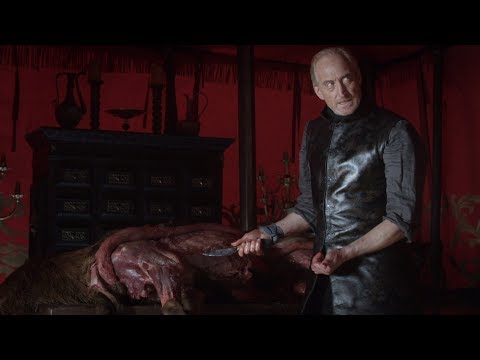
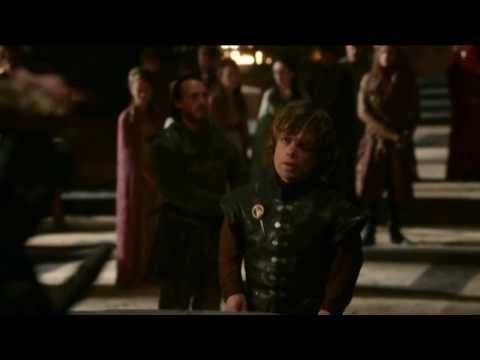
lannister em 30 segundos
- A Lannister is a fictional character archetype representing extreme wealth, strategic ruthlessness, and a 'family-first' mentality that often operates outside of traditional moral boundaries.
- The term is famously linked to the proverb 'A Lannister always pays his debts,' which signifies both financial reliability and a commitment to returning favors or slights.
- In modern English, it is used metaphorically to describe powerful business dynasties, political families, or individuals who use their resources with cold, calculated precision.
- Visually, the name evokes the colors crimson and gold and the symbol of a lion, representing pride, dominance, and an intimidating level of luxury and success.
The term Lannister has evolved from a simple proper noun in fantasy literature into a potent cultural archetype. Originally coined by George R.R. Martin for his 'A Song of Ice and Fire' series, it refers to a member of House Lannister, the wealthiest and most politically cunning family in the fictional realm of Westeros. However, in contemporary English, particularly among those familiar with pop culture, it has become a metaphorical descriptor for individuals or organizations characterized by immense wealth, ruthless pragmatism, and an unwavering commitment to family interests. When someone is called a 'Lannister,' the speaker is often highlighting a blend of power and perceived coldness. It is not merely about having money; it is about the power that money buys and the willingness to use that power to maintain one's status at any cost. The name carries a weight of legacy and the burden of a reputation that precedes the individual.
- The Debt Metaphor
- The most famous association with the name is the phrase 'A Lannister always pays his debts.' While the official house motto is 'Hear Me Roar,' the 'debt' phrase is what defines their social standing. In a literal sense, it means they are financially reliable. Metaphorically, it implies a terrifying sense of reciprocity: if you help them, they will reward you, but if you cross them, they will ensure you suffer an equal or greater loss. This duality makes the term 'Lannister' a complex label for a business partner or political ally.
In the high-stakes world of venture capital, she moved like a Lannister, securing her family's fortune while quietly neutralizing her competitors.
The visual and symbolic language surrounding the Lannisters—lions, the colors crimson and gold, and the idea of 'Casterly Rock' (their ancestral home)—contributes to the word's usage. To describe a room as having 'Lannister luxury' suggests a style that is opulent, intimidating, and perhaps a bit old-fashioned in its grandeur. It evokes a sense of 'old money' that is aggressive rather than passive. In social commentary, the term might be used to critique dynasties that seem to operate above the law, relying on their financial 'gold' to solve problems that would ruin others. It is a word that sits at the intersection of admiration for success and suspicion of the methods used to achieve it.
- Ruthless Pragmatism
- A 'Lannister' approach to a problem is one that ignores sentimentality in favor of results. This is often seen in corporate restructuring or political maneuvering where the 'Lannister' figure makes the hard, often unpopular choices to ensure the long-term survival of their 'house' or company. It is the personification of Machiavellianism in a modern, gilded coat.
He handled the merger with the cold efficiency of a Lannister, leaving no doubt about who held the real power.
Furthermore, the term can be applied to family dynamics. A 'Lannister family' is one that is fiercely loyal to its members against the outside world, even if they are dysfunctional or cruel to one another in private. This 'us against the world' mentality is a hallmark of the Lannister brand. It suggests a closed circle where the family name is the ultimate priority, transcending individual morality or public opinion. In this context, the word is often used to describe political families or business empires where the children are groomed from birth to protect the family's legacy.
The CEO's children were raised as Lannisters, taught that the company's reputation was more important than their own personal happiness.
- Cultural Resonance
- Because 'Game of Thrones' was a global phenomenon, the term 'Lannister' is understood across many cultures. It has become a shorthand for 'the powerful antagonist you can't help but respect.' It bridges the gap between high fantasy and real-world social observation, allowing people to discuss complex power dynamics using a widely understood reference point.
Even his enemies admitted he was a Lannister when it came to keeping his word, however much they hated his methods.
The gala was a sea of Lannister gold and crimson, a display of wealth that bordered on the offensive.
In summary, to invoke the name 'Lannister' is to call upon a rich tapestry of associations: the glitter of gold, the roar of a lion, the cold calculation of a master strategist, and the unbreakable bond of a family that views the rest of the world as a chessboard. It is a word for the powerful, the proud, and the profoundly debt-conscious.
Using the word Lannister effectively requires an understanding of its metaphorical weight. Because it is a proper noun, it should always be capitalized, even when used as an adjective. It is most frequently used in comparisons, often with the word 'like' or 'as,' or as a direct label for someone exhibiting specific traits of wealth and ruthlessness. The key is to ensure the context supports the idea of power, family loyalty, or financial reliability.
- Metaphorical Comparison
- When you use 'Lannister' to describe a person, you are usually making a statement about their character. It suggests they are formidable and perhaps a bit dangerous. For example: 'He has a Lannister-like devotion to his family's business empire.' This sentence tells us that his loyalty is absolute and likely aggressive.
Don't expect mercy from the board of directors; they are Lannisters through and through when it comes to the bottom line.
Another common way to use the word is in reference to the 'debt' proverb. This is particularly useful in business or social contexts where someone is known for returning favors or seeking revenge. 'You can trust him to pay you back; he's a real Lannister in that regard.' Here, the word acts as a shorthand for reliability, though with a slightly ominous undertone. It implies that the person takes their obligations very seriously, perhaps to an extreme degree.
- Describing Opulence
- The word can also be used to describe an aesthetic. If a hotel lobby is filled with gold leaf, deep red velvets, and intimidatingly large statues, one might describe it as 'Lannister-esque.' This usage focuses on the visual markers of House Lannister—their colors and their desire to project power through wealth.
The penthouse was decorated in a style that could only be described as Lannister chic: lots of gold, red, and expensive-looking lions.
In political commentary, 'Lannister' is often used to describe a political dynasty. 'The Smith family has become the Lannisters of the state legislature, controlling every major committee for three generations.' This usage emphasizes the longevity and the 'clannish' nature of their power. It suggests that they are a unified front that is difficult to break. It also implies that their power is inherited and fiercely guarded.
She played the political game like a Lannister, always three steps ahead of her rivals and never forgetting a slight.
- The 'Tyrion' Variation
- Sometimes, people use 'Lannister' to specifically evoke the character Tyrion Lannister—meaning someone who is witty, underestimated, and uses their intellect to survive in a world of giants. 'He's the Tyrion of the family: small in stature but the smartest Lannister in the room.'
Despite being the youngest, he was the most Lannister of them all, possessing a sharp tongue and an even sharper mind.
The way they protect their own is very Lannister; they might fight each other, but they'll kill anyone else who tries to intervene.
Ultimately, the word 'Lannister' is a versatile tool for describing a specific type of high-stakes, family-oriented power. Whether you are talking about a billionaire's business tactics, a politician's long-term strategy, or a friend's uncanny ability to always pay back a loan, the name 'Lannister' provides a vivid, culturally rich shorthand that conveys more than a simple adjective ever could.
The word Lannister is most frequently encountered in the context of popular culture discussions, but its reach extends far beyond fan forums. You will hear it in news articles, business analyses, and even in casual conversations among people who have never read the books or seen the show, but have absorbed the term through cultural osmosis. It has become a standard reference point for a certain kind of 'villainous' success.
- In Pop Culture Media
- Naturally, the word is ubiquitous in reviews and discussions of 'Game of Thrones' and 'House of the Dragon.' Critics often use 'Lannister' as a benchmark for character development. For example, a reviewer might say, 'The protagonist's descent into ruthlessness is very Lannister-esque,' implying a shift toward cold, calculated power-seeking.
The latest episode showed a Lannister level of betrayal that left fans reeling on social media.
In the business world, financial journalists sometimes use the term to describe wealthy families or corporate giants. When a company is known for its aggressive acquisition strategies or its 'winner-takes-all' mentality, it might be compared to House Lannister. This is especially true when discussing 'old money' families who are seen as the puppet masters of an industry. The phrase 'A Lannister always pays his debts' is frequently quoted in articles about financial reliability or the importance of creditworthiness, often with a wink to the reader.
- In Political Commentary
- Political pundits love a good 'Game of Thrones' metaphor. You might hear a commentator describe a political dynasty as 'the Lannisters of the Beltway.' This implies that the family is wealthy, powerful, and perhaps more concerned with their own legacy than the public good. It also suggests a certain level of strategic brilliance that makes them difficult to defeat.
The senator's family has been called the Lannisters of the Midwest due to their iron grip on local politics.
Social media is another place where the word thrives. Memes featuring the Lannister characters are used to react to real-world news. If a billionaire makes a controversial move, the comments might be flooded with 'Lannister' references. It has become a way for the general public to process and categorize the behavior of the ultra-wealthy. The term 'Lannister energy' is a common slang phrase used to describe someone who carries themselves with an air of arrogant, well-funded confidence.
- In Literature and Academic Writing
- Even in more formal settings, 'Lannister' is used as a modern example of a literary archetype. Scholars of fantasy literature or medievalism might compare the Lannisters to real historical families like the Borgias or the Medicis. In this context, the word represents the 'corrupt but capable' ruling class that is a staple of historical and fantasy narratives.
The author explores the Lannister archetype of the 'golden child' who is burdened by the weight of family expectation.
In the debate over inheritance tax, one speaker referred to 'the Lannister problem'—the concentration of wealth in a few powerful hands.
Whether it's a joke about a friend who always pays for dinner ('A Lannister always pays his debts!') or a serious critique of a corporate dynasty, the word 'Lannister' is a vibrant part of the modern English lexicon. It provides a shorthand for a specific, complex set of behaviors that would otherwise take many more words to describe.
While Lannister is a widely recognized term, there are several common mistakes people make when using it, ranging from grammatical errors to misunderstandings of its metaphorical depth. Because it is a proper noun derived from a specific fictional universe, its usage requires a certain level of precision to be effective and accurate.
- Capitalization Errors
- The most frequent mistake is failing to capitalize the word. Since it is a proper name, it must always start with an uppercase 'L.' Writing 'he is a lannister' is grammatically incorrect. Even when used as an adjective (e.g., 'Lannister-like'), the 'L' should remain capitalized. This respects its origin as a specific family name.
Incorrect: He has a lannister attitude toward money. Correct: He has a Lannister attitude toward money.
Another mistake is oversimplifying the term to mean just 'rich.' While wealth is a key component of being a Lannister, it is not the only one. Using 'Lannister' to describe a kind, generous billionaire would be a misuse of the term. A 'Lannister' is characterized by a specific type of wealth that is used for power, control, and family preservation. If the person isn't also somewhat ruthless or strategically minded, 'Lannister' might not be the right word. A better term for a simply 'rich' person might be 'Croesus' or 'Rockefeller.'
- Misquoting the Motto
- Many people mistakenly believe 'A Lannister always pays his debts' is the official motto of the house. In the books, the official motto is actually 'Hear Me Roar.' While the 'debts' phrase is more famous and culturally significant, a true fan or a precise writer will distinguish between the official words and the common saying. Using the 'debts' phrase as the 'motto' in a formal essay might be seen as a minor error in literary analysis.
Mistake: The Lannister motto is 'A Lannister always pays his debts.' Correction: While 'A Lannister always pays his debts' is their most famous saying, their official motto is 'Hear Me Roar.'
Confusing the different Lannister characters is another common pitfall. To call someone a 'Lannister' can mean many things depending on which character you are evoking. Tywin represents cold, patriarchal power; Cersei represents fierce, often paranoid protection of her children; Jaime represents a complex struggle between honor and family; and Tyrion represents wit and being an outcast. If you mean someone is 'witty and underestimated,' it's better to say they are 'a Tyrion' rather than just 'a Lannister,' which might imply they are 'cruel and powerful' like Tywin.
- Pluralization and Possession
- When referring to the family as a whole, use 'the Lannisters.' For possession, use 'Lannister's' (singular) or 'Lannisters'' (plural). For example: 'The Lannisters' wealth is legendary.' A common mistake is to forget the apostrophe or to use 'Lannister' when 'Lannisters' is required.
Incorrect: The Lannister are coming. Correct: The Lannisters are coming.
Incorrect: That is a Lannisters trait. Correct: That is a Lannister trait.
By avoiding these common mistakes, you can use the term 'Lannister' to add a layer of sophisticated cultural commentary to your writing and speech. It is a powerful word, but like the family it describes, it must be handled with care and strategic intent.
If you find that the word Lannister is too specific or perhaps too informal for your context, there are several alternatives that capture similar themes of wealth, power, and ruthlessness. Choosing the right word depends on which aspect of the 'Lannister' archetype you want to emphasize.
- Machiavellian
- This is perhaps the closest academic equivalent. It refers to the political philosophy of Niccolò Machiavelli, which emphasizes that 'the end justifies the means.' A Machiavellian person is cunning, strategic, and often unscrupulous in their pursuit of power. While a Lannister is often Machiavellian, a Machiavellian person doesn't necessarily have the Lannister wealth or family focus.
His Machiavellian scheme to take over the company was worthy of Tywin Lannister himself.
If you want to focus on the 'old money' and 'dynastic' aspect, you might use words like Patrician or Oligarchic. A 'patrician' family is one of high social rank and long-standing wealth, often implying a sense of duty but also a certain aloofness. An 'oligarch' is a member of a small group that exercises control over a country or organization, usually through wealth. These words are more formal and less tied to a specific fictional reference.
- Borgia / Medici
- For historical comparisons, the Borgias and the Medicis are the real-world Lannisters. The Borgias are famous for their corruption, ruthlessness, and family scandals in Renaissance Italy. The Medicis are known for their immense banking wealth and their role as the 'godfathers' of the Renaissance. Using these names adds a layer of historical weight to your description.
The family's influence on the city's art and politics was almost Medici-like in its scope.
When focusing specifically on the 'ruthless wealth' aspect, Plutocratic is a strong choice. A plutocracy is a society governed by the wealthy. Describing someone's actions as 'plutocratic' suggests they are using their money to bypass democratic processes or social norms. This captures the 'gold as a weapon' theme of the Lannisters without the fictional baggage.
- Dynastic
- If the primary trait you're highlighting is the family's long-term grip on power, 'dynastic' is the most accurate term. It refers to a succession of people from the same family who play a prominent role in business, politics, or another field. It lacks the 'ruthless' connotation of 'Lannister' but emphasizes the 'family first' mentality.
The dynastic nature of the company made it impossible for outsiders to reach the top positions.
She had a patrician air that made everyone else in the room feel slightly out of place.
In conclusion, while 'Lannister' is a uniquely evocative word, these alternatives allow you to fine-tune your meaning. Whether you need the historical depth of 'Borgia,' the philosophical precision of 'Machiavellian,' or the formal tone of 'Patrician,' there is a word to match every shade of power and wealth.
How Formal Is It?
Curiosidade
The name 'Lannister' is so well-known that it has been used in actual financial reports to describe the creditworthiness of certain countries or corporations.
Guia de pronúncia
- Pronouncing the 'a' like 'ah' (Lahn-ister).
- Adding an extra 's' (Lanniss-ter).
- Mispelling it as 'Lanister' (one 'n').
- Failing to capitalize it in writing.
- Confusing the pronunciation with 'Lancaster'.
Nível de dificuldade
Requires knowledge of the fictional context to fully understand the nuance.
Must remember capitalization and correct spelling.
Pronunciation is relatively straightforward.
Easily recognizable due to its distinct sound.
O que aprender depois
Pré-requisitos
Aprenda a seguir
Avançado
Gramática essencial
Capitalization of Proper Nouns
Always write 'Lannister' with a capital L.
Possessive Proper Nouns
Use 'Lannister's' for one person and 'Lannisters'' for the whole family.
Similes with 'Like'
He acts like a Lannister.
Adjective Suffixes (-esque, -like)
The room was Lannister-esque.
Pluralizing Surnames
The Lannisters are a powerful family.
Exemplos por nível
He is very rich, like a Lannister.
Il est très riche, comme un Lannister.
Using 'like' for a simple comparison.
The Lannister family has a lot of gold.
La famille Lannister a beaucoup d'or.
Proper noun used as a subject.
Is he a Lannister?
Est-il un Lannister ?
Simple question structure.
I see a Lannister on TV.
Je vois un Lannister à la télé.
Direct object in a simple sentence.
Lannisters are very powerful.
Les Lannister sont très puissants.
Plural proper noun.
That house is big, like a Lannister castle.
Cette maison est grande, comme un château Lannister.
Proper noun used as an adjective.
He pays his debts like a Lannister.
Il paie ses dettes comme un Lannister.
Comparison with a specific trait.
The Lannister lion is gold.
Le lion des Lannister est en or.
Possessive use (implied).
A Lannister always pays his debts, so don't worry.
Un Lannister paie toujours ses dettes, alors ne t'inquiète pas.
Using the famous proverb.
She acts like a Lannister when she is at work.
Elle se comporte comme une Lannister quand elle est au travail.
Simile describing behavior.
The Lannisters are the richest family in the story.
Les Lannister sont la famille la plus riche de l'histoire.
Superlative with a proper noun.
He has Lannister hair—it's very blonde.
Il a des cheveux de Lannister — ils sont très blonds.
Proper noun as a descriptive adjective.
I don't want to be a Lannister; they are too mean.
Je ne veux pas être un Lannister ; ils sont trop méchants.
Infinitive phrase with a proper noun.
The Lannister name is very famous now.
Le nom Lannister est très célèbre maintenant.
Proper noun modifying a common noun.
He is a Lannister, so he has a lot of pride.
C'est un Lannister, donc il a beaucoup de fierté.
Cause and effect sentence.
They live in a Lannister-style mansion.
Ils vivent dans un manoir de style Lannister.
Compound adjective.
In business, he is a real Lannister—ruthless but reliable.
En affaires, c'est un vrai Lannister — impitoyable mais fiable.
Metaphorical use in a professional context.
The company's approach to competition is very Lannister-like.
L'approche de l'entreprise vis-à-vis de la concurrence est très 'Lannister'.
Adjective formed with '-like'.
If you cross him, remember that a Lannister always pays his debts.
Si tu le trahis, souviens-toi qu'un Lannister paie toujours ses dettes.
Proverb used as a warning.
She has that Lannister ambition to reach the top of the firm.
Elle a cette ambition de Lannister pour atteindre le sommet de l'entreprise.
Proper noun as a modifier for an abstract noun.
The family is known as the Lannisters of the local political scene.
La famille est connue comme les Lannister de la scène politique locale.
Pluralized proper noun used as a category.
His office was decorated in Lannister gold and crimson.
Son bureau était décoré en or et cramoisi Lannister.
Describing an aesthetic using the name.
He handled the crisis with Lannister efficiency.
Il a géré la crise avec une efficacité de Lannister.
Abstract noun modified by a proper noun.
Being a Lannister means putting the family name above all else.
Être un Lannister signifie placer le nom de famille au-dessus de tout le reste.
Gerund phrase as the subject.
The CEO's decision to cut the pension fund was seen as a classic Lannister move.
La décision du PDG de réduire le fonds de pension a été vue comme un geste classique de Lannister.
Describing a specific action as characteristic of the name.
They are a Lannister dynasty, controlling the industry for decades.
C'est une dynastie Lannister, qui contrôle l'industrie depuis des décennies.
Using the name to describe a long-term power structure.
Her Lannister-esque pragmatism made her the most effective negotiator in the room.
Son pragmatisme à la Lannister a fait d'elle la négociatrice la plus efficace de la salle.
Adjective with '-esque' suffix.
He possesses the Lannister knack for turning a disadvantage into a victory.
Il possède ce talent de Lannister pour transformer un désavantage en victoire.
Possessive proper noun modifying a common noun.
The gala was a display of Lannister-level opulence that left everyone stunned.
Le gala était une démonstration d'opulence de niveau Lannister qui a laissé tout le monde stupéfait.
Compound modifier for degree.
To some, he is a hero; to others, he is a dangerous Lannister.
Pour certains, c'est un héros ; pour d'autres, c'est un dangereux Lannister.
Parallel structure with contrasting labels.
The way they protect their secrets is very Lannister.
La façon dont ils protègent leurs secrets est très Lannister.
Proper noun used as a predicate adjective.
He has the Lannister look: blonde, sharp, and slightly arrogant.
Il a le look Lannister : blond, vif et un peu arrogant.
Colon used to list characteristics of the name.
The political landscape is dominated by Lannister-style machinations that prioritize legacy over law.
Le paysage politique est dominé par des machinations de style Lannister qui privilégient l'héritage sur la loi.
Complex sentence with a relative clause and compound adjective.
In the realm of corporate law, she is a Lannister, known for her 'scorched earth' tactics.
Dans le domaine du droit des affaires, c'est une Lannister, connue pour ses tactiques de la 'terre brûlée'.
Appositive phrase providing further detail.
The family's commitment to their own is Lannisterian in its intensity and its moral ambiguity.
L'engagement de la famille envers les siens est lannistérien dans son intensité et son ambiguïté morale.
Adjectival form 'Lannisterian' used for formal tone.
He embodies the Lannister paradox: a man of great honor who will commit any sin for his house.
Il incarne le paradoxe Lannister : un homme de grand honneur qui commettra n'importe quel péché pour sa maison.
Abstract concept linked to the proper noun.
The rise of this new tech dynasty has been described as the 'Lannisterization' of Silicon Valley.
L'ascension de cette nouvelle dynastie technologique a été décrite comme la 'Lannistérisation' de la Silicon Valley.
Noun formed from the proper noun to describe a process.
Their wealth is not just a resource; it is a Lannister shield against the consequences of their actions.
Leur richesse n'est pas seulement une ressource ; c'est un bouclier Lannister contre les conséquences de leurs actes.
Metaphorical use of the name as a modifier.
One cannot help but admire the Lannister resolve, even while deploring their methods.
On ne peut s'empêcher d'admirer la résolution des Lannister, même tout en déplorant leurs méthodes.
Participial phrase 'even while deploring...'.
The narrative arc of the family is a Lannister tragedy of pride and gold.
L'arc narratif de la famille est une tragédie Lannister de fierté et d'or.
Using the name to define a specific type of literary tragedy.
The sociological study critiques the Lannister-like insularity of the global 1%, who operate beyond national borders.
L'étude sociologique critique l'insularité de type Lannister du 1 % mondial, qui opère au-delà des frontières nationales.
Highly academic sentence structure using the name as a comparative tool.
His leadership style was a potent mix of Lannisterian pragmatism and a genuine, if ruthless, desire for order.
Son style de leadership était un mélange puissant de pragmatisme lannistérien et d'un désir d'ordre authentique, bien qu'impitoyable.
Use of 'Lannisterian' to elevate the register.
To understand the current political deadlock, one must look at the Lannister-esque dynasties that control the key committees.
Pour comprendre l'impasse politique actuelle, il faut regarder les dynasties à la Lannister qui contrôlent les commissions clés.
Complex sentence with an infinitive of purpose and a relative clause.
The film explores the 'Lannister burden'—the psychological toll of maintaining a legacy of perceived perfection.
Le film explore le 'fardeau Lannister' — le coût psychologique du maintien d'un héritage de perfection perçue.
Using the name to label a specific psychological phenomenon.
Her defense of the family business was nothing short of Lannister, involving both legal brilliance and strategic intimidation.
Sa défense de l'entreprise familiale n'était rien de moins que du Lannister, impliquant à la fois brio juridique et intimidation stratégique.
Idiomatic 'nothing short of' followed by the proper noun.
The architectural design was a modern interpretation of Lannister power, all sharp angles and gilded surfaces.
La conception architecturale était une interprétation moderne de la puissance Lannister, tout en angles vifs et surfaces dorées.
Metaphorical application of the name to a non-human subject.
In the end, his Lannister pride was his undoing, as he refused to compromise even when defeat was certain.
En fin de compte, sa fierté de Lannister a causé sa perte, car il a refusé de faire des compromis même quand la défaite était certaine.
Causal 'as' clause explaining the result of the 'Lannister pride'.
The book deconstructs the Lannister myth, showing the rot beneath the golden exterior of the world's elite.
Le livre déconstruit le mythe Lannister, montrant la pourriture sous l'extérieur doré de l'élite mondiale.
Participial phrase 'showing the rot...' modifying the main clause.
Colocações comuns
Frases Comuns
— A phrase meaning that a person is reliable in returning favors or seeking revenge. It emphasizes reciprocity.
I'll help you this time, but remember: a Lannister always pays his debts.
— The official motto of House Lannister, used to express power, dominance, and a warning to enemies.
She walked into the meeting with a 'hear me roar' attitude that silenced the room.
— Refers to immense, often inherited wealth that is used as a source of power.
They think they can solve everything with Lannister gold.
— Doing things in a ruthless, pragmatic, and family-oriented manner.
Winning at any cost—that's the Lannister way.
— Describing someone who is blonde, attractive, and carries themselves with an air of superiority.
He has that classic Lannister look that makes people both admire and fear him.
— Refers to the traits or heritage of the Lannister family, often implying pride or ruthlessness.
You can tell she has Lannister blood by the way she handles pressure.
— In the style of a Lannister; characterized by wealth and strategic power.
The party was Lannister-esque in its scale and opulence.
— Often a reference to Tyrion Lannister, meaning someone who is clever and witty despite being an underdog.
He might be the youngest, but he's the smartest Lannister in the room.
— An intense, sometimes blinding sense of family honor and personal superiority.
His Lannister pride wouldn't let him ask for help.
— Similar to a Lannister in behavior or appearance.
The family's control over the town is very Lannister-like.
Frequentemente confundido com
A real English noble family. The Lannisters were likely inspired by them, but 'Lancaster' is historical, while 'Lannister' is fictional.
Similar in meaning (ruthless strategy), but 'Machiavellian' is a general philosophical term, while 'Lannister' specifically implies wealth and family.
The rival family in the same story. Starks represent 'honor and cold weather,' while Lannisters represent 'wealth and ruthlessness.' Don't mix them up!
Expressões idiomáticas
— To settle an obligation, whether it's a financial loan or a personal favor/grudge.
He's coming back to pay his Lannister debts, so be prepared for either a reward or a fight.
Informal/Slang— To be cold, calculating, and prioritize family or power over emotion.
She has a Lannister heart; she won't let her feelings get in the way of the deal.
Literary— A variation of 'born with a silver spoon,' implying one was born into extreme wealth and power.
He didn't earn his position; he was born with a Lannister spoon in his mouth.
Informal— To perform a move that is surprisingly ruthless or strategically brilliant to secure power.
He pulled a Lannister and bought out the competition before they even knew he was interested.
Slang— A humorous pop-culture idiom describing someone who is tough/rich publicly but kind/loyal privately.
He's a Lannister in the streets, but a Stark in the sheets—totally different person at home.
Slang/Humorous— To assert one's power or dominance in a loud and unmistakable way.
When the company was threatened, the CEO roared like a Lannister and shut down the rumors.
Metaphorical— Extremely wealthy or possessing a 'golden' (blonde) appearance.
With his new promotion, he's as gold as a Lannister.
Informal— Being treated with a mix of high luxury and cold, professional distance.
The hotel gave us the full Lannister treatment—everything was perfect, but the staff was very formal.
Informal— To risk a significant amount of wealth or a family's entire reputation on a single venture.
He's betting the Lannister gold on this new tech startup.
Informal— A promise that is absolutely guaranteed to be kept, often for better or worse.
You have a Lannister's word; the money will be in your account by morning.
InformalFácil de confundir
Often confused with other fictional families.
Lannisters are specifically the 'rich and ruthless' ones. Targaryens are the 'dragon' ones. Starks are the 'honor' ones.
He's a Lannister, not a Stark; he cares about gold, not honor.
Lannister is often used as a synonym for rich.
Rich is just about money. Lannister is about money + power + family + ruthlessness.
He's not just rich; he's a Lannister who uses his money to control people.
Lannister implies ruthlessness.
Ruthless is a general adjective. Lannister is a specific cultural archetype that includes ruthlessness.
His Lannister ruthlessness was evident in the way he fired his staff.
Lannisters are a dynasty.
Dynastic is a formal term for family power. Lannister is a more colorful, metaphorical way to say the same thing.
The family's dynastic power was very Lannister-like.
Both involve cunning.
Machiavellian focuses on the 'end justifying the means.' Lannister focuses on 'family and gold.'
His plan was Machiavellian, but his style was pure Lannister.
Padrões de frases
He is like a [Proper Noun].
He is like a Lannister.
The [Proper Noun] family is [Adjective].
The Lannister family is rich.
He has a [Proper Noun]-like [Noun].
He has a Lannister-like pride.
It was a classic [Proper Noun] move.
It was a classic Lannister move.
[Proper Noun]ian [Noun] is [Adjective].
Lannisterian pragmatism is effective.
The [Noun] of [Proper Noun]ization.
The process of Lannisterization in the industry.
To act as a [Proper Noun] would.
He acted as a Lannister would.
Possessing the [Proper Noun] [Noun].
Possessing the Lannister gold.
Família de palavras
Substantivos
Verbos
Adjetivos
Relacionado
Como usar
High in pop culture, Medium in general media, Low in academic writing (unless literary).
-
Writing 'lannister' with a lowercase 'l'.
→
Lannister
It is a proper noun (a name) and must always be capitalized.
-
Using 'Lannister' to mean just 'any rich person'.
→
Using it for a 'ruthless and strategic' rich person.
A Lannister is a specific type of rich person. If they are just kind and wealthy, use 'philanthropist.'
-
Mispelling it as 'Lanister'.
→
Lannister
The name has two 'n's. This is a very common spelling error.
-
Saying 'The Lannister motto is: A Lannister always pays his debts.'
→
The motto is 'Hear Me Roar.'
While the 'debts' phrase is famous, it's not the official motto. This is a common mistake for casual fans.
-
Confusing 'Lannister' with 'Lancaster'.
→
Lannister (fictional) vs Lancaster (historical).
Don't use the fictional name when you are talking about real English history, and vice versa.
Dicas
Embrace the Lion
When using 'Lannister,' think of the lion. It's about being at the top of the food chain. Use it for people who dominate their field.
Capitalization Matters
Always capitalize 'Lannister.' It shows you respect the word's origin as a proper name and keeps your writing professional.
Money as a Weapon
Remember that a Lannister doesn't just have money; they *use* money. Use the word when wealth is being used to influence or control.
Try 'Lannisterian'
For a more formal or academic sound, use the adjective 'Lannisterian.' It sounds more like a legitimate analytical term.
The Debt Rule
Use the 'paying debts' phrase to describe someone's reliability. It's a great way to compliment someone's business ethics with a bit of flair.
Crimson and Gold
If you're describing a place that is very fancy but also a bit intimidating, 'Lannister' is the perfect word to use.
Which Lannister?
Think about which character you mean. Are they a Tywin (power), a Cersei (protection), or a Tyrion (wit)? Be specific if you can.
Global Metaphor
Don't be afraid to use it with international friends. Most people who watch TV will understand exactly what you mean.
Compound It
Words like 'Lannister-style' or 'Lannister-level' are very common and help you fit the name into different sentence structures.
Watch the Tone
Calling someone a Lannister can be a compliment or a critique. Make sure your tone of voice or the surrounding words make your meaning clear.
Memorize
Mnemônico
Remember: LAN-nis-ter. LAN like 'Land' (they own lots of it), NIS like 'Nice' (they look nice/rich), TER like 'Terror' (they are scary if you owe them money).
Associação visual
Imagine a golden lion wearing a crown and holding a bag of gold coins. The lion is sitting on a red throne.
Word Web
Desafio
Try to use 'Lannister' in a sentence to describe a famous business person or a character from another movie. Write it down and check the capitalization.
Origem da palavra
The word was created by George R.R. Martin for his book series 'A Song of Ice and Fire' (1996). It is a fictional surname designed to sound noble and slightly English, possibly inspired by the House of Lancaster from the real-world Wars of the Roses.
Significado original: In the context of the books, it refers to the descendants of Lann the Clever, a legendary figure who tricked his way into owning Casterly Rock.
Constructed English (Literary)Contexto cultural
Be careful using it to describe real people, as it can be seen as calling them 'villainous' or 'untrustworthy.'
Commonly used in the US and UK as a shorthand for 'rich and ruthless.'
Pratique na vida real
Contextos reais
Business Negotiations
- A Lannister always pays his debts.
- Lannister-like efficiency.
- Strategic ruthlessness.
- The bottom line.
Pop Culture Discussion
- Lannister vibes.
- Team Lannister.
- The smartest Lannister.
- Hear me roar.
Political Analysis
- Political dynasty.
- Lannister-style maneuvering.
- Family legacy.
- Iron grip on power.
Interior Design
- Lannister gold.
- Crimson and gold palette.
- Opulent decor.
- Regal aesthetic.
Family Relationships
- Fierce family loyalty.
- The Lannister bond.
- Us against the world.
- Protecting the name.
Iniciadores de conversa
"Do you think it's a compliment or an insult to be called a Lannister?"
"Which Lannister character do you think is the most misunderstood?"
"Have you ever met someone who had real 'Lannister energy' in business?"
"Why do you think the phrase 'A Lannister always pays his debts' is so famous?"
"If you had Lannister wealth, what is the first thing you would buy?"
Temas para diário
Describe a time when you had to be 'ruthless' like a Lannister to achieve a goal. Do you regret it?
Write about a family you know (real or fictional) that reminds you of the Lannisters. What are their similarities?
How important is 'paying your debts' (metaphorical or literal) to your personal philosophy?
If you were a Lannister, would you prefer to be feared like Tywin or loved (by some) like Tyrion?
Reflect on the idea of 'family first.' When does this become a negative trait, as seen with the Lannisters?
Perguntas frequentes
10 perguntasNo, it was created by George R.R. Martin for his books. However, it sounds similar to real names like Lancaster or Bannister.
Only if you are writing about literature or pop culture. In a serious academic or business essay, it's better to use terms like 'Machiavellian' or 'plutocratic' unless you are making a specific cultural comparison.
It means they are reliable. If they owe you money, they pay it. If you help them, they reward you. If you hurt them, they get revenge. It's about balance and reciprocity.
The lion is the sigil (symbol) of House Lannister. It represents their pride, strength, and status as 'kings' of their domain.
It depends. It means you are seen as powerful, successful, and reliable. However, it also suggests you might be cold, ruthless, or untrustworthy.
In the story, Tyrion Lannister is often the most popular, but Tywin Lannister is the one most associated with the 'ruthless power' archetype.
Yes, always. It is a proper noun, just like 'Smith' or 'London.'
Crimson (dark red) and gold. These colors represent blood and wealth.
Yes, informally. You can say 'That is so Lannister' or use 'Lannister-like' and 'Lannister-esque.'
Yes, because 'Game of Thrones' was a global hit, the term is understood in many languages and cultures.
Teste-se 200 perguntas
Write a simple sentence about a rich person using the word 'Lannister'.
Well written! Good try! Check the sample answer below.
Explain what 'A Lannister always pays his debts' means in your own words.
Well written! Good try! Check the sample answer below.
Describe a character from a movie who acts like a Lannister. Why?
Well written! Good try! Check the sample answer below.
Compare the Lannister family to a real-world political dynasty.
Well written! Good try! Check the sample answer below.
Analyze the 'Lannister paradox' of family loyalty versus moral behavior.
Well written! Good try! Check the sample answer below.
Discuss the impact of the Lannister archetype on modern pop culture metaphors.
Well written! Good try! Check the sample answer below.
What color is a Lannister lion? Write a sentence.
Well written! Good try! Check the sample answer below.
Would you like to be a Lannister? Why or why not?
Well written! Good try! Check the sample answer below.
Write a short dialogue where someone uses the 'Lannister debt' phrase.
Well written! Good try! Check the sample answer below.
Describe a 'Lannister-style' office or house.
Well written! Good try! Check the sample answer below.
How does the name 'Lannister' function as a shorthand for power in business journalism?
Well written! Good try! Check the sample answer below.
Evaluate the 'Lannisterization' of global wealth distribution.
Well written! Good try! Check the sample answer below.
Write the word 'Lannister' three times with correct capitalization.
Well written! Good try! Check the sample answer below.
What show are the Lannisters from? Write it in a full sentence.
Well written! Good try! Check the sample answer below.
Use 'Lannister-like' to describe a person's attitude.
Well written! Good try! Check the sample answer below.
Write a paragraph about a fictional 'Lannister' takeover of a company.
Well written! Good try! Check the sample answer below.
Discuss the role of 'Lannister pride' in the downfall of a leader.
Well written! Good try! Check the sample answer below.
Critique the use of fantasy archetypes like 'Lannister' in serious political discourse.
Well written! Good try! Check the sample answer below.
Explain the difference between a Lannister and a Stark.
Well written! Good try! Check the sample answer below.
What does 'Hear Me Roar' tell us about the Lannister personality?
Well written! Good try! Check the sample answer below.
Say 'Lannister' out loud. Focus on the 'LAN' sound.
Read this aloud:
Você disse:
Speech recognition is not supported in your browser. Try Chrome or Edge.
Say 'A Lannister always pays his debts.' Use a serious tone.
Read this aloud:
Você disse:
Speech recognition is not supported in your browser. Try Chrome or Edge.
Describe a 'Lannister' person you know or have seen on TV.
Read this aloud:
Você disse:
Speech recognition is not supported in your browser. Try Chrome or Edge.
Explain why the Lannisters are both admired and hated.
Read this aloud:
Você disse:
Speech recognition is not supported in your browser. Try Chrome or Edge.
Give a short speech about the dangers of 'Lannister pride' in leadership.
Read this aloud:
Você disse:
Speech recognition is not supported in your browser. Try Chrome or Edge.
Debate the ethics of the 'Lannister way' in a high-stakes business environment.
Read this aloud:
Você disse:
Speech recognition is not supported in your browser. Try Chrome or Edge.
Say 'Lannister gold' and 'Lannister lion'.
Read this aloud:
Você disse:
Speech recognition is not supported in your browser. Try Chrome or Edge.
Tell a friend what show the Lannisters are from.
Read this aloud:
Você disse:
Speech recognition is not supported in your browser. Try Chrome or Edge.
Roleplay a business meeting where you act like a Lannister.
Read this aloud:
Você disse:
Speech recognition is not supported in your browser. Try Chrome or Edge.
Discuss the 'Lannister aesthetic' in fashion or design.
Read this aloud:
Você disse:
Speech recognition is not supported in your browser. Try Chrome or Edge.
Analyze the character of Tyrion Lannister as a 'modern hero'.
Read this aloud:
Você disse:
Speech recognition is not supported in your browser. Try Chrome or Edge.
Deconstruct the cultural resonance of the Lannister name in the 21st century.
Read this aloud:
Você disse:
Speech recognition is not supported in your browser. Try Chrome or Edge.
Say 'He is a Lannister' with a big smile.
Read this aloud:
Você disse:
Speech recognition is not supported in your browser. Try Chrome or Edge.
Say 'Hear me roar' like a lion.
Read this aloud:
Você disse:
Speech recognition is not supported in your browser. Try Chrome or Edge.
Explain the phrase 'Lannister vibes' to someone who doesn't know it.
Read this aloud:
Você disse:
Speech recognition is not supported in your browser. Try Chrome or Edge.
Compare the Lannisters to the Starks in a short presentation.
Read this aloud:
Você disse:
Speech recognition is not supported in your browser. Try Chrome or Edge.
Discuss the 'Lannisterization' of politics in your country.
Read this aloud:
Você disse:
Speech recognition is not supported in your browser. Try Chrome or Edge.
Critique the portrayal of wealth in 'Game of Thrones' through the Lannisters.
Read this aloud:
Você disse:
Speech recognition is not supported in your browser. Try Chrome or Edge.
Tell a story about a 'Lannister' who paid their debt.
Read this aloud:
Você disse:
Speech recognition is not supported in your browser. Try Chrome or Edge.
Describe the 'Lannister look' in detail.
Read this aloud:
Você disse:
Speech recognition is not supported in your browser. Try Chrome or Edge.
Listen for the word 'Lannister' in a short audio clip about TV shows.
Listen to a description of a wealthy man. Is he a 'Lannister' or a 'Stark'?
Listen to a podcast about business. How is the word 'Lannister' used as a metaphor?
Listen to a literary analysis of House Lannister. What three traits are mentioned?
Listen to a political debate. Identify the 'Lannister' reference and explain its meaning.
Listen to the pronunciation of 'Lannister'. Which syllable is stressed?
Listen to the phrase 'A Lannister always pays his debts'. What is the last word?
Listen to a character description. Does it sound like a Lannister?
Listen for the colors crimson and gold. Which family are they talking about?
Listen to a talk on 'Machiavellian leaders'. Is 'Lannister' mentioned?
Listen to a critique of 'dynastic wealth'. How does the speaker use the Lannister example?
Listen to a joke about a Lannister. What is the punchline?
Listen to a review of 'Game of Thrones'. What does the reviewer say about the Lannisters?
Listen to a lecture on 'Fantasy Archetypes'. How is the Lannister family classified?
Listen to a discussion on 'Legacy'. How do the Lannisters fit into this theme?
/ 200 correct
Perfect score!
Summary
The word 'Lannister' is more than a name; it is a shorthand for 'ruthless, wealthy power.' Use it to describe someone whose success is built on strategic brilliance and a fierce, often cold, devotion to their own legacy. Example: 'He runs the company like a Lannister, with no room for sentiment.'
- A Lannister is a fictional character archetype representing extreme wealth, strategic ruthlessness, and a 'family-first' mentality that often operates outside of traditional moral boundaries.
- The term is famously linked to the proverb 'A Lannister always pays his debts,' which signifies both financial reliability and a commitment to returning favors or slights.
- In modern English, it is used metaphorically to describe powerful business dynasties, political families, or individuals who use their resources with cold, calculated precision.
- Visually, the name evokes the colors crimson and gold and the symbol of a lion, representing pride, dominance, and an intimidating level of luxury and success.
Embrace the Lion
When using 'Lannister,' think of the lion. It's about being at the top of the food chain. Use it for people who dominate their field.
Capitalization Matters
Always capitalize 'Lannister.' It shows you respect the word's origin as a proper name and keeps your writing professional.
Money as a Weapon
Remember that a Lannister doesn't just have money; they *use* money. Use the word when wealth is being used to influence or control.
Try 'Lannisterian'
For a more formal or academic sound, use the adjective 'Lannisterian.' It sounds more like a legitimate analytical term.