baggins 30秒了解
- A famous fictional surname created by J.R.R. Tolkien for his Hobbit protagonists.
- Represents a blend of domestic comfort, respectability, and hidden heroic potential.
- Commonly used in fantasy literature, cinema, and modern pop culture references.
- Functions as a proper noun that must always be capitalized in writing.
The term 'Baggins' serves primarily as a proper noun, specifically a surname originating from the legendarium of J.R.R. Tolkien. To understand what a 'Baggins' is, one must delve into the pastoral and meticulously constructed world of Middle-earth, specifically the region known as the Shire. A Baggins is not merely a name; it represents a specific social standing and a set of character expectations within the Hobbit community. Historically, the Baggins family was regarded as one of the most respectable, wealthy, and predictable families in Hobbiton. When someone uses the name today, they are almost always referring to Bilbo Baggins or his nephew Frodo Baggins, the protagonists of 'The Hobbit' and 'The Lord of the Rings' respectively. In a modern, metaphorical sense, calling someone a 'Baggins' might imply they are a homebody, someone who cherishes the comforts of a warm hearth, multiple meals a day, and a quiet life away from the 'disturbances' of the outside world. However, the name also carries a secondary, more complex meaning: the hidden potential for extraordinary courage and resilience beneath a mundane exterior.
- Literary Origin
- Created by J.R.R. Tolkien in the early 1930s, the name was intended to sound English, cozy, and slightly comical, rooted in the word 'bag' and the idea of a cul-de-sac (Bag End).
'The Baggins family has lived in the neighborhood of The Hill for time out of mind, and people considered them very respectable.'
In contemporary discourse, the name is often invoked in discussions about heroism, the 'hero's journey,' and the archetype of the 'everyman.' Because Bilbo and Frodo are unlikely heroes—small, physically weak compared to warriors, and initially reluctant to leave home—the name 'Baggins' has become synonymous with the idea that even the smallest person can change the course of the future. It is used by literary critics to discuss the subversion of traditional epic tropes. Furthermore, in fan communities, 'Baggins' is a badge of identity, representing a love for high fantasy and the specific moral philosophy of Tolkien, which emphasizes mercy, friendship, and the preservation of nature over industrialization and power.
'He’s a real Baggins at heart, preferring his armchair and tea to any grand adventure you might suggest.'
- Cultural Archetype
- The 'Baggins' archetype represents the reluctant hero who finds strength in their domestic values rather than in martial prowess.
Beyond literature, the name has seeped into scientific nomenclature and pop culture references. There are species of spiders and fossils named after the Baggins characters, reflecting the deep impact Tolkien’s work has had on the scientific community's imagination. In casual conversation, if someone calls you a 'Baggins,' they might be teasing you for being too comfortable or 'settled,' or they might be complimenting your loyalty and hidden depths. It is a word that carries the weight of a 20th-century myth, bridging the gap between simple rural life and the grandest of cosmic struggles. Understanding 'Baggins' requires an appreciation for the duality of the character: the side that wants tea at four, and the side that, when pushed, can outwit a dragon or carry a burden that would break a king.
'I feel like a Baggins today; I just want to stay in my pajamas and read books.'
'The Bagginses of Bag End were known for their excellent pantry and their lack of interest in the world outside.'
- Symbolism
- The name symbolizes the intersection of the mundane and the magical, where a simple surname becomes a legendary title.
'You are a Baggins, and you come from a long line of respectable people who never did anything unexpected.'
Using the word 'Baggins' correctly involves recognizing its status as a proper noun and its specific literary connotations. In its most direct usage, it functions as a surname. However, because of the fame of the characters Bilbo and Frodo, the name is often used as a metonym for a certain type of person or experience. When constructing sentences, you must decide if you are referring to the characters themselves, the family as a whole, or using the name as a descriptive label for someone else. For instance, if you are writing a literary analysis, you might say, 'The transformation of the Baggins character from a complacent bourgeois figure to a seasoned traveler is central to the narrative.' Here, 'Baggins' acts as a specific identifier for the protagonist's identity and social class.
- As a Surname
- 'Mr. Baggins was standing at his door after breakfast smoking a very long wooden pipe.'
'The Baggins name was held in high regard until Bilbo went off on that business with the dwarves.'
In informal or creative writing, 'Baggins' can be used to evoke a specific mood or personality trait. You might describe a friend who loves their home as 'quite a Baggins.' In this context, the name functions almost like an adjective, though it remains a noun. It suggests a preference for comfort, a certain stubbornness regarding routine, and perhaps a secret longing for adventure that they would never admit to. You can also use it in the possessive form, 'Baggins's' or 'Baggins',' depending on your preferred style guide, though 'Baggins's' is often preferred for clarity in singular usage. When referring to the family unit, the plural 'Bagginses' is the standard Tolkienian form, which adds a touch of authenticity to your writing if you are referencing the books.
'If you keep acting like a Baggins, you'll never see the world beyond this town.'
- In Comparisons
- 'She has the adventurous spirit of a Took but the sensible mind of a Baggins.'
Another common usage is in the context of 'Baggins of Bag End.' This full title is often used to emphasize the character's connection to their ancestral home. In sentences, this can be used to highlight a character's roots or their sense of belonging. For example: 'No matter how far he traveled, he was always Baggins of Bag End.' This reinforces the theme of identity. Furthermore, in fan fiction or role-playing games, the name is used to denote lineage. 'He claimed to be a distant cousin of the famous Baggins.' The name carries such weight that its mere mention sets a specific scene of cozy interiors, round doors, and unexpected journeys.
'The Sackville-Bagginses were always trying to get their hands on the estate.'
'Is there a Baggins in the house who can help us with this riddle?'
- Metaphorical Usage
- 'After a long week of travel, I’m ready to return to my Baggins lifestyle of quiet evenings and early bedtimes.'
'The name Baggins became a legend among the people of the Lake-town.'
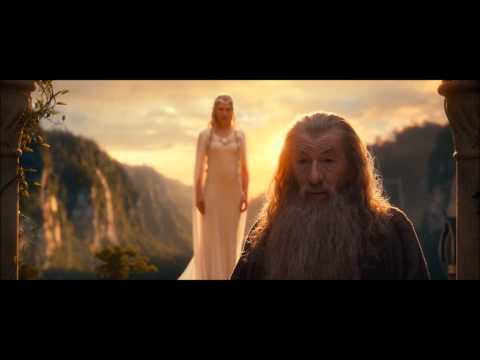
The word 'Baggins' is most frequently encountered in literary and cinematic contexts. Since the publication of 'The Hobbit' in 1937 and 'The Lord of the Rings' in the 1950s, the name has become a cornerstone of the fantasy genre. You will hear it in film adaptations, such as those directed by Peter Jackson, where characters like Gandalf, Gollum, and Thorin Oakenshield frequently utter the name with varying tones of affection, suspicion, or malice. Gollum’s iconic rasping of 'Baggins! We hates it, precious!' is perhaps one of the most famous lines in cinema history, making the name recognizable even to those who have never read the books. In these contexts, the name is a focal point of the plot, representing the person who holds the One Ring.
- In Cinema
- The name is spoken hundreds of times across the six Middle-earth films, often as a call to adventure or a cry of frustration.
'I am looking for someone to share in an adventure that I am arranging, and it’s very difficult to find anyone... especially a Baggins.'
You will also hear 'Baggins' in academic settings, particularly in English literature departments. Scholars analyze the name's etymology, its connection to the English countryside, and its role in Tolkien's philological project. In these discussions, 'Baggins' is treated as a symbol of the 'Little Englander' mentality that Tolkien both celebrated and critiqued. Outside of academia, the name is common in gaming culture. Whether in the official 'Lord of the Rings Online' MMO or in tabletop 'Dungeons & Dragons' sessions, players often reference the Baggins family when creating characters or discussing 'halfling' lore. It is a shorthand for a specific type of character: the small, stealthy, and surprisingly hardy adventurer.
'The professor’s lecture on Tolkien focused heavily on the linguistic roots of the name Baggins.'
- In Pop Culture
- The name appears in songs (like Leonard Nimoy's 'The Ballad of Bilbo Baggins'), television shows, and internet memes.
In everyday life, you might hear the word in bookstores, libraries, or at trivia nights. It is a common answer in crossword puzzles and quiz shows. In some cases, it is used in a derogatory way by those who find fantasy literature 'childish,' but more often, it is used with a sense of nostalgic affection. If you visit New Zealand, where the movies were filmed, you will hear the name 'Baggins' frequently in the context of tourism, particularly at the Hobbiton Movie Set. There, the name is part of a multi-million dollar industry, representing the cultural and economic impact of a single fictional family name. Finally, you might hear it in the names of pets; many dogs and cats are named 'Bilbo' or 'Baggins' due to their small size or home-loving nature.
'We named our golden retriever Baggins because he’s always looking for his next snack.'
'The tour guide at Hobbiton pointed out the exact spot where the Baggins family lived.'
- In Science
- 'Landouria baggins' is a species of land snail named after the character for its small size and terrestrial nature.
'I found a copy of the book where the previous owner had written 'Property of Baggins' on the inside cover.'
One of the most frequent mistakes people make with the word 'Baggins' is failing to capitalize it. As a proper noun—specifically a surname—it must always begin with an uppercase 'B'. Writing 'baggins' in lowercase is grammatically incorrect and can be confusing, as it might be mistaken for a misspelling of 'bagging' or another common noun. Another common error involves the pluralization of the name. In standard English, the plural of a name ending in 's' can be tricky. While some might be tempted to write 'Bagginses' or 'Baggins's,' Tolkien specifically used 'Bagginses' (e.g., 'The Bagginses of Bag End'). Using 'Baggins' as a plural (e.g., 'The two Baggins went on a trip') is incorrect; it should be 'The two Bagginses' or 'The two members of the Baggins family.'
- Capitalization
- Incorrect: 'bilbo baggins'. Correct: 'Bilbo Baggins'. Names are always capitalized.
'The Bagginses (not Baggins) were a very wealthy family in the Shire.'
Confusion also arises between 'Baggins' and 'Bag End.' 'Baggins' is the name of the family, while 'Bag End' is the name of their home. It is a mistake to use them interchangeably. For example, saying 'He lives in Baggins' is incorrect; he lives in Bag End, and he is a Baggins. Additionally, some people confuse the name with other Hobbit families, such as the Tooks or the Brandybucks. While all are Hobbits, a 'Baggins' specifically connotes the more conservative, home-loving side of Hobbit nature, whereas a 'Took' connotes the more adventurous, 'wild' side. Misusing these names can signal a lack of familiarity with the source material in literary discussions.
'This is Baggins's sword, and it glows blue when orcs are near.'
- Spelling Errors
- Common misspellings include 'Bagins' (one 'g') or 'Baggens'. Always use double 'g' and 'ins'.
Another mistake is using 'Baggins' as a general term for any Hobbit. While Bilbo and Frodo are the most famous Hobbits, not all Hobbits are Bagginses. Using the name as a synonym for the species 'Hobbit' is technically incorrect, though often understood in casual conversation. In formal writing or fan contexts, it is important to distinguish between the individual, the family, and the race. Finally, avoid the 'Sackville-Baggins' pitfall. The Sackville-Bagginses are a specific branch of the family that is often at odds with Bilbo and Frodo. Referring to Bilbo as a 'Sackville-Baggins' would be a significant factual error in the context of the story.
'Don't confuse the respectable Baggins with those greedy Sackville-Bagginses!'
'He made the mistake of calling Frodo a 'Took,' but Frodo is very much a Baggins by name.'
- Pronunciation
- The 'g' sounds are hard, like in 'bag'. It is not pronounced with a soft 'j' sound.
'The Orc shouted the name Baggins with a harsh, guttural accent.'
When looking for words similar to 'Baggins,' one must consider the context. If you are looking for a synonym for the character type, 'Hobbit' or 'Halfling' are the most direct alternatives. 'Hobbit' is the specific race created by Tolkien, while 'Halfling' is a more generic term used in other fantasy settings like 'Dungeons & Dragons' to avoid copyright issues. If you are describing the personality traits associated with a Baggins, words like 'homebody,' 'traditionalist,' 'epicurean,' or 'bourgeois' might fit. A 'homebody' is someone who prefers staying at home, much like the Bagginses of the Shire. An 'epicurean' is someone who enjoys good food and comfort, which is a defining trait of the Baggins family before their adventures begin.
- Hobbit
- A more general term for the race. All Bagginses are Hobbits, but not all Hobbits are Bagginses.
- Underhill
- The pseudonym used by Frodo Baggins to hide his identity. It serves as a direct alternative in the narrative.
'He introduced himself as Mr. Underhill, but we all knew he was a Baggins.'
In terms of literary comparisons, you might look at names like 'Watson' from Sherlock Holmes or 'Samwise' (though Sam is a Gamgee). These characters represent the 'loyal companion' or the 'grounded perspective' in a world of high stakes. If you are looking for an antonym or a contrasting name, 'Took' is the best choice within the Tolkien universe. The Tooks are known for being adventurous and 'un-Hobbit-like.' Outside of Tolkien, a 'wanderer' or 'adventurer' would be the opposite of the traditional Baggins persona. Using these alternatives can help you avoid repetition in your writing and provide a clearer picture of the character you are describing.
'The protagonist was a typical halfling, possessing all the caution of a Baggins.'
- Burglahobbit
- A humorous portmanteau used by the trolls in 'The Hobbit' to describe Bilbo Baggins.
When discussing the name in a linguistic context, you might compare it to other English surnames like 'Bagman' or 'Baxter.' These names have a similar phonetic weight and evoke a sense of middle-class English life. However, 'Baggins' is unique because of its fictional baggage (pun intended). It carries the weight of the Ring, the history of the Third Age, and the themes of heroism. Therefore, while 'homebody' might describe the personality, it lacks the mythic resonance of 'Baggins.' Choosing the right word depends on whether you want to emphasize the character's mundane traits or their legendary status.
'She’s more of a wanderer than a Baggins, always looking for the next mountain to climb.'
'The author used the name Baggins to ground the high-fantasy elements in something familiar and domestic.'
- Comparison: Baggins vs. Took
- A Baggins represents stability and the hearth; a Took represents curiosity and the horizon.
'Even the most adventurous Baggins still dreams of their own bed.'
How Formal Is It?
"The Baggins lineage is central to the mythological structure of Middle-earth."
"Bilbo Baggins is the main character of the book."
"Stop being such a Baggins and come out with us!"
"Mr. Baggins lived in a cozy hole in the ground."
"That's some Baggins-level luck right there."
趣味小知识
The name was inspired by a real place called 'Bag End', the name of his aunt's farm in Worcestershire, England.
发音指南
- Pronouncing the 'g' as a soft 'j' (like 'badgins').
- Using a long 'a' sound (like 'bay-gins').
- Leaving off the 's' at the end.
- Over-emphasizing the second syllable.
- Confusing it with 'bagging'.
难度评级
Easy to recognize in text due to capitalization.
Pluralization (Bagginses) can be tricky for learners.
Simple pronunciation with hard consonants.
Very distinct sound, rarely confused with other words.
接下来学什么
前置知识
接下来学习
高级
需要掌握的语法
Proper Noun Capitalization
Always write **B**aggins, never **b**aggins.
Pluralizing names ending in 's'
The plural of Baggins is **Bagginses**.
Possessive of names ending in 's'
Bilbo **Baggins's** ring (or Baggins').
Noun as Adjective
He has a **Baggins** attitude.
Collective Nouns
The **Bagginses** are a wealthy family.
按水平分级的例句
Bilbo Baggins is a Hobbit.
Bilbo Baggins est un Hobbit.
Proper noun, capitalized.
He is a Baggins.
Il est un Baggins.
Used as a predicate nominative.
The Baggins house is under a hill.
La maison des Baggins est sous une colline.
Possessive use (implied).
I like Mr. Baggins.
J'aime M. Baggins.
Used with a title (Mr.).
Is he a Baggins?
Est-il un Baggins ?
Interrogative sentence.
Baggins lives in the Shire.
Baggins vit dans la Comté.
Subject of the sentence.
The name is Baggins.
Le nom est Baggins.
Simple identification.
Goodbye, Mr. Baggins!
Au revoir, M. Baggins !
Direct address.
The Bagginses are a very old family.
Les Baggins sont une famille très ancienne.
Plural form 'Bagginses'.
He is a respectable Baggins.
C'est un Baggins respectable.
Modified by an adjective.
No Baggins has ever had an adventure before.
Aucun Baggins n'a jamais eu d'aventure auparavant.
Used with 'no' to indicate a whole group.
I am looking for a Baggins.
Je cherche un Baggins.
Direct object.
The Baggins family is rich.
La famille Baggins est riche.
Used as an attributive noun.
Frodo is the most famous Baggins.
Frodo est le plus célèbre des Baggins.
Superlative comparison.
They are the Bagginses of Bag End.
Ce sont les Baggins de Cul-de-Sac.
Specific locational identifier.
He doesn't look like a Baggins.
Il ne ressemble pas à un Baggins.
Simile with 'like'.
Being a Baggins meant you were predictable and quiet.
Être un Baggins signifiait que vous étiez prévisible et calme.
Gerund phrase as subject.
The Baggins side of him wanted to stay at home.
Le côté Baggins en lui voulait rester à la maison.
Used to describe a part of a personality.
Everyone in the village knew the Baggins name.
Tout le monde dans le village connaissait le nom Baggins.
Noun adjunct.
He was a Baggins, but he had Tookish blood.
Il était un Baggins, mais il avait du sang Touque.
Contrast between two family names.
The Sackville-Bagginses were his greedy relatives.
Les Bessac-Baggins étaient ses parents avides.
Compound surname.
You can't trust a Baggins who travels with wizards.
On ne peut pas faire confiance à un Baggins qui voyage avec des mages.
Relative clause.
He felt more like a Baggins after a good meal.
Il se sentait plus comme un Baggins après un bon repas.
Comparative structure.
The Baggins estate was passed down to Frodo.
Le domaine Baggins a été transmis à Frodo.
Passive voice.
The Baggins reputation was ruined by Bilbo's sudden disappearance.
La réputation des Baggins a été ruinée par la disparition soudaine de Bilbo.
Possessive noun phrase.
Tolkien chose the name Baggins for its humble, English sound.
Tolkien a choisi le nom Baggins pour sa sonorité humble et anglaise.
Proper noun as direct object.
A true Baggins would never dream of skipping second breakfast.
Un vrai Baggins ne songerait jamais à sauter le second petit-déjeuner.
Conditional mood.
The name Baggins became a symbol of hope in Middle-earth.
Le nom Baggins est devenu un symbole d'espoir en Terre du Milieu.
Linking verb with a complement.
He struggled to maintain his Baggins dignity while climbing the mountain.
Il luttait pour maintenir sa dignité de Baggins en grimpant la montagne.
Attributive use of a proper noun.
The Bagginses were known for their hospitality and their large pantries.
Les Baggins étaient connus pour leur hospitalité et leurs grands garde-manger.
Plural subject with passive construction.
Despite being a Baggins, he found himself drawn to the wild.
Bien qu'étant un Baggins, il se sentit attiré par la vie sauvage.
Concessive clause.
The word Baggins is often associated with the concept of 'home'.
Le mot Baggins est souvent associé au concept de 'foyer'.
Metonymic usage.
The duality of the Baggins character reflects Tolkien's own internal conflict.
La dualité du personnage de Baggins reflète le propre conflit interne de Tolkien.
Complex subject phrase.
In the Shire's social hierarchy, the Bagginses occupied a comfortable middle-tier position.
Dans la hiérarchie sociale de la Comté, les Baggins occupaient une position confortable de niveau intermédiaire.
Prepositional phrase describing social status.
The Orcs used 'Baggins' as a curse, showing how the name had spread.
Les Orques utilisaient 'Baggins' comme une malédiction, montrant comment le nom s'était répandu.
Noun used as a quotation/label.
The Baggins legacy is one of unexpected heroism from a mundane source.
L'héritage Baggins est celui d'un héroïsme inattendu provenant d'une source banale.
Abstract noun modified by a proper noun.
Scholars argue that 'Baggins' is a philological pun on the word 'bag'.
Les chercheurs soutiennent que 'Baggins' est un jeu de mots philologique sur le mot 'bag'.
Noun in a subordinate clause.
The transformation from a mere Baggins to a Ring-bearer is a profound psychological journey.
La transformation d'un simple Baggins en porteur de l'Anneau est un voyage psychologique profond.
Noun phrase as part of a comparison.
The Bagginses' resistance to the Ring's power is a central theme of the epic.
La résistance des Baggins au pouvoir de l'Anneau est un thème central de l'épopée.
Plural possessive.
To call someone a Baggins in literary circles is to evoke the 'everyman' archetype.
Appeler quelqu'un un Baggins dans les cercles littéraires, c'est évoquer l'archétype de 'l'homme ordinaire'.
Infinitive phrase as subject.
The nomenclature of 'Baggins' serves as a linguistic anchor in Tolkien's subversion of the heroic tradition.
La nomenclature de 'Baggins' sert d'ancrage linguistique dans la subversion de la tradition héroïque par Tolkien.
Highly formal academic structure.
Tolkien’s 'Baggins' is a masterful blend of Edwardian provincialism and mythic potentiality.
Le 'Baggins' de Tolkien est un mélange magistral de provincialisme édouardien et de potentialité mythique.
Possessive proper noun used as a concept.
The phonetic grounding of 'Baggins' contrasts sharply with the ethereal sibilance of Elvish names.
L'ancrage phonétique de 'Baggins' contraste vivement avec la sibilance éthérée des noms elfiques.
Linguistic analysis terminology.
The Bagginses' domesticity is the antithesis of the nihilistic void represented by Sauron.
La domesticité des Baggins est l'antithèse du vide nihiliste représenté par Sauron.
Philosophical comparison.
By centering the narrative on a Baggins, Tolkien democratizes the concept of the hero.
En centrant le récit sur un Baggins, Tolkien démocratise le concept du héros.
Participial phrase for cause and effect.
The semiotic weight of 'Baggins' has evolved from a simple surname to a global cultural signifier.
Le poids sémiotique de 'Baggins' a évolué d'un simple nom de famille à un signifiant culturel mondial.
Present perfect tense with abstract nouns.
The Bagginses' penchant for 'bagging' underscores the earthy, corporeal nature of the Shire folk.
Le penchant des Baggins pour le 'bagging' souligne la nature terreuse et corporelle des gens de la Comté.
Use of specialized dialect terms.
The enduring appeal of the Baggins lineage lies in its relatability amidst the sublime.
L'attrait durable de la lignée Baggins réside dans sa capacité à susciter l'identification au milieu du sublime.
Abstract noun phrase in a prepositional structure.
常见搭配
常用短语
The Bagginses of Bag End
Not a Baggins in sight
Spoken like a Baggins
The Baggins way
A Baggins through and through
Baggins and proud
The Baggins name
A Baggins adventure
The last Baggins
Baggins-style
容易混淆的词
The present participle of 'bag', meaning to put things in a bag.
The name of the house, not the family.
The other part of the Sackville-Baggins name, often used for the 'bad' relatives.
习语与表达
"To be a Baggins in a world of Tooks"
To be a sensible person among reckless people.
In this startup, I feel like a Baggins in a world of Tooks.
Informal"Baggins's choice"
A choice between a comfortable life and a difficult but necessary duty.
He faced a Baggins's choice: stay safe or help his friends.
Literary"To pull a Baggins"
To unexpectedly go on a trip or do something brave.
He pulled a Baggins and quit his job to travel the world.
Slang"As respectable as a Baggins"
Extremely well-behaved and predictable.
The new neighbor is as respectable as a Baggins.
Neutral"The Baggins itch"
A hidden desire for adventure that suddenly appears.
He finally felt the Baggins itch and bought a plane ticket.
Informal"Waiting for a Baggins"
Waiting for a simple person to solve a big problem.
The committee is just waiting for a Baggins to show up and lead.
Metaphorical"Baggins's pantry"
A place that is extremely well-stocked with food.
Her kitchen is like a Baggins's pantry.
Informal"To have the Baggins heart"
To have a small but very brave spirit.
She may be quiet, but she has the Baggins heart.
Poetic"No Baggins of mine"
Used to disown someone who is acting recklessly.
If you go out in this storm, you're no Baggins of mine!
Humorous"Baggins's luck"
Finding something valuable by accident.
Finding that $20 bill was pure Baggins's luck.
Informal容易混淆
Both are Hobbit surnames.
Baggins is for home-lovers; Took is for adventurers.
He has a Baggins head but Took feet.
Another Hobbit surname.
Brandybucks are from Buckland and like boats; Bagginses are from Hobbiton.
Merry is a Brandybuck, not a Baggins.
Another famous Hobbit surname.
Gamgees are usually the working-class servants to the Bagginses.
Sam Gamgee was the gardener for the Bagginses.
It's a name used by a Baggins.
Underhill is a fake name; Baggins is the real name.
He used the name Underhill to hide that he was a Baggins.
It's the Spanish translation.
Same character, different language.
In Spain, they call him Bilbo Bolson, not Baggins.
句型
I am [Name] Baggins.
I am Bilbo Baggins.
The [Name] family is [Adjective].
The Baggins family is old.
He is a [Adjective] Baggins.
He is a respectable Baggins.
To be a Baggins means [Verb].
To be a Baggins means loving your home.
The [Noun] of the Baggins [Noun] is [Adjective].
The reputation of the Baggins name is legendary.
Centering on a Baggins, the [Noun] [Verb].
Centering on a Baggins, the narrative explores domesticity.
More of a [Name] than a [Name].
He is more of a Baggins than a Took.
The [Noun]-like Baggins.
The home-loving Baggins stayed inside.
词族
名词
形容词
相关
如何使用
High in fantasy contexts, low in general business contexts.
-
baggins
→
Baggins
Names must be capitalized.
-
The Baggins are here.
→
The Bagginses are here.
Use the correct plural form for the family.
-
He is a Bagins.
→
He is a Baggins.
The name is spelled with two 'g's.
-
He lives in Baggins.
→
He lives in Bag End.
Baggins is the name, Bag End is the house.
-
Bilbo is a Took-Baggins.
→
Bilbo is a Baggins (with Tookish blood).
Don't confuse the family names with hyphenated versions unless it's Sackville-Baggins.
小贴士
Always Capitalize
Since it is a proper noun, never write it with a small 'b'.
Know the Lore
Using the name correctly shows you understand the 'reluctant hero' archetype.
Double G
Don't forget the second 'g'. It's Baggins, not Bagins.
Use for Homebodies
Use it to describe friends who love their comfort and snacks.
Hard G
Remember the 'g' is like 'goat', not 'giraffe'.
Fan Identity
Mentioning the name is a great way to find other Tolkien fans.
Shire Context
The name works best when associated with themes of home and peace.
Plural Form
Use 'Bagginses' for a more authentic, literary feel.
Listen for Gollum
His unique pronunciation is a famous part of the name's history.
Philology
Consider the name's roots in the word 'bag' for deeper analysis.
记住它
记忆技巧
Think of a 'Bag' with 'ins'ide it. Bilbo has many things 'in' his 'bag' for his trip.
视觉联想
Imagine a round green door with a brass knob and a mailbox that says 'Baggins'.
Word Web
挑战
Try to use 'Baggins' in a sentence to describe someone you know who loves staying at home.
词源
Coined by J.R.R. Tolkien for 'The Hobbit'. It is an English-sounding name derived from the word 'bag'.
原始含义: Tolkien intended it to evoke the idea of a 'bag' or a 'cul-de-sac' (a dead-end street), which is 'Bag End' in English.
Constructed English (Neo-Philological).文化背景
The name is a trademarked literary property; use it respectfully in commercial contexts.
The name evokes the rural English countryside and the 'middle-class' values of the early 1900s.
在生活中练习
真实语境
Literary Discussion
- The Baggins archetype
- Tolkien's use of Baggins
- The Baggins transformation
- A typical Baggins
Movie Night
- Is that a Baggins?
- Gollum wants the Baggins
- The Baggins of the Shire
- Classic Baggins move
Gaming
- Baggins stealth
- Playing a Baggins
- Baggins-style halfling
- The Baggins quest
Tourism (NZ)
- The Baggins home
- Where the Bagginses lived
- Baggins tour
- Bag End Baggins
Trivia
- The first Baggins
- Baggins family tree
- Baggins etymology
- Famous Bagginses
对话开场白
"Who is your favorite Baggins, Bilbo or Frodo?"
"Do you think you are more of a Baggins or a Took?"
"If you were a Baggins, what would you keep in your pantry?"
"Why do you think the name Baggins is so famous around the world?"
"Would you ever want to live in a Baggins-style house?"
日记主题
Describe a day in your life if you lived like a Baggins in the Shire.
Write about a time you had to leave your 'Baggins' comfort zone for an adventure.
If you had to change your surname to a fictional one like Baggins, what would it be and why?
Analyze why the Baggins family is considered 'respectable' in their community.
Imagine a meeting between a Baggins and a character from a different book.
常见问题
10 个问题While extremely rare, it has existed as a real surname in England, but its fame comes entirely from Tolkien's fiction.
He wanted a name that sounded cozy and English, related to 'bag' and the idea of a cul-de-sac (Bag End).
The plural is 'Bagginses', as used by Tolkien in his books.
Yes, Frodo is the nephew (and heir) of Bilbo Baggins.
Only metaphorically to describe someone like a Hobbit. It should still be capitalized.
It is a formal way of identifying the head of the Baggins family living in their ancestral home.
Yes, the books mention many relatives, including the Sackville-Bagginses.
In the story, a 'Took' is the opposite because they are adventurous.
It is pronounced BAG-inz, with a hard 'g'.
Yes, the Saul Zaentz Company and the Tolkien Estate hold various rights to the name.
自我测试 180 个问题
Write a sentence using 'Bilbo Baggins'.
Well written! Good try! Check the sample answer below.
Describe a 'Baggins' personality in your own words.
Well written! Good try! Check the sample answer below.
Write a short dialogue between Gandalf and a Baggins.
Well written! Good try! Check the sample answer below.
Explain the difference between a Baggins and a Took.
Well written! Good try! Check the sample answer below.
Write a sentence using the plural 'Bagginses'.
Well written! Good try! Check the sample answer below.
How would you describe a 'Baggins-like' house?
Well written! Good try! Check the sample answer below.
Write a sentence about Frodo Baggins.
Well written! Good try! Check the sample answer below.
Why is the name Baggins important in literature?
Well written! Good try! Check the sample answer below.
Use 'Baggins' as a metaphor for someone you know.
Well written! Good try! Check the sample answer below.
Write a sentence about the Sackville-Bagginses.
Well written! Good try! Check the sample answer below.
What does the name Baggins mean to you?
Well written! Good try! Check the sample answer below.
Write a sentence using 'Baggins' and 'adventure'.
Well written! Good try! Check the sample answer below.
Describe the etymology of the name Baggins.
Well written! Good try! Check the sample answer below.
Write a sentence about the Baggins family tree.
Well written! Good try! Check the sample answer below.
Use 'Baggins' in a formal academic sentence.
Well written! Good try! Check the sample answer below.
Write a sentence about a Baggins's pantry.
Well written! Good try! Check the sample answer below.
What is the significance of the name 'Underhill' for a Baggins?
Well written! Good try! Check the sample answer below.
Write a sentence about the Baggins reputation.
Well written! Good try! Check the sample answer below.
How does the name Baggins sound to an English speaker?
Well written! Good try! Check the sample answer below.
Write a sentence about the last Baggins.
Well written! Good try! Check the sample answer below.
Pronounce the name 'Baggins' clearly.
Read this aloud:
你说的:
Speech recognition is not supported in your browser. Try Chrome or Edge.
Say: 'Bilbo Baggins lives in a hole.'
Read this aloud:
你说的:
Speech recognition is not supported in your browser. Try Chrome or Edge.
Say: 'The Bagginses are a respectable family.'
Read this aloud:
你说的:
Speech recognition is not supported in your browser. Try Chrome or Edge.
Say: 'Frodo Baggins is the Ring-bearer.'
Read this aloud:
你说的:
Speech recognition is not supported in your browser. Try Chrome or Edge.
Say: 'I am more of a Baggins than a Took.'
Read this aloud:
你说的:
Speech recognition is not supported in your browser. Try Chrome or Edge.
Say: 'Gollum hates the Baggins.'
Read this aloud:
你说的:
Speech recognition is not supported in your browser. Try Chrome or Edge.
Say: 'The Sackville-Bagginses are very greedy.'
Read this aloud:
你说的:
Speech recognition is not supported in your browser. Try Chrome or Edge.
Say: 'Baggins of Bag End is a famous title.'
Read this aloud:
你说的:
Speech recognition is not supported in your browser. Try Chrome or Edge.
Say: 'The Baggins name is legendary.'
Read this aloud:
你说的:
Speech recognition is not supported in your browser. Try Chrome or Edge.
Say: 'A Baggins loves a good meal.'
Read this aloud:
你说的:
Speech recognition is not supported in your browser. Try Chrome or Edge.
Say: 'Is there a Baggins in the house?'
Read this aloud:
你说的:
Speech recognition is not supported in your browser. Try Chrome or Edge.
Say: 'The Bagginses' pantry is full.'
Read this aloud:
你说的:
Speech recognition is not supported in your browser. Try Chrome or Edge.
Say: 'Bilbo's Baggins side wanted peace.'
Read this aloud:
你说的:
Speech recognition is not supported in your browser. Try Chrome or Edge.
Say: 'The name Baggins is English.'
Read this aloud:
你说的:
Speech recognition is not supported in your browser. Try Chrome or Edge.
Say: 'Frodo is a true Baggins.'
Read this aloud:
你说的:
Speech recognition is not supported in your browser. Try Chrome or Edge.
Say: 'The Baggins heritage is deep.'
Read this aloud:
你说的:
Speech recognition is not supported in your browser. Try Chrome or Edge.
Say: 'No Baggins has ever been so brave.'
Read this aloud:
你说的:
Speech recognition is not supported in your browser. Try Chrome or Edge.
Say: 'The Bagginses of Hobbiton.'
Read this aloud:
你说的:
Speech recognition is not supported in your browser. Try Chrome or Edge.
Say: 'Mr. Baggins, your adventure awaits!'
Read this aloud:
你说的:
Speech recognition is not supported in your browser. Try Chrome or Edge.
Say: 'The philology of the name Baggins.'
Read this aloud:
你说的:
Speech recognition is not supported in your browser. Try Chrome or Edge.
Listen and identify the name: 'Baggins'.
Listen and identify the plural: 'Bagginses'.
Listen for the character name: 'Bilbo Baggins'.
Listen for the house name: 'Bag End'.
Listen for the relative's name: 'Sackville-Baggins'.
Listen for the trait: 'Baggins-like'.
Listen for the phrase: 'Baggins of Bag End'.
Listen for the pseudonym: 'Underhill'.
Listen for the sound: 'Hard G in Baggins'.
Listen for the context: 'The Shire'.
Listen for the number of syllables in 'Baggins'.
Listen for the emotion: 'Gollum's anger at Baggins'.
Listen for the family name: 'The Bagginses'.
Listen for the character: 'Frodo Baggins'.
Listen for the adjective: 'Respectable Baggins'.
/ 180 correct
Perfect score!
Summary
The name 'Baggins' is more than just a label; it is a cultural symbol of the 'reluctant hero' who values peace and home but rises to meet extraordinary challenges, proving that even the smallest person can change the world.
- A famous fictional surname created by J.R.R. Tolkien for his Hobbit protagonists.
- Represents a blend of domestic comfort, respectability, and hidden heroic potential.
- Commonly used in fantasy literature, cinema, and modern pop culture references.
- Functions as a proper noun that must always be capitalized in writing.
Always Capitalize
Since it is a proper noun, never write it with a small 'b'.
Know the Lore
Using the name correctly shows you understand the 'reluctant hero' archetype.
Double G
Don't forget the second 'g'. It's Baggins, not Bagins.
Use for Homebodies
Use it to describe friends who love their comfort and snacks.