bald 30秒了解
- Bald is an adjective used to describe a person with no hair on their head, often due to aging or genetics.
- It can also describe objects that have lost their covering, such as bald tires or a bald landscape without trees.
- Metaphorically, it means plain, blunt, or direct, as in 'the bald truth' or a 'bald statement' without details.
- Commonly used with the verbs 'to be' and 'to go', and often confused with the word 'bold'.
The word bald primarily functions as an adjective to describe a person who has little or no hair on their scalp. While the term is most frequently associated with adult men experiencing male pattern hair loss, it is a versatile descriptor that applies to anyone—regardless of gender or age—who lacks hair. The state of being bald can be a natural result of genetics, aging, or medical conditions like alopecia, but it can also be a deliberate stylistic choice where an individual chooses to shave their head completely. In a broader, more metaphorical sense, 'bald' can describe things that are uncovered, plain, or lacking their usual covering, such as a 'bald tire' that has lost its tread or a 'bald landscape' devoid of trees and vegetation.
- Physical Appearance
- Refers to the absence of hair on the head. This can range from a small bald spot at the crown to a completely smooth, hairless scalp.
After years of thinning hair, he finally decided to embrace his bald head and shave it all off.
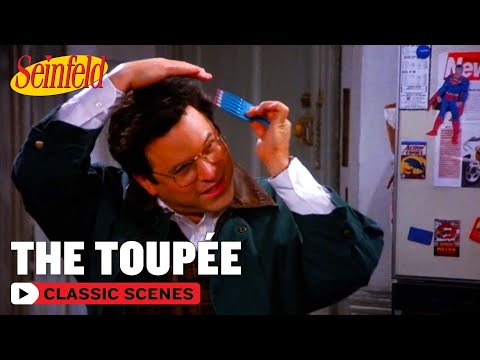
In social contexts, the word carries various connotations. Historically, baldness was sometimes viewed with sensitivity, leading to the use of wigs, toupees, or 'comb-overs' to hide the scalp. However, in modern culture, the 'shaved bald' look has become a symbol of confidence, strength, and even masculinity, popularized by famous actors and athletes. When using the word, it is important to distinguish between 'balding' (the process of losing hair) and 'bald' (the state of having no hair). The word is also used in the animal kingdom, most notably with the 'bald eagle,' though in this case, 'bald' stems from an older meaning of 'white-headed' rather than a lack of feathers.
- Metaphorical Use
- Used to describe something that is blunt, direct, or lacking in detail, such as a 'bald statement' or a 'bald lie'.
The witness gave a bald account of the events, providing only the most basic facts without any emotion.
Furthermore, the term appears in technical and safety contexts. A 'bald tire' is a significant safety hazard because the lack of tread reduces friction on the road, especially in wet conditions. In geology or geography, a 'bald' might refer to a mountain summit that lacks trees despite being below the typical tree line. This richness of meaning shows that while we first think of hair, the core concept of 'bald' is about the absence of a natural or expected covering. Understanding these nuances helps learners move beyond simple physical descriptions into more advanced English usage.
Driving on bald tires in the rain is incredibly dangerous and can lead to hydroplaning.
- Biological Context
- Baldness is often caused by androgenetic alopecia, a condition influenced by hormones and heredity that affects millions worldwide.
He noticed a small bald patch on the back of his head while looking in the mirror.
The hill was bald and rocky, standing out against the lush green forest surrounding it.
Using 'bald' correctly involves understanding its role as an adjective and its common collocations. Most commonly, it follows the verb 'to be' (e.g., 'He is bald') or 'to go' (e.g., 'He is going bald'). When we say someone is 'going bald,' we mean they are in the process of losing their hair. This is a progressive state. Once the hair is gone, we say they 'are bald.' It can also be used as an attributive adjective directly before a noun, such as 'a bald man' or 'a bald head.' In these cases, it provides a direct physical description. It is important to note that 'bald' is an absolute state in its literal sense, but we often use intensifiers like 'completely,' 'totally,' or 'entirely' to emphasize the lack of hair.
- Describing People
- Focuses on the physical attribute of the scalp. Example: 'The actor is famous for his shiny bald head.'
By the time he was forty, he was bald on top but still had hair on the sides.
In more formal or literary writing, 'bald' can describe non-human objects to evoke a sense of emptiness or lack of ornamentation. For instance, 'the bald facts' refers to the plain, unadorned truth without any explanation or justification. This usage is common in journalism and legal contexts where objectivity is paramount. Similarly, a 'bald narrative' is one that lacks descriptive detail. When describing landscapes, 'bald' suggests a lack of vegetation, often creating a stark or desolate image. In these contexts, the word moves from a simple physical description to a tool for setting a mood or tone in writing.
- Describing Objects
- Used for things that have lost their covering or tread. Example: 'You need to replace those bald tires before winter.'
The bald truth is that we simply don't have enough money for the project.
When using 'bald' in conversation, be mindful of the tone. While it is a neutral descriptive word, some people may be sensitive about their hair loss. Using it in a derogatory way or as an insult is considered rude. However, in medical or professional hair-styling contexts, it is a standard term. For example, a doctor might discuss 'male pattern baldness' with a patient. In the fashion world, a 'bald fade' is a specific type of haircut where the hair is tapered down to the skin. This shows how the word has been integrated into specific professional vocabularies, maintaining its core meaning while adapting to different industries.
The eagle's bald head is actually covered in white feathers, not skin.
- Common Phrasal Usage
- Phrases like 'bald-headed' are often used to emphasize the physical state. Example: 'He wore a hat to cover his bald-headed appearance.'
The mountain's bald peak was visible from miles away, towering over the pines.
He gave a bald refusal to cooperate with the investigation.
The word 'bald' is a staple in everyday English, appearing in a wide variety of settings from casual conversations to specialized professional environments. In a domestic or social setting, you might hear it during discussions about family traits—'You have your father's bald spot'—or when friends talk about aging. It is a common topic in barbershops and hair salons, where clients might ask for advice on thinning hair or request a 'bald shave.' In these environments, the word is used practically and descriptively, often without any negative stigma, as people seek to manage their appearance.
- In the Media
- News reports often use 'bald' when describing suspects or missing persons. Example: 'The suspect is described as a bald male in his late 40s.'
The comedian made a joke about his bald head, making the audience laugh at his self-deprecation.
In the world of sports and entertainment, 'bald' is frequently used to describe iconic figures. Think of famous bald celebrities like Dwayne 'The Rock' Johnson, Jason Statham, or Michael Jordan. In these cases, 'bald' is often associated with a 'tough guy' persona or peak athletic performance. Commentators might mention a player's bald head as a distinguishing feature during a broadcast. Additionally, in the automotive industry, mechanics and safety inspectors use the word 'bald' constantly to describe tires that have worn down past the legal limit. Hearing 'Your tires are bald' is a common, albeit unwelcome, experience for many car owners during a routine service.
- In Nature and Science
- Biologists use the term to describe species or specific traits. Example: 'The bald uakari is a small monkey known for its bright red, hairless face.'
The documentary highlighted the majestic flight of the bald eagle over the Alaskan wilderness.
Furthermore, you will encounter 'bald' in literature and journalism when authors want to emphasize harshness or lack of detail. A 'bald summary' of a book provides only the plot points without any analysis of the themes. In political discourse, a 'bald assertion' is a claim made without any supporting evidence. These uses are more sophisticated and are often found in high-level reading materials like The Economist or academic journals. By paying attention to these different contexts, you can see how 'bald' transitions from a simple physical adjective to a powerful tool for describing abstract concepts of lack and simplicity.
The mountain was a bald dome of granite, rising sharply above the tree line.
- In Medical Settings
- Doctors use 'baldness' to refer to various types of hair loss. Example: 'Chemotherapy often causes patients to become temporarily bald.'
He felt the cold air on his bald scalp and reached for his winter hat.
The bald cypress tree is unique because it loses its needles in the winter.
One of the most frequent mistakes English learners make is confusing 'bald' with the phonetically similar word 'bold.' While they sound nearly identical to the untrained ear, their meanings are worlds apart. 'Bald' (adjective) refers to a lack of hair or covering, whereas 'bold' (adjective) refers to being brave, courageous, or standing out (like bold text). Confusing these two can lead to humorous or confusing sentences, such as saying 'He is a very bold man' when you actually mean he has no hair. To avoid this, remember that 'bald' has an 'a' like 'hairless' (metaphorically) and 'bold' has an 'o' like 'over-confident.'
- Grammar Mistake: 'Has bald'
- Incorrect: 'He has bald.' Correct: 'He is bald' or 'He has a bald head.' Since 'bald' is an adjective, it describes the person or the head.
It is a common error to say someone is bald when they actually just have very short hair.
Another common error involves the misuse of 'bald' versus 'shaved.' While a shaved head is bald, not all bald people have shaved their heads. 'Bald' is the state of having no hair, regardless of the cause. 'Shaved' implies a deliberate action. If you see someone with a smooth head, you can say they are bald, but if you know they did it on purpose with a razor, 'shaved' is more specific. Additionally, learners sometimes struggle with the difference between 'bald' and 'balding.' 'Balding' is a verb/adjective describing the process of losing hair. If someone still has some hair but is losing it, they are 'balding,' not yet 'completely bald.'
- Contextual Mistake: Sensitivity
- Using 'bald' as a noun (e.g., 'The bald over there') is grammatically incorrect and often offensive. Always use it as an adjective.
He was sensitive about his bald spot, so he always wore a baseball cap outside.
In writing, avoid overusing 'bald' when describing things that are simply 'plain' or 'empty.' While 'bald' works for 'bald facts,' using it to describe a 'bald room' might sound strange; 'bare room' or 'empty room' is usually better. Similarly, 'bald' is rarely used for body parts other than the head. You wouldn't say someone has 'bald arms'; you would say they have 'hairless arms.' Understanding these collocations prevents your English from sounding unnatural. Finally, be careful with the spelling of 'baldness' (noun) and 'baldly' (adverb). Some learners mistakenly add an extra 'e' or forget the double 's', but the root 'bald' remains consistent throughout its word family.
The bald truth can sometimes be difficult to accept without any sugar-coating.
- Spelling Confusion
- Do not confuse 'bald' with 'bawled' (past tense of bawl, meaning to cry loudly). They are homophones in many dialects.
He baldly stated his intentions, leaving no room for misunderstanding or debate.
The mechanic pointed out that the bald spot on the tire was a sign of poor alignment.
When you want to describe someone without hair, 'bald' is the most common word, but there are several alternatives depending on the level of formality and the specific situation. 'Hairless' is a more general term that can apply to any part of the body or even to animals (like a hairless cat). It is more clinical and less focused on the scalp than 'bald.' 'Shaven' or 'clean-shaven' is used when the lack of hair is a deliberate choice made with a razor. This carries a different connotation, often suggesting a neat, groomed appearance rather than natural hair loss. In more formal or scientific contexts, you might encounter the word 'glabrous,' which specifically means smooth and hairless, often used in botany or biology.
- Bald vs. Thinning
- 'Thinning' describes hair that is becoming less dense, while 'bald' describes a complete absence of hair in a specific area.
His hair was thinning for years before he finally became completely bald.
For describing the process of losing hair, 'balding' is the most accurate adjective. If someone's hairline is moving back from their forehead, we say they have a 'receding hairline.' This is a specific type of balding. Another term often used for men is 'thinning on top,' which is a gentler way of saying someone is starting to go bald. In slang or very informal English, you might hear terms like 'chrome dome' or 'slaphead,' but these can be offensive and should be used with extreme caution, usually only among very close friends. On the other end of the spectrum, 'tonsured' is a very specific term for the circular bald patch traditionally shaved by monks.
- Bald vs. Bare
- 'Bare' means uncovered or empty (bare walls), while 'bald' implies the loss of a natural covering (bald head).
The bare branches of the trees looked like skeletal fingers against the sky.
When 'bald' is used metaphorically to mean 'blunt' or 'direct,' synonyms include 'stark,' 'plain,' 'unadorned,' and 'explicit.' A 'stark truth' and a 'bald truth' are very similar, both suggesting a reality that is harsh and has no comforting details. 'Explicit' is used when something is stated very clearly and in detail, which is slightly different from 'baldly,' which emphasizes the lack of extra words. In the context of tires, 'worn' or 'smooth' are common alternatives. Saying 'Your tires are worn out' is less specific than 'Your tires are bald,' as 'bald' specifically describes the loss of tread. Choosing the right alternative depends on whether you want to be polite, technical, or descriptive.
The report provided a stark contrast between the two economic theories.
- Summary of Alternatives
- 1. Hairless (general) 2. Shaven (deliberate) 3. Thinning (partial) 4. Glabrous (scientific) 5. Stark (metaphorical).
He preferred the clean-shaven look, finding it easier to maintain than a full head of hair.
The bald facts of the case were presented to the jury without any emotional appeal.
How Formal Is It?
趣味小知识
The 'bald' in 'bald eagle' doesn't mean the bird has no feathers. It comes from the older meaning of 'white-headed'.
发音指南
- Pronouncing it like 'bold' (/boʊld/) with an 'oh' sound.
- Dropping the final 'd' so it sounds like 'ball'.
- Pronouncing the 'l' too softly.
- Confusing it with 'bawled' in listening exercises.
- Adding an extra vowel sound at the end.
难度评级
Easy to recognize in text, though metaphorical uses require more context.
Simple spelling, but must be careful not to confuse with 'bold'.
Pronunciation is key to distinguish from 'bold' and 'ball'.
Can be confused with 'bold' or 'bawled' in fast speech.
接下来学什么
前置知识
接下来学习
高级
需要掌握的语法
Adjective Order
A tall, bald, middle-aged man.
Verbs of Change (Go)
He is going bald (not 'becoming' bald in casual speech).
Noun Formation with -ness
Baldness can be a sensitive topic.
Adverb Formation with -ly
He baldly stated his opinion.
Using 'as...as' for Similes
He is as bald as a billiard ball.
按水平分级的例句
The man is bald.
L'homme est chauve.
Subject + is + adjective.
My father is bald.
Mon père est chauve.
Possessive adjective + noun + is + adjective.
He has a bald head.
Il a la tête chauve.
Using 'has' with a noun phrase.
Is he bald?
Est-il chauve ?
Question form of 'to be'.
The baby is bald.
Le bébé est chauve.
Common description for infants.
He is old and bald.
Il est vieux et chauve.
Using two adjectives together.
Look at that bald man.
Regarde cet homme chauve.
Imperative + demonstrative adjective.
I am not bald.
Je ne suis pas chauve.
Negative form of 'to be'.
He is going bald.
Il devient chauve.
Present continuous to show a process.
The bald eagle is big.
Le pygargue à tête blanche est grand.
Proper noun usage.
He has a small bald spot.
Il a une petite zone chauve.
'Bald' as an adjective for 'spot'.
My uncle became bald at thirty.
Mon oncle est devenu chauve à trente ans.
Past simple with 'become'.
He wears a hat because he is bald.
Il porte un chapeau parce qu'il est chauve.
Using 'because' to give a reason.
Is your grandfather bald?
Ton grand-père est-il chauve ?
Interrogative with possessive.
He is almost bald now.
Il est presque chauve maintenant.
Using the adverb 'almost'.
The doll's head is bald.
La tête de la poupée est chauve.
Possessive 's.
The tires on my car are bald.
Les pneus de ma voiture sont lisses.
Metaphorical use for objects.
He told me the bald truth.
Il m'a dit la vérité toute nue.
Idiomatic expression meaning 'plain truth'.
He started going bald in his twenties.
Il a commencé à devenir chauve dans la vingtaine.
Verb 'start' + gerund.
It is dangerous to drive on bald tires.
Il est dangereux de conduire avec des pneus lisses.
It is + adjective + to-infinitive.
The mountain has a bald peak.
La montagne a un sommet dénudé.
Describing geographical features.
He decided to shave his head and go bald.
Il a décidé de se raser la tête et de devenir chauve.
Using 'go bald' as a stylistic choice.
Male pattern baldness is hereditary.
La calvitie masculine est héréditaire.
Noun form 'baldness'.
The witness gave a bald account of the crime.
Le témoin a donné un récit succinct du crime.
Meaning 'plain' or 'without detail'.
The report was a bald statement of facts.
Le rapport était un simple exposé des faits.
Meaning 'unadorned' or 'blunt'.
He baldly denied any involvement in the scandal.
Il a nié carrément toute implication dans le scandale.
Adverbial use 'baldly'.
The landscape was bald and desolate.
Le paysage était dénudé et désolé.
Using 'bald' for atmospheric description.
She was surprised by the baldness of his request.
Elle a été surprise par la brusquerie de sa demande.
Noun form used for abstract quality.
He is as bald as a coot.
Il est chauve comme un œuf.
Simile/Idiom.
The bald patches in the lawn need reseeding.
Les zones dénudées de la pelouse doivent être réensemencées.
Describing surfaces.
His bald refusal to help was unexpected.
Son refus catégorique d'aider était inattendu.
Meaning 'outright' or 'blunt'.
The bald eagle's recovery is a success story.
Le rétablissement du pygargue à tête blanche est une réussite.
Using the term in a scientific/conservation context.
The poem's bald imagery emphasizes the harshness of winter.
L'imagerie dépouillée du poème souligne la rigueur de l'hiver.
Literary analysis usage.
The baldness of the terrain made it difficult to find cover.
La nudité du terrain rendait difficile la recherche d'un abri.
Noun form in a tactical context.
He presented the bald facts without any attempt at justification.
Il a présenté les faits bruts sans aucune tentative de justification.
Meaning 'unvarnished'.
The bald cypress is a deciduous conifer.
Le cyprès chauve est un conifère à feuilles caduques.
Botanical name.
The bald truth is that the project has failed.
La triste vérité est que le projet a échoué.
Emphatic use of the idiom.
His baldly stated ambitions alienated his colleagues.
Ses ambitions ouvertement affichées lui ont aliéné ses collègues.
Adverb modifying a participle.
The hills were bald, stripped of their forests by years of logging.
Les collines étaient dénudées, dépouillées de leurs forêts par des années d'exploitation forestière.
Describing environmental damage.
There was a bald spot in the middle of the expensive rug.
Il y avait une zone d'usure au milieu du tapis coûteux.
Describing wear and tear.
The baldness of his prose was a reaction against Victorian excess.
Le dépouillement de sa prose était une réaction contre les excès victoriens.
Aesthetic/Stylistic criticism.
She faced the bald reality of her situation with remarkable stoicism.
Elle a affronté la dure réalité de sa situation avec un stoïcisme remarquable.
Abstract metaphorical use.
The baldly functional design of the building prioritized utility over beauty.
La conception purement fonctionnelle du bâtiment privilégiait l'utilité à la beauté.
Adverbial use in architecture.
The bald mountain stood as a silent sentinel over the valley.
La montagne dénudée se dressait comme une sentinelle silencieuse au-dessus de la vallée.
Personification and literary description.
His argument was a bald assertion, lacking any empirical evidence.
Son argument était une simple affirmation, dépourvue de toute preuve empirique.
Logical/Rhetorical criticism.
The baldness of the winter woods had a stark beauty of its own.
Le dépouillement des bois en hiver avait une beauté austère qui lui était propre.
Noun form in nature writing.
The tires were so bald that the metal cords were beginning to show.
Les pneus étaient si lisses que les fils métalliques commençaient à apparaître.
Result clause 'so... that'.
He baldly recounted the events, omitting no detail however grim.
Il a raconté les événements sans détour, n'omettant aucun détail, aussi sinistre soit-il.
Adverbial use for narrative style.
常见搭配
常用短语
— The plain, unvarnished facts without any attempts to hide the unpleasant parts.
The bald truth is that we are out of money.
— To lose the hair on one's head over time.
He started to go bald when he was only twenty-five.
— Completely bald. A coot is a bird with a white patch on its head.
My uncle is as bald as a coot.
— A specific area on the head where hair is missing.
He uses a mirror to check the bald spot on the back of his head.
— Having a head with no hair; often used as a direct descriptor.
The bald-headed man was easy to spot in the crowd.
— A tire that has worn down so much that it has no tread.
The mechanic warned me about my bald tires.
— A claim or remark made without any supporting details or explanation.
His bald statement about the merger surprised everyone.
— An area where the usual covering is missing, like grass on a lawn.
The dry summer left several bald patches in the garden.
— Said in a very direct and plain way, without any politeness or extra info.
The facts were baldly stated in the official report.
— Having removed all hair from the head using a razor.
He decided to go shaved bald for the summer.
容易混淆的词
Bold means brave or standing out. Bald means no hair. They sound similar.
Bawled is the past tense of cry loudly. It is a homophone for bald in some accents.
A round object. 'Bald' has a 'd' at the end and a different vowel sound.
习语与表达
— Entirely bald. This is a very old and common comparison in English.
After the haircut, he was as bald as a coot.
informal— The reality of a situation, presented without any softening or exaggeration.
I'm going to give you the bald truth about your performance.
neutral— An impudent, shameless, or obvious lie. (Note: often 'bold-faced' is also used).
That is a bald-faced lie and you know it!
informal— An idiom used to tell someone to stay calm (the opposite of 'losing' hair/losing temper).
Keep your hair on! I'll be ready in five minutes.
informal— To be extremely frustrated or worried (often leading to 'baldness' in a metaphorical sense).
I've been tearing my hair out trying to fix this computer.
informal— Extremely smooth and hairless head.
His head was as bald and shiny as a billiard ball.
informal— To say something in the most direct and simple way possible.
Baldly put, we cannot afford to hire you.
neutral— Something very scary (makes hair stand up, opposite of baldness).
It was a hair-raising experience on the mountain.
neutral— By a very small distance (related to the thinness of hair).
We missed the accident by a hair's breadth.
neutral— To argue about very small, unimportant details.
Let's not split hairs over who arrived five minutes late.
neutral容易混淆
Similar pronunciation.
Bold refers to courage or thick lines; bald refers to lack of hair or covering.
He made a bold move by shaving his head bald.
Similar meaning of 'uncovered'.
Bare is used for objects/rooms; bald is used for heads/tires/mountains.
The bare room had a bald man sitting in it.
Both result in no hair.
Shaved is an action; bald is a state (can be natural or from shaving).
He is bald because he shaved his head.
Related to hair loss.
Thinning means losing some hair; bald means having no hair.
His hair is thinning, but he isn't bald yet.
Scientific synonym.
Glabrous is used in biology/botany; bald is used in everyday English.
The scientist described the leaf as glabrous, while the gardener called it bald.
句型
Subject + is + bald.
He is bald.
Subject + is going + bald.
My uncle is going bald.
Subject + has a + bald + noun.
The car has a bald tire.
The + bald + truth + is...
The bald truth is that we failed.
Subject + baldly + verb.
She baldly refused the offer.
The + baldness + of + noun...
The baldness of the landscape was striking.
A + bald + adjective + noun.
A bald, unvarnished account of the events.
Metaphorical + bald + noun.
His bald assertion was met with skepticism.
词族
名词
形容词
相关
如何使用
Common in daily speech and writing.
-
He is bold.
→
He is bald.
Confusing 'bold' (brave) with 'bald' (no hair) is a very common pronunciation and spelling error.
-
He has bald.
→
He is bald. / He has a bald head.
'Bald' is an adjective, so it needs to describe a noun or follow a linking verb like 'is'.
-
The dog is bald.
→
The dog is hairless. / The dog has no fur.
While 'bald' is sometimes used for animals, 'hairless' or 'no fur' is much more common for pets.
-
He is becoming bald.
→
He is going bald.
In natural English, we almost always use the verb 'go' with 'bald' to describe the process.
-
I told him the bold truth.
→
I told him the bald truth.
The idiom for the plain, unvarnished truth is 'the bald truth'.
小贴士
Use 'going bald'
When someone is losing hair, use the phrase 'going bald' rather than 'becoming bald' for a more natural sound.
Check your tires
In English-speaking countries, a mechanic will tell you your tires are 'bald' if they are dangerous. This is a key safety term.
The Bald Truth
Use 'the bald truth' when you want to emphasize that you are being 100% honest and direct about a situation.
Bald vs Bold
Remember: B-A-L-D rhymes with 'called'. B-O-L-D rhymes with 'cold'. This distinction is vital for being understood.
Metaphorical Bald
In essays, use 'bald' to describe arguments or facts that lack evidence or detail to sound more sophisticated.
Be Polite
While 'bald' is a fact, some people are sensitive about it. Use it descriptively, not as a way to tease or mock.
Adjective Usage
Always use 'is bald' or 'has a bald head'. Never say 'he has bald' as 'bald' is not a noun in this context.
Bald Eagle
When discussing American symbols, remember the 'bald' in 'bald eagle' refers to the color white, not hairlessness.
Hairless vs Bald
Use 'hairless' for animals or body parts, and 'bald' specifically for the head for the best accuracy.
Shaved vs Bald
If someone chooses to have no hair, 'shaved' is often a more complimentary or specific word than just 'bald'.
记住它
记忆技巧
Think of a 'Ball'—it is smooth and has no hair, just like a 'Bald' head. Both words start with 'Bal'.
视觉联想
Imagine a shiny bowling ball sitting on someone's shoulders instead of a head.
Word Web
挑战
Try to describe three famous bald people without using the word 'hair'. Then, use 'bald' in a sentence about a car.
词源
Derived from the Middle English word 'ballede', which likely comes from a much older root meaning 'white' or 'having a white spot'.
原始含义: Originally, it didn't just mean hairless; it often referred to a white patch on the head of an animal.
Germanic文化背景
Avoid using 'bald' as a noun to refer to a person; always use it as an adjective to be respectful.
In the UK and US, 'bald' is a standard descriptor, but 'balding' is often used more gently for those in the process.
在生活中练习
真实语境
At the Barber Shop
- I'm going bald on top.
- Can you give me a bald fade?
- Is there a treatment for baldness?
- I want to shave it all off.
Describing a Person
- He is a tall, bald man.
- He has a bald spot on his crown.
- He looks good bald.
- He's been bald since his thirties.
Car Maintenance
- Your front tires are bald.
- Driving on bald tires is risky.
- Check for bald spots on the rubber.
- These tires are completely bald.
Truth and Facts
- Just give me the bald truth.
- It was a bald statement of fact.
- He baldly denied the truth.
- The bald facts are these.
Nature and Geography
- The mountain has a bald summit.
- We saw a bald eagle today.
- The hill was bald and rocky.
- A bald patch in the forest.
对话开场白
"Do you think men look better with hair or when they are bald?"
"Have you ever seen a bald eagle in the wild?"
"What would you do if you started going bald tomorrow?"
"Is it common for people in your family to go bald?"
"Why do you think some people choose to shave their heads and be bald?"
日记主题
Describe a time you had to tell someone the bald truth, even if it was difficult.
Write about a famous bald person you admire and why they are successful.
Imagine a world where everyone is born bald. How would fashion and culture change?
Describe a landscape that is 'bald'. What does it look and feel like?
Reflect on how your appearance has changed over the years. Have you noticed any 'bald spots' in your life or habits?
常见问题
10 个问题Not necessarily. It is a neutral descriptive word. However, like any physical description, it can be used rudely depending on the tone and context. It is best to use it as a simple fact.
'Bald' is the final state of having no hair. 'Balding' is the process of losing hair. If someone still has hair but is losing it, they are balding.
Yes, women can be bald due to medical conditions, genetics, or by choice. The word applies to anyone without hair on their head.
It means the tires have lost their tread (the grooves on the surface) and are now smooth. This makes them very dangerous for driving.
The name comes from an old English word 'balde' which meant 'white'. It refers to the white feathers on the eagle's head, not a lack of feathers.
No. 'Bold' means brave or courageous. 'Bald' means having no hair. They are often confused because they sound similar.
A bald spot is a small area on the head where hair is missing, while the rest of the head might still have hair.
Yes, a 'bald' mountain is one that has no trees at its summit, often looking smooth and rocky from a distance.
It is an idiom that means the direct, honest facts of a situation without any attempts to make them sound better or more pleasant.
It rhymes with 'called'. It has a long 'aw' sound like in 'saw' followed by 'l' and 'd'. Avoid the 'oh' sound of 'bold'.
自我测试 180 个问题
Describe a bald person in one sentence.
Well written! Good try! Check the sample answer below.
Write a sentence using 'going bald'.
Well written! Good try! Check the sample answer below.
Why are bald tires dangerous? (Write 2 sentences).
Well written! Good try! Check the sample answer below.
Use 'baldly' in a sentence about a business meeting.
Well written! Good try! Check the sample answer below.
Explain the idiom 'the bald truth'.
Well written! Good try! Check the sample answer below.
Write a short paragraph about the 'baldness' of a winter landscape.
Well written! Good try! Check the sample answer below.
Is your favorite actor bald? Write a sentence.
Well written! Good try! Check the sample answer below.
Describe a bald eagle.
Well written! Good try! Check the sample answer below.
What is a bald spot?
Well written! Good try! Check the sample answer below.
Write a sentence using 'as bald as a coot'.
Well written! Good try! Check the sample answer below.
Use 'bald' to describe a mountain.
Well written! Good try! Check the sample answer below.
Critique a 'bald assertion' in a sentence.
Well written! Good try! Check the sample answer below.
Write: 'He has no hair.' using the word 'bald'.
Well written! Good try! Check the sample answer below.
When do people usually go bald?
Well written! Good try! Check the sample answer below.
Use 'bald' to describe a fact.
Well written! Good try! Check the sample answer below.
Describe a 'bald-headed' man you know.
Well written! Good try! Check the sample answer below.
Write a sentence about 'bald patches' in a lawn.
Well written! Good try! Check the sample answer below.
Use 'baldness' in a sentence about architecture.
Well written! Good try! Check the sample answer below.
Is a bowling ball bald?
Well written! Good try! Check the sample answer below.
What is 'male pattern baldness'?
Well written! Good try! Check the sample answer below.
Say: 'The man is bald.'
Read this aloud:
你说的:
Speech recognition is not supported in your browser. Try Chrome or Edge.
Say: 'He is going bald.'
Read this aloud:
你说的:
Speech recognition is not supported in your browser. Try Chrome or Edge.
Say: 'These tires are bald.'
Read this aloud:
你说的:
Speech recognition is not supported in your browser. Try Chrome or Edge.
Say: 'Tell me the bald truth.'
Read this aloud:
你说的:
Speech recognition is not supported in your browser. Try Chrome or Edge.
Say: 'He baldly denied the charge.'
Read this aloud:
你说的:
Speech recognition is not supported in your browser. Try Chrome or Edge.
Say: 'The baldness of the terrain was daunting.'
Read this aloud:
你说的:
Speech recognition is not supported in your browser. Try Chrome or Edge.
Say: 'My grandpa is bald.'
Read this aloud:
你说的:
Speech recognition is not supported in your browser. Try Chrome or Edge.
Say: 'Look at the bald eagle.'
Read this aloud:
你说的:
Speech recognition is not supported in your browser. Try Chrome or Edge.
Say: 'He has a bald spot.'
Read this aloud:
你说的:
Speech recognition is not supported in your browser. Try Chrome or Edge.
Say: 'He is as bald as a coot.'
Read this aloud:
你说的:
Speech recognition is not supported in your browser. Try Chrome or Edge.
Say: 'The bald facts are simple.'
Read this aloud:
你说的:
Speech recognition is not supported in your browser. Try Chrome or Edge.
Say: 'His bald assertion was baseless.'
Read this aloud:
你说的:
Speech recognition is not supported in your browser. Try Chrome or Edge.
Say: 'Is he bald?'
Read this aloud:
你说的:
Speech recognition is not supported in your browser. Try Chrome or Edge.
Say: 'Male pattern baldness.'
Read this aloud:
你说的:
Speech recognition is not supported in your browser. Try Chrome or Edge.
Say: 'A bald-headed man.'
Read this aloud:
你说的:
Speech recognition is not supported in your browser. Try Chrome or Edge.
Say: 'A bald mountain peak.'
Read this aloud:
你说的:
Speech recognition is not supported in your browser. Try Chrome or Edge.
Say: 'He shaves his head bald.'
Read this aloud:
你说的:
Speech recognition is not supported in your browser. Try Chrome or Edge.
Say: 'Completely bald.'
Read this aloud:
你说的:
Speech recognition is not supported in your browser. Try Chrome or Edge.
Say: 'Baldly stated facts.'
Read this aloud:
你说的:
Speech recognition is not supported in your browser. Try Chrome or Edge.
Say: 'Bald patches in the lawn.'
Read this aloud:
你说的:
Speech recognition is not supported in your browser. Try Chrome or Edge.
Listen and write: 'He is bald.'
Listen and write: 'The eagle is bald.'
Listen and write: 'The tires are bald.'
Listen and write: 'He is as bald as a coot.'
Listen and write: 'The bald truth is hard.'
Listen and write: 'A bald man.'
Listen and write: 'Going bald.'
Listen and write: 'A bald spot.'
Listen and write: 'Baldly denied.'
Listen and write: 'Bald cypress.'
Listen and write: 'Baldness of prose.'
Listen and write: 'Male pattern baldness.'
Listen and write: 'Shaved bald.'
Listen and write: 'Bald-headed.'
Listen and write: 'Bald mountain.'
/ 180 correct
Perfect score!
Summary
The word 'bald' is a versatile adjective that primarily describes a hairless scalp but extends to anything lacking its natural covering or being presented in a blunt, unadorned manner. Example: 'He decided to embrace his bald head rather than wearing a wig.'
- Bald is an adjective used to describe a person with no hair on their head, often due to aging or genetics.
- It can also describe objects that have lost their covering, such as bald tires or a bald landscape without trees.
- Metaphorically, it means plain, blunt, or direct, as in 'the bald truth' or a 'bald statement' without details.
- Commonly used with the verbs 'to be' and 'to go', and often confused with the word 'bold'.
Use 'going bald'
When someone is losing hair, use the phrase 'going bald' rather than 'becoming bald' for a more natural sound.
Check your tires
In English-speaking countries, a mechanic will tell you your tires are 'bald' if they are dangerous. This is a key safety term.
The Bald Truth
Use 'the bald truth' when you want to emphasize that you are being 100% honest and direct about a situation.
Bald vs Bold
Remember: B-A-L-D rhymes with 'called'. B-O-L-D rhymes with 'cold'. This distinction is vital for being understood.