moana 30秒了解
- A Polynesian-derived term for the vast, deep open ocean.
- Used literally to describe the sea and metaphorically for boundlessness.
- Carries significant cultural and spiritual weight in Pacific Island communities.
- Often used to emphasize scale, depth, and the interconnectedness of nature.
The word moana is a profound and evocative term that originates from Polynesian languages, specifically Māori, Hawaiian, and Tahitian, where it fundamentally means 'ocean' or 'sea.' In an English-speaking context, particularly when used as a common noun, it refers to a vast, deep expanse of water. It is not just any body of water; it implies a sense of scale that is nearly incomprehensible, suggesting depths that are unexplored and horizons that never end. When people use this word, they are often trying to capture the majesty and the spiritual weight of the open ocean. It is a term that bridges the gap between simple geography and deep cultural significance. For many, the moana is a living entity, a source of life, and a path for ancestors. In modern literature and conversation, using 'moana' instead of 'ocean' adds a layer of poetic beauty and respect for the natural world. It is used to describe the blue wilderness that covers the majority of our planet, emphasizing its role as a connector of worlds and a holder of mysteries. Whether you are discussing the literal Pacific Ocean or using the term metaphorically to describe a vast, overwhelming emotion or a boundless field of stars, 'moana' carries a weight of immensity.
- Literal Usage
- Referring to the physical open sea, especially the deep blue waters far from the shore where the seafloor is miles below.
The voyagers set their sails, ready to cross the unpredictable moana in search of new lands.
Beyond its literal meaning, the term is frequently employed in metaphorical contexts. When a writer describes a 'moana of possibilities' or a 'moana of grief,' they are tapping into the word's inherent association with boundlessness and depth. It suggests something so large that one could easily get lost within it, or something so deep that its bottom cannot be seen. This metaphorical use is common in poetry and high-level prose where the author wishes to evoke a sense of awe or overwhelming scale. In the context of environmental science, 'moana' might be used to emphasize the importance of marine conservation, highlighting the ocean as a singular, interconnected system that sustains all life on Earth. The use of the word has seen a significant rise in global awareness due to popular culture, yet its core meaning remains rooted in the ancient relationship between humanity and the sea. It is a word of navigation, of survival, and of wonder. When you use it, you are acknowledging the sheer power of the water that surrounds us.
- Metaphorical Usage
- Describing an abstract concept that is immense, deep, or seemingly infinite, such as a vast collection of data or a deep well of tradition.
She looked into the data and saw a moana of information that would take years to fully comprehend.
In social settings, particularly within Pacific Islander communities, the word is used with a sense of communal ownership and pride. It represents the 'Blue Continent,' a concept that views the islands not as isolated dots but as a unified region connected by the water. This perspective shifts the focus from land-based boundaries to the fluid, ever-changing nature of the sea. When discussing climate change, 'moana' is often used to personify the ocean, reminding listeners that the rising tides are not just statistics but a change in a vital family member of the global ecosystem. The word encourages a mindset of stewardship and respect. It is also used in naming—both for people and for organizations—to signify depth of character, strength, and a far-reaching vision. By understanding the word 'moana,' a learner gains insight into a worldview that prizes the horizon over the fence, and the depth over the surface. It is a word that invites you to look further and dive deeper.
- Cultural Context
- In many Austronesian cultures, the moana is considered a sacred space that requires rituals and respect before entering or harvesting from it.
The elders taught the children that the moana provides for those who treat it with kindness.
Standing on the cliff, he felt small against the backdrop of the endless moana.
The navigator knew every current and wave of the moana as if it were his own home.
Using 'moana' correctly in a sentence requires an understanding of its noun form and the specific imagery it evokes. It is typically used as a singular noun, often preceded by the definite article 'the.' Because it refers to a vast expanse, it is rarely used in the plural unless one is referring to different specific regions of the deep sea. When constructing sentences, think about the qualities of the ocean: its color, its movement, its depth, and its mystery. Adjectives like 'vast,' 'deep,' 'azure,' 'unforgiving,' and 'boundless' pair exceptionally well with 'moana.' For example, instead of saying 'The sea was big,' you might say, 'The vast moana stretched out before them, a shimmering sheet of sapphire.' This elevates the tone of your writing and provides a more specific cultural and geographic flavor. It is also important to note that 'moana' can function as a proper noun in certain contexts, but here we are focusing on its use as a common noun for the sea itself.
- Descriptive Usage
- Using adjectives to emphasize the physical characteristics of the deep sea.
The sun dipped below the horizon, casting a golden glow across the tranquil moana.
In more formal or academic writing, 'moana' might appear in discussions regarding Pacific studies, oceanography, or indigenous knowledge systems. In these cases, it is often used to contrast Western scientific views of the ocean with indigenous perspectives that see the water as a living, breathing part of the community. You might write, 'The study explores how the concept of the moana influences local fishing practices and conservation efforts.' This usage acknowledges the word's origin and its specific meaning within those cultures. When using it in a sentence about travel or exploration, it suggests a journey of significant distance and perhaps significant peril. 'Crossing the moana' is a phrase that implies bravery and a deep connection to the elements. It is not a casual trip; it is an epic undertaking. The word can also be used to describe the color of the water itself, often referred to as 'moana blue,' a deep, saturated shade that reflects the depth of the open sea.
- Action-Oriented Usage
- Focusing on the movement or the journey across the water.
Ancient navigators relied on the stars to guide them through the trackless moana.
Metaphorically, the word fits into sentences where you want to describe a state of being or a vast quantity. 'He felt as though he were drowning in a moana of paperwork' uses the word to emphasize the overwhelming nature of the task. 'Her eyes were like the moana, deep and full of secrets' uses the word for poetic comparison. In these instances, the word 'moana' is chosen specifically for its connotations of depth and mystery, which 'ocean' might not convey as strongly. It is a versatile word that can shift from the literal to the figurative with ease. When writing, consider the rhythm of the sentence; 'moana' has a soft, flowing sound that mimics the movement of waves, making it ideal for lyrical or descriptive passages. It brings a sense of calm or power depending on the surrounding words. Whether you are describing a physical place or an internal state, 'moana' provides a rich, resonant option for your vocabulary.
- Metaphorical Comparison
- Using the ocean's vastness to describe something abstract or emotional.
The philosopher described the human mind as a vast moana, with only the surface visible to others.
After the storm, the moana returned to a state of deceptive stillness.
They spoke of the moana as a mother who both gives and takes away.
You are most likely to encounter the word 'moana' in several distinct contexts, each providing a different shade of meaning. First and foremost, it is a common term in the daily lives of people living in the Pacific Islands, including New Zealand (Aotearoa), Hawaii, Samoa, Fiji, and Tahiti. In these regions, 'moana' is the standard word for the sea, used in news reports, weather forecasts, and casual conversation. You might hear a fisherman talking about the conditions of the moana or a politician discussing the protection of the moana's resources. In these places, the word is ubiquitous and carries a deep sense of home and identity. For someone learning English in these regions, 'moana' is an essential part of the local dialect and cultural vocabulary. It is also frequently heard in traditional songs, chants, and prayers, where it is often personified or addressed with great reverence. Hearing the word in this context allows you to appreciate its rhythmic quality and its importance to the indigenous way of life.
- Regional Context
- Commonly used in the Pacific Islands as the primary word for the ocean in both native languages and local English dialects.
'The moana is rough today,' the captain warned as we boarded the ferry in Auckland.
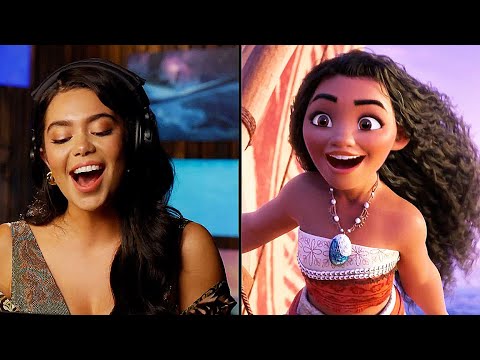
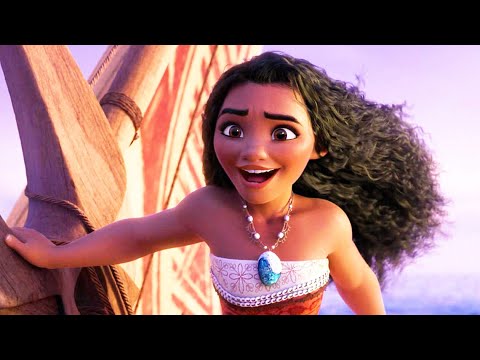
In the broader global context, the word has gained immense popularity through popular culture, most notably the Disney film 'Moana.' While the film uses the word as a proper name for the protagonist, it also reinforces the word's meaning as 'ocean' throughout the story. This has led to a global recognition of the word, though many people may only associate it with the movie character. However, this pop-culture presence has also opened the door for more people to learn about the word's true origins and its broader meaning as a common noun. You will also hear 'moana' in the world of oceanography and environmental activism. Organizations like 'Sustainable Moana' or 'The Moana Project' use the term to emphasize a holistic and culturally respectful approach to marine science. In these circles, 'moana' represents a shift away from seeing the ocean as a resource to be exploited and toward seeing it as a vital system to be protected. It is a word that carries a message of sustainability and global responsibility.
- Environmental Context
- Used by conservation groups to promote a respectful and indigenous-led approach to protecting the world's oceans.
The conference focused on the health of the moana and the impact of rising temperatures on coral reefs.
Finally, you will find 'moana' in literature, poetry, and art that explores themes of travel, discovery, and the human relationship with nature. Poets use the word for its evocative sound and its ability to immediately transport the reader to a place of vastness and salt air. In art galleries, you might see exhibitions titled 'Voices of the Moana' or 'Reflections on the Moana,' where artists use the term to ground their work in a specific geographic and cultural reality. It is a word that invites contemplation. Whether you are reading a travel blog about sailing the South Pacific or a scientific paper on deep-sea currents, 'moana' serves as a powerful reminder of the ocean's scale and importance. It is a word that is both local and global, ancient and modern. By paying attention to where you hear it, you can begin to see how it connects different fields of knowledge and different cultures across the world.
- Literary Context
- Used in poetry and prose to evoke a sense of wonder, mystery, and the epic scale of the sea.
The poet wrote of the moana as a vast mirror reflecting the infinite sky.
In the museum, the exhibit showcased ancient tools used to navigate the moana.
The documentary explored the hidden creatures that live in the deepest parts of the moana.
One of the most common mistakes learners make with the word 'moana' is treating it exclusively as a proper noun or a name. Because of the popularity of the Disney movie, many people assume that 'Moana' is only a character's name and are surprised to find it used as a common noun meaning 'ocean.' To avoid this, it is important to look at the context: if it is preceded by 'the' and is not capitalized (unless at the start of a sentence), it is likely referring to the sea itself. Another mistake is using 'moana' to describe small bodies of water, like a pond, a small lake, or a swimming pool. The word specifically implies a vast, deep expanse. Using it for a small pond would be semantically incorrect and might sound confusing or even humorous to native speakers. It is a word reserved for the greatness of the open sea. Think of it as the difference between a 'hill' and a 'mountain'; 'moana' is the mountain of the water world.
- Misuse of Scale
- Using 'moana' for small or shallow bodies of water. It should only be used for vast, deep oceans.
Incorrect: We went for a swim in the moana at the local park's small pond.
Pronunciation is another area where mistakes frequently occur. In Polynesian languages, the vowels are clear and consistent. A common error is to pronounce it as 'mo-ANN-ah' or 'mown-ah.' The correct pronunciation is generally 'mo-AH-nah,' with the emphasis on the second syllable and a clear 'ah' sound. Mispronouncing the word can sometimes change its meaning or simply make it difficult for others to understand. Additionally, learners sometimes struggle with the grammatical placement of the word. While it functions like 'ocean,' it is often used with a more poetic or reverent tone. Using it in a very technical or dry scientific sentence without acknowledging its cultural weight can sometimes feel slightly 'off' or culturally insensitive if not handled with care. It is better to use 'ocean' for purely technical data and 'moana' when discussing the sea as a broader, more meaningful concept.
- Pronunciation Error
- Misplacing the stress or flattening the vowels. The 'ah' should be open and clear.
Correct: The chant honored the moana (pronounced mo-AH-nah) for its bounty.
Finally, a subtle mistake is overusing the word in contexts where it doesn't fit the 'register' or tone of the conversation. If you are talking about a beach holiday in a place where the word 'moana' isn't used locally (like the Mediterranean or the Caribbean), using 'moana' might seem like you are trying too hard to sound exotic or are confusing different cultures. It is most appropriate when there is a connection to the Pacific or when you are intentionally using it for its metaphorical value. Also, avoid using it as a verb. While you can 'sail the moana,' you cannot 'moana' across the sea. Keeping it as a noun ensures your sentences remain grammatically sound. By being mindful of these common pitfalls—scale, pronunciation, register, and grammatical role—you can use the word 'moana' with the respect and accuracy it deserves, enriching your vocabulary and your understanding of the world's cultures.
- Register Mismatch
- Using the word in geographical contexts where it has no cultural or linguistic roots, which can feel out of place.
Correct: We sailed across the vast moana toward the islands of Polynesia.
Incorrect: I am going to moana to the other side of the bay.
Correct: The vastness of the moana can be both beautiful and terrifying.
When looking for alternatives to 'moana,' the most obvious choice is 'ocean.' However, 'ocean' is a broad, scientific term that lacks the specific cultural and spiritual connotations of 'moana.' While 'ocean' describes the body of salt water that covers most of the Earth, 'moana' often implies the Pacific specifically or a deep, open sea with a sense of living presence. Another similar word is 'sea,' but 'sea' is often used for smaller, more enclosed bodies of water (like the Mediterranean Sea) or for the water near the coast. 'Moana' is more akin to the 'high seas' or the 'deep blue,' emphasizing distance from land and great depth. If you are writing poetry, you might use 'the deep' or 'the main' (an archaic term for the open ocean). These words capture the scale but lack the specific Polynesian heritage that 'moana' brings to a sentence. Understanding these nuances helps you choose the right word for the right moment.
- Moana vs. Ocean
- 'Ocean' is scientific and general; 'moana' is cultural, evocative, and often refers to the Pacific or the deep open sea.
While the scientist studied the ocean currents, the poet sang to the moana.
Other alternatives include 'expanse' or 'abyss' when focusing on the size or depth. An 'expanse' refers to a wide, open area, which fits the 'vast' part of the definition of moana. An 'abyss' refers to a bottomless pit or very deep space, which fits the 'deep' part. However, neither of these words specifically refers to water. 'Pelagic' is a scientific adjective used to describe the open sea, but it is rarely used as a noun in common conversation. 'Brine' is a more literary or salty way to refer to the sea, often used to emphasize its saltiness or its harshness. 'The blue' is a common colloquialism for the ocean, especially among sailors and pilots. While all these words share some semantic space with 'moana,' none of them quite capture the same blend of geography, culture, and spirituality. Choosing 'moana' is a deliberate choice to invoke a specific worldview and a specific sense of awe that other words might not reach.
- Moana vs. Sea
- 'Sea' can be small or coastal; 'moana' is almost always vast and deep, far from the sight of land.
The children played in the shallow sea, but the ships ventured out into the moana.
In some contexts, you might see 'moana' compared to 'wai,' which is another Polynesian word meaning 'water' in general (often fresh water). Understanding the difference between 'moana' (salt water/ocean) and 'wai' (fresh water/river/lake) is crucial in Polynesian-influenced English. Similarly, 'tai' can refer to the tide or the sea near the shore. By learning these related terms, you can see how 'moana' fits into a larger linguistic map of the natural world. When you want to express the idea of something being 'boundless' or 'immense' without referring to water at all, you might use 'infinity,' 'vastness,' or 'immensity.' But if there is even a hint of a connection to the sea, 'moana' remains the most powerful and descriptive choice. It is a word that carries the salt of the earth and the depth of the sky within its three syllables. Using it correctly allows you to tap into a rich tradition of storytelling and navigation that has spanned thousands of years.
- Moana vs. Wai
- 'Wai' is general or fresh water; 'moana' is specifically the large, salty, deep ocean.
The river's wai eventually flows into the great moana.
He looked out at the moana and felt a sense of infinite peace.
The moana is the heart of the Pacific way of life.
How Formal Is It?
趣味小知识
In many Polynesian mythologies, Moana is not just a place but a deity or a powerful force of nature that requires respect and navigation skills to master.
发音指南
- Pronouncing it as 'mo-ANN-ah' (rhyming with Hannah).
- Pronouncing it as 'MOWN-ah' (two syllables).
- Putting the stress on the first syllable.
- Flattening the 'ah' sound into an 'ay' sound.
- Treating the 'o' as a short 'o' like in 'hot'.
难度评级
Easy to recognize but requires context to distinguish from the name.
Requires understanding of tone and metaphorical use.
Pronunciation is key; once mastered, it flows well.
Clear vowels make it easy to hear in speech.
接下来学什么
前置知识
接下来学习
高级
需要掌握的语法
Using 'the' with unique geographical features.
We always say 'the moana' because it refers to a specific, singular concept.
Metaphorical 'a' vs. literal 'the'.
He looked at 'the moana' (the sea), but he felt 'a moana' (a vast amount) of fear.
Adjective placement for emphasis.
The 'vast, deep moana' emphasizes scale through a string of adjectives.
Uncountable nouns in a general sense.
We don't usually say 'moanas' unless referring to different types of oceans.
Prepositional phrases for location.
Use 'on the moana' for the surface and 'in the moana' for the depths.
按水平分级的例句
The moana is very big and blue.
The ocean is very big and blue.
Simple subject-verb-adjective structure.
I see a boat on the moana.
I see a boat on the ocean.
Use of 'on' for the surface of the water.
Fish live in the deep moana.
Fish live in the deep ocean.
Use of 'in' for being inside the water.
The moana is beautiful today.
The ocean is beautiful today.
Using 'the' before 'moana' as a noun.
We love the moana.
We love the ocean.
Simple present tense.
Is the moana warm?
Is the ocean warm?
Question form.
The sun is over the moana.
The sun is over the ocean.
Preposition 'over' showing position.
The moana has many waves.
The ocean has many waves.
Use of 'has' for possession/characteristics.
They traveled across the moana to find a new home.
They traveled across the ocean to find a new home.
Past tense 'traveled' with 'across'.
The moana is much deeper than the lake.
The ocean is much deeper than the lake.
Comparative adjective 'deeper than'.
You can hear the sound of the moana from here.
You can hear the sound of the ocean from here.
Modal verb 'can' for ability/perception.
The moana provides food for the village.
The ocean provides food for the village.
Present simple for a general truth.
It is dangerous to swim in the moana during a storm.
It is dangerous to swim in the ocean during a storm.
Infinitive 'to swim' as the subject complement.
The moana is full of mysterious creatures.
The ocean is full of mysterious creatures.
Adjective phrase 'full of'.
We watched the whales jumping in the moana.
We watched the whales jumping in the ocean.
Participle 'jumping' describing the whales.
The moana looks like a mirror in the morning.
The ocean looks like a mirror in the morning.
Simile using 'looks like'.
The vast moana stretched out to the horizon, seemingly endless.
The vast ocean stretched out to the horizon, seemingly endless.
Use of 'seemingly' as an adverb.
He felt a moana of relief when he finally reached the shore.
He felt a vast amount of relief when he finally reached the shore.
Metaphorical use of 'moana' to mean 'a great amount'.
The moana is a vital part of the global ecosystem.
The ocean is a vital part of the global ecosystem.
Formal noun phrase 'global ecosystem'.
Ancient navigators understood the secrets of the moana.
Ancient navigators understood the secrets of the ocean.
Past tense with a plural subject.
The moana can be calm one minute and violent the next.
The ocean can be calm one minute and violent the next.
Contrast between 'calm' and 'violent'.
Pollution is a major threat to the health of the moana.
Pollution is a major threat to the health of the ocean.
Noun 'threat' followed by 'to'.
She stared into the moana, lost in her own thoughts.
She stared into the ocean, lost in her own thoughts.
Participial phrase 'lost in her own thoughts'.
The moana's depth is still largely unexplored by humans.
The ocean's depth is still largely unexplored by humans.
Possessive form 'moana's'.
The project aims to restore the balance of the moana through sustainable practices.
The project aims to restore the balance of the ocean through sustainable practices.
Infinitive of purpose 'to restore'.
In her poetry, the moana represents both a barrier and a bridge.
In her poetry, the ocean represents both a barrier and a bridge.
Use of 'both... and' for dual roles.
The sheer scale of the moana is humbling to even the most experienced sailors.
The sheer scale of the ocean is humbling to even the most experienced sailors.
Gerund 'humbling' as an adjective.
They faced a moana of challenges before the business became successful.
They faced a vast number of challenges before the business became successful.
Metaphorical extension of 'moana' to abstract challenges.
The moana's currents carry warmth from the equator to the poles.
The ocean's currents carry warmth from the equator to the poles.
Scientific description using possessive.
Protecting the moana is not just an environmental issue, but a cultural one.
Protecting the ocean is not just an environmental issue, but a cultural one.
Correlative conjunction 'not just... but'.
The moana whispered secrets to those who knew how to listen.
The ocean whispered secrets to those who knew how to listen.
Personification of the moana.
The moana's vastness makes it difficult to track migratory patterns.
The ocean's vastness makes it difficult to track migratory patterns.
Causative structure 'makes it difficult to'.
The moana serves as a central motif in the literature of the Pacific diaspora.
The ocean serves as a central motif in the literature of the Pacific diaspora.
Academic term 'motif' and 'diaspora'.
Scholars argue that the moana should be viewed as a lived space rather than a void.
Scholars argue that the ocean should be viewed as a lived space rather than a void.
Subjunctive-like structure 'should be viewed'.
The moana of human emotion is often deeper and more turbulent than any physical sea.
The vastness of human emotion is often deeper and more turbulent than any physical sea.
Complex metaphorical comparison.
The treaty recognizes the indigenous rights to the resources of the moana.
The treaty recognizes the indigenous rights to the resources of the ocean.
Formal legal language.
The moana's influence on the local climate is profound and multi-faceted.
The ocean's influence on the local climate is profound and multi-faceted.
Adjective 'multi-faceted' for complexity.
He navigated the moana of corporate politics with surprising ease.
He navigated the vast and complex world of corporate politics with surprising ease.
Metaphorical use in a professional context.
The moana's depths hold the history of our planet's evolution.
The ocean's depths hold the history of our planet's evolution.
Abstract noun 'evolution' as the object.
The moana's song is a haunting reminder of our connection to the earth.
The ocean's song is a haunting reminder of our connection to the earth.
Evocative adjective 'haunting'.
The moana is an ontological bridge, linking the physical realm with the spiritual.
The ocean is a bridge of being, linking the physical realm with the spiritual.
High-level philosophical terminology.
In the face of the moana's infinite horizon, human ego seems remarkably insignificant.
In the face of the ocean's infinite horizon, human ego seems remarkably insignificant.
Prepositional phrase 'In the face of'.
The moana's ebb and flow dictate the very rhythm of life on the islands.
The ocean's tides dictate the very rhythm of life on the islands.
Idiomatic 'ebb and flow'.
The moana of data generated by the experiment required a new kind of algorithm to process.
The vast amount of data generated by the experiment required a new kind of algorithm to process.
Technical metaphor for large datasets.
The moana's silence is as eloquent as its roar, speaking of ages past.
The ocean's silence is as meaningful as its roar, speaking of ages past.
Paradoxical comparison 'silence is as eloquent'.
To master the moana is to master oneself, as the ancient proverbs suggest.
To master the ocean is to master oneself, as the ancient proverbs suggest.
Infinitive phrases as subject and complement.
The moana's vastness is the ultimate canvas for the imagination.
The ocean's vastness is the ultimate canvas for the imagination.
Metaphorical 'canvas'.
The moana's legacy is etched into the very DNA of the people who call it home.
The ocean's legacy is deeply part of the people who call it home.
Metaphorical 'etched into DNA'.
常见搭配
常用短语
— Being far away from land on the open sea.
Life is different when you are out on the moana.
— A strong desire or urge to go to the sea.
He could never stay on land for long; he felt the call of the moana.
— Things about the ocean that are unknown or mysterious.
Scientists are still discovering the secrets of the moana.
— Moving from one side of the ocean to the other.
News traveled slowly across the moana in the old days.
— Resources or food provided by the sea.
The fresh fish was a daily gift of the moana.
— Being surrounded by the water, often in a comforting or overwhelming way.
The swimmer felt safe in the moana's embrace.
— The natural timing of the tides and waves.
The village lived by the rhythm of the moana.
— The large amount of food or wealth the sea provides.
They celebrated the bounty of the moana with a feast.
— People or spirits who protect the ocean.
The local community acted as guardians of the moana.
— Being unable to find one's way in the vast sea.
Without a compass, they were quickly lost in the moana.
容易混淆的词
Many people only know it as the name of the Disney character, not as a common noun for the ocean.
A different name (like Mona Lisa) with a different pronunciation (MOH-na).
Another Polynesian word meaning spiritual power or prestige, often confused by learners.
习语与表达
— A very large or vast difference between two things.
There is a moana of difference between talking about a problem and solving it.
informal/creative— Being completely overwhelmed by a large quantity of something.
I am drowning in a moana of emails today.
informal— Having great depth, usually referring to feelings or knowledge.
His love for his family was as deep as the moana.
poetic— A situation that is progressing without any problems.
Once we got the funding, it was smooth sailing on the moana.
informal— To have a natural and deep connection to the sea.
Born on the coast, she had the moana in her blood.
literary— A very small amount compared to what is needed or what exists.
My contribution is just a drop in the moana of what we need to raise.
neutral— To connect two very different or distant things/people.
The new cultural exchange program aims to bridge the moana between our nations.
formal— There are no limits to what can be achieved (variation of 'the sky is the limit').
With your talent, the moana is the limit.
informal— To do something good without expecting an immediate reward (variation of 'cast bread upon the waters').
He helped the strangers, casting his bread upon the moana.
literary— A period of peace before a large and difficult event.
The quiet office was just the calm before the moana's storm of the busy season.
informal容易混淆
They mean the same thing physically.
'Ocean' is the standard, scientific English term. 'Moana' is culturally specific to the Pacific and more evocative.
The Pacific Ocean is the largest moana on Earth.
Both refer to salt water.
'Sea' often implies coastal or smaller areas. 'Moana' almost always implies the deep, vast, open water.
The Mediterranean Sea is small compared to the vast moana.
Both are Polynesian words for water.
'Wai' is fresh water (rivers, lakes). 'Moana' is salt water (the ocean).
The river's wai meets the moana at the estuary.
Both imply great depth.
'Abyss' is more dramatic and can be any deep hole. 'Moana' is specifically the ocean and its life.
The submarine dove into the moana's dark abyss.
Both imply vastness.
'Expanse' is a general term for any wide area (sky, desert). 'Moana' is specific to the sea.
The moana is a vast expanse of blue.
句型
The moana is [adjective].
The moana is blue.
I can see the [adjective] moana.
I can see the big moana.
They [verb] across the vast moana.
They sailed across the vast moana.
There is a moana of [noun] between us.
There is a moana of misunderstanding between us.
The moana serves as a [noun] for [concept].
The moana serves as a catalyst for cultural exchange.
The moana's [noun] is a testament to [concept].
The moana's vastness is a testament to nature's power.
Lost in the [adjective] moana, they...
Lost in the trackless moana, they prayed for land.
To protect the moana is to [verb].
To protect the moana is to safeguard our future.
词族
名词
形容词
相关
如何使用
Common in Pacific regions; growing globally; frequent in literature and film.
-
Using it for a swimming pool.
→
I am swimming in the pool.
A pool is too small. 'Moana' is for the vast ocean.
-
Pronouncing it 'Mown-ah'.
→
mo-AH-nah
The 'a' in the middle must be pronounced clearly.
-
Thinking it only means the movie character.
→
The moana is beautiful today.
It is a common noun for the ocean in many cultures.
-
Using it as a verb.
→
We sailed across the moana.
'Moana' is a noun, not an action.
-
Confusing it with 'mana'.
→
The moana is deep; his mana is strong.
'Mana' is spiritual power; 'moana' is the sea.
小贴士
Think Scale
Only use 'moana' when you want to emphasize that the water is truly vast and deep. It's for the big stuff!
Respect the Roots
Remember that this word is sacred to many. Using it correctly shows respect for Pacific Islander cultures.
Poetic Flair
In creative writing, 'moana' is a great way to avoid repeating the word 'ocean' too many times.
Open 'Ah'
Make sure your 'ah' sound is nice and open. Don't let it sound like 'anna'.
Metaphorical Depth
Don't be afraid to use it for abstract things like 'love' or 'knowledge' to show how big they are.
Check the 'The'
If you see 'the moana,' it's the sea. If you see just 'Moana,' it's probably the person.
Singular Focus
Keep it singular most of the time. The moana is usually seen as one big, connected thing.
Color Connection
Use 'moana blue' to describe a very specific, beautiful shade of deep ocean blue.
Listen for Rhythm
The word has a rhythmic, wave-like sound. Notice how people say it with a bit of a flow.
Expand Your World
Learning 'moana' is a gateway to learning other beautiful Polynesian words like 'aroha' (love) or 'koha' (gift).
记住它
记忆技巧
Think of 'More-Ah-No' (More water, Ah! so big, No end). Or simply associate it with the movie character who loves the sea.
视觉联想
Imagine a tiny boat in the middle of a dark blue circle that stretches forever. That circle is the moana.
Word Web
挑战
Try to use 'moana' in a sentence today instead of 'ocean' when you want to sound more descriptive or poetic.
词源
The word 'moana' comes from Proto-Polynesian *moana, which has the same meaning across many Austronesian languages. It is a core term in Māori, Hawaiian, Tahitian, and Samoan. It entered English primarily as a loanword to describe the specific cultural and geographic context of the Pacific.
原始含义: Ocean, sea, or a vast body of water.
Austronesian (Polynesian branch).文化背景
Always use the word with respect for its Polynesian origins. Avoid using it as a generic 'exotic' word without understanding its meaning.
In English-speaking countries like NZ and Australia, 'moana' is widely understood as a common noun for the sea. In the US/UK, it is increasingly recognized due to cultural exchange.
在生活中练习
真实语境
Nature and Environment
- Marine life in the moana
- Protecting the moana
- The moana's ecosystem
- Rising levels of the moana
Travel and Exploration
- Sailing the moana
- Across the vast moana
- Navigating the moana
- Voyage on the moana
Culture and Mythology
- Legends of the moana
- The moana's spirit
- Ancestors and the moana
- Songs of the moana
Metaphorical/Abstract
- A moana of possibilities
- Deep moana of grief
- Lost in a moana of thoughts
- A moana of information
Art and Literature
- Painting the moana
- Poetry about the moana
- The moana as a character
- Imagery of the moana
对话开场白
"Have you ever seen the moana in person, or just in movies?"
"What do you think is the most mysterious thing about the moana?"
"If you had to cross the moana, would you prefer a modern ship or a traditional canoe?"
"Why do you think the moana is so important to people living on islands?"
"Can you think of a 'moana of something' that you are currently dealing with?"
日记主题
Describe a time you felt small, like a tiny boat on the vast moana.
Write a poem about the colors you see in the moana at different times of the day.
If the moana could speak, what secrets do you think it would tell us about the past?
Reflect on the idea of a 'moana of information.' How do you navigate it without getting lost?
How does the word 'moana' change your feeling about the ocean compared to the word 'sea'?
常见问题
10 个问题It is a loanword from Polynesian languages. While not as common as 'ocean,' it is widely used in Pacific English and recognized globally due to cultural influences.
Generally, no. 'Moana' implies a vast, deep, salty ocean. For a lake, you would use 'lake' or the Polynesian word 'roto'.
It is pronounced mo-AH-nah. The stress is on the second syllable, and the 'ah' is like the 'a' in 'father'.
No. When you are using it as a common noun meaning 'ocean,' it is not capitalized. It is only capitalized when used as a proper name.
Metaphorically, it refers to anything that is boundless, immense, or overwhelming, such as a 'moana of grief' or a 'moana of data'.
While it originates from the Pacific, it can be used to describe any vast, deep ocean, though it always retains its Pacific cultural 'flavor'.
It can be both. It is formal in environmental and cultural contexts, but can be informal or poetic in everyday speech and literature.
In many Polynesian languages, 'moana' is the deep, open sea, while 'tai' refers to the sea near the shore or the tide.
No, it is strictly a noun. You cannot 'moana' somewhere; you can only sail 'on the moana'.
Using 'moana' adds a layer of depth, beauty, and cultural respect that the more scientific word 'ocean' might lack.
自我测试 200 个问题
Write a sentence using 'moana' to describe a beautiful sunset.
Well written! Good try! Check the sample answer below.
Use 'moana' metaphorically to describe a large amount of work.
Well written! Good try! Check the sample answer below.
Describe the difference between a pond and the moana in two sentences.
Well written! Good try! Check the sample answer below.
Write a short paragraph about why we should protect the moana.
Well written! Good try! Check the sample answer below.
Use the phrase 'heart of the moana' in a creative sentence.
Well written! Good try! Check the sample answer below.
Explain why 'moana' is a more evocative word than 'ocean' in poetry.
Well written! Good try! Check the sample answer below.
Write a sentence using 'moana blue' to describe an object.
Well written! Good try! Check the sample answer below.
Describe a journey across the moana using three adjectives.
Well written! Good try! Check the sample answer below.
How would you use 'moana' in a formal environmental report?
Well written! Good try! Check the sample answer below.
Create a mnemonic sentence to remember the pronunciation of moana.
Well written! Good try! Check the sample answer below.
Write a sentence about ancient navigators and the moana.
Well written! Good try! Check the sample answer below.
Use 'moana' to describe a deep and vast emotion.
Well written! Good try! Check the sample answer below.
Write a dialogue between two fishermen talking about the moana.
Well written! Good try! Check the sample answer below.
Describe the moana using only five words.
Well written! Good try! Check the sample answer below.
Write a journal entry as if you were lost on the moana.
Well written! Good try! Check the sample answer below.
Use 'moana' in a sentence that contrasts it with 'land'.
Well written! Good try! Check the sample answer below.
Explain the cultural significance of the moana in your own words.
Well written! Good try! Check the sample answer below.
Write a sentence using 'moana' and 'stars'.
Well written! Good try! Check the sample answer below.
Use 'moana' to describe a vast collection of data.
Well written! Good try! Check the sample answer below.
Write a slogan for a campaign to save the moana.
Well written! Good try! Check the sample answer below.
Pronounce 'moana' three times, focusing on the second syllable.
Read this aloud:
你说的:
Speech recognition is not supported in your browser. Try Chrome or Edge.
Describe the moana to a friend who has never seen the ocean.
Read this aloud:
你说的:
Speech recognition is not supported in your browser. Try Chrome or Edge.
Talk for 30 seconds about why the moana is important for the planet.
Read this aloud:
你说的:
Speech recognition is not supported in your browser. Try Chrome or Edge.
Use 'moana' in a sentence about your favorite place in nature.
Read this aloud:
你说的:
Speech recognition is not supported in your browser. Try Chrome or Edge.
Explain the metaphorical meaning of 'a moana of ideas' to a classmate.
Read this aloud:
你说的:
Speech recognition is not supported in your browser. Try Chrome or Edge.
Discuss how the moana connects different cultures in the Pacific.
Read this aloud:
你说的:
Speech recognition is not supported in your browser. Try Chrome or Edge.
Tell a short story about a brave sailor crossing the moana.
Read this aloud:
你说的:
Speech recognition is not supported in your browser. Try Chrome or Edge.
Describe the color 'moana blue' and what it reminds you of.
Read this aloud:
你说的:
Speech recognition is not supported in your browser. Try Chrome or Edge.
What are some dangers of the moana? Talk about them for a minute.
Read this aloud:
你说的:
Speech recognition is not supported in your browser. Try Chrome or Edge.
How do you feel when you look at the vast moana? Describe your emotions.
Read this aloud:
你说的:
Speech recognition is not supported in your browser. Try Chrome or Edge.
Give a short speech about protecting the moana from plastic pollution.
Read this aloud:
你说的:
Speech recognition is not supported in your browser. Try Chrome or Edge.
Compare the word 'ocean' and 'moana'. Which one do you prefer and why?
Read this aloud:
你说的:
Speech recognition is not supported in your browser. Try Chrome or Edge.
Ask a partner five questions about the moana.
Read this aloud:
你说的:
Speech recognition is not supported in your browser. Try Chrome or Edge.
Describe the moana using five different adjectives.
Read this aloud:
你说的:
Speech recognition is not supported in your browser. Try Chrome or Edge.
Explain why 'moana' is a good name for a character who loves the sea.
Read this aloud:
你说的:
Speech recognition is not supported in your browser. Try Chrome or Edge.
Talk about a movie or book that features the moana.
Read this aloud:
你说的:
Speech recognition is not supported in your browser. Try Chrome or Edge.
What secrets do you think are hidden in the deep moana? Discuss with a partner.
Read this aloud:
你说的:
Speech recognition is not supported in your browser. Try Chrome or Edge.
How has your understanding of the word 'moana' changed today?
Read this aloud:
你说的:
Speech recognition is not supported in your browser. Try Chrome or Edge.
Describe the rhythm of the moana's waves using your voice.
Read this aloud:
你说的:
Speech recognition is not supported in your browser. Try Chrome or Edge.
Summarize the cultural importance of the moana in three sentences.
Read this aloud:
你说的:
Speech recognition is not supported in your browser. Try Chrome or Edge.
Listen to the sentence: 'The moana is deep.' What is the adjective used?
Listen to the sentence: 'They sailed across the vast moana.' Where did they sail?
Listen to the sentence: 'The moana's roar was loud.' What was loud?
Listen to the sentence: 'We must protect the moana.' What is the verb?
Listen to the sentence: 'A moana of stars filled the sky.' What filled the sky?
Listen to the sentence: 'The moana blue dress was stunning.' What was stunning?
Listen to the sentence: 'He felt a moana of grief.' What emotion did he feel?
Listen to the sentence: 'The moana is a bridge between islands.' What is the moana compared to?
Listen to the sentence: 'Ancient navigators knew the moana.' Who knew the moana?
Listen to the sentence: 'The moana's depth is unknown.' What is unknown?
Listen to the sentence: 'The moana provides for us.' What does the moana do?
Listen to the sentence: 'The moana is calm today.' How is the moana?
Listen to the sentence: 'She stared into the moana.' What was she doing?
Listen to the sentence: 'The moana is the heart of the Pacific.' What is the moana called?
Listen to the sentence: 'Pollution hurts the moana.' What hurts the moana?
/ 200 correct
Perfect score!
Summary
The word 'moana' is more than just a synonym for 'ocean'; it evokes a sense of immense scale, profound depth, and cultural heritage. For example, 'The ancient voyagers navigated the moana using only the stars,' highlights its role as a vast, living path.
- A Polynesian-derived term for the vast, deep open ocean.
- Used literally to describe the sea and metaphorically for boundlessness.
- Carries significant cultural and spiritual weight in Pacific Island communities.
- Often used to emphasize scale, depth, and the interconnectedness of nature.
Think Scale
Only use 'moana' when you want to emphasize that the water is truly vast and deep. It's for the big stuff!
Respect the Roots
Remember that this word is sacred to many. Using it correctly shows respect for Pacific Islander cultures.
Poetic Flair
In creative writing, 'moana' is a great way to avoid repeating the word 'ocean' too many times.
Open 'Ah'
Make sure your 'ah' sound is nice and open. Don't let it sound like 'anna'.