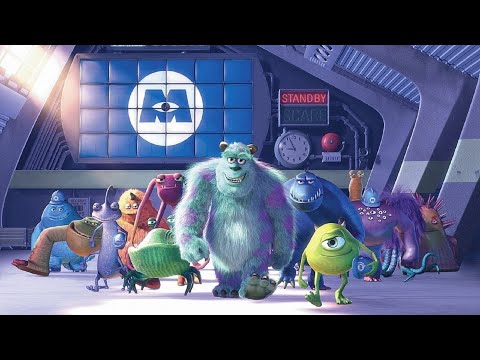
waternoose
A waternoose is a fictional creature, specifically a large, multi-legged crustacean-like monster featured in popular animation. It is often used figuratively to describe someone who is intimidating, bureaucratic, or overly imposing in a professional or authoritative setting.
waternoose 30秒了解
- A waternoose is a fictional crab-like monster and a metaphor for a corrupt, institutional leader who prioritizes survival over ethics.
- The term comes from the Pixar character Henry J. Waternoose III, known for his multi-legged appearance and ruthless corporate decisions.
- It is used to describe intimidating authority figures, bureaucratic systems, or large, skittering creatures in creative writing contexts.
- Key traits of a waternoose include paternalistic authority, desperation, and the willingness to betray subordinates for the 'greater good' of a company.
The term waternoose is a fascinating example of how popular culture, specifically modern animation, can inject new nouns into the English lexicon to describe complex archetypes. Originally, the word refers to Henry J. Waternoose III, the primary antagonist of the 2001 Pixar film Monsters, Inc.. Physically, a waternoose is depicted as a massive, five-eyed, crab-like monster with a suit and a sophisticated, albeit menacing, demeanor. However, in contemporary usage, particularly among younger professionals and film enthusiasts, the word has evolved into a metaphorical label for a specific type of authority figure.
- The Corporate Archetype
- A 'waternoose' represents the desperate leader who is willing to sacrifice ethics, safety, and the well-being of subordinates to ensure the survival of their organization. It describes a person who masks their ruthlessness with a veneer of professional tradition and 'doing what is necessary' for the greater good.
When people use this term, they are often highlighting a betrayal of trust. In the source material, Waternoose was a mentor to the protagonist, Sulley. Therefore, calling someone a waternoose implies they are a mentor-turned-villain who prioritizes the 'bottom line' over human (or monster) decency. It is used in discussions about business ethics, corporate greed, and the psychological pressure of failing industries.
'The new regional manager is a total waternoose; he talks about family values while cutting everyone's health insurance to save the company's quarterly earnings.'
Furthermore, the physical description of a waternoose—crustacean-like and multi-legged—is sometimes used in creative writing to describe eldritch or alien creatures that possess a mix of aquatic and terrestrial features. It evokes a sense of heavy, skittering movement and overwhelming physical presence. In a bureaucratic sense, the 'many legs' of a waternoose can symbolize the many 'arms' of a complex, suffocating administration that makes it impossible for individuals to escape red tape.
- The Ethical Dimension
- The term is deeply tied to the concept of 'utilitarianism gone wrong.' A waternoose believes that 'I'll kidnap a thousand children before I let this company die!' This specific brand of villainy—where the institution's survival justifies any atrocity—is the core of the waternoose identity.
'The government's response to the crisis felt like something a waternoose would devise: efficient, cold, and utterly devoid of empathy for the individual.'
In summary, while the word started as a character name, it has branched out into a descriptive noun for intimidating, multi-faceted, and ethically compromised figures in power. It is most commonly heard in film analysis, online forums discussing workplace toxicity, and speculative fiction circles where 'crustacean-monsters' are a common trope. It captures a blend of physical intimidation and systemic corruption that few other words can succinctly express.
Using waternoose effectively requires an understanding of its dual nature as both a literal monster description and a figurative character archetype. Because it is an eponym (a name used as a common noun), it often functions similarly to words like 'Scrooge' or 'Machiavelli.' You can use it to describe a person's behavior, their physical presence, or the nature of a system they represent.
- Describing Corporate Behavior
- When applying the term to a professional setting, it usually acts as a noun. 'He is a waternoose' or 'The CEO acted like a waternoose.' It emphasizes the transition from a respected leader to a desperate tyrant. It is particularly effective when describing someone who uses their high status to bully those below them while claiming they are 'saving the industry.'
'Stop being such a waternoose about the budget; we know you're just trying to protect your own bonus at our expense.'
In creative writing, 'waternoose' can be used to describe physical movement or appearance, especially if the creature in question has multiple limbs or a hard, shell-like exterior. It conveys a sense of weight and mechanical precision in movement. Writers might use it to evoke the specific visual of a large, skittering entity that is both aquatic and terrifyingly grounded.
Another common usage is in the context of 'Waternoose-ian' logic. This refers to the specific ethical fallacy where the survival of a legacy institution justifies any amount of harm to the innocent. You might say, 'The company's decision to dump waste in the river was purely Waternoose-ian; they prioritized their survival over the town's health.'
- Physical Descriptions
- 'The beast emerged from the depths, a massive waternoose of clicking legs and obsidian eyes, towering over the terrified sailors.'
'The bureaucratic process was a waternoose, with so many legs of legislation that it was impossible to find a clear path forward.'
Finally, the word can be used as a verb in very informal, slang-heavy contexts: 'to waternoose someone.' This means to betray a protégé or subordinate for the sake of institutional stability. 'I can't believe the dean waternoosed me after I spent five years building that department.' This usage is rarer but highly descriptive within communities familiar with the source material.
The word waternoose is most frequently encountered in environments where film analysis, animation history, and corporate critique intersect. Because Monsters, Inc. is a seminal work of the early 2000s, the characters have become ingrained in the collective consciousness of Millennials and Gen Z, who now use these terms in their adult lives to describe real-world situations.
- Film and Media Criticism
- In video essays and articles analyzing Pixar's villains, 'Waternoose' is cited as the gold standard for the 'twist villain' or the 'paternalistic antagonist.' Critics discuss the 'Waternoose effect,' where a character who represents the status quo becomes the ultimate threat to progress.
You will also hear this word in online discussions regarding workplace toxicity. On platforms like Reddit (specifically subreddits like r/antiwork or r/workplaceculture), users might compare their high-level executives to Waternoose when those executives make decisions that are technically 'for the company' but morally bankrupt. It serves as a shorthand for 'a boss who sold their soul to keep the lights on.'
'If you watch the documentary on the collapse of the energy giant, you'll see that the CEO was a literal waternoose—he knew the system was failing and chose to exploit the vulnerable instead of innovating.'
In the gaming world, particularly in tabletop RPGs like Dungeons & Dragons, players might use 'waternoose' to describe a specific type of homebrew monster. If a Dungeon Master describes a 'waternoose-like creature,' the players immediately envision something large, crustacean, multi-legged, and perhaps wearing a vestige of authority or intelligence. It has become a visual shorthand for 'intelligent but monstrous arthropod.'
- Memes and Social Media
- The quote 'I'll kidnap a thousand children before I let this company die!' is a frequent meme template. When a real-world company does something controversial, social media users will post the image of Waternoose to draw a direct parallel between the fictional monster and the real-world entity.
'The way the tech industry is handling AI ethics right now is very waternoose; they're so afraid of losing their lead that they're ignoring the potential harm to society.'
Lastly, in the world of toy collecting and animation fandom, 'Waternoose' is a specific item of interest. Collectors discuss the 'Waternoose figure' or 'Waternoose concept art,' referring to the physical merchandise and the creative process behind the character's design. In these circles, the word is used with technical precision regarding the character's 3D model and rigging.
Because waternoose is a specialized term derived from a proper name, there are several common pitfalls that learners and even native speakers might encounter when using it in conversation or writing.
- Confusion with the Word 'Noose'
- The most significant mistake is associating the word too closely with 'noose' (the rope used for hanging). While the character's name includes this word, using 'waternoose' to imply execution or suicide is incorrect and can be highly insensitive. The 'noose' in his name is likely a play on 'tightening the noose' (putting pressure on someone) or simply a surname, not a literal reference to the object.
Another mistake is using the term to describe any villain. A 'waternoose' is not just a bad guy; he is a specific type of bad guy. If a villain is chaotic or just wants to destroy the world (like the Joker), they are not a waternoose. A waternoose must have a position of authority, a sense of tradition, and a desperate need to save an institution. Using it for a random criminal misses the nuance of the 'corrupt executive' archetype.
Incorrect: 'The bank robber was a total waternoose.' (Robbers aren't usually institutional leaders.)
Correct: 'The bank's board of directors acted like a waternoose by hiding the losses from the public.'
Over-capitalization is also a frequent error. If you are using the word as a general noun to describe a type of person, it should ideally be lowercase ('He's a waternoose'). If you capitalize it in every instance, it looks like you are only talking about the specific character from the movie, which limits the metaphorical power of your sentence.
- Misapplying the Physical Description
- In creative writing, don't use 'waternoose' to describe something small or graceful. The word carries a connotation of bulk and many-legged, skittering movement. Describing a delicate butterfly as 'waternoose-like' would be confusing to the reader because it contradicts the established visual of the term.
'The giant steam-powered harvester moved across the field like a waternoose, its many mechanical legs churning the earth.'
Finally, avoid using the term with audiences who are completely unfamiliar with Pixar films. Unlike 'Scrooge,' which has been in the language for over 150 years, 'waternoose' is still relatively niche. If your audience hasn't seen Monsters, Inc., the metaphor will fail, and they might think you are talking about a literal noose in the water, which sounds much darker than intended.
If you find that waternoose is too specific or perhaps too informal for your current context, there are several alternatives that capture different facets of its meaning. Depending on whether you want to emphasize the 'corrupt boss' aspect or the 'multi-legged monster' aspect, you can choose from the following.
- The Corrupt Authority Figure
- Apparatchik: A blindly devoted official in a massive organization. This is more formal and implies a lack of individual thought.
Tyrant: A cruel and oppressive ruler. This is broader but lacks the 'corporate' nuance of a waternoose.
Machiavellian: Someone who is cunning and unscrupulous, especially in politics or advancing their career. This fits the 'ends justify the means' logic perfectly.
When comparing a waternoose to a 'Scrooge,' the difference lies in the motivation. A Scrooge is motivated by personal greed and miserliness. A waternoose is motivated by the survival of the institution they lead. A waternoose might actually be quite generous to his 'top performers' as long as the company is succeeding, whereas a Scrooge is stingy to everyone.
'While the CEO wasn't a Scrooge—he paid well—he was definitely a waternoose when it came to environmental regulations; he'd bypass any law to keep the factory running.'
For physical descriptions of monsters, you might use Crustacean-like, Arthropodal, or Decapodal (ten-footed). These are more scientific and less evocative of a specific character. If you want to describe something that feels both organic and mechanical, Insectoid is a strong alternative.
- The 'Twist' Mentor
- Judas: A person who betrays a friend or mentor. This is much more personal and religious in tone.
Fifth Columnist: Someone who undermines a group from within. This is more political and implies a secret alliance with an enemy.
'The mentor's betrayal was waternoose-ian in its scope; he didn't just hurt his student, he tried to dismantle the student's entire career to protect the university's reputation.'
In conclusion, while 'waternoose' is a unique and colorful term, words like 'Machiavellian,' 'Apparatchik,' and 'Arthropodal' can serve as more formal or precise alternatives depending on the specific nuance you wish to convey. However, none of them quite capture the specific blend of 'crustacean-monster-CEO' that 'waternoose' provides.
How Formal Is It?
""
""
""
""
""
趣味小知识
The character was originally designed to be more human-like, but the 'waternoose' (crab) design was chosen to make his betrayal feel more 'alien' and shocking.
发音指南
- Pronouncing 'noose' as 'nose' (rhyming with 'goes').
- Stress on the second syllable (wa-TER-noose).
- Dropping the 'r' in American English (wa-te-noose).
- Pronouncing the 'oo' like 'book' instead of 'boot'.
- Adding an extra 's' at the end (waternooses is plural, not singular).
难度评级
Requires knowledge of pop culture to fully grasp the metaphor.
Spelling 'noose' and using the hyphenated forms can be tricky.
Easy to pronounce but requires the right context.
Can be confused with 'water' and 'noose' as separate words.
接下来学什么
前置知识
接下来学习
高级
需要掌握的语法
Eponymous Nouns
Using 'waternoose' like 'Scrooge' to describe a personality type.
Compound Adjectives
Using 'waternoose-like' or 'waternoose-ian' to modify other nouns.
Proper vs. Common Nouns
Capitalizing 'Waternoose' for the character, lowercase for the archetype.
Metaphorical Extension
Extending a physical description (many legs) to a systemic one (many departments).
Verbification
Informally turning the noun into a verb: 'He waternoosed the project.'
按水平分级的例句
The waternoose is a big monster.
Waternoose est un grand monstre.
Subject + Verb + Object.
He has many legs like a crab.
Il a beaucoup de jambes comme un crabe.
Present simple tense.
Is the waternoose scary?
Le waternoose est-il effrayant ?
Question form.
The waternoose wears a red vest.
Le waternoose porte un gilet rouge.
Third person singular -s.
I see a waternoose in the movie.
Je vois un waternoose dans le film.
Simple sentence structure.
The waternoose is the boss.
Le waternoose est le patron.
Use of 'the' for a specific noun.
He has five eyes.
Il a cinq yeux.
Number + Noun.
Do not be a waternoose!
Ne sois pas un waternoose !
Imperative mood.
The waternoose wants to save his company.
Le waternoose veut sauver son entreprise.
Infinitive after 'wants'.
He is a very large and strong monster.
C'est un monstre très grand et fort.
Adjectives before noun.
People call him a waternoose because he is mean.
Les gens l'appellent un waternoose parce qu'il est méchant.
Conjunction 'because'.
The waternoose moved quickly on his many legs.
Le waternoose se déplaçait rapidement sur ses nombreuses jambes.
Past simple tense.
He was a friend, but now he is a waternoose.
C'était un ami, mais maintenant c'est un waternoose.
Contrast with 'but'.
You can see the waternoose in the office.
Vous pouvez voir le waternoose dans le bureau.
Modal verb 'can'.
A waternoose is not a real animal.
Un waternoose n'est pas un vrai animal.
Negative sentence.
The waternoose's plan was very bad.
Le plan du waternoose était très mauvais.
Possessive 's.
The CEO's waternoose-like behavior intimidated the entire staff.
Le comportement de type waternoose du PDG a intimidé tout le personnel.
Compound adjective with -like.
In the film, Waternoose betrays his most loyal employee.
Dans le film, Waternoose trahit son employé le plus fidèle.
Present simple for plot summary.
I wouldn't want to work for a waternoose like him.
Je ne voudrais pas travailler pour un waternoose comme lui.
Conditional 'wouldn't'.
The creature was a massive waternoose with sharp claws.
La créature était un énorme waternoose avec des griffes acérées.
Descriptive noun phrase.
He acted like a waternoose to protect his own interests.
Il a agi comme un waternoose pour protéger ses propres intérêts.
Prepositional phrase 'to protect'.
Is the term 'waternoose' common in business discussions?
Le terme 'waternoose' est-il courant dans les discussions d'affaires ?
Interrogative with quoted term.
The waternoose archetype is common in modern animation.
L'archétype du waternoose est courant dans l'animation moderne.
Noun as a modifier.
She described her former boss as a total waternoose.
Elle a décrit son ancien patron comme un waternoose total.
Reported speech/description.
The administration's decision was criticized as being purely waternoose-ian.
La décision de l'administration a été critiquée comme étant purement waternoosienne.
Passive voice with gerund.
A waternoose often hides behind a mask of professional tradition.
Un waternoose se cache souvent derrière un masque de tradition professionnelle.
Metaphorical language.
The protagonist realized his mentor had become a waternoose.
Le protagoniste a réalisé que son mentor était devenu un waternoose.
Past perfect tense.
The multi-legged waternoose skittered across the laboratory floor.
Le waternoose à plusieurs pattes a détalé sur le sol du laboratoire.
Specific verb 'skittered'.
Calling him a waternoose highlights his lack of ethical boundaries.
L'appeler un waternoose souligne son manque de limites éthiques.
Gerund as subject.
The company's survival depended on a waternoose-style sacrifice.
La survie de l'entreprise dépendait d'un sacrifice de style waternoose.
Compound noun phrase.
He maintains a waternoose-like grip on the department's resources.
Il maintient une emprise de type waternoose sur les ressources du département.
Figurative 'grip'.
The villain's transformation into a waternoose was unexpected.
La transformation du méchant en waternoose était inattendue.
Abstract noun 'transformation'.
The narrative explores the descent of a leader into a desperate waternoose.
Le récit explore la descente d'un leader vers un waternoose désespéré.
Complex noun phrase.
Her analysis of the corporate structure revealed several waternoose figures.
Son analyse de la structure de l'entreprise a révélé plusieurs figures de waternoose.
Pluralization of eponym.
The creature's waternoose physiology allowed it to navigate the uneven terrain.
La physiologie de waternoose de la créature lui permettait de naviguer sur le terrain accidenté.
Technical noun 'physiology'.
The ethical dilemma was exacerbated by the CEO's waternoose-ian logic.
Le dilemme éthique a été exacerbé par la logique waternoosienne du PDG.
Passive voice with agent.
He was the quintessential waternoose, sacrificing everything for a dying industry.
Il était le waternoose quintessentiel, sacrifiant tout pour une industrie mourante.
Appositive phrase.
The term 'waternoose' encapsulates the tragedy of institutional desperation.
Le terme 'waternoose' résume la tragédie du désespoir institutionnel.
Precise verb 'encapsulates'.
The film's antagonist serves as a warning against becoming a waternoose.
L'antagoniste du film sert d'avertissement contre le fait de devenir un waternoose.
Gerund after preposition.
The skittering sound of the waternoose echoed through the ventilation shafts.
Le bruit de dérapage du waternoose résonnait dans les conduits de ventilation.
Sensory language.
The socio-political landscape was dominated by waternoose-like entities vying for control.
Le paysage socio-politique était dominé par des entités de type waternoose se disputant le contrôle.
Participle phrase 'vying for'.
To label him a waternoose is to acknowledge the systemic rot he represents.
L'étiqueter comme un waternoose, c'est reconnaître la pourriture systémique qu'il représente.
Infinitive as subject and complement.
The author utilizes the waternoose motif to critique late-stage capitalism.
L'auteur utilise le motif du waternoose pour critiquer le capitalisme tardif.
Literary analysis terminology.
The creature was a grotesque waternoose, a fusion of corporate suit and chitinous nightmare.
La créature était un waternoose grotesque, une fusion de costume d'entreprise et de cauchemar chitineux.
Complex apposition.
His transition from mentor to waternoose was a masterclass in character development.
Sa transition de mentor à waternoose a été une leçon magistrale de développement de personnage.
Noun phrase with 'masterclass'.
The 'Waternoose Fallacy' suggests that an organization's life is worth more than its ethics.
Le 'sophisme de Waternoose' suggère que la vie d'une organisation vaut plus que son éthique.
Noun as proper adjective.
The sheer scale of the waternoose's betrayal left the community in a state of paralysis.
L'ampleur de la trahison du waternoose a laissé la communauté dans un état de paralysie.
Possessive with abstract noun.
In the depths of the abyss, the waternoose reigned supreme over the lesser scavengers.
Dans les profondeurs de l'abîme, le waternoose régnait en maître sur les charognards moindres.
Adverbial phrase 'reigned supreme'.
常见搭配
常用短语
Pulling a Waternoose
The Waternoose Method
Waternoose's Choice
Looking like a Waternoose
Beyond Waternoose
The Waternoose Legacy
Waternoose-style management
A Waternoose in a suit
The many legs of a Waternoose
Waternoose's scream
容易混淆的词
A noose is a rope; a waternoose is a monster or a corrupt boss.
This is a misspelling and has no meaning in English.
A Scrooge is greedy with money; a waternoose is greedy for institutional power.
习语与表达
"I'll kidnap a thousand children before I let this company die"
The ultimate expression of prioritizing an institution over human life.
His attitude was basically 'I'll kidnap a thousand children before I let this company die.'
Informal/Meme"To have five eyes on the prize"
A play on 'eye on the prize,' meaning to be obsessively focused on a goal from every angle.
He has five eyes on the prize, just like a Waternoose.
Slang"Skittering up the corporate ladder"
To advance in a career using many 'legs' or connections, often in a creepy way.
She's skittering up the corporate ladder like a Waternoose.
Informal"Tightening the waternoose"
Increasing pressure on a subordinate until they break.
The manager is tightening the waternoose on the sales team.
Metaphorical"A crab in a three-piece suit"
A person who looks professional but is actually a 'bottom-feeder' or monster.
He's nothing but a crab in a three-piece suit—a total Waternoose.
Informal"Feeding the machine"
Sacrificing others to keep a system running, a core Waternoose trait.
He's just feeding the machine at this point.
Neutral"The mentor's sting"
The pain of being betrayed by a teacher or boss.
Feeling the mentor's sting is the first step to realizing he's a Waternoose.
Literary"Many legs, no heart"
Describing someone with lots of power and reach but no empathy.
That CEO has many legs but no heart.
Informal"Caught in the claws"
Being trapped by a powerful and ruthless person.
I'm caught in the claws of a real Waternoose.
Metaphorical"The scream extractor"
A metaphor for a system that drains the energy or life out of its workers.
This office has become a literal scream extractor.
Informal/Reference容易混淆
Both mean large and powerful.
A behemoth is just big; a waternoose is specifically crustacean-like and bureaucratic.
The company is a behemoth, but the CEO is a waternoose.
Both are aquatic-themed monsters.
Leviathan is usually a sea serpent; waternoose is a crab-like creature.
The leviathan swam, but the waternoose skittered.
Both are bad leaders.
A tyrant rules by fear; a waternoose rules by 'saving' the system.
He wasn't a tyrant, he was a waternoose trying to save his legacy.
Waternoose looks like a crab.
A crab is an animal; a waternoose is a specific monster or character type.
I saw a crab at the beach, not a waternoose.
Both are bureaucratic.
An apparatchik is a low-level follower; a waternoose is the high-level leader.
The waternoose gave orders to his loyal apparatchiks.
句型
The [noun] is a waternoose.
The monster is a waternoose.
He is a waternoose because [reason].
He is a waternoose because he is mean.
Stop being such a [noun].
Stop being such a waternoose.
His [noun] was very waternoose-ian.
His leadership was very waternoose-ian.
The [noun] encapsulates the waternoose archetype.
The CEO encapsulates the waternoose archetype.
To [verb] is to embrace a waternoose-ian philosophy.
To fire them is to embrace a waternoose-ian philosophy.
A waternoose of [noun].
A waternoose of bureaucracy.
The waternoose-like [noun] [verb].
The waternoose-like creature skittered.
词族
名词
动词
形容词
相关
如何使用
Low (Specialized/Pop Culture)
-
He is a waternose.
→
He is a waternoose.
The word comes from 'noose' (rope), not 'nose' (face).
-
The waternoose of the company was very kind.
→
The mentor of the company was very kind.
A waternoose is by definition a villain or intimidating; it shouldn't be used for someone kind.
-
I'm going to waternoose my shoes.
→
I'm going to tie my shoes.
Waternoose is not a synonym for 'tie' or 'knot,' despite containing the word 'noose'.
-
She acted waternoose.
→
She acted like a waternoose.
You need 'like a' or use the adjective form 'waternoose-ian'.
-
The waternoose swam away.
→
The waternoose skittered away.
While aquatic-themed, the character has many legs and is usually associated with walking/skittering, not swimming.
小贴士
Hyphenate Adjectives
When using it to describe something else, always use a hyphen: 'waternoose-like' or 'waternoose-ian'.
Rhyme with Goose
Remember that the end of the word rhymes with 'goose' or 'loose,' not 'nose'.
Use as an Eponym
Treat it like 'Scrooge.' It's a name that has become a description for a personality type.
Visual Description
Use it to describe things with many mechanical arms or legs, like a complex machine or a large crane.
Utilitarianism
Use it to discuss the 'dark side' of utilitarianism—doing bad things for a perceived 'greater good'.
Workplace Slang
It's a great 'secret' word to use with coworkers who understand the reference to describe a bad boss.
Double O
Don't forget the double 'o' in 'noose.' It's not 'waternose'!
Countability
Remember it is a countable noun. You can have one waternoose or many waternooses.
Millennial Lingo
Recognize that this is part of the 'Millennial/Gen Z' vocabulary set.
记住它
记忆技巧
Think of a 'Water' crab putting a 'Noose' around his company's neck to save it. Water + Noose = The Boss who kills to save.
视觉联想
Picture a giant crab in a business suit with five eyes looking at a pile of money and a group of scared workers.
Word Web
挑战
Try to describe the most 'Waternoose' person you've ever met in three sentences using the word twice.
词源
The word was coined by Pixar screenwriters for the 2001 film 'Monsters, Inc.' It is a combination of 'water' and 'noose.'
原始含义: The name of a fictional monster who runs a power company.
English (Modern Neologism/Eponym).文化背景
Be careful not to use it in a way that mocks physical disabilities; it refers to a character's monstrous nature, not real-world conditions.
Commonly understood by people who grew up with Pixar movies (Millennials/Gen Z).
在生活中练习
真实语境
Office Workplace
- Stop being a waternoose.
- He's a corporate waternoose.
- The waternoose of HR.
- Don't pull a waternoose.
Film Discussion
- Waternoose is a twist villain.
- The design of Waternoose.
- Waternoose's motivation.
- A classic waternoose character.
Creative Writing
- A waternoose-like creature.
- Skittering like a waternoose.
- The waternoose's many eyes.
- A heavy, waternoose frame.
Ethics Class
- The Waternoose dilemma.
- Waternoose-ian utilitarianism.
- Institutional vs. personal ethics.
- The Waternoose betrayal.
Social Media
- Literal waternoose energy.
- CEO pulling a waternoose.
- Waternoose memes.
- Is he a waternoose?
对话开场白
"Have you ever had a boss who acted like a total waternoose?"
"What do you think makes a character a 'waternoose' instead of just a regular villain?"
"If you were in a movie, would you rather face a waternoose or a dragon?"
"Do you think modern tech CEOs are becoming more waternoose-ian lately?"
"How would you describe a waternoose to someone who hasn't seen Monsters, Inc.?"
日记主题
Describe a time you felt like a 'waternoose' in a small way—prioritizing a project over a person.
Write a short story about a literal waternoose monster living in a modern city.
Analyze the ethical failings of Henry J. Waternoose III and how they apply to real-world businesses.
If you had to design a 'waternoose' for a new movie, what would they look like and what would they do?
Reflect on the phrase 'I'll kidnap a thousand children before I let this company die.' Why is this so terrifying?
常见问题
10 个问题It is a 'real' word in the sense that it is used in English, but it is a neologism from a movie. You won't find it in old dictionaries, but you will find it in modern cultural discussions.
Probably not. It is too informal and refers to a villain. Using it might make you seem unprofessional unless you are discussing film or animation specifically.
The name likely combines 'water' (aquatic) and 'noose' (pressure/trap). It sounds old-fashioned and authoritative, fitting a character from a long line of business leaders.
Yes, when used for a person. It implies they are corrupt, desperate, or intimidating. No one wants to be called a waternoose.
No, 'waternoose' is gender-neutral when used as an archetype, even though the original character was male.
The plural is 'waternooses.' You just add 'es' to the end.
No, the 'water' in Waternoose refers to his crab-like, aquatic appearance, not the political scandal.
Yes, as 'waternoose-ian' or 'waternoose-like.' For example, 'His waternoose-ian tactics were effective but cruel.'
It is understood by anyone who has seen the movie, regardless of their dialect of English.
An 'altruistic leader' or a 'protector.' Someone who sacrifices themselves for their team, rather than the other way around.
自我测试 98 个问题
Describe a 'waternoose' character in your own words.
Well written! Good try! Check the sample answer below.
Write a short dialogue between an employee and a 'waternoose' boss.
Well written! Good try! Check the sample answer below.
Explain the difference between a 'Scrooge' and a 'waternoose'.
Read this aloud:
你说的:
Speech recognition is not supported in your browser. Try Chrome or Edge.
Listen to the description of a monster with five eyes and many legs. What is it called?
/ 98 correct
Perfect score!
Summary
A 'waternoose' is the ultimate 'company man' turned villain; use it to describe a boss who would 'kidnap a thousand children' (or fire a thousand people) just to keep a failing business afloat. Example: 'The department head's waternoose-ian tactics eventually led to a total loss of employee trust.'
- A waternoose is a fictional crab-like monster and a metaphor for a corrupt, institutional leader who prioritizes survival over ethics.
- The term comes from the Pixar character Henry J. Waternoose III, known for his multi-legged appearance and ruthless corporate decisions.
- It is used to describe intimidating authority figures, bureaucratic systems, or large, skittering creatures in creative writing contexts.
- Key traits of a waternoose include paternalistic authority, desperation, and the willingness to betray subordinates for the 'greater good' of a company.
Context is Key
Only use this word if you are sure your audience knows Pixar movies. Otherwise, use 'corrupt CEO' or 'crustacean monster'.
Hyphenate Adjectives
When using it to describe something else, always use a hyphen: 'waternoose-like' or 'waternoose-ian'.
Rhyme with Goose
Remember that the end of the word rhymes with 'goose' or 'loose,' not 'nose'.
Use as an Eponym
Treat it like 'Scrooge.' It's a name that has become a description for a personality type.